Maro Markou
You were born in Zimbabwe and now live in Cyprus. How have the landscapes, colours and visual cultures of these two places shaped your artistic language?
Zimbabwe will always be part of me. I grew up surrounded by the African landscape—the wildlife, the trees and the raw beauty of nature—and that has always stayed with me.
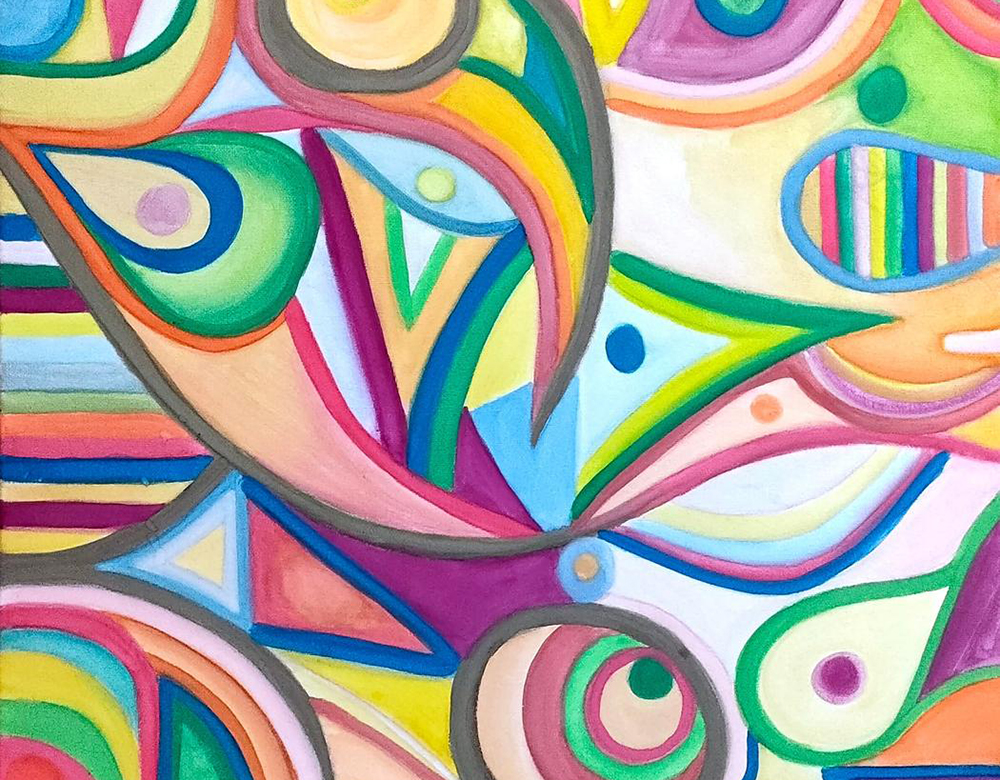
Moving to Cyprus was more than a change of landscape. It began a completely new chapter in my life, and the freedom I found here brought stronger, bolder colour into my work.
Zimbabwe is where my roots are; Cyprus is where I began again. My paintings bring those two worlds together: the strength and wildness of Africa with the light, colour and freedom I have found in Cyprus.
The human figure and the animal often appear physically close in your paintings, almost as if they share the same emotional space. What interests you about this relationship?
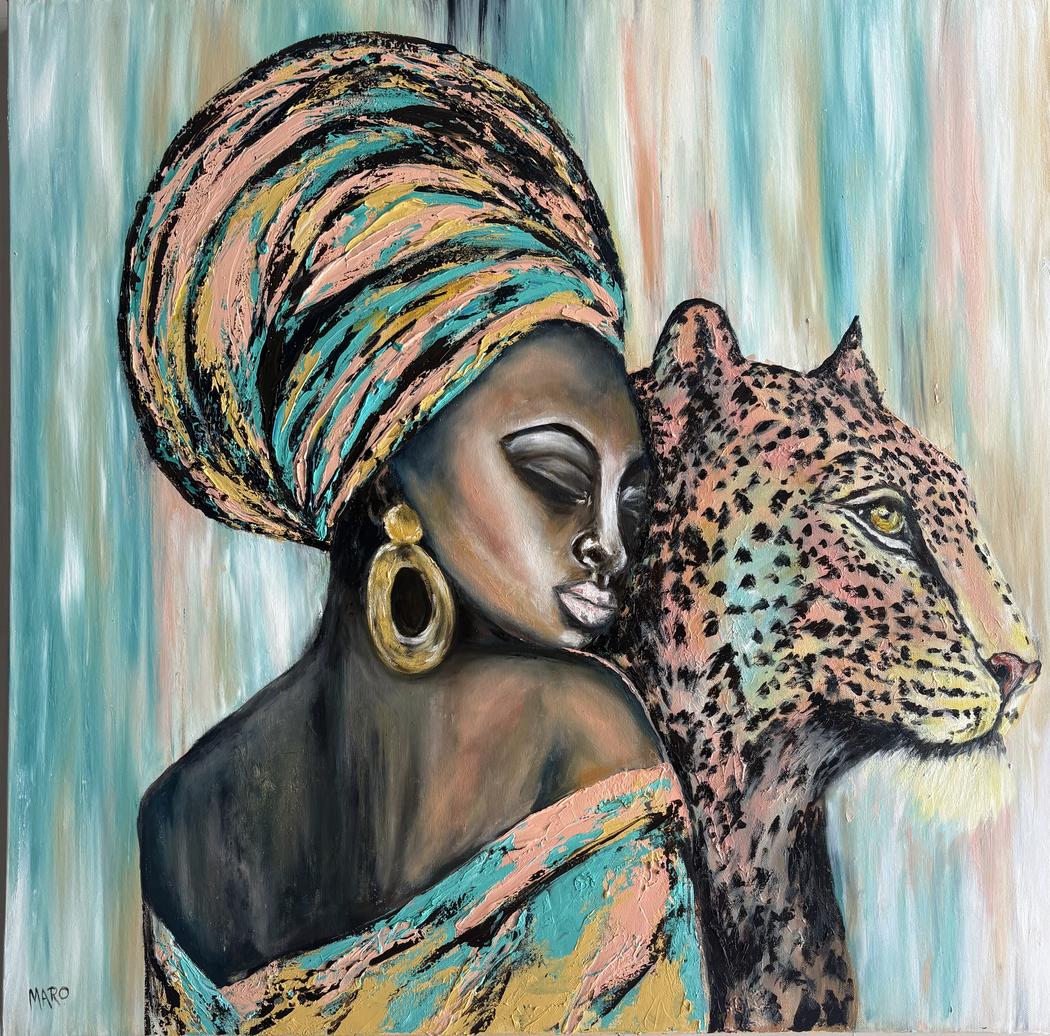
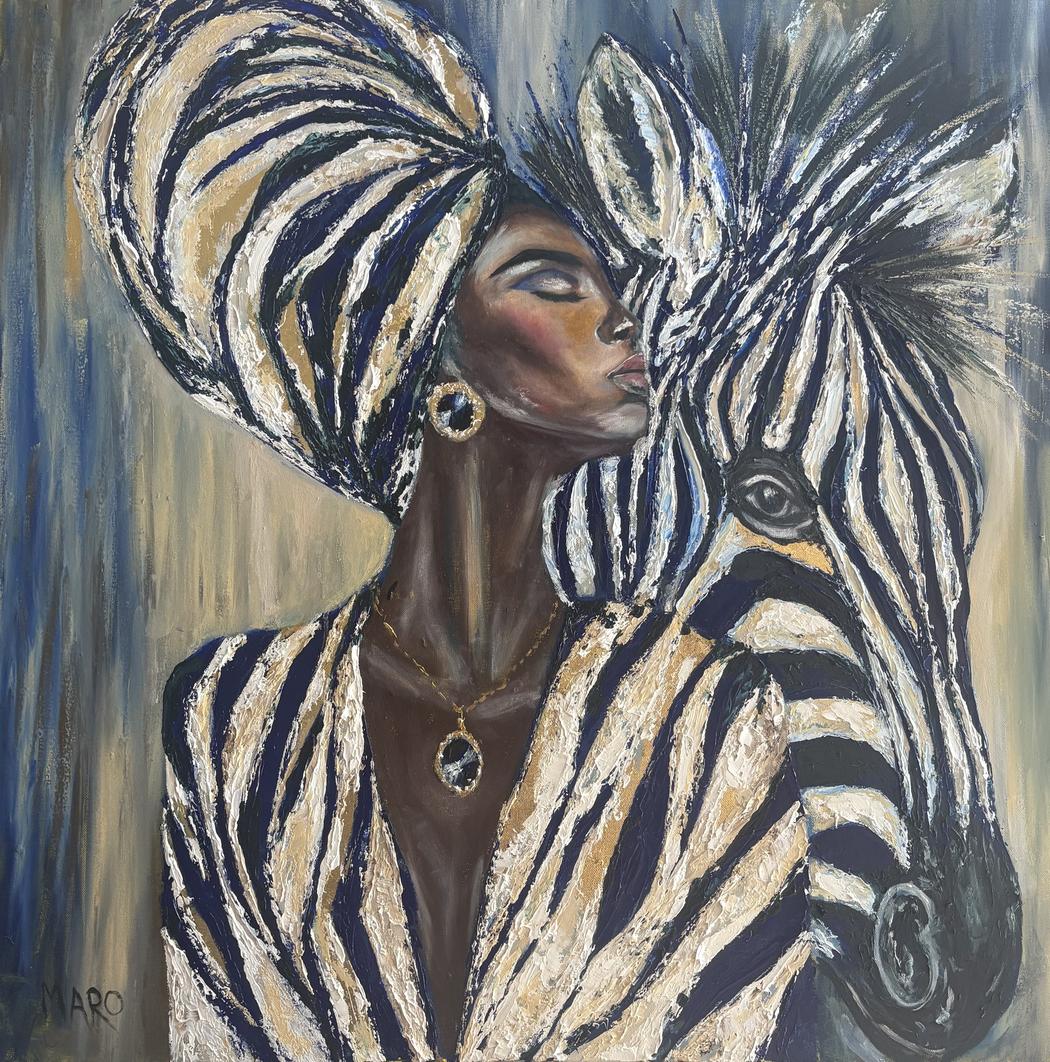
The relationship between the woman and the animal is a silent one. The woman carries her feelings within her, while the animal represents instinct and strength. By bringing them close together, those two sides meet.
There is tenderness in their closeness, but also power. Neither is above the other. The connection is simply there, with no need for words.
Who are the women portrayed in your works? Are they inspired by particular people, personal memories or imagined characters?
The women are not portraits of particular people, but they are deeply inspired by my own life, my memories and what I have lived through. Some are imagined characters, yet each one carries a part of me.
I portray women with serenity, strength and hope. They represent the freedom and peace I searched for within myself, and eventually found.
In some paintings, the woman’s eyes are closed, while the animal remains alert and looks outward. How do you use the direction of the gaze to shape the psychological atmosphere of a work?
When the woman’s eyes are closed, her gaze turns inward. She is in a place of stillness and reflection.
The animal looks outward and remains alert. The woman is at peace while the animal remains watchful, creating a feeling of safety, trust and protection.
The women in your paintings appear both serene and powerful. How do you approach strength without relying on dramatic action or conventional heroic poses?
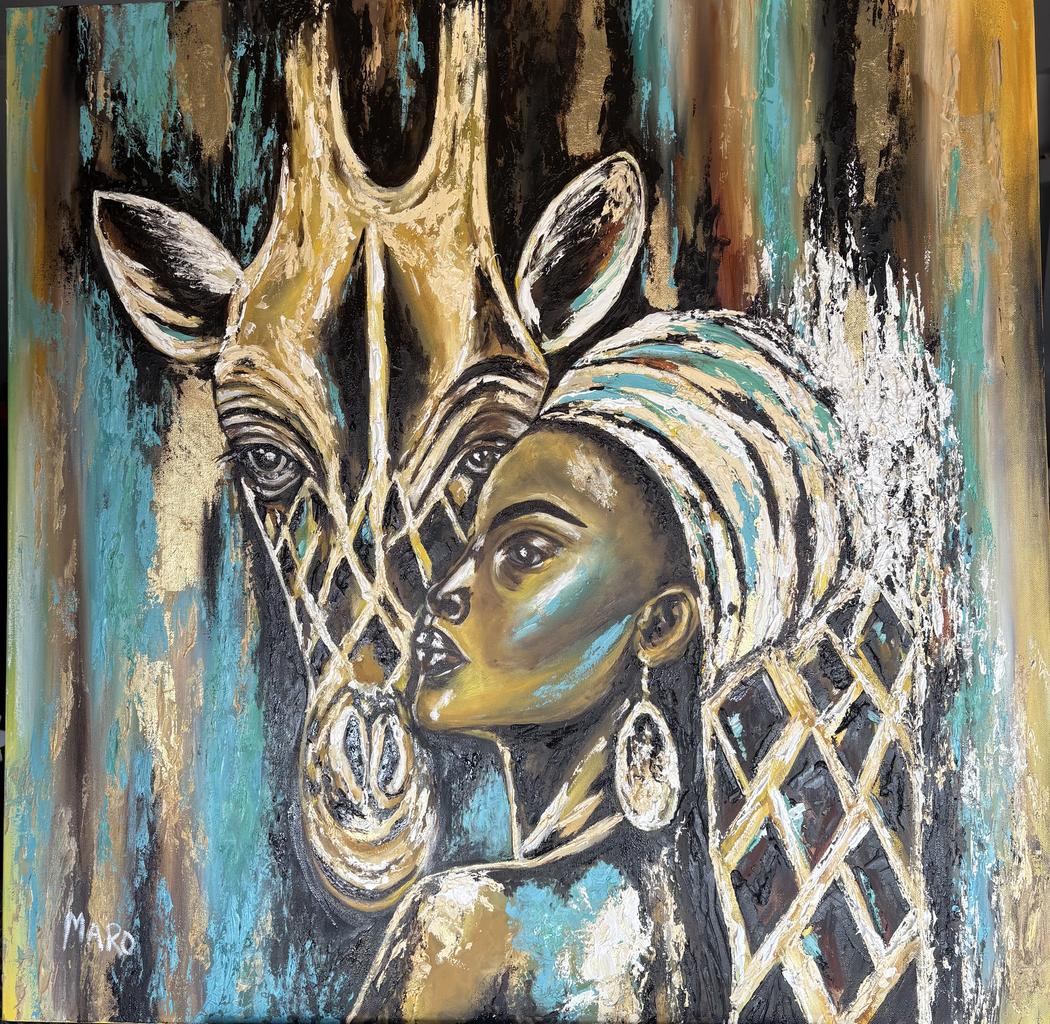
To me, strength comes from within. It does not have to be loud to be powerful. It can be seen in the woman’s serene stillness and dignity, and in everything she has endured, survived and overcome.
There is a strong sense of trust and intimacy between the figures and animals in these works. Does this closeness also express ideas of companionship, protection or mutual recognition?
The animal brings safety and protection, while the woman brings trust and tenderness. Each has their own worth within the bond. There is a quiet understanding between them that cannot be fully explained in words.
Do you regard these paintings as individual narratives, or are they part of a broader, interconnected world that continues from one canvas to another?
These paintings are part of a series of six paintings called Wild Grace. The woman and the animal may change from one canvas to another, but the connection between them continues as part of the same story.
Together, they tell a larger story of a woman’s journey from survival to strength, peace and freedom.
What aspect of your practice are you currently hoping to develop or explore in greater depth?
I want to explore the connection between women and nature in a different way. In Wild Grace, the woman and animal meet as two beings with a heartbeat, creating an intimate bond.
In Wild Bloom, the flowers become part of the woman herself. Her inner beauty shines outward as she blossoms—radiant, glowing and confident.
The Wild Grace series forms an important part of my forthcoming book, Out of the Fire. The women in these paintings reflect a longing for safety and peace, and the reclaiming of their autonomy. The book carries a message of hope for women seeking freedom from coercive control.