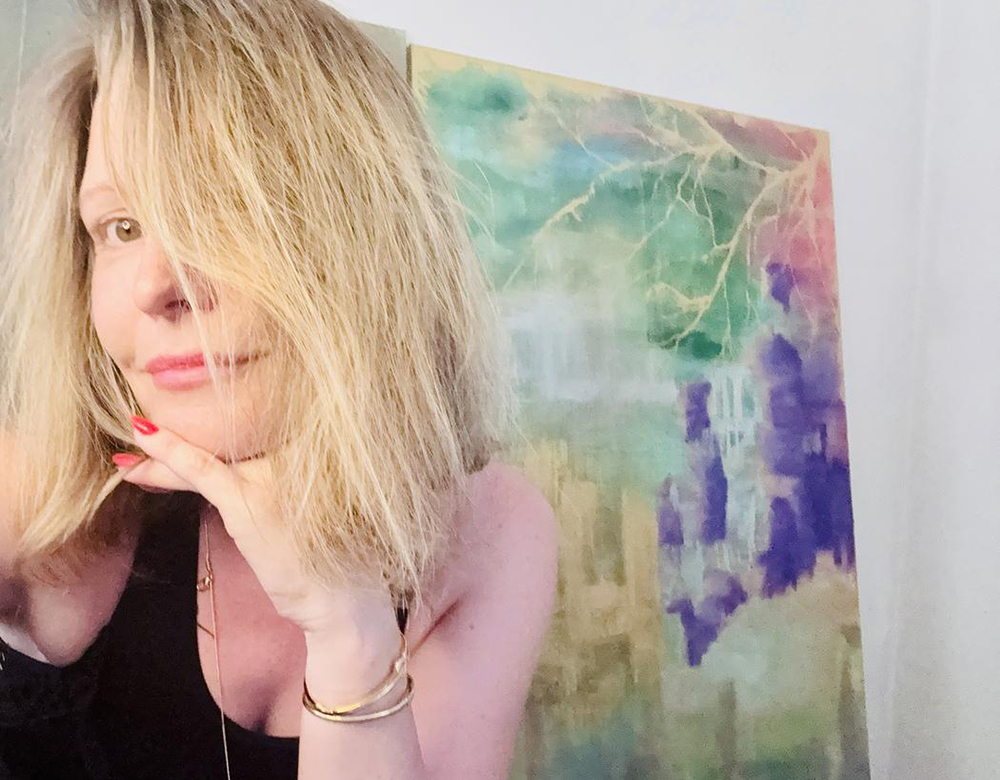
Irena Hocevar (Ihart)
You describe painting as a return to a passion that had remained dormant for many years. What brought you back, and how has your relationship with painting changed since then?
Painting was a passion that stayed with me, even during the years when other things took priority. My background in graphic and fabric design allowed me to remain connected to creativity, colour, composition, and materials, but painting itself had taken a quieter place in my life. Returning to it felt less like starting something new and more like reconnecting with a part of myself that had always been there.
Over time, my relationship with painting has become more intuitive and personal. I feel less concerned with the need to define an outcome from the beginning. Instead, I allow myself to explore, to experiment, and sometimes to be guided by unexpected discoveries. Painting has become a space of freedom, where I can slow down, listen to my instincts, and express things that are difficult to put into words.
How does your background in graphic and fabric design influence the way you approach composition, texture, and the physical structure of a painting?
My background in graphic and fabric design has undoubtedly shaped the way I approach painting. Both disciplines have taught me to pay close attention to composition, rhythm, proportion, repetition, and the relationship between colour and form. They have also made me sensitive to the way a surface can communicate through its structure, even before we begin to interpret its visual content.
Fabric design, in particular, has influenced my understanding of texture and tactility. I am interested in how materials hold traces of a process, how patterns can emerge through repetition, and how subtle variations create a sense of movement. Graphic design has given me an awareness of balance and spatial relationships, while painting allows me to move beyond the precision of design into something more instinctive and unpredictable.
In my work, the surface is not simply a background for an image. It becomes the image itself a physical structure with its own rhythm, depth, and character.
What first drew you to plaster as a painting material, and what possibilities does it offer that other materials do not?
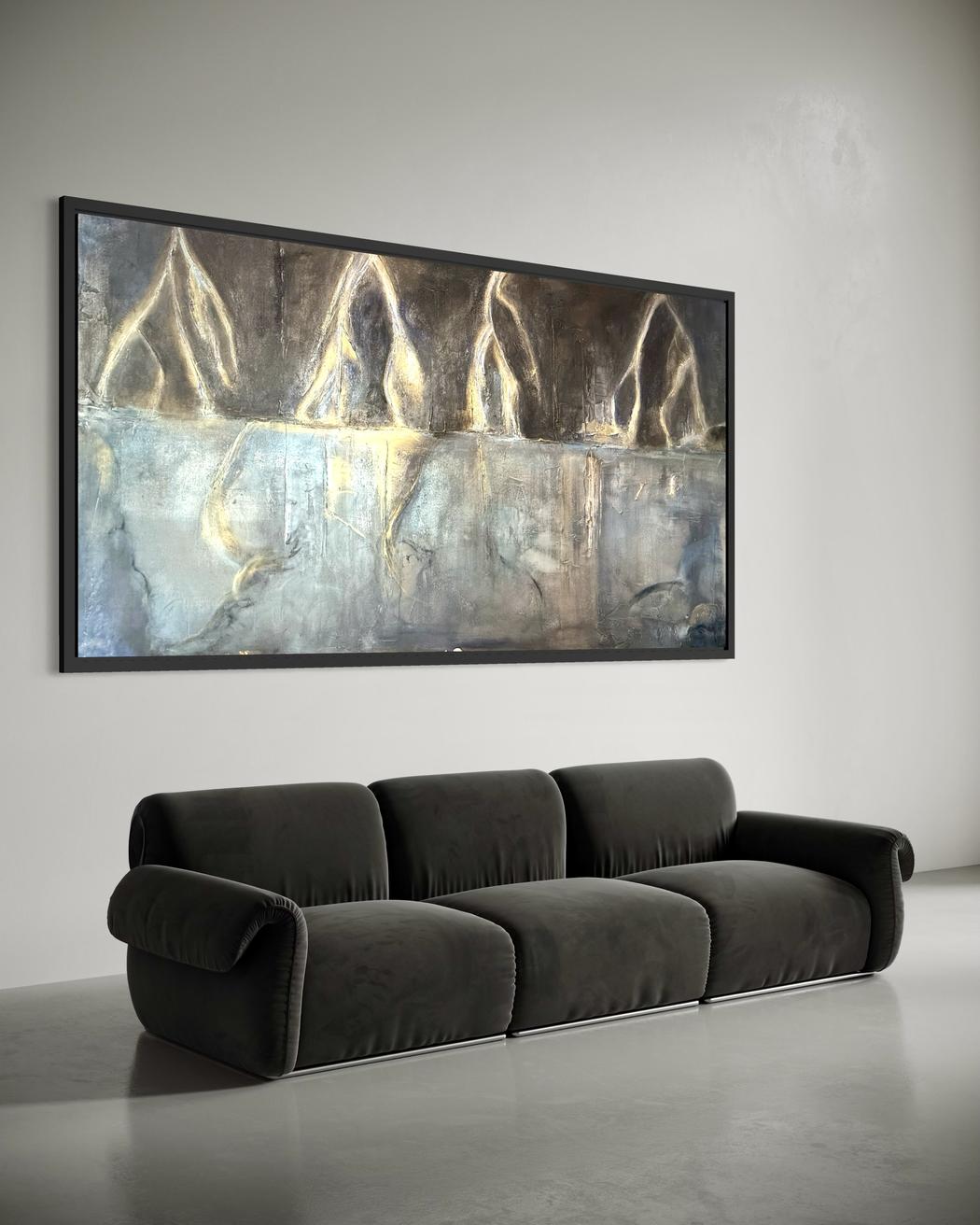
I was drawn to plaster because of its physical presence and its ability to transform a painting into something almost sculptural. Unlike traditional painting materials, which often encourage us to think primarily in terms of colour and image, plaster introduces volume, resistance, and a certain unpredictability. It allows me to build a surface rather than simply paint on one.
What fascinates me most is the balance between control and chance. Plaster can be shaped, layered, scraped, and sanded, but it also responds to the process in its own way. It may crack, break, or reveal unexpected marks. These irregularities are not necessarily imperfections they can become essential parts of the work.
I also appreciate the way plaster interacts with light. Its subtle relief creates shadows and tonal variations that change according to the viewing angle and the surrounding light. This gives the painting a quiet dynamism. It is never entirely fixed in its appearance, because the surface continues to reveal itself differently as we move around it.
Could you walk us through the development of one piece, from the first application of material to the final stages of shaping and sanding?
Each piece begins with an idea or a feeling, but rarely with a completely defined image. I usually have a general sense of the atmosphere I want to create, perhaps a particular colour relationship, a certain degree of movement, or a surface quality that I want to explore.
I begin by applying plaster to the support, building up the material and establishing the first layers of texture. At this stage, I am interested in its physical behaviour how it spreads, where it accumulates, and how it responds to the tools I use. I work directly with the material, allowing my hands and gestures to influence the emerging surface.
Once the plaster begins to set, I start shaping it, removing material in some areas and emphasising it in others. This is a gradual process of addition and subtraction. I may scrape, carve, or sand the surface, sometimes revealing a quieter layer beneath a more pronounced texture. Often, the most interesting moments occur when the material does something I had not anticipated.
Colour comes into the process as the surface develops. I apply it, observe how it settles into the relief, and consider whether it enhances or competes with the existing structure. I may return to certain areas several times, adjusting both the colour and the texture.
The final stages are often the most delicate. Sanding softens some of the marks while allowing others to remain visible. I look for a balance between roughness and refinement, between what is revealed and what is left untouched. I know a piece is approaching completion when the surface feels resolved, even if it retains a degree of openness and ambiguity.
How do you develop your colour palette? Do colours guide the construction of the surface, or do they emerge in response to its texture?
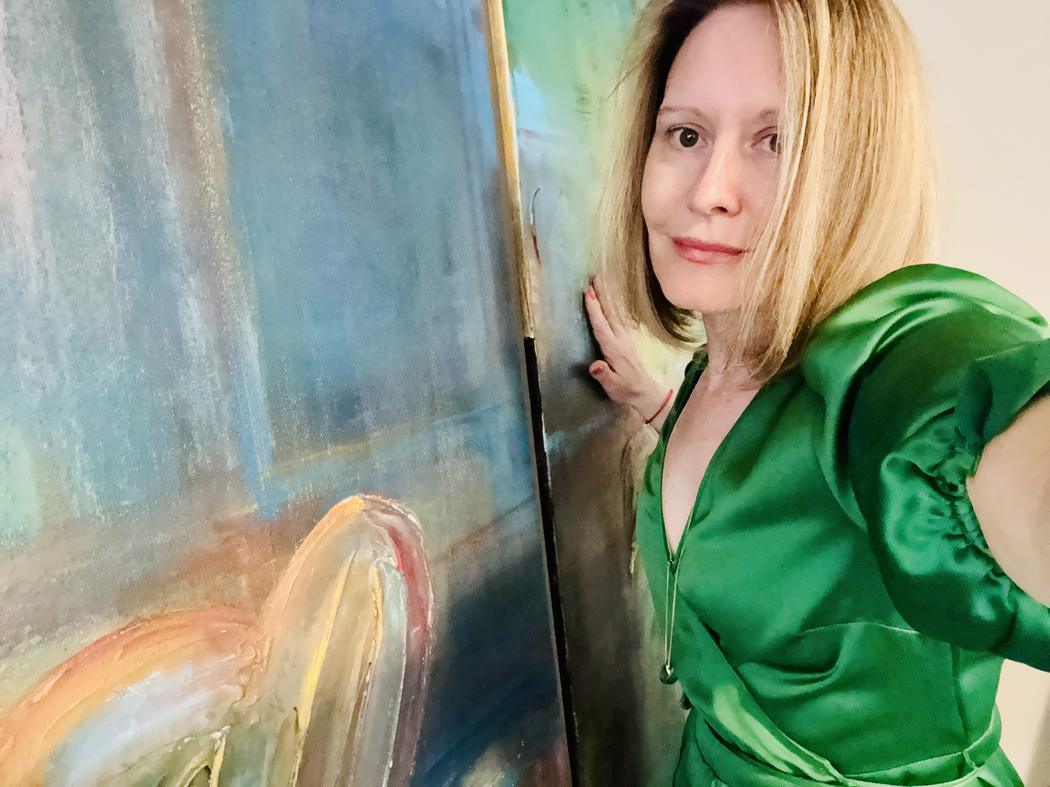
Colour and texture are closely connected in my work, and I find it difficult to separate one from the other. Sometimes I begin with a colour that I am drawn to, and this becomes the starting point for the entire piece. At other times, the surface comes first, and the colours emerge in response to its physical qualities.
I am particularly interested in subtle colour relationships tones that sit close to one another, gentle transitions, and variations that become apparent only when we look carefully. I do not always want colour to dominate the surface. Sometimes I prefer it to settle into the texture, allowing the relief and the changing light to contribute just as much to the overall impression.
The plaster itself influences the final result. Colour behaves differently across smooth and rough areas, in recesses and on raised edges. It can appear deeper in one place and lighter in another, creating a sense of depth without relying on conventional perspective.
For me, colour is not simply something applied at the end of the process. It is part of the material’s language, and I allow it to evolve alongside the surface.
Beyond their tactile qualities, what personal experiences or emotions find their way into your surfaces?
Although my paintings are abstract, they are deeply connected to personal experience. I do not necessarily begin with a specific memory or emotion that I want to represent. Instead, feelings often enter the work indirectly, through the pace of the process, the gestures I make, and the decisions I take along the way.
There is something important to me about the physical act of working with plaster. It requires patience and a willingness to accept that not everything can be controlled. Sometimes the process feels calm and meditative at other times, it involves frustration, uncertainty, or the need to remove something I have spent a long time creating. I recognise these experiences as part of life itself.
The layers, marks, and imperfections in the surface can hold something of these moments. They become traces of time, of decisions made and reconsidered, of things that have been built up, altered, or allowed to remain unresolved.
Returning to painting after many years has also made the work more personal. There is a sense of rediscovery in it, of allowing myself to return to something meaningful without needing to justify it. Perhaps this is reflected in the surfaces themselves: they are not always perfectly controlled or polished, but they carry a sense of presence, vulnerability, and quiet strength.
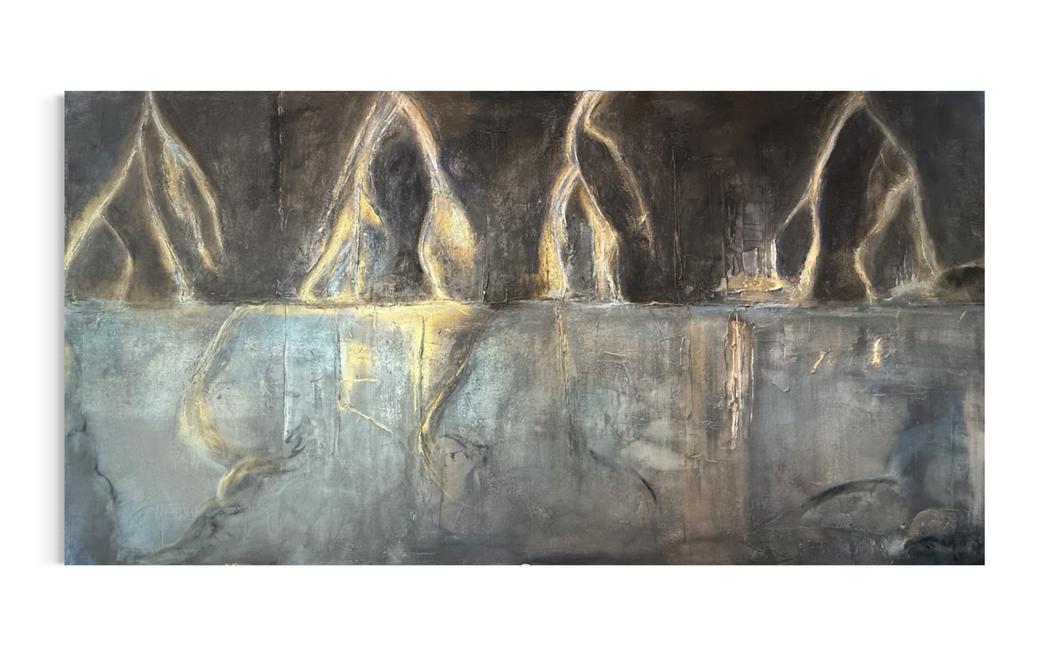
How would you like viewers to encounter your paintings? What might they discover by moving closer, stepping back, or observing the surface under different light?
I would like viewers to approach my paintings without feeling that they need to understand them immediately. I am interested in creating an experience rather than communicating a single, fixed meaning. The work can be encountered visually, but it also invites a more physical and sensory way of looking.
From a distance, the painting may appear calm, almost minimal, with colour and composition creating an overall sense of balance. As the viewer moves closer, however, the details begin to emerge: small irregularities, changes in depth, traces of the tools, and the subtle transitions between different areas of the surface.
Light plays an important role in this experience. Depending on its direction and intensity, shadows appear and disappear, revealing textures that may not have been visible before. The painting seems to shift slightly, even though the material itself remains unchanged.
I hope viewers feel free to spend time with the work, to move around it, and to discover their own associations. Perhaps one person will be drawn to its texture, another to its colour, and someone else to the feeling of stillness it creates.
Ultimately, I would like the paintings to offer a moment of pause an opportunity to slow down and become more attentive to material, light, and the experience of looking. If the work allows someone to connect with a feeling or a memory of their own, then it has opened up a space beyond the object itself.