
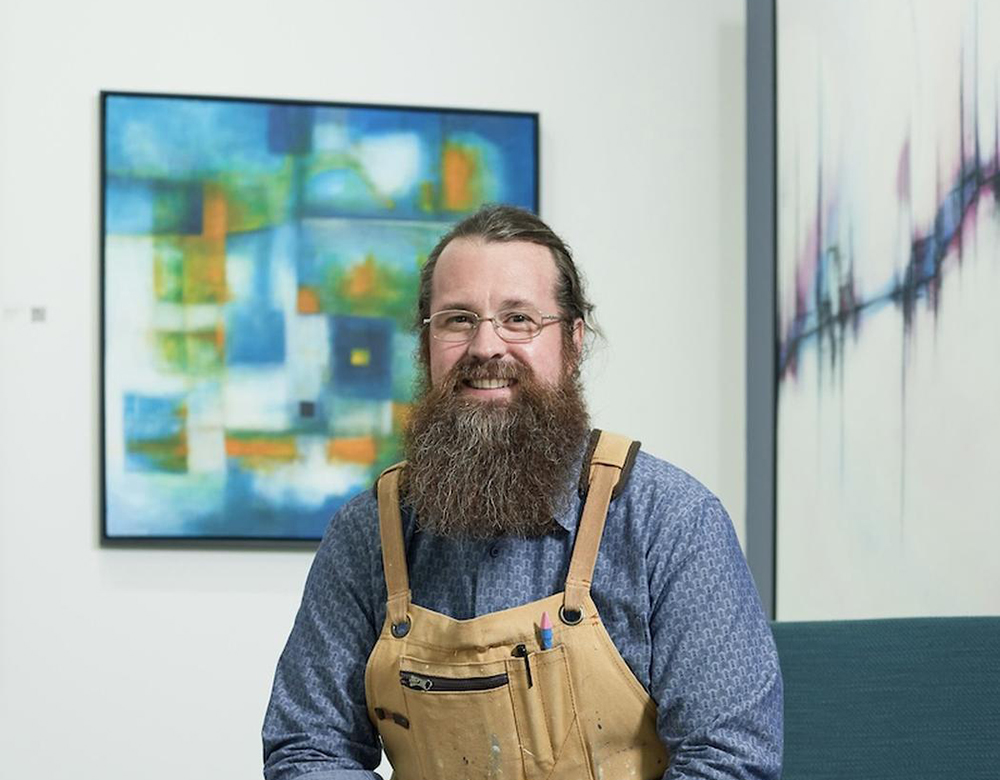
Adam Land
Your background in engineering seems to strongly inform your artistic language. How did this technical experience shape the way you approach abstraction?
My background in engineering has had a lasting impact on how I approach abstraction. It shaped the way I think about structure, organization, and problem solving. Even in the studio, I still approach materials with a level of testing and refinement. I will evaluate how a surface responds, how layers interact, and how certain decisions affect the overall outcome. That process is not separate from the work. It is part of the language.
At the same time, engineering gave me a way to think in systems rather than isolated elements. When I build a painting, I am not only concerned with individual marks or colors. I am thinking about how each part contributes to a larger structure. That awareness allows me to approach abstraction with both intention and flexibility, where precision and openness can exist at the same time.
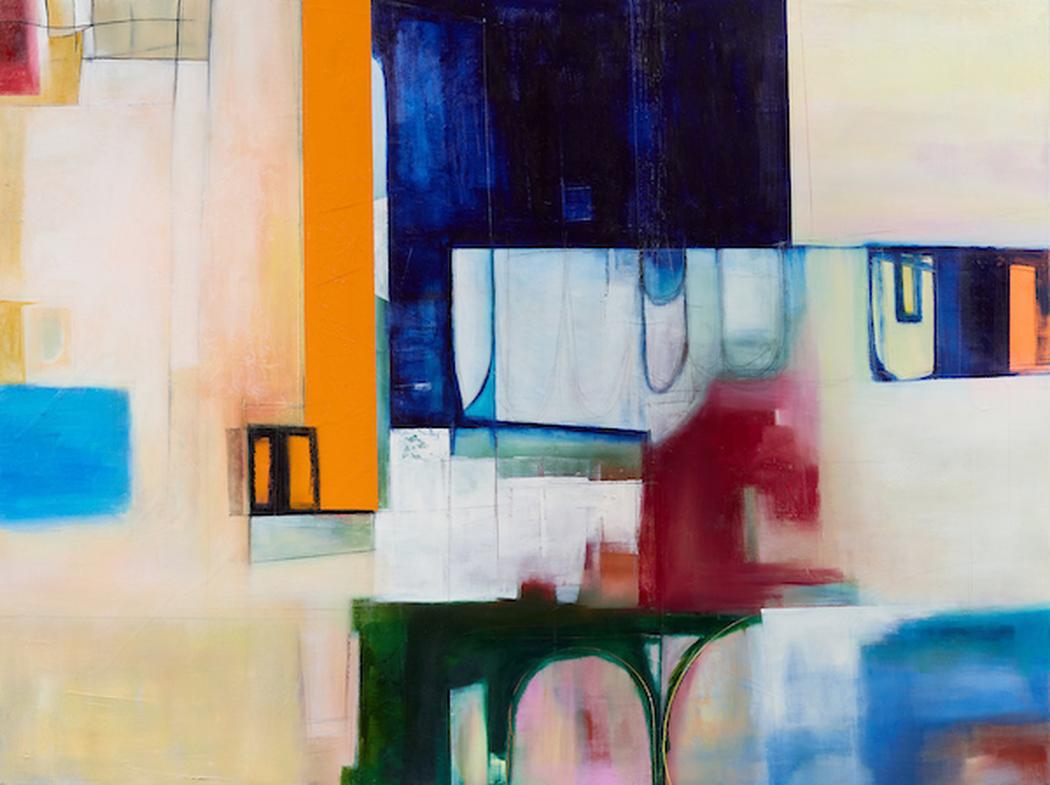 Adam Land | Urban Interference | 2025
Your compositions often feel architectural, almost like imagined city structures or invisible urban maps. How important is architecture in your visual thinking?
Architecture plays an important role, though it often enters the work through a combination of observation and intuition. During the process, certain marks or areas begin to suggest something familiar, such as a window, a threshold, or a structural opening. That moment prompts a deeper internal investigation about place, function, and context.
I also spend time looking at cities and the visual language of infrastructure. There is a logic to how spaces are constructed and organized, and that logic becomes a source of inspiration. The work does not aim to depict architecture directly, but it carries a sense of spatial awareness and constructed form that reflects how we move through built environments.
In your work, geometric forms coexist with softer, atmospheric layers of color. How do you balance structure and spontaneity during the creative process?
The process is intuitive from the beginning. The first layers are often there to remove the blankness of the surface, but they quickly begin to create areas of interest. Those early moments establish a kind of foundation that I can respond to instead of fully controlling.
Structure begins to emerge as I recognize relationships within the painting. At that point, I start to make more deliberate decisions, but I remain open to unexpected shifts. The balance comes from allowing the painting to evolve while still guiding it toward a coherent outcome. It is a constant negotiation between what is discovered and what is resolved.
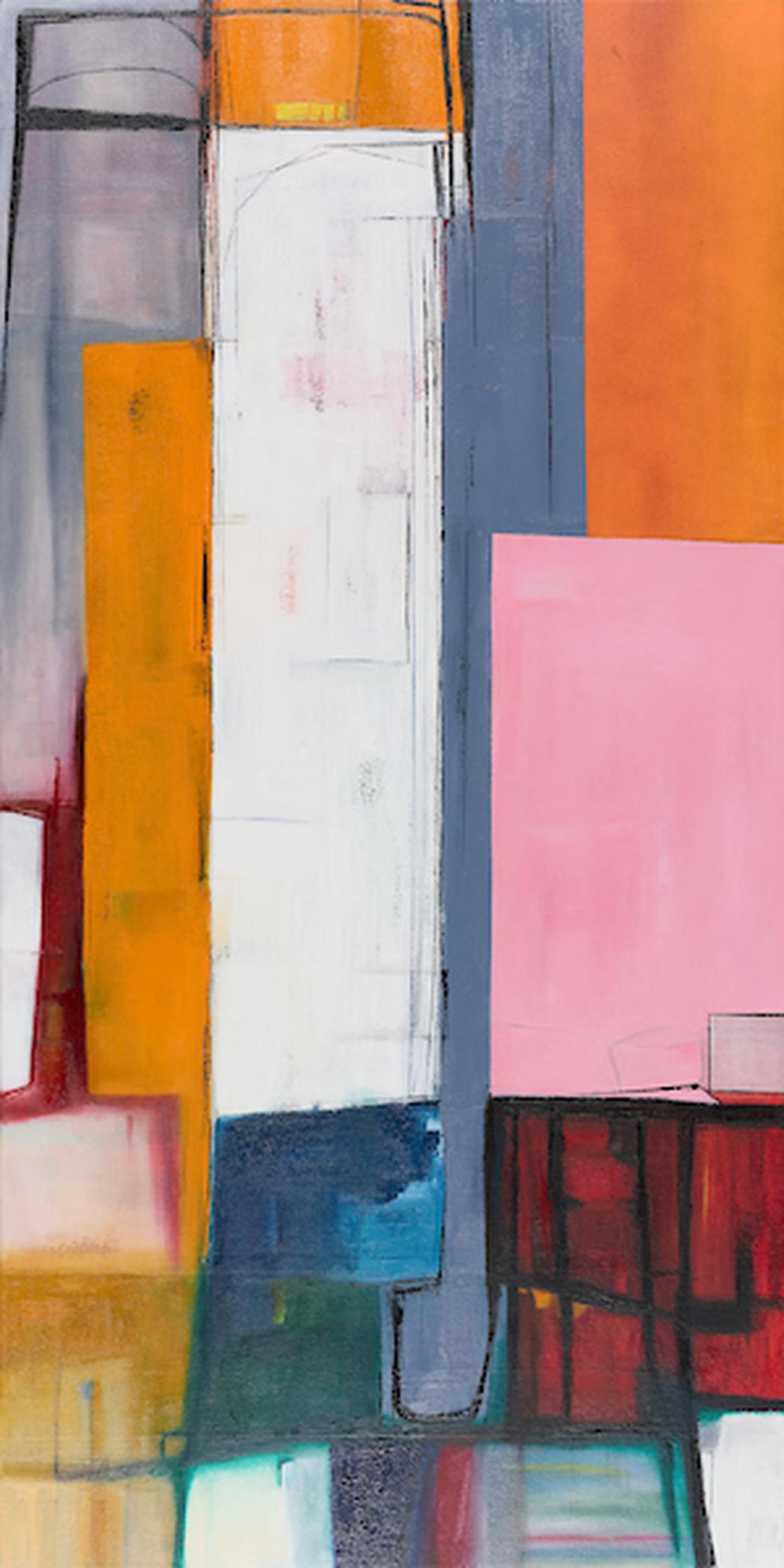 Adam Land | Linear Drift | 2025
You mention infrastructure, power lines, crosswalks, conduits, and data transmission as sources of inspiration. What attracts you to these often overlooked systems?
What draws me to these systems is the contrast between their importance and their invisibility. They are essential to how we live and move, yet they are rarely noticed in a meaningful way, especially in developed environments where they are fully integrated into everyday life.
There is something compelling about that condition. These systems represent a level of engineering complexity and coordination, yet they exist quietly in the background. That duality between significance and anonymity creates a sense of curiosity. It invites a closer look at the structures that support our experience without demanding attention.
Many of your paintings suggest both physical space and invisible networks. How do you translate something intangible, like communication or data flow, into color and form?
I approach intangible systems through qualities such as rhythm, density, movement, and connection. Rather than trying to illustrate a specific network, I focus on how it behaves. Repetition can suggest continuity, intersections can imply exchange, and variations in color or opacity can create a sense of layering or transmission.
The goal is not to define a system, but to create an environment where its presence can be felt. By working through spatial relationships and subtle shifts in structure, the paintings begin to reflect the way information moves and interacts. It becomes less about depiction and more about constructing an experience that parallels those invisible processes.
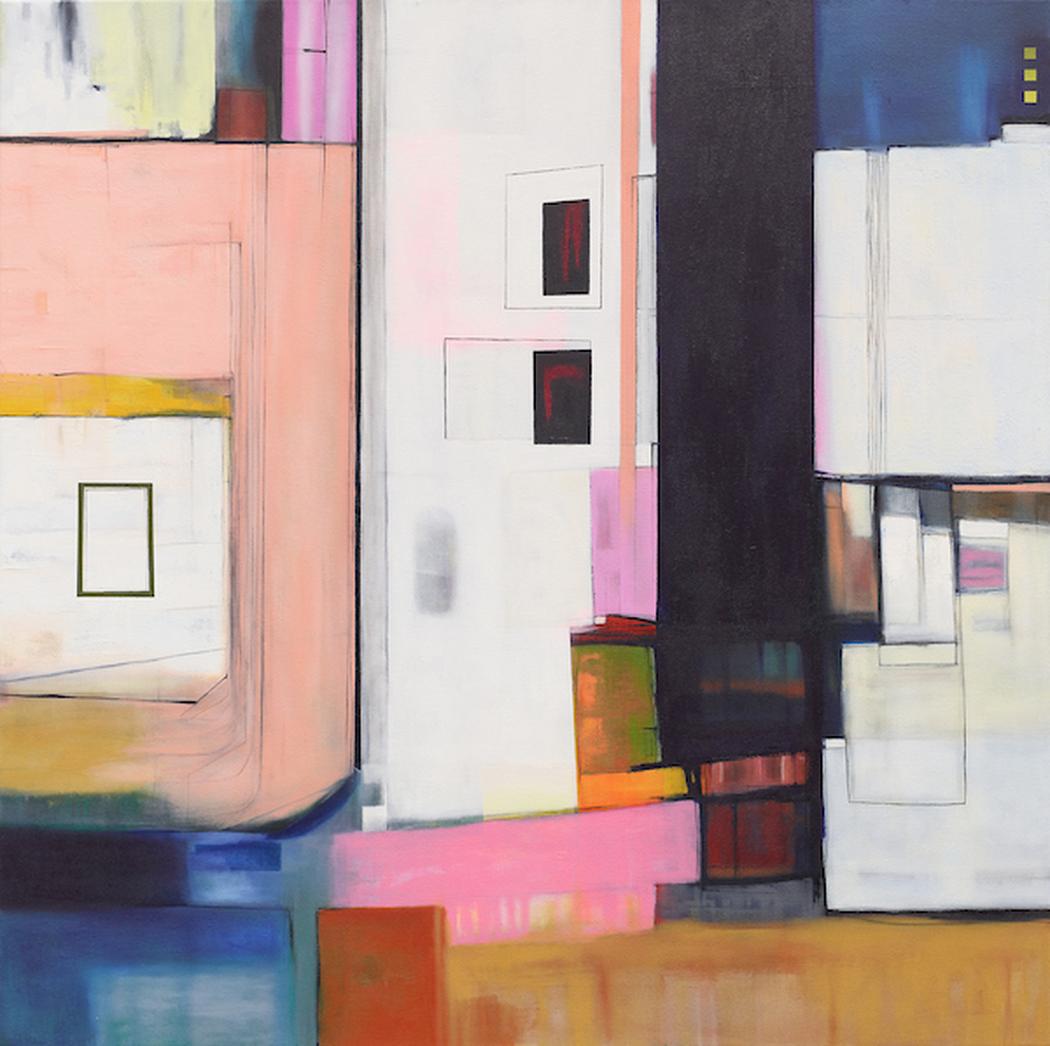 Adam Land | Network Convergence | 2025
Your work invites viewers to slow down and observe subtle shifts in tone, line, and space. What kind of experience do you hope people have when standing in front of your paintings?
I hope the work encourages a moment of attention. There is so much constant input and visual saturation that it can lead to a kind of detachment. I am interested in creating work that resists that response.
When someone spends time with a painting, small details begin to surface and relationships become clearer. That slower engagement allows for a more active experience, where the viewer is not just observing but also interpreting. The goal is to move beyond indifference and create a sense of awareness, even if it is subtle.
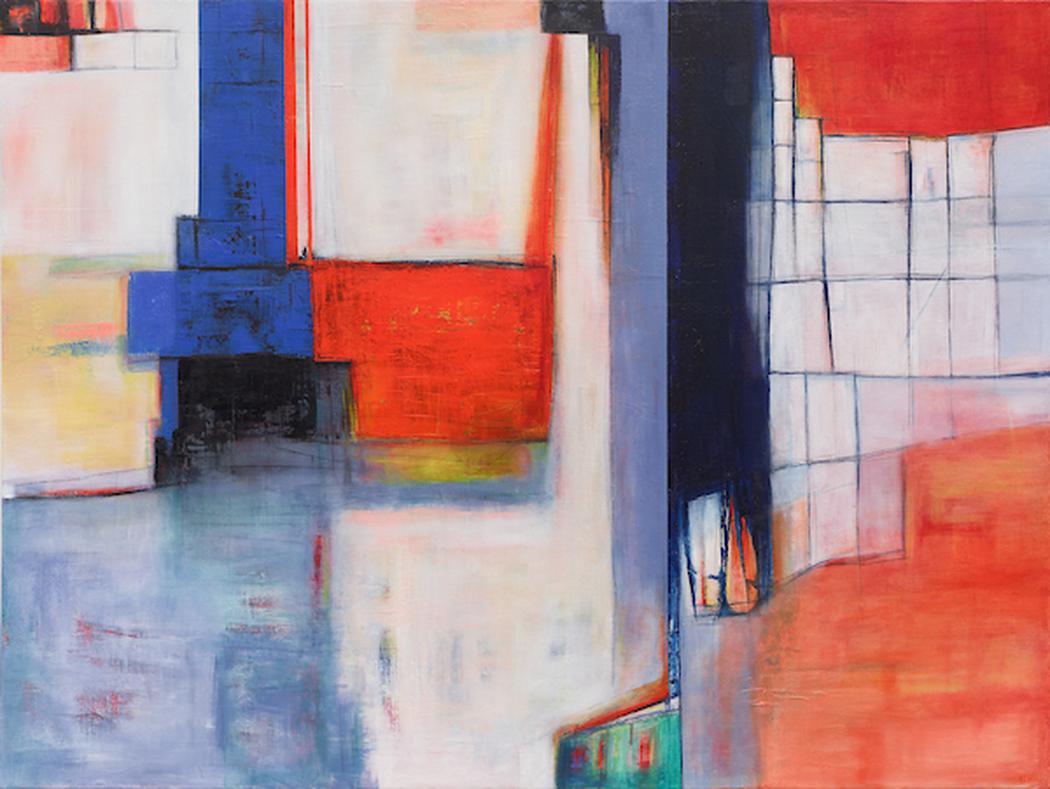 Adam Land | Signal Grid | 2025
As President of the Visual Arts Alliance, you are actively involved in the arts community. How does this role influence your perspective as an artist?
That role has expanded my understanding of how positioning and communication shape the way work is received. It has pushed me to be more intentional in how I articulate my ideas, both visually and in writing. Clarifying those ideas has become an important part of the practice.
It has also shifted my perspective beyond the studio. Being engaged with other artists, organizers, and audiences reinforces the importance of visibility and connection. The art world is not only about making work, but also about creating opportunities for that work to be seen and understood. That awareness has made me more open, more engaged, and more conscious of how a practice exists within a larger ecosystem.
Leave a Reply
You must be logged in to post a comment.