
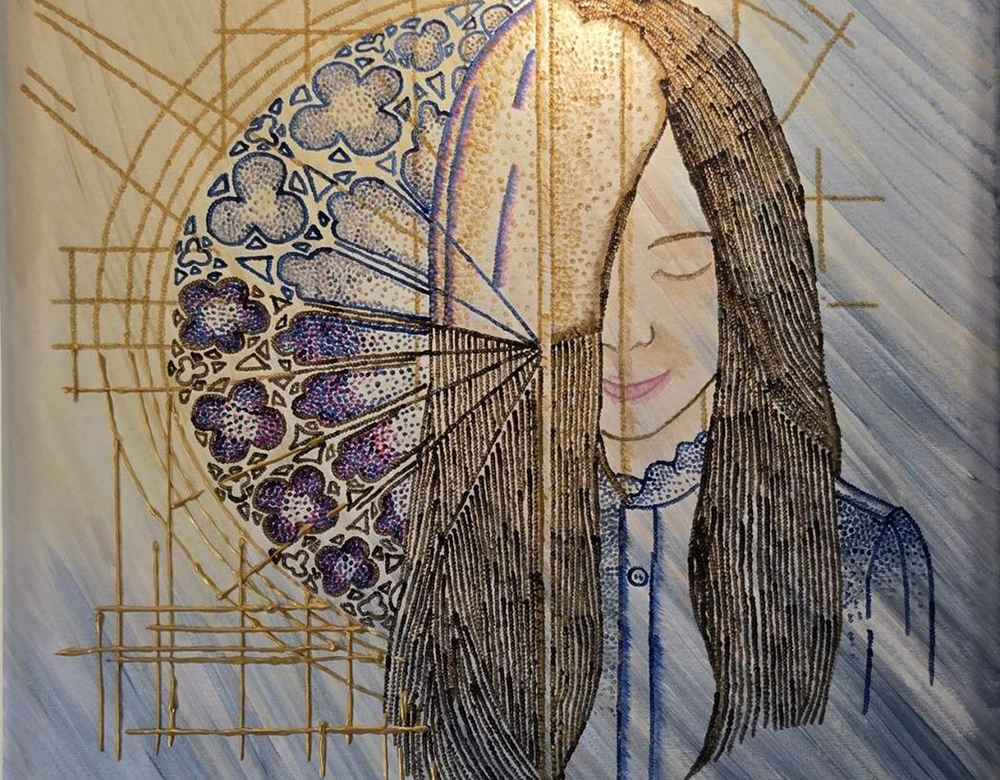
Miléna Cayet
Your practice is built around the dialogue between line and dot. How did these two elements become central to your artistic language?
Line and dot entered my work quite naturally because they are closely connected to the actions I use: drawing, stitching, perforating, pressing, and repeating a gesture by hand.
A dot may begin as a small mark, but it can also become a hole, a point of pressure, or a place where light enters the surface. A line can be drawn, sewn, stretched through space, or formed by a sequence of separate marks. Their meaning changes according to the material and the way the work is viewed.
Over time, I realised that these very simple elements allowed me to work with things that are less easy to name: distance, tension, rhythm, interruption, and continuity. They help me make relationships visible without turning them into illustrations.
For me, line and dot are less like motifs than points of departure. They give the eye something to follow, while leaving enough space for another kind of perception to develop.
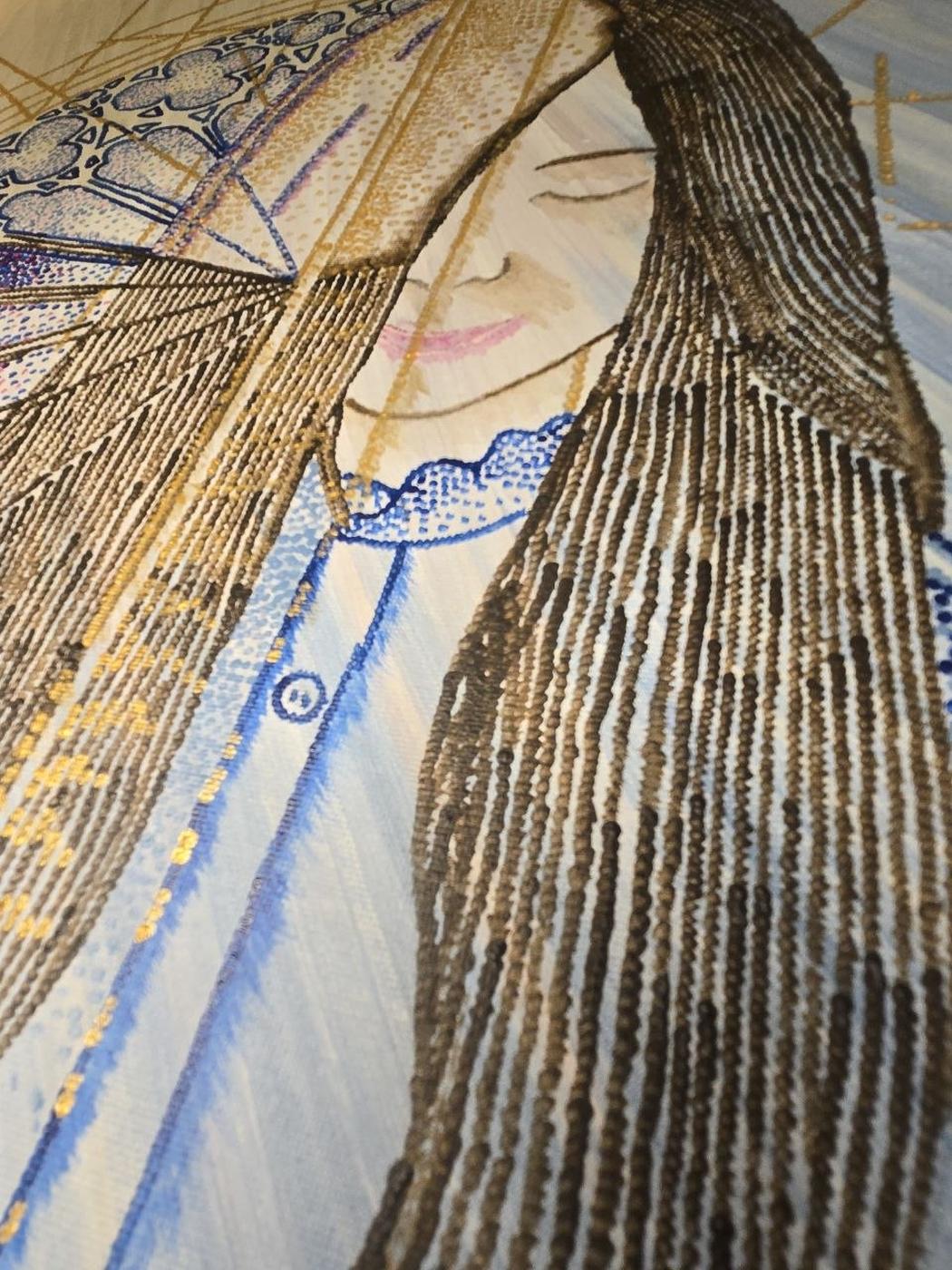 Miléna Cayet | Axis Of Becoming | 2026
Repetition plays an important role in your work. Do you see repetition as a meditative process, a structural method, or a way of discovering unexpected forms?
Repetition gives me a way to stay with a material long enough for it to change.
When the same gesture is made many times, it never remains entirely the same. The pressure of the hand changes. The surface becomes more resistant or more fragile. A thread pulls differently from one point to the next. Small variations begin to accumulate, even within a structure that initially appears regular.
There can be a meditative aspect to this process, but that is not usually my starting point. What matters more is the concentration repetition requires. It slows down both making and seeing.
I often discover the work through these accumulated differences. A form may appear that I had not planned, or a pattern may begin to produce a sense of depth, movement, or tension. Repetition is therefore both a discipline and a way of remaining open to what I cannot foresee.
In your works, figures often seem to emerge gradually from patterns and layered gestures. How do you decide when a form is complete or visible enough?
Stopping is one of the most difficult parts of my process.
I do not wait for the image to become completely clear. In fact, when a form becomes too resolved, it can lose the uncertainty that first made it alive. I look for the moment when the work can hold the viewer’s attention without explaining itself too quickly.
Sometimes I step away from a piece for several days and return to it under different light. Distance helps me see whether the relationships within it are still active or whether I have begun to overwork them.
A work feels complete when it no longer depends on my next gesture. It has enough presence to stand on its own, while still allowing something to shift as the viewer moves, looks again, or spends more time with it.
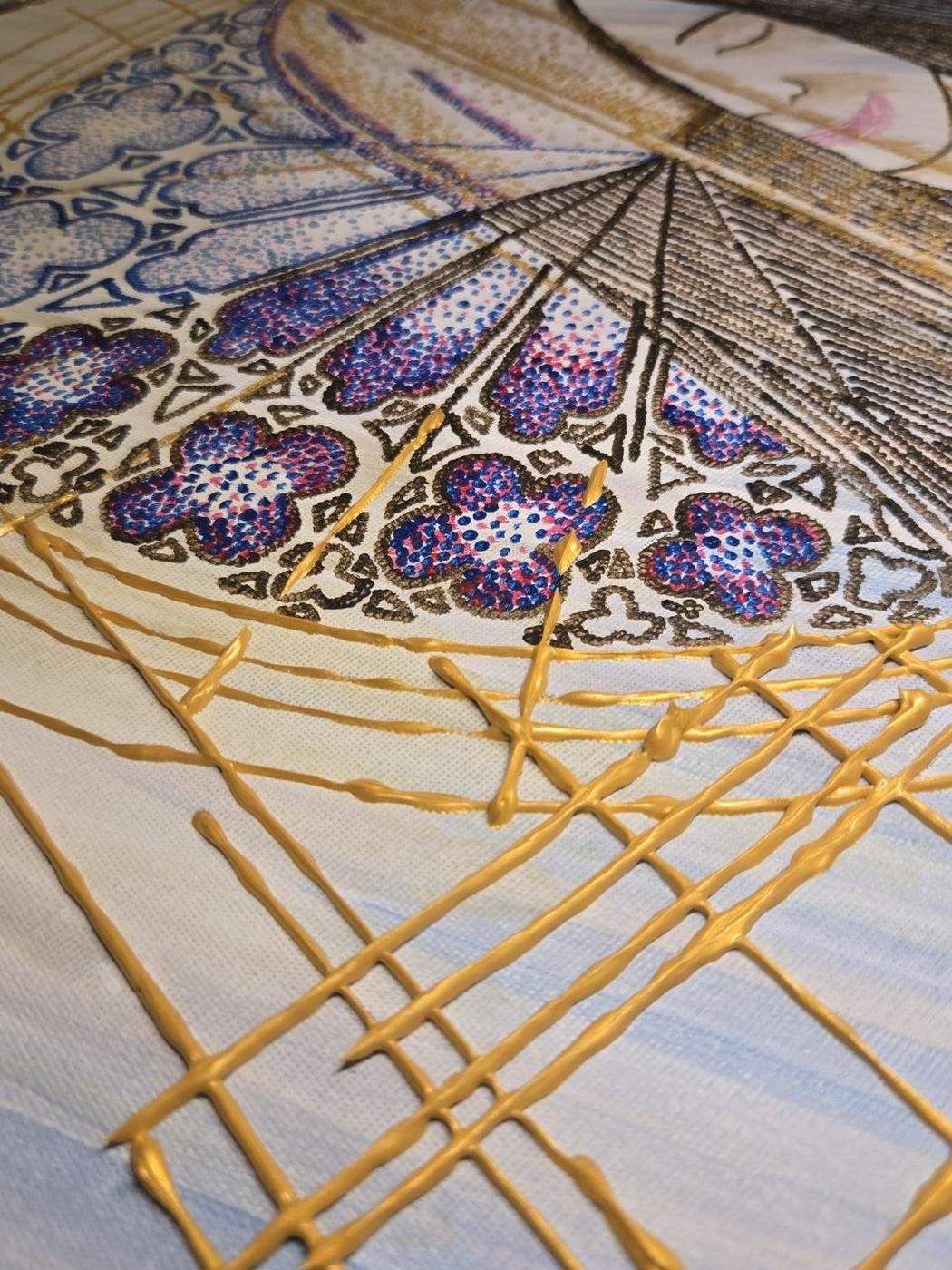 Miléna Cayet | Axis Of Becoming | 2026
Your compositions combine geometric order with a strong sense of intuition. How do you balance control and spontaneity during the creative process?
I often need a structure before I can begin. It might be an axis, a division of the surface, a repeated interval, or a simple geometric framework. That initial order gives me a direction and a certain resistance to work against.
Once the process starts, however, the structure is never completely stable. Paint spreads unevenly. Thread bends or tightens. A perforated surface reacts differently from what I expected. Even a small change in light can alter the way I understand the composition.
Intuition enters through these moments. It is not separate from control; it grows out of close attention to what is happening.
I make decisions throughout the process, but I also leave room for the material to interrupt the plan. The final work usually carries traces of both: the structure I established and the changes that occurred while making it.
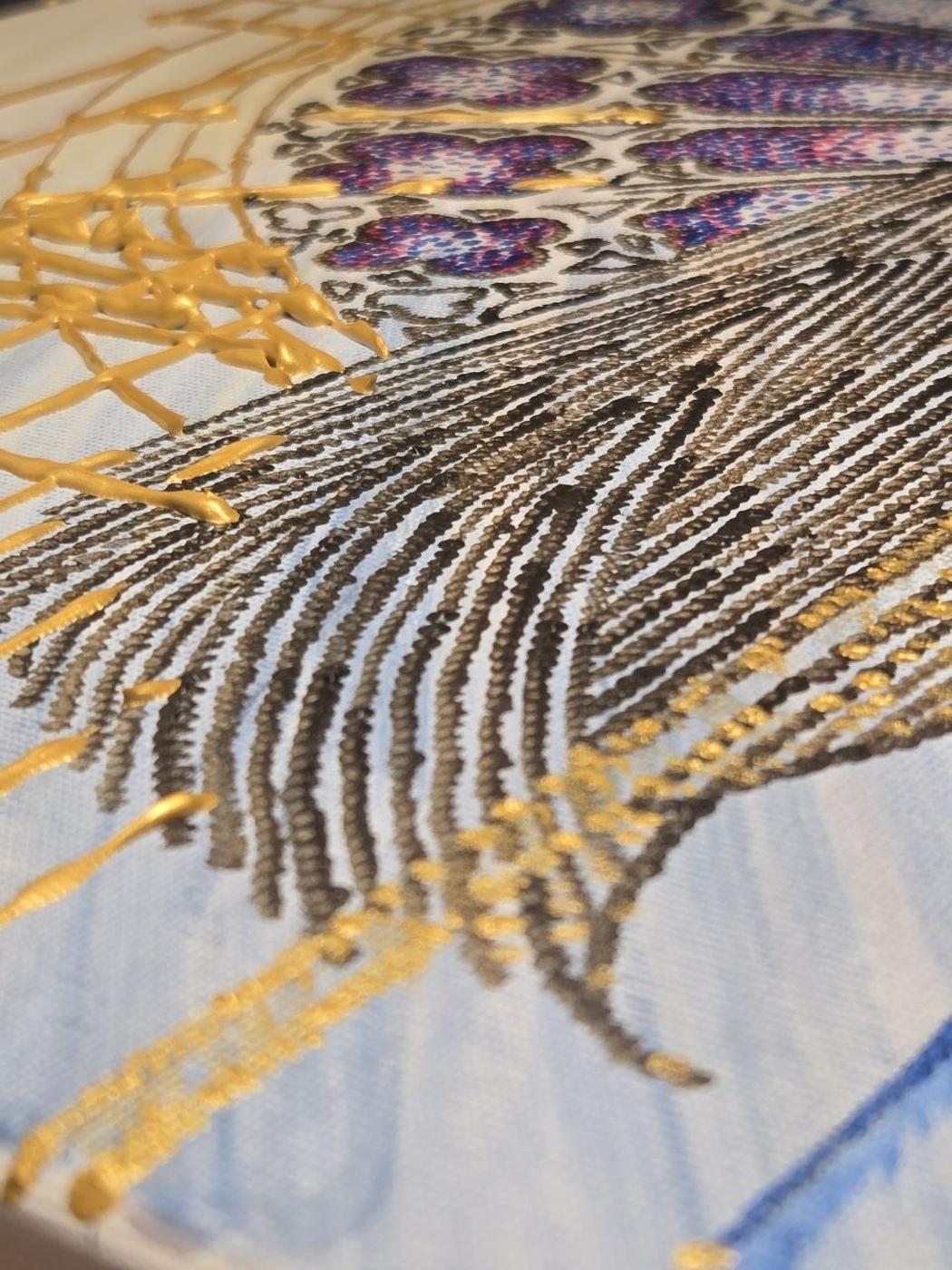 Miléna Cayet | Axis Of Becoming | 2026
Light appears not only as a visual element, but almost as a material presence in your work. What does light represent for you?
I first became interested in light through the way it changed the physical character of a surface.
A perforation may seem almost insignificant until light passes through it. Thread can cast a second drawing as shadow. A pale area can disappear from one angle and become very present from another. These shifts make the work feel less fixed.
Light, for me, is closely connected to revelation, but not in a symbolic or religious sense. It reveals by changing relationships. It can bring forward what was hidden, but it can also blur an edge or make something recede.
This is why I experience light almost as a material. It has no permanent form, yet it changes every other material it encounters. It also brings time into the work, because the same piece is never perceived in exactly the same way twice.
Do you begin with a clear image in mind, or does the artwork reveal itself through the accumulation of gestures?
I rarely begin with a finished image. Usually there is a question, a physical action, or a relationship I want to explore.
I may start by wondering what happens when light passes through a painted surface, how tension changes a piece of fabric, or how a repeated mark begins to create depth. From there, the work develops one decision at a time.
The accumulation of gestures matters because each action alters what is possible next. Once the surface has been pierced, stitched, covered, or stretched, I have to respond to the new condition rather than return to the original plan.
There is still intention in the process. I am not waiting passively for an image to appear. But I try not to force the work to become what I imagined at the beginning. Very often, the most important part arrives when the piece starts moving in a direction I had not anticipated.
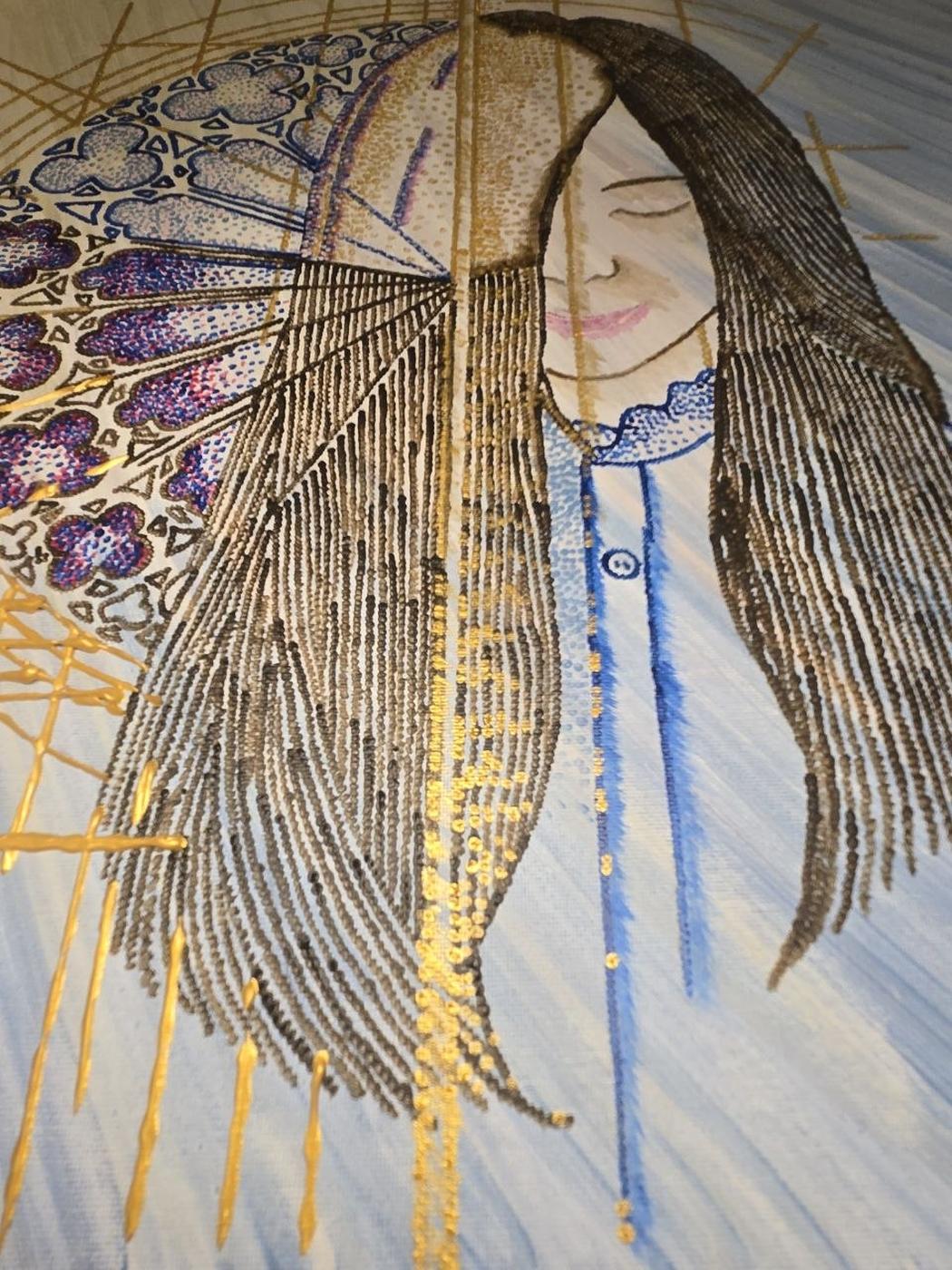 Miléna Cayet | Axis Of Becoming | 2026
There is a quiet, contemplative atmosphere in your work. What kind of emotional or perceptual experience would you like viewers to have when encountering it?
I would like viewers to feel that they do not need to understand the work immediately.
We are accustomed to recognising images very quickly. We name what we see, decide what it means, and move on. My work asks for a different pace. It may require the viewer to come closer, step back, change position, or simply remain for a little longer.
The quietness in the work is not intended to produce one particular emotion. It is there to make subtle changes easier to notice: a shift in shadow, a difference in density, a line that appears continuous from far away but breaks apart at close range.
Ideally, the viewer becomes aware of looking as an experience in itself. The work is present, but so are the viewer’s body, attention, distance, and time. That encounter is more important to me than delivering a single message.