C.llaguno
You write, “My work begins where the blueprint ends”. What does this boundary between planning and intuition mean to you, and how do you navigate it as both an architect and an artist?
Architecture taught me to think through structure, proportion, balance, and intention. As an architect, I am used to anticipating a result: there is a plan, a scale, and a logic. Painting gives me the opposite experience. It allows me to begin without knowing exactly where I am going.
That is what I mean when I say that my work begins where the blueprint ends. I bring everything architecture has taught me into the studio, but at some point I have to let go of control. In architecture, I design for someone else. In art, I create for myself. I make the first gesture and allow intuition to take over, following a line, a color, a texture, or a form that appears unexpectedly.
I am constantly moving between those two parts of myself: the architect who wants to organize space and the artist who wants to disrupt it. I am interested in what happens when structure gives way to instinct.
How has your training in virtual space design influenced the way you approach depth, movement, and space in your paintings and sculptures?
My training in virtual space design taught me to think beyond the surface. I learned to understand space as something you move through, not simply something you look at, and I think that has stayed with me deeply.
In my paintings, I naturally work with layers, overlapping forms, transparencies, textures, and areas of emptiness. I want the eye to travel through the work, to discover different moments rather than take everything in at once. Even on a flat canvas, I am always thinking about what feels closer, what recedes, and where the eye wants to go next.
With sculpture, that relationship becomes physical. I think about how a piece changes as you move around it—its silhouette, its volume, and even the space surrounding it. In both disciplines, space is never just a background for me; it is part of the work itself.
Your paintings begin with a gesture. What usually prompts that first mark, and how does it guide what happens next?
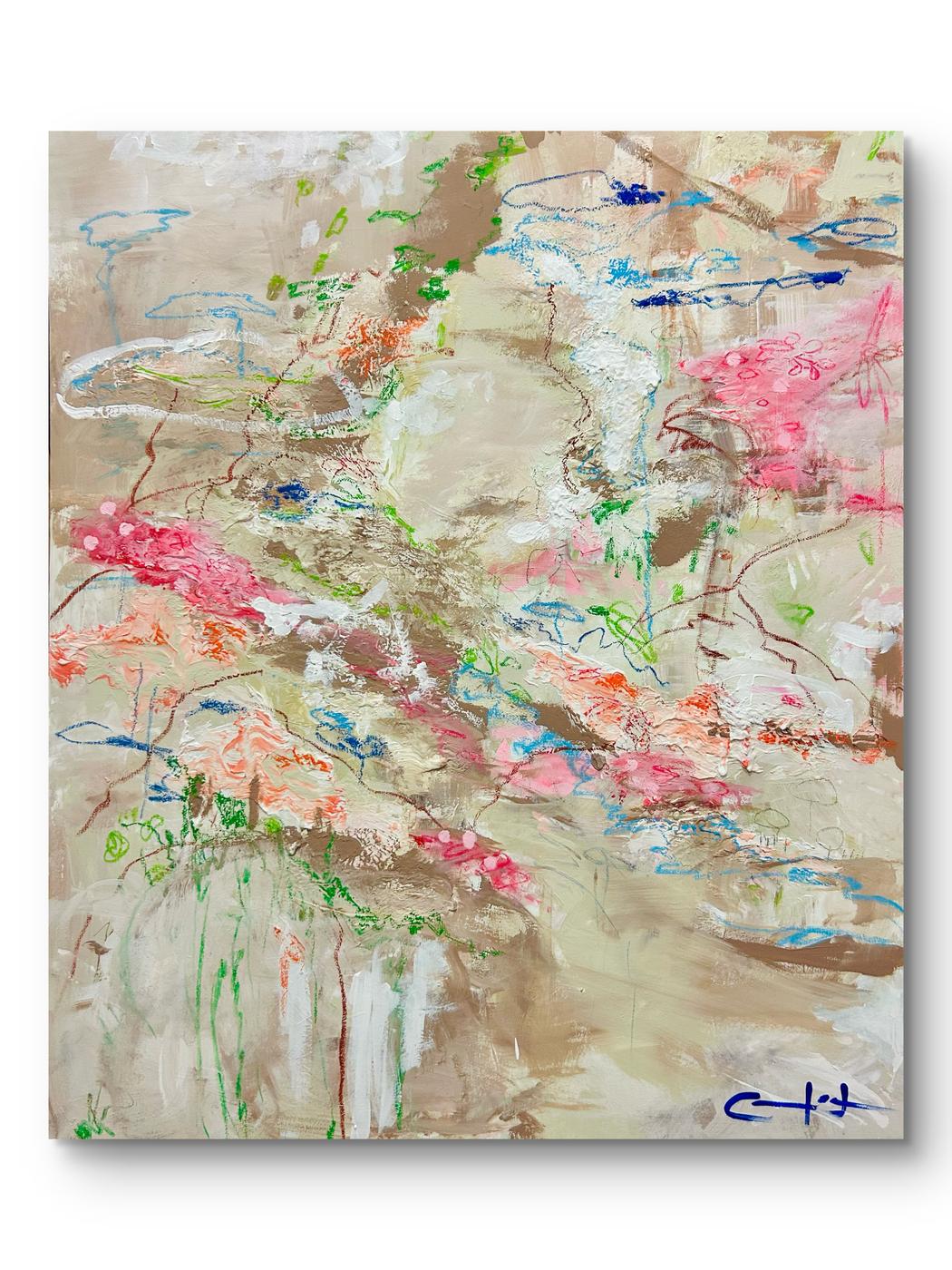
The first gesture is usually very instinctive. I rarely begin with a sketch or a fixed image of what the painting should become. Sometimes it comes from an emotion, a thought, a color I feel drawn to, or simply the need to make a mark and begin.
That first gesture breaks the silence of the canvas. From there, I start responding to what appears. One line suggests another, a color creates a tension, a texture reveals a form I had not anticipated. I follow those signals without trying to understand them too quickly.
For me, painting is a process of discovery. I add, erase, cover, and return until something begins to feel familiar. At some point, I stop directing the painting and start listening to it. That is usually when my mind begins to speak in a language I could not have planned.
You describe following, erasing, and returning to emerging forms. Can you share an example of a painting that changed unexpectedly through this process?
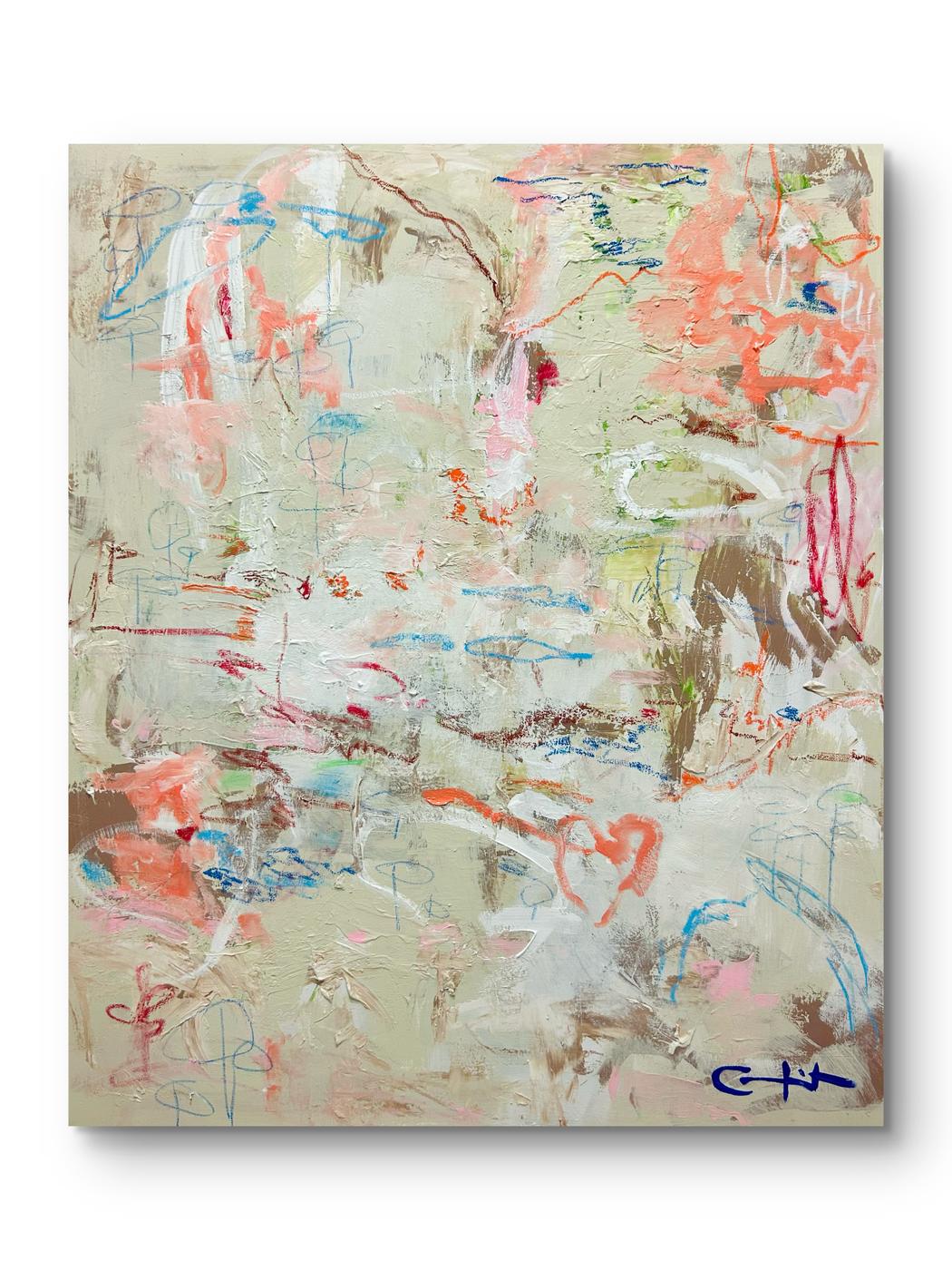
Where Blue Trees Grow is a good example. I did not begin the painting intending to create a landscape, and certainly not blue trees. I was working intuitively, building and removing layers, following marks and shapes without trying to name them.
At some point, forms began to emerge that reminded me of trees. Instead of defining them immediately, I kept painting around them, covering parts, bringing others back, and allowing the image to remain somewhere between abstraction and recognition. Slowly, an imaginary landscape appeared.
What surprised me was how familiar it felt, even though it was a place that does not exist. I think that is one of the moments I search for when I paint: when something I could never have planned reveals itself and somehow feels completely right. Where Blue Trees Grow became a place I discovered rather than a place I invented.
How do color and texture help you express emotions that you find difficult to put into words?
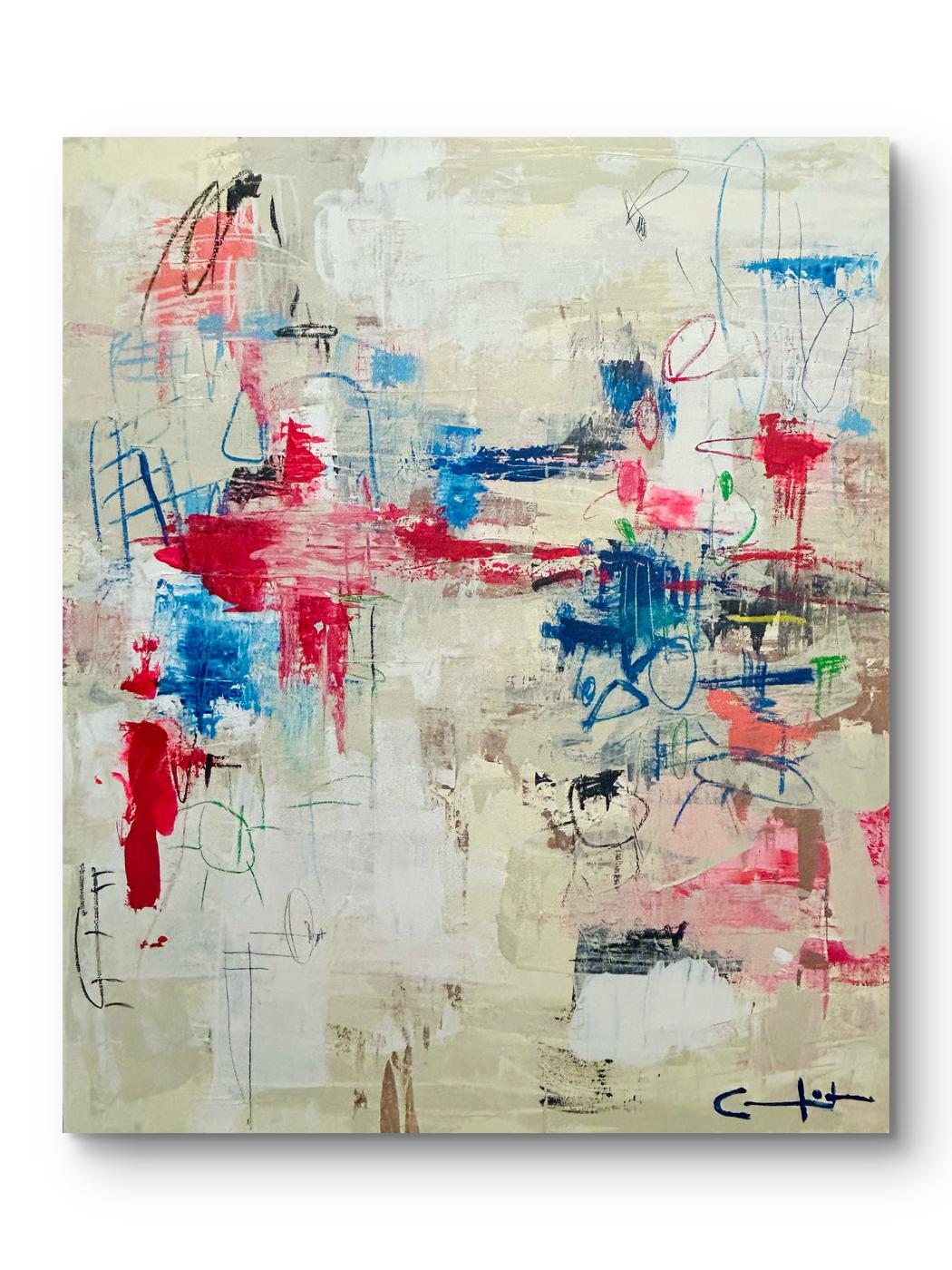
Color is probably the most immediate emotional language in my work. I don’t necessarily associate one color with one specific feeling; it is more about the relationships between colors, the tension, contrast, harmony, or even the discomfort they can create together. I often choose color instinctively, before I fully understand why I need it.
Texture is much more physical. My studio is full of tools and objects that I use to paint, not only brushes, but spatulas, pieces of cardboard, wooden boards, metal objects, and anything that intuitively feels right in that moment. Each one leaves a different trace. I scrape, drag, cover, remove, and build again, allowing the surface to keep evidence of the process.
There are emotions I would struggle to explain in words because they can be contradictory or not completely formed. Painting allows me to give them a physical presence without having to define them. Color gives them energy, texture gives them memory, and together they give form to something I might not be able to express in words.
How does living and working in Saltillo shape your artistic practice? Are there aspects of your surroundings that enter your work, even indirectly?
Saltillo is a relatively small and traditional city, and I think its slower rhythm has given me the space to develop my work in a very personal way. It has a beautiful historic center, a strong artistic tradition, and it is surrounded by mountains, so there is always a sense of history and landscape quietly present around you.
My relationship with art also began here. As a child, I attended art workshops with local painters who introduced me to different techniques and ways of seeing. I eventually chose architecture as my profession, but those early experiences never really left me.
I don’t consciously paint Saltillo or try to represent my surroundings, but I am sure they enter the work indirectly. The mountains, the light, the architecture, the colors, and perhaps even the calmness of living here become part of my visual memory. They stay somewhere in the background and sometimes appear in ways I only recognize after the work is finished.
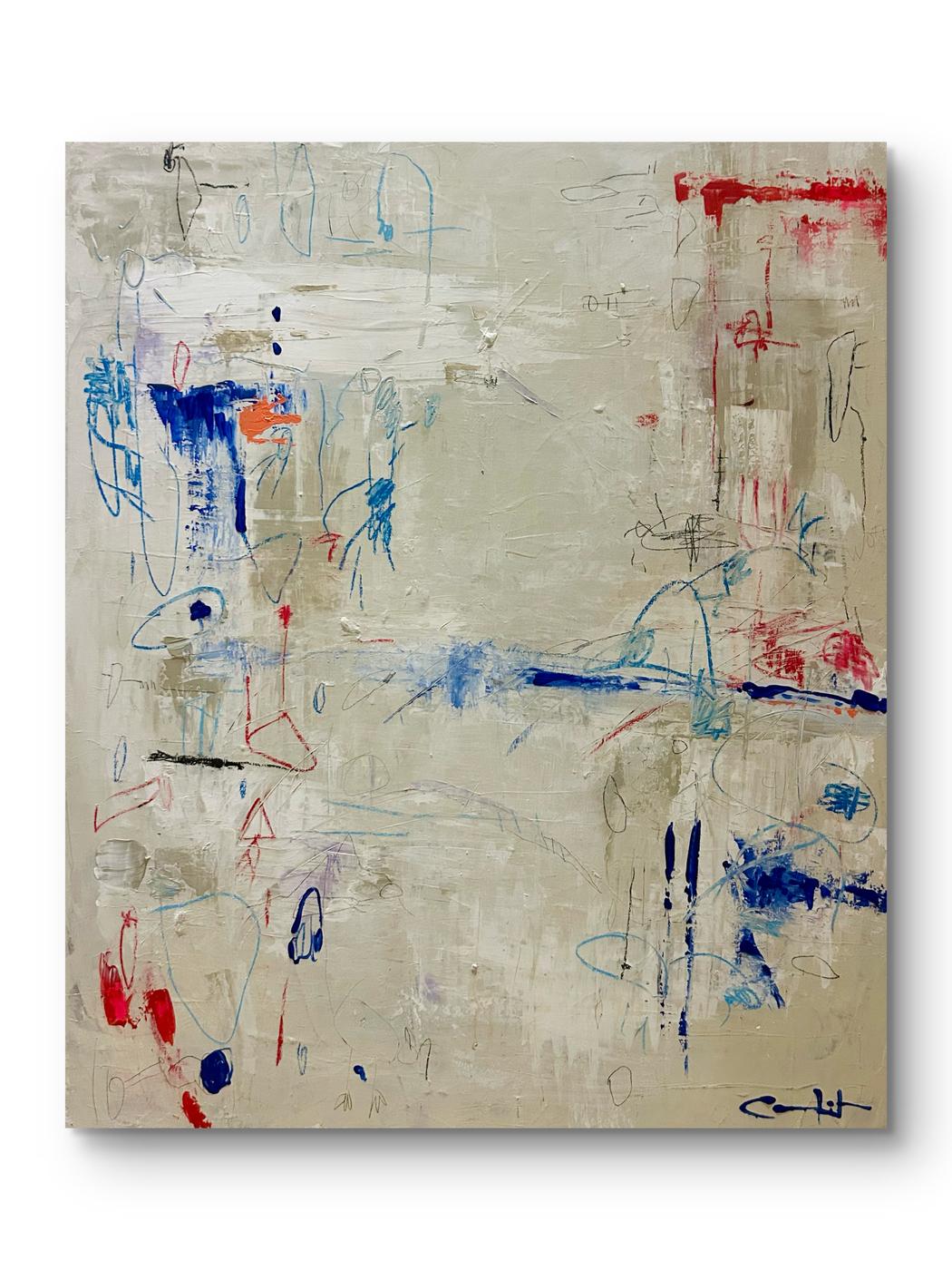
You are drawn to moments when something unfamiliar feels deeply recognizable. Can you describe a work in which you experienced that feeling yourself?
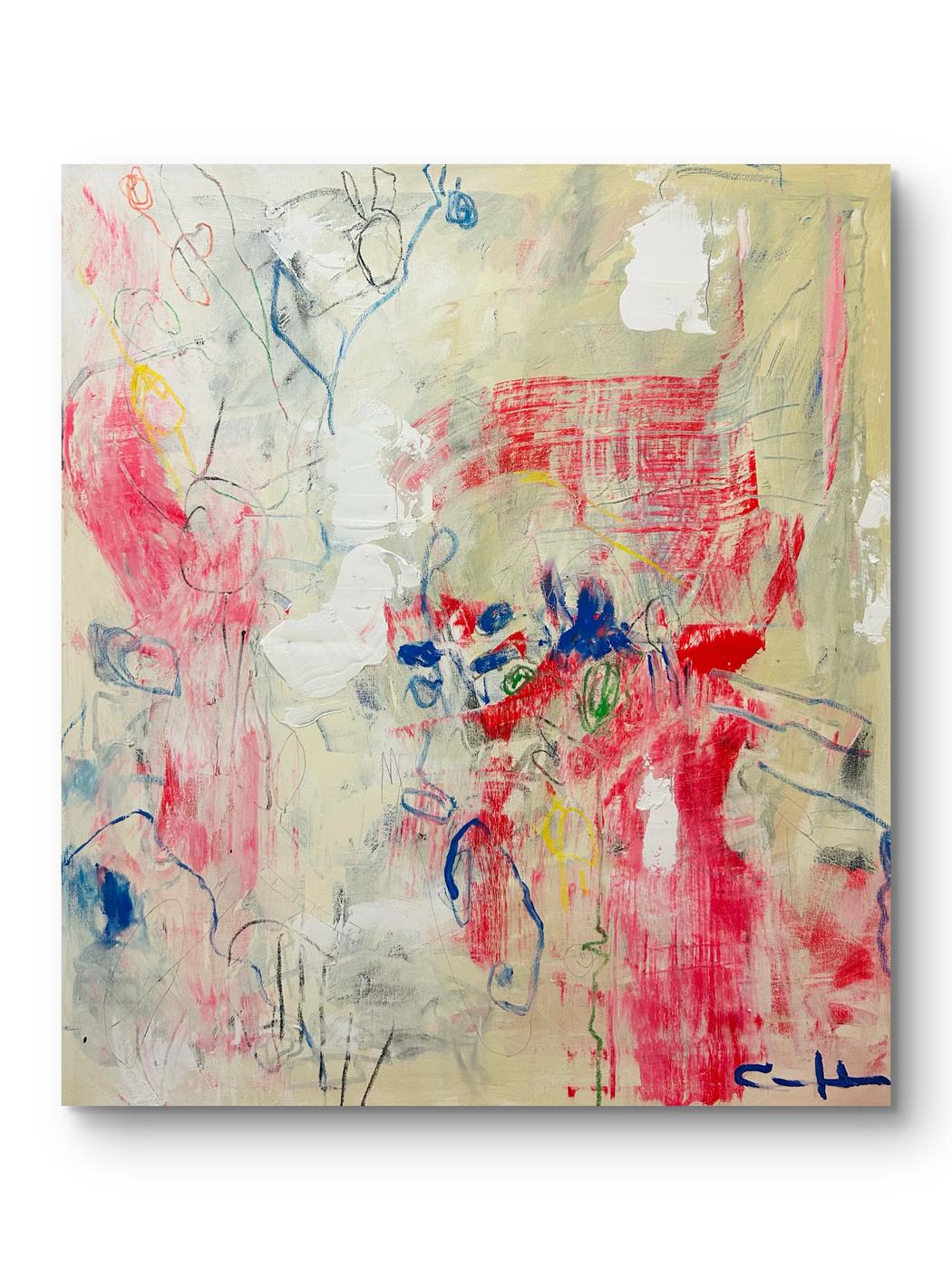
Teardrop Records is a painting where I experienced that feeling very strongly. As I worked, marks and forms began to appear that felt strangely familiar to me, almost like fragments of a memory, a symbol, or a language I once knew but could no longer translate.
I never wanted to define them too clearly. I allowed them to remain somewhere between recognition and abstraction, because that uncertainty was exactly what interested me.
Looking at the finished painting, I still have the sensation that it is telling me something I know, although I cannot explain exactly what it is. Sometimes recognition happens before understanding. I can feel connected to an image long before I know what it means.