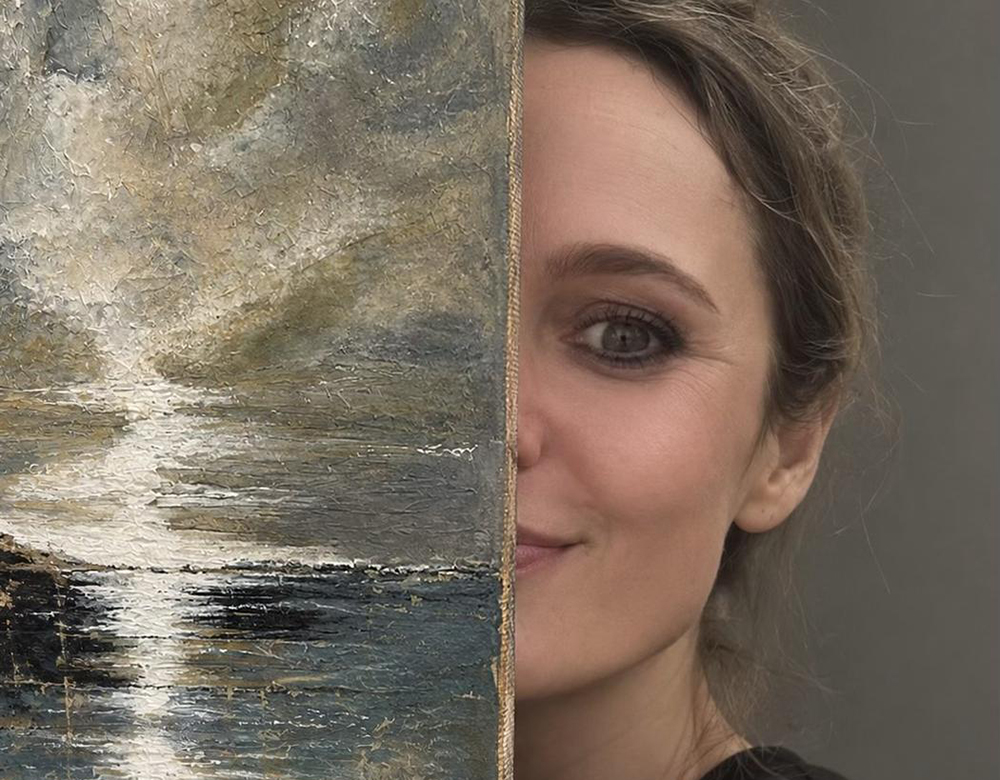
Dr Anna Kadzik-Bartoszewska
Your background spans fine art, architecture, urban planning, and art history. How have these disciplines shaped the way you approach painting?
My practice has developed between disciplines rather than within a single tradition. I trained in Fine Art and Architecture and Urban Planning, and later completed doctoral research in Art History and Cultural Policy at University College Dublin, where I also taught modern architecture. Architecture taught me to think through proportion, structure, rhythm, material and void. Archaeology and art history taught me to look differently at what survives: the fragment, the surface, the trace, and the evidence of something that is no longer entirely present. Painting became the place where these ways of seeing could meet.
I don’t use architecture as a subject to illustrate, nor archaeology as a theme to depict. Instead, I bring their underlying processes into the making of the painting. I construct the surface through layers, much as a building accumulates material, repair and weathering. I then interrupt, scrape, abrade and uncover it. The painting develops its own stratigraphy. For me, this is where architecture and archaeology meet: the surface is simultaneously constructed and excavated. A structural line can become a horizon. A wall can become geology. A fragment can become landscape. The image remains deliberately unstable. I want the work to retain the discipline of architecture while allowing the uncertainty of archaeology and the freedom of abstraction.
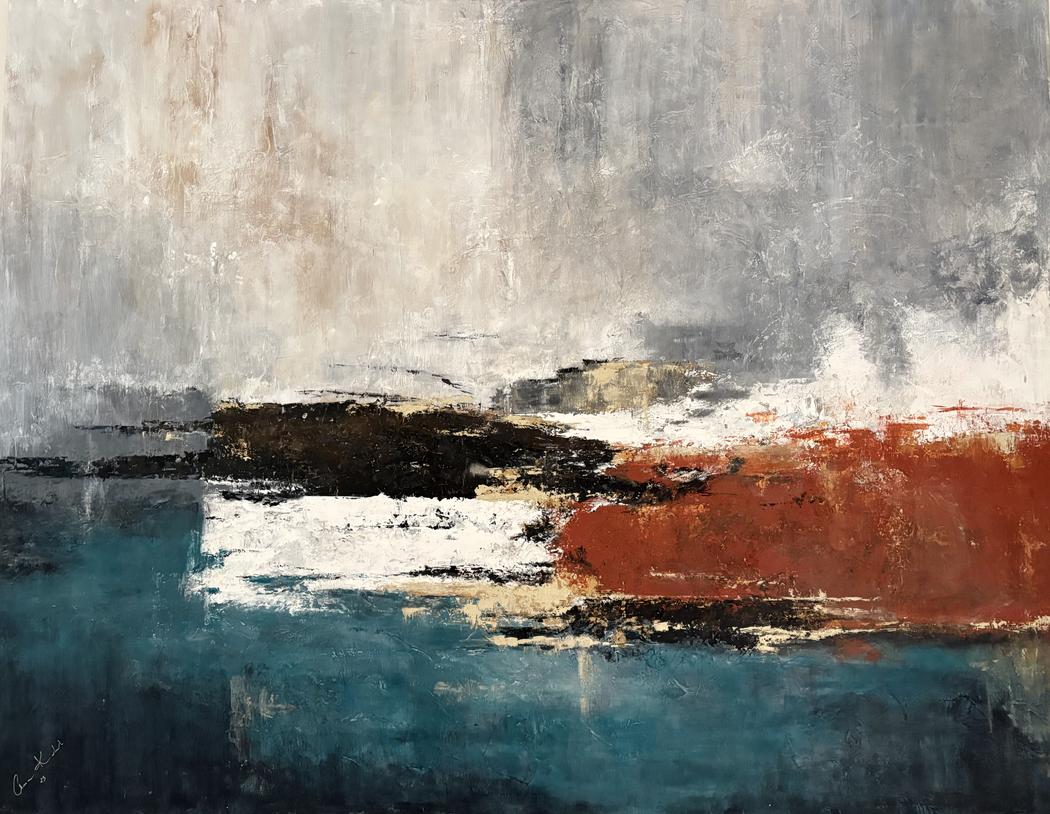 Dr Anna Kadzik-Bartoszewska | Vestige IV Passage | 2026
What drew you to the idea of a trace left behind by something that has disappeared?
A trace is powerful because it is incomplete. In archaeology, a fragment confirms that something existed without giving us the whole story. The absence becomes part of the evidence. That became central to Vestige. I think of a vestige not as nostalgia, but as a surviving presence a trace that has endured transformation, weather and time. The same principle operates within the paintings. A layer may disappear from view without disappearing materially. A buried line, colour or texture can remain beneath the surface and later re-emerge. The painting therefore develops a memory of its own. With Threshold, I move from what remains towards the space between states: inside and outside, visible and concealed, constructed and eroded, presence and disappearance.
In a sense, Vestige asks: what survives?
Threshold asks: what exists between survival and disappearance?
Both belong to a larger investigation into the archaeology of place, not archaeology as an image or historical subject, but as a way of understanding how places accumulate, conceal and retain traces of what has happened to them. That unresolved territory is important to me because it allows the viewer to participate in reconstructing the image.
Your paintings often bring structured, architectural forms together with areas that feel open and atmospheric. How do you develop a balance between these elements?
I am interested in the moment when architecture begins to dissolve into landscape. The paintings often begin with an underlying structure verticals, horizontals, intervals, divisions and voids. But I deliberately prevent that structure from becoming completely resolved. The surface is built physically. Layers accumulate and begin to suggest stone, plaster, concrete, exposed earth or weathered architectural surfaces. I then disturb them through scraping, abrasion and freer gestures. The process becomes a kind of construction followed by erosion. Sometimes the architecture contains the landscape; at other times the landscape appears to erode the architecture. That tension gives the paintings a sense of stillness and movement at the same time. Scale is also important to this experience. I work predominantly on large canvases, with the smallest works beginning at around one metre and extending to approximately 180 centimetres. I find this scale necessary because I want the paintings to be encountered physically rather than simply viewed as images. At that size, the surface can begin to operate almost architecturally. The viewer becomes aware of their own position in relation to the painting, and details that might seem small at a distance can become almost spatial when encountered closely. I don’t want the viewer to decide immediately whether they are looking at a building, a landscape, a ruin or an entirely abstract space. The ambiguity is intentional. It is the point at which the painting stops describing a place and begins to become a place in its own right.
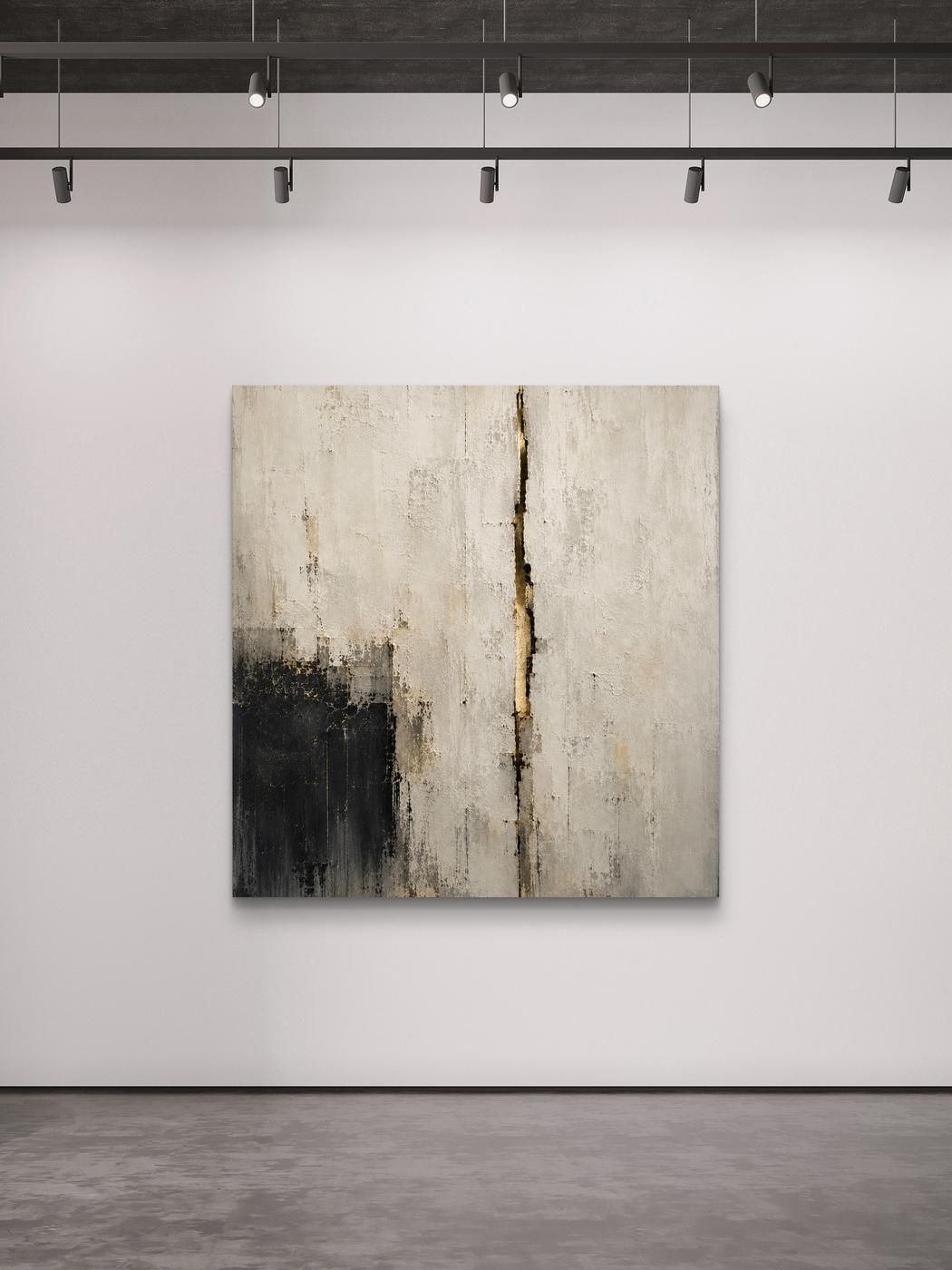 Dr Anna Kadzik-Bartoszewska | Threshold I | 2026
Some passages in your work suggest a landscape, while others resist any clear sense of place. How much do you want viewers to recognise, and how much do you prefer to leave to their imagination?
Recognition is a doorway, not a destination. Ireland has profoundly influenced the atmospheric language of my work. Its weather, mist, stone, water and shifting light can transform a landscape almost continuously. Solid forms can appear to dissolve; horizons can become uncertain. I don’t try to reproduce a particular Irish landscape. Instead, I translate something of its instability into the painting. A horizon can become architecture. A wall can become geology. A field of colour can suggest sea, sky, stone or memory. This is why I think of the work as abstract landscape rather than landscape painting. I want the viewer to recognise something and then lose certainty about what they have recognised. That moment matters. The painting may begin with a sense of place, but gradually becomes a place that belongs partly to the viewer.
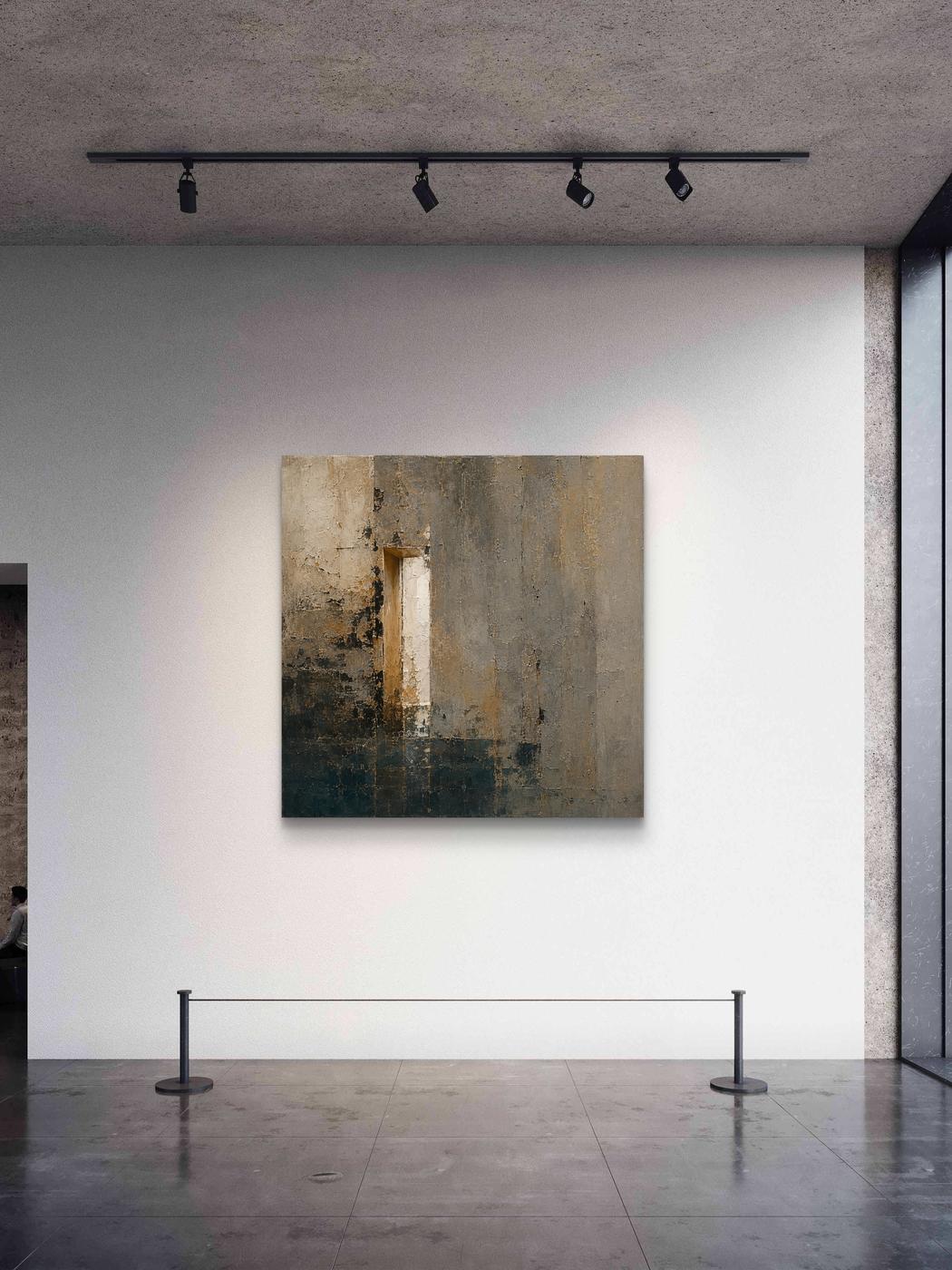 Dr Anna Kadzik-Bartoszewska | Threshold II | 2026
You layer, cover, scrape, and reveal parts of the surface. Can you describe a moment when uncovering an earlier layer changed the direction of a painting?
The physical surface is not simply the support for the painting; it is part of its subject. I build the surface gradually, allowing layers to accumulate much as materials accumulate in architecture or strata accumulate at an archaeological site. Then I remove parts of what I have built. Scraping can reveal an earlier colour. Abrasion can expose a line. A buried texture can suddenly establish an entirely different sense of space. When this happens, I don’t see it as an accident. I see it as a discovery. The painting has revealed something to me. This is central to the way I work. I am not simply applying an image to a surface; I am allowing the painting to develop its own history. Architecture gives me the language of construction; archaeology gives me the language of uncovering. The surface contains both. There is a visible present, but underneath it are traces of everything that has happened before. I want the viewer to experience that gradually, the way an excavation changes our understanding with each layer that is exposed.
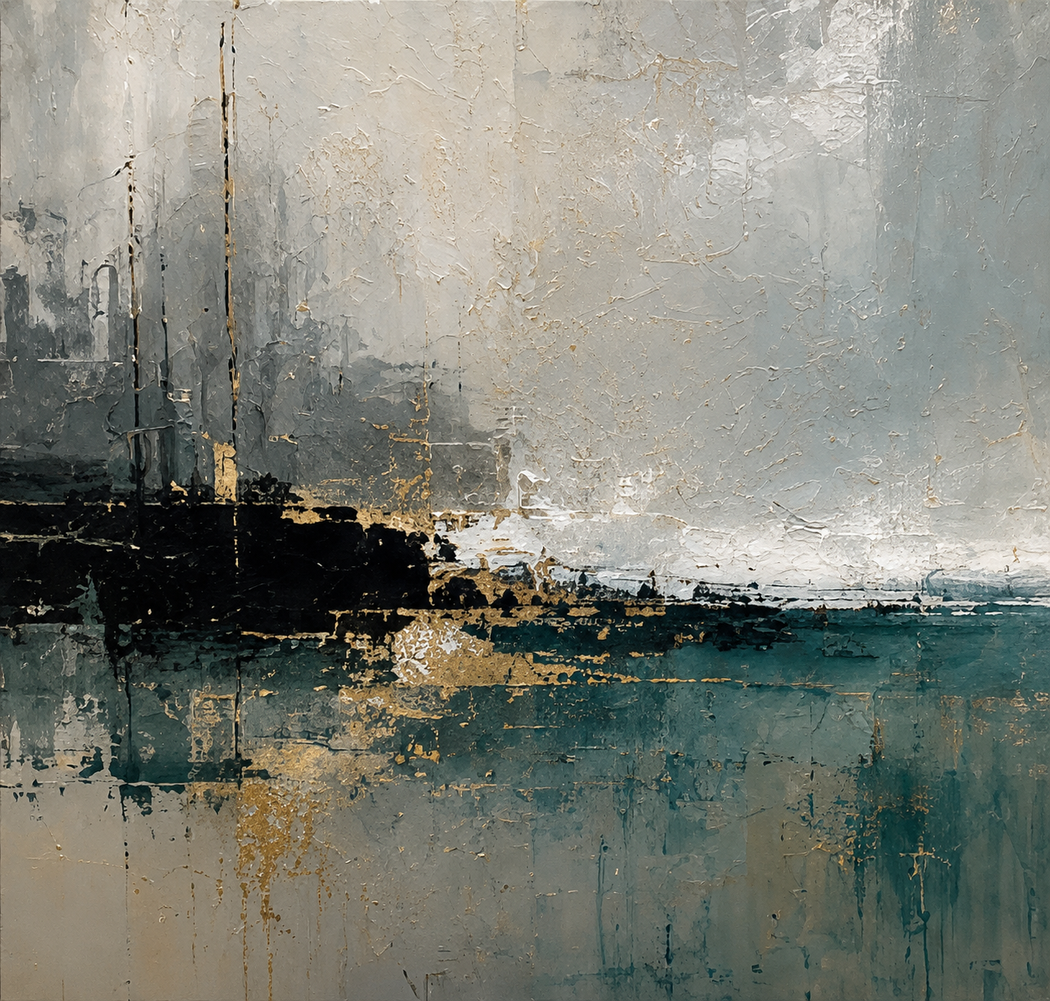 Dr Anna Kadzik-Bartoszewska | Vestige I Foundation | 2025
Gold appears in your work as small, sometimes subtle marks. What draws you to this material, and how do you decide where to use it?
Gold interests me as a material of light, endurance and discovery rather than as decoration. It has a long history within art and architecture, particularly in objects and spaces intended to endure across generations. But what interests me most is its physical behaviour. Gold responds to movement. It can almost disappear from one position and suddenly become luminous from another. I therefore use it sparingly. Within a weathered, layered surface, a small trace of gold can feel like something that has survived: a seam, a mineral trace, a fragment of architecture or a moment of light caught within the surface. I don’t want it to announce itself. I want it to be discovered. That is consistent with the paintings as a whole. Their first encounter may be atmospheric, but sustained looking reveals another level of structure, material and history. The gold is therefore not an applied symbol. It becomes another trace within the stratigraphy of the painting.
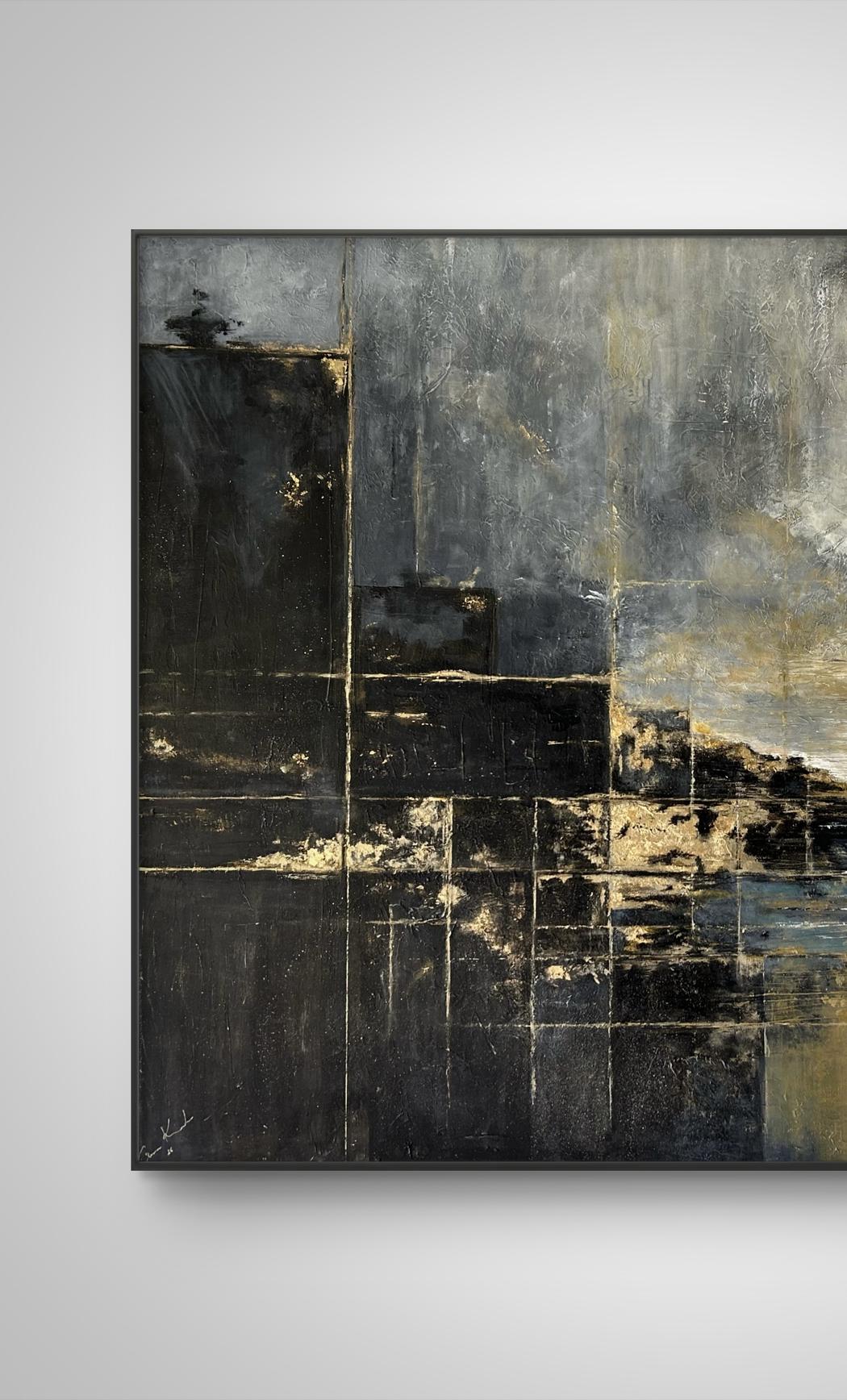 Dr Anna Kadzik-Bartoszewska | Vestige III Strata | 2025
Do memories of places you have lived or studied enter your work, even when you are not depicting a specific location?
Yes, but memory enters the work less as an image than as a spatial language. Architecture taught me to notice thresholds, openings, boundaries, proportion and movement through constructed space. Archaeology taught me to notice what remains when those spaces are altered, abandoned or partially erased. Ireland contributes another layer through its weathered surfaces and constantly changing atmosphere. These experiences are not reproduced literally. They are transformed.
A building can become a fragment.
A ruin can become an absence.
A landscape can become an atmosphere.
A memory can become a surface.
This is particularly important in Threshold, where archaeology becomes a way of thinking rather than an image to reproduce. The paintings exist between visibility and concealment, construction and erosion, presence and disappearance.
Vestige is concerned with what survives.
Threshold is concerned with what exists between states.
Together they form part of a larger investigation into how places retain traces of what has happened to them.
Ultimately, I want the paintings to feel as though they have been discovered rather than simply made, as if the viewer has encountered a fragment of a place whose complete history remains just beyond reach.
The incomplete is important to me.
It leaves room for the viewer to enter.