Nancy Bou Karam
Your work often moves between emotion, memory, and identity. How do these three elements come together during your creative process?
Every painting begins with something deeply personal. It starts with an emotion I have experienced, a memory that has stayed with me, or a part of my identity that I want to understand or express. I don’t consciously separate these elements they naturally become one. My paintings are, in many ways, reflections of who I am.
You describe flowers as a language of emotion delicate yet powerful, fragile yet alive. What emotions or personal experiences do flowers allow you to express?
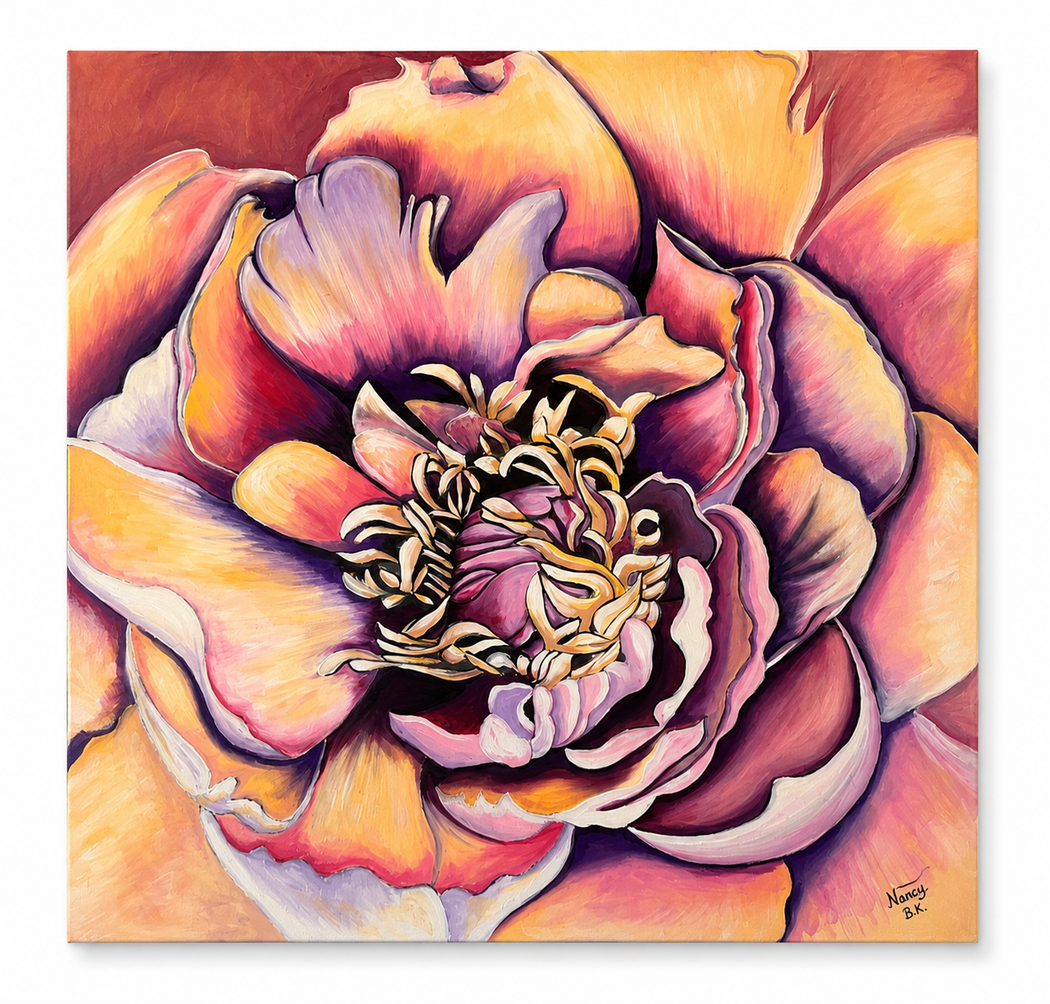
Flowers have become my way of telling the story of women. As a woman, I have lived through experiences that challenged me, but I am grateful for them because they shaped the person I am today. Through flowers, I express resilience, vulnerability, hope, and quiet strength. They may appear fragile, but beneath that softness lies an incredible ability to survive and bloom.
Color plays a strong and expressive role in your paintings. How do you choose your palette, and what do particular colors communicate in your work?
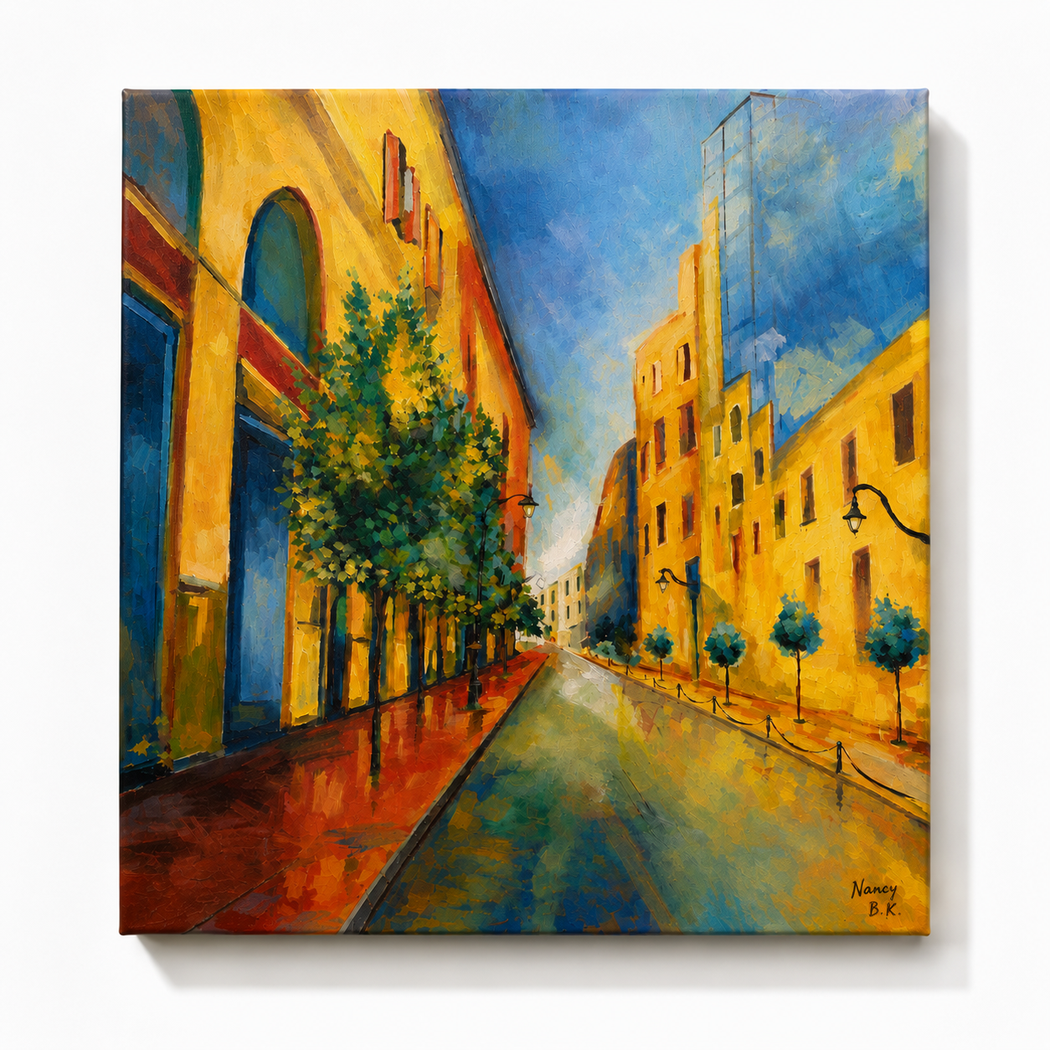
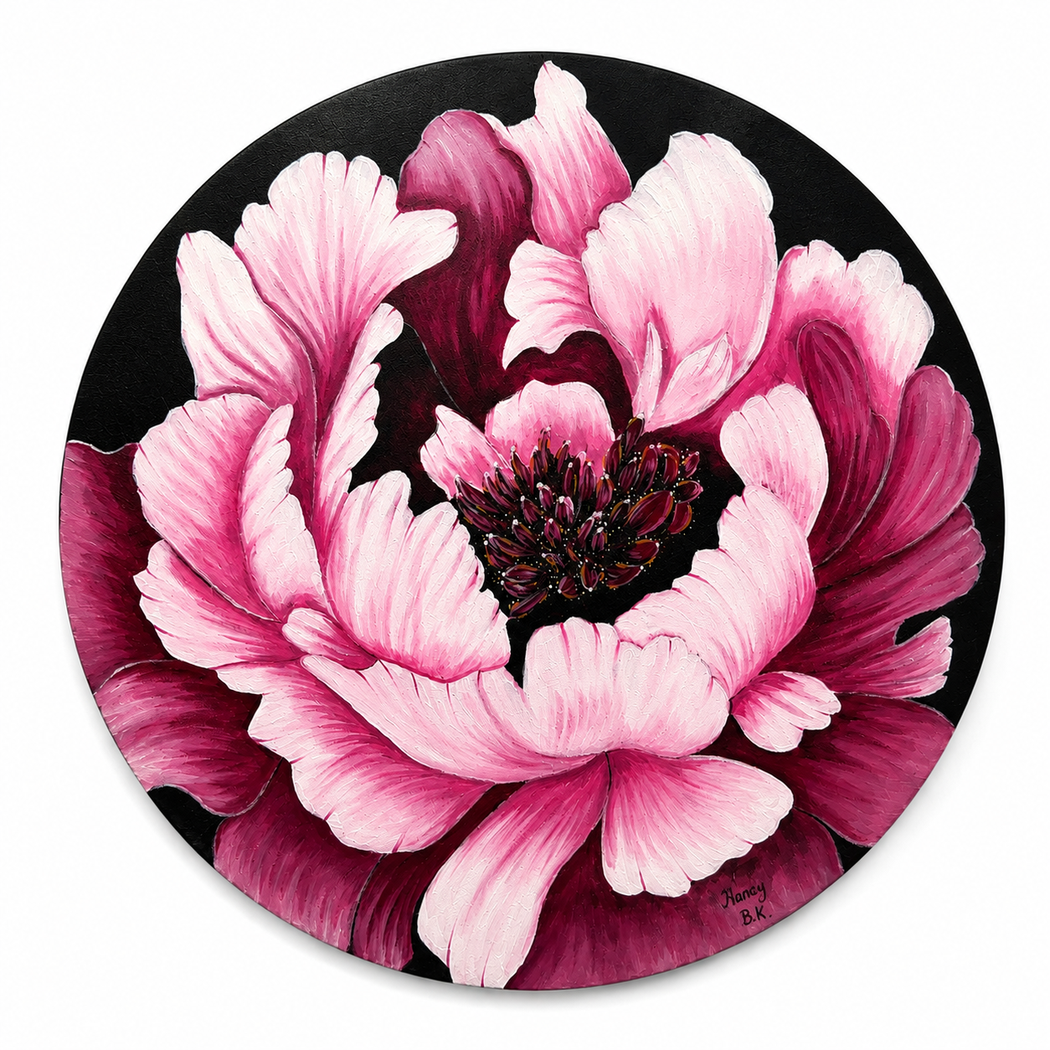
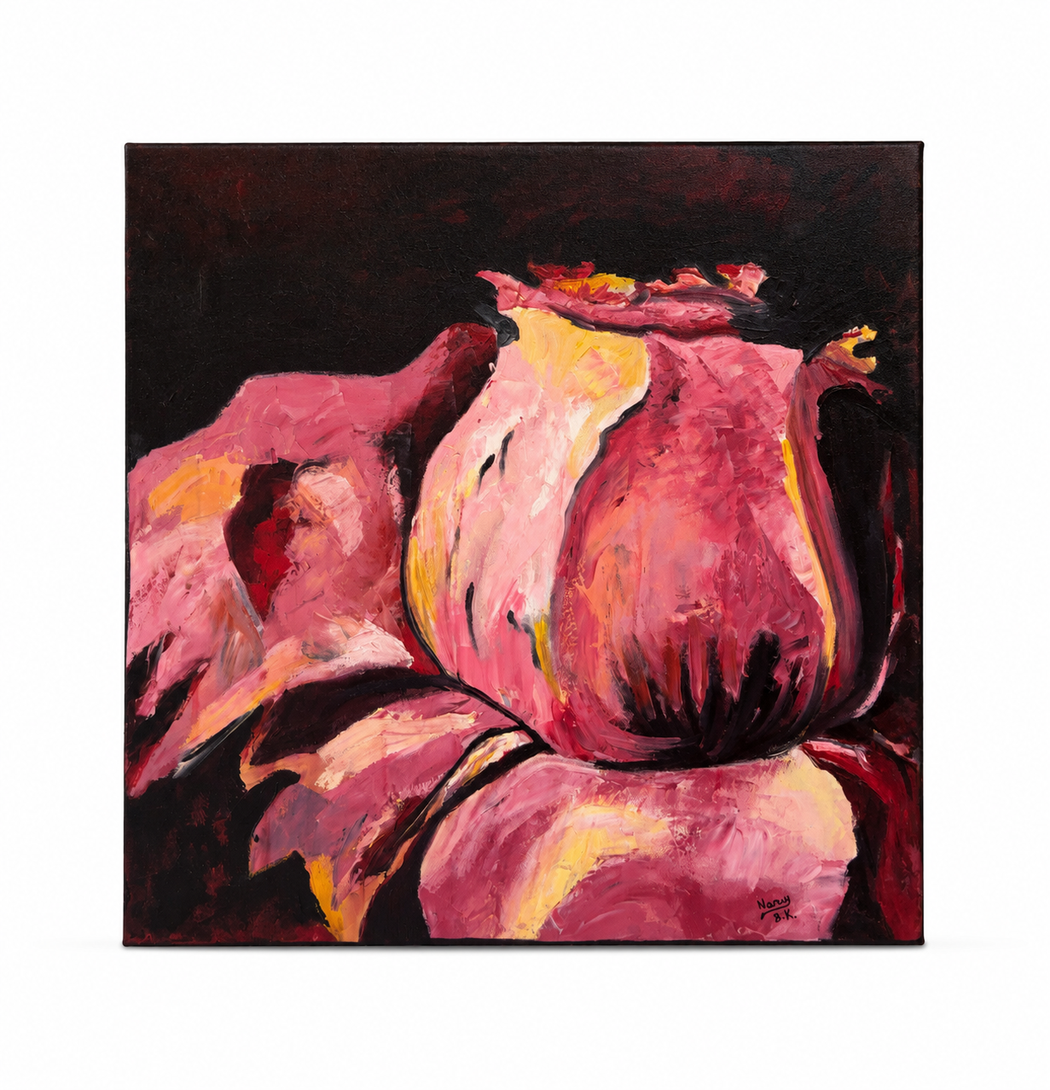
My palette is guided by emotion. It depends on the composition, my state of mind, and the feeling I want to communicate. I am naturally drawn to strong contrasts and often choose black backgrounds because they give the flowers presence and power. They create light through darkness. In many ways, this reflects how I experience life, there are moments of darkness and moments of light, and that contrast has become an essential part of my visual language.
Your floral paintings range from detailed observation to more expressive and abstract interpretation. How do you decide how closely to follow the natural form of a flower?
I always begin with the flower’s natural structure, but I allow emotion to reshape it. The flower transforms according to what I am feeling and the story I want to tell. Even its stage of growth…whether it is blooming, opening, or fading becomes symbolic of an emotional state or a chapter in my own life.
Nature and Lebanese heritage are both important sources of inspiration for you. In what ways does your cultural background enter your paintings, either consciously or intuitively?
My floral collection is deeply influenced by the experience of women in Lebanon. Our culture teaches us resilience from a very young age. We learn to adapt, to carry our burdens with grace, and to keep moving forward despite challenges. That is why my flowers always bloom. They carry signs of struggle, yet they never lose their beauty. They are a tribute to the quiet strength of Lebanese women.
You encourage your students to discover their individual creative voices. What helped you recognize and develop your own voice as an artist?
My late brother, who was an architect, was the first person to recognize my artistic gift. He believed in me before I fully believed in myself. He taught me techniques, encouraged me to keep exploring, and inspired me to trust my own vision. His guidance became the foundation upon which I built my artistic voice, and his influence continues to live through my work.
You believe that creativity can transform the way we see the world. What kind of emotional or intellectual transformation do you hope viewers experience when encountering your paintings?
I hope people realize that a painting is never just an object to look at it, it is a story, an emotion, and a piece of someone’s soul. Every artwork carries the artist’s thoughts, memories, and feelings. Through my paintings, I hope viewers will look beyond the beauty of the flowers and discover their deeper meaning: that true strength can exist within softness, and that what appears fragile can often be the most resilient.