
RAMI
How did light and darkness become central to your artistic practice? Was there a particular experience that first led you to explore their relationship?
Many of humanity’s stories have always begun with light. For some, light may be a dream; for others, it may be love, or perhaps a person who has held them together for a long time.
Throughout our lives, we each discover our own light. Sometimes we lose it, and sometimes we spend years trying to find it again. I, too, have experienced moments of loss, emptiness, and the desire to find something again while moving through life.
Through those experiences, light came to mean more to me than simply brightness. It came to symbolize hope, passion, and the direction we continue to hold onto, even when everything around us becomes dark.
In that sense, my work is ultimately about the journey of life — discovering our own light, losing it, and finding our way back to it.
What initially drew you to mother-of-pearl and silver leaf, and what does each material allow you to express that the other cannot?
The same object or material can reveal completely different qualities depending on the surrounding light and the position from which it is viewed. I believe our lives and relationships are much the same; they are never fixed in a single form.
What first drew me to mother-of-pearl and silver leaf was their ability to transform light without producing light of their own.
Both materials change in color and expression depending on the viewer’s position and the direction of the light. At times they shine intensely; at other moments, they almost seem to disappear.
I find this uncertainty and constant transformation deeply reflective of human life and relationships.
If mother-of-pearl represents a light that comes from within — something closer to emotion, feeling, and attitude — then silver leaf represents a light that comes from the outside, from nature and the world around us, something beyond our control.
I am interested in bringing these two different qualities together and allowing them to coexist within a single surface.
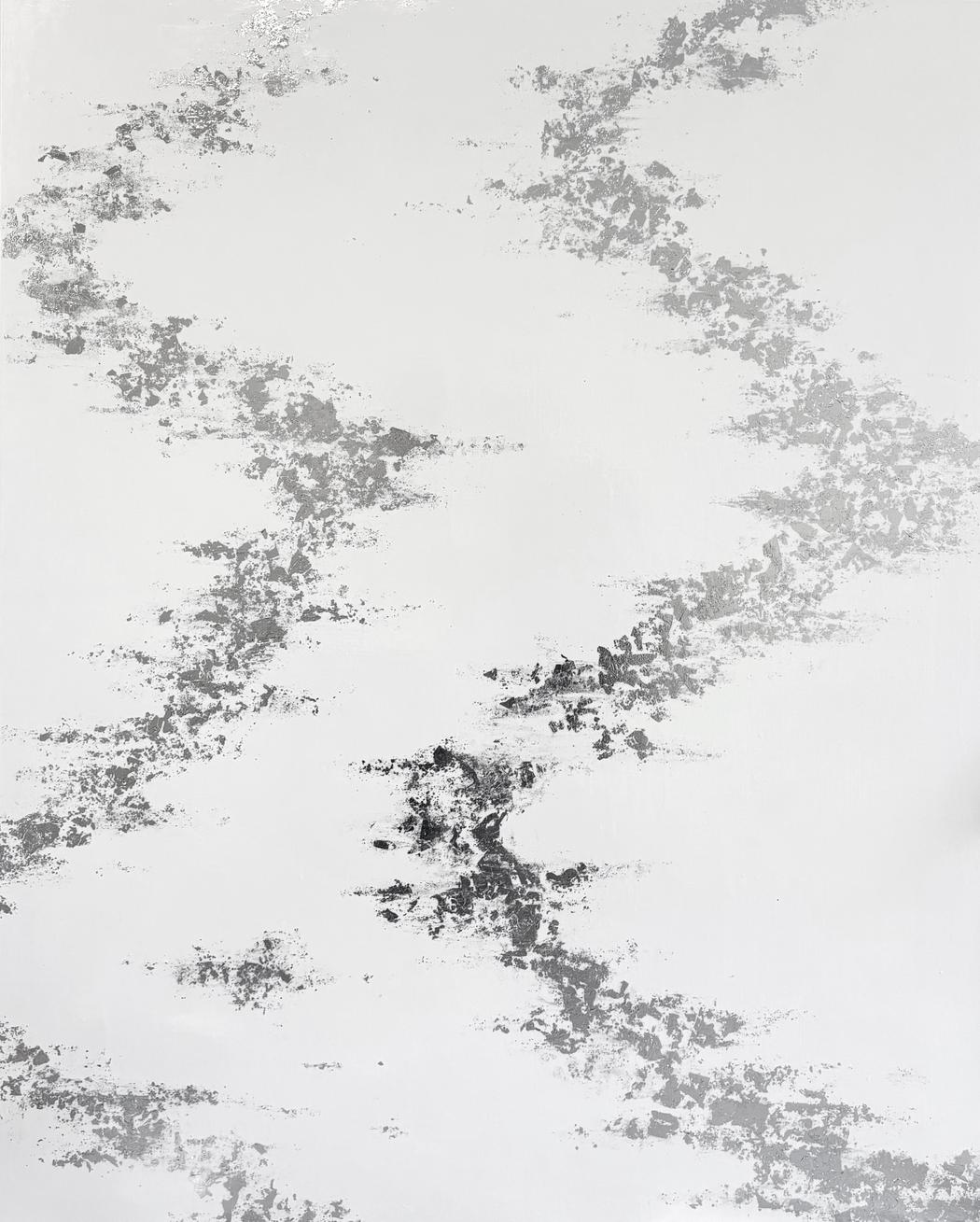 RAMI | Journey To Light (빛을 향한 여정)
Could you walk us through your process, from the first idea to the finished surface? How much is planned, and how much emerges through working with the materials?
When I begin a work, I usually have a general direction and structure in mind, but I do not completely determine what the finished piece will look like beforehand.
With mother-of-pearl and silver leaf in particular, even a small fragment can reflect light differently depending on its position and angle. As a result, unexpected changes naturally emerge during the process.
Rather than trying to control those changes completely, I try to accept them.
I place the fragments one by one, step back to observe the whole surface, then return to the details and make adjustments. I repeat this process many times.
Ultimately, the work is completed through a meeting between my initial intention and the unexpected possibilities revealed by the materials themselves.
For me, making a painting is therefore less about imposing a predetermined image and more about having a continuous dialogue with the materials and discovering a form through that process.
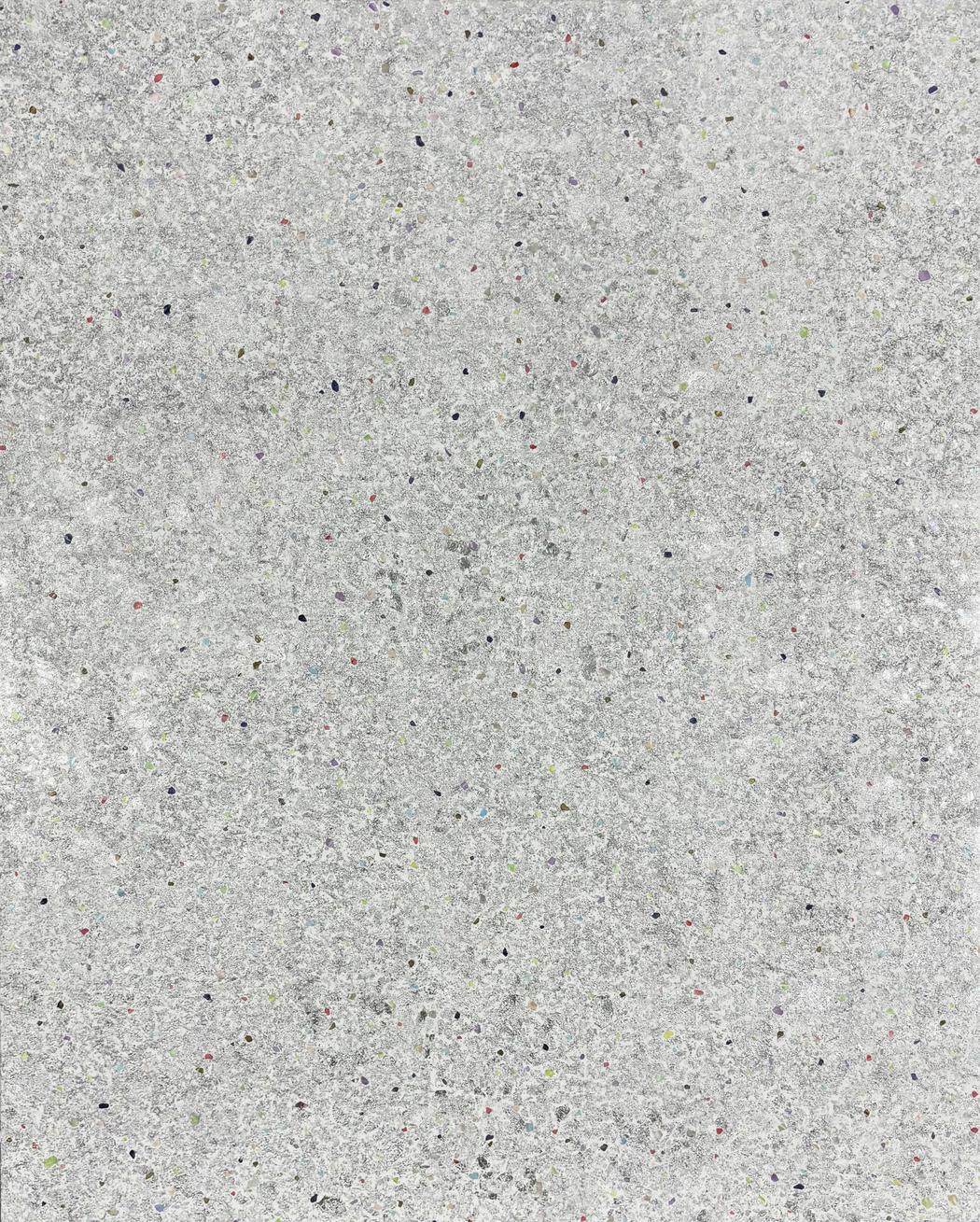 RAMI | La Festa (축제)
Your surfaces contain countless small fragments. How do you work with their size, placement, and density to create rhythm and a sense of movement?
I do not think of each small fragment simply as a decorative element.
I adjust the size, spacing, direction, and density of the fragments to create a kind of rhythm across the entire surface. Some areas become densely layered, while others are intentionally left open.
These differences encourage the viewer’s gaze to move rather than remain fixed in a single place.
More importantly, because the fragments reflect light differently as the viewer moves, I want the work to exist not as a fixed image, but as a surface that continuously changes through the viewer’s movement.
Subtle green tones and scattered accents of other colors appear within your predominantly silver and white palette. How do you choose these colors, and what do they bring to the emotional atmosphere of a piece?
For me, color is less a means of directly expressing strong emotions and more a way of changing the temperature and atmosphere of light.
If silver and white create a sense of emptiness or something almost transcendent, green evokes nature, life, and the sensation of coming alive again.
The other colors contain different layers of emotion and traces of memories that we encounter throughout human life.
For this reason, I do not use many colors. Instead, I introduce them like small traces, carefully enough that they do not interrupt the overall flow of light.
I want color to be experienced less as something simply seen and more as something felt.
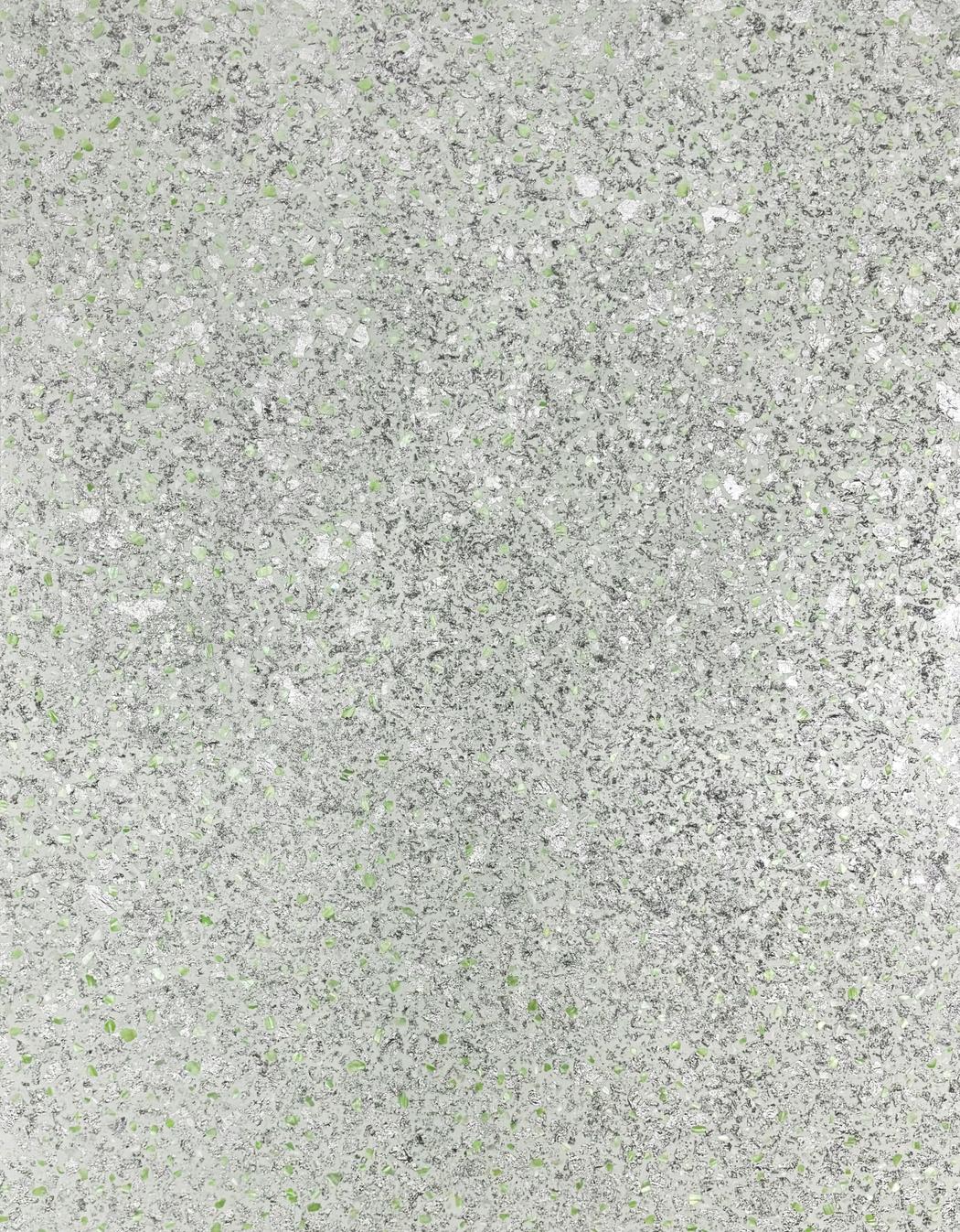 RAMI | Light (Shining Green) (빛–초록 빛)
You describe losing light and searching for it again. Do you see this rediscovery as a return to something familiar, or as finding a different kind of light?
I think it is closer to the latter.
In life, what we lose can rarely return exactly as it was before. The same is true of people, time, and relationships.
When I speak of “returning to the light,” however, I mean returning to a place we once loved most, or to the most innocent and sincere part of ourselves.
It is not about recovering the exact light of the past. Rather, after passing through loss, emptiness, loneliness, and longing, it is about facing those memories and feelings again and discovering a new way of living with them.
Perhaps there are kinds of light that we can only see because we have experienced darkness. That is why, in my work, light is not a final destination. It is a process of continually searching.
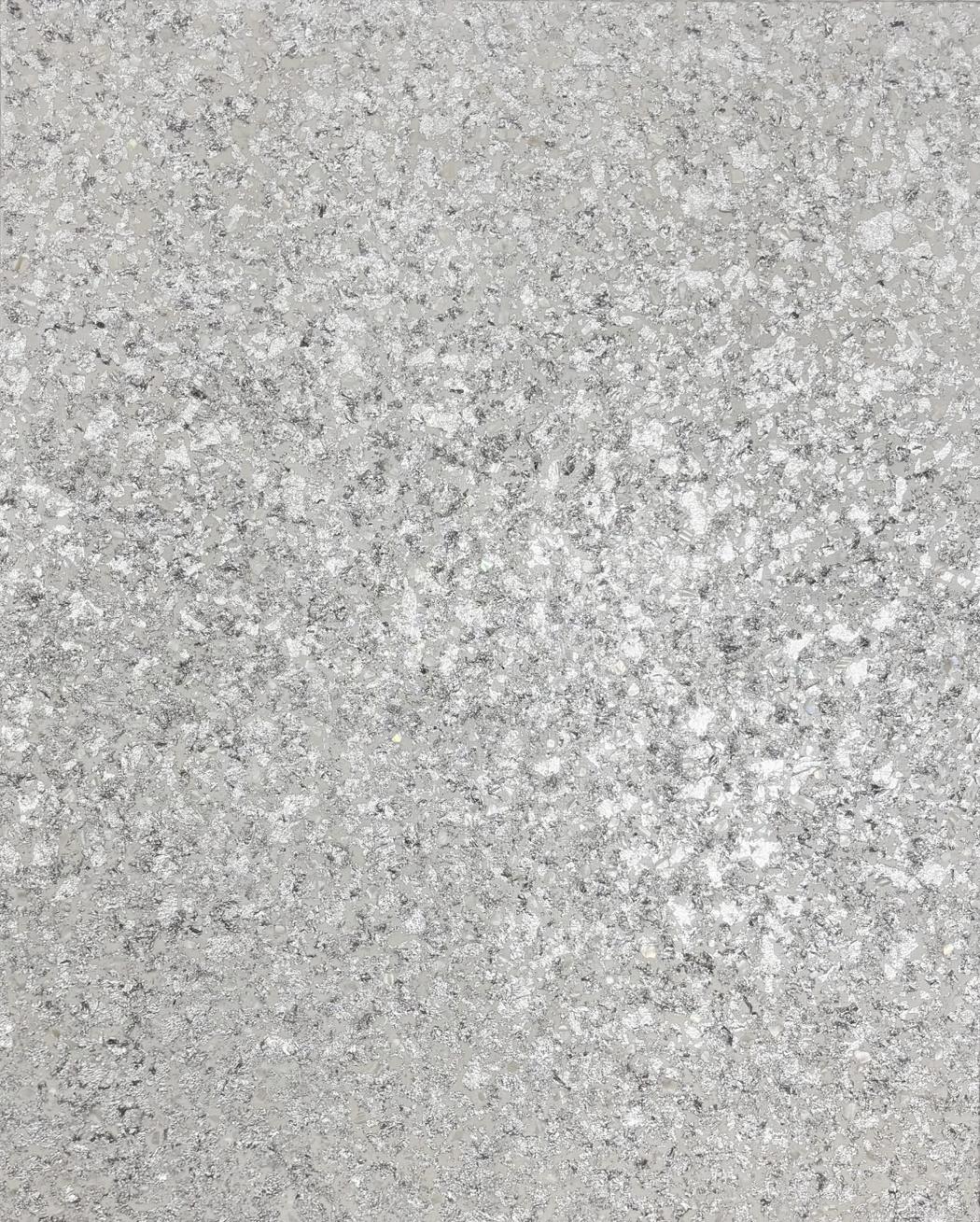 RAMI | Light (빛
What did participating in the Unknown Vibe Art Fair in Seoul in 2026 reveal to you about how audiences experience your work? Was there a response that surprised you?
The Seoul exhibition reminded me once again that a work can take on an entirely different meaning once it leaves the artist’s hands.
While creating my work, I was primarily thinking about light, loss, and the process of finding one’s way back to the light. Yet each viewer encountered the work through their own experiences.
I was particularly struck by watching people spend time in front of the works, moving from different angles. It made me realize that the “light that changes with movement,” which I had intended as part of the work, was also becoming part of the actual experience of viewing it.
What stayed with me most was seeing the contrast between people who simply passed by the works and those who stopped, became emotionally moved, and began talking about their own memories and feelings.
That experience made me think that art does not necessarily need to deliver a single answer. Perhaps an important role of art is to offer a question, and allow each viewer to answer it through their own life.
For some people, a work may mean nothing at all. For someone else, it may remain in their heart for a long time.
I believe that accepting this difference is itself an important part of art. If a work can create even the smallest change, or offer a moment of rest and comfort, to even one person, I believe that alone gives art a meaningful purpose.