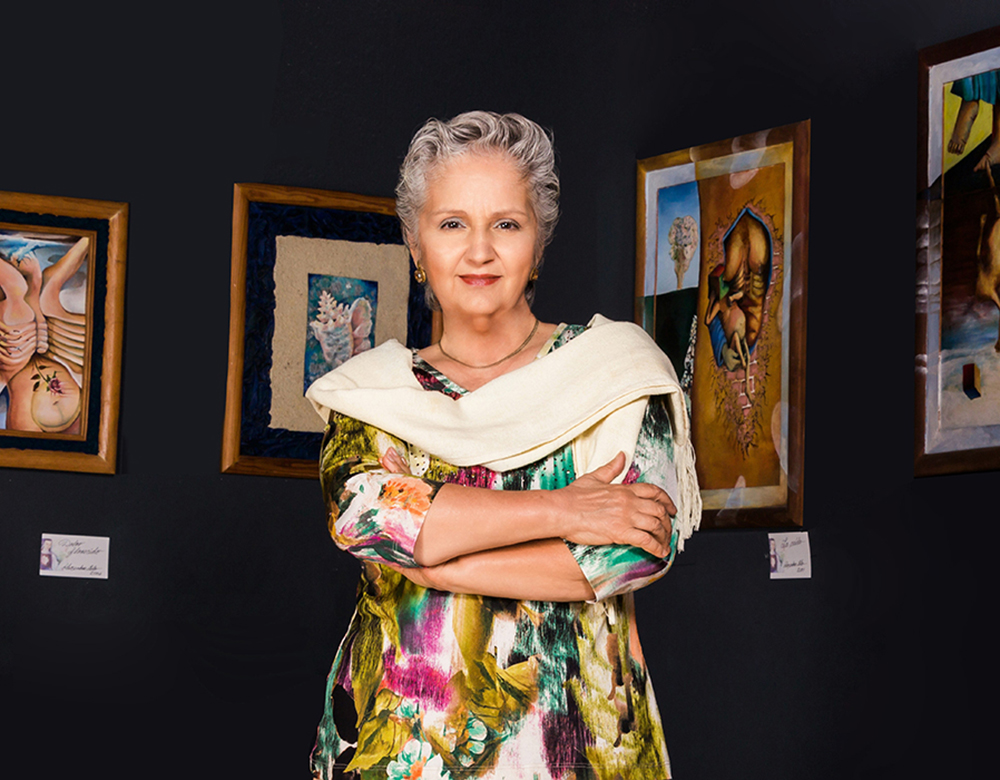
Marien Espinosa Garay
How did art, writing, and teaching become part of your life, and how has the relationship between these three practices evolved over time?
Art, writing, music, singing, acting, and teaching were deeply rooted practices in my family, alongside frequent conversations about classic literature, poetry, history, and philosophy. Consequently, pursuing these disciplines felt like a natural progression. This environment inspired me to participate in art exhibitions and literature contests, ultimately leading me to earn a Master’s degree in Humanities, transforming these family traditions into my professional path.
You have worked with painting, sculpture, object art, collage, installation, and drawing. What guides your choice of medium when you begin a new work?
I believe everything starts with an image that appears suddenly in your mind or heart, completely unbidden. From there, you follow where this inspiration leads, listening closely and trusting that the medium you choose is the right one for this idea to unfold and be brought into the world. As the philosopher Louis Lavelle said: “The work of art becomes a web that confines a spark of the spirit, enabling the inner to become external and permanent.”
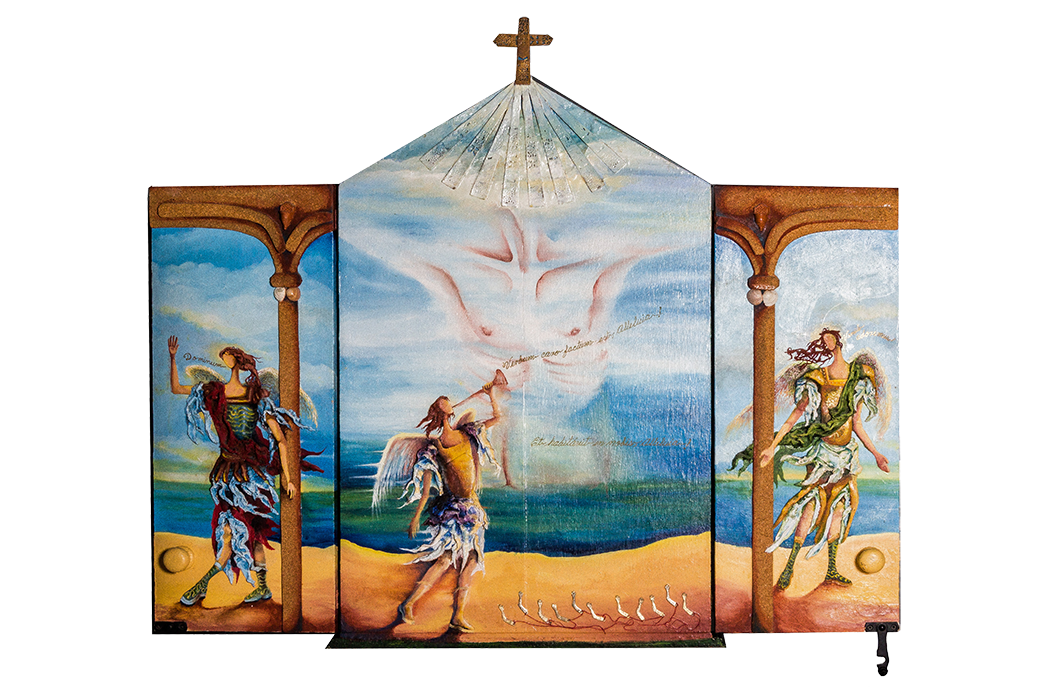 Marien Espinosa Garay | Polyptych Of The Pantocrator | 2011
In your painting “El beso”, human profiles merge with organic and geometric forms. How do you develop these transformations, and what do they allow you to express?
It is an elusive process to explain, as I believe much of this artwork is born from a subconscious state. Just like in dreams, you set reasoning aside and allow images to flow freely. Interestingly, these pieces also communicate with the viewer on that same subconscious level. Once El Beso was finished, I noticed the audience deeply resonated with its underlying themes: love persevering in spite of adversity, the coldness of mechanical edges, and nature blooming within the figures—feelings that ultimately transcend what words can express.
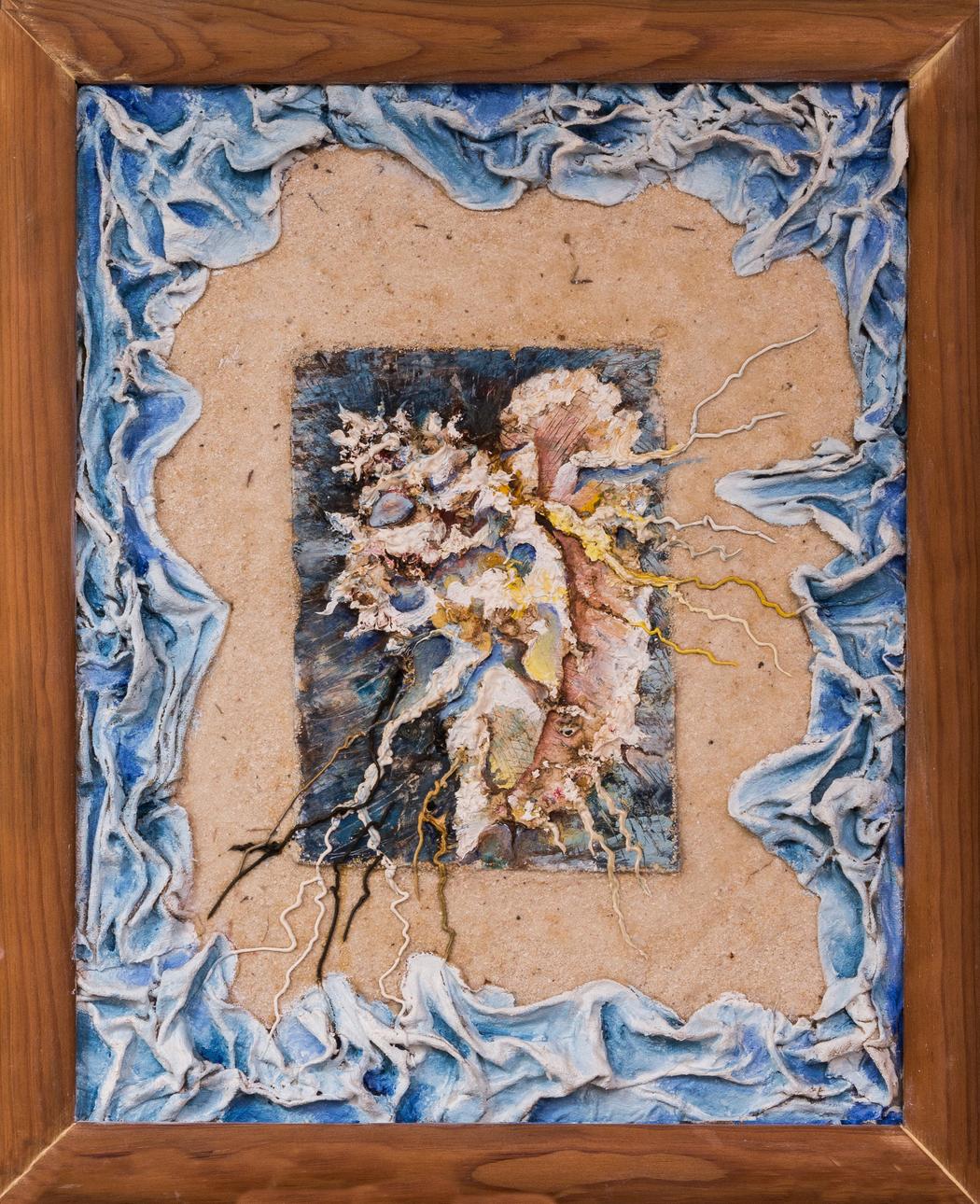 Marien Espinosa Garay | The Aching Seashell | 2009
The meeting of two faces suggests intimacy, while the surrounding forms make the scene feel dreamlike. What interests you about the relationship between human connection and the imagination?
Human connection operates on multiple levels. At the surface, we see individuals going about their daily activities, playing their roles in various scenarios—at home, at work, or within their busy lives. But at a profound level, human emotions such as love or fear defy concepts and words. There, in the innermost realm of the soul, only symbols and archetypes can reach. These universal patterns formed the very first link between humans, enduring within the collective psyche from antiquity to the present day. As Carl Jung noted, symbols serve as a bridge to this collective depth, allowing the unutterable to find form.
How does living in Cancún influence your visual language? Do the sea, light, and local environment enter your work consciously or intuitively?
Both consciously and intuitively. The white sands, the turquoise blue sea, and sunrises and sunsets full of colors and shades—all of these vivid experiences have deeply influenced my artwork. Also, the Mayan culture has been a core interest in my research about Maya art and the use of the ‘Azul Maya’ (Maya Blue pigment) in pre-Hispanic and colonial art in the Yucatan Peninsula.
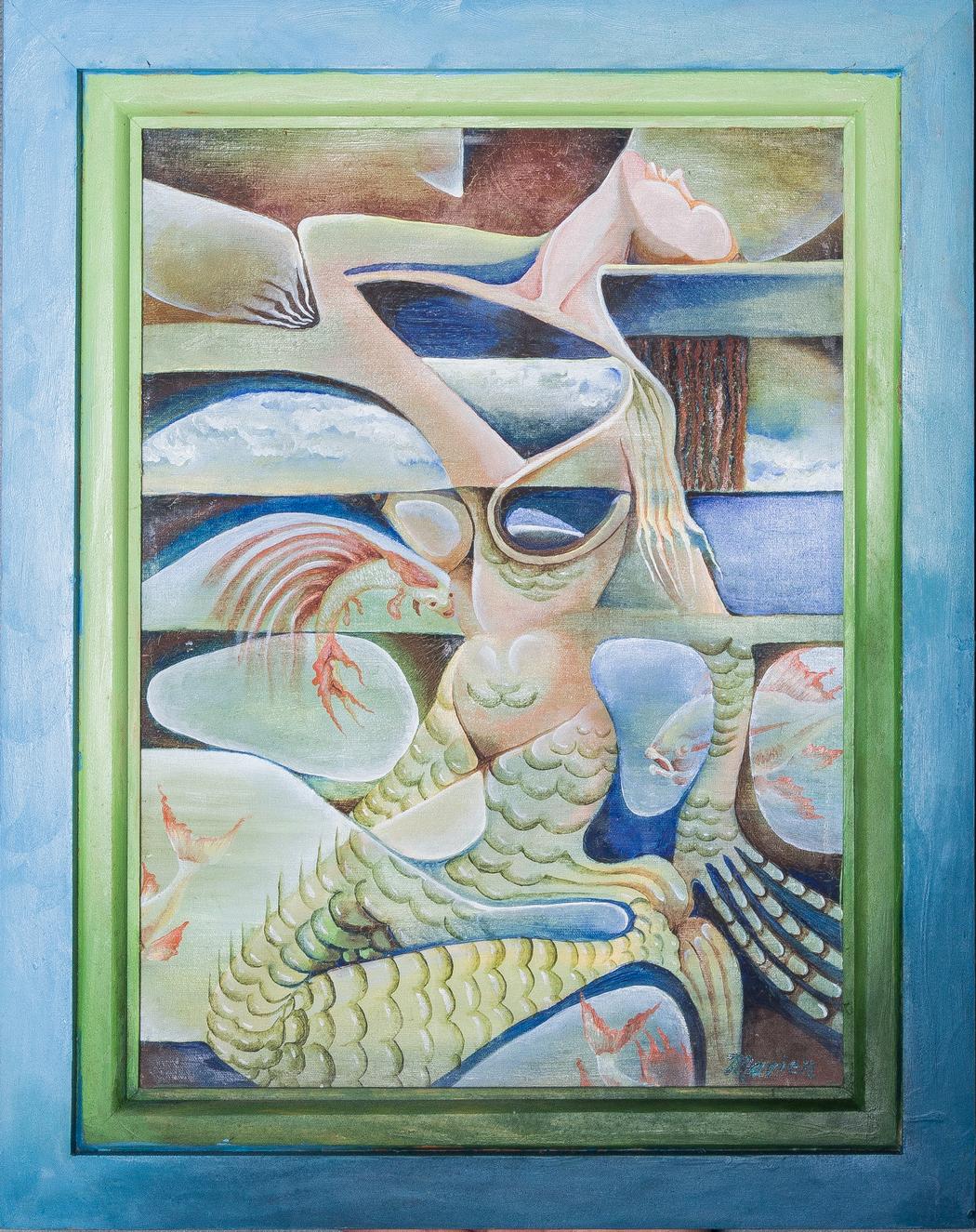 Marien Espinosa Garay | Sirenata | 2004
After more than thirty years of teaching, what have your students taught you about creativity, and has this changed the way you approach your own work?
In my youth, I began as a kindergarten teacher, later moving on to elementary and high schools, as well as working with children with special needs. Eventually, I also taught at the college and graduate levels. Through this journey, I have learned that regardless of age or academic level, creativity is a fundamental drive within every human soul. From antiquity to the present day, and from our earliest years to the end of our lives, we constantly seek to express our innermost selves, whether consciously or not. This realization has profoundly shaped my approach, deeply enriching both my life and my creative process.
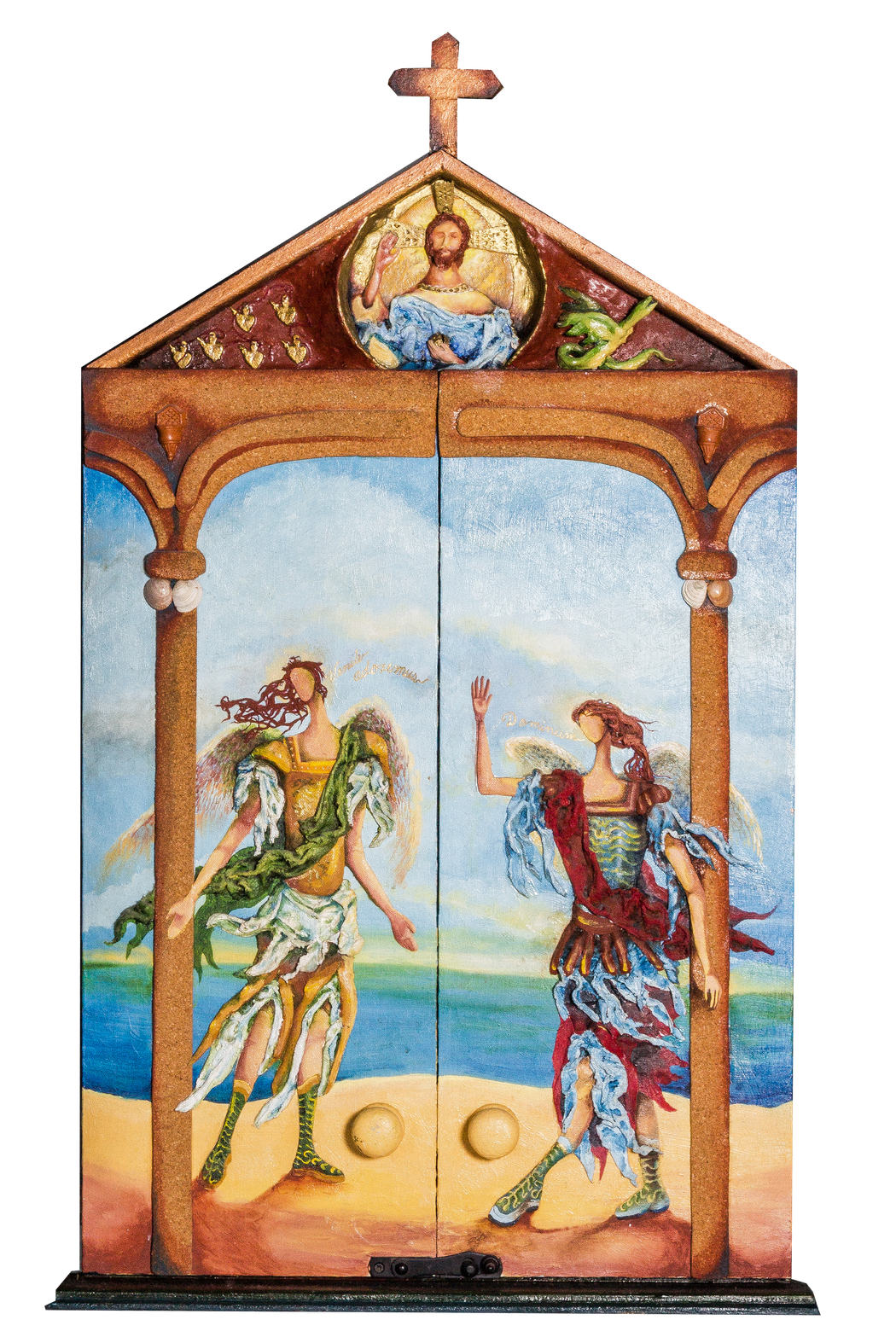 Marien Espinosa Garay | Polyptych Of The Pantocrator | 2011
How much space do you leave for viewers to interpret your work differently from your original intention? Has someone’s response ever changed your understanding of a piece?
I am certain that viewers will interpret every artwork with absolute freedom, guided by how they are moved by its textures, the direction of lines, the temperature of colors, and the overall composition—much like Wassily Kandinsky explored in Concerning the Spiritual in Art. Furthermore, when an artwork presents recognizable figures, nature, expressions, or relationships, the observer connects directly with the spirit of a culture at a specific historical moment. And when the work taps into the open perspective of symbols and archetypes, the viewer experiences a profound shock, akin to a lightning strike. Carl Jung would see his notions of the collective unconscious affirmed here, just as Byung-Chul Han wrote in The Salvation of the Beautiful: “The contemplation of the beautiful does not provoke complacency; it shocks.” Art is inherently polysemic, as Umberto Eco stated, and yes, I am often wonderfully surprised when my work elicits interpretations I had never initially imagined.