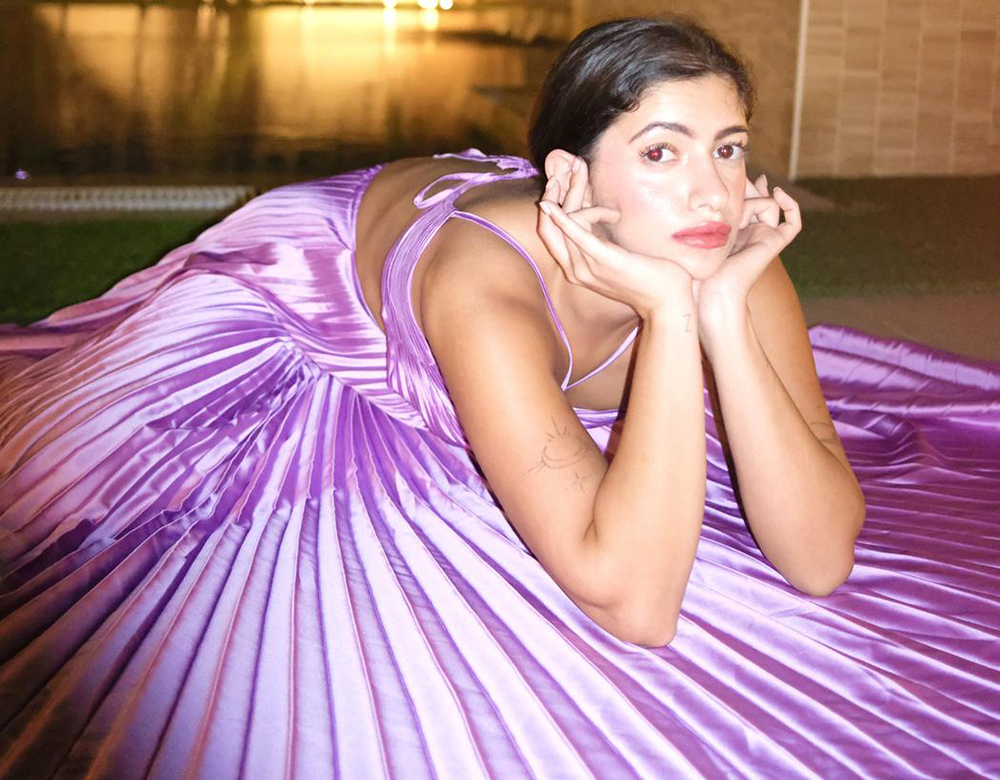
Farah Abdul Ghani
Growing up with Iraqi, Palestinian, and Canadian identities and now living in Dubai, how has your understanding of “home” changed over time?
When I was younger, I associated the meaning of home with nationalism and patriotism. Growing up as an Arab in exile and as an immigrant in Canada, I always felt that I lacked a sense of belonging and a place I could fully call home.
Growing up with Iraqi, Palestinian and Canadian identities, and now living in Dubai, I have often existed as a foreigner within different spaces; never entirely local, and sometimes perceived as not Arab enough or not Canadian enough. People can interpret that detachment as something I have chosen, when in reality my detachment from my geographic identity is circumstantial rather than intentional.
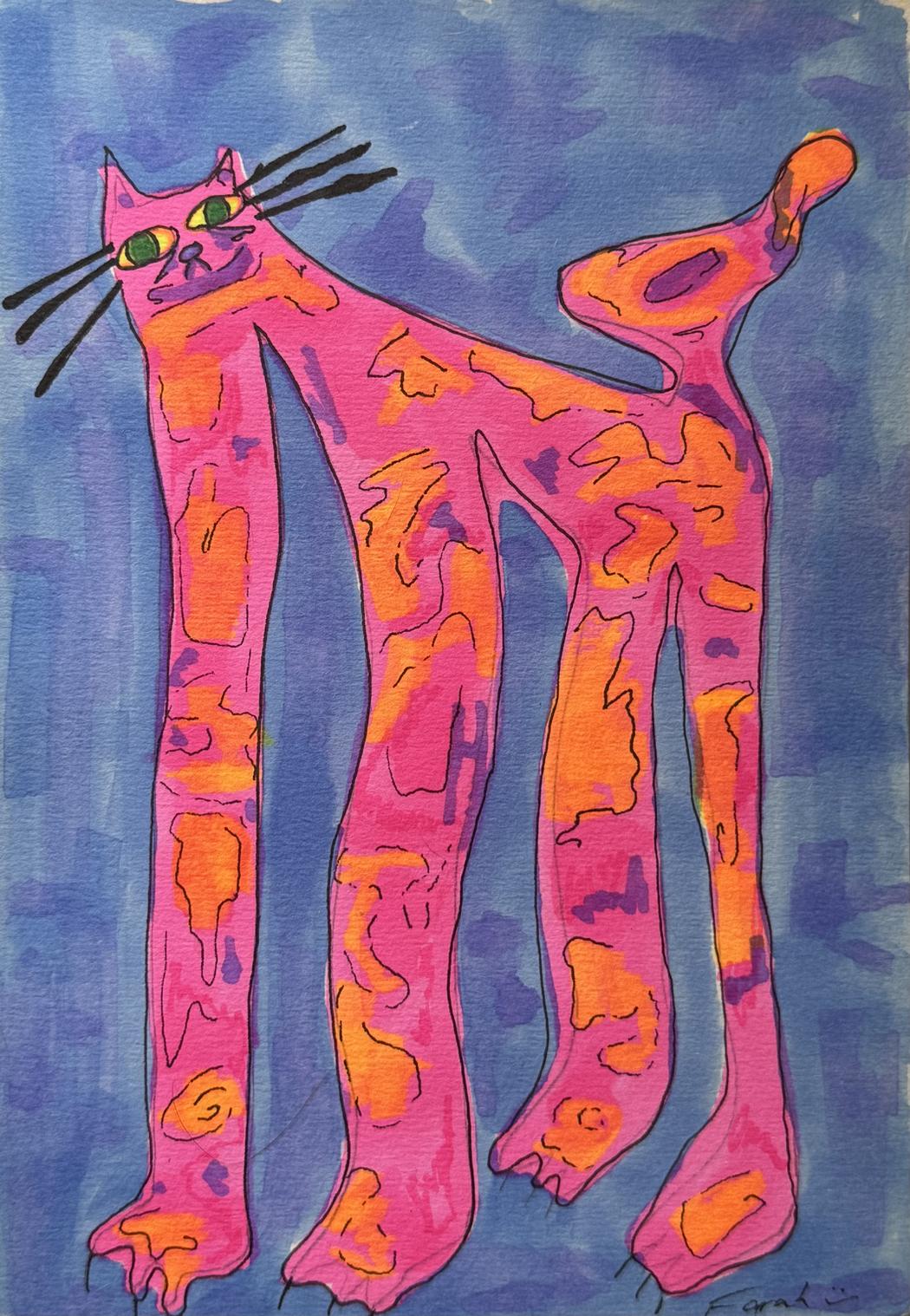
As I’ve grown older, my understanding of home has changed. Home is no longer a country or a geographical place. It is the things that make me feel alive and most like myself: my cat choosing me as a safe place to rest, a rainy day, or the feeling of becoming completely lost in dancing or painting. Those moments give me a sense of belonging that geography never really could.
Over time, I’ve realised that I don’t need other people to validate the authenticity of my identity. I define who I am regardless of whether someone in the room considers me “authentic enough” to belong to a particular culture. I can choose the traditions, memories and parts of my different cultures that genuinely represent me. Home, for me now, is less about where I belong geographically and more about the places, people, and experiences in which I recognise myself in.
You describe the experience of being seen as too “Western” in some spaces and too “Arab” in others. How has that tension shaped the way you portray identity in your work?
This tension has been an immense catalyst for my work. I continuously return to the question: if you lack belonging, do you belong anywhere at all? When you don’t feel that you have a home, it can create a strange sense of alienation; as though you are obsolete, irrelevant, or somehow outside of the ordinary world.
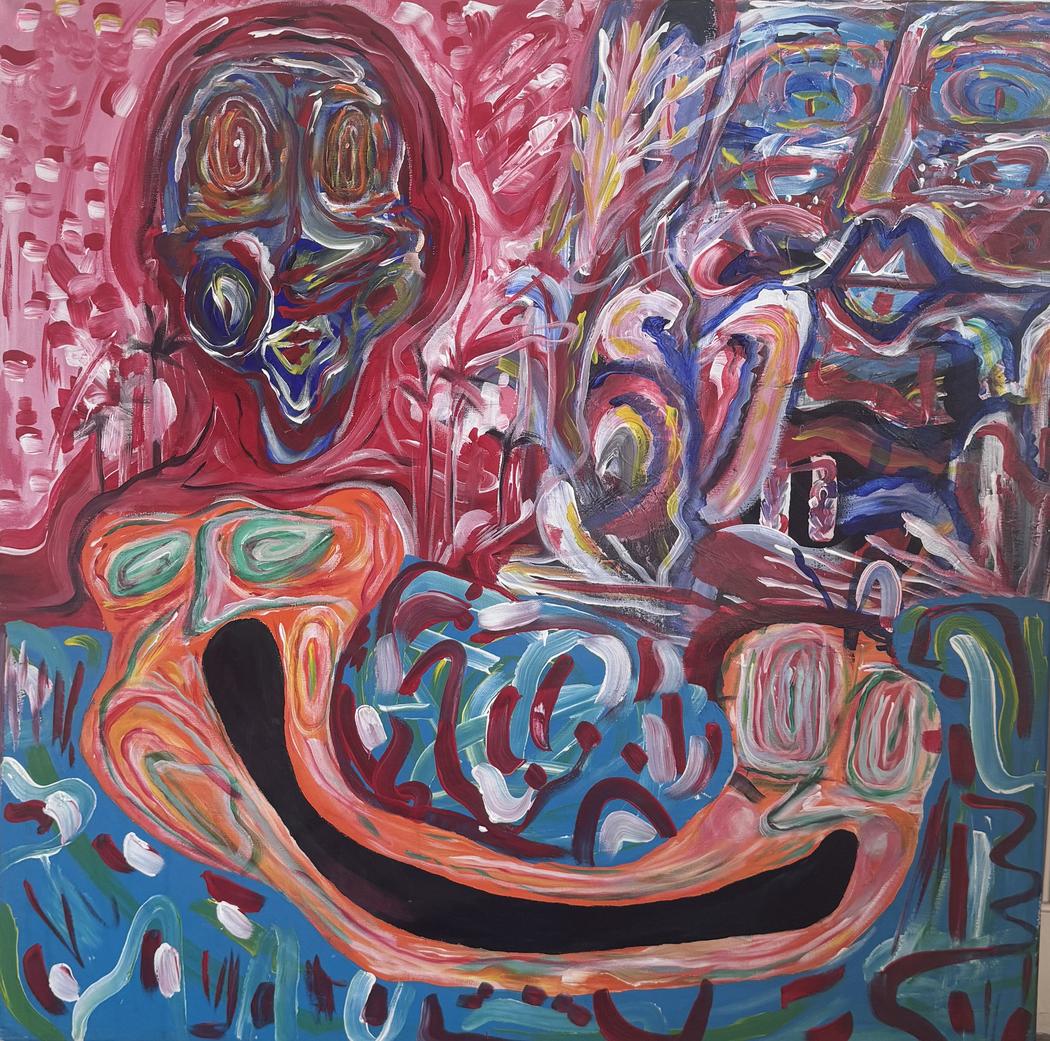
That feeling of exclusion is what initially attracted me to surrealism and to things that are unusual or impossible. I’m particularly drawn to water, floating figures, distorted bodies and fantasy landscapes because they exist outside the rules of ordinary reality. There is something comforting to me about creating a world in which things do not necessarily make sense, because that reflects the way I have often experienced identity and belonging myself.
When people try to dissect my identity or arrive at a definitive opinion of who I am, particularly when my lack of conventional patriotism is interpreted as a lack of passion or authenticity, I often feel a strong desire to escape those categories entirely. In my work, that escape can mean becoming almost non-human: a mermaid, a floating figure, an alien-like character, or a body existing somewhere it seemingly shouldn’t.
I’m attracted to the abstract, the uncomfortable and the fantastical because those elements capture how I sometimes feel moving through the world. If I cannot comfortably belong to the identities and spaces that already exist, In these imagined worlds, I don’t have to explain where I belong or prove that I belong there.
Faces and bodies in your work often seem to shift, overlap, or break into different forms. What can a fragmented figure express that a conventional portrait cannot?
A fragmented figure breaks structure, convention and perfectionism. It can be uncomfortable, unusual, obscure and even unsettling. A conventional portrait can be beautiful, structured and emotionally moving, but it often exists within a visual language that we already understand and accept. Fragmentation allows me to move beyond that, to create a world of distorted bodies, floating eyes, and water that feels more like a dream than reality.
The ordinary is beautiful, but it can also feel inaccessible. There is an expectation of coherence and perfection that is difficult to achieve when we are naturally imperfect and contradictory as human beings. Ironically, although surrealism depicts a fantasy world that does not exist, I find that it can come much closer to expressing emotions that do exist, particularly feelings of discomfort, alienation or confusion that can be difficult to articulate verbally.
That is what I find beautiful and fun about the unconventional portrait. There is room to play, to distort and to make things that don’t entirely make sense. There is also room to embrace the discomfort of being human, which, ironically, I find quite beautiful.
Eyes and expressions hold a powerful presence in your images. What role does the gaze play in the relationship between your figures and the viewer?
Being Iraqi, Palestinian and Canadian, I often feel exposed; almost metaphorically naked to other people’s judgement and criticism. At times, I become very aware of people looking at me, whether that gaze comes from discomfort, confusion, curiosity, enthusiasm or even disgust. Regardless of the intention behind it, there is something about being observed that makes me feel watched and exposed.
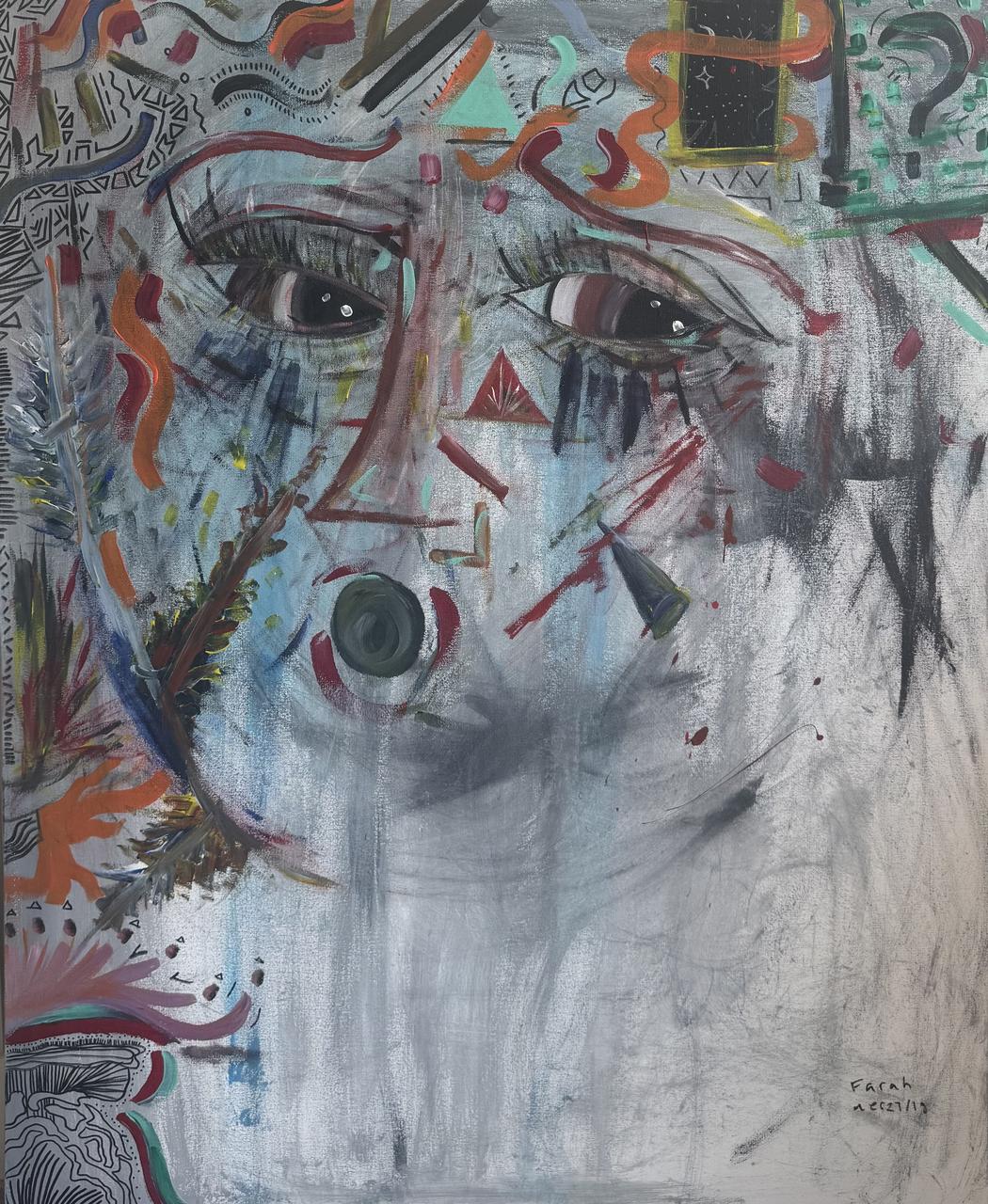
I purposefully portray large eyes throughout my work, but my central figures often look away from the viewer. For me, this reflects an avoidance of eye contact and of that uncomfortable confrontation. At the same time, smaller elements, particularly disembodied or floating eyes often stare directly at the viewer. There is a tension between the figure trying not to look and the feeling that they are being watched anyway.
That relationship reflects the experience of feeling as though I am on display without purpose or permission. Whether or not I actually care what someone thinks of me, I can still be conscious of their gaze. No matter how I behave, how I dress or how I present myself, there can be a feeling of being silently interrogated by the eyes around me.
The figures look away and pretend not to notice the gaze, even though they know perfectly well that it is there. The eyes, meanwhile, refuse to look away.
Some of your compositions bring several figures and visual elements into close proximity, while others focus on a single face. How do you decide how much space a figure needs?
It depends on the character I initially create and what I imagine they need. Whether they seem like they want company or whether they are the kind of figure that would rather be left alone. I often make that decision by looking at the character’s eyes and expression. If they appear disinterested, unbothered or are deliberately looking away, I sometimes enjoy introducing another element specifically to disturb that sense of peace. It creates tension and allows me to explore what happens when two opposing or unexpected elements are forced to occupy the same space. Could they adore one another, tolerate each other, or simply be deeply uncomfortable together? I’m interested in that discomfort.
At other times, I know immediately that a figure needs to exist alone. In those compositions, I
tend to exaggerate the characteristics that make them distinctive; a particular face shape, oversized eyes, a dramatic bowl cut, or something slightly nerdy or strange. I like taking characteristics that might ordinarily be judged as weird and making them the entire focus of the image. If I paint one figure, I want them to have enough personality and peculiarity to occupy the space on their own.
When I paint several figures, however, they often seem slightly uncomfortable around one another. I think that unintentionally or perhaps intentionally, captures me quite well. I feel very at peace when I’m alone in my own world. Around other people, I become conscious of what they might be thinking and how I am expected to communicate, almost rearranging my own weirdness into something that will make sense to the person in front of me.
In that sense, the amount of space I give my figures often reflects the difference between the freedom of being alone and the negotiation that comes with being around other people.
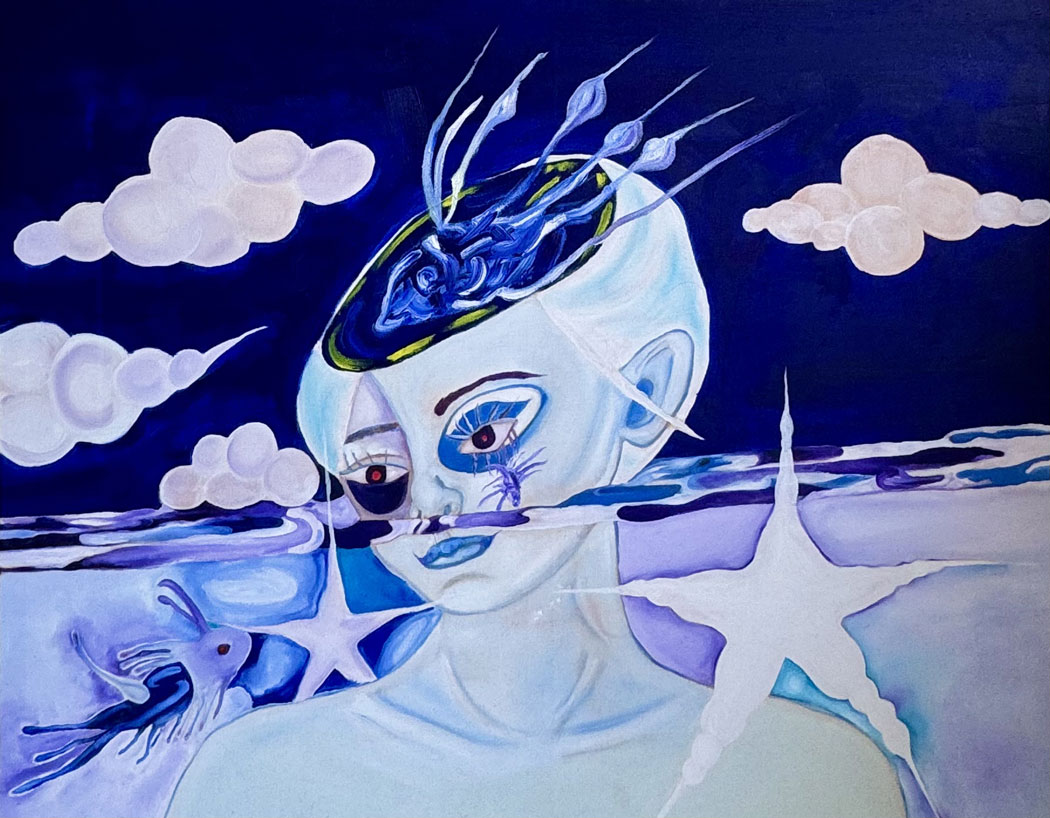 Farah Abdul Ghani | In My Mind
When you begin a new piece, do you start with a particular memory or feeling, or do you discover its meaning as you work?
When I am painting, I am incredibly disconnected from conscious thought. I’m never really thinking or calculating. Of course, there is usually a rough draft where I consider certain elements or the composition, but once I am actually painting, I am completely in it. It almost feels as though I am possessed. The brush and my hand develop a mind and a story of their own, and my body simply becomes the home for my artistic mind.
The process becomes very automatic. I often only understand what is happening when I physically stand up, step away from the canvas, or return to it later and look at what I have created. That distance allows me to recognise things in the work that I wasn’t consciously aware of while making it.
I like taking risks, being dramatic and allowing painting to become an escape from reality. If I began every piece by consciously thinking about a particular memory or trying to illustrate a specific feeling, I don’t think I would get anything done. Ironically, it is the lack of conscious thought that allows the work to become so deeply connected to my inner world.
I’m incredibly thankful to be so in love with and moved by art that the process can mentally take me somewhere else entirely. I don’t necessarily discover the meaning as I work, I discover it when I come back.
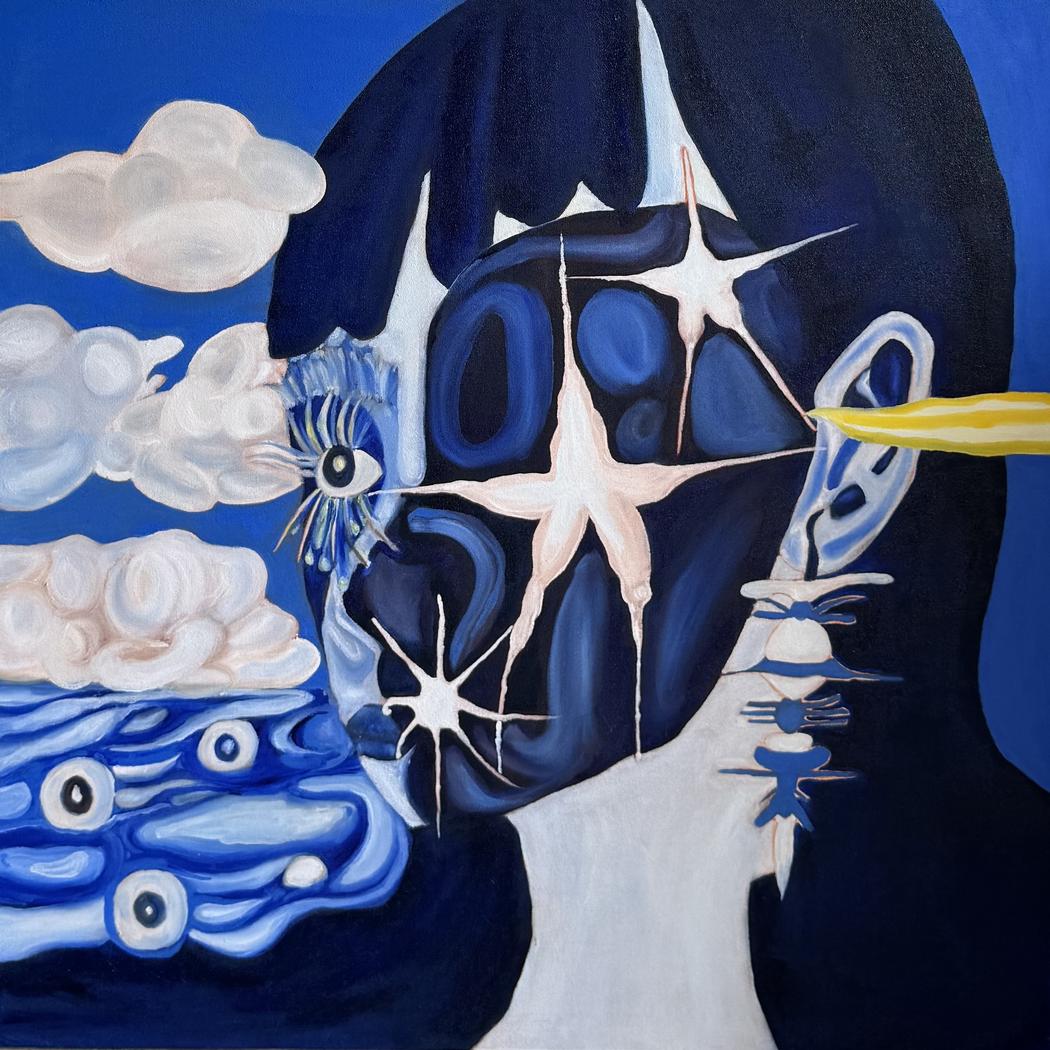 Farah Abdul Ghani | La La Land
What would you like viewers to feel or question when they encounter the figures in your work?
Nothing particular comes to mind. More than anything, I want my work to evoke something powerful, uncomfortable or personal to the viewer’s own experience of this intense and unpredictable world. If I am able to move someone, inspire them, or make them feel less alone in the absurdity of existence and life, then I feel that my work has served its purpose.
I don’t expect the viewer to immediately understand my themes, nor do I necessarily want them to. I would rather they begin with my work and then become lost. Not in the world I have created, but in a world of their own, on their own terms. I want the work to give them space to project their own memories, emotions and experiences onto what they are seeing.
Ultimately, my work is only the vessel. Where it takes the viewer belongs entirely to them.