
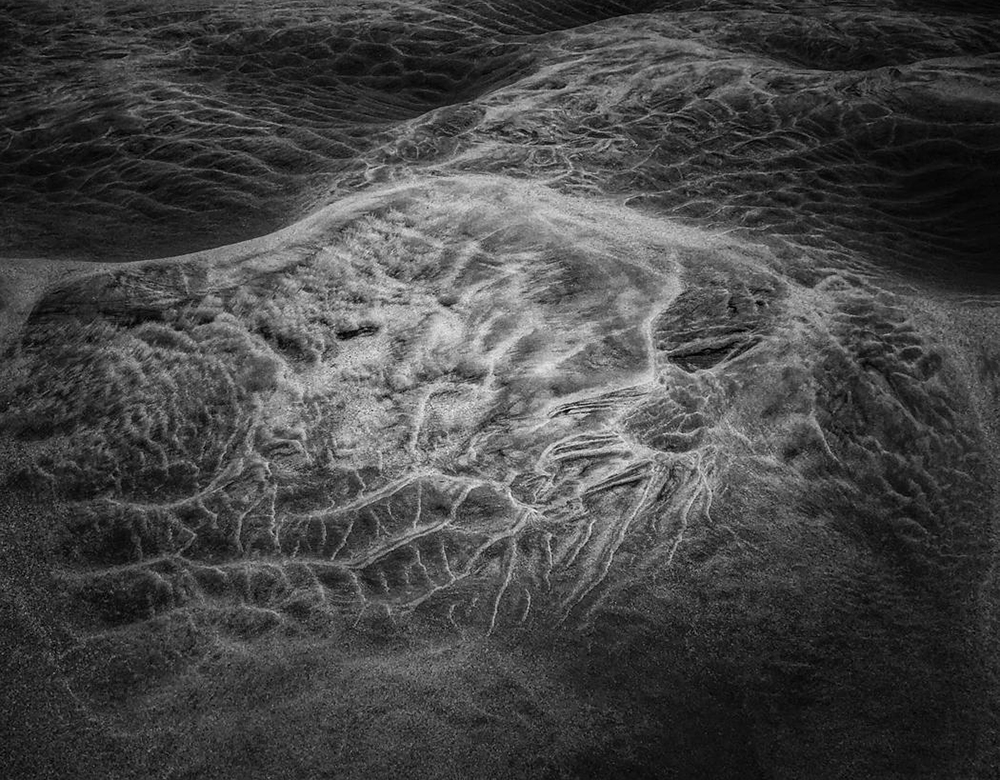
Jens Christoph Gehring
You began with analogue photography and learned to develop your own films and prints in the darkroom. How has that early hands-on experience shaped the way you approach photography today?
The era of analog photography has shaped me in various ways. On the one hand, it taught me technical skills—what happens in the photographic process, such as the exposure itself or the development—without relying blindly on predetermined procedures. With this knowledge as a foundation, I can focus more intently on the actual photographic and creative aspects. On the other hand, it has helped me develop my own perspective on my photographs. I’m more selective, often even before I press the shutter button. It’s almost as if I see a contact sheet in my mind’s eye, which allows me to assess more quickly which of my photographs will have which effect. Even though my workflow is now digital, I still make time to experiment with analog techniques.
Photography became your life’s work after a personal change in 2012. How did that transition affect the subjects you chose to photograph and the way you understood your own artistic practice?
This personal transformation has led me to view things more critically and to try to convey that in my photographs. I no longer take anything for granted; instead, I see everything as special and a gift. I take more time when developing concepts and try to examine them from different perspectives. As a result, they evolve over time and take shape. In 2012, I revisited a theme I had originally begun in the mid-1980s and adapted it to the social changes of the present day. But change itself as a theme also fascinates me and has been a recurring motif in my work ever since. In our thinking, change is often viewed negatively. For me, it is a transformation that can also unleash energy and, with it, creativity. It opens up new perspectives for our consciousness and encourages us to cross boundaries.
In your Watt photographs, the landscape appears almost abstract, with the surface shaped by lines, ridges, shadows, and traces. What initially attracted you to this particular environment?
My WATT series came about without any prior planning. When I saw the scene before me, I was overwhelmed by what I saw and had to capture it. So it just happened to me. I was drawn to the shapes created by nature, which is constantly reinventing itself. After every tide change, new patterns emerge. Especially at the sea, we experience this process of change several times a day. For me, this process is a metaphor for the call to constantly work on myself and to embrace change—whether in the photographic process, in my personal behavior, or in my outlooks and perspectives.
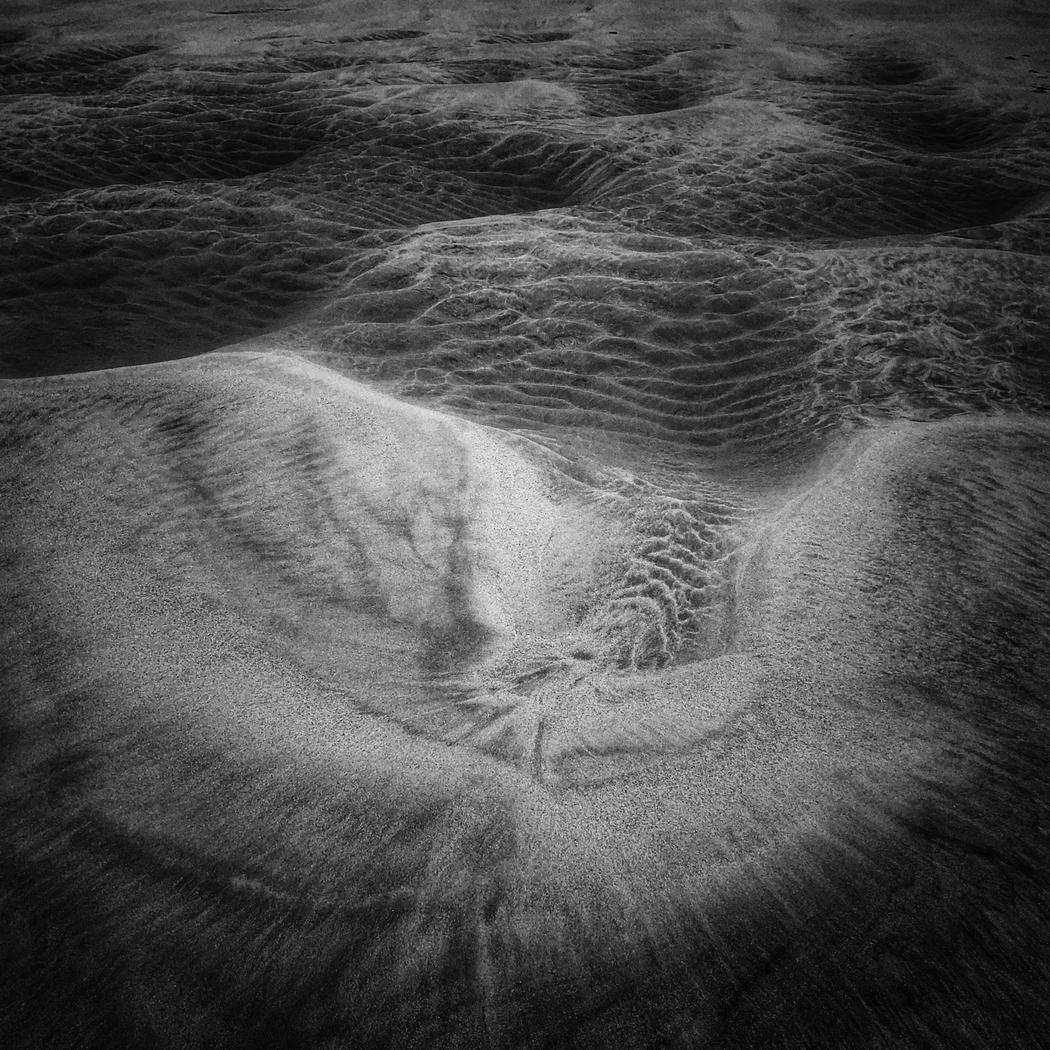 Jens Christoph Gehring | Watt | 2021
Your images seem to exist somewhere between landscape photography and abstraction. How important is it to you that the viewer recognizes the actual place being photographed?
It is not important to me that viewers recognize the locations in my photographs. They are interchangeable. What matters to me is that the viewer’s identification with what is shown is based not on the setting but on the subject matter, and that it evokes a response in the viewer. What is shown can then, regardless of its actual location, merge with the viewer’s memories or newly formed mental images.
The black-and-white treatment gives these landscapes a strong sense of texture and structure. What does monochrome allow you to express that color might not?
Years ago, I asked myself why black-and-white photography appeals to me. In a conversation with a well-known photographer, I received an explanation that resonated with me. He said, “Color is life; black-and-white is reality.” And that’s exactly how I feel. It gets right to the point, takes the viewer by the hand, and leads them more quickly and directly to the image’s message. The viewer’s gaze and perception of what is shown are not distracted or influenced by color. So, using monochrome, I can create a message that would lose its impact if rendered in color.
In recent years, your work has increasingly been shown internationally, including exhibitions connected with the Rencontres de la Photographie in Arles. Has encountering your photographs in different cultural and exhibition contexts changed the way you see your own work?
I wouldn’t call it a new perspective on my work. It has always been—and remains—important to me to stay true to myself. However, participating in international exhibitions and the Rencontres de la Photographie in Arles has shown me that I need to engage in a critical examination of my own work. Even though I’ve done this in the past, the level of depth required was a new experience for me. It was also interesting for me to observe that while the recognition for my exhibited works remained consistent, the evaluation—or rather, the perspective—from the outside varied depending on the cultural context. This helped me establish a framework for my critical assessment.
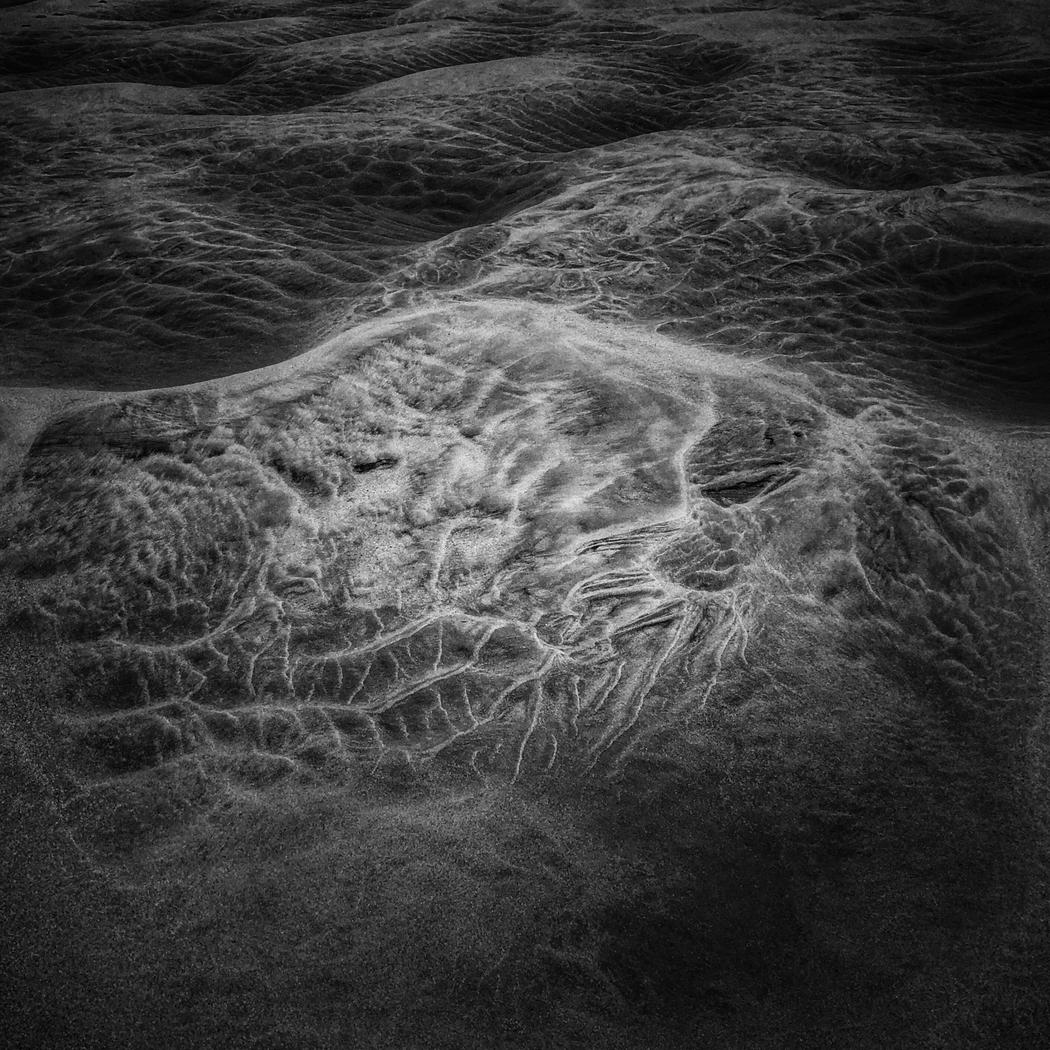 Jens Christoph Gehring | Watt | 2021
When viewers stand in front of your photographs, what kind of experience would you like them to have: recognition of a landscape, contemplation of natural processes, or something more personal and subjective?
For me, recognizability is secondary. I’m not interested in picture-postcard idylls, but in the details—those little things that only reveal themselves upon closer inspection. Regardless of genre, these can be details that affect us in our urban environment, such as walls, benches, or chairs, water, or clouds. In our fast-paced and consumer-oriented society, where everything revolves around the big picture and where the focus is increasingly on “I” rather than “WE,” it’s important to me to use my photographs of these small things to create a counterbalance—to give the viewer the opportunity to pause and find peace, and, in the best-case scenario, to inspire a process of change within them.