
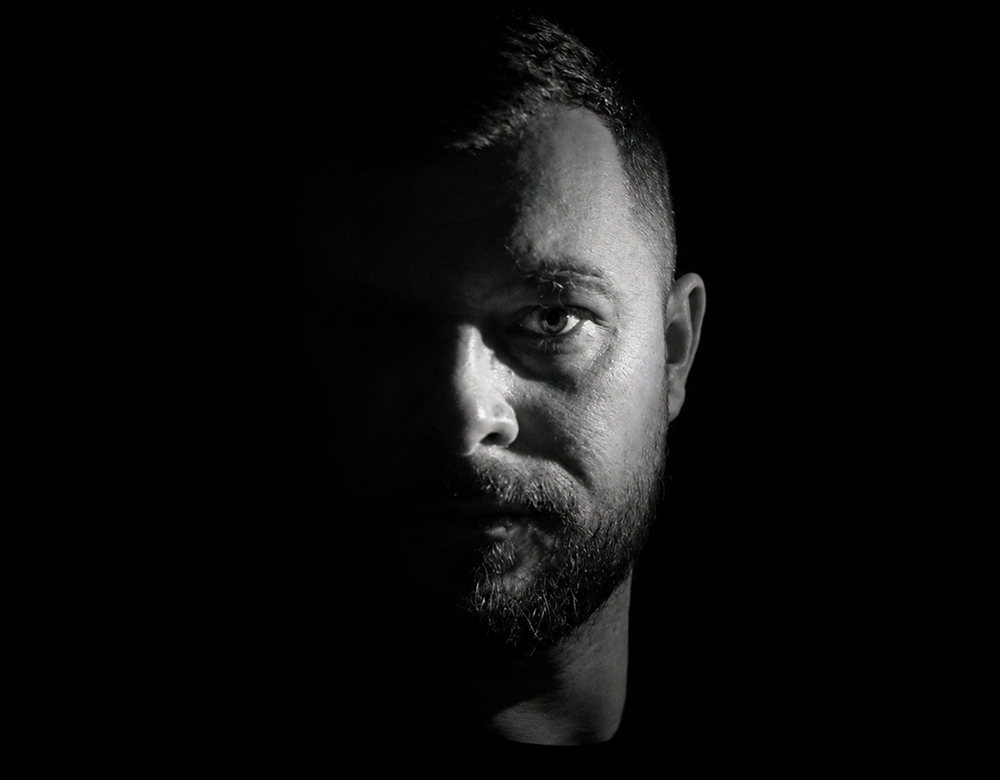
Ján Špireng
What personal experience or question first led you to create PROJECT LIFE?
It began with PROTECTION, a photograph I dedicated to my daughter Zoe. It carries a simple, personal promise: “As long as I’m here, you will never walk through life alone.” PROJECT LIFE grew out of that relationship and sense of responsibility.
Over time, the project expanded to include other experiences that are part of life: closeness, loneliness, loss, pain, and the search for oneself. Photography allows me to express things I sometimes cannot or do not want to put into words. Personal experience is my starting point, but I do not want viewers to need to know my life story to find something meaningful in the images.
That is why PROTECTION remains the project’s closing image. It reminds me where the whole cycle began and why there is a reason to keep going, despite the difficult experiences explored in its individual chapters.
How do you decide where one chapter of PROJECT LIFE ends and another begins? What connects the chapters beyond their visual language?
Each chapter represents a different inner state or experience. THE BROKEN focuses on a person’s inner breaking point, PAIN brings that pain into a relationship, and STRANGER asks how well we still recognise ourselves. But the boundaries are not entirely clear-cut. As in life, one experience can lead into another.
The triptych allows me to stay with a subject and explore it through three images. A chapter does not have to offer a solution or a fully resolved story. What matters is that the photographs express something together that a single image could not.
Above all, the chapters are connected by the human being and our relationship with ourselves and others. They grow out of personal experiences while leaving room for the viewer’s own. The project also has two fixed points: ESCAPE as an entry into life, and PROTECTION as a promise of protection and closeness. New chapters can emerge between them, because our experience of life is never complete.
 Ján Špireng | Stranger
What does the title STRANGER mean to you? Does it refer to another person, an unfamiliar part of ourselves, or something else entirely?
For me, STRANGER is primarily about encountering a stranger within yourself. It is the moment when you look at yourself and realise you are no longer as familiar to yourself as you thought. Our experiences, losses, and decisions can change us without us noticing straight away.
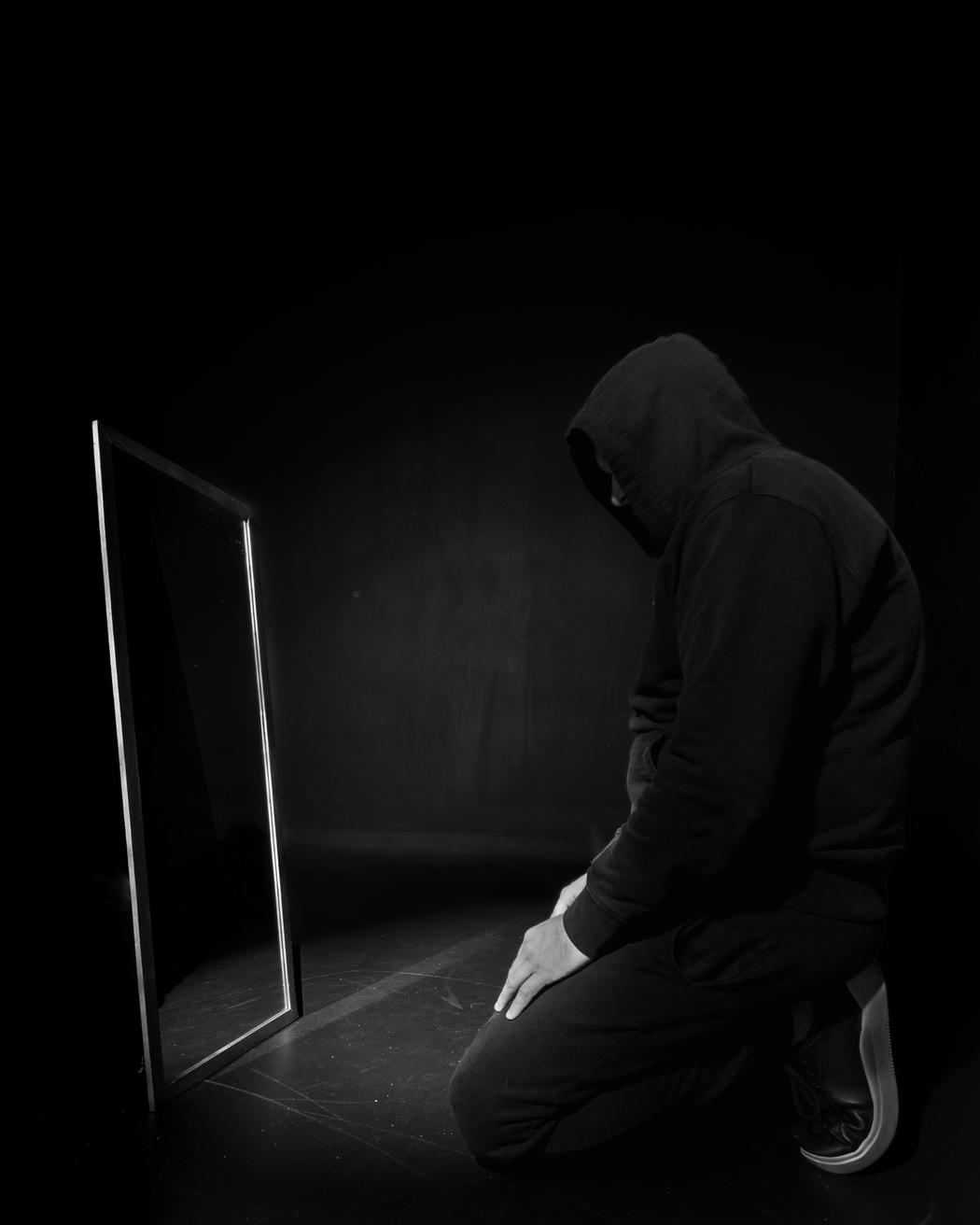
The mirror is important in this series. It offers the possibility of recognising ourselves, but also raises the question of who we are actually seeing. I am interested in the tension between a person and their own image: between the self they know and the figure they now find in front of them.
But I do not want to limit the title to a single explanation. Some viewers may see estrangement from themselves; others may think of someone who was once close to them but now feels like a stranger. For me, the series begins with a question of identity, but room for other readings is part of the work.
How do you develop the poses and gestures of your figures, and how do you recognise when they convey the emotion you are looking for?
Before photographing each series, I have thought through the idea, emotion, or experience I want to express. That is my starting point when developing poses and gestures. I try to translate something internal into an image through the body, its position, its movement, and its relationship to the surrounding space. When looking at a photograph, I return to what first prompted the series and ask whether I can find that feeling in it.
That does not mean the same gesture has to mean the same thing to the viewer as it does to me. The possibility of a different reading is central to my work. I bring my own experience into a photograph, but I want to leave room for someone else’s experience too.
I do not want to tell viewers what to see or feel. I would rather encourage them to ask, “What do I see in this image?” If a photograph leads them to their own story, its meaning for them may differ from my original intention. That is equally valuable to me.
 Ján Špireng | Stranger
Your photographs feature anonymous figures. How does withholding someone’s identity change the emotional connection between the subject and the viewer?
When a figure’s face or identity is not clearly visible, attention shifts to their gesture, posture, and situation. Viewers may think less about who that particular person is. Instead, they may recognise themselves, someone close to them, or a feeling they have experienced.
For me, anonymity creates room for a personal connection with the image. Even without a facial expression, the position of a body or the distance between two people can convey a strong emotion. I am interested in how much we can communicate through these simple means.
This connects to my wish not to dictate what viewers should find in a photograph. The figure comes from my story, but their anonymity allows viewers to enter the image with their own. What remains hidden can, paradoxically, create a sense of closeness.
How did you select the three photographs you submitted from STRANGER? Do you intend them to be viewed in a particular order?
I had planned all three images before photographing them, including their order. They were not assembled afterwards from unrelated photographs. From the beginning, I conceived them as one triptych.
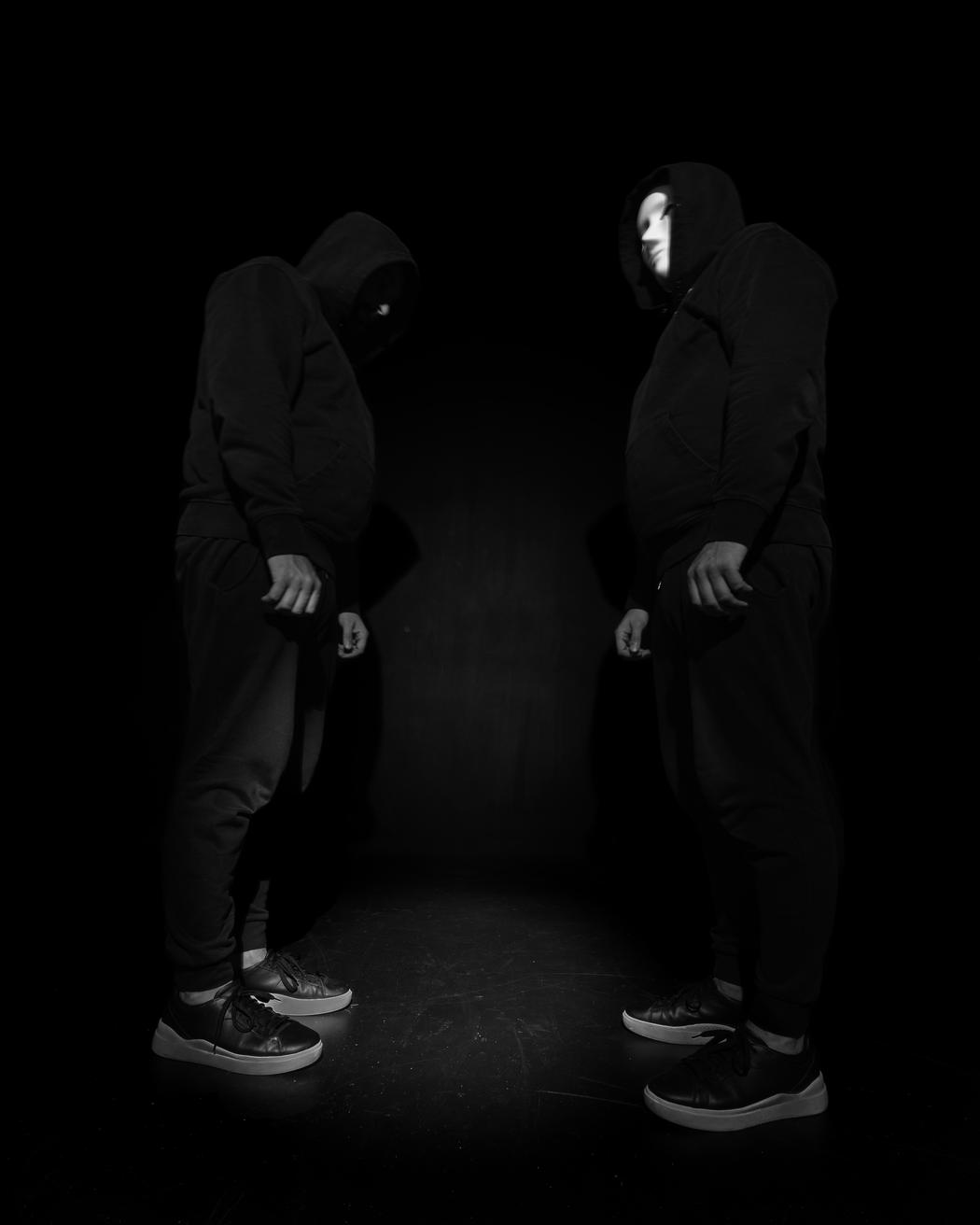
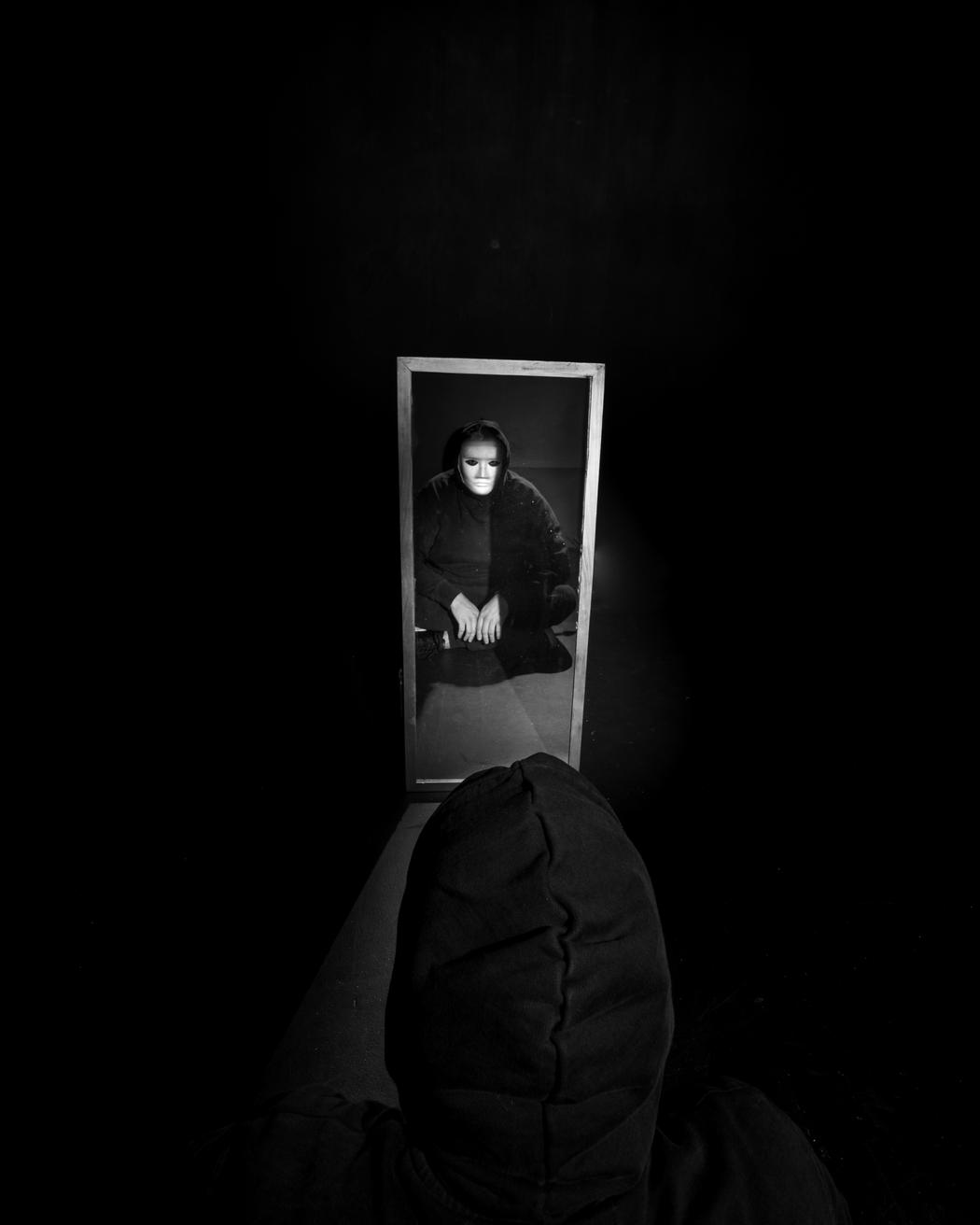
In the first image, a person looks into a mirror. In the second, they see someone they are not, or someone they do not recognise within themselves. In the third, they stand face to face with themselves, but the other figure is wearing a mask. For me, this is the moment when a person still recognises themselves, yet realises they have become someone else.
The sequence I, II, and III is therefore important. It moves from looking at oneself, through estrangement from one’s own image, to an encounter with that transformation. This is my starting point, but I do not want it to limit the viewer’s interpretation. One person may see concealment in the mask, another protection, or the identity we present to others.
STRANGER II will be exhibited in Vienna. Although it belongs to a wider narrative, it can also stand on its own and raise the question of who we actually see when we look at ourselves.
 Ján Špireng | Stranger
Have viewers ever interpreted one of your photographs in a way that surprised you? Did their response change your understanding of the image?
It happens quite often, but two responses have stayed with me in particular. The first concerned PROTECTION. One viewer saw danger in it: an adult pursuing a child. Yet I had created it as an image of protection, specifically the protection of my daughter, to whom I had promised, “As long as I’m here, you will never walk through life alone.” The same image carried almost opposite meanings for us.
The second response came from a viewer in the United States, who saw resurrection in THE BROKEN. I had conceived the series as the story of a person breaking down, reaching out for a helping hand, and ultimately not receiving that help. Where I was expressing collapse and an unanswered plea, this viewer found resurrection.
Responses like these show me that a photograph can hold a meaning I did not consciously put into it. My original story remains, but it is not the only possible reading. That is precisely why I do not want to tell viewers what they should see. I am interested in what they discover in the image, even when it is the complete opposite of what led me to create it.
What questions remain unresolved for you in PROJECT LIFE, and how might they shape its next chapter?
I do not approach PROJECT LIFE with the feeling that I have to photograph something simply to create another series. The subjects come naturally. When I carry a feeling or experience that I want to express visually, I begin looking for a way to give it form. That is how a new chapter emerges.
I do not have a predetermined list of questions to work through, or a fixed idea of where the project must lead. What feels important to photograph next may come from something I am experiencing now, or from a feeling I am only gradually beginning to understand.
Life itself is an endless source of inspiration for me. As long as it brings new experiences, encounters, and changes, PROJECT LIFE remains open too. The next series will emerge when I have something I want to express through photography.