Jae Park
How did studying architecture at SCI-Arc shape your artistic practice, particularly the way you approach structure, materials, and construction?
Before attending SCI-Arc, I studied architecture and gained professional experience in South Korea. At that time, I was primarily focused on solving architectural problems within given constraints and finding ways to realize my designs.
At SCI-Arc, I explored a wide range of fabrication techniques, including sculpture, plaster casting, woodworking, and printmaking, applying them to physical models and drawings. What interested me was how even carefully planned processes could produce slightly different results. Even when 3D printing the same digital model multiple times, the outcomes were not always identical.
These experiences led me to think more about the relationship between design and fabrication. New questions often emerged through making something and observing the results. In Exactly Not the Same, I explored this relationship by repeatedly applying the same rules and observing the differences that appeared through the process.
 Jae Park | Exactly Not The Same | 2026
You work across architecture, photography, and sculpture. What connects these disciplines for you, and how do ideas move between them?
I see photography, architecture, and sculpture as different ways of developing an idea rather than as separate practices. I might explore an architectural idea through photography or develop a sculptural concept into an architectural space.
For example, when working on an architectural project, I sometimes experiment with printmaking techniques to reinterpret drawings or create photographic composites that place a building I am designing in an entirely different setting. Most of these experiments never make it into the final presentation, but they allow me to reconsider familiar ideas from different perspectives and occasionally lead to unexpected directions.
I take a similar approach when working with photography or sculpture. Exploring an idea through different materials and techniques often produces unexpected results, sometimes changing the original idea itself. I prefer to keep the choice of medium open and let the work develop through experimentation.
What first prompted the question behind Exactly Not the Same: does repetition necessarily produce sameness?
Repetition is common in architecture. For example, identical columns arranged at regular intervals can create a sense of order and unity within a space.
I began to wonder whether this sense of order required every individual element to be exactly the same. Even when elements vary slightly, the overall rhythm can remain intact. In some cases, a shared order can make those individual differences even more apparent.
Exactly Not the Same grew from this question. I wanted to explore how a consistent system of repetition could maintain an overall sense of unity while allowing individual differences to emerge.
 Jae Park | Exactly Not The Same | 2026
Rather than designing each form individually, you establish a shared system. Could you explain how this system works and which rules guide the resulting forms?
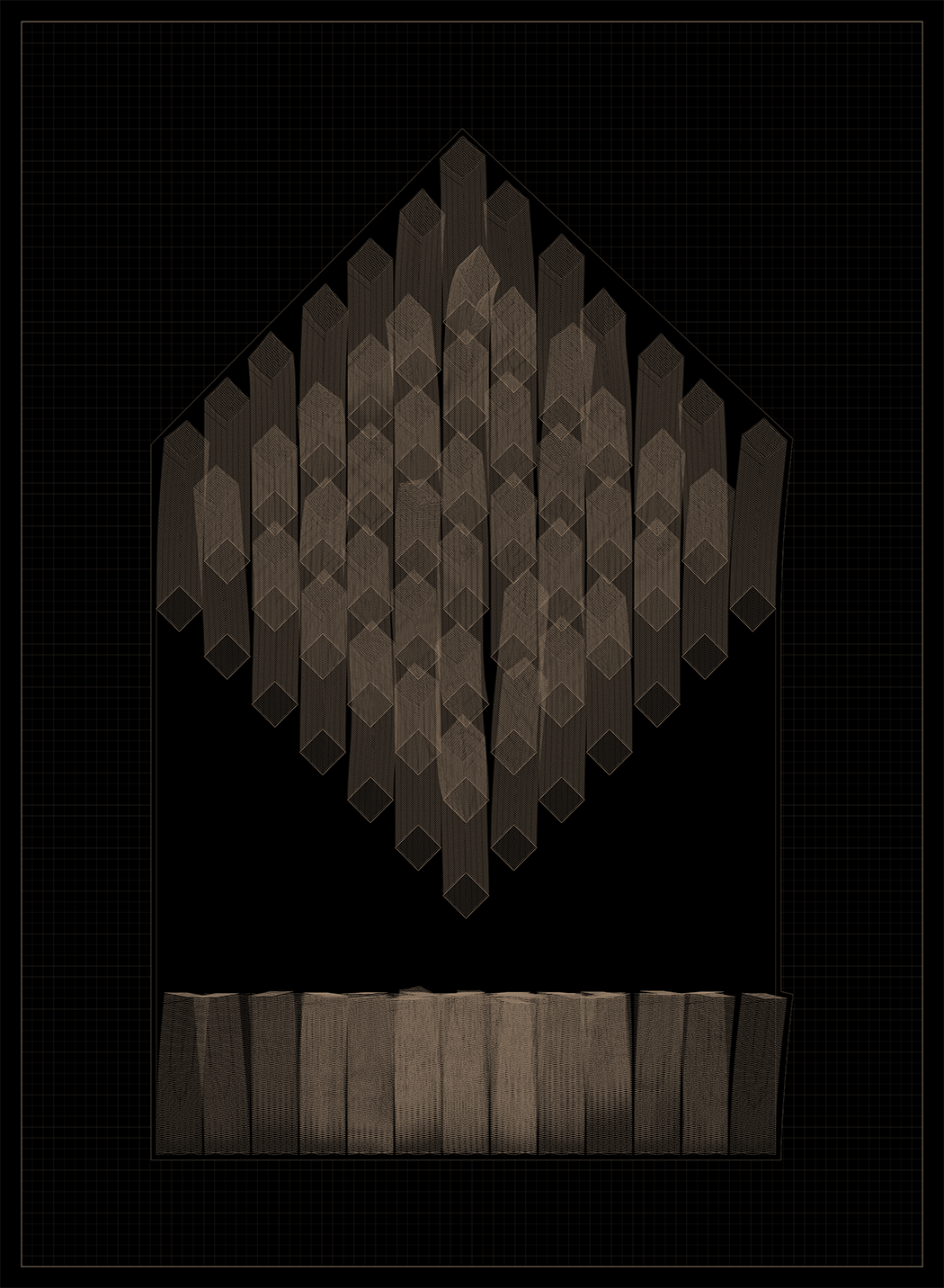
The basic method is simple: drawing lines repeatedly using the same procedure.
I established a set of rules and applied them consistently, allowing countless lines to accumulate and overlap. Depending on how the lines intersected and overlapped, variations in density and form began to appear.
Each drawing developed its own visual characteristics while following the same underlying process. I did not predetermine the individual differences. I observed how they emerged through the repeated application of the rules.
 Jae Park | Exactly Not The Same | 2026
Why did you choose the line as the basic unit of the project? What can a line express that a surface or a solid volume cannot?
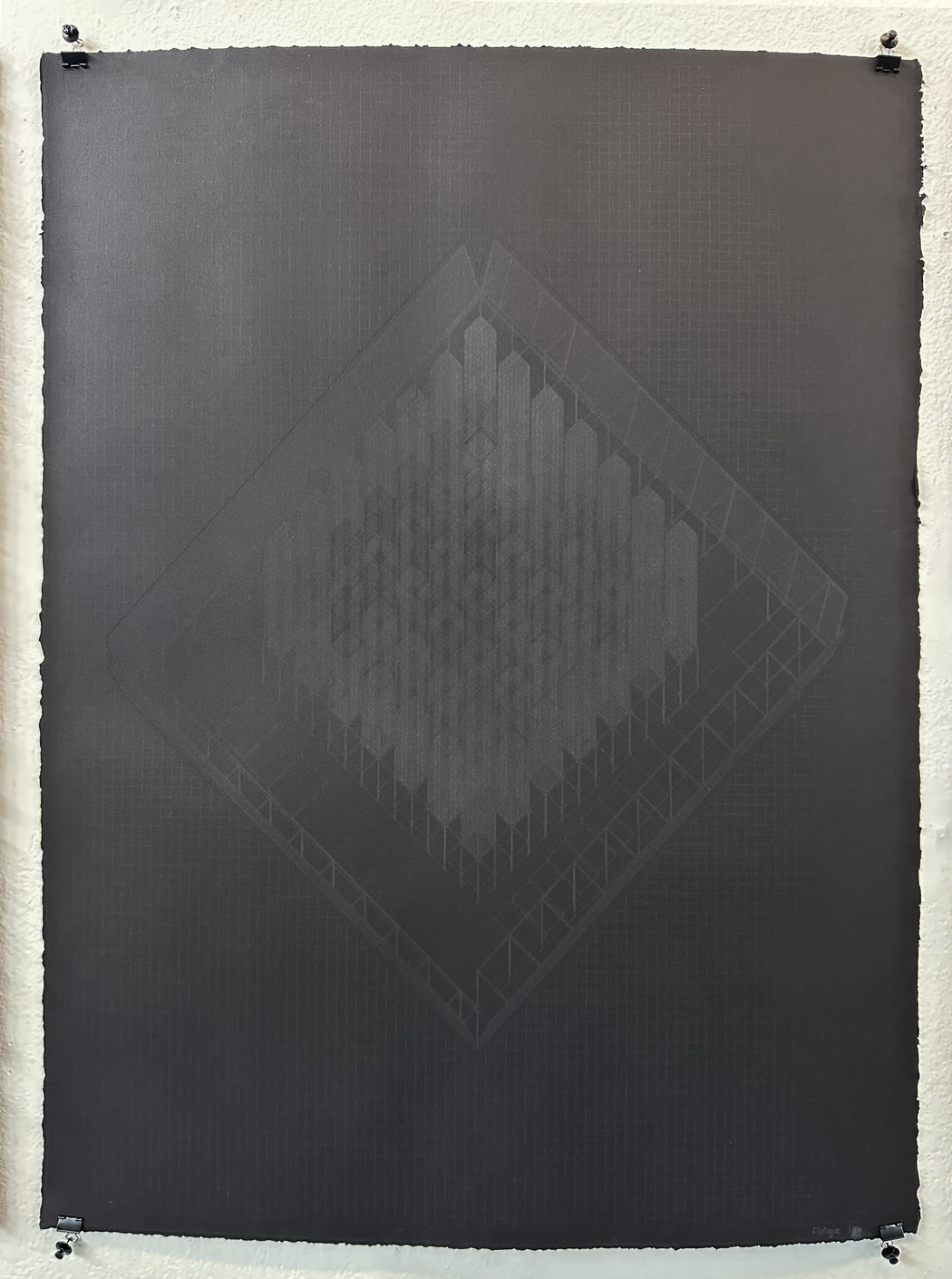
I am interested in how a line can contribute to a larger form while retaining its identity as an individual element.
A single line is simple, but countless lines together can create the impression of a surface or a solid mass. This perception changes with viewing distance. From afar, the drawings appear as faint, unified forms. As you move closer, those forms gradually dissolve into countless individual lines.
I chose the line because it allows the overall form and its individual components to remain visible within the same work.
 Jae Park | Exactly Not The Same | 2026
How did you choose the materials for the four laser-etched works, and how do their surfaces affect the visibility and character of the lines?
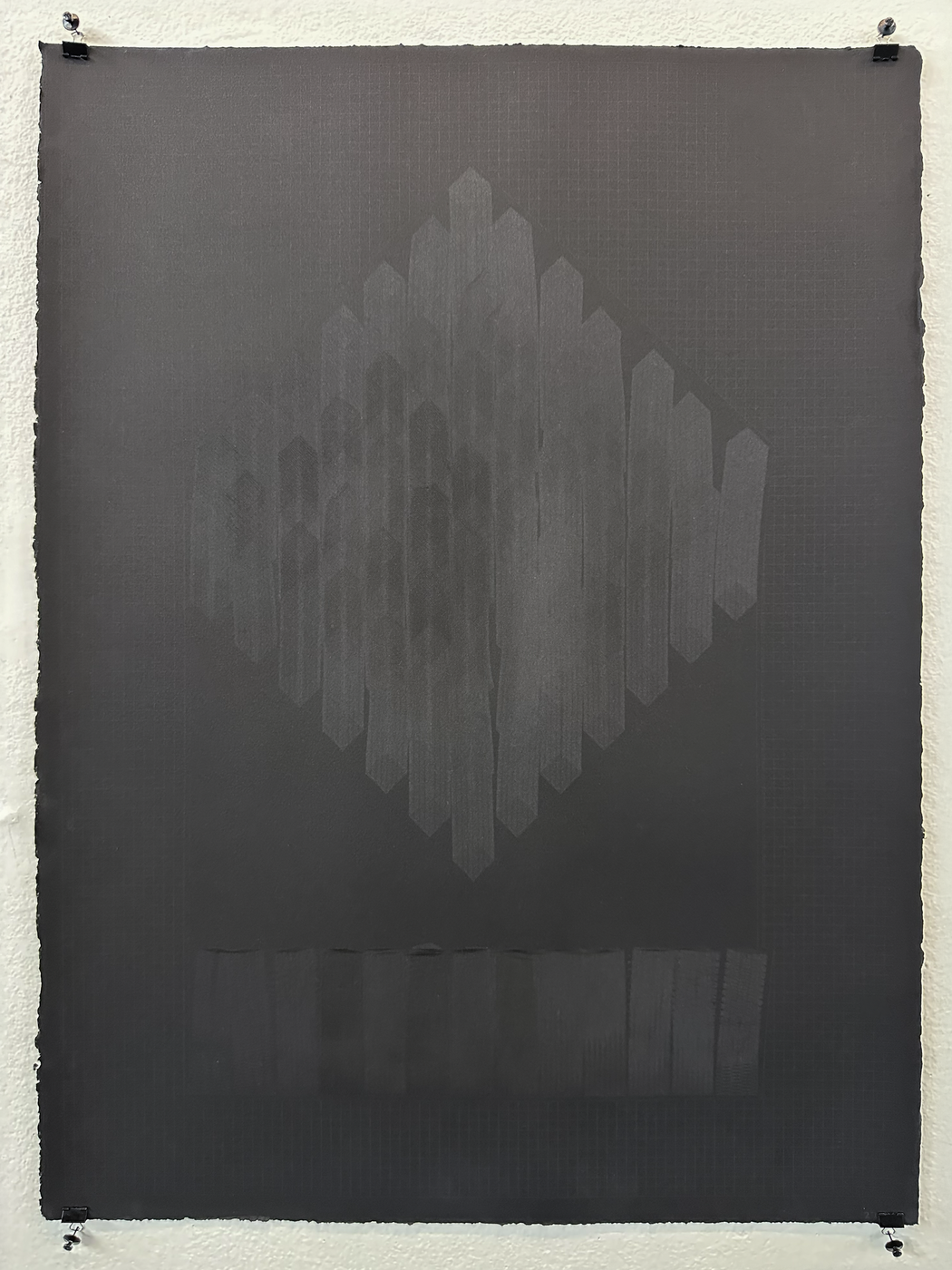
I began by drawing and overlapping lines repeatedly in a digital environment. However, with conventional printing, overlapping lines tend to merge into a single image. I wanted the repeated act of drawing to leave physical traces on the surface.
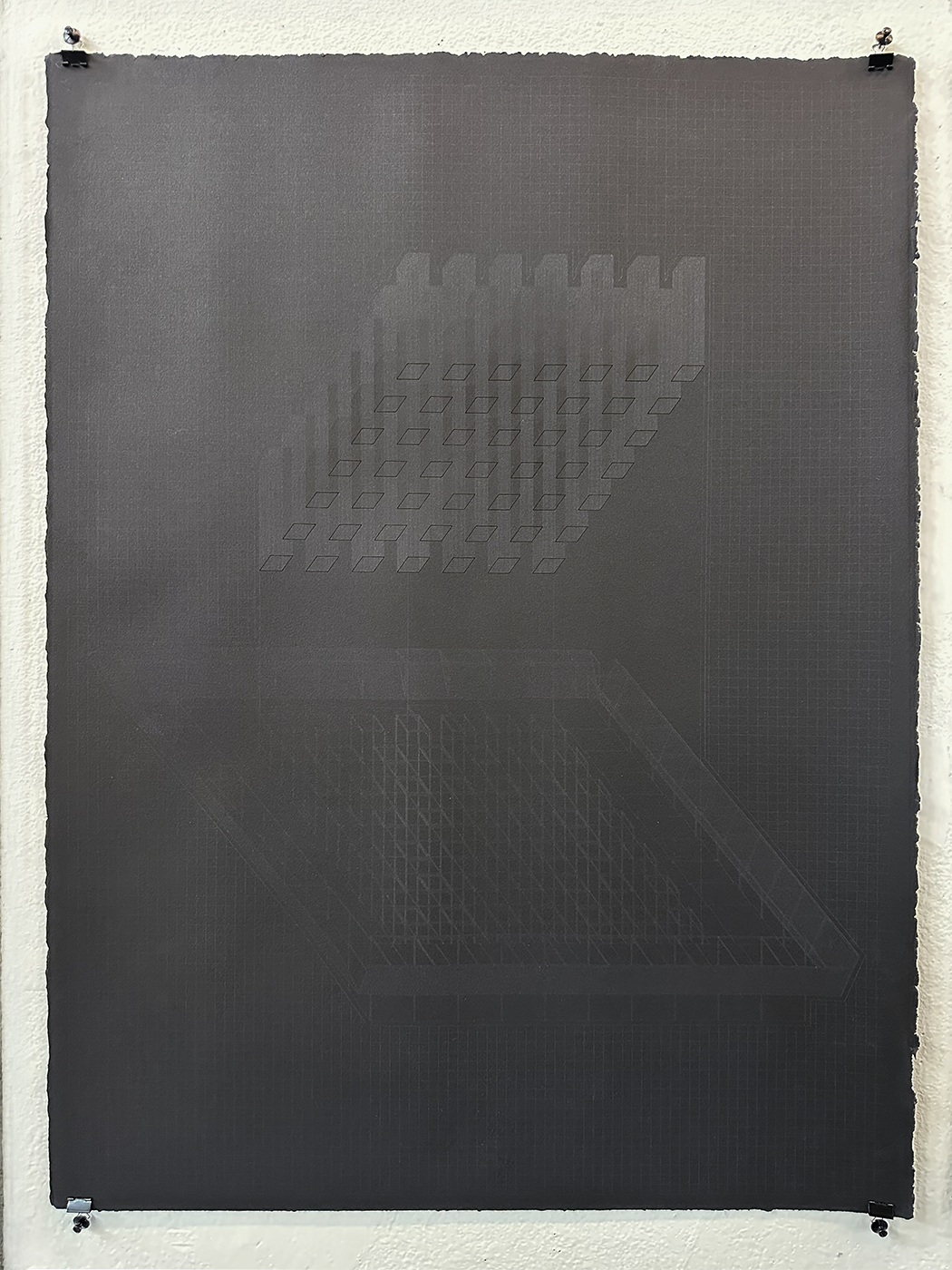
This led me to laser etching. With the method I used, the laser followed the overlapping paths, passing over the same areas multiple times and gradually building up marks on the paper. I chose textured black paper because a single laser pass leaves an extremely faint mark, almost invisible to the eye. As the lines overlap through repeated passes, the marks gradually become deeper and more visible, allowing the form to emerge.
The paper’s surface is also slightly uneven, so even under the same laser settings, subtle variations occur in the marks. When viewed closely, the individual lines reveal differences in depth and texture.
 Jae Park | Exactly Not The Same | 2026
How do the thread columns extend the project’s exploration of line into three-dimensional space? What role does the drawing of their construction logic play in understanding the work?
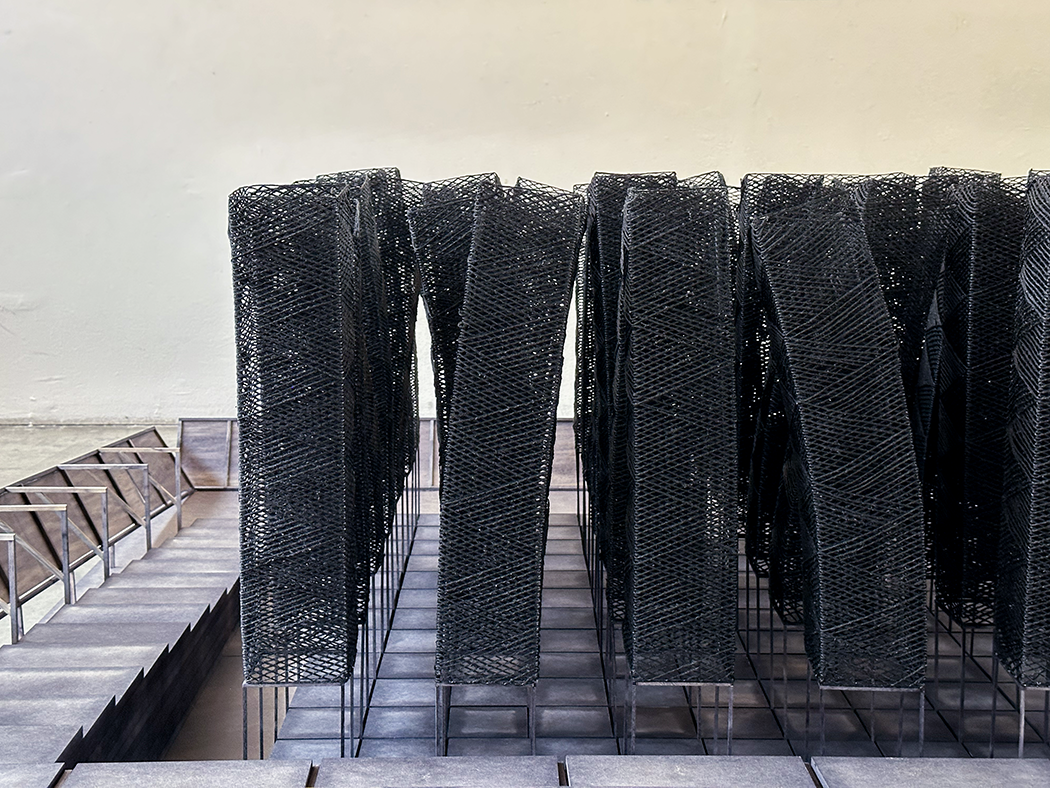
While working on the four black drawings, I began to wonder what would happen if I brought the repeated lines into physical space. I extended the experiment by translating the lines into actual threads and arranging them according to the same principles to create structures resembling columns and roofs.
In the drawings, overlapping lines produced variations in density and form. In physical space, gravity and tension introduced new variables. Even when following the same construction method, the threads sagged and shifted at slightly different angles, producing variations in the structures and the spaces beneath and around them. This experiment later developed into further three-dimensional models and studies of architectural space.
The instruction drawing presented here illustrates the rules and construction process behind these thread structures. The four black drawings show forms generated through repetition, while the fifth drawing shows how the same principle can be applied to physical structures.