
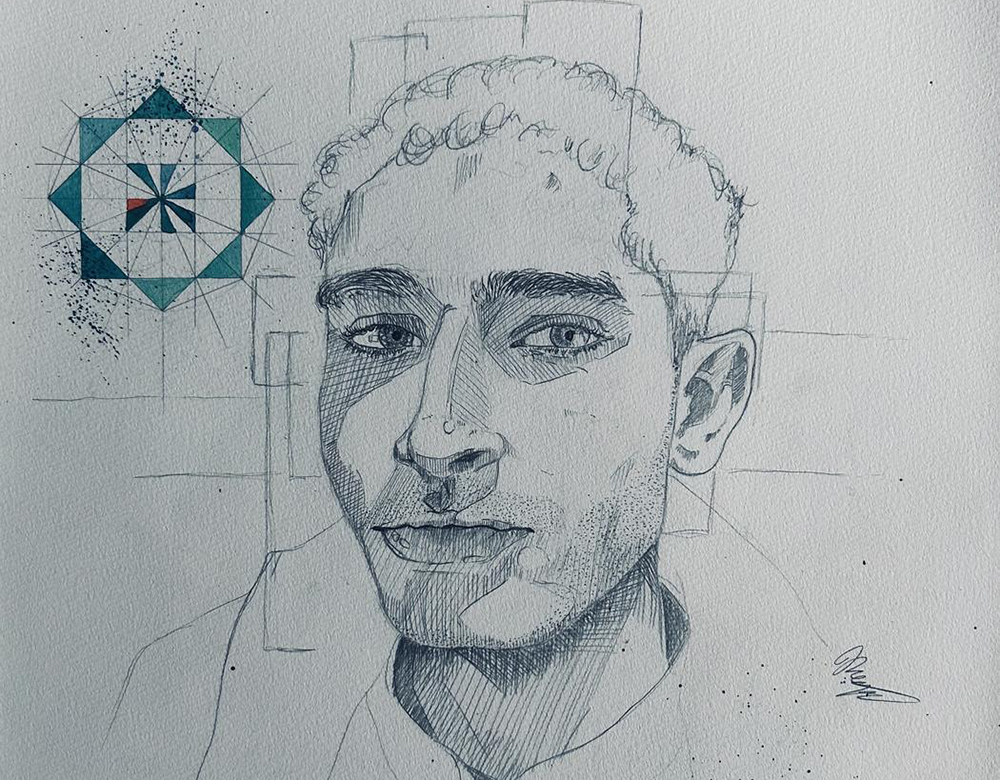
Jibril Ben Jamaa
You grew up in Japan with Filipino and Tunisian roots and later lived in the UAE and the UK. How has this multicultural experience influenced the way you see people and approach portraiture?
It’s simply being exposed to these diverse backgrounds. Not everyone looks like me, and not everyone looks like each other. Isn’t that amazing in itself? Also, it’s the fact that someone who looks like me is “Japanese”. Made me wonder what other faces exist that are from a nation or culture that you didn’t expect would house such face. At that moment, I wanted to know more about the faces of the one nation. In my example of living in Japan, there are faces like mine (mixed heritage Zainichi), Korean Zainichi (“Zainichi” is the term for foreign-born in Japan, but particularly for the Koreans brought in during annexation), the indigenous Ainu of Hokkaido and their iconic mouth tattoos, the indigenous of Okinawa, the “stereotypical” face of the Wa Japanese, the face of Japanese artist in full makeup, the attire of a Japanese bride — all these faces are “Japanese”. All of them make up the beauty of Japan. They make people go “What? These people exist there?” And I want to see more in different locations.
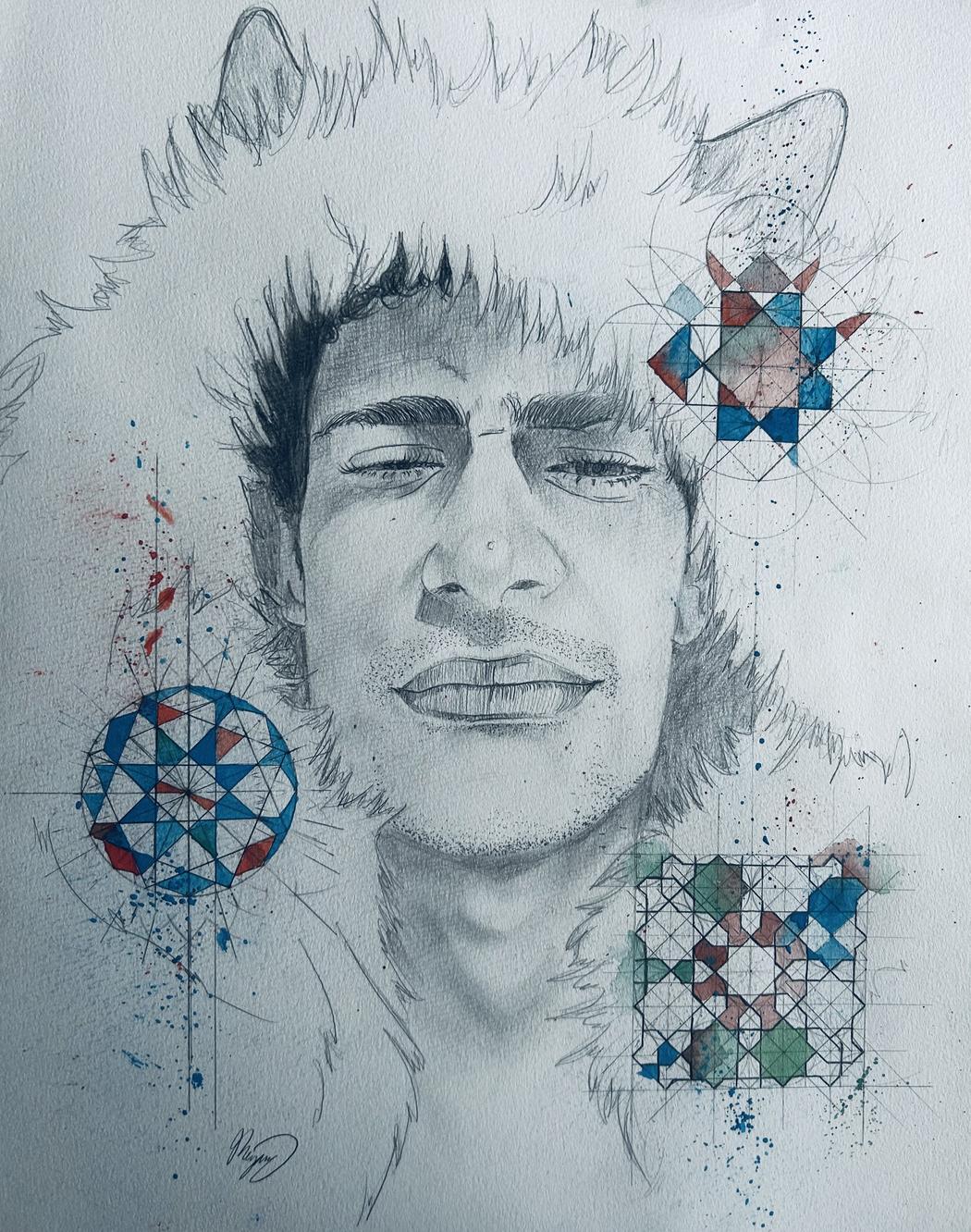
You mention that you only draw faces you feel a particular connection to. What usually creates that connection, and how do you know that a face has become a subject you want to draw?
I could say many things to give a logical, tangible reason. Perhaps it’s when it’s a face in context I’ve never seen before. Perhaps it’s when the face gives a striking look into whatever they are looking at. Perhaps I have a supernatural ability to see the thoughts and read the stories the face has to tell. But I always refer to a quote from MIYAZAKI Hayao’s film Kiki’s Delivery Service: “Today when I saw you, I thought: ‘I wanna paint!’” That pretty much sums up my connection — they make me want to draw.
Faces are clearly at the center of your artistic practice. What do you think a face can communicate that words sometimes cannot?
It’s more about how the face makes me feel. My latest portrait is that of a classical Indian dancer. In a way, I felt the passion and the love for the art style that dancer allows his face to express. Anyone can say they love to dance. But with my latest subject, I can believe it when I saw his face. As the poet Brian Jones puts it in his poem About Friends, the less words are expressed, the more authenticity there is. It’s that moment when someone smiles without knowing by they are smiling; it’s that moment someone’s pupils widen unknowingly; it’s the moment someone blushes without verbal triggers. It’s the passion that is allowed to shine unknowingly in a moment of being true to oneself that we see in faces that words fail to translate.
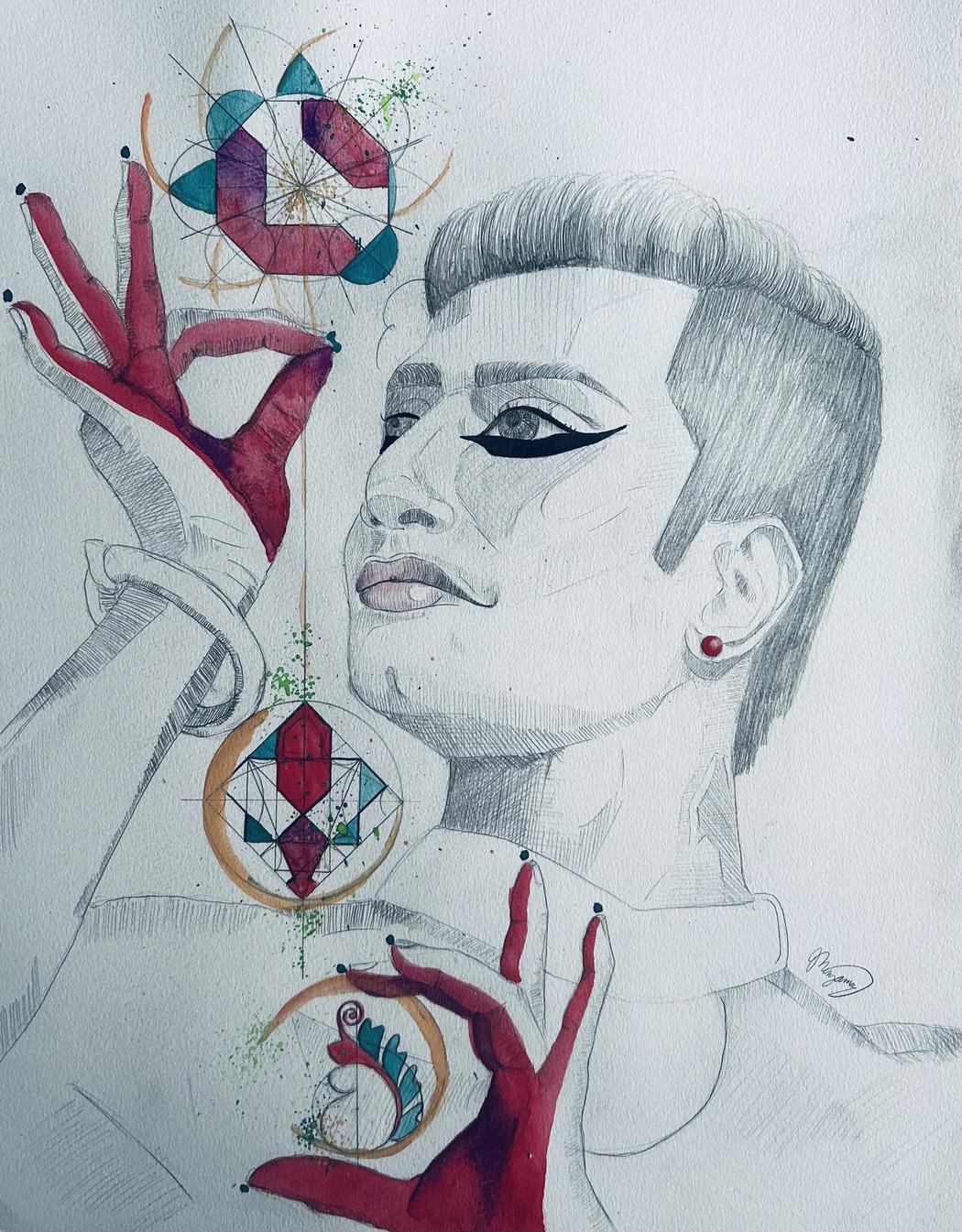
You have a strong passion for languages and are currently learning your seventh language. Do you see any connection between learning languages and learning to “read” or portray a human face?
In a way, I do. Cultures and their languages have a perspective in situations and contexts, and have a word specific to that one instance, existing only in that language and its people. People generally tend to steer clear from what they can’t understand. However, because I have the fortune of having an access to a library of unique vocabulary from different languages, I know what word is best to associate with what I see in these faces.
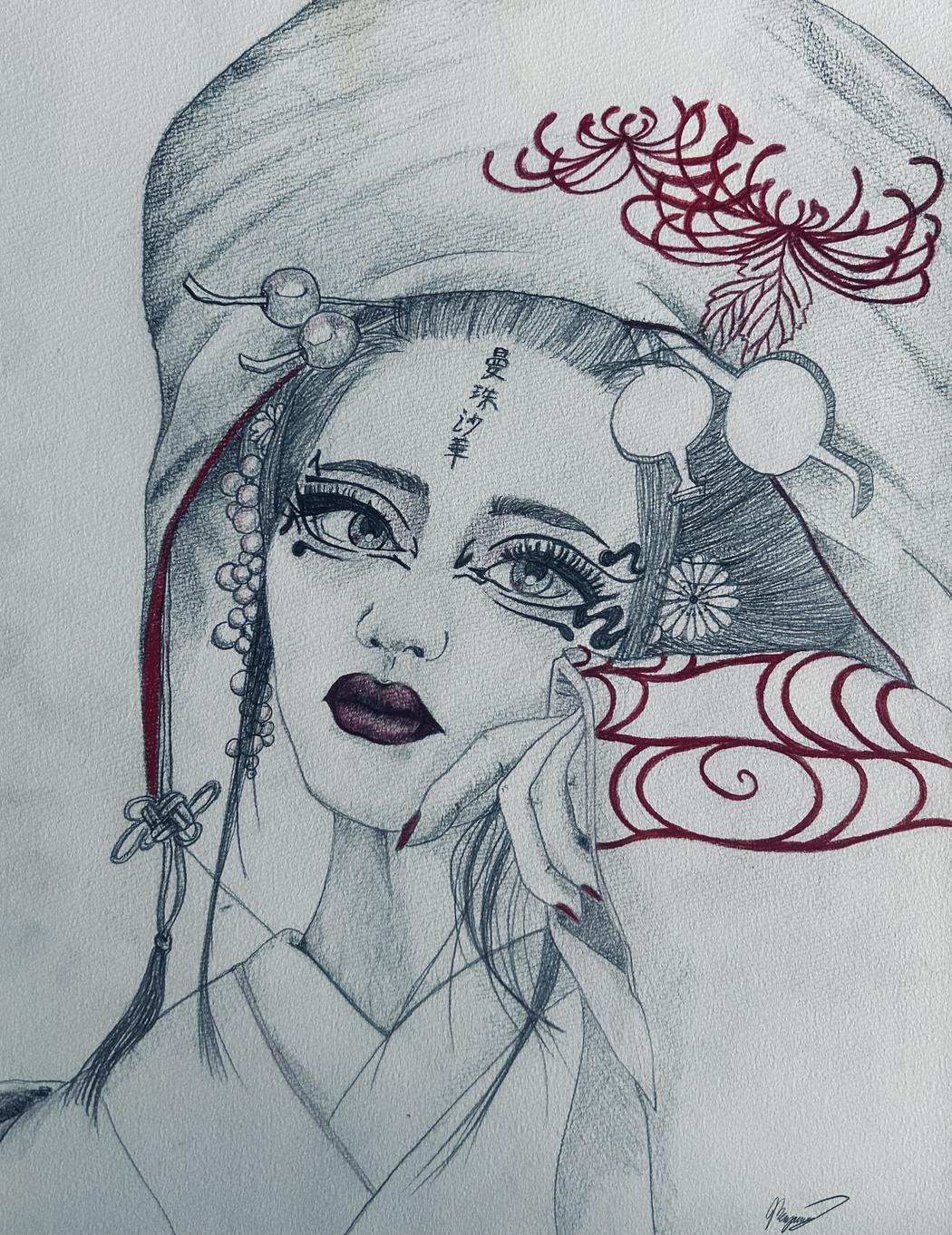
Many of your portraits combine realistic pencil drawing with precise geometric patterns. What do these geometric forms represent for you, and how did they become part of your visual language?
When I draw these faces, I noticed that the end product is kind of lonely. They need a company, a compliment. I used to draw flowers, but I thought it too generic and unoriginal, overly-used. I was thinking to myself: “What motifs can I use to accompany this portrait?” My search led me to a (re)discovery of geometric patterns, particularly Arabo-Islamic patterns. I tried them on, and to my amazement, it fit perfectly. A mathematical, universal motif. I didn’t quite bother asking myself why it worked. I just knew it did. I’ll let the audience figure that out for themselves.
When creating a portrait, are you primarily interested in achieving physical resemblance, or are you trying to capture something less visible about the person?
I do try to make the portrait as accurate as the original subject. And that includes the inspiration that pushed me to draw them. When I look back at the portrait, I want to be able to say to myself I see in that drawing what I saw in that person.
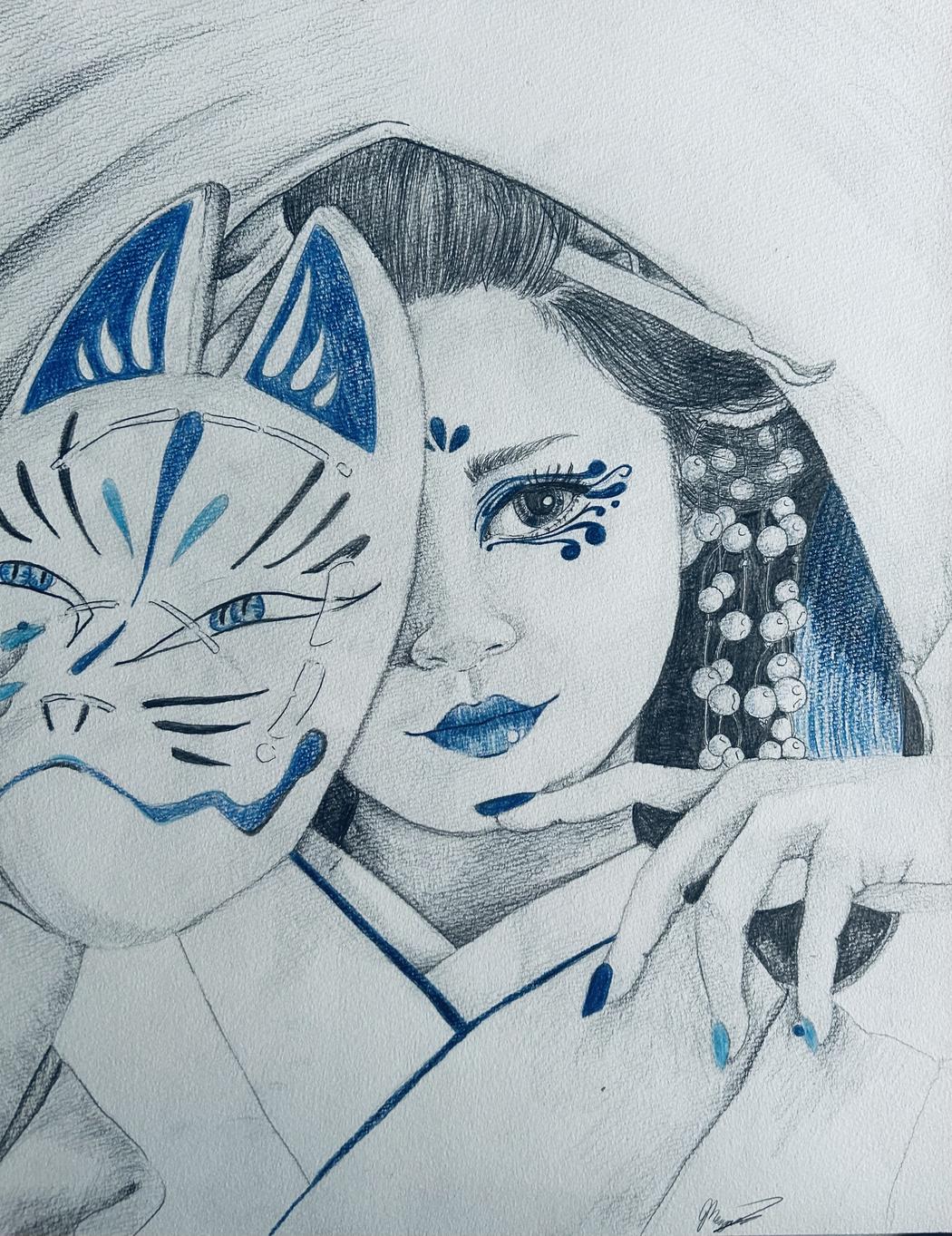
Your own life has involved movement between countries and cultures, and you are preparing for another chapter in Malaysia. Do ideas of belonging, cultural identity, or being between different worlds enter your work consciously?
Never. I know where I belong. I know what I am. And I am not “one thing”; I am “many things”. I’m not just “Japanese” or “Filipino-Tunisian”; I am “Filipino-Tunisian, born and raised in Japan, with a French education”. And as I’ve done my tertiary education in the Emirates and in the United Kingdom, we can add that to the list. People grow, people move out, people learn. If after ten years you’re still the same person, then that’s unfortunate. I don’t consider myself to be “between” worlds. It sounds like I am “stuck”. But I’m not stuck. I am fluid. Who says I can’t be this and that at the same time? Because it’s true. That’s how I am able to explore different views and appreciate different cultures. I have the ability to dip my toes in all the words. Many bi-racials or Third Culture Kids feel a pressure to choose one place of belonging, to identify and relate to one field. That’s such a limiting mindset. Just imagine how colorful the horizons would be if we let go of the search of needing to be in one place. Imagine what abilities you can unleash once you realize you don’t have to “search” for anything, and just be.
No, ideas of belonging, cultural identity, or being between worlds do not cross my mind. I do what I do best. I draw faces I love, I decorate them with geometric patterns, I take photos of scenes I feel with, and I am always proud of the work I produce.