

Dušan Kovačević
Your recent works explore the human body through conditions such as calcific tendinitis, COPD, and scoliosis. What first led you to medical imagery and the body as a subject?
My interest in the human body did not begin with medicine, but through observing workers and their everyday lives. I am interested in the body as something that simultaneously carries personal experience, physical labour, exhaustion, and injury. When I began exploring medical imagery, especially X-rays and anatomical representations, I recognized in them the possibility of observing the body in a different way — not only as a figure, but as an internal space. Medical imagery became a kind of foundation for exploring the relationship between what is visible on the outside and what is happening inside a person.
The titles of these paintings are clinically precise, while the images themselves are expressive and emotionally charged. How do you approach the tension between medical objectivity and personal experience?
This contrast is very important to me. A clinical term represents a fact, something precise and almost cold, while the painting allows for a completely different, subjective relationship with that fact. I do not try to transfer medical information literally onto the canvas, but rather use it as a foundation on which I develop my own interpretation.
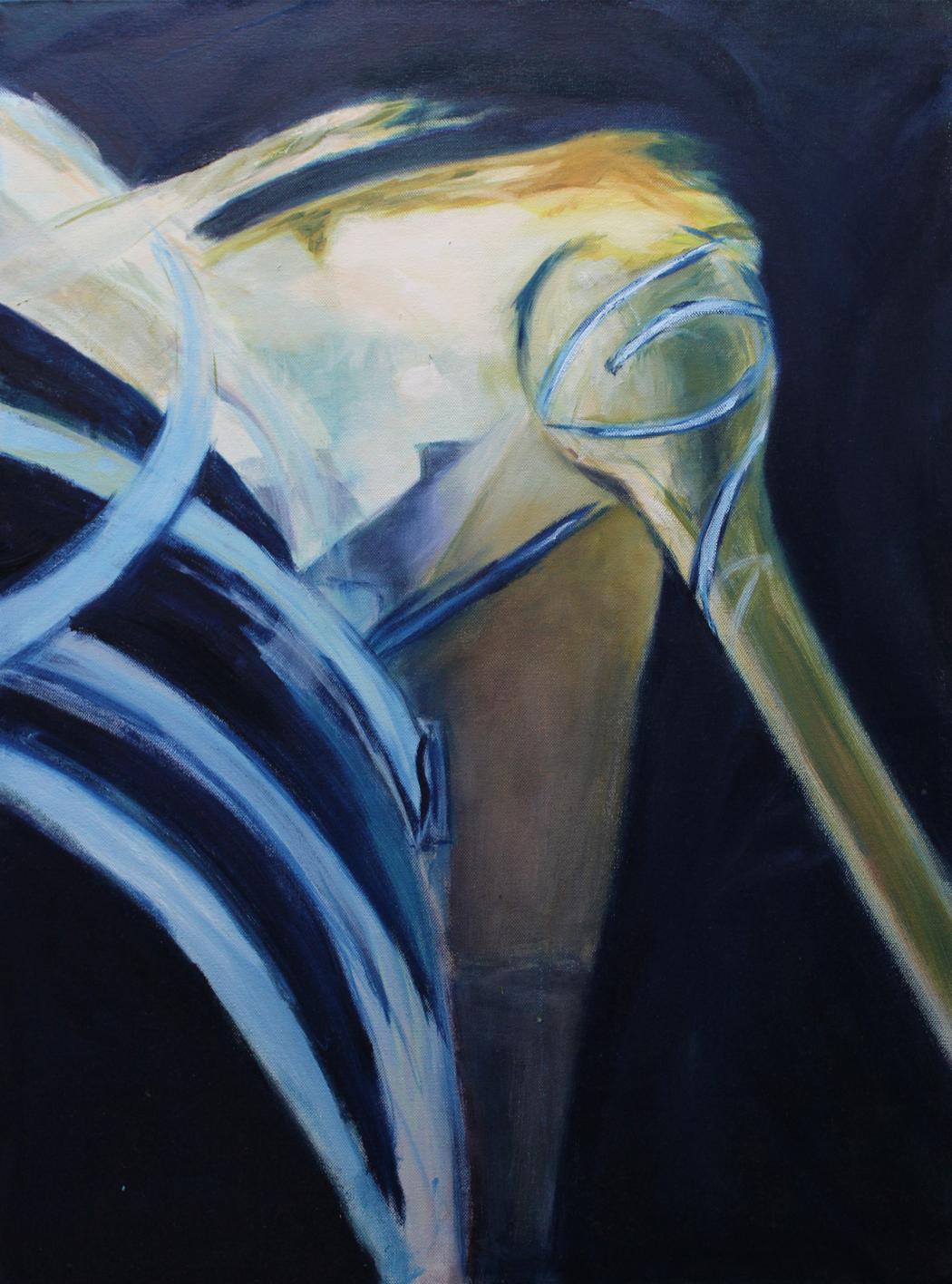 Dušan Kovačević | Calcific tendinitis | 2024-2025
Blue dominates many of these works, but it shifts between associations with the clinical, the mechanical, and the emotional. What role does blue play in your visual language?
For me, blue is much more than simply a colour. It can appear cold, sterile, and clinical, but at the same time it can be very emotional, deep, and vivid. Sometimes I use it precisely because I want to move the image away from the natural colour of the body and bring it into another, almost unreal space. In this way, blue becomes a kind of atmosphere through which I observe the body.
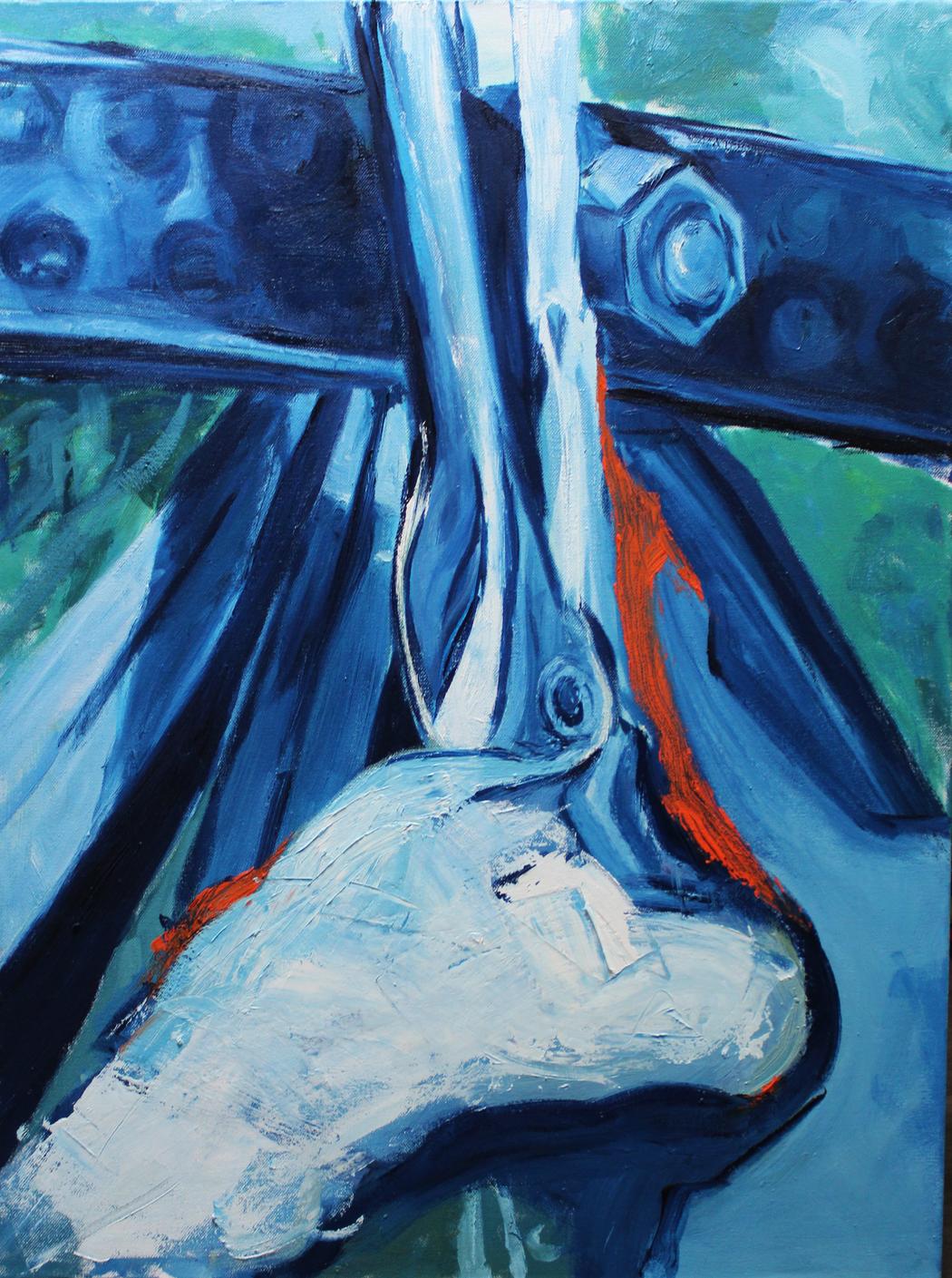 Dušan Kovačević | Transhumanism | 2024
Your brushwork moves between clearly recognizable anatomy and near-abstraction. How do you decide how much of the subject should remain identifiable?
There is no predetermined boundary. It depends on the painting itself and on what I want to achieve. It is important to me that, at a certain moment, the viewer can recognize a body, a bone, a muscle, or a particular anatomical form, while at the same time feeling that this recognizability is beginning to disappear.
I am interested in the moment when the painting is no longer simply a representation of something we already know. When anatomy begins to break apart through brushwork and colour, it becomes an almost abstract structure. At that point, we are no longer looking only at the body, but also at the surface, rhythm, material, and energy of the painting. That is why it is important to me that there is a constant tension between figuration and abstraction.
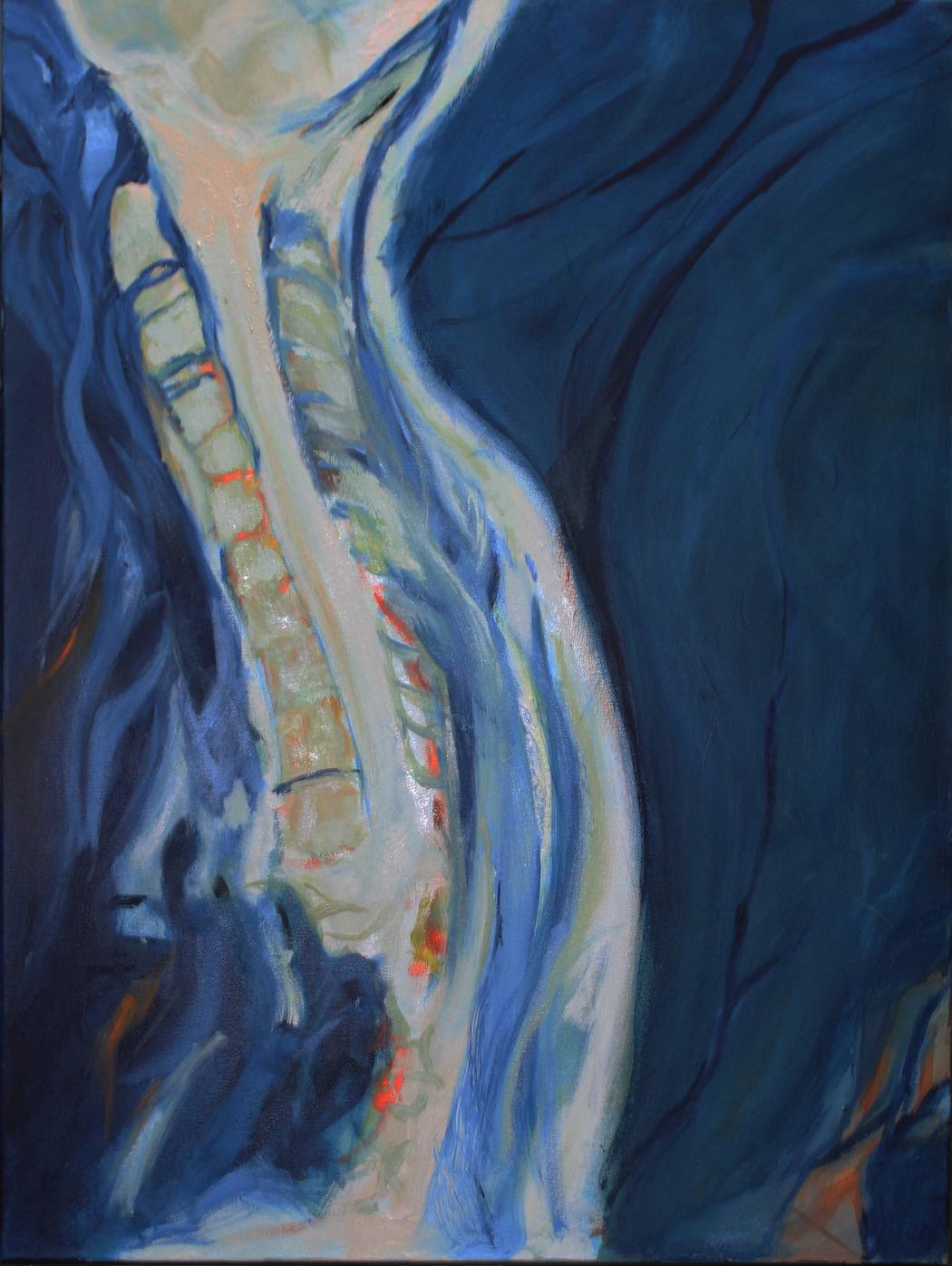 Dušan Kovačević | Scoliosis | 2025
How does living and working in Banja Luka shape your choice of subjects, your understanding of the body, and your depiction of contemporary life?
Banja Luka is the city where I live and from which my experience of everyday life begins. The city may not be a major centre, but precisely because of that, I feel more connected to my immediate surroundings and to the people I encounter every day.
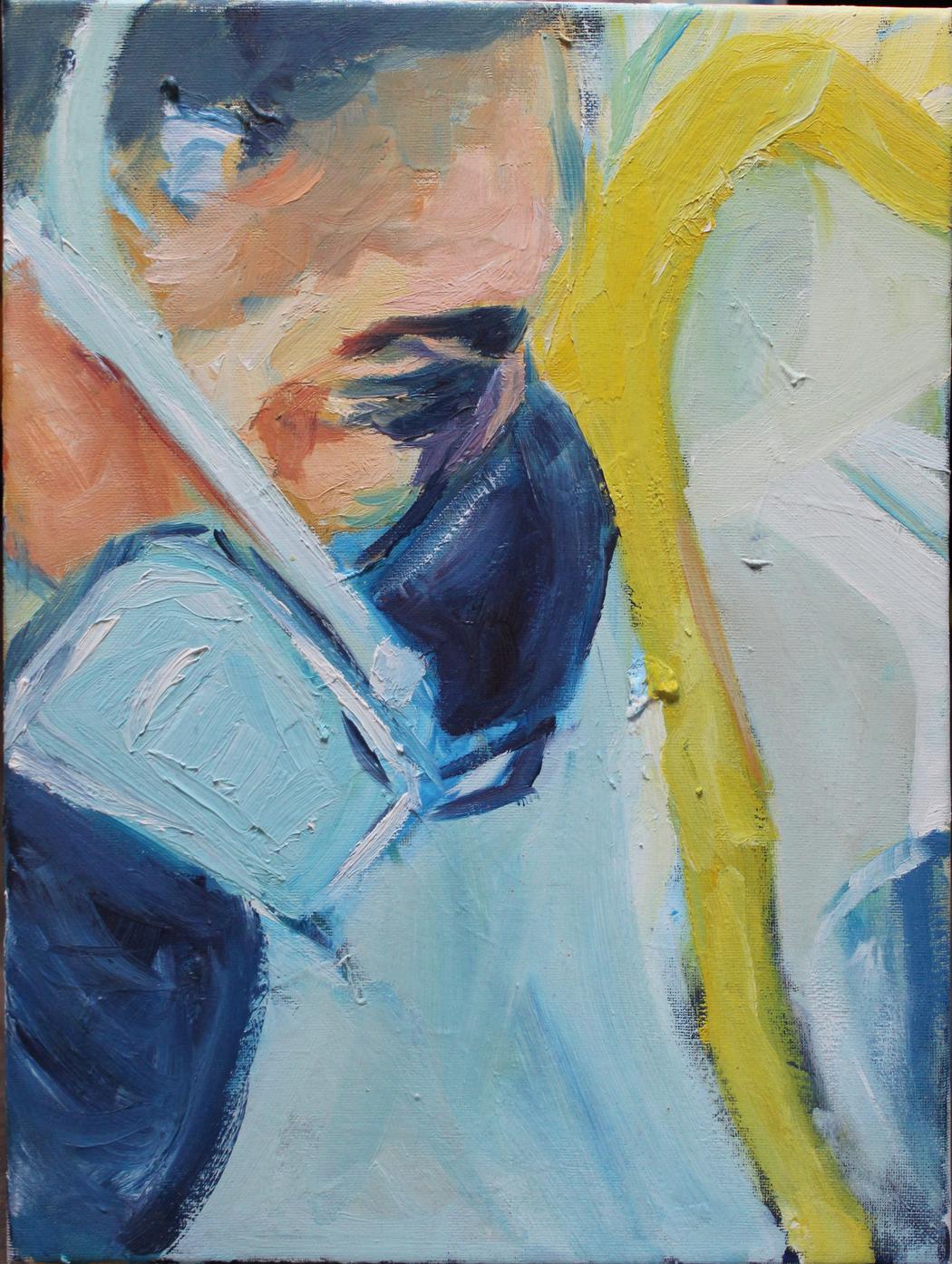 Dušan Kovačević | COPD | 2025
Having recently completed your Master’s degree, which questions or themes do you now want to investigate further, and in what direction do you see your practice developing?
Completing my Master’s degree is not the end of one investigation for me, but the beginning of a new period. I want to continue exploring the relationship between the human being, the body, and the space in which we live and work. I also want to continue pushing the boundaries of my artistic expression, without losing the initial human story.