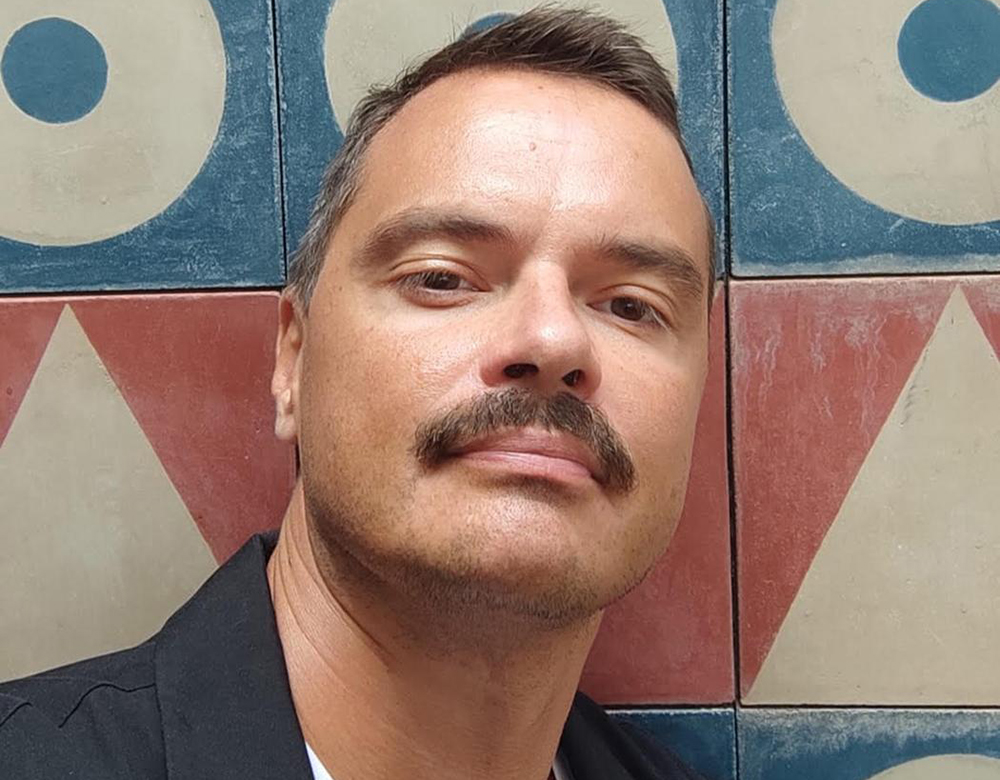
Vladimir Svorcan
Your education combines Visual Communications and Art Direction, while your current practice is rooted in fine art. How has this background shaped the way you construct an image, even when you begin without a predetermined composition?
I would say it has shaped my practice to the extent that an art academy can shape it, regardless of the specific field of study. My artistic practice has little to do with my applied design background, or even with my professional work. In a way, it serves as a counterpoint to it. In my art, I explore themes and approaches that are possible primarily within an artistic context, above all spontaneity and gestural expression. I don’t create an image that I already have in my mind; instead, things unfold in the moment, during several-hour-long creative sessions.
You describe your works as being created in concentrated, physical sessions. What does such a session look and feel like, and how important are bodily movement, speed, and rhythm to the finished work?
The sessions last several hours. I work simultaneously on several boards with paper fixed to them. I discard some of the resulting works because they don’t meet certain criteria of mine.
Speed is important because the works need to retain a sense of freshness, and it is essential for me that movement remains perceptible. This is also why I work on paper: the medium itself imposes certain limitations.
At the same time, the image only makes sense if there is a certain degree of control. Otherwise, it would be nothing more than simply pouring paint and leaving everything to chance. Rhythm is another important element. I want my paintings to have a musical atmosphere, like visual chords.
You have said that the image is “found through the act of making”. How do you recognize the moment when a work begins to reveal its direction?
This is quite a difficult question. In principle, if I haven’t already torn up the paper, it means that there is some direction emerging. There is always an initial idea of what the composition should look like; everything beyond that is a combination of chance and gesture.
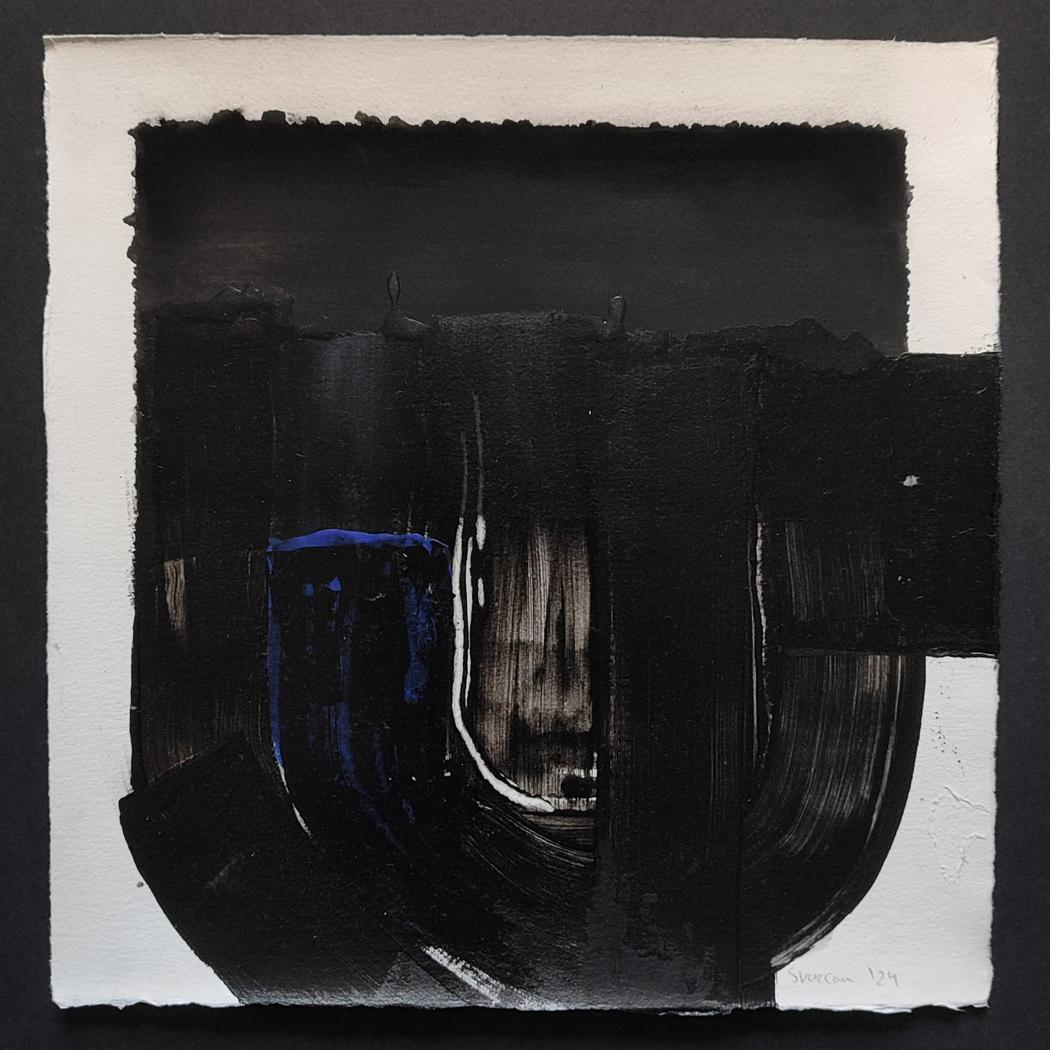
At what point do you know that a work is complete? Is this decision intuitive, or are there particular visual tensions or balances you look for?
A work is finished when I no longer know or feel if I can add anything to it. Sometimes I return to works I consider finished and think about whether I would do anything more. If the answer is no, then that is it.
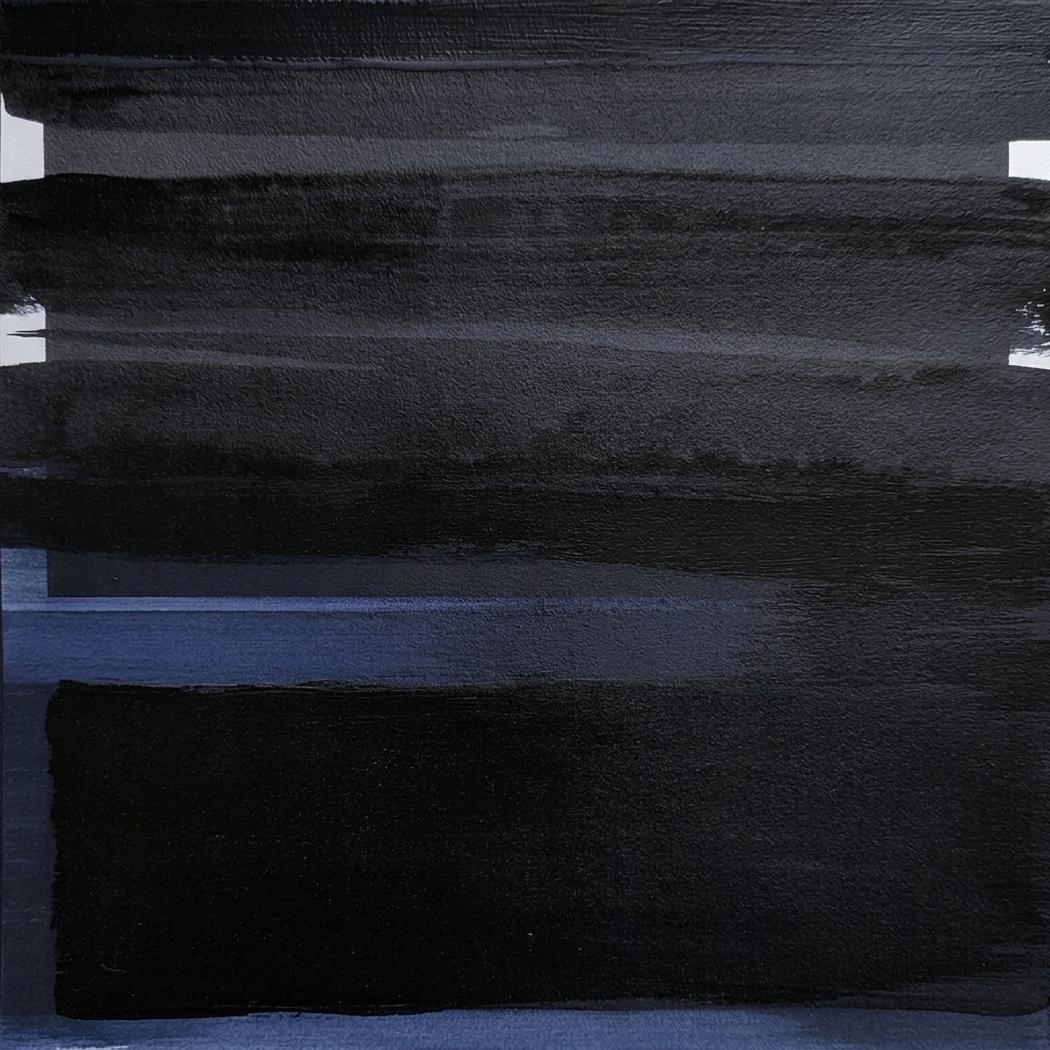
Black dominates much of your work, yet it never appears entirely uniform: it carries layers, textures, and traces of movement. What does black represent or make possible for you as a material and visual space?
Choosing black is a way of limiting my visual means so that texture and movement can take centre stage. Through different layers, I create depth. The medium is also very important here: Chinese ink and acrylic behave differently on paper and produce different visual qualities.
Abandoning colour and reducing it to accents is a kind of painterly position. Black allows me to focus on one thing: a certain artistic expression.
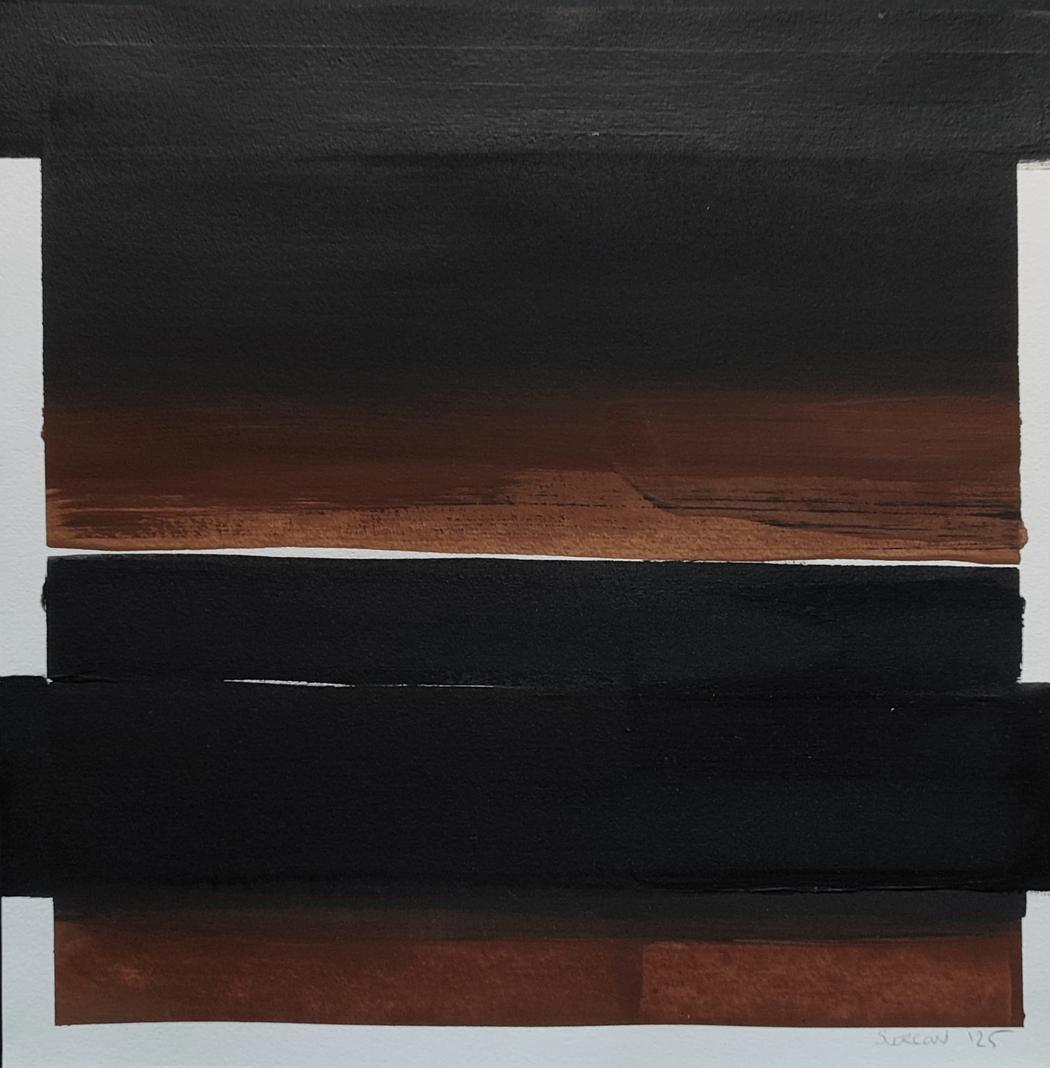
How does working on paper – with its absorbency, fragility, and physical limits – affect your decisions differently from working on canvas or another surface?
Paper is essential because it forces you to react quickly and rarely gives you a second chance. I have experimented with canvas, but it allows for corrections, and things can begin to feel laboured. The work loses its energy and spontaneity.
Having lived and studied in Novi Sad, Rome, and Munich, and exhibited in several European contexts, how have these different cultural and urban environments influenced the atmosphere or structure of your work?
These are simply places where I have lived or currently live. The need to create is something I carry within me, independently of where I am.
Of course, all these different contexts have influenced me as a person, but certainly not my creative work. The need to create is immanent; it comes from within you. It is what you give to the world, not what the world gives to you.