
Karen Mosbacher
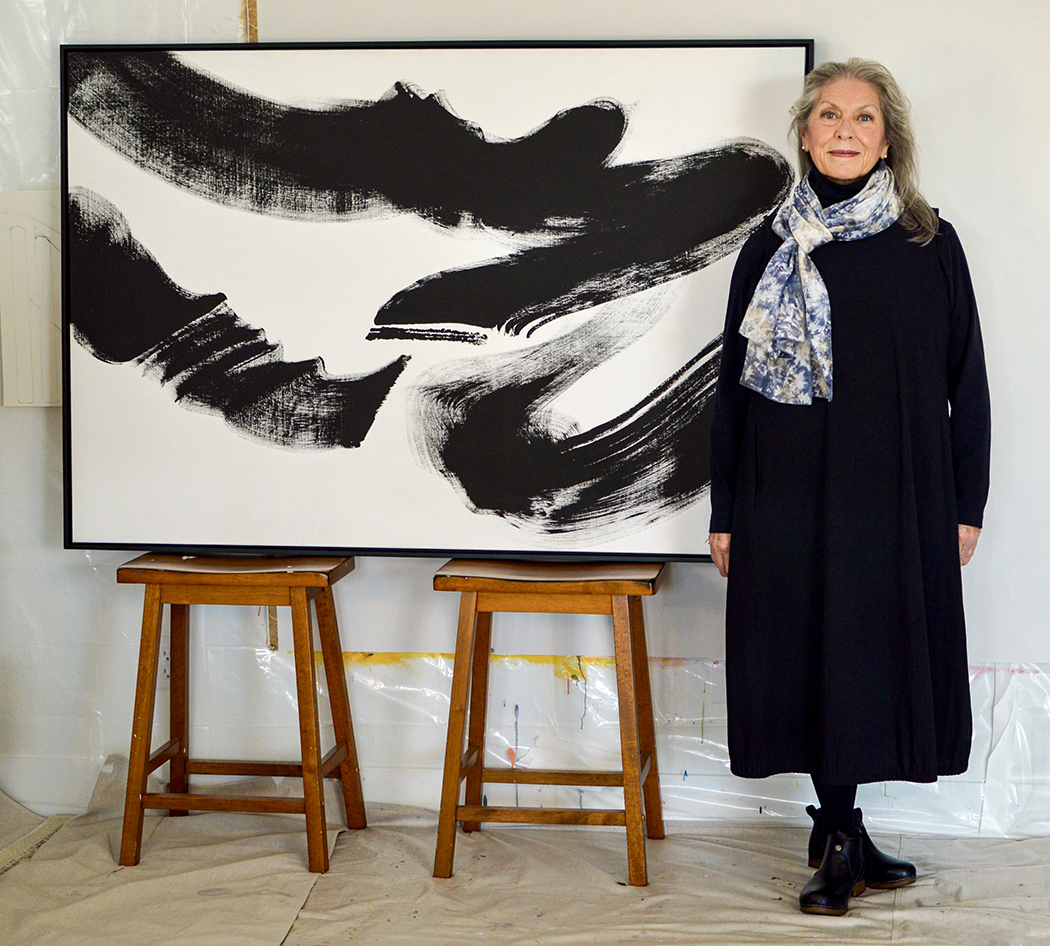
Your work is deeply rooted in chromesthesia. Can you describe what it feels like to “see” sound, and how this perception shapes your creative process?
Sound is never only something I hear. I also feel the vibrations of it in my bones. It arrives with color, movement, density, rhythm, and atmosphere. Certain notes in music or voices feel sharp and bright; others feel expansive, veiled, weighted, or fluid. I experience sound, music, and emotion as a moving field, something alive that shifts as the sound unfolds.
That perception is central to my creative process. I begin by listening with my whole body. I pay attention to the emotional temperature of the music, the architecture of the composition, the spaces between sounds, and the way a phrase rises, fractures, dissolves, or returns. The painting becomes a way of translating that inner sensory experience into color, gesture, and surface.
In works such as Infinite Way Home to Yourself, the gestures carry that movement between sound, emotion, and embodied response. The work does not depict the music; it carries the atmosphere, pressure, and emotional architecture I experience while listening. I interpret what I see and what it feels like to move through it.
In your paintings, gesture plays a central role. How do you translate musical movement into physical brushstrokes?
Gesture is where sound becomes physical for me. A musical phrase may suggest a sweeping motion, a rupture of marks, a pulse, a tremor, or a suspended breath. I respond to those sensations through the movement of my hand, arm, and body as one connected instrument. My background in dance helps me interpret the music physically. The emotional movement of the music resounds in my body, which directs me to create the gestures.
The brushstroke becomes a kind of notation. It carries tempo, pressure, interruption, release, and emotional force. Sometimes the gesture is fast and instinctive; other times it is restrained, almost held back. I’m interested in the moment when a mark still feels alive — when you can sense the movement that made it.
On many occasions, I use my hands to create the gesture as they are an extension of what is happening in my body. In this way, the painting holds both the music and the body’s response to it. It becomes evidence of listening.
In my new body of work, coming next year, Elsewhere: Not Escape. Becoming, textured sides and edges also matter because they make the work more than a front-facing image. The object itself becomes a carried message, a wrapped scroll of knowing, almost like a vessel. The surface, edges, paper, and interior space all participate in that container. I call the edges and sides of the piece passage bearers. They hold the becoming. The work feels like an alchemy itself, an object that has traveled from one state into another.
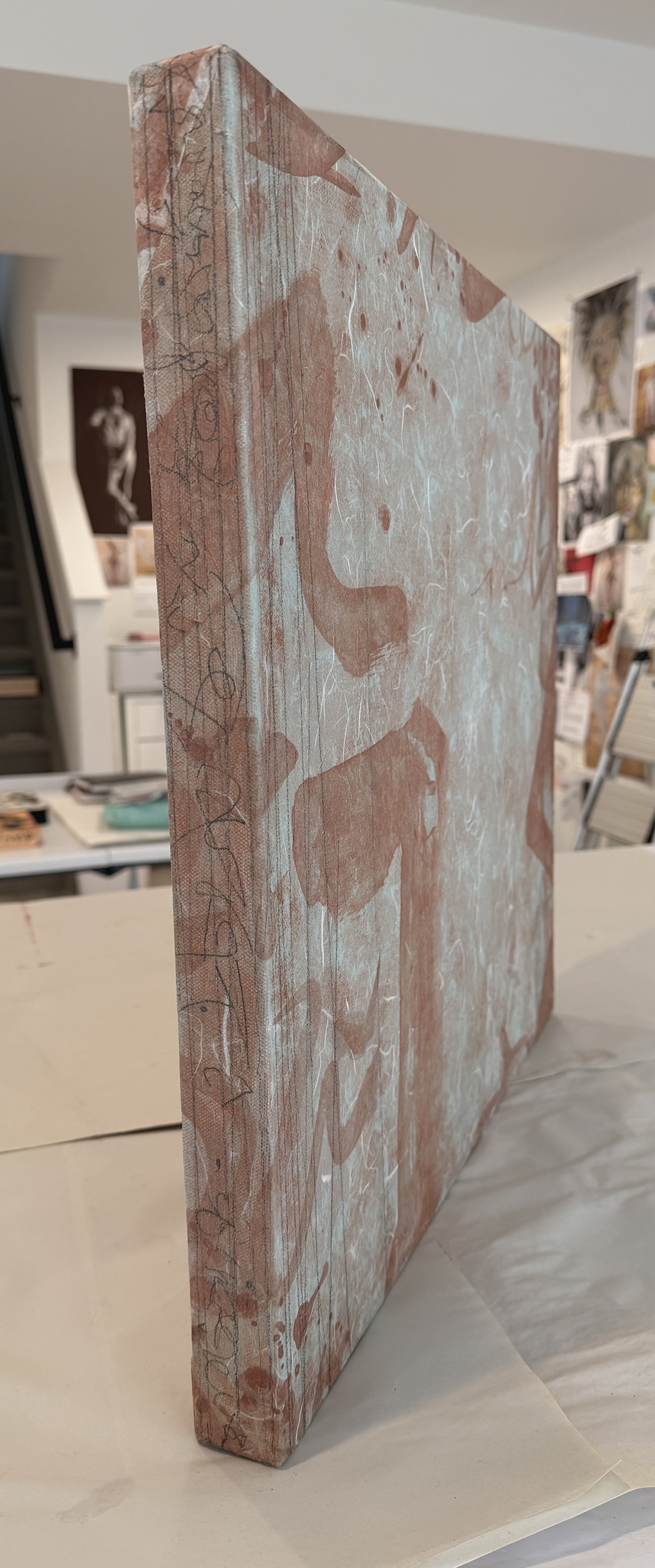 Karen Mosbacher | Elsewhere Study
You describe art as a form of alchemy. What transformations are you most interested in exploring through your materials and process?
The alchemy in my work is integration. After decades of working through dance, music, color, photography, painting, and material experimentation, these languages are finally coming together. Gesture, sound, movement, texture, and emotion no longer feel separate to me. They are part of the same field. The alchemy happens when all of those lived experiences become one physical form. It is the act of taking the invisible and giving it a physical presence.
Materials allow transformation to happen slowly. Through materiality, the work can conceal, reveal, stain, fracture, soften, or repair. A surface can hold revision, resistance, beauty, disruption, and emergence all at once. I’m drawn to that complexity because it feels honest. Life is layered. We carry marks. We change through pressure.
The materiality of gesture is the most distinct inquiry in the beginning of a piece. Paint, textiles, fiber, paper, and a multitude of media have found their way into my toolbox. To create fluid gestures with materials other than paint is a challenge I have recently accepted.
In the studio, I explore how raw sensation becomes image, how chaos becomes rhythm, and how something unresolved can become visually alive. Just as music resolves in the coda, the tenacity of gesture settles the alchemy of each piece.
How do you balance structure (such as musical composition) with spontaneity in your paintings?
Music gives me an underlying structure of color and movement. Musical composition often feels parallel to composition in a work of art. I have spoken with many composers and asked them similar questions about structure, emotion, and movement. Different genres offer rhythm, repetition, contrast, tension, and arrival. Those elements become a kind of invisible framework. One composer, in particular, is continually enchanted by my colorful descriptions of his cultural music and the stories behind it.
Within that framework, I allow the painting to remain spontaneous. I want the work to have the freshness of discovery. I may begin with a strong sense of color or movement from the music, but once the painting starts, it becomes a conversation. The surface pushes back and asks for more texture. Marks create new relationships. Something unexpected appears, and I decide whether to follow it or resist it.
That balance is important to me. Too much structure can become rigid. Too much spontaneity can lose depth. I’m looking for the place where discipline and instinct meet.
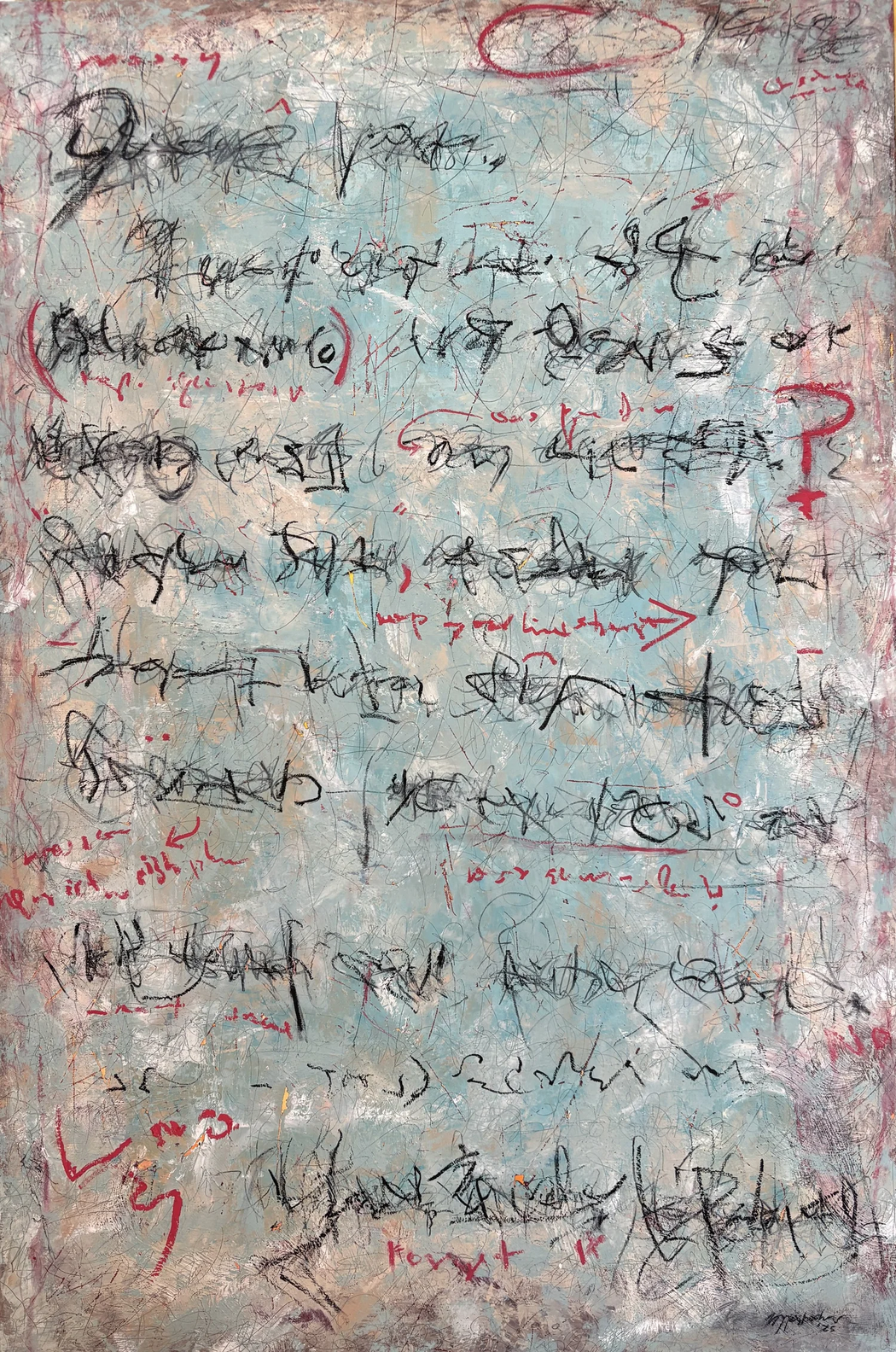 Karen Mosbacher | Corrected & Returned Love Letter | 2025
Can you tell us about your collaboration with dancers? How does movement from the body translate into your visual language?
Dance has always felt very close to painting for me because both are languages of movement. Because of my 35-year background in dance, I don’t experience music as something separate from the body. Sound moves. It travels. It has weight, velocity, vibration, and emotional temperature. Through chromesthesia, I see sound as color and movement, but I also feel it physically in my bones. My paintings come from that intersection: music as color, sound as vibration, and gesture as the body’s response.
In my collaborations with professional dancers, I’m interested in how the body reveals tension, vulnerability, strength, resistance, and connection without needing words. Watching dancers and understanding movement through my own body in class gives me another way to comprehend gesture. A lifted arm, a turn, a collapse, a reach, or a moment of stillness can carry enormous emotional weight. Those physical movements often find their way back into my paintings as arcs, lines, interruptions, extensions, or fields of energy.
The collaboration also expands the work beyond the canvas. The painting is no longer only an object; it becomes part of a larger environment where color, movement, sound, and human presence are in relationship. That relationship is very important to my current work.
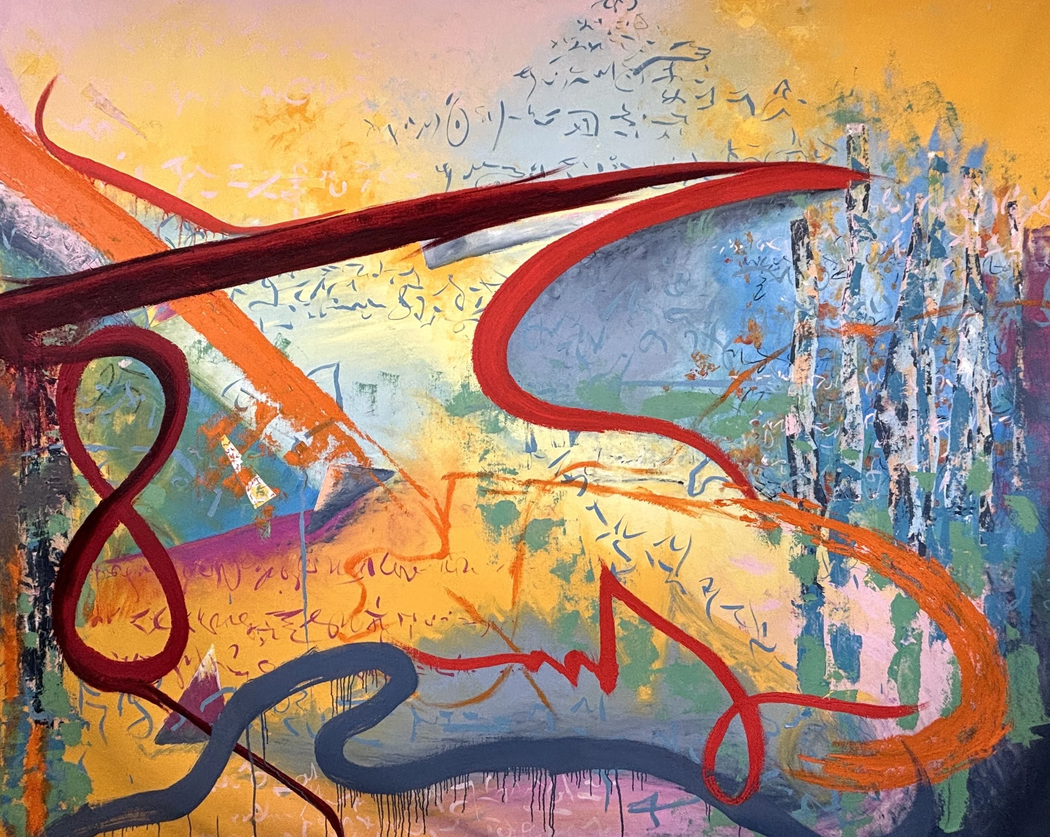 Karen Mosbacher | The Infinite Way Home To Yourself | 2025
Your gestural language is inspired in part by ancient alphabets. How did studying these systems influence your mark-making?
Studying ancient written languages opened my understanding of mark-making as something deeper than design. Early systems of writing often feel both visual and ceremonial. They carry rhythm, repetition, mystery, and human intention. Even when we cannot read them fluently, we can feel that they were made to hold meaning.
That has influenced my own gestural language. I’m interested in marks that feel like they are trying to communicate before they become literal language. They may suggest writing, notation, code, or memory, but they remain open. I want them to feel ancient and contemporary at the same time, as if they belong to the body, to music, and to a larger human impulse to leave evidence.
I resonate with Hilma af Klint in the sense that I am listening, sometimes unknowingly, and mapping or scripting messages from the emotions, rhythms, and sound waves of music. Through my own symbolic lexicon, almost like a root system connected to historical references, my body remembers calligraphic movement and reaches toward a message for the person standing before the work.
These marks are not decorative. They are carriers of attention.
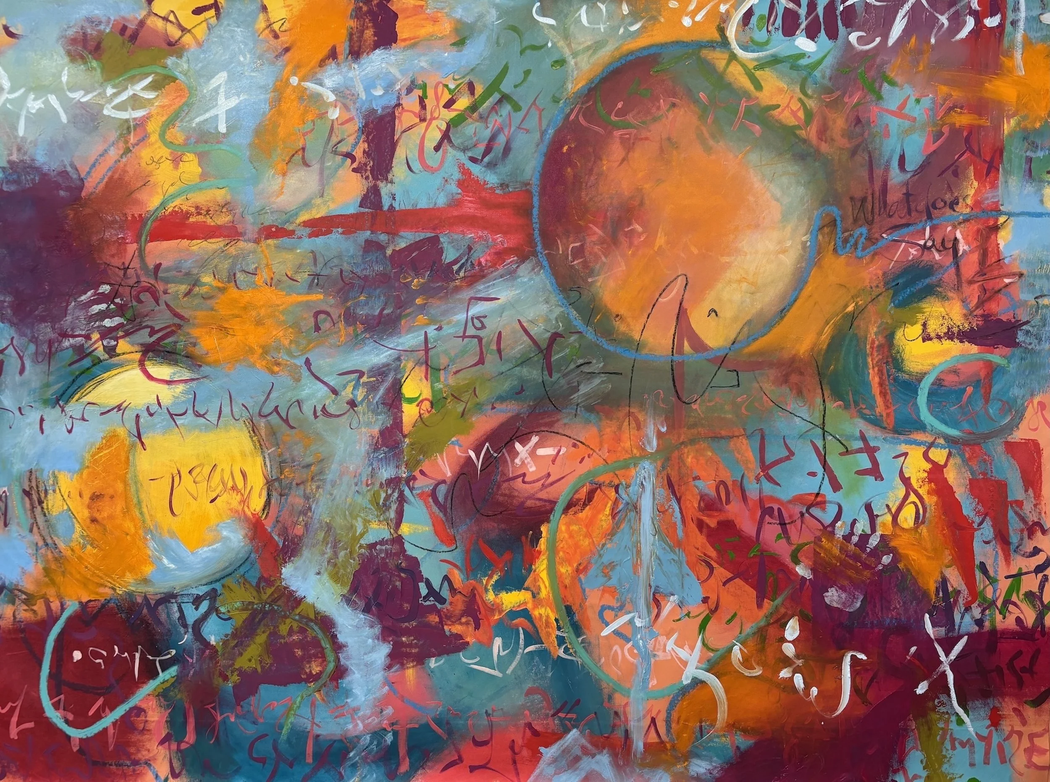 Karen Mosbacher | Navigating Angst | 2025
When viewers engage with your paintings, do you hope they “hear” something internally, or is the experience more emotional than sensory?
Chromesthesia is my doorway into the work, but once the painting exists, it belongs to the person standing in front of it. Musicians have told me how closely my work resonates with pieces of music, affirming the movement and color they also sense when performing.
Composers I work with have responded deeply to my gestural way of visualizing the emotions they have written into the music. One composer is continually enchanted with my colorful descriptions of his cultural music and stories behind it.
Some people may feel a kind of internal sound or rhythm. Others may respond emotionally, physically, or intuitively. They may feel movement, memory, stillness, tension, or release. All of those responses matter.
The best thing is when the work creates a moment of recognition, not necessarily of the music itself, but of something human. A painting can hold a frequency of experience that people recognize before they can explain it. And maybe, they see something about themselves.
Leave a Reply
You must be logged in to post a comment.