When the Ordinary Becomes Insufficient: Renwei Liu’s Seen-Scene-Screen
By Tabitha Ysart Green
In a world where we are consistently fed spectacle through the media, how can our daily lives compete? This is the question posed by Renwei Liu in his recent solo exhibition “Seen – Scene – Screen”. Curated by Chupei Yu, and presented from the 21st to the 28th of July 2026, at LumiNoir ART Gallery, London, his exhibition presented four of Liu’s most recent digital video works under the collective title Edited Reality. In Edited Reality, Liu reflects the creativity that can come from boredom, but with a sinister twist, as the bored protagonist attempts to escape the ordinariness of his everyday life.
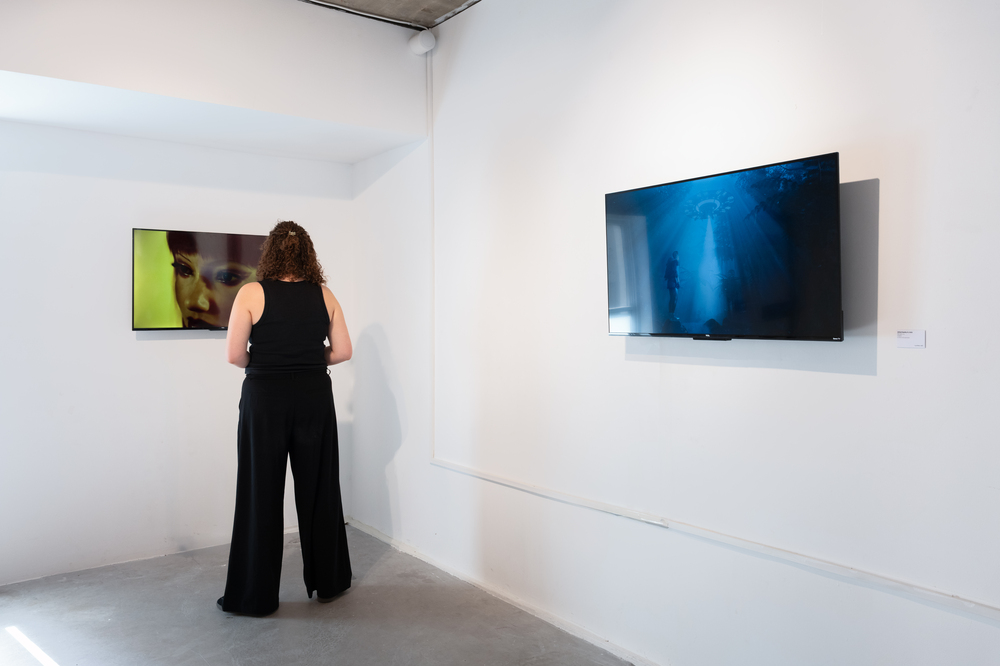
Installation view of Seen-Scene-Screen, LumiNoir ART Gallery, London, 2026.
Edited Reality transports the viewer into the everyday existence of a man whose life is cyclical and unremarkable. He becomes a visual metaphor for society’s contemporary condition – overstimulated by media, and understimulated by life. Liu then juxtaposes the protagonists’ routines with increasingly dramatic imagined scenarios, highlighting the feelings of inadequacy and suffocating normalcy that modern media consumption can create. We follow the rhythm of the protagonist’s life: commuting to work, working, after work activities and spending quiet weekends alone. One sequence begins with an otherwise normal morning commute. The protagonist is shown in a train carriage alongside other commuters on the way to work. He notices a woman carrying a metal briefcase and begins to speculate about its contents. His curiosity quickly spirals into fantasy: the woman becomes a terrorist and the briefcase a weapon.
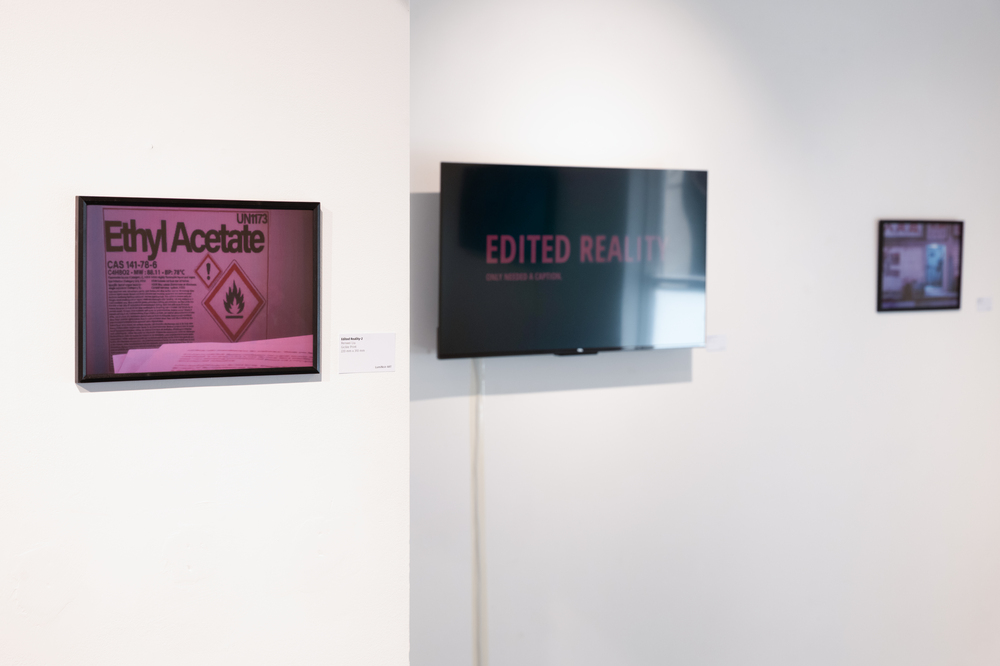
Installation view of Seen-Scene-Screen, LumiNoir ART Gallery, London, 2026.
The viewer is drawn into a curated visual space of normalcy, which is swiftly replaced by a crisis, conspiracy, or dramatised moment bringing the viewer out of the comfortable and into the extraordinary, before revealing itself as fantasy. The transition between reality and fantasy occurs without visual warning, which denies the viewer a clear distinction between the two. In doing so, the exhibition mirrors the protagonist’s own collapsing boundary between observation and imagination.
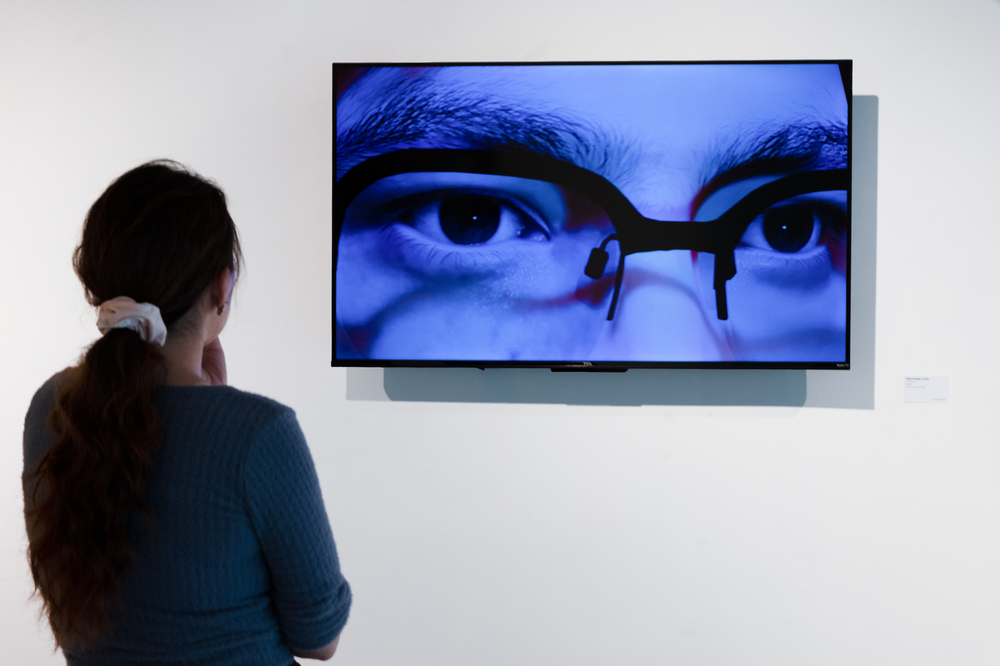
Installation view of Seen-Scene-Screen, LumiNoir ART Gallery, London, 2026.
Utilising a dual-channel model that alternates between mundane scenes and the increasingly cinematic fantasies, Edited Reality explores the psychological consequences of consuming a world in which every event is framed as exceptional. The works interrogate modern society’s use of spectacle media; from breaking news and conspiracy culture to true crime, viral videos and clickbait journalism, constantly feeding us the extraordinary, so that we fail to slow down and appreciate the ordinary. As the boundary between imagination and observation dissolves, the protagonist’s fantasies become a coping mechanism for the perceived inadequacy of everyday life, prompting viewers to question whether the ordinary has lost its value – or whether our ways of seeing have changed.
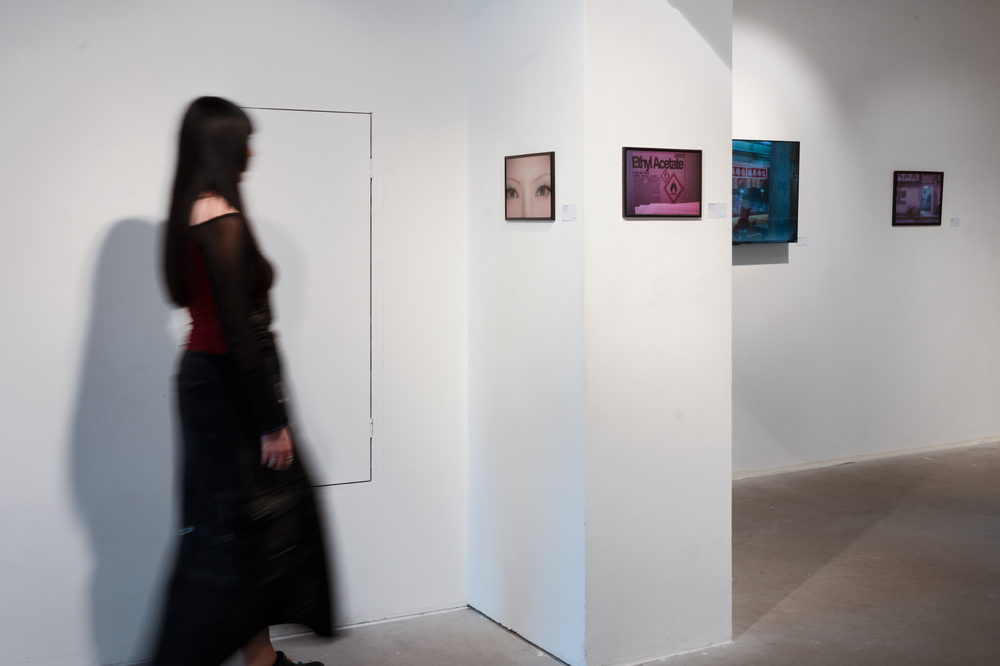
Installation view of Seen-Scene-Screen, LumiNoir ART Gallery, London, 2026.
This exhibition is aptly timed as contemporary discussion around social media shifts to a more critical angle. Concerns about the effects of social media on young minds are shaping political policies, such as the proposed ban on social media for under 16 year olds in the UK in 2027, and the same actualised ban in Australia in 2026. Rather than offering easy answers to this epidemic of the extraordinary, “Seen-Scene-Screen” asks viewers to reconsider their own relationship with the ordinary.