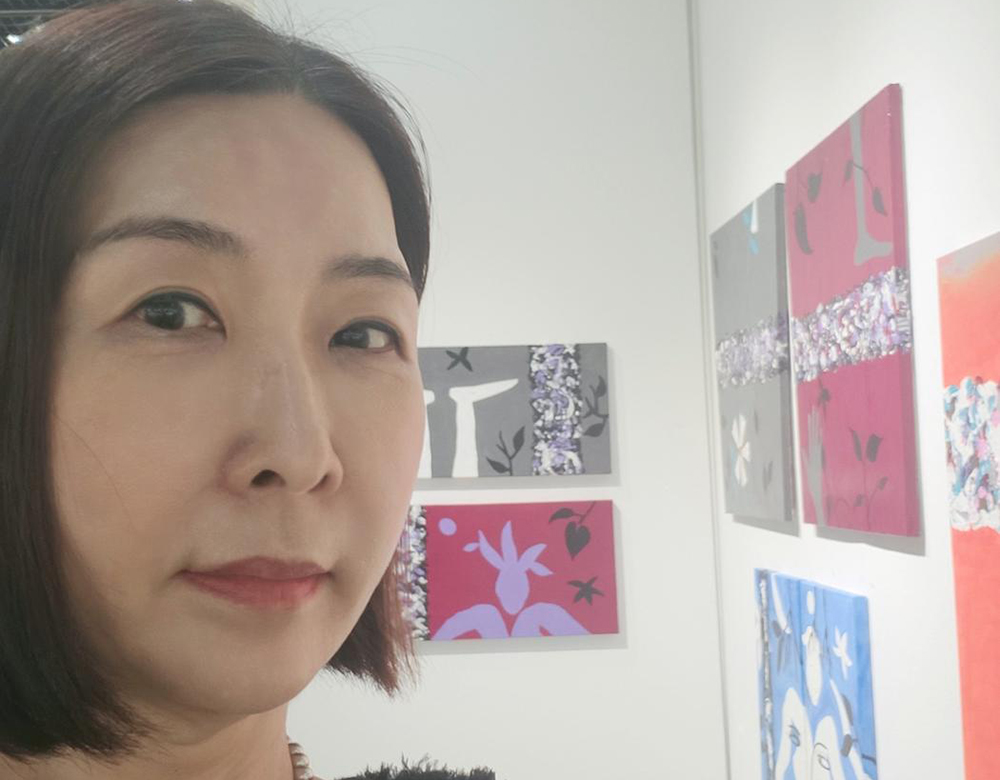
Jung Eun Cho
You have been making art since high school and later studied Western painting at Sejong University. How has your approach to painting changed over the years?
After graduating from university, I worked as a designer for a Seoul company producing licensed caps for sports leagues. Some of the caps I designed were sold in the United States. I continued developing creative ideas, and after getting married, I became an active member of the Korean Fine Arts Association in the area where I live.
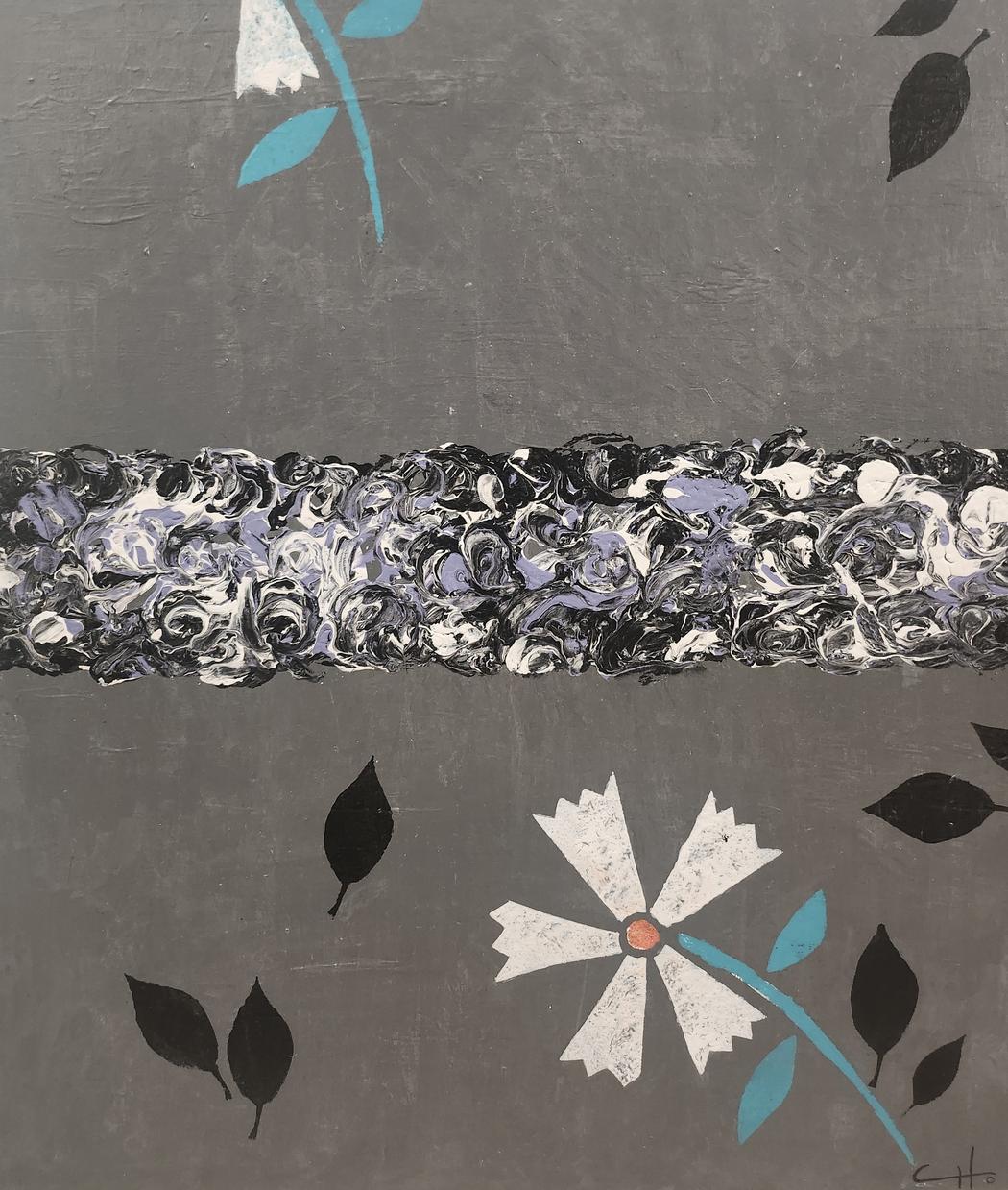
What experience or question led you to create BORDER LINE?
Since childhood, I have wondered how the choices I make in different circumstances might change my life. I have also wondered how the choices we make as a society shape the future.
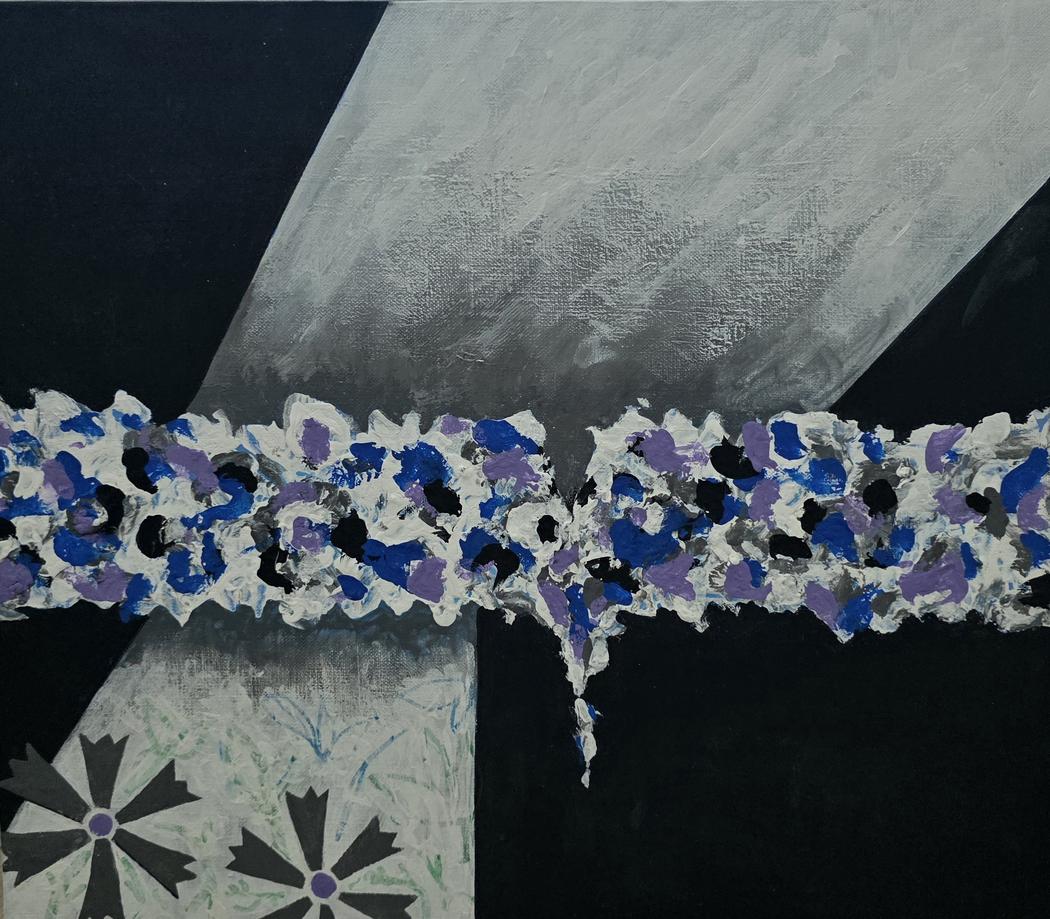
Your statement speaks of choices between freedom and oppression, equality and inequality, happiness and unhappiness. Do you see the border as a place of separation, or as a place where opposites meet?
For me, a border includes both visible and invisible lines. It can be a place of separation or confrontation. I do not want to give it one fixed meaning. The same rock might look like a tiger from one side and a rhinoceros from the other.
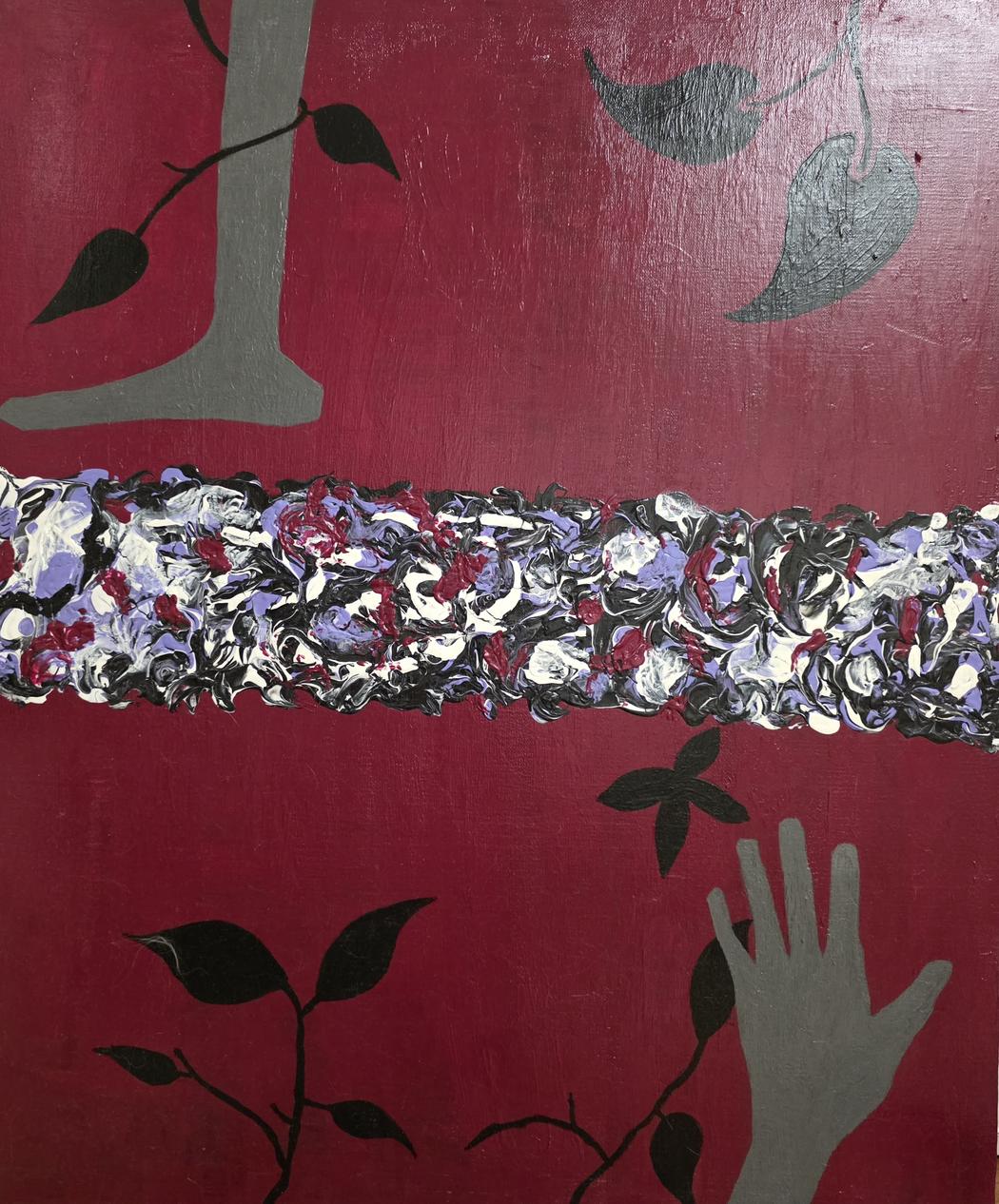
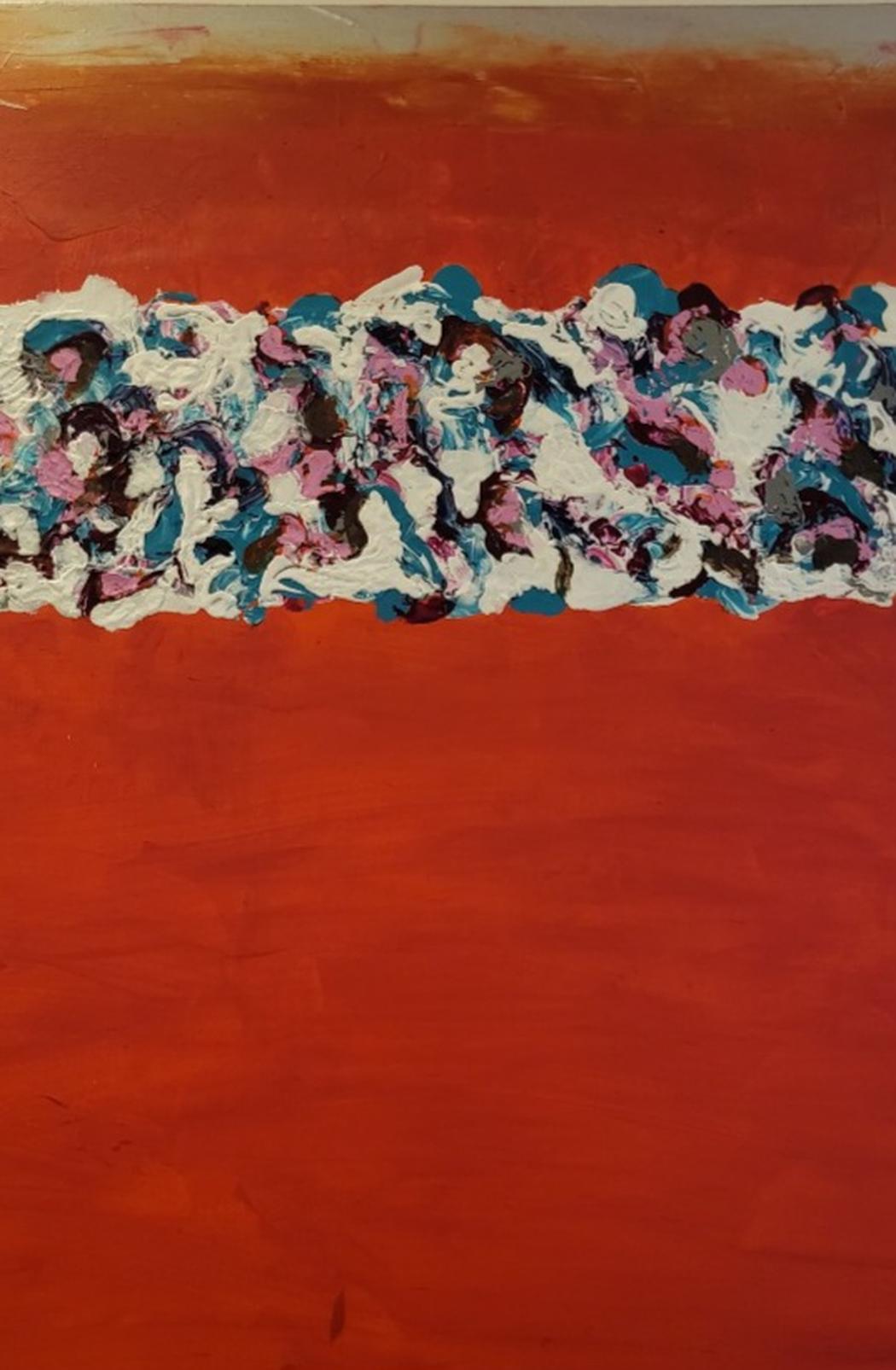
A dense, textured band runs through several of your paintings. What does this recurring form mean to you, and how do you build its surface?
I create the band’s texture with acrylic paint, using brushes, a palette knife, and my fingers. Within the band, different concerns and beliefs struggle and compete as a choice is being made. The band represents those boundary lines.
In one painting, two faces appear on either side of a dark vertical line. What relationship did you want to explore between them?
They could be different people who have made choices at a boundary, people on opposing sides, or different aspects of my inner self.
Are the dilemmas in BORDER LINE drawn mainly from your own experiences, or also from what you observe in the world around you?
They come from both my personal experiences and what I see in the world around me. People are constantly wrestling with choices at these borders.
When viewers encounter these paintings, what would you like them to reflect on about the choices in their own lives?
I hope viewers will reflect carefully on the choices they have made, the choices they will have to make, and their consequences. After all, happiness and unhappiness are never far apart.