
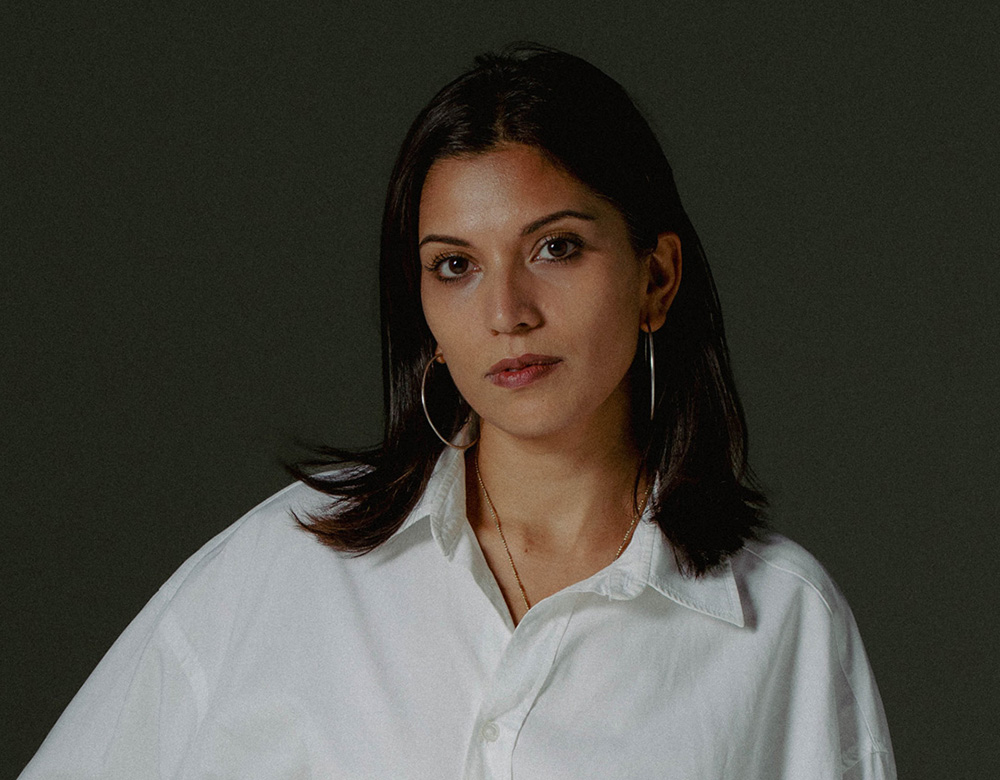
Priyanka Pulijal
Your practice explores speculative realities and metaphysical spaces beyond the limits of perception. What first drew you to subjects that cannot be directly seen or proven?
I think I’ve always been interested in the idea that reality is much bigger than what we can actually perceive. We have such a limited understanding of consciousness, death, the universe, even our own minds, but we’re constantly trying to build systems to explain all of it.
I grew up with elaborate descriptions of other realms, gods, cycles of time, reincarnation, different forms of existence. I didn’t necessarily think about them as things I had to literally believe in. I was more fascinated that humans had imagined these enormous systems for understanding things we couldn’t possibly know.
That uncertainty is really where the work starts for me. I like the space between belief and disbelief.
In LOKAS: Heavens, Hells, and the Realms In-Between, you reinterpret realms described in Vedic cosmology. How do you balance these traditional sources with your own imagination and contemporary perspective?
I never wanted to illustrate the lokas exactly as they’ve historically been described. I’m interested in the source material, but I also give myself a lot of freedom to move away from it.
I’ll research a realm, read different descriptions and interpretations, and usually there’s one detail or idea that sticks with me. From there it becomes much more intuitive. I start thinking about what that place might feel like rather than what it’s “supposed” to look like.
So the paintings end up somewhere between something ancient and something completely invented. They’re influenced by the original cosmology, but also by science fiction, architecture, landscapes, cinema, things I’ve seen in dreams, and the visual world I’m living in now.
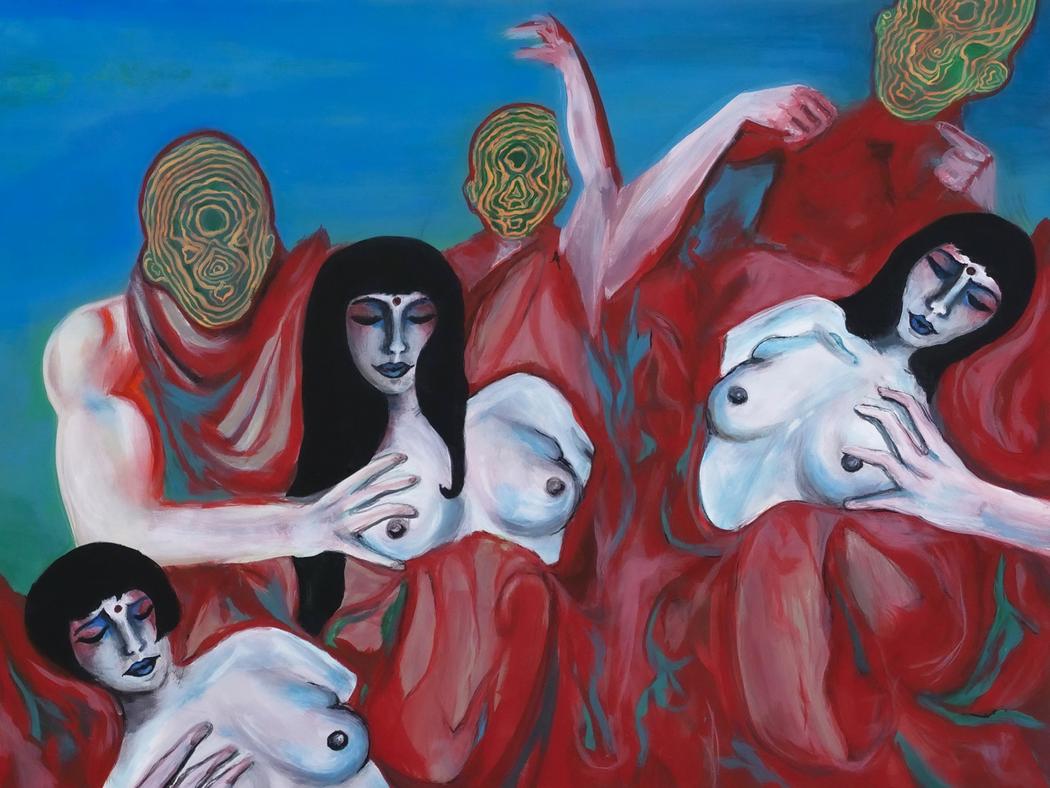 Priyanka Pulijal | Atala | 2020
Do you approach the lokas as literal places, psychological states, symbolic structures, or something that moves between these interpretations?
Definitely something that moves between all of those.
Sometimes I imagine them very literally, almost like I’m designing an actual place that exists somewhere. Other times they feel much more psychological, like different states of consciousness or ways of experiencing reality.
I actually prefer not knowing exactly what they are. I don’t think the paintings need to prove or explain the existence of another realm. I’m more interested in asking: if it did exist, what would it feel like to encounter it?
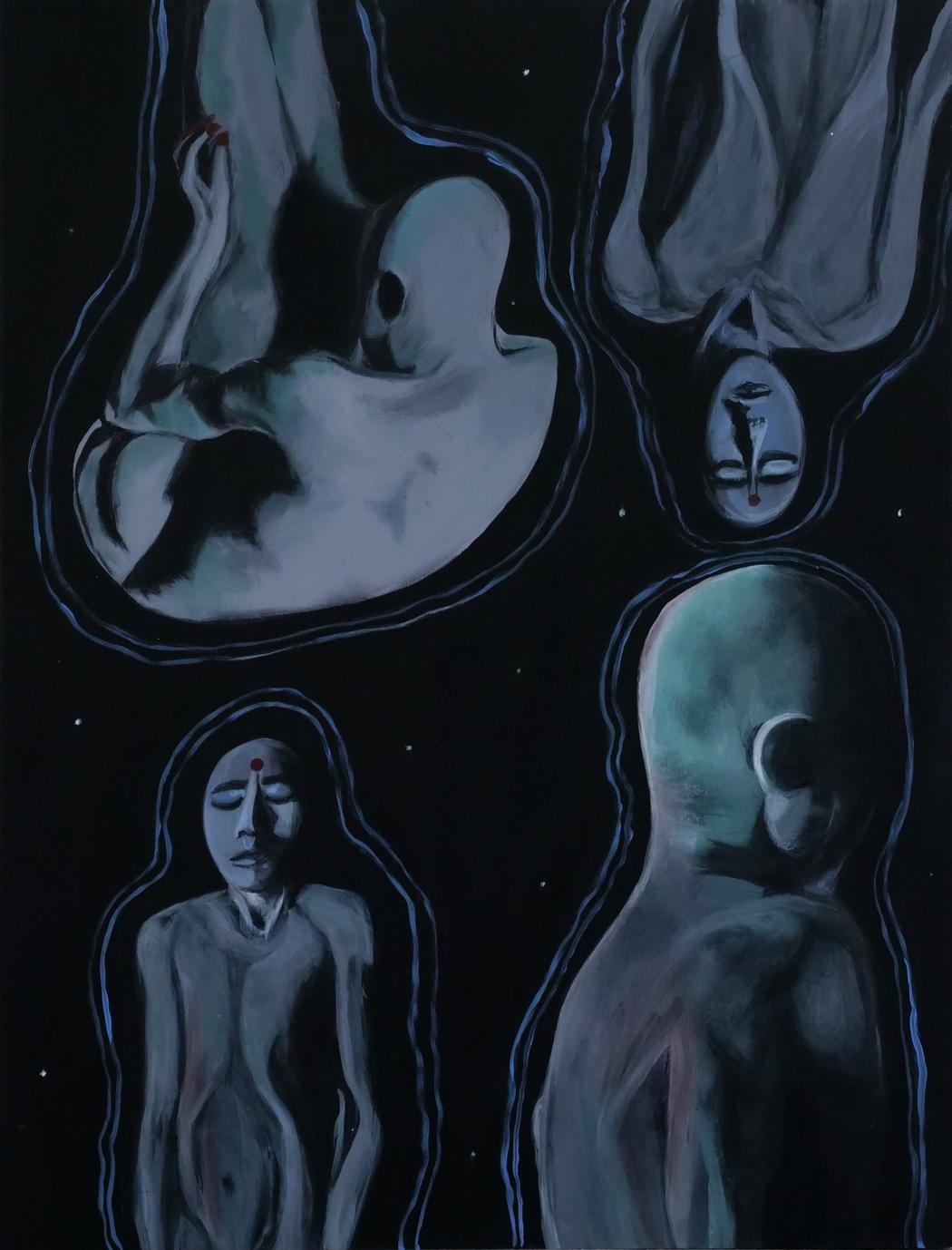 Priyanka Pulijal | Bhuvar | 2021
Your works often suggest environments that feel simultaneously cosmic, organic, and architectural. How do these visual worlds begin to take shape?
Usually with fragments. I rarely sit down knowing exactly what the entire painting is going to look like.
I collect references constantly—architecture, expressions, forms, astronomy, film stills, weird textures, plants. Then I start combining things that don’t necessarily belong together.
Eventually the world starts creating its own logic and I follow that.
How do color, scale, texture, and spatial composition help you create a sense of transcendence or passage between different states of existence?
Scale is really important because I want the viewer to feel like they could physically enter the painting rather than just look at an image of a place.
Color does a lot of the emotional work. I’m not necessarily thinking, “this color represents this specific thing.” It’s much more instinctive. I’m thinking about temperature, atmosphere, light, depth, and whether something feels inviting or slightly unsettling.
I also use a lot of layering and repetition, especially in the more detailed works. I want your eye to move through the painting and keep discovering smaller spaces inside larger ones.
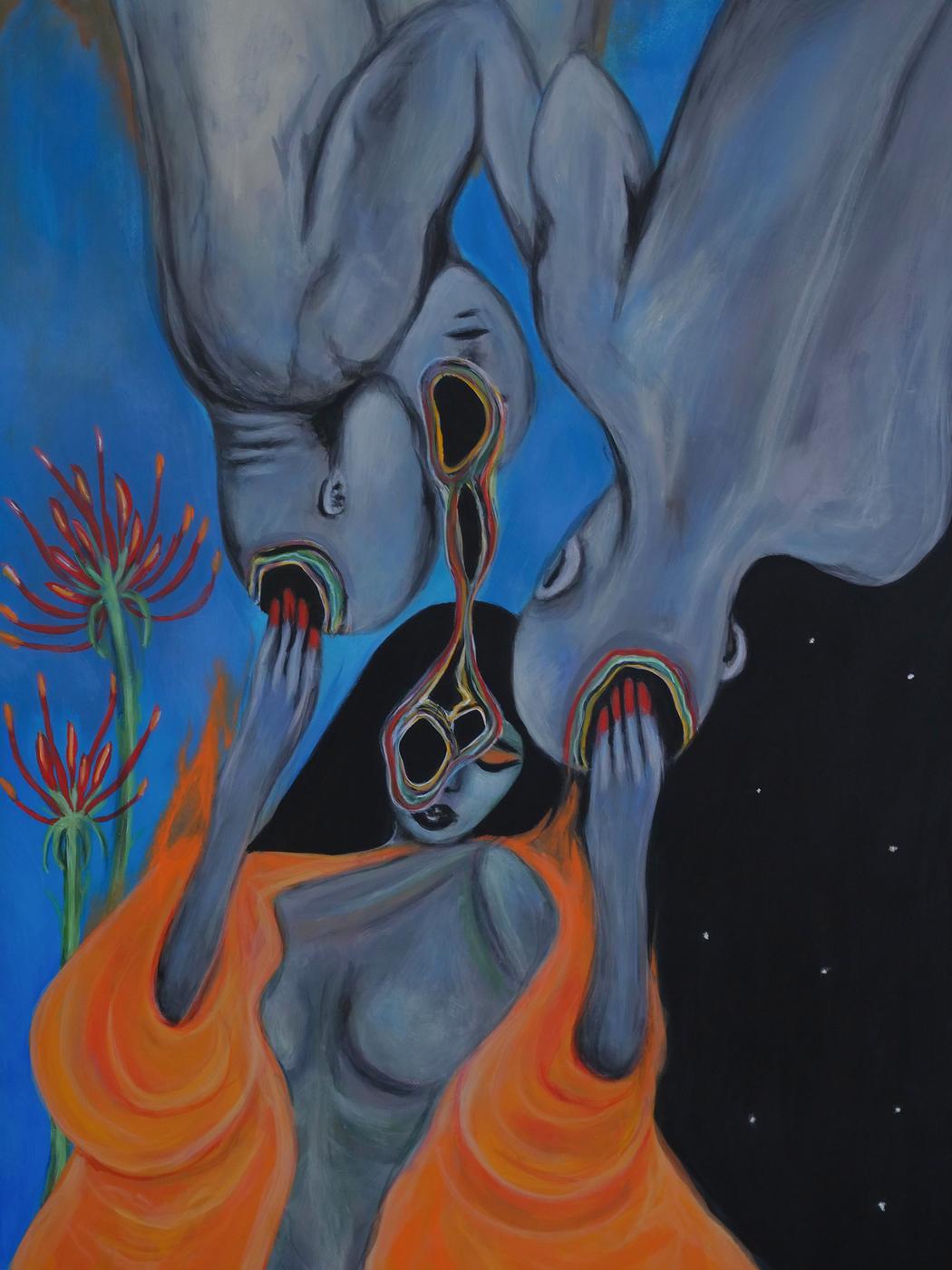 Priyanka Pulijal | Jana II | 2021
Your practice draws from both metaphysical traditions and science fiction. Where do these two modes of imagining the unknown intersect for you?
I actually think they’re doing something very similar.
Metaphysical traditions created incredibly complex explanations for things humans couldn’t understand: where we came from, what happens after death, whether other realms exist, what consciousness is. Science fiction asks many of the same questions, just through different language and technology.
One might describe another plane of existence through gods or cosmology, while the other imagines another dimension, simulation, planet, or form of consciousness.
I’m interested in that overlap because both require imagination. They’re different ways of looking beyond the limits of what we currently know.
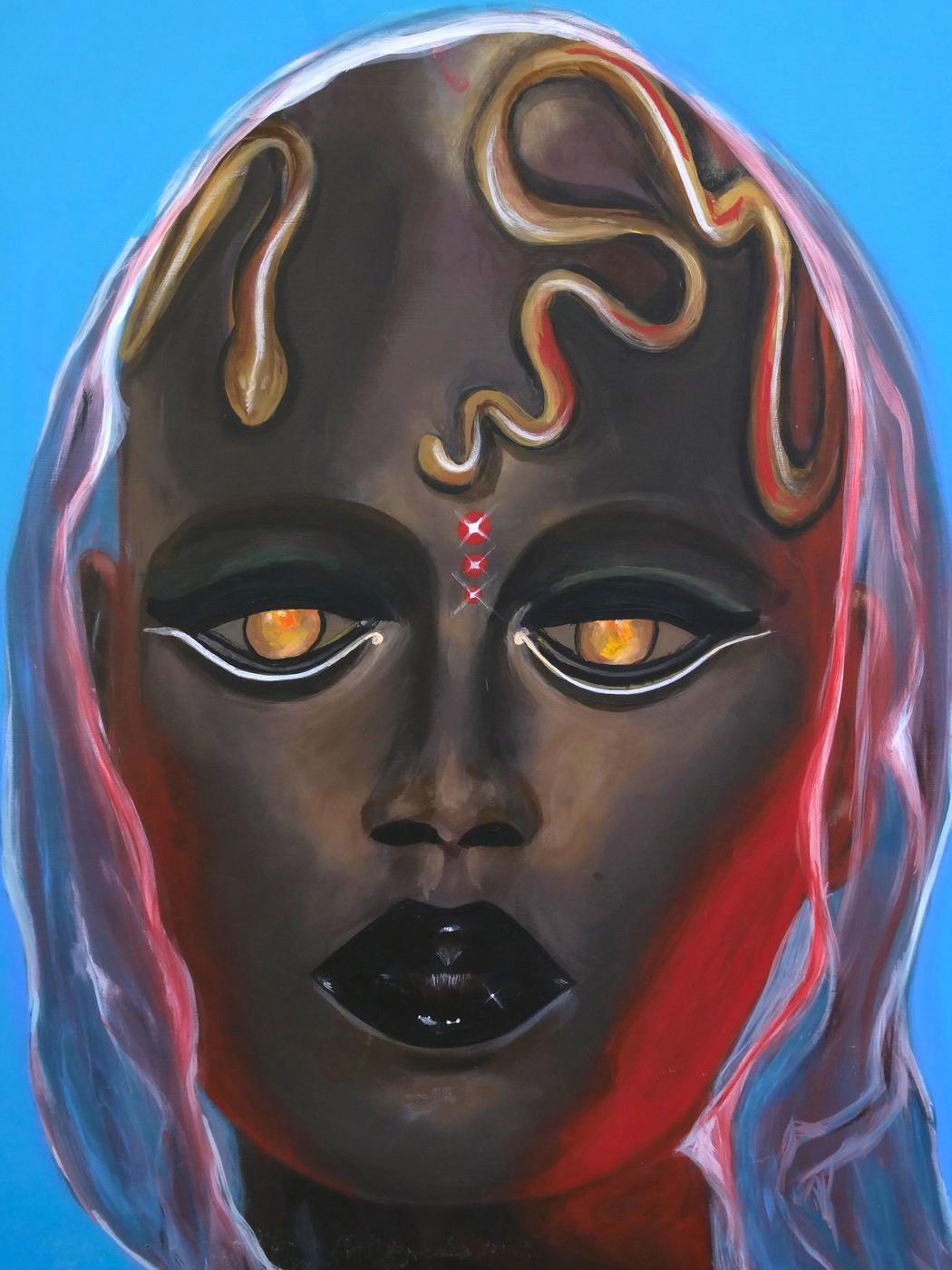 Priyanka Pulijal | Mahatala | 2020
When viewers encounter your work, what kind of experience do you hope they have: contemplation, disorientation, recognition, spiritual curiosity, or something else?
Probably a combination of contemplation and curiosity, with a little disorientation.
I don’t really want to tell someone exactly what they should believe or what they’re looking at. I’d rather the painting create a moment where they’re unsure.
Ideally there’s something beautiful or familiar enough to pull you in, but strange enough that you can’t completely place it. If someone spends a little time wondering where they are, what the scale is, whether the place feels physical or imagined, or whether they’d want to enter it, then the painting is doing what I want it to do.
I like leaving people with a question more than an answer.