

Oleksandra Fomchenko
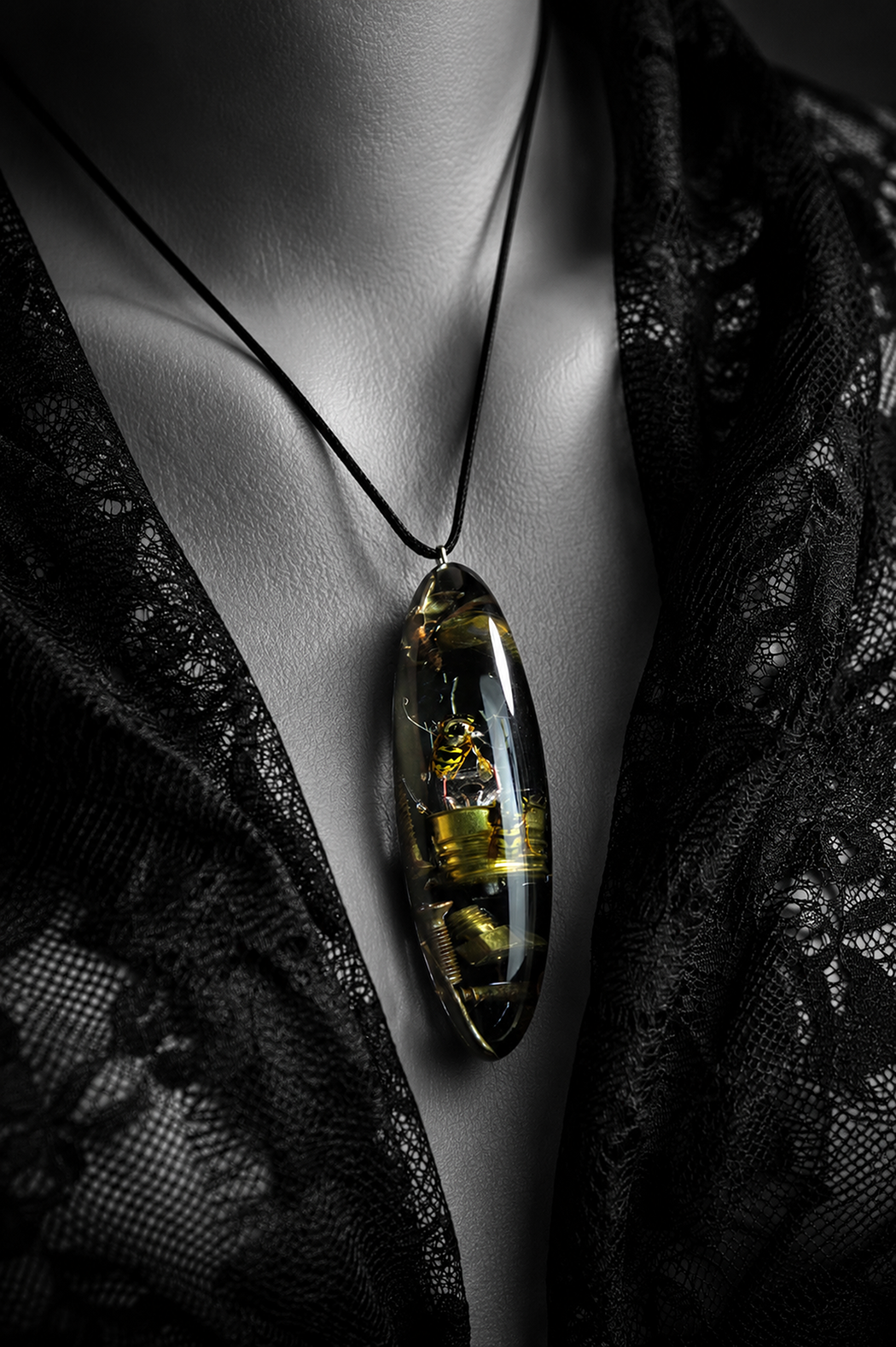 Oleksandra Fomchenko | The Shattered Impulse | 2026
Your works exist between jewelry, sculpture, relic, and emotional archive. How do you personally define the objects you create?
I do not see my works as traditional jewelry. For me, they are sculptural vessels of memory. Each piece is a self-contained world where fragments of nature, history, technology, and personal associations coexist. They can be worn, but their purpose extends far beyond adornment. I see them as objects that preserve traces of time, emotions, and stories that can literally be carried with you.
At some point, I grew tired of decorative art that strives only to be beautiful, comfortable, and easy to consume. I have always been drawn to art that evokes emotion, raises questions, and creates a dialogue with the viewer. My work does not attempt to beautify reality. Instead, it explores memory, mortality, transformation, and the beauty that can exist within imperfection. It is important for me to create objects that are honest, meaningful, and emotionally resonant.
You describe resin as a material of preservation and transformation. What attracts you to resin as a medium, both technically and conceptually?
I have always been fascinated by the fact that resin simultaneously preserves and transforms. From a technical perspective, it allows me to protect extremely fragile materials that would otherwise deteriorate or disappear over time. But what interests me even more is its conceptual nature.
Once an object is embedded in resin, it no longer exists within ordinary time. A dried plant, an insect, or an old metal fragment becomes part of a new reality. Resin transforms into a kind of time capsule where memory is preserved while simultaneously acquiring new meaning.
I am captivated by this paradox: the material prevents decay, yet completely alters the context in which an object exists. This tension between preservation and transformation lies at the heart of my artistic practice.
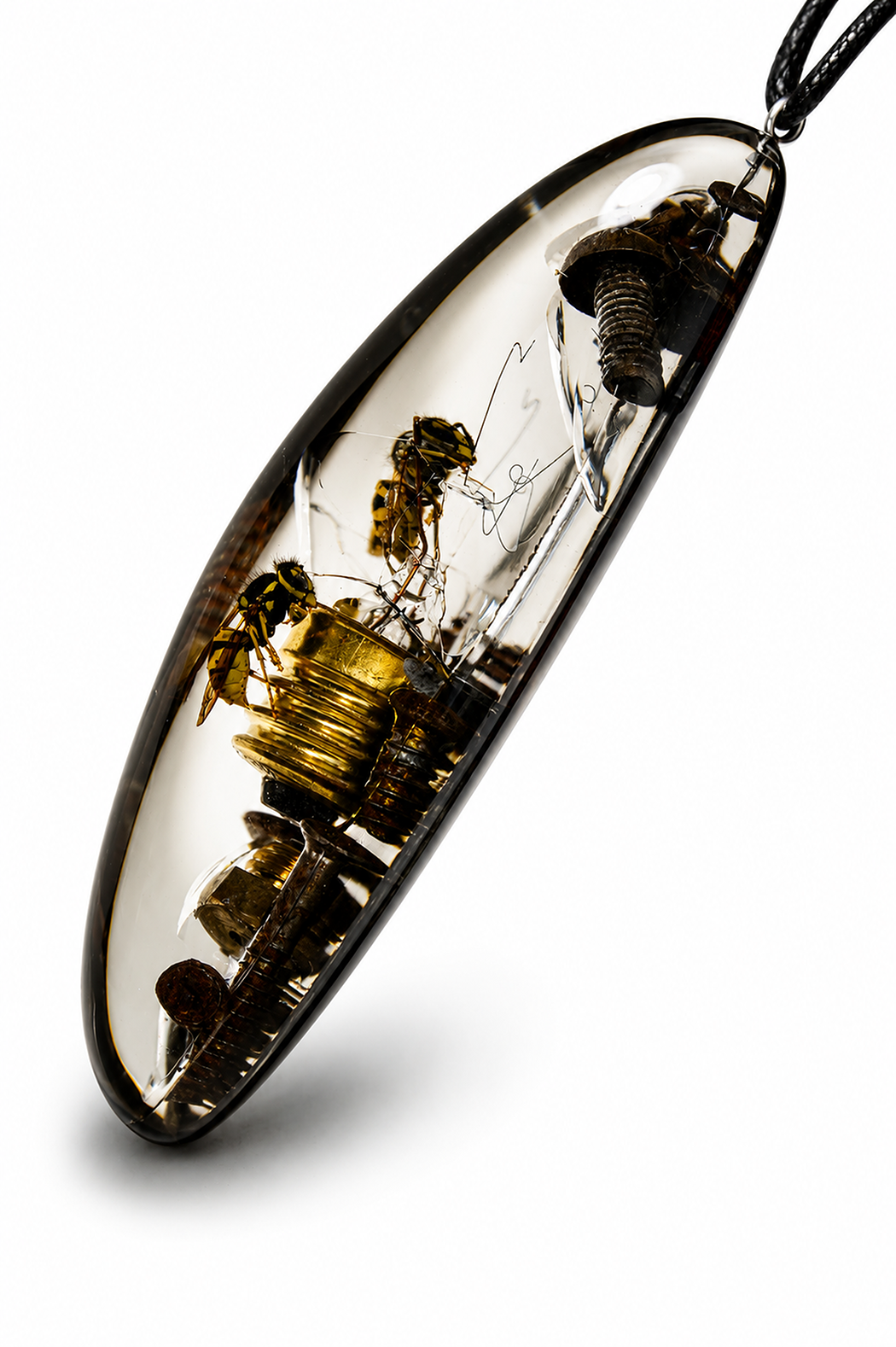 Oleksandra Fomchenko | The Shattered Impulse | 2026
Many of your pieces contain insects, organic remains, industrial debris, screws, wires, and fragments of vintage electronics. How do you choose the materials for each work?
Most of my works begin long before I enter the studio. I spend a great deal of time thinking about future compositions, visualizing details, imagining forms, and mentally assembling materials. Some of my strongest ideas arrive late at night, just before sleep, when reality and imagination begin to merge. During these moments, I try to envision the atmosphere, symbolism, and emotional weight of an entire piece.
If an idea appears unexpectedly, I immediately record it in my notes so I can return to it later. Every work is connected to a specific thought, emotion, or internal state. Because of this, my compositions are never random. Each material is selected deliberately and becomes part of a larger narrative.
Some pieces take months to complete. Beyond building the composition itself, there is an extremely demanding process of casting, refining, sanding, and polishing the resin until it achieves a flawless glass-like finish. The process requires patience and precision, but it is essential for creating the sense of depth and permanence that defines my work.
Your resin domes create optical distortion and a sense of hidden depth. How important is this visual effect to the emotional experience of the piece?
This effect is extremely important to me. I want the viewer to feel as though they are looking into an object rather than simply looking at it. The resin lens creates depth, reflections, distortions, and hidden details that cannot be fully perceived at first glance. This mirrors the nature of memory itself. Memory never reveals everything immediately. The longer we observe it, the more layers begin to emerge. I want the viewer to experience that same gradual discovery when engaging with my work.
I spent years developing and refining my resin techniques to achieve this effect. My goal was never simply to create decorative objects, but to build miniature worlds enclosed within transparent forms. Each piece functions as a small universe that can be explored repeatedly, revealing new details and relationships over time.
Unfortunately, photographs and videos cannot fully capture this experience. In person, the interaction of light, depth, and perspective creates something much more immersive and captivating. Many of the smallest details only become visible when the piece is viewed from different angles, making the experience deeply personal and constantly evolving.
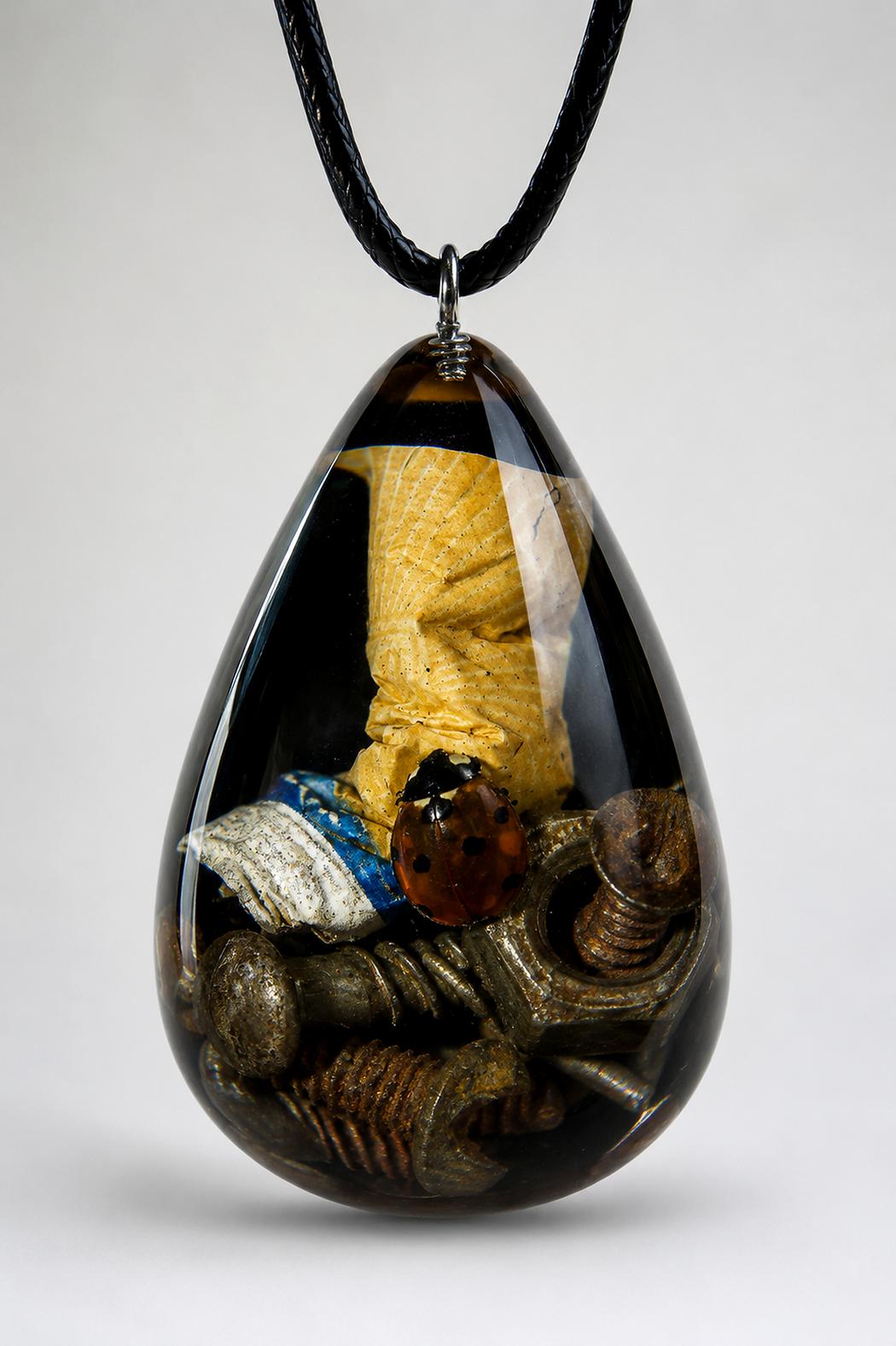 Oleksandra Fomchenko | The white noise | 2026
The works seem to preserve fragile or damaged things inside a flawless polished surface. Is this contrast between vulnerability and control central to your practice?
Yes, this contrast is one of the central themes of my work.
I have always been drawn to the idea that the most fragile things are often the most valuable. Insects, dried plants, antique lace, forgotten objects, and fragments of obsolete technology are all inherently vulnerable to time and decay. By preserving them within resin, I am giving them a second life.
At the same time, the flawless polished surface creates a sense of order, permanence, and control, while inside remain objects that carry traces of age, imperfection, and fragility. I believe this contrast closely reflects the human experience. We often present ourselves as strong and composed while carrying memories, wounds, and vulnerabilities beneath the surface.
In this sense, my works are not only acts of preservation but also metaphors for memory, resilience, and the complexity of human identity.
You do not create duplicates of your works. Why is uniqueness so important in your artistic process?
Every work I create is a complete and self-contained story that exists only once. I have never been interested in mass production or repeating successful designs. Instead, I value rarity, individuality, and the unrepeatable nature of each piece.
The materials themselves are unique. No two insects, plants, fragments of lace, or found objects are ever exactly the same. But beyond that, every work emerges from a specific thought, emotion, or moment in my life that cannot be recreated.
I am drawn to the idea that the collector becomes the owner of a one-of-a-kind artifact that will never exist again. In a world where almost everything can be reproduced endlessly, uniqueness becomes increasingly precious.
I want each piece to retain the feeling of a discovered relic or a rare object from an unknown collection—something deeply personal, irreplaceable, and impossible to duplicate.
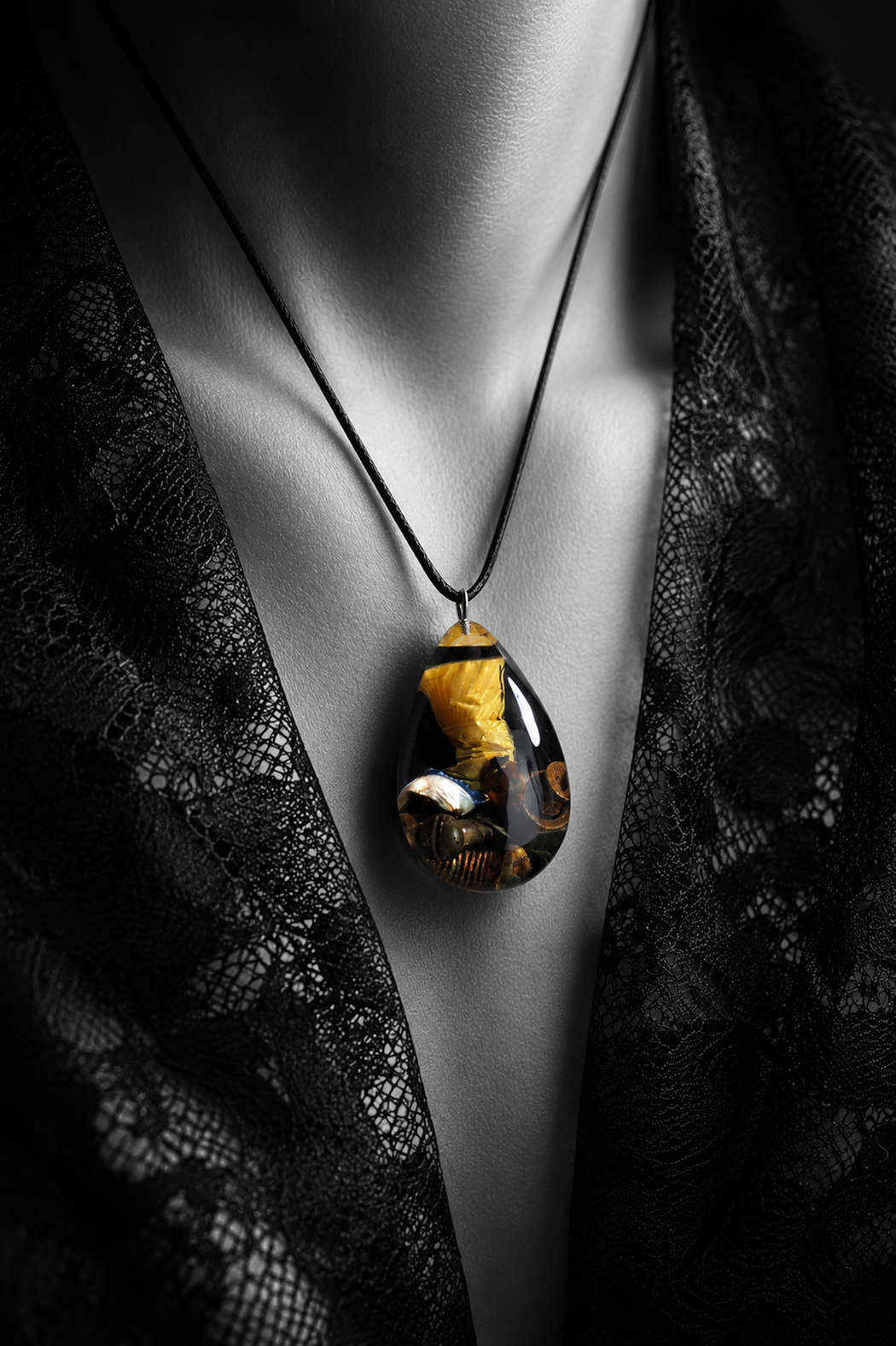 Oleksandra Fomchenko | The white noise | 2026
How does the wearable nature of your objects change their meaning compared to traditional sculpture?
Traditional sculpture usually exists separately from the viewer, while my works become part of a person’s daily life. The ability to wear an object creates a completely different level of interaction. The work is no longer something observed from a distance; it becomes a personal experience.
I am fascinated by the idea that someone can carry a small world, a memory, or a story with them wherever they go. Once worn, the object begins a new life and enters into a dialogue with its owner. Each person brings their own experiences, emotions, and interpretations to the work.
For this reason, I see my practice as a form of wearable sculpture. The works retain the conceptual and artistic depth of sculptural objects while becoming more intimate, personal, and emotionally connected to the individual who wears them.
Leave a Reply
You must be logged in to post a comment.