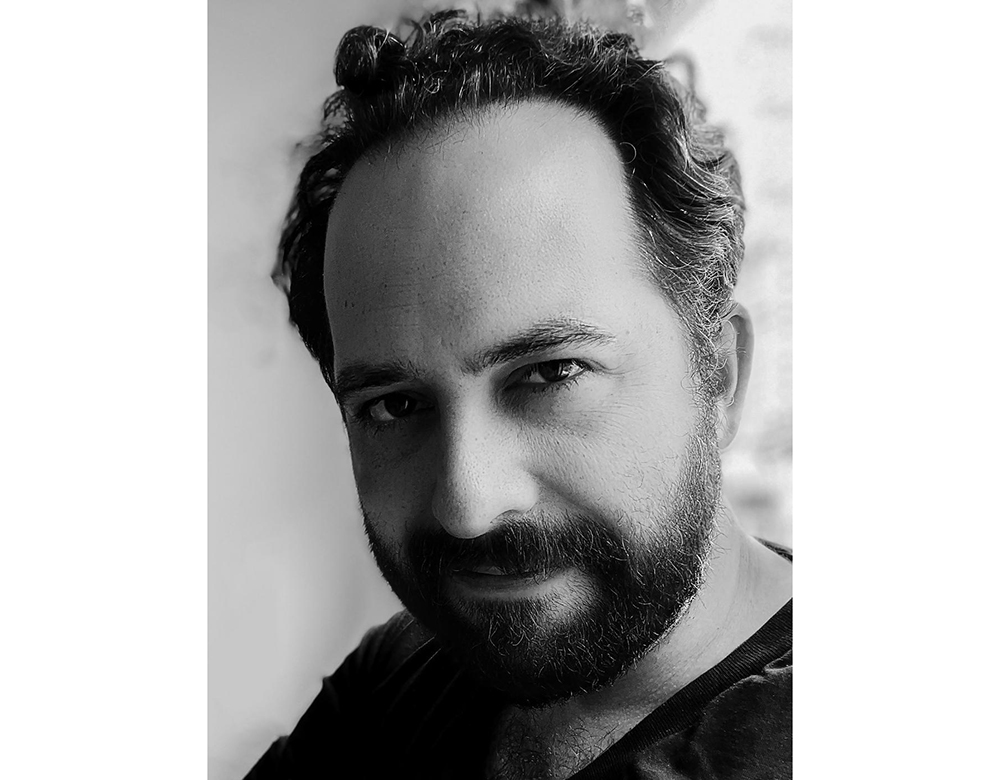
Peter Tristram Walz
Your practice brings together art, writing, education, and research. How do these different roles influence the way you create visual work?
I am a maximalist when it comes to experience, but I strive for minimalism in the presentation of my work! I think all experiences and learning contribute to what creates “successful” art. As a teacher, my mantra for my students is the assumption of “legitimacy,” or giving the work the benefit of our doubts. During critiques, I stress that we must do our best to shed our own prejudices and approach all work as if it has already been qualified. This is difficult and must be cultivated carefully. From my perspective, it is also a truth, which, of course, makes it easier to follow in the end.
It may be true that not all art or artists enter the canon, but we certainly all make art to describe something that cannot easily be illuminated in any way other than the way we choose to create it. All experience is experience, which is why I view aging and learning as a joy and privilege, not a deficit.
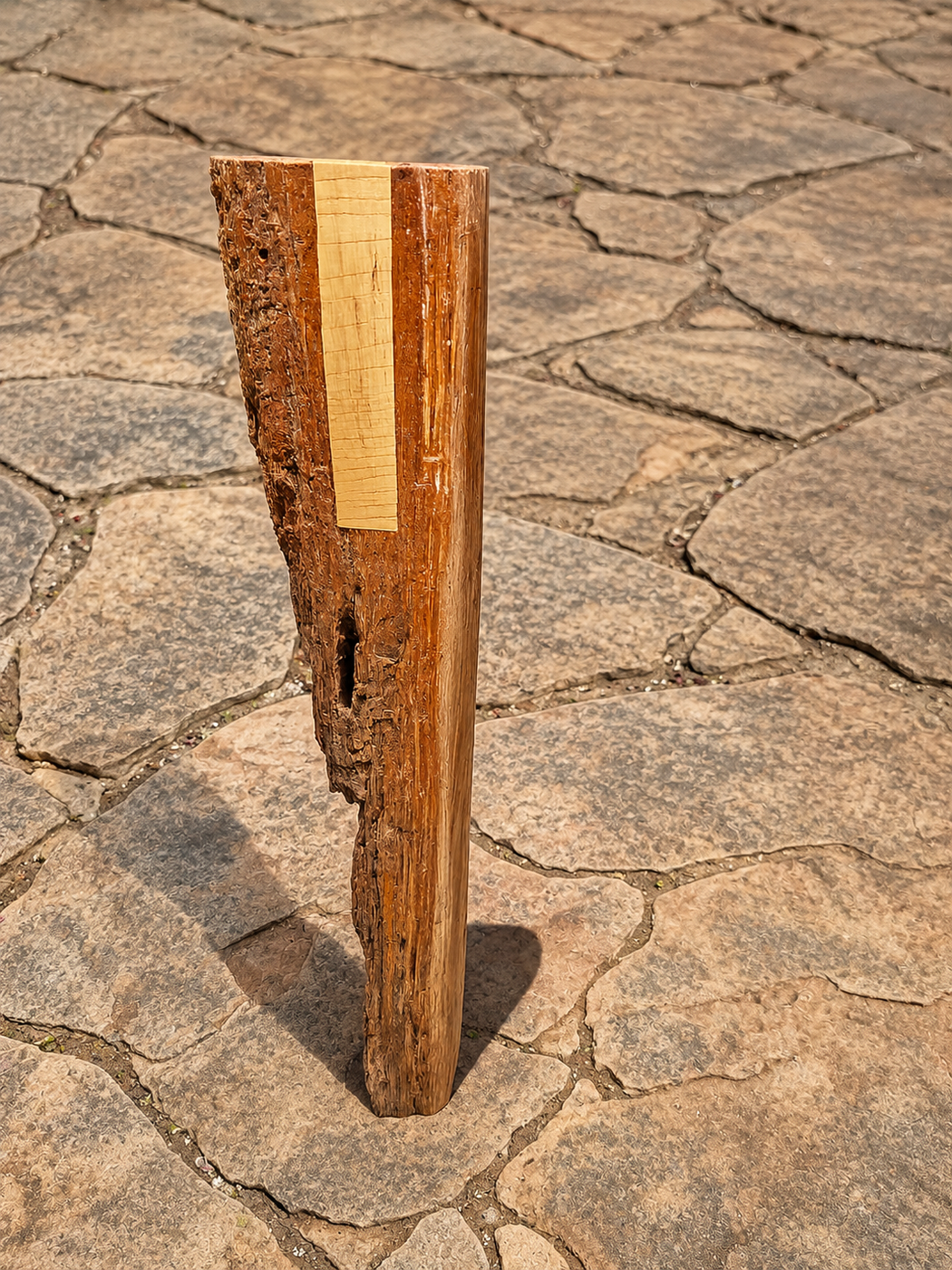 Peter Tristram Walz | Active Object | 2026
The works presented here have a strong material presence, with layered surfaces, dark textures, and visible wood structures. What role does materiality play in your current studio practice?
I was originally trained as a fine furniture maker, so the presence, choice, and manipulation of physical stuff in my work are deeply ingrained, (forgive the pun!) But this also relates to my perception of the physical world and is especially connected to my desire to illuminate “material” that is not traditionally defined as physical.
The visibility of the material—its worked surfaces and its malleability—should refocus the viewer on the ephemeral: unseen materials we work with and non-retinal craftsmanship to borrow from Duchamp.
Much of your work explores visual culture and mediated experience. How do you understand the relationship between physical objects and digital systems today?
This is an incredibly important question. I find that students, artists, and the public often tend to regard digital systems as somehow apart from lived experience. We regard the digital world as a product to be consumed. This is because we—and by “we,” I do mean the prevalent capitalist construct—experience ourselves through the lens of a particular cultural perspective that privileges the observer.
Some have called this a “gaze,” but however one chooses to participate in these systems and experiences, or this discussion, an ephemeral framework of constructed observation is—and, in fact, must be—present. To put this more simply: we expect digital systems to be for something.
But if we consider that they may not simply be for us, but rather are part of what constitutes us, then we can begin to understand these systems as something other than an input-output binary. “Us” becomes not merely what digital systems complete, calculate, or act upon, but something that exists alongside, or integrated with, as an extension of a larger planetary system we might call life.
Famously, McLuhan argues that media and technological tools function as extensions of human biological and cultural systems. But even this assertion does not fully explore the possibility of a deeper and more fundamental continuity between such extensions and those things that fall outside the category we conventionally call technology.
Thus, I do not view digital systems as simply having a relationship to physical objects. I understand digital systems as physical objects—and, at a more fundamental level, as participating in the same material object or system that constitutes us all.
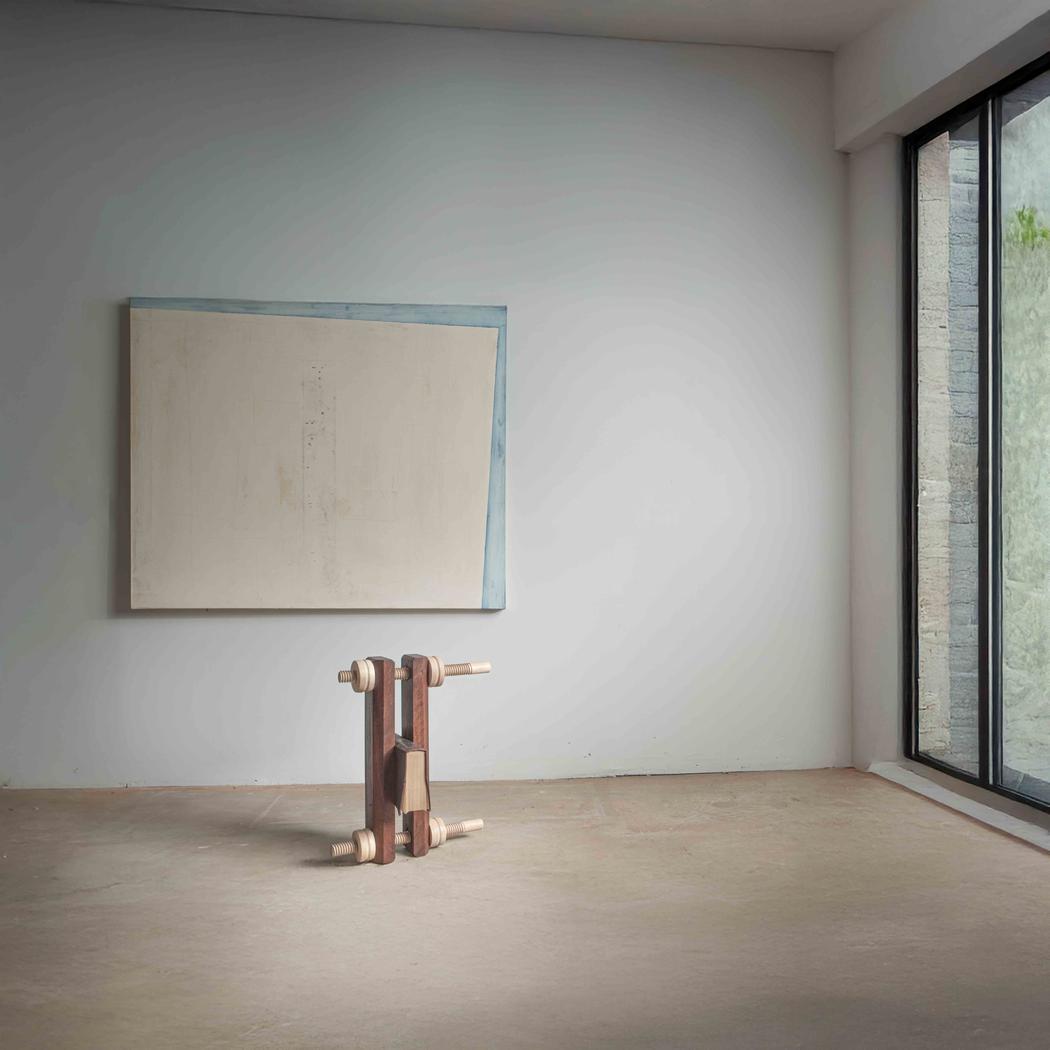 Peter Tristram Walz | Book Vise
Could you tell us more about your concept of the “cultural proscenium”? How does this framework appear in your recent artworks?
A proscenium is the architectural frame around the opening of a stage: the threshold through which the audience observes a performance. It corresponds closely to the theatrical “fourth wall,” the imagined boundary separating the performed world from its observers. In ancient Greek and Roman theatre, the term could also refer to the area or raised platform where the play was staged. It can therefore be understood not only as a frame around creativity, but also as one of its sites— the boundary from where performance is enacted.
I look at cultural and digital spaces as the same. When I describe the cultural proscenium, I am implying that although we collectively and individually perform in our daily encounters with others the scope of that performance has both broadened and become more introverted with the rise of digital tech.
This is exemplified by social media. The number of potential performances of oneself—through video and image feeds, opinions, and written posts—is connected to the aggregate number of “followers” one has cultivated or, perhaps even more interestingly, imagines having cultivated. This occurs not publicly, as some technology conglomerates would have us believe when describing these forums as a “public square,” but rather as an interaction between a screen and a mind.
It is an isolation of actions that previously would have entered collective memory. That collective memory, based in the minds of others, is what creates my “self.” Without a collective experience, we are then given to performing many selves at many different points in time and engagement without a sustained core self. The cultural proscenium is the gateway through which a person performs a different “person” at any point during the course of contemporary life.
How does this appear in my work? It appears through a disambiguation of traditional attitudes toward the relationship between the object and the viewer. My works are not interested in being seen; they are interested in revealing the viewer to themselves as well as engaging with these technologies as object/selves in their own right.
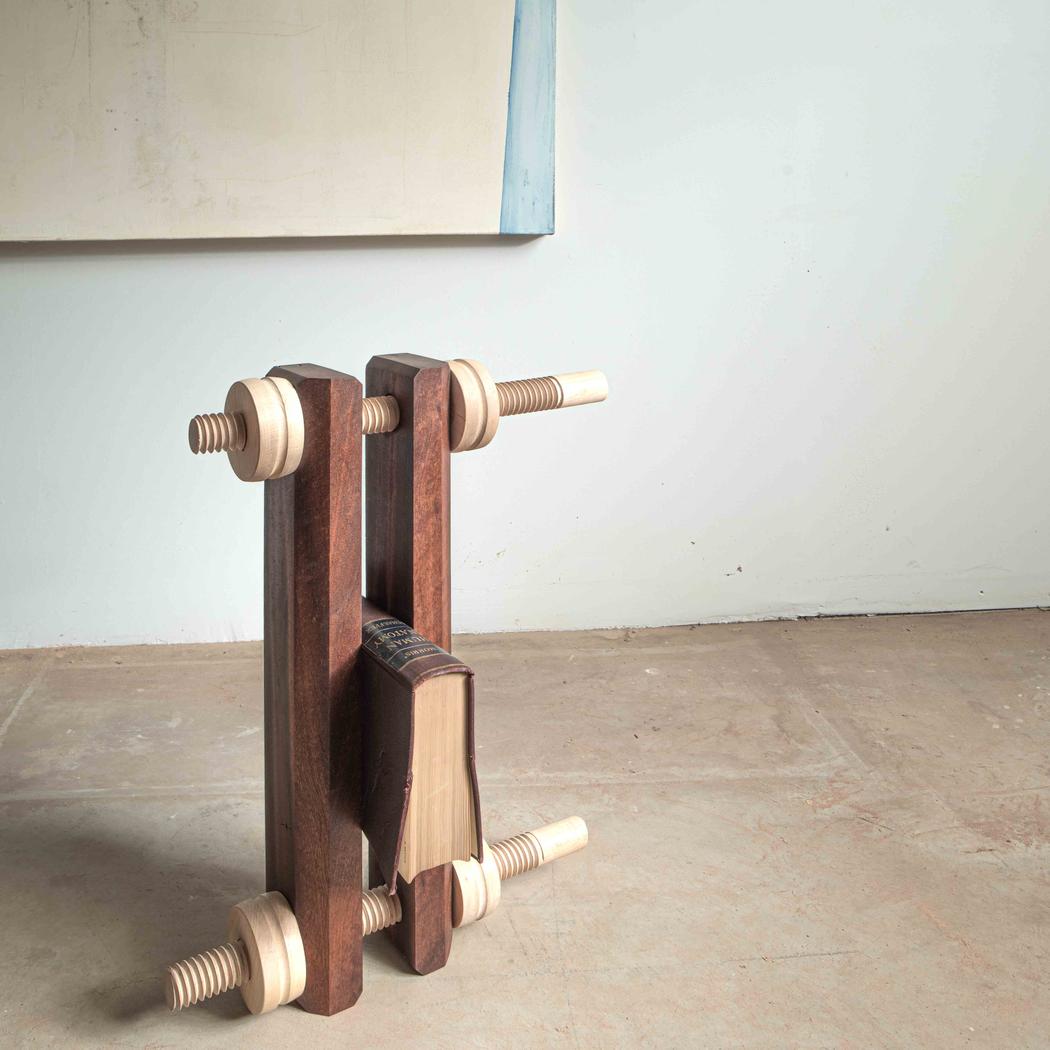 Peter Tristram Walz | Book Vise
How does your background in critical theory and art history shape your approach to form, composition, and meaning?
As I mentioned at the beginning of this interview, I view all experience and learning as equally important and crucial to interesting and vibrant art. Theory does a good job of opening minds and thoughts to the potential for expression.
I especially enjoy metaphysics and philosophy because, much like art, they rely upon distinctly indirect languages to achieve what they hope to achieve. In many cases, what artworks might hope for is to be misunderstood, so that the viewer, actor, or whoever encounters them delivers their own personality to the work.
What draws you to abstraction as a visual language, especially when addressing complex themes such as perception, media, and technology?
It would be difficult for me to say that I am an abstract artist. Abstraction is itself a fraught subject, though perhaps not as fraught as “realism.”
Consider Thomas Struth’s photographic portrait series. At first appraisal, the works appear to be examples of highly formal portraiture, yet there are oddities in their affect, manner, titling, and in the monumentality of the printed objects themselves. As portraits, they may move closer to abstraction than, say, an Abstract Expressionist work in which gesture functions as part of an already recognizable visual Gestalt.
Both forms retain a relationship to indexicality, but Struth’s portraits filter that indexicality through performance. The photograph remains a record of a physical person and encounter, yet pose, affect, scale, framing, and presentation abstract the final work from straightforward resemblance. The image does not abandon representation so much as reveal the structures through which representation is produced and interpreted.
I try to work in a similar way. The wood panels, sculptures, and spaces are designed not to represent an abstraction of reality, but rather to illuminate the abstraction already operating within reality.
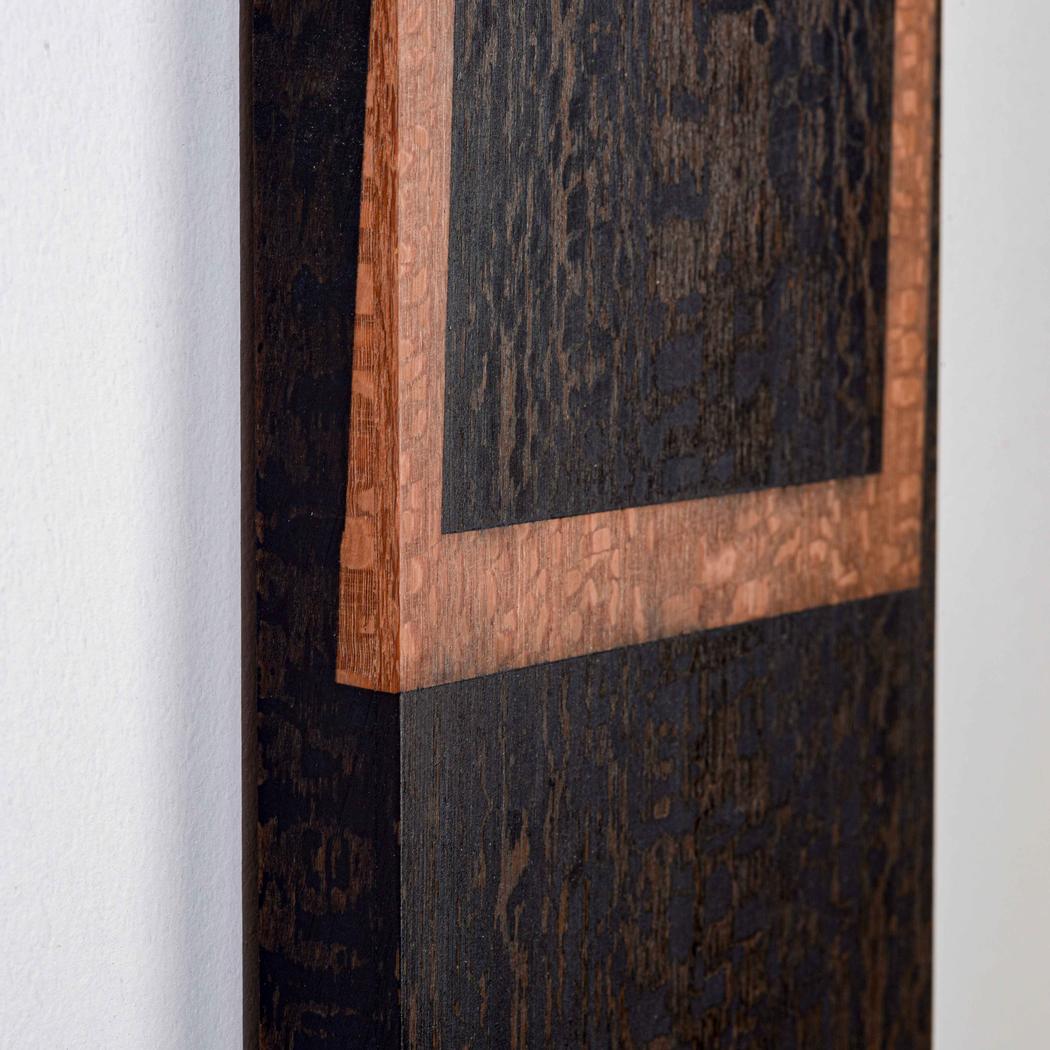 Peter Tristram Walz | Active Object | 2026
How important is the viewer’s bodily experience—movement, distance, texture, and scale—when encountering your work?
The viewer’s bodily experience (even when not present) is extremely important to my work, although I think it is often a deeply unconsidered aspect of viewing art. This has become particularly problematic for artists who work physically—with wood, clay, stone, and other materially specific forms—because it is difficult to communicate the full depth of that experience through online forums and exhibitions.
Scale is perhaps the most readily apparent condition affecting the perception of an artwork, but distance, movement, texture, and the viewer’s position are equally important. To sustain interest in the absence of that presence, I find that a work must be thoughtfully documented through multiple angles, details, and views of the object within an environment. This sometimes results in my documentation becoming a kind of photographic montage—almost Cubist in the way it attempts to present multiple perspectives and moments of encounter at once.
Environmental works make the limitations of documentation even more apparent. A representation of a space necessarily fails to communicate the totality of living within a curated environment: the movement of the body, the shifting distances between objects, the peripheral impressions, and the textures and proportions that gradually become perceptible through time.
I have been especially interested in work that illuminates senses that have not traditionally been allowed in museums and curated spaces, especially touch. I am planning a series in which touch is required rather than distanced from the experience of the work. It is also important that digitally consumed work interrogates that physical relationship as part of its facture.