
Brechin Flournoy
Your artistic practice is deeply connected to dance and movement. How did your background as a dancer and choreographer shape the way you approach photography?
My photographic practice is an outgrowth of my lifelong studies in dance, and my extensive training in Butoh, a contemporary dance genre originating from Japan. The training requires exceptional physical discipline in balance with Buto-Fu (words and poetic imagery that inspire or trigger internal movements and transformation). I approach photography as a dancer first, drawing from the perspectives of the body as an extension of the environment. It is not separate, rather it is an alchemical relationship that shapes space.
The lens is an extension of my body and my eye as I’m drawn into the scene. When photographing dancers in performance, I’m often seeing the choreography for the first or second time. Drawing on my background, I can read the moments of preparation for a jump or a split second composition. I am constantly experimenting with the camera to figure out a way to elevate the subject into something extraordinary.
When photographing natural elements, I manipulate my body so that it fits into the curve of a tree or flat against the ground, or hanging from certain vantage point to capture something that I see. In this way, I am as much a part of the environment as the subject of my attention.
You describe movement as your “mother tongue”. What does photography allow you to express that movement alone cannot?
I’ve been experimenting with movement and dance as long as I can remember. It is my first language, a refuge, and one of the constants of my life. Movement is a life-long conversation. I don’t perform anymore but movement doesn’t need a stage. As my body has aged and my physical abilities have changed, I’ve adopted the practice of dancing whenever the moment strikes, whether it’s on a street corner, in the club, at a concert, in the kitchen. Dancing is always there. But where the body has limitations, photography is limitless. I can play with color, light, and spatial relationships. The freedom to combine imagery and elements is a way to continue the creative journey in a new world. Photography utilizes my arts background while demanding growth and new skills.
 Brechin Flournoy | Summertime
Many of your works capture bodies in moments of suspension, flight or physical tension. What draws you to these transitional moments?
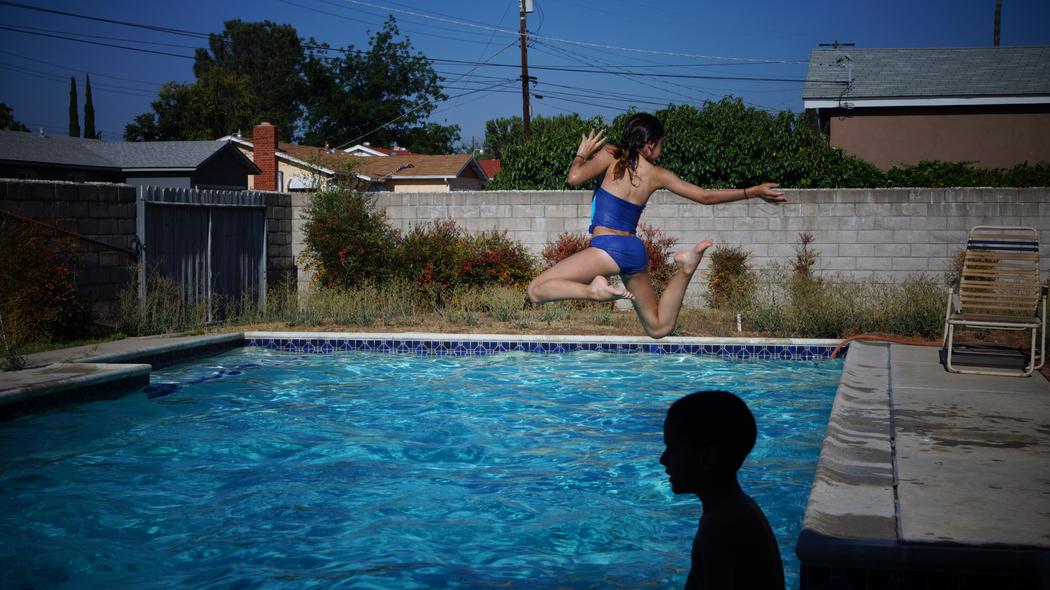
The power of the moment. When seeing the jump or leap in real-time, we see the arc of movement. The continuation of a body as it slices through space. Capturing the moment through photography allows us to ponder, with perfect clarity, that split second when the body is at pinnacle of achievement.
In the submitted images, the figures appear to defy gravity. How do you understand the relationship between freedom, strength, and vulnerability in these works?
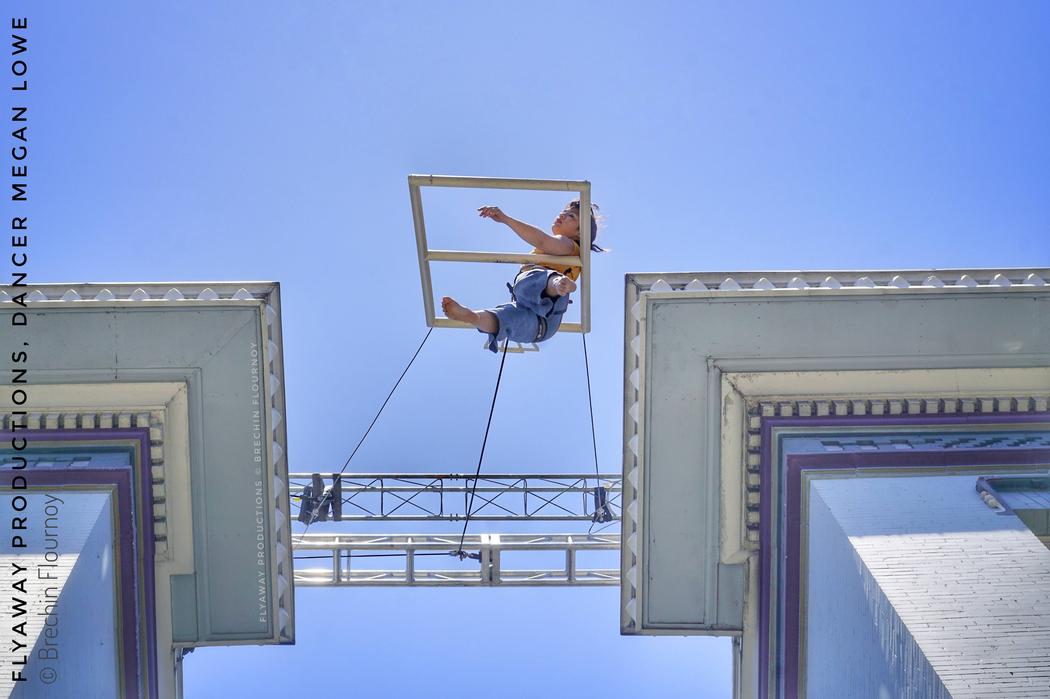
The image of a dancer framed by two buildings is a documentary image of a site-specific, aerial dance performance by Flyaway Productions (dancer: Megan Lowe). The second image is of a child – my daughter- jumping into a pool. The silhouette in the front grounds the image to emphasize the feeling of flying. Both images represent freedom and expression of physical power. That moment when strength meets risk. I’m reminded of being a child on a swing, furiously pumping the legs to create a certain velocity and that moment of suspended stillness before the swing descends back to earth. That was a moment of fearlessness, accomplishment, and giddy joy. The submitted images evoke the same feelings. Both are physically vulnerable to the environment. The wind can blow the apparatus and dancer’s ropes in unpredictable ways. The sun can heat the dancers metal frame and affect the grip. The child jumping into a pool can have a hard landing in the water. But the subjects are in control, being bold and joyful.
This interdependency is what makes us – as the viewer – take that moment to fully appreciate the casual elegance of these moments.
Your work often explores the connection between the body and the environment. How do specific locations or surroundings influence the final image?
The natural world has a personality. It has secrets. It has a rhythm that influences our visceral connection to natural and urban environments. Lens-based work is a record of my conversations with the elements – earth, water, air, fire – as a photographer and a movement artist.
Different environments demand different expectations and a willingness to work with the immediacy of the moment. In a studio setting I can control the lighting, the backdrop, and the pace of the session. But much of my work is photographed outdoors or in a theatrical setting, where I have considerably less control over the conditions that shape the image. I enjoy the exercise of adaptation and improvisation to navigate unpredictable lighting, shooting conditions, and visual distractions. When shooting aerial dance on the street, in particular, the techniques are oriented towards capturing the dancers’ body in a state of precarious motion balanced by the weight of the building façade. Or focusing on the moment of emotional urgency.
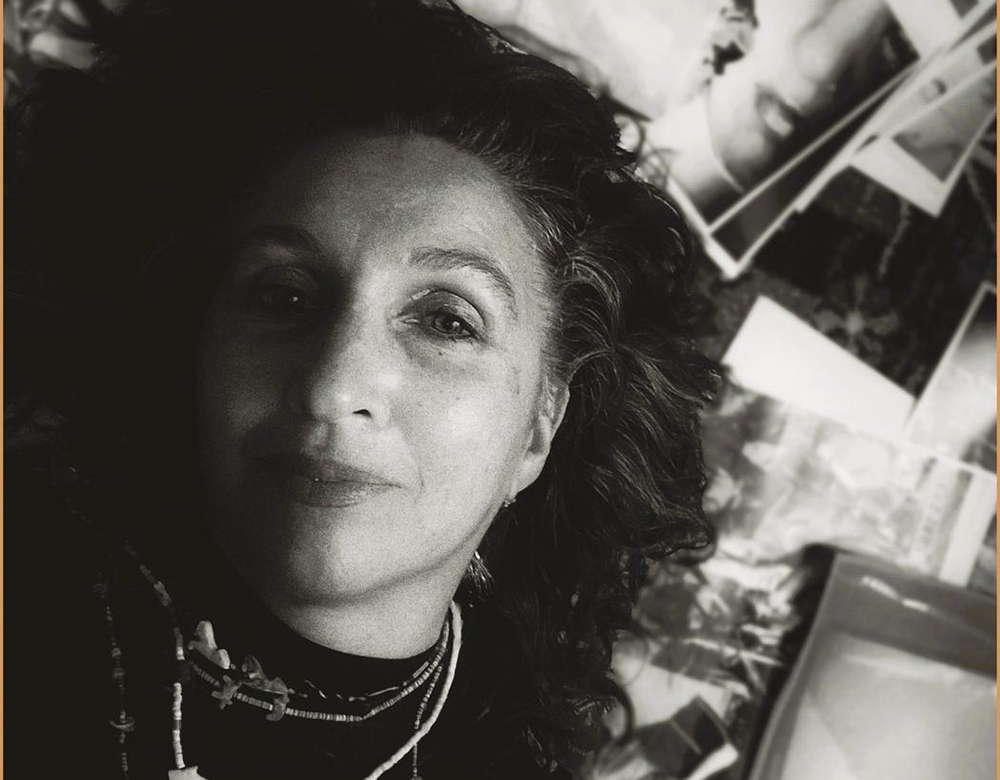
A different approach is expressed through my self-portraiture, which tends to be embedded in the earth. In my self-portrait series about my experiences with breast cancer, I buried myself in the garden soil to feel the sun in my soul. It was a ceremonial burial and rebirth staged for the camera. The ground and dappled light provided a haven- a grounding element of sensory comfort. Courage was found in nature’s impermanence and its promise of rejuvenation. Radical healing took on a kinetic energy. The practice of connecting the sensory body with the details of our environment was more than satisfying- it was medicine. In many of my works, I layer organic overgrowth, or a landscape with images of my body in frozen motion. The images are synthesized through an alchemical process of combining documentary images with fantastic elements to shape a new reality.
Your long-term self-portraiture project reflects a deeply personal journey of the body, healing and transformation. How has self-portraiture changed your relationship with your own image?
I am fascinated with the details of our changing forms. I consider my body to be a house – or spaceship- that holds my consciousness. One of my teachers, Akira Kasai, would refer to our bodies as stardust and matter as constantly changing. Photography has been a tool that gives me the ability to converse with my physical state. This perspective was developed
F*ck Strength – a self-portraiture project about my experiences navigating breast cancer from my first diagnosis at age 42 to my second round in 2020 at age 54- is the externalization of deeply personal negotiations with serious illness and reconciliation with my new body.
Cancer changed my body. Internally, my cells mutated and expired. Externally, my physicality evolved into a new shape with scars and discolored skin as evidence of the struggle. Throughout this journey, photographic self-portraiture became my language of confrontation and self-acceptance.
Photography was a powerful tool as a language and a witness. Frame by frame, my lens recorded years of internal conversations with my body and its mercurial emotional states of existence.
The camera is a witness to my corporeal struggles and an extension of my emotional and energetic bodies. It is a record of my conversations with the physical world and the synthesis of kinesthetic and spiritual realities; an intuitive diary of color, light, and captured movement.
The act of capturing my image on camera, then manipulating the images into new realities, externalized my emotional relationship with the body through life stages and serious illnesses. I reject the notions of the ‘tragic female body’ and the bypassing of “being strong”. Through vulnerability and self-acceptance, I present an unflinching gaze that asserts a woman’s right to exist as an emotionally whole, sovereign being.
 Brechin Flournoy | Flyaway Productions
What do you hope viewers feel or reconsider when they encounter your photographs of bodies in motion?
I have so much respect and admiration for the people that I photograph. They are exceptional athletes doing incredible things. Watching the performance, or moment in real-time, we see one thing. Picking a moment and showing frozen motion asks the viewer to consider something familiar as a hidden creature or a deeper meaning. I hope to inspire the question “how?” How did that body defy gravity? What are the lines and shapes that the body can make? I want the audience to consider the impossibility of flight and the power of risk. And that female bodies are powerhouses that do seemingly impossible things. So often I see images of women and female-identified people portrayed as tragic, sexual, shy, retiring, sweet, wholesome or slutty, confrontational… the list of negative stereotypes goes on. I reject this interpretation and I want to show us as the multi-faceted, complex, powerful people that we are. We can be messy and we can be precise. The images of bodies in motion are the ultimate expression of selfdetermination. This is the moment we are exercising controlled precision against all odds.