
Alexandra Mot
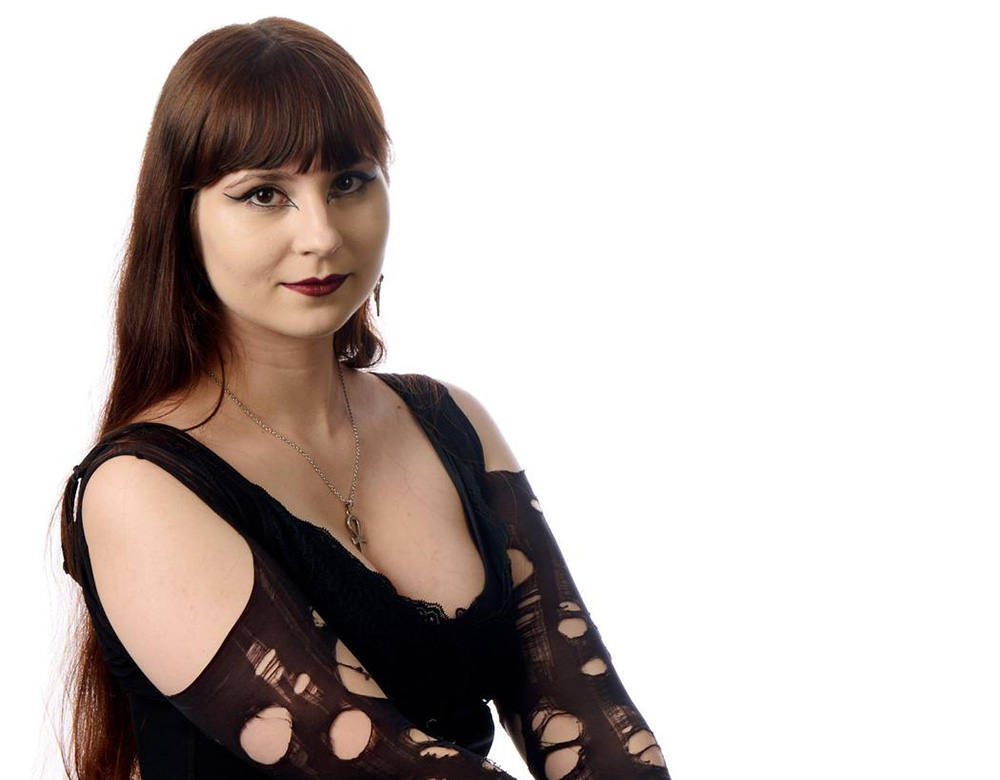
Moving to Los Angeles at such a young age was a big step. How did this relocation shape you both personally and creatively?
This decision shaped the trajectory of my creative career as well as my personal life. I made the decision to move from Hungary to the US in high school and I kept working towards this goal until I achieved it. To be honest I couldn’t have gotten here if it wasn’t for the support of my parents: this journey requires a lot of sacrifices, both financially and emotionally. They believed in me and provided me the opportunity for a better life and the chance to get into the fashion industry. This move made me who I am today, all the challenges I had to get through and still have in front of me, made me stronger and required me to mature faster. I had to become more independent from the moment I took my first flight alone to LAX. Although I’m still learning how to ask for help from others, becoming more independent has helped me tremendously in this big city. I have my long-term boyfriend to depend on as well, we met in Hungary and I moved here a bit after him.
I can say the education I got both out of school and my internship is a great foundation I can build on and I’m forever grateful for it. I know I couldn’t have received it elsewhere. Moving here and meeting the people I did felt like it was meant to be, to end up in LA was destiny. All the things Los Angeles has to offer to a designer, like the Fashion District, contractors and small manufacturing, gives possibility for small scale production that is amazing for students starting out like me. We have the entertainment industry at the heart of this city and these paths opened my eyes to what could be achieved here.
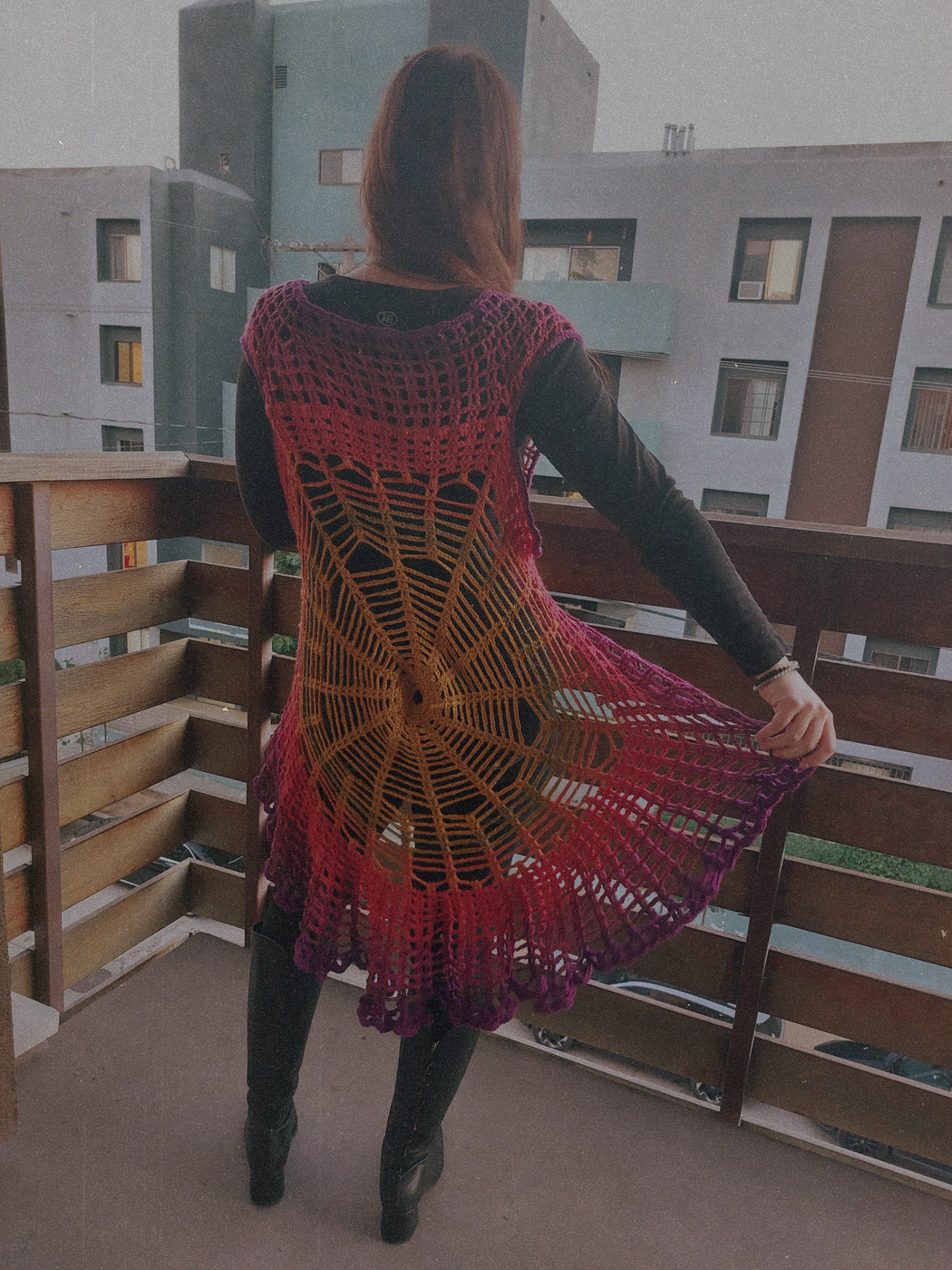 Alexandra Mot | Szn Of The Witch | 2024
Crochet became a form of escape and art therapy for you during a difficult period. How does emotion influence your creative process today?
I found crochet at the right time. It was gaining a lot of popularity during Covid and I’d see all these beautiful pieces made by young people like me, I realized there’s a whole new community forming out of it. I tried a little in Hungary but my first actual piece was made for my boyfriend, a plushie for his birthday. It was as simple as that feeling some people can’t shake off: that I can make and learn anything if I set my mind to it! So I went to this tiny shoebox sized sewing supply store, asked the lady for the yarn and hook and got to work. After my little plushie piece, I didn’t touch crochet for around half a year, but burning out from sewing for my college classes made me interested in creating clothing with a totally different technique.
After a hard day, sitting down with my hook, yarn and a cup of tea, it just melted away all my worries. It’s hard to describe, but crocheting felt like meditating for the first time in my life, it shut out all the noises, doubts and anxieties in my head.
I think it helped me not make these things for anyone’s approval, but for my own joy. As a high-achiever from a young age, anything I did had to measure-up to a certain level or it was a waste of time and I felt worthless. My grades and later on my sewing projects had to be so perfect I often forgot why I was working so hard and didn’t celebrate my achievements. I had no idea how to relax or to enrich my soul after I’ve done the work I had to. Finding out how happy and relaxed crochet made me feel definitely helped my mental health and I don’t know how I’d survive without it now. Being so far away from my family and best friends I made in Hungary was also very challenging, it took a long time to transition and live in the present for me. My biggest escape was crochet during this time and I still do it on a regular basis. I started to gain skill in it without even realizing and I learned by myself, there were no professors to judge my work, only me. This made me so much prouder of my garments than what I made for college classes.
Emotions still play a big part of my work, I usually pour all my joy, anger, frustrations or moody periods into my work. Creating is like therapy for me.
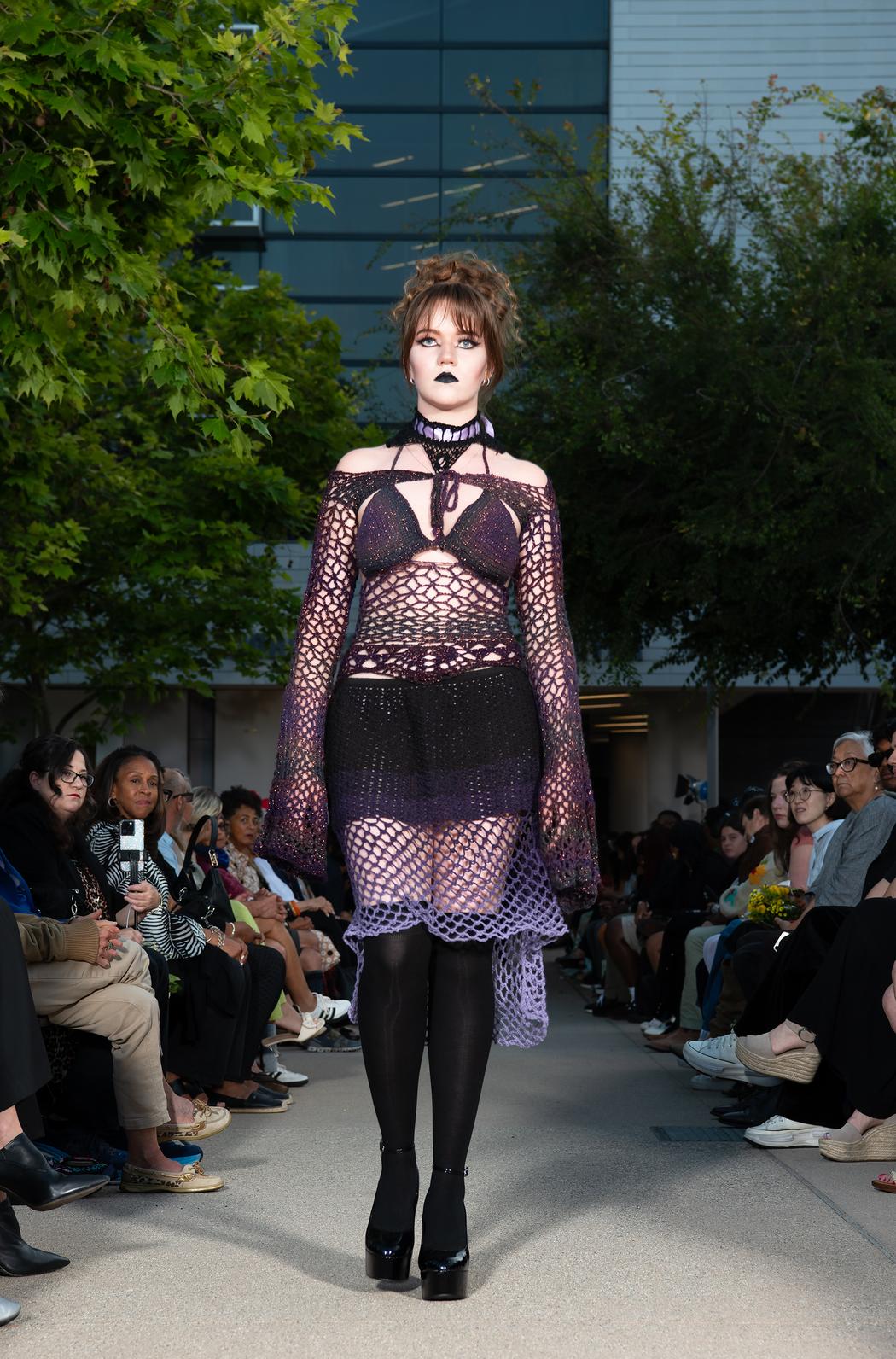
You often reference Victorian fashion alongside 80s post-punk and goth subcultures. What draws you to these specific eras and aesthetics?
The journey of finding my style is quite interesting because I wasn’t exposed to much of it as a child. I would call my hometown plain and boring in terms of fashion and self-expression through clothing, so it was something else that pulled me in. As a little kid I collected Barbie dolls like every other little girl, but then a new doll line came along in the late 2000s, Monster High. These fashion dolls were inspired by famous monsters from horror movies and it was a gateway for me into this world. Extravagant accessories, complicated high heels and outfits, they all mesmerized me. It started my love for the genre when I first started watching horror movies at 13, these dolls made me interested in fashion, especially alternative fashion and it brought a whole new obsession to my life. I would sketch out 6-8 outfits with heels per page in my small sketchbook, during most of my free time. My grandmother would help me create the outfits for the dolls for me and that was my first introduction to sewing.
Then I got my first smart phone when I was a preteen and I got to research more. I started listening to rock music and discovered alternative subcultures. I didn’t have the courage or the clothes to dress like that in high school so my style took a long time to bloom.
I only really started dressing gothic and alternative when I moved here, I started to gain confidence and get out of my shell more and more. Even though dressing in all-black isn’t easy in the hot weather LA has most of the year, seeing everyone confidently dressing the way they want to and no one batting an eye made me follow suit. Unlike in Hungary, where there’s a lot more judgment from strangers on the street or family, employers, establishments, etc.
I was falling in love with goth rock music during my college years, like The Cure, Sisters of Mercy and Siouxsie and the Banshees. This interest led me to Victorian fashion, as it shares elements with gothic fashion. The Victorian era also gave us classic gothic horror books and dealt with darker topics like mourning openly, which intrigued me. The gothic subculture basically started from this era’s literature so it’s like going back to the roots of the movement. I adore Victorian fashion now, notably the corsetry, the meticulous details and the big puffy sleeves. It provides endless inspiration to bring a touch of that era into modern, wearable alternative clothing.
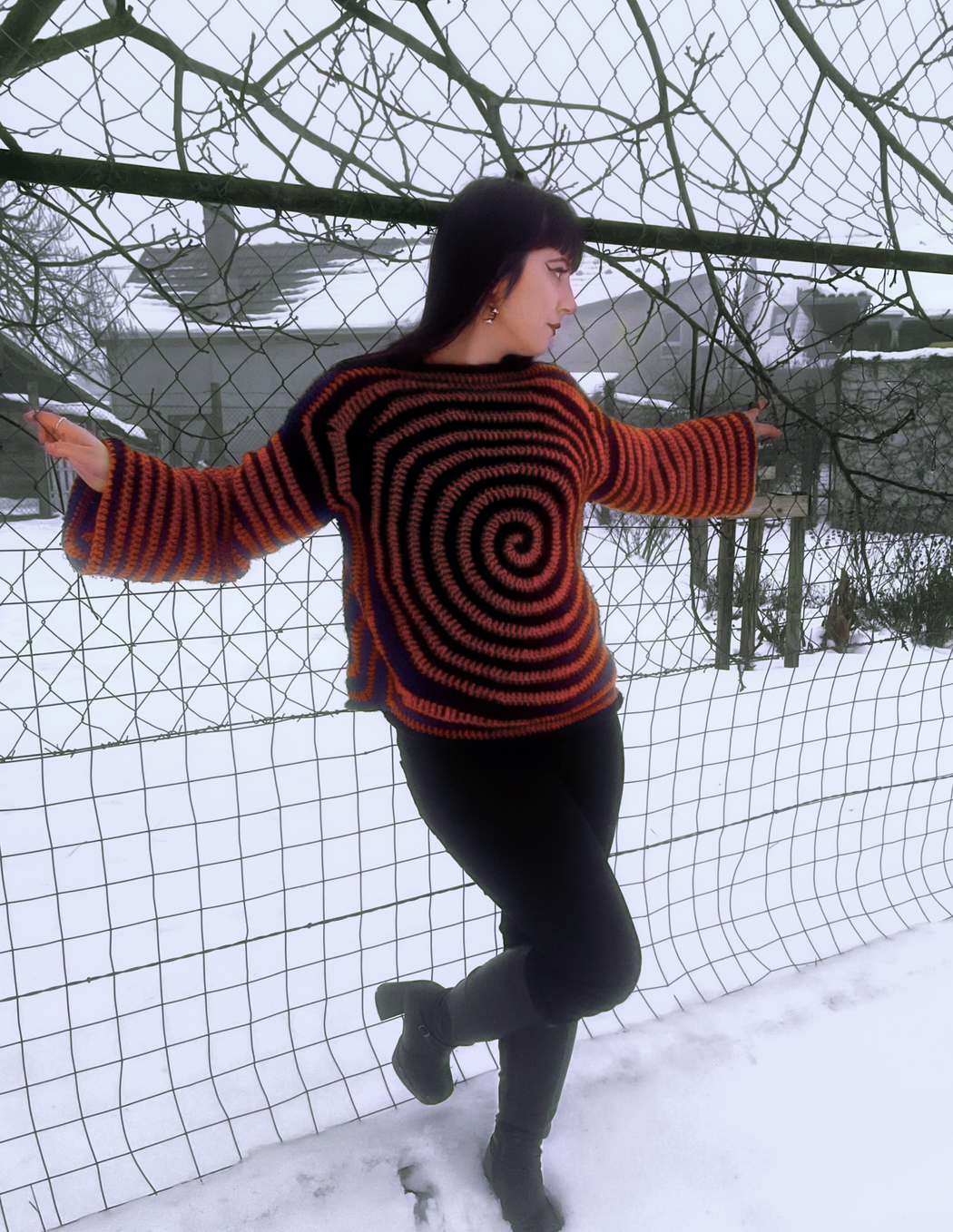
Your spider-web crochet designs feel symbolic. What does the spider web represent to you personally and artistically?
Most of my friends growing up would say that I was a “city girl”, meaning I wasn’t around nature too much, but it was quite the opposite for me. Yes we lived in a small apartment in the town centre with my family, but my dad’s workplace which he owned also had a backyard garden kind of separated off from the business. It has a wooden cabin and I’d spend all my summers there growing up. I distinctly remember watering the plants during the sunset every day and between two thuja trees, spiderwebs would form. The water from the hose would sprinkle on them and the water droplets formed little crystals on the webs. It was truly beautiful and I would wait for the spider to come out, sometimes I caught it wrapping up its next dinner in the form of an unlucky fly, bee, or small mantis. I was very spooked by insects and spiders when I was little, but being close to nature made me respect them more and fear them less. Not having many poisonous and deadly spiders and animals out in the wild in Hungary helped a ton, of course!
Observing the spiderweb, they were such precise and delicate creations in nature but never quite perfect. Some lines got longer or uneven and that was the beauty in it, all of them were different but made with the same technique. To me the spiderweb design reminds me of home, the beauty in something that some people might consider scary or spooky and how I can create gorgeous things without the pressure to be perfect.
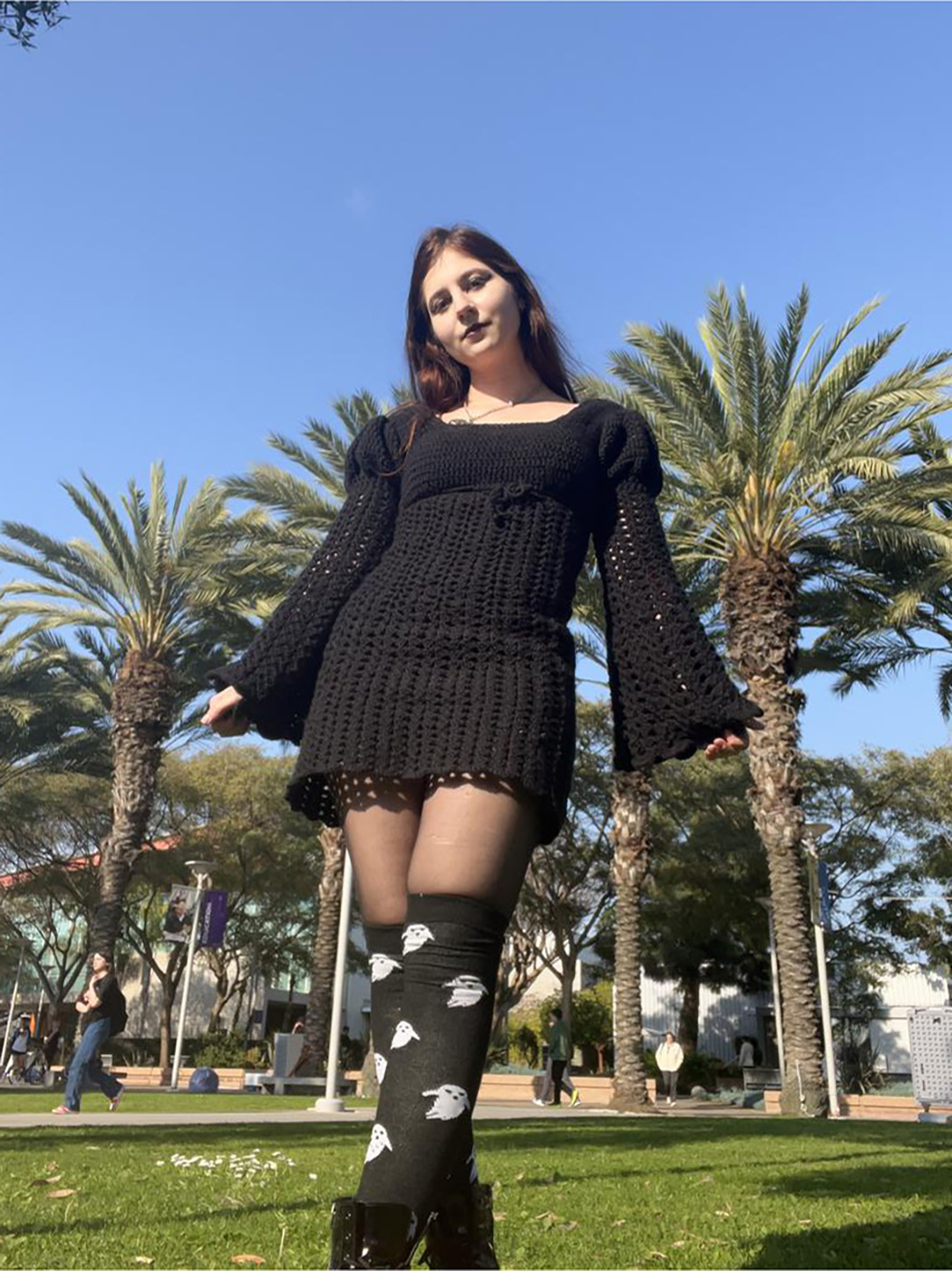
You mentioned feeling frustrated with sewing and patternmaking early on. How did embracing crochet change your relationship with perfectionism?
When I started to feel the pressure from school, perfectionism and tight constraints on projects made me look for a different way of making clothing. It felt great learning a new skill, don’t get me wrong, but I was learning how to sew the basics and not practicing the design process or how to creatively express myself. Long commuting on the public transport ( I was used to getting to places in 10-15 minutes in the town I grew up in) and classes during the week made me feel exhausted and I felt I was losing my spark a bit. Perfectionism freezes you, makes you indecisive and robs you of energy to just sit down and do things. Starting was always the hardest for me. Once I’m actually in the zone, I do hours of work at a time, I’m not the type to take breaks really.
In crochet, repetition was easy to follow, and if I missed one little stitch or made a mistake that didn’t throw off the next rows I learned to let it go. I didn’t have the heart to undo 2-3 hours of work at a time because I noticed something small too late. I would improvise on the patterns more and add my tweaks here and there. For me, creating a garment out of yarn, basically making up the textile as I go was revolutionary. The process is so different, it just clicked in my brain. Another bonus is the convenience: I can pick up a crochet project anywhere in the house and work on it, I’m not tied to a table and chair the same way as sewing. I can take the project on the go, work on it on public transport for 2 hours, which I usually did while getting home from my classes.
Now I’m less of a perfectionist in sewing, which doesn’t mean to ditch precision in patternmaking, cutting, nor sewing. It just means to get rid of the mental block for me, that everything had to be planned out beforehand and to get anxious if a problem came up. I also realized how important your tools are as a beginner and learning on the “wrong” sewing machine can make someone turn away from it. As I get to used different machines, home and industrial alike, I realized I was working against my machine and not with it. Getting the right sewing machine, thread and needle made my life so much easier with sewing, so I’m planning on getting back to it as well and to combine sewing and crochet in my pieces moving forward.
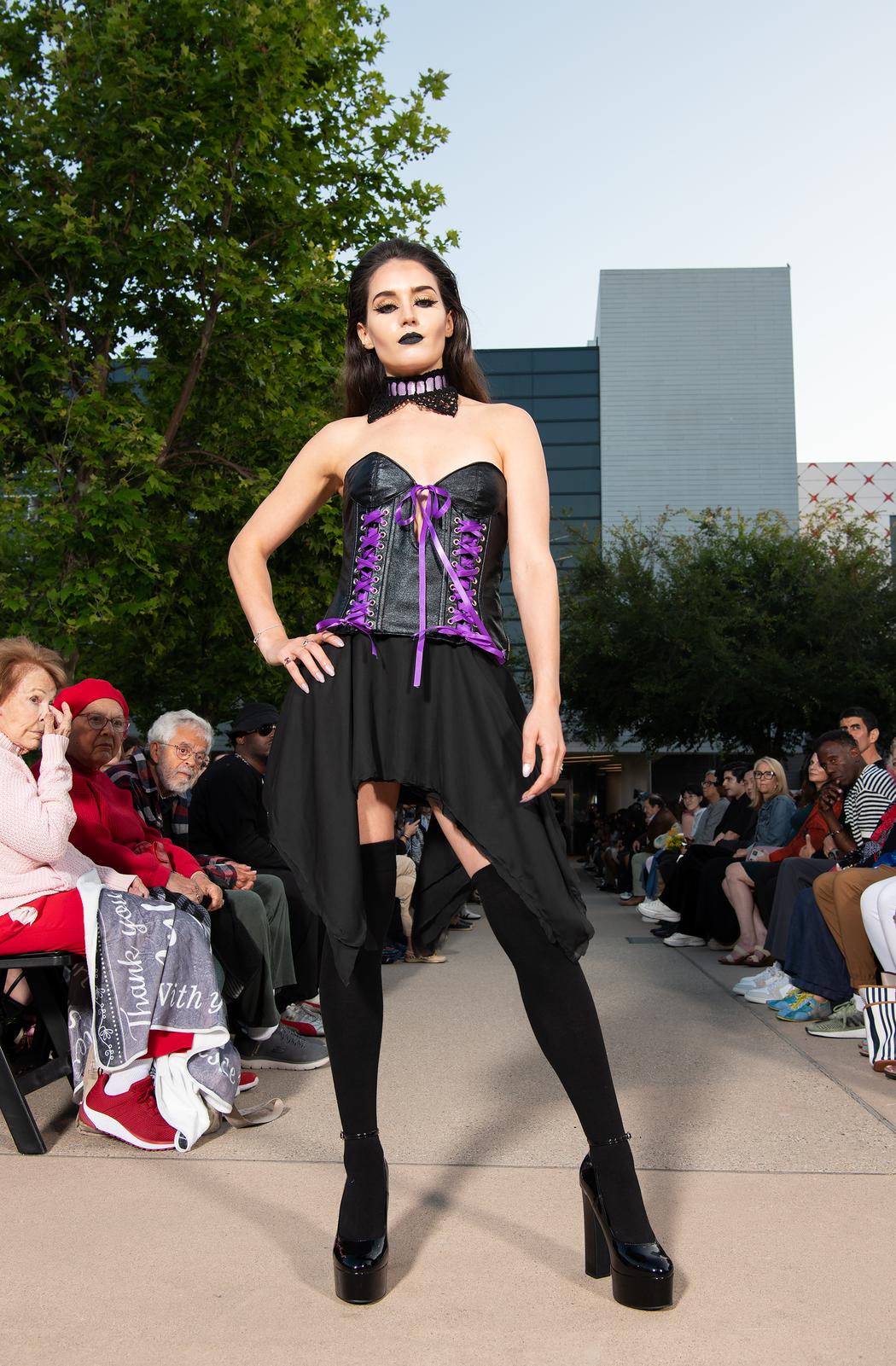
Sustainability and upcycling play an important role in your work. How do these values influence your design decisions?
These values first started when my mom would take me thrifting growing up, both for economic and ethical reasons. I would find the most unique pieces that only I had, which made my little fashionista heart so happy, as there were very few stores in town so most people dressed the same.
Our college program would talk about sustainability, where I participated in upcycling challenges as well. Knowing how polluting the fashion industry is, I think it’s important to have sustainability in mind in our design processes. I think sourcing for upcycling is the easy part, I accumulated way too much already, so the bags are stashed away in my closet. The harder part is figuring out how to fit bits and pieces into existing pattern pieces, to cut it up to smaller pieces or if you can find a big enough piece for this panel? And to coordinate the sourced materials so it looks cohesive in color story, textures, and fabric weight as well.
I like patchwork design and denim and I aim to use these techniques in gothic fashion. Just like crochet, it’s a smaller niche.
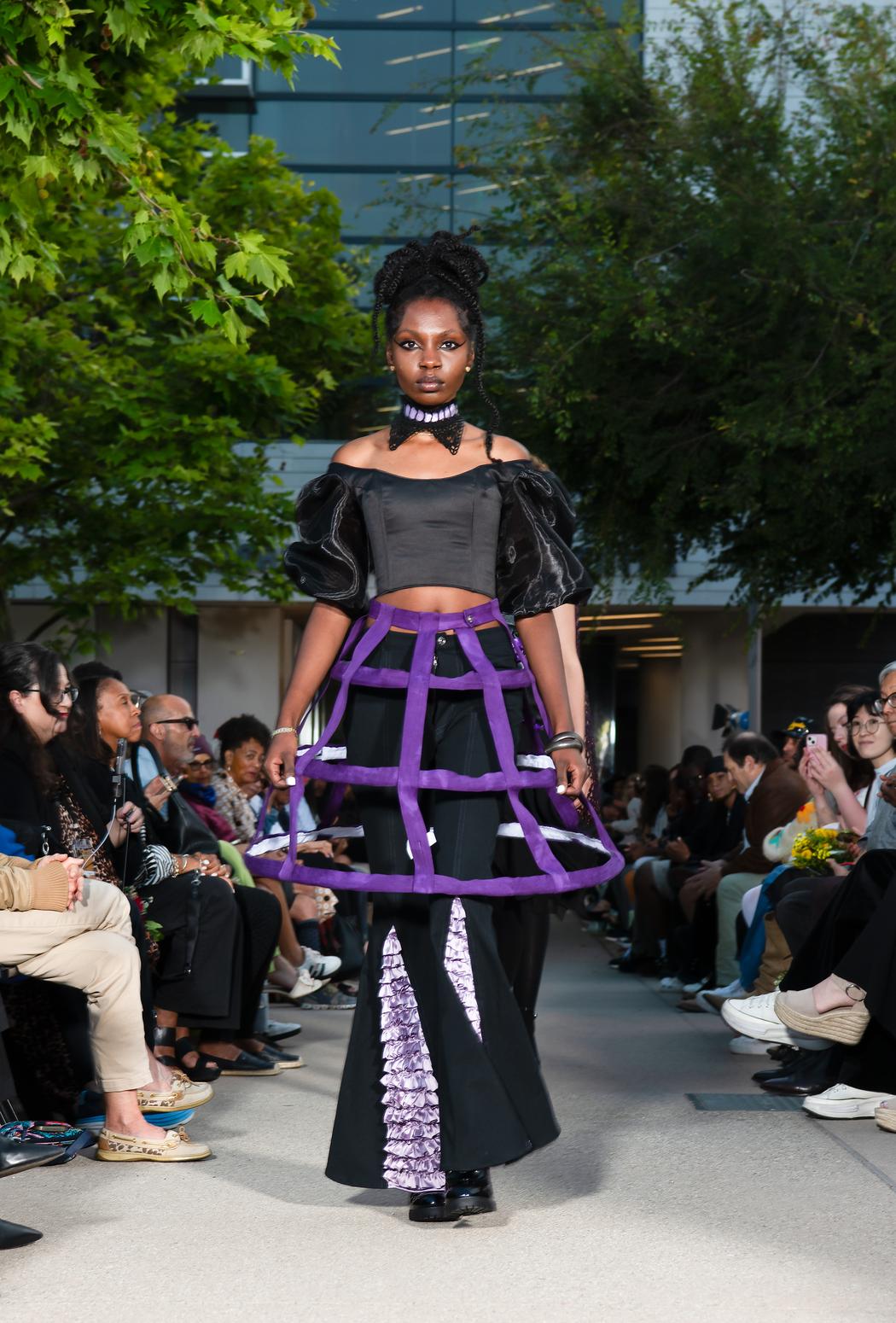
How does living in Los Angeles influence your work compared to your time in Hungary?
I was very young in Hungary when I started learning about sewing and fashion, I was just trying to find my style and voice. The fashion industry is so small and the market is tight, not a lot of people have the budget to get clothing from independent or designer brands, most people buy fast fashion there and aren’t really interested in anything outside of a certain style. Therefore I had very little that could influence me there, I would watch fashion shows online and learn about established designers and brands, but I felt limited. If I wanted to source fabrics the thrift was great for upcycling, but we only had maybe 2 fabric stores, one was on the brink of closing. I would have had to live in Budapest, our capital to really start experimenting with my style.
Moving to LA and seeing the Fabric district, I was like a kid in a candy store. The world opened up before my eyes and I could see that there’s so much I can find out here. My mentor from my internship also taught me about fabrics as I had next to no knowledge about it. He showed me the best spots, how to bargain and get creative with trimmings, I have to thank him a lot. To this day I get overly excited when I get to go shopping for materials downtown.
I also developed my taste and interest in gothic, post-punk and Victorian fashion while living here. The fashion history classes taught me the basics of historical fashion, which I throughoutly enjoyed. But my internship was very influential for learning about the LA punk and goth scene in the 80s, because my mentor lived through it all and influenced him greatly. He makes mostly menswear, but his style is steeped in dark 60s looks (think the Doors and Foghat), gothic aesthetics and Victorian jackets and pants. This mentorship was a match made in Heaven between him and me. I met him through one of my classes and I’m forever grateful for this experience. After learning from him, I’m more inspired than ever to start translating my taste into modern, wearable art pieces.
Leave a Reply
You must be logged in to post a comment.