Wu Mingze
Your creative practice centers on fluid color experiments and material-driven painting processes. What initially attracted you to adopt this painting approach?
I was initially drawn to fluid and material-based creation because it bridges the gap between controlled artistic expression and natural vitality. Unlike traditional painting that relies solely on precise manual brushwork, fluid materials carry unique, spontaneous kinetic energy. This creation method allows colors and textures to evolve naturally, which perfectly matches my artistic pursuit of capturing subtle, unpredictable changes in life and nature. I believe the most touching artistic moments often come from the interaction between human intention and material nature, and this creative approach gives my works unique vitality and inclusiveness that traditional rigid painting methods cannot achieve.
In your works, paints flow, diffuse, collide and overlap. How do you balance the natural properties of materials and your own creative intentions?
My balance lies in “pre-set direction and fine-tuned intervention”. First, I define the overall tone, composition logic and emotional theme of the work in advance through color selection, material proportioning and canvas layout, which is the controllable creative intention. During the creation process, I fully respect the natural flow, diffusion and collision laws of pigments to retain the unique random texture of materials. When the natural changes of materials deviate from the core artistic conception I want to express, I intervene subtly through angle adjustment, partial guidance and layered superposition. In short, I take the natural characteristics of materials as the foundation and my creative intention as the core, integrating random natural beauty and subjective artistic design organically.
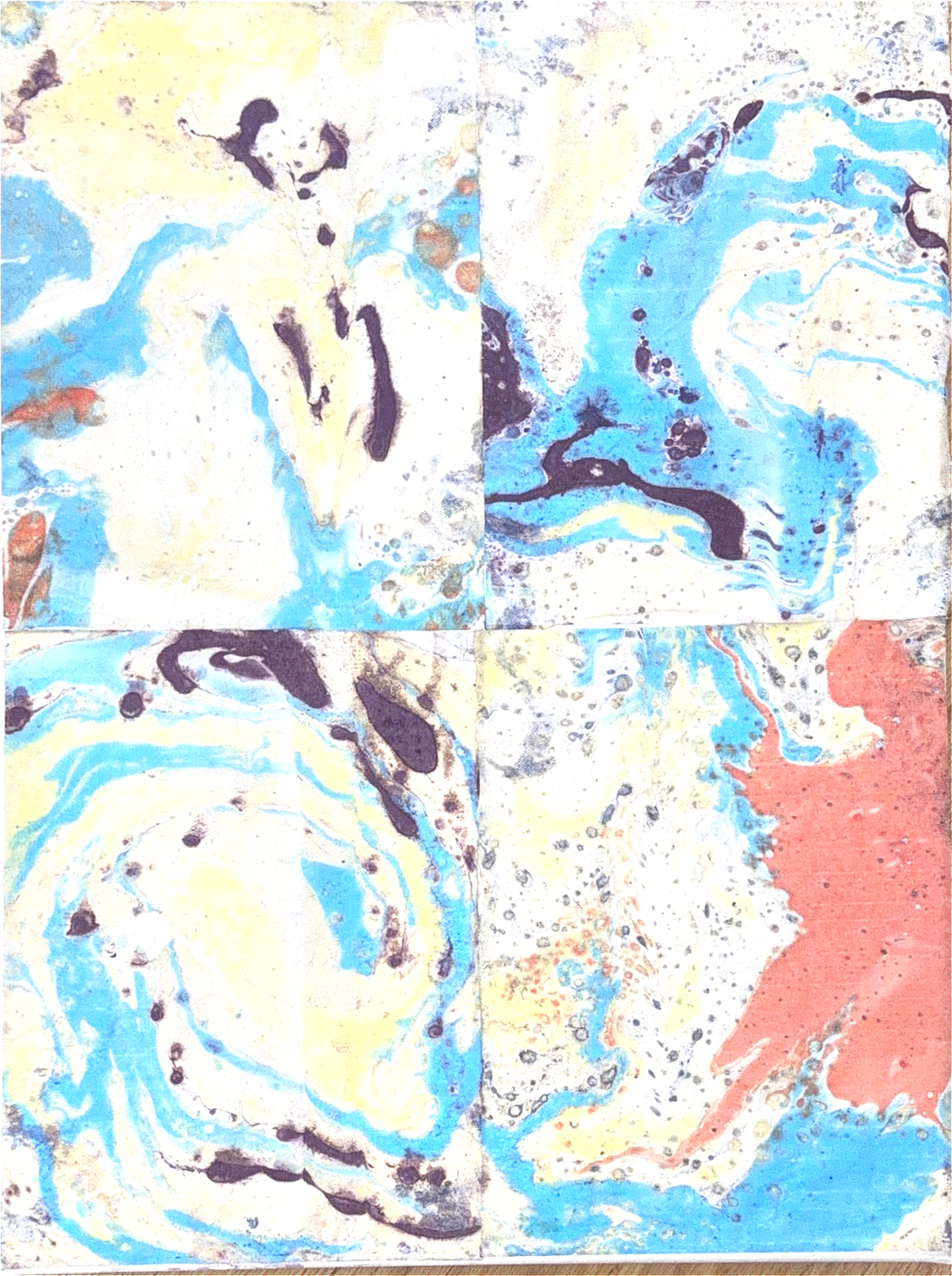 Wu Mingze | Green Tide Vortexу | 2026
At which stage of creation do you begin to intervene in accidental forms, and how do you judge when a work is finished?
I usually do not intervene in the early stage of creation. I allow the pigments to flow and spread freely to generate the most primitive and accidental textures and forms. I start targeted intervention in the middle and late stages of creation, when the basic framework of the work is formed. At this stage, I will modify overly scattered structures, unify the overall color rhythm, and strengthen the visual hierarchy according to the work’s theme. I judge a work to be finished when it achieves a complete balance of vision, emotion and logic. The work needs to have natural and vivid material textures, a unified and coherent overall artistic conception, and no redundant or missing visual languages. Most importantly, it can completely convey the core emotions and themes I want to express, leaving a moderate visual imagination space for the audience.
Spring Tide MapGreen Tide Vortex4. Works such as and evoke aerial views of oceans, coastlines, ocean currents and unfamiliar landforms. How important are these natural and cartographic associations to you?
These natural and cartographic associations are the core spiritual carrier of my series of works and extremely important to my creation. On the surface, ocean currents, coastlines and landform aerial visions are the visual prototypes of my works; on a deeper level, they are symbolic metaphors. The flowing tides and changing landforms represent the uncertainty, mobility and evolution of nature and life, while the cartographic texture implies the exploration, recording and cognition of the world. These associations connect my abstract visual language with real natural cognition and life perception, enabling my abstract works to get rid of empty formal presentation and carry profound emotional and cognitive connotations of observing nature and perceiving life.
Both works are divided into four independent yet interconnected parts. What role does this modular structure play in the audience’s viewing experience?
This modular structure builds a layered and progressive viewing experience for the audience. On the one hand, each independent module has its own independent color rhythm and texture detail, which allows the audience to appreciate the unique aesthetic and independent artistic charm of each part separately and capture different subtle emotional changes. On the other hand, the internal connection in tone, theme and visual logic among the four modules ensures the overall unity of the work. It enables the audience to integrate the scattered independent pictures in the viewing process, perceive the complete artistic conception and progressive emotional rhythm of the work, and understand the overall creative theme through local details. This design also echoes the pluralistic and fragmented perceptual characteristics of modern people’s cognition of the world.
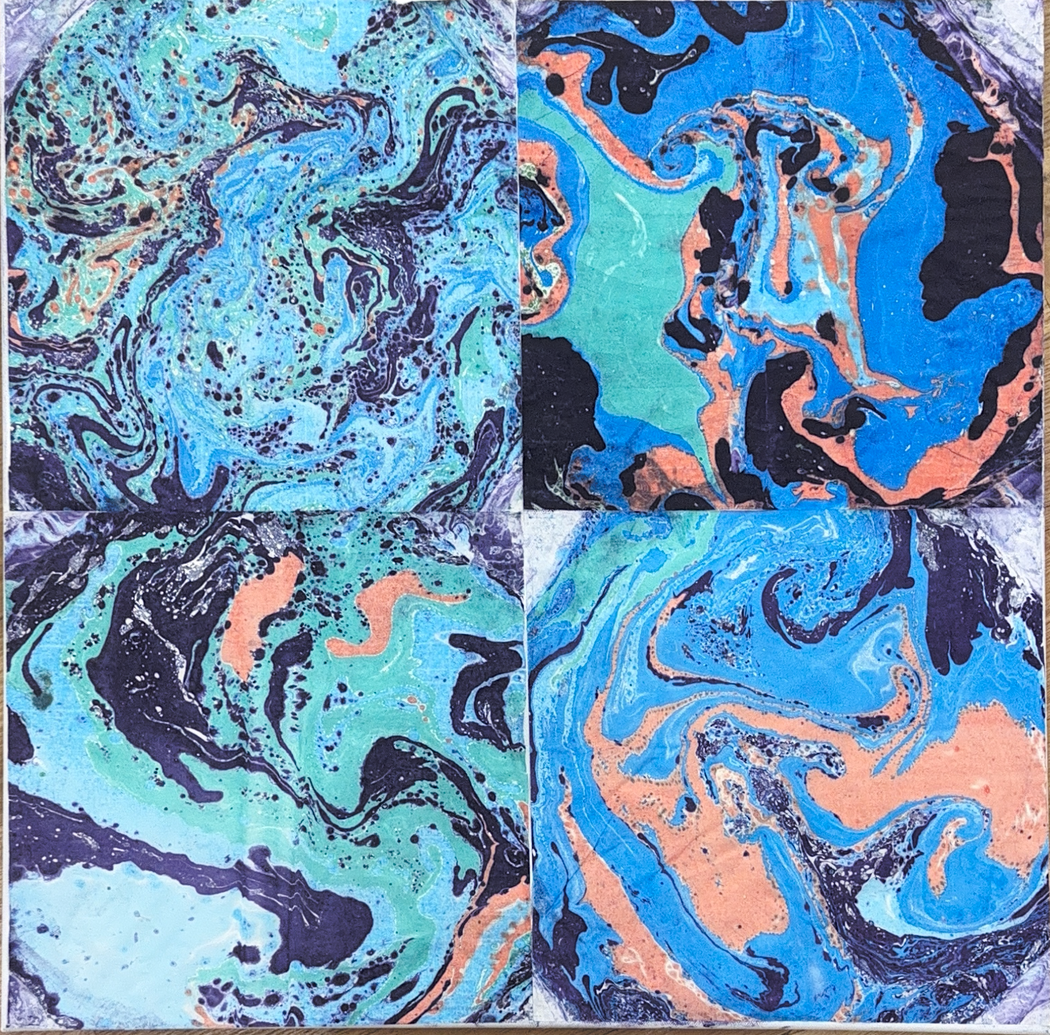 Wu Mingze | Spring Tide Mapу | 2026
You have lived, studied and worked in the UK, the US, Canada, Singapore, Malaysia and other regions. How have these cross-cultural experiences influenced your visual language and understanding of abstract art?
My rich cross-cultural experiences have profoundly shaped my inclusive and diverse abstract visual language and global artistic perspective. First of all, the diversified artistic education and market environments in Europe and America have made me break the single aesthetic paradigm, enabling me to understand that abstract art is not limited to fixed forms, but a diverse expression of inner emotions and cognitive thinking. Secondly, the integration of Eastern and Western cultures formed by living in multiple countries has made my works combine the free and unrestrained visual tension of Western abstract art and the implicit and inclusive artistic conception of Eastern aesthetics. In addition, cross-cultural migration and life experience have made my understanding of abstract art more focused on universal human emotions such as integration, change and adaptation, making my visual language more international and inclusive, and transcending regional cultural limitations.
Themes such as memory, migration, order and uncertainty run through your creations. How do you integrate your personal experiences into works that avoid direct representation?
I integrate personal experiences and inner perceptions into creation through abstract visual symbols such as color rhythm, material texture, picture layering and flowing tracks, instead of direct figurative representation. My repeated cross-border migration life has accumulated rich memories of wandering and integration. The irregular flow, collision and superposition of pigments in the works correspond to the uncertainty and change of migration life. The overall orderly picture framework and local random textures form the confrontation and unity of order and chaos, which precisely reflects the life state of maintaining self-order in the face of uncertain changes. All my personal perceptions and life experiences are internalized into the rhythm, tension and layering of the works, allowing the audience to perceive the implicit emotional and thematic connotation through visual experience.