
Divya Vinod Gilatar
Your practice is deeply rooted in sacred geometry and yogic philosophy – how did this direction first emerge in your artistic journey?
My practice emerged through a sustained engagement with Indian philosophy, yoga, and the study of ancient cultural systems. During my academic work in Ancient Indian Culture, History, and Archaeology, I became increasingly interested in how different cultures have used geometry as a way of understanding the cosmos.
This led me to explore Hindu yantras, Buddhist mandalas, Chinese spiritual traditions, and even the geometric principles embedded within medieval European cathedrals and Mughal architecture. Across cultures, I found a recurring belief that geometry is not merely decorative, but sacred and foundational — a way of structuring both the visible and invisible world.
A philosophical idea that deeply resonated with me is often attributed to Plato: “God geometrizes continually.” Tracing these systems back to the yantra, I began to see geometry as a spiritual language. Combined with my personal practice of yoga and meditation, this naturally evolved into a visual practice where sacred geometry became the core structure of my work.
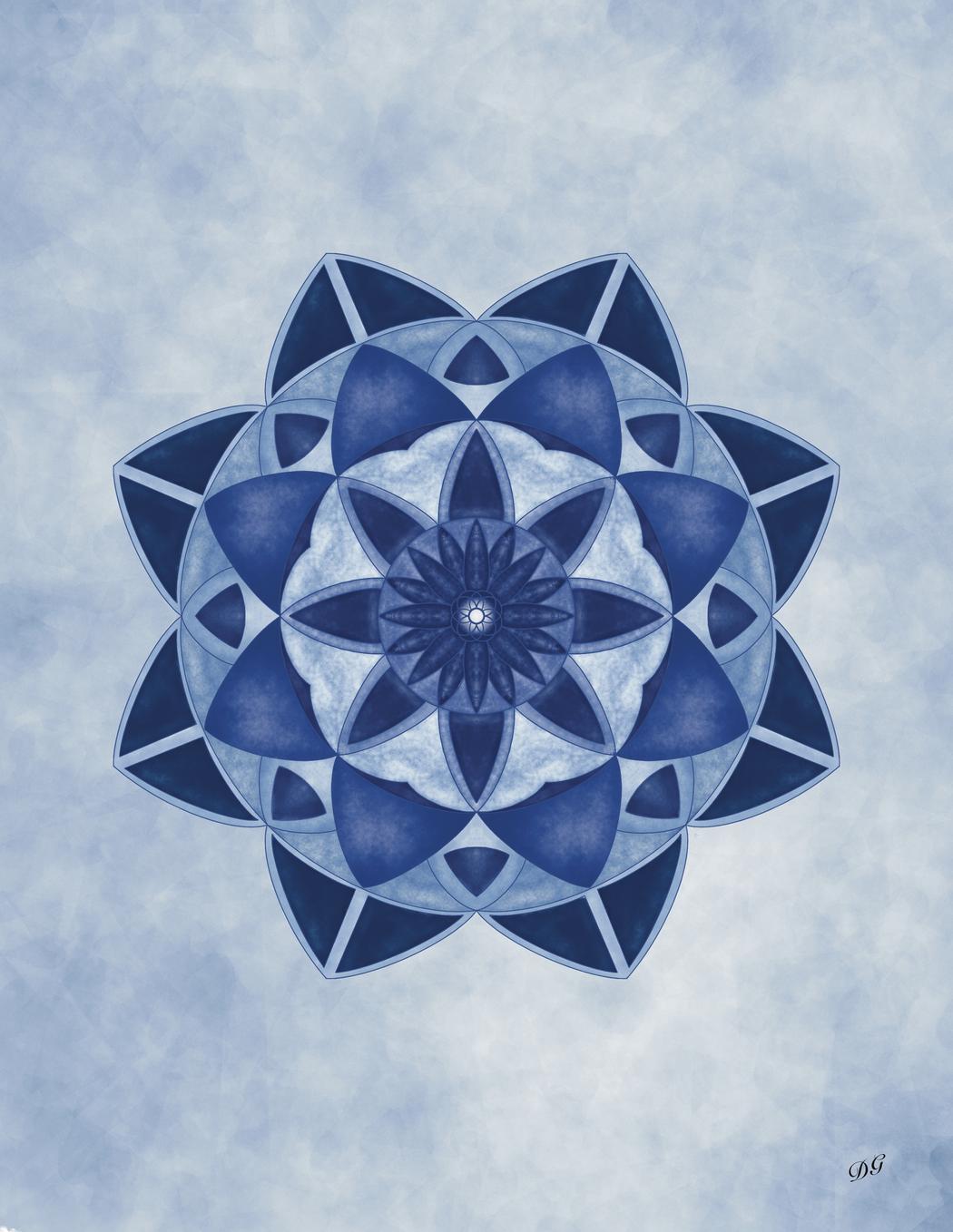 Divya Vinod Gilatar | Ajna Chakra The Third Eye Portal | 2022
The Chakra Mandala Series explores the subtle body through visual form. How do you translate something intangible, like energy, into structured geometry?
For me, energy is not abstract or intangible — it is something I experience as a continuous presence. I approach the body not just as a physical form, but as a field of structured energy.
Geometry becomes a tool to give that energy a visual architecture. The mandala, in particular, offers a system of balance, symmetry, and repetition that mirrors the organisation of the subtle body. Rather than “translating” energy, I see the process as mapping it — creating a visual structure through which it can be perceived, contemplated, and experienced.
At the centre of this process is Shakti — the primordial life force that animates all form. My work seeks to give visual coherence to this dynamic energy, allowing it to be experienced not as abstraction, but as presence, movement, and inner vibration.
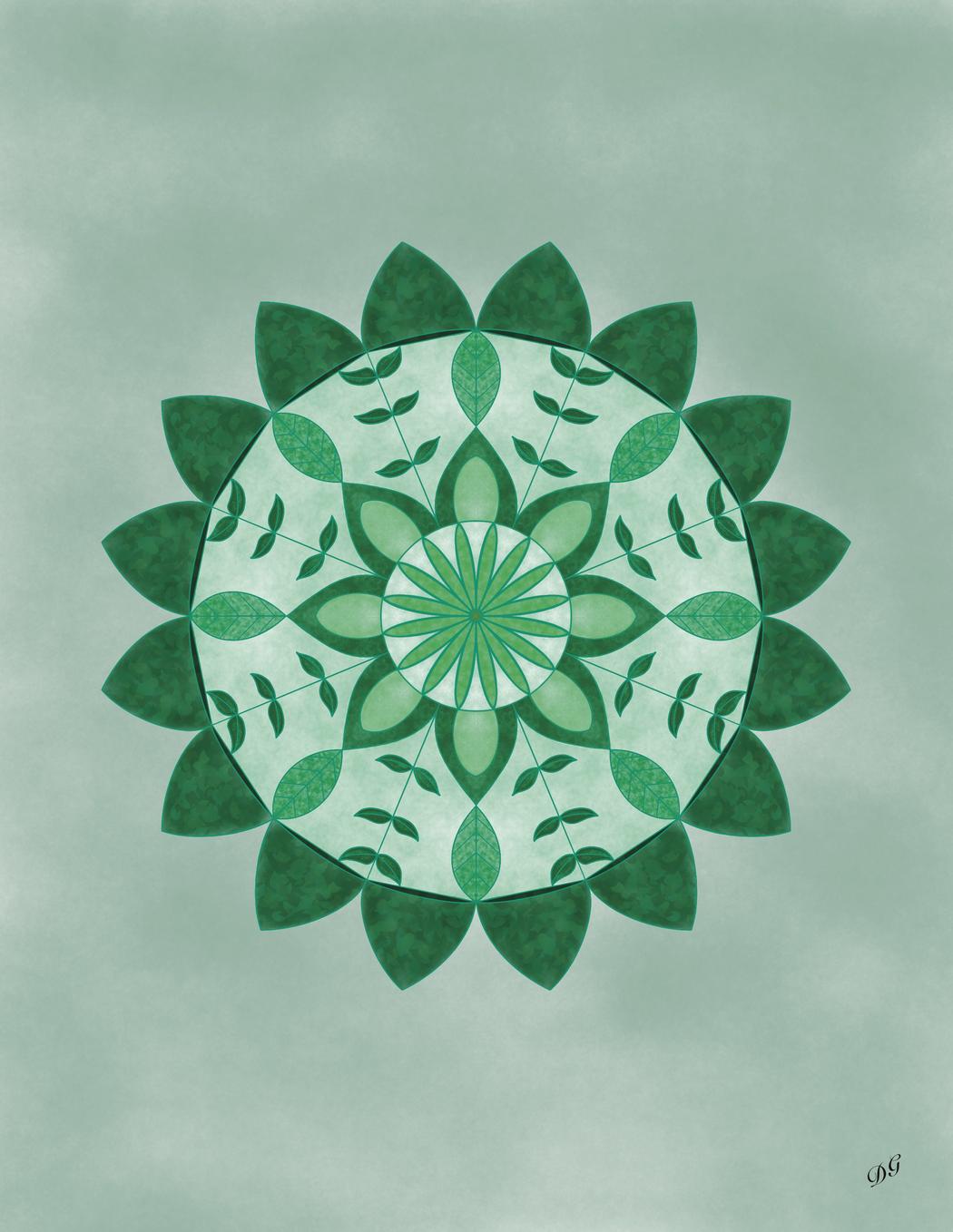 Divya Vinod Gilatar | Anahata Chakra The Heart Portal | 2022
Can you describe your creative process – is it more intuitive, meditative, or mathematically constructed?
My process is a synthesis of intuition, meditation, and structure. It begins in a highly intuitive and meditative state, where I approach the work almost as a form of devotion. I spend time in stillness, allowing the form to emerge rather than forcing it. From there, the geometric and mathematical construction unfolds as a natural extension of that state.
I do not separate intuition from structure — the geometry is not imposed, but revealed. In this sense, the act of creation becomes both contemplative and precise: a balance between surrender and discipline.
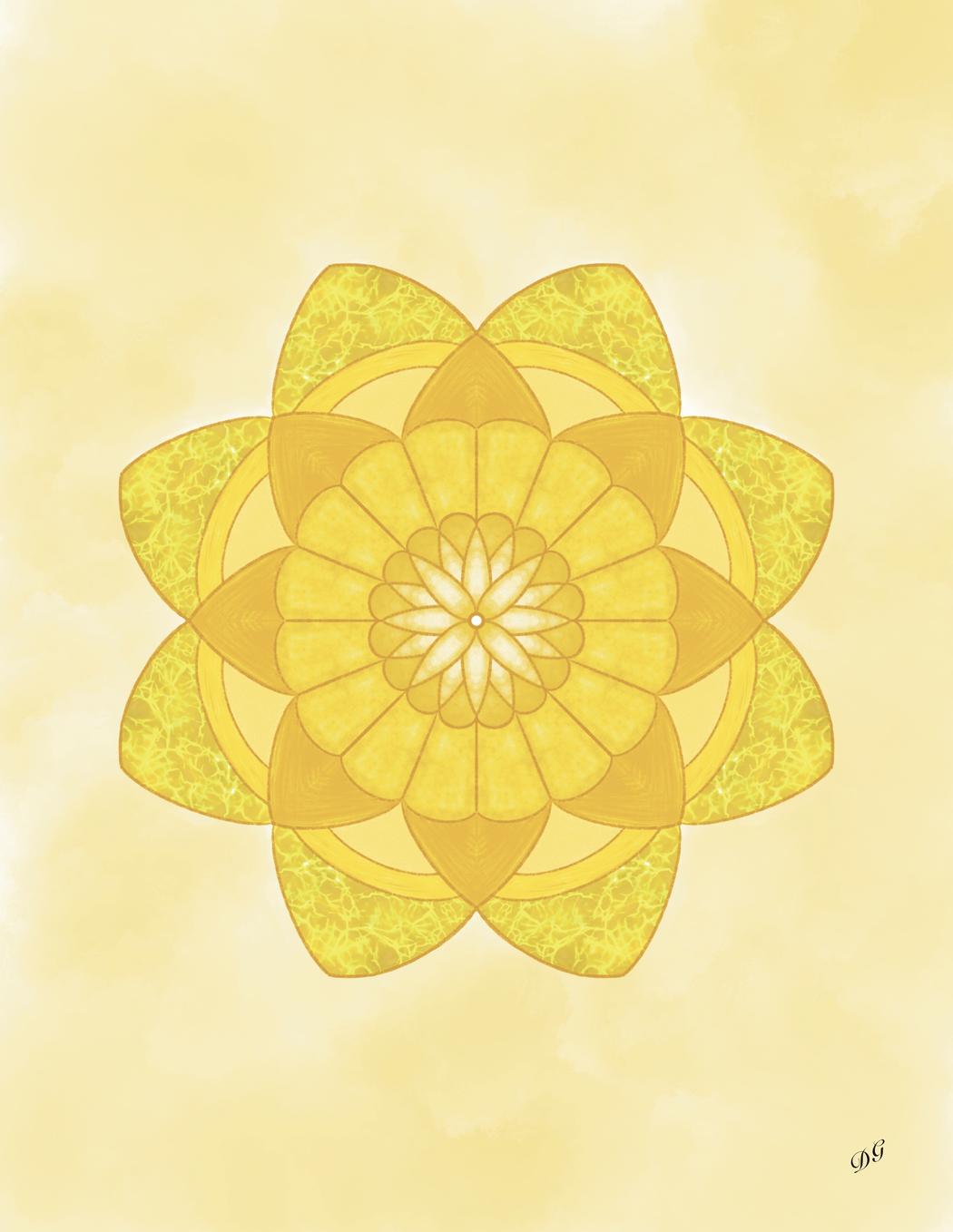 Divya Vinod Gilatar | Manipura Chakra The Stomach Portal | 2022
Each chakra carries specific symbolic meanings and emotional states. How do you approach color selection and composition for each energy center?
Colour is central to the emotional and energetic resonance of each piece. While each chakra is traditionally associated with a specific colour, working within a predominantly monochromatic palette requires a more nuanced approach.
I focus on subtle variations in tone, saturation, and luminosity to generate depth and movement within a single colour field. The intention is not simply to represent the colour of a chakra, but to evoke its vibrational quality — whether grounding, expansion, expression, or stillness.
In this way, colour operates as both a symbolic language and an experiential field.
Your work references ancient systems like yantra and tantra. How do you balance respect for tradition with contemporary digital expression?
I approach these systems with both respect and continuity. Yantra and tantra are not static historical artefacts; they are living frameworks of understanding.
My use of digital tools is not a departure from tradition, but an extension of it. By translating these principles into a contemporary visual language, I seek to demonstrate their continued relevance and accessibility in the present moment.
The intention is not to replicate tradition, but to activate it within a contemporary context.
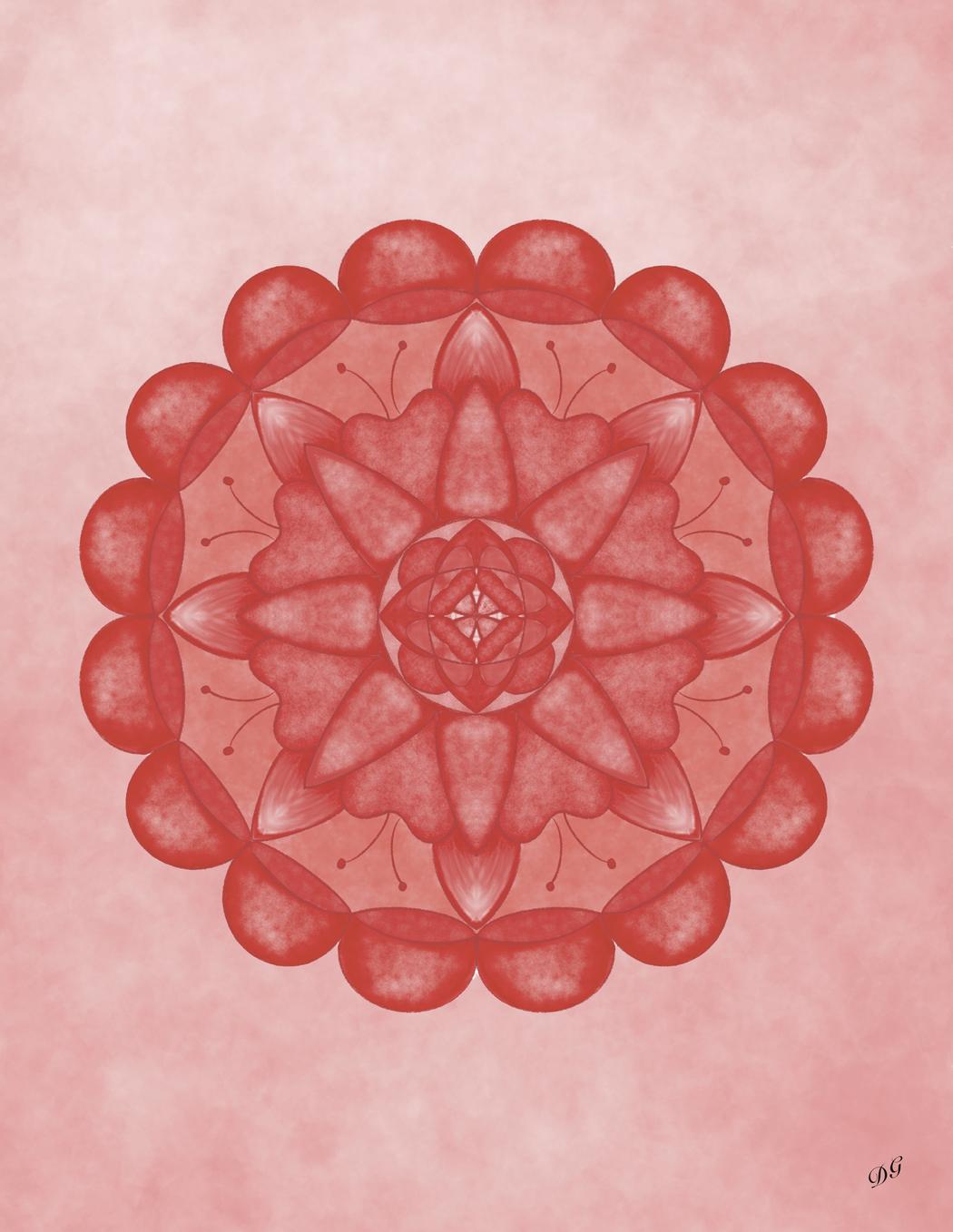 Divya Vinod Gilatar | Muladhara Chakra The Root Portal | 2022
Your works are described as portals into inner stillness. Have you observed how audiences interact with them in exhibition spaces?
These works were originally created while I was living in the Himalayas, during a period when I was working as a yoga educator. They emerged as digital mandalas for meditation, and as tools to support work with energetic blockages in the body.
In exhibition spaces, I have observed a similar response. Viewers tend to slow down, often spending longer than expected engaging with the work. There is a subtle shift from looking to experiencing, where repetition and symmetry generate a meditative pull.
This aligns closely with my intention — to create moments of stillness within a fast-paced visual environment.
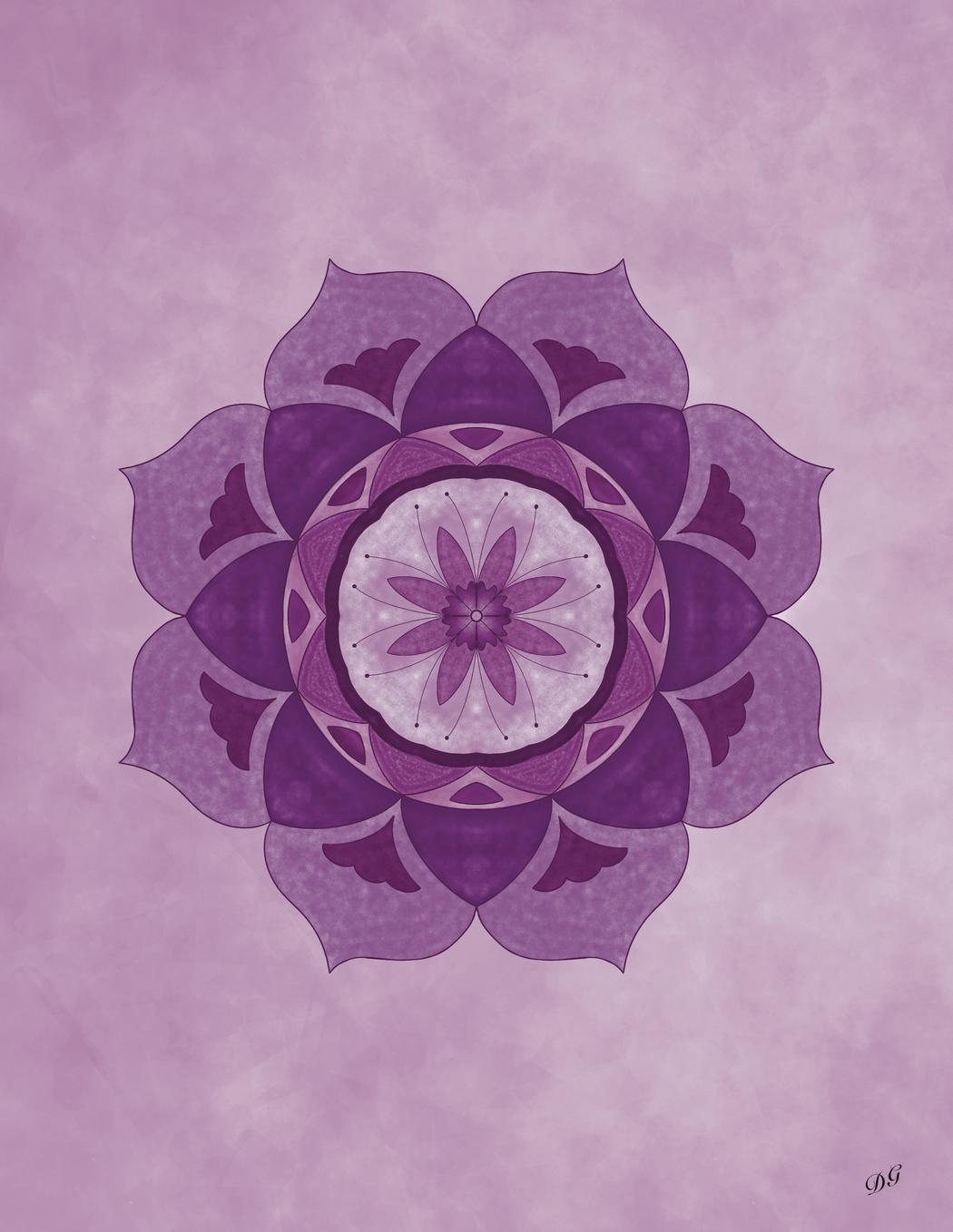 Divya Vinod Gilatar | Sahasrara Chakra The Crown Portal | 2022
As your work reaches international audiences, how do you navigate cultural translation of deeply rooted Indian spiritual concepts?
Rather than relying on explanation, I focus on universality. While my work is rooted in Indian spiritual systems, the visual language I use — geometry, symmetry, and colour — exists across cultures.
This allows the work to be experienced intuitively, regardless of cultural background. I see my role as creating a bridge between cultural specificity and universal perception, where viewers can engage with the work on both an intellectual and experiential level.
Leave a Reply
You must be logged in to post a comment.