
Nadezhda Nemchinova
Your background combines cultural studies, psychology, and art therapy. How do these disciplines influence your artistic practice today?
Cultural studies analyze the past—both general trends and local phenomena—examining the patterns and interconnections of events that have already taken place. In my artistic practice, this serves as a foundation and an inexhaustible source for reinterpreting contemporary realities. Psychology, and particularly its art-therapeutic dimension, represents the moment of “now,” with its emotions, sensations, contradictions, and sometimes absurd situations. It is a way of focusing attention on the calm, the familiar, and the small details that make us who we are and shape our identity. In my paintings, I try to capture this “now,” which, like a lens, brings into focus a certain emotion, environment, life, and destiny.
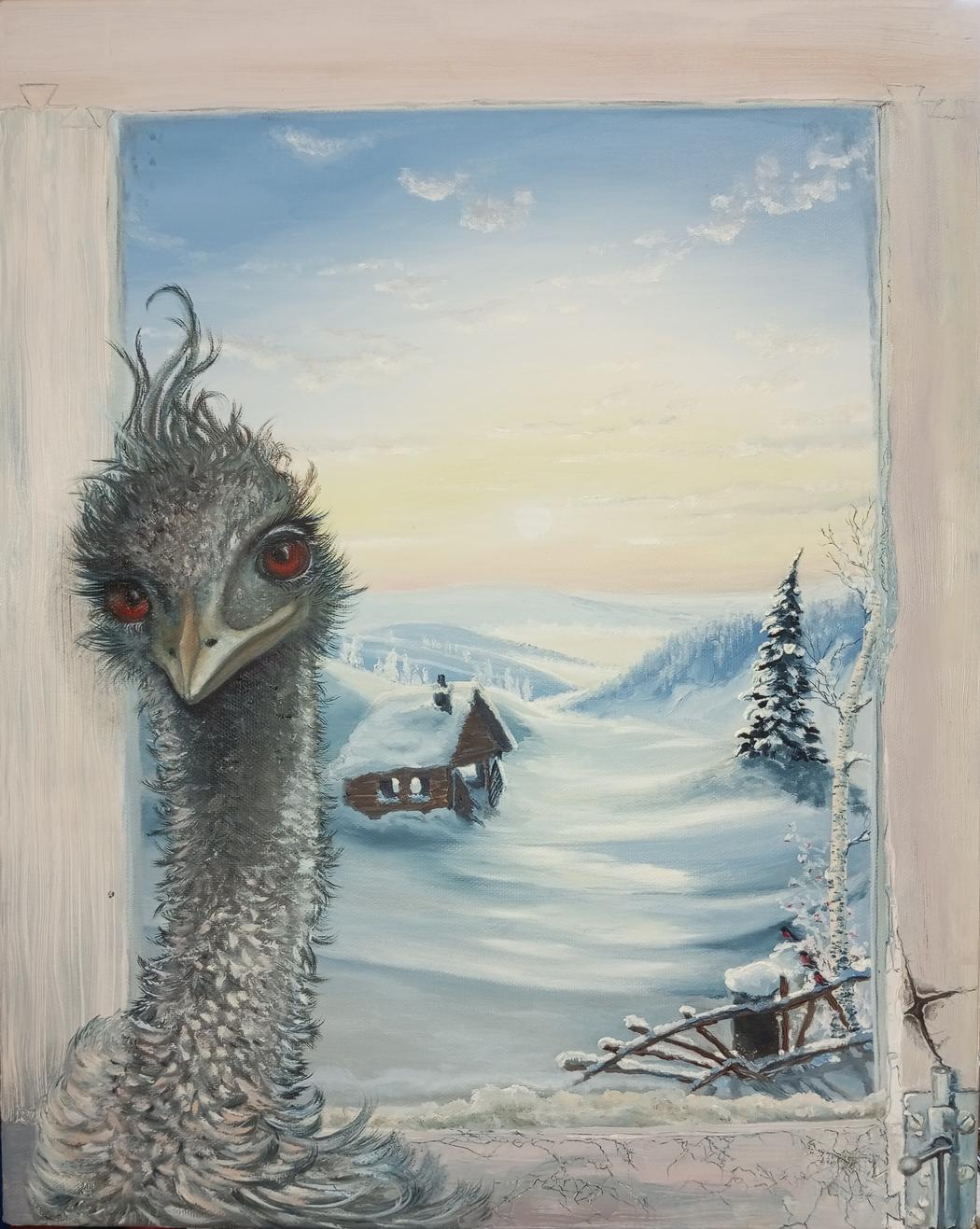 Nadezhda Nemchinova | Squirrel Or What Happened Yesterday
Your series “Say Hello to Life” explores sensitivity and emotional connection. What inspired you to focus on this theme?
The idea of sensitivity and connection is inspired by a personal story. I am the mother of a child with autism, and communication in all its alternative forms has been lived and deeply felt by me over a long period of my life — my daughter is now 23 years old. From complete withdrawal into oneself to moments of immediate responsiveness and acceptance — all these gradations are inherent in each of us. But for me, every step of sensitivity and every form of contact is a memory of overcoming, of a small victory of life over non-life.
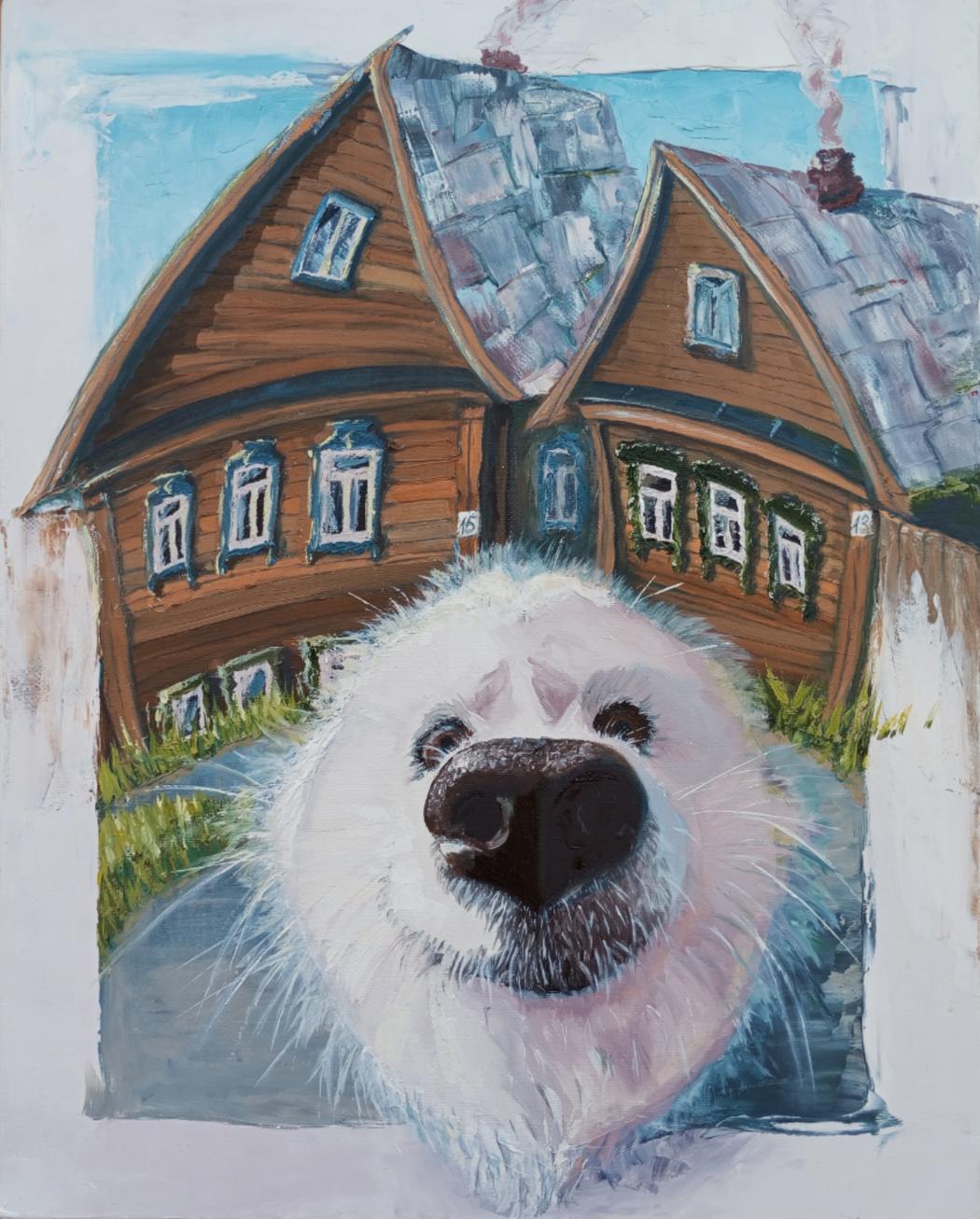 Nadezhda Nemchinova | Wisp
Many of your works seem to reflect a childlike perception of the world. Why is reconnecting with this perspective important to you?
A childlike perspective is the most sincere and genuine thing one can find within oneself. For me, returning to it is important as a way to clear away the artificial and renew my reactions and impressions. Curiosity and emotional openness, unconventional ways of seeing, boundless energy and enthusiasm, openness to the world, and spontaneity — these are qualities that belong both to childhood and to creativity.
You often explore the idea of an introvert expressing emotions outwardly. How does this duality manifest in your paintings?
Introversion is characterized by reliance on self-respect and self-approval. It is self-sufficiency elevated to an absolute. It is a painting created in solitude with oneself. It is a frame that may appear white and austere to some, telling the world: “Stay there while I remain here.” It is glass that is almost invisible, yet present; painted mountains that seem alive, yet remain painted.
Extraversion, by contrast, is a need for respect and approval from others. It is the desire to show the painting to people, to express oneself, to transcend the frame—to fold space so that the frame no longer confines, to open the window latch, to extend a hand, to meet another’s gaze.
For an introvert, these actions disrupt their foundations and challenge their essence, yet this is precisely what makes them valuable—they bring the introvert closer to the world, making them more human, more connected. The introvert does not become an extravert; these are subtle signs that not everyone is able to notice. But that is exactly their value—the true uniqueness of the moment.
In my paintings, I try to capture this duality: “here and there,” “looking inward and meeting the gaze,” “within the frame and beyond it,” “the subtlety of a layer and the roughness of a brushstroke,” “the expression of emotion and the withdrawal from it,” “the eternal and the fleeting.”
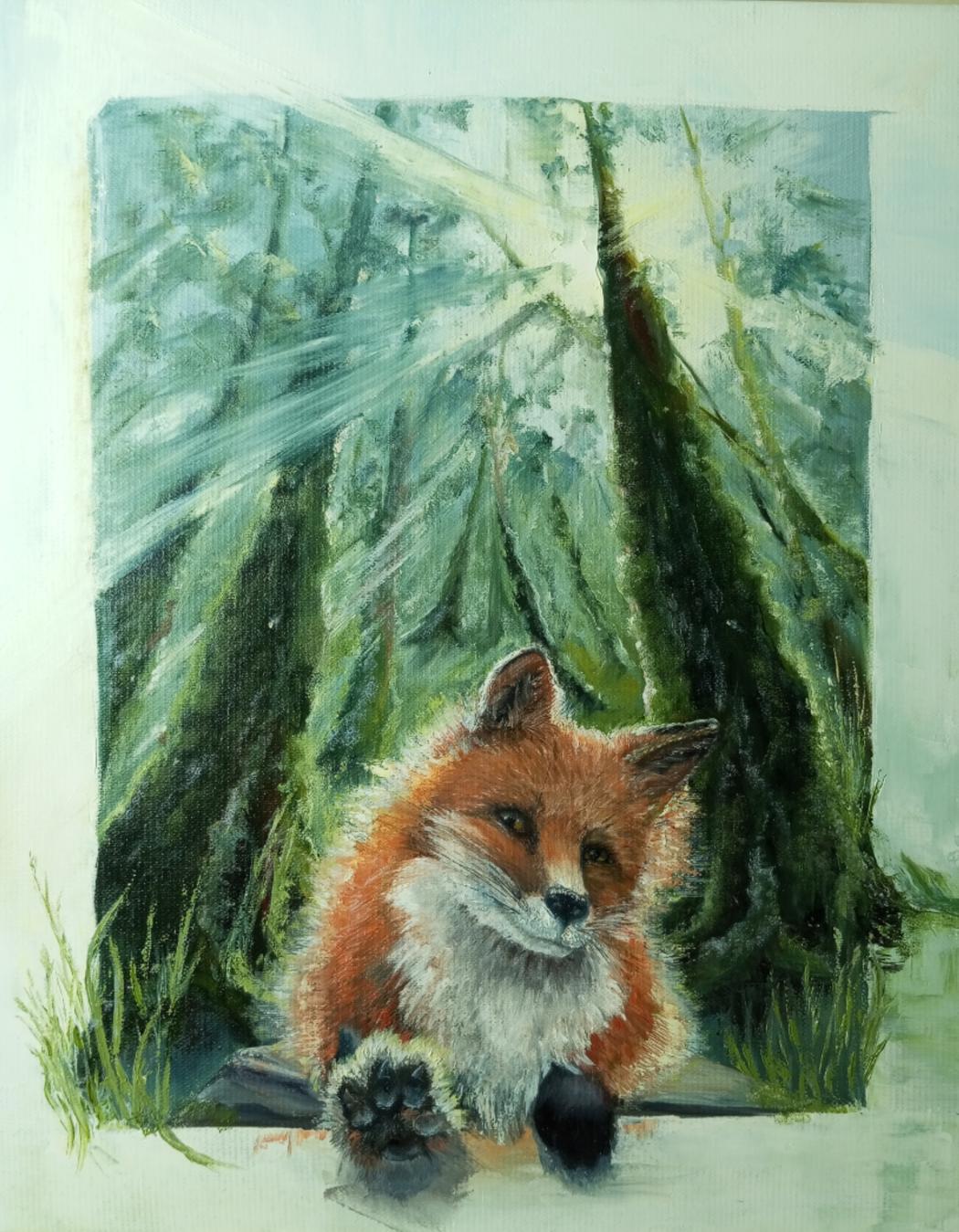 Nadezhda Nemchinova | The sun
Animals and nature frequently appear as characters offering connection or support. What role do they play in your symbolic language?
I resonate with panpsychism. For me, the idea that nature—and all its individual manifestations—is animated means that animals, plants, houses, and objects possess character and history. It is possible to sense the movement within them, their desires, and their unconscious, deeper layers.
Images of animals allow us to focus attention on a specific trait of character or a quality of contact, making intuitively clear what lies beneath the layers of meaning that often accompany depictions of people. When we perceive a human figure, we inevitably begin by identifying gender, age, attractiveness, condition, and social attributes—and only afterward do we arrive at emotions and the nature of connection. When looking at a donkey or a dog, we bypass these conventions, unless they are deliberately emphasized by the artist. No one asks themselves about the gender or age of a young ostrich or a dog, whether the donkey is beautiful, or what social status a dragonfly might have. They immediately offer a form of contact, like children playing in a sandbox. They do not ask whether you are rich or poor, but reach toward the essence itself—toward what lies beyond the social façade and mask, toward the viewer’s true “self.”
There is no symbolic labeling such as “a donkey means stupidity.” This particular donkey is playful, lively, a bit mischievous. Another donkey might be gloomy, withdrawn, and hurt. As Vladimir Mayakovsky once wrote: “…each of us is, in our own way, a horse.”
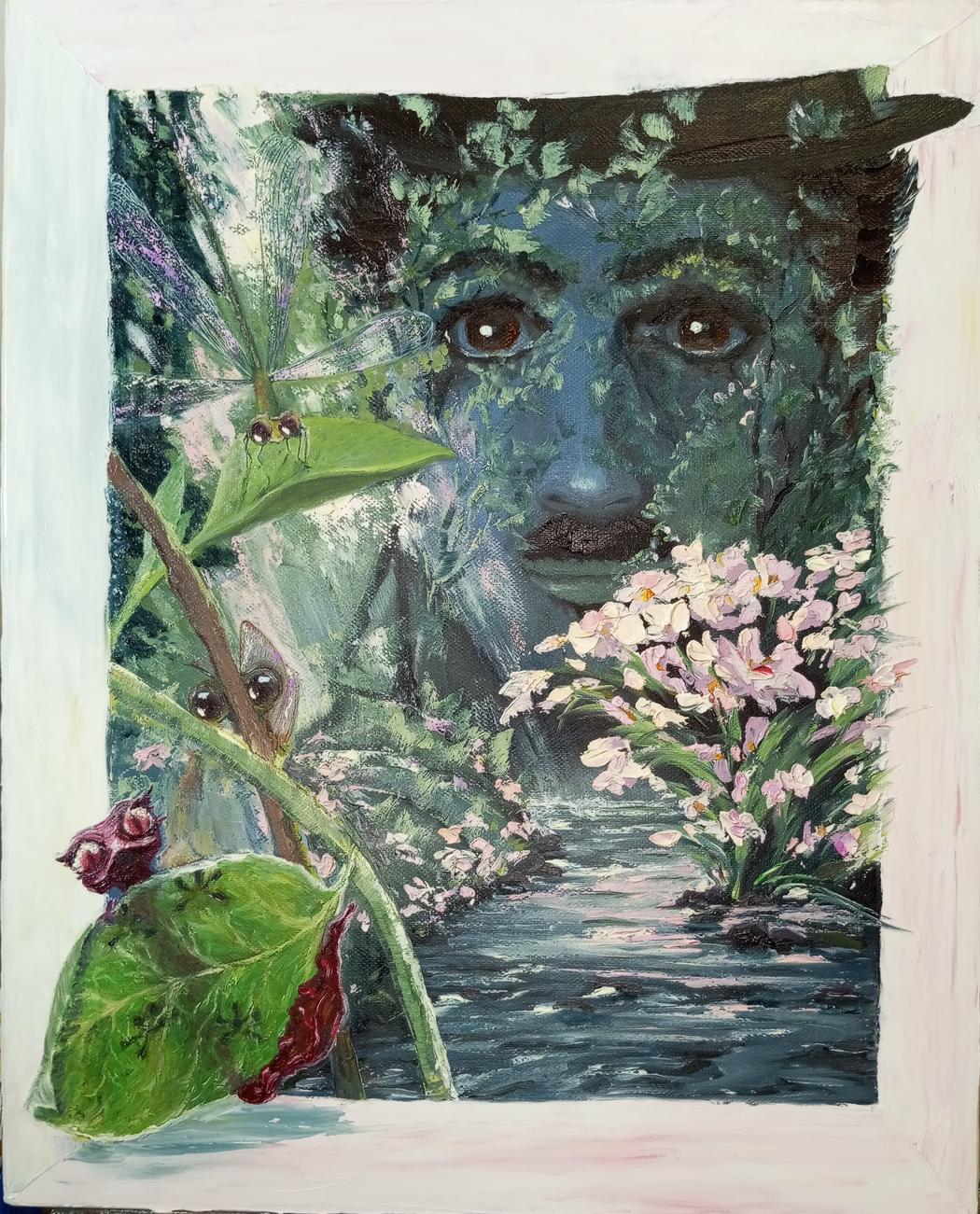 Nadezhda Nemchinova | The one who watches
Your paintings often carry multiple layers of meaning—playful on the surface but deeper underneath. How do you balance lightness and complexity?
These are very valuable things to me: humor, joy, a genuine smile, and the ability to gently look deeper and reflect or talk about something intimate. I’m very happy when I manage to combine these. It doesn’t always work.
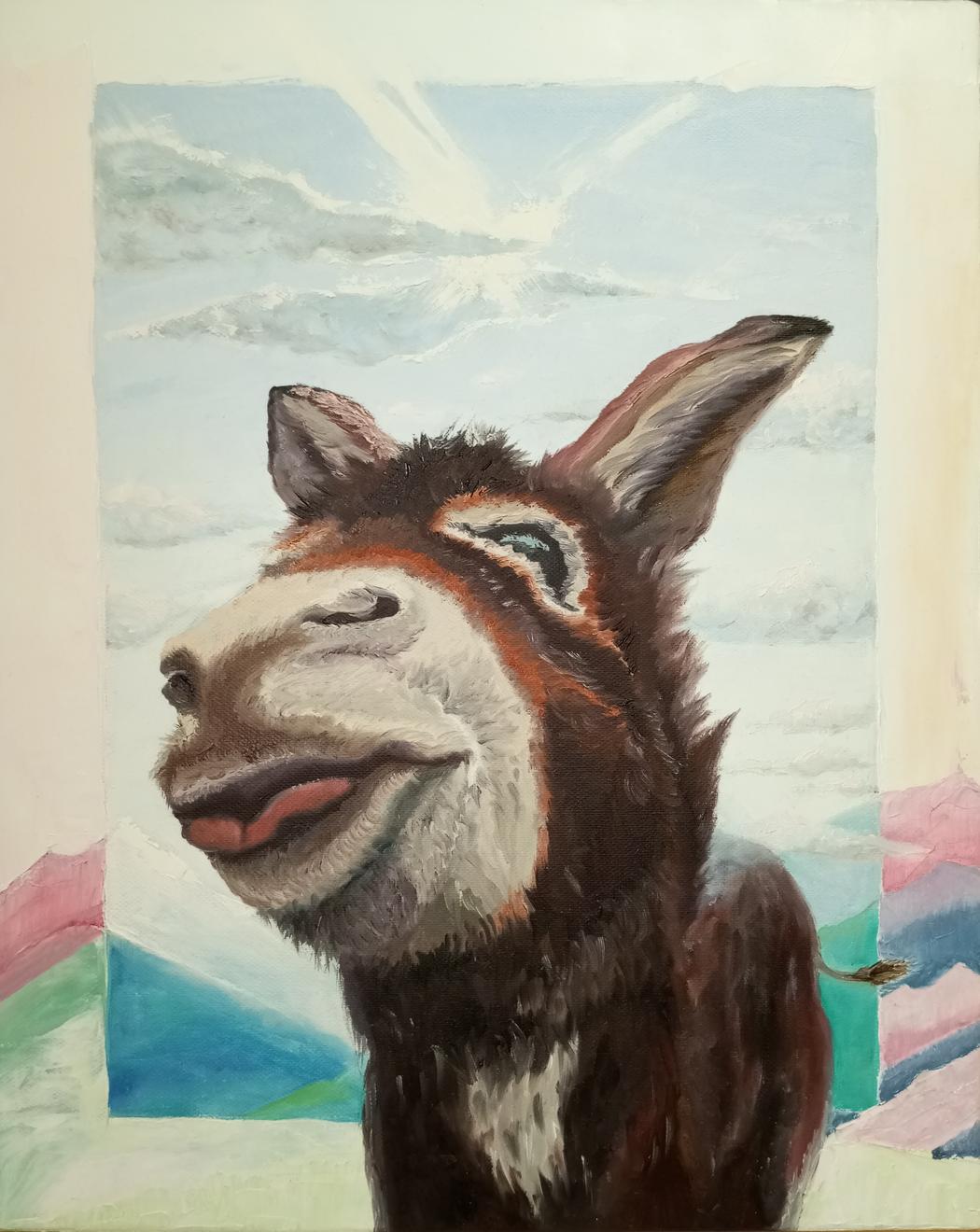 Nadezhda Nemchinova | Himalayan cloud
When viewers engage with your work, what kind of emotional or psychological experience do you hope they have?
I would like viewers to safely encounter something deep and gentle within themselves, in their inner world. Paintings have a remarkable ability to convey emotions and states over a long time. I have tried to infuse them with openness and acceptance, love and inner stillness. It is an invitation into a resourceful state — where you are seen, supported, treated with care and tenderness, understood, given emotional warmth, and awaited.

Leave a Reply
You must be logged in to post a comment.