
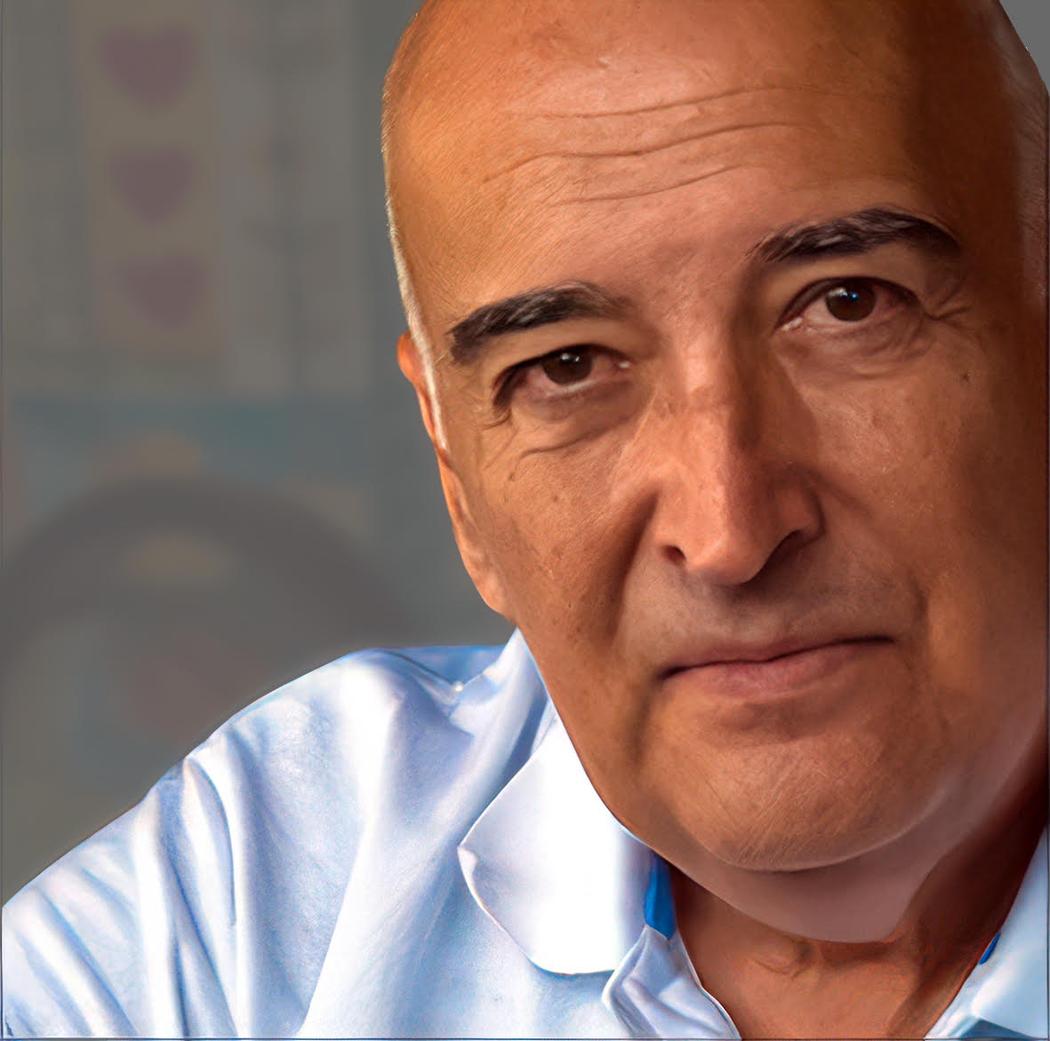
Patxi Navarro
Your work consistently explores tension between structure and entropy. At what point does a system become visually interesting for you – when it is stable, or when it begins to break down?
I find this an interesting question, although it is not one I consciously ask myself while working on a piece.
When I begin a new project, I always start from a very open idea: I have an intuition of what I am looking for, but I do not visualize a specific final result. This is probably related to my working process, which is largely based on repeatedly modifying the image until it reaches a point that feels right to me, or until I decide to abandon it entirely.
I am very aware that “beauty” is not my priority. And for someone like me, structurally quite Cartesian, this often means deliberately moving away from formal structures and searching for a certain degree of disorder within the work.
To answer the question directly, my works evolve from an initial seed, and in most cases, if I cannot reach that state you describe as “breakdown” — if the piece does not convey entropy — I prefer to abandon it. And it is not only important that the system breaks down, but how it does so.
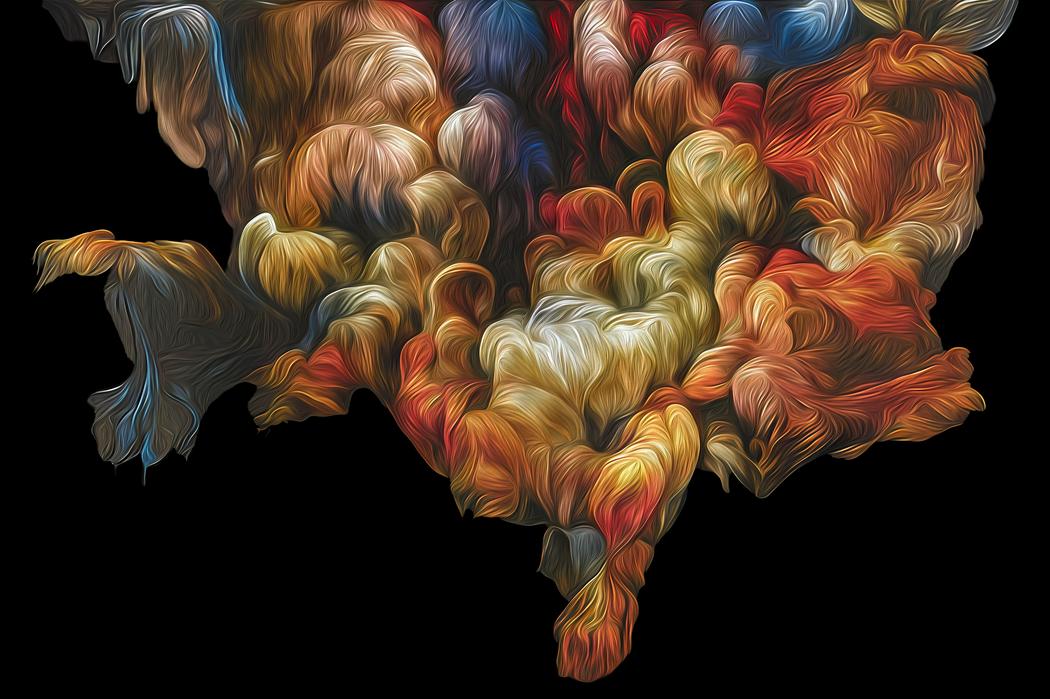 Patxi Navarro | Dense Accumulation | 2025
With a background in physics and digital technology, how do scientific thinking and system-based logic influence your approach to abstraction?
My academic background is in physics and computer science, and scientific thinking has therefore always shaped the way I understand systems and processes. I am particularly interested in how complex structures emerge from simple rules, and how small variations can destabilize an apparently stable system.
This way of thinking influences my approach to abstraction more as a mindset than as a direct reference. I do not illustrate scientific concepts; instead, I work with ideas such as balance, instability, accumulation, and transformation.
Digital technology allows me to work iteratively, testing limits and observing how an image reacts when it is pushed beyond control. In this sense, abstraction becomes a space where intuition and system-based logic are in constant negotiation.
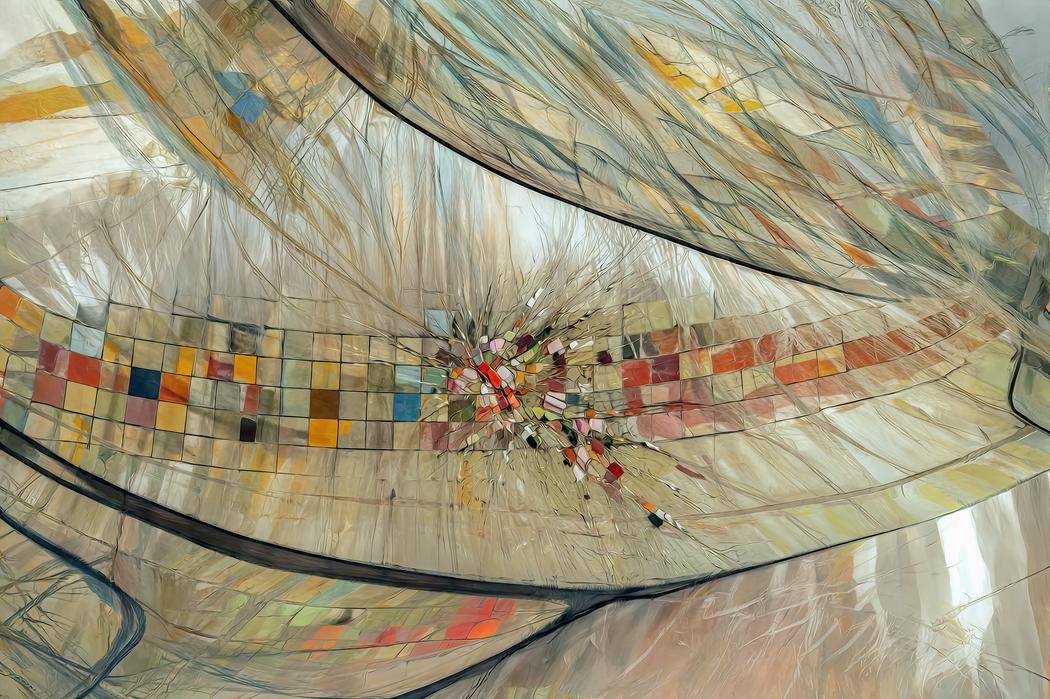 Patxi Navarro | Fractured System | 2025
Many of your works suggest grids, flows, or modular structures that appear to collapse or deform. What role does control versus loss of control play in your creative process?
Control is present at the beginning of my process, when I establish an initial structure or framework. However, I am not interested in maintaining control throughout the entire development of the work.
As the piece evolves, I deliberately allow that structure to be stressed, distorted, or partially lost. The most interesting moments often appear when the image starts to behave in unexpected ways, forcing me to respond rather than to impose decisions.
For me, the work exists precisely in that tension: between what I try to organize and what resists being fully controlled.
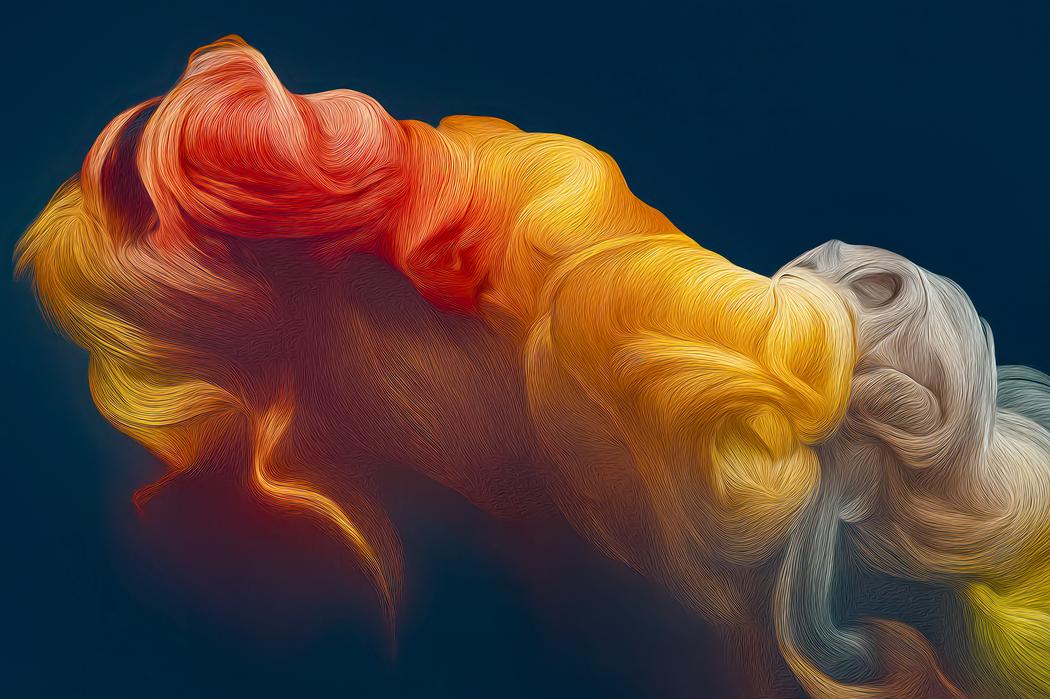 Patxi Navarro | Material Shift | 2025
You describe human presence as a “residue” or trace rather than a subject. What does this absence – or dissolution of the human – represent for you in a contemporary context?
I am not interested in representing the human figure directly. Instead, I am drawn to what remains once explicit presence disappears: traces, pressure, density, or collective movement.
In a contemporary context saturated with images of identity and individuality, this dissolution of the human allows me to shift the focus toward systems, environments, and forces that operate beyond the individual. The human is still there, but indirectly, embedded in structures rather than depicted as a subject.
This absence is not a denial, but a way of speaking about our condition through what we leave behind.
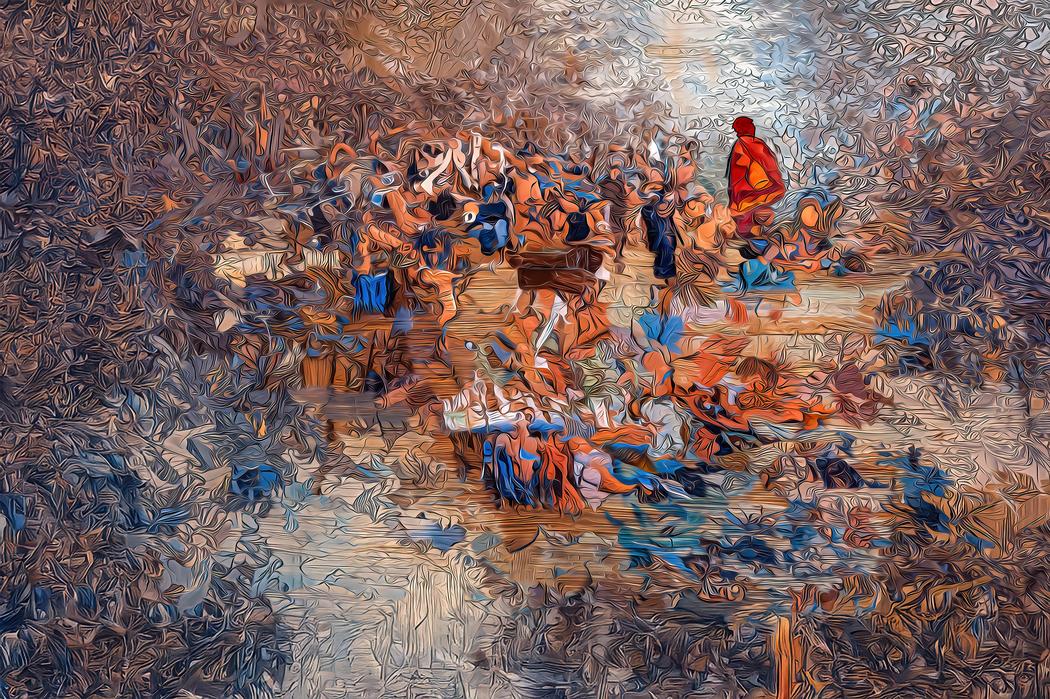 Patxi Navarro | Remnant Presence | 2025
Your images resist harmony and instead propose friction and perceptual tension. Why is discomfort or instability important for you as an artistic strategy?
I am not interested in images that offer immediate resolution or comfort. For me, harmony often closes the experience too quickly.
Instability and friction keep the image open, forcing the viewer to remain engaged and alert. They introduce uncertainty, which I consider essential in a time when visual consumption is fast and passive.
Discomfort is not a goal in itself, but a tool to prevent the work from becoming decorative and to maintain a space for questioning rather than affirmation.
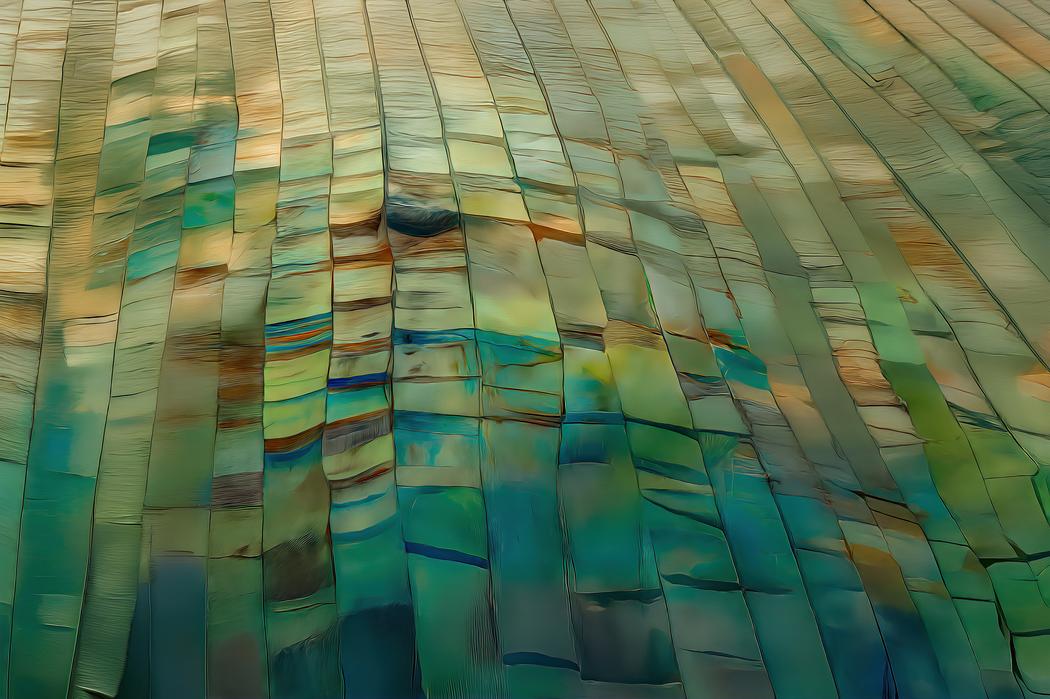 Patxi Navarro | Modular Field | 2025
Having started your career in photography and now working exclusively with digital art, how has your understanding of “image” changed over time?
When I worked primarily in photography, the image was closely tied to observation and capture. Over time, my interest shifted from recording reality to transforming it.
Today, I understand the image less as a document and more as a construction. Photography remains the starting point, but it is no longer the end. Digital processes allow me to work with images as mutable material, open to revision, erosion, and reconfiguration.
This shift has expanded my understanding of what an image can be: not a fixed representation, but a field of operations.
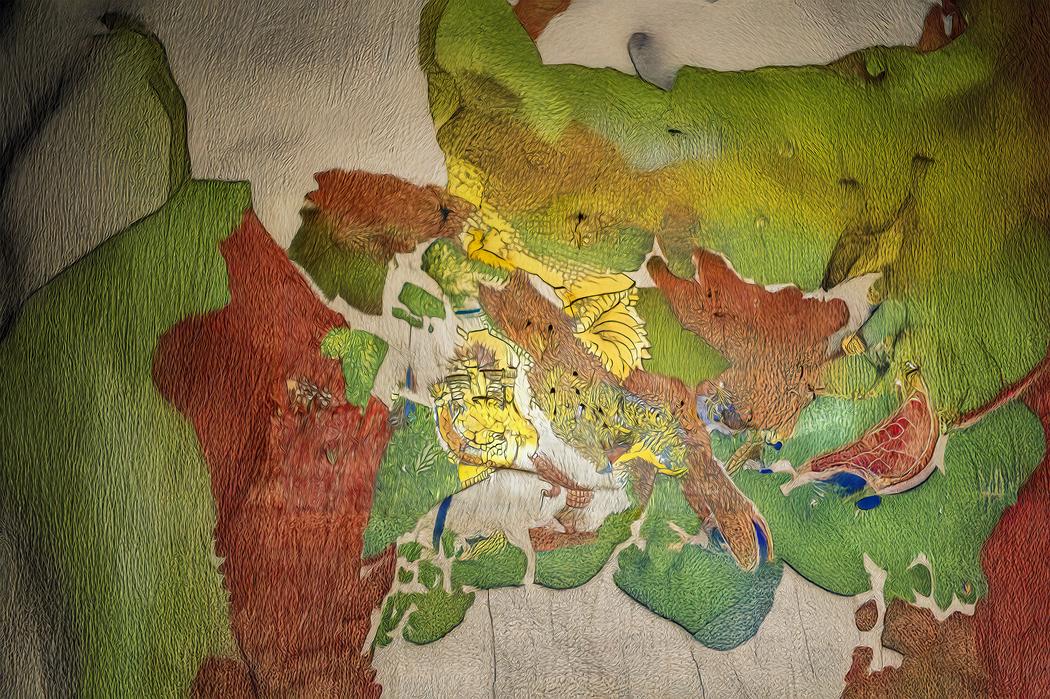 Patxi Navarro | Remnant Presence | 2025
You have exhibited both in gallery spaces and major contemporary art fairs. How does the context of display influence the way your work is perceived – or does it?
Inevitably influences perception. A gallery space invites slower viewing and reflection, while art fairs operate within a more accelerated and competitive environment.
However, I try to develop works that maintain their internal tension regardless of context. If a piece depends too much on its setting, it risks losing autonomy.
That said, scale, installation, and material presence become especially important in public or crowded contexts, where the work must assert itself without explanation.
Leave a Reply
You must be logged in to post a comment.