
Natalie Dunham
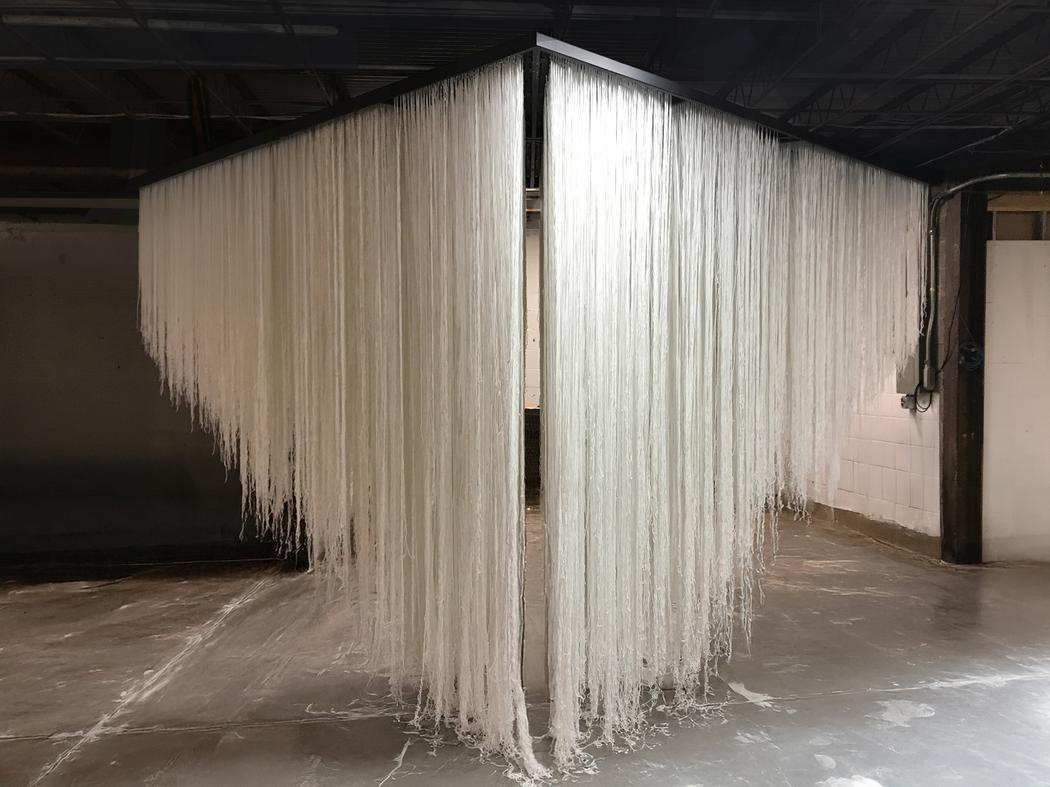 Natalie Dunham | No. 16.8512.11
You give your works numerical titles that form a narrative of your artistic development. When did this method first emerge, and how has it influenced the way you create?
I first started using numerical titles in 2010. As a process-based artist, I struggled with titling my works early in my career, repeatedly using ‘Untitled’ on my labels. During exhibitions, I was frequently asked how many individual pieces of material were in each work. This prompted me to start documenting my materials, which quickly led to me assigning numerical titles to my pieces.
The numerical titles not only allow me to track the individual elements used but also document the materials, finish, and quantities required to replicate a piece of that size. This practice is invaluable when creating commissions that use the same or similar materials.
What draws you most to sculpture and installation as your primary forms of expression?
I’m drawn to the tactile and spatial interaction they enable. Sculpture and installation invite viewers to engage with the artwork in three dimensions, allowing them to move around and experience the piece from various angles. This physical engagement fosters a more immersive connection, allowing viewers to explore the relationships among form, material, and space in a dynamic, alive way.
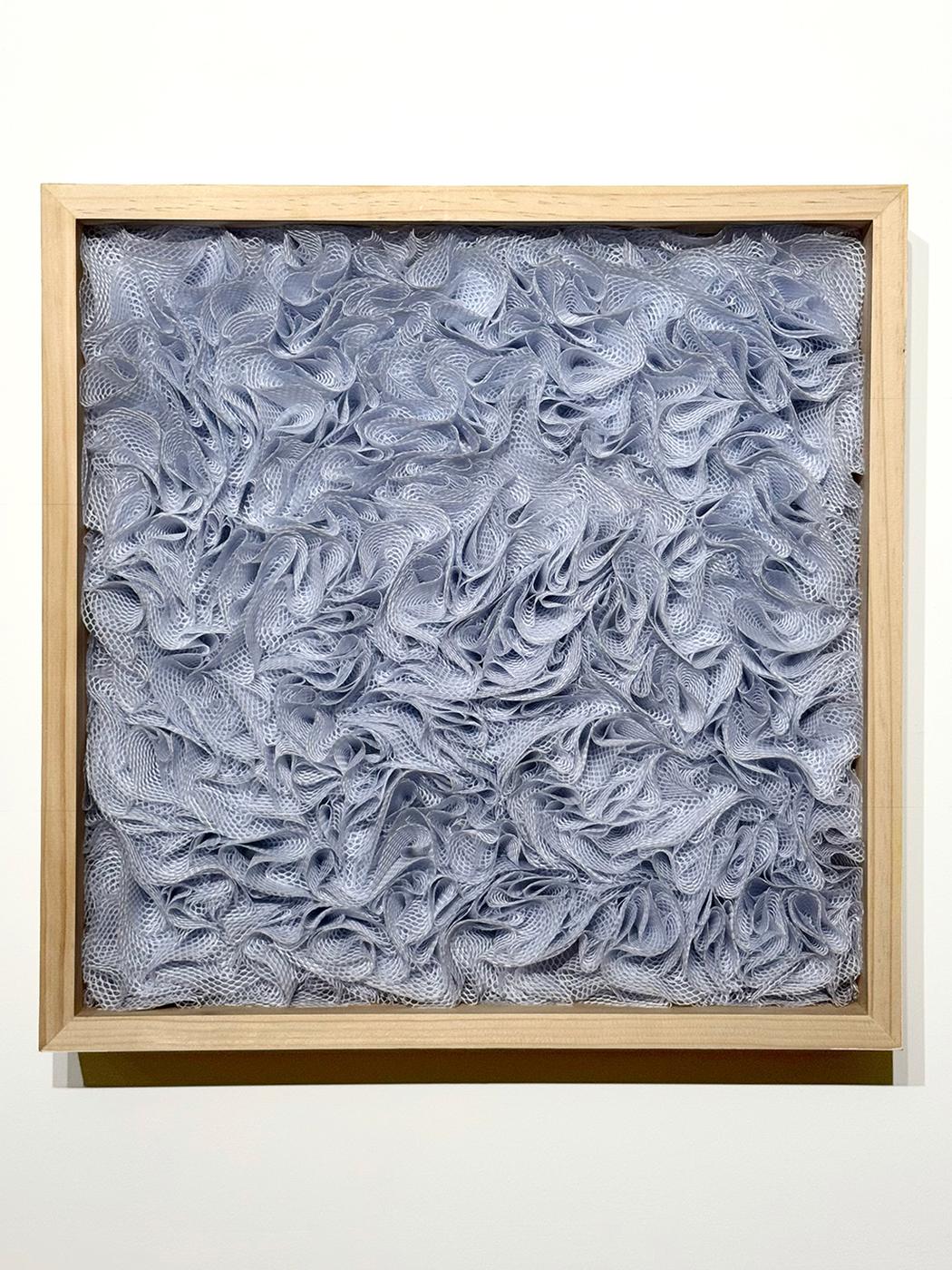 Natalie Dunham | No. 1.719.5
How do you choose the materials for each project? Do they guide the work, or do you guide them?
My selection of materials for each project is an intuitive process that balances the materials’ characteristics with my initial vision for each piece. I consider the inherent qualities of each material—its texture, weight, flexibility, and how it interacts with light. Once I have a material in mind, it often guides the direction of the work. I pay close attention to how the material responds to my manipulation and to the ideas that emerge during this process. The material can sometimes lead me to unexpected discoveries or shifts in direction.
In other cases, I may have a clear vision of what I want to create and choose materials that best convey that idea. This interplay between guiding the materials and being guided by them creates a rich dialogue during the creation process, allowing for a balance between intention and spontaneity.
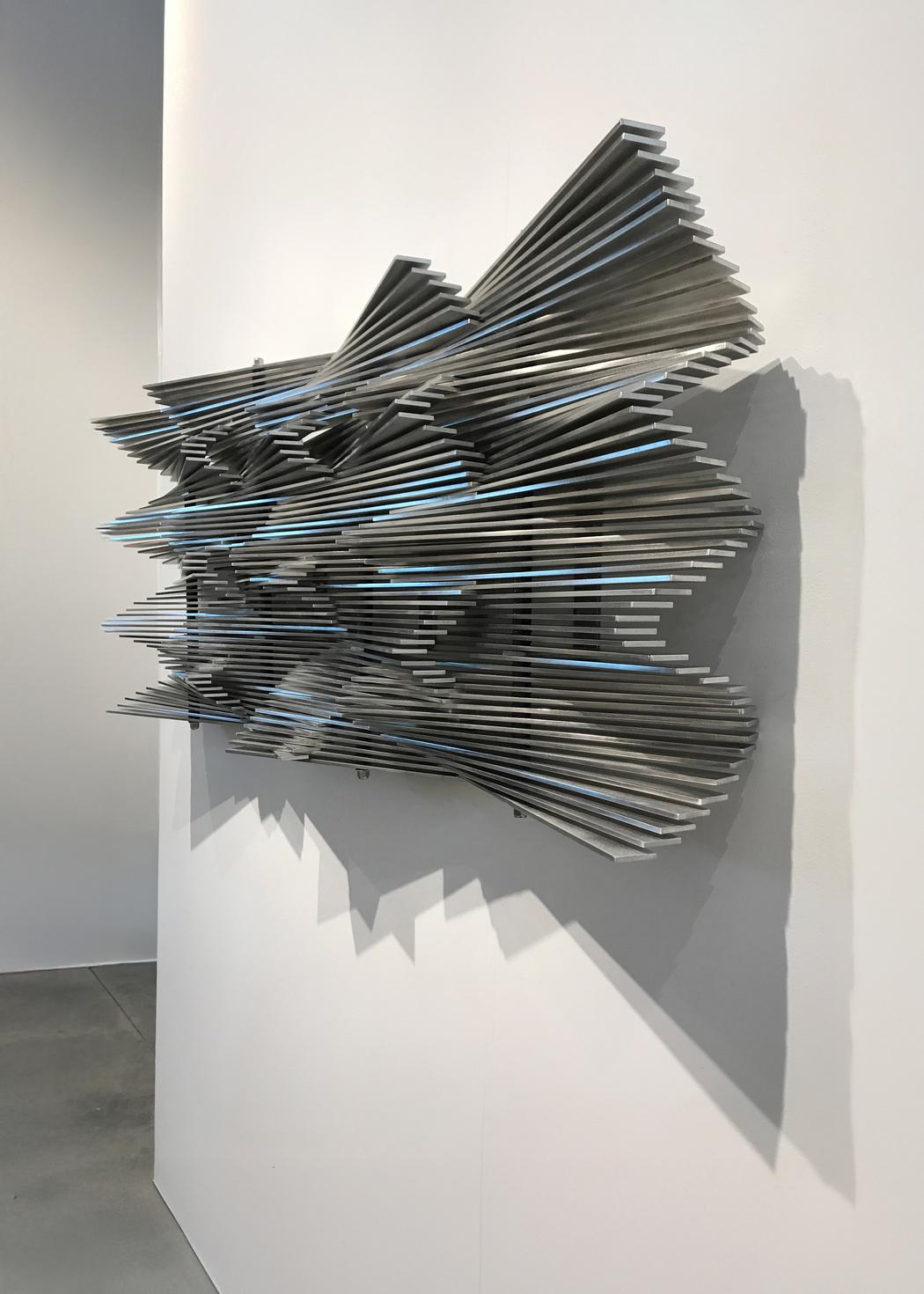 Natalie Dunham | No. 4.216.1
Your art encourages viewers to slow down and be mindful. What role does slowness play in your own life and creative process?
Slowness plays a significant role in both my life and creative process. In a world that often prioritizes speed and instant gratification, I find value in taking the time to observe and reflect. This intentional pacing allows me to connect more deeply with my surroundings, my materials, and my own thoughts and emotions.
In my creative process, slowness enables me to experiment without the pressure of rushing to completion. It gives me the freedom to explore ideas organically, allowing for moments of discovery that might go unnoticed in a hurried approach. By integrating this mindful practice, I can engage more authentically with the materials, fostering a dialogue between what I envision and how the materials respond.
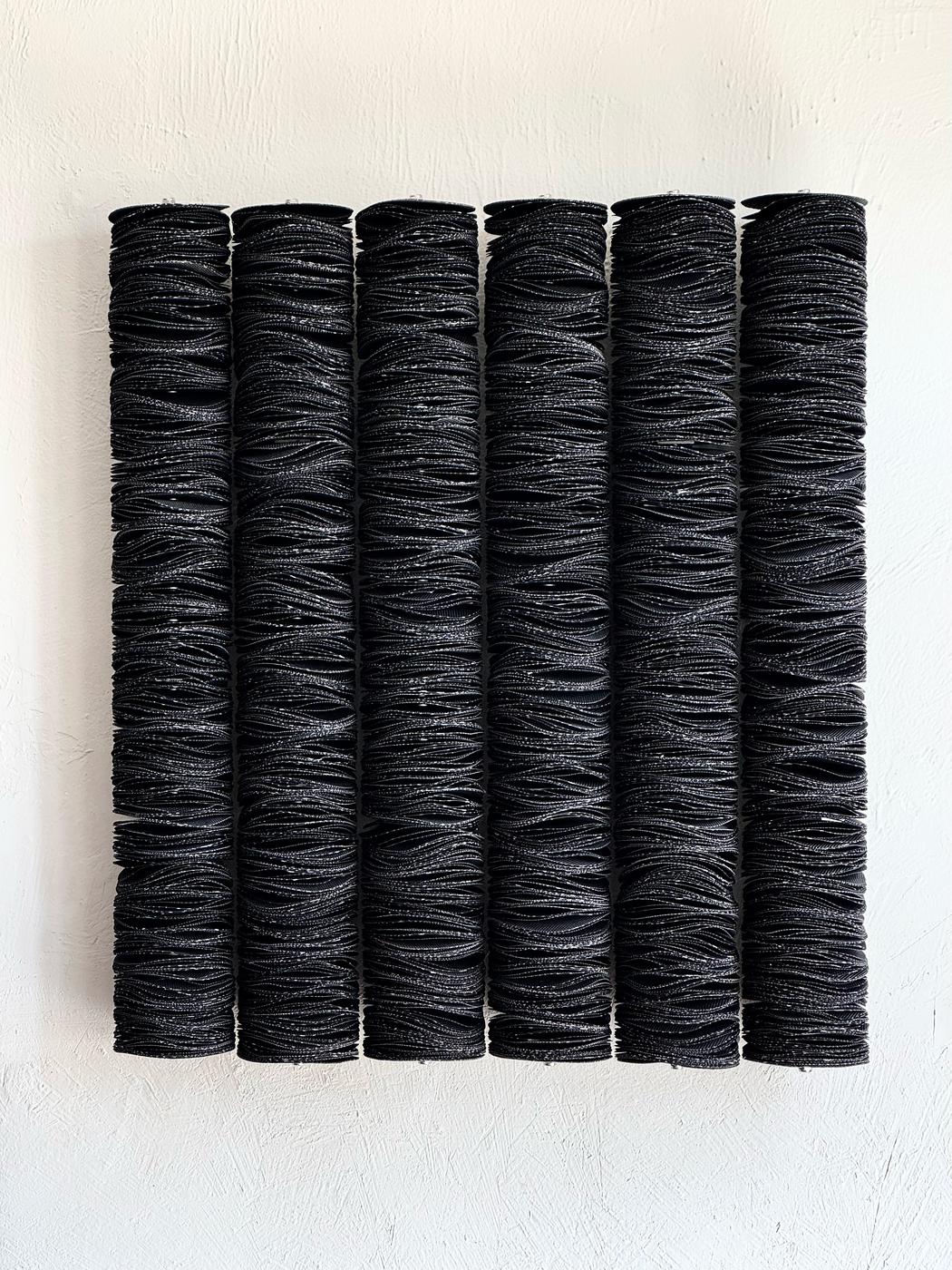 Natalie Dunham | No. 6.2231.20
You maintain workspaces in both the United States and Europe. How do these different environments influence your artistic thinking?
While I am fortunate to have workspaces in both the United States and Europe, I have not yet fully leveraged the space in Europe. However, I am actively working to integrate my practice across both locations. Currently, most of my work is produced in the US; I transport it deconstructed by plane and assemble it upon arrival in Europe for exhibitions.
I look forward to further expanding my practice in both environments by building new connections and growing my client base.
Your works have been acquired by a wide range of public spaces—from hospitals to embassies. How does the context of display shape the meaning or reception of your work?
The environment in which artwork is exhibited or collected can significantly influence its perception and interpretation. As a minimalist artist, I find that the diverse display contexts allow my work to resonate in varied ways, prompting different interpretations and emotional responses. It is fascinating to see how each environment shapes not only the viewer’s experience but also the narrative the artwork contributes to within that space.
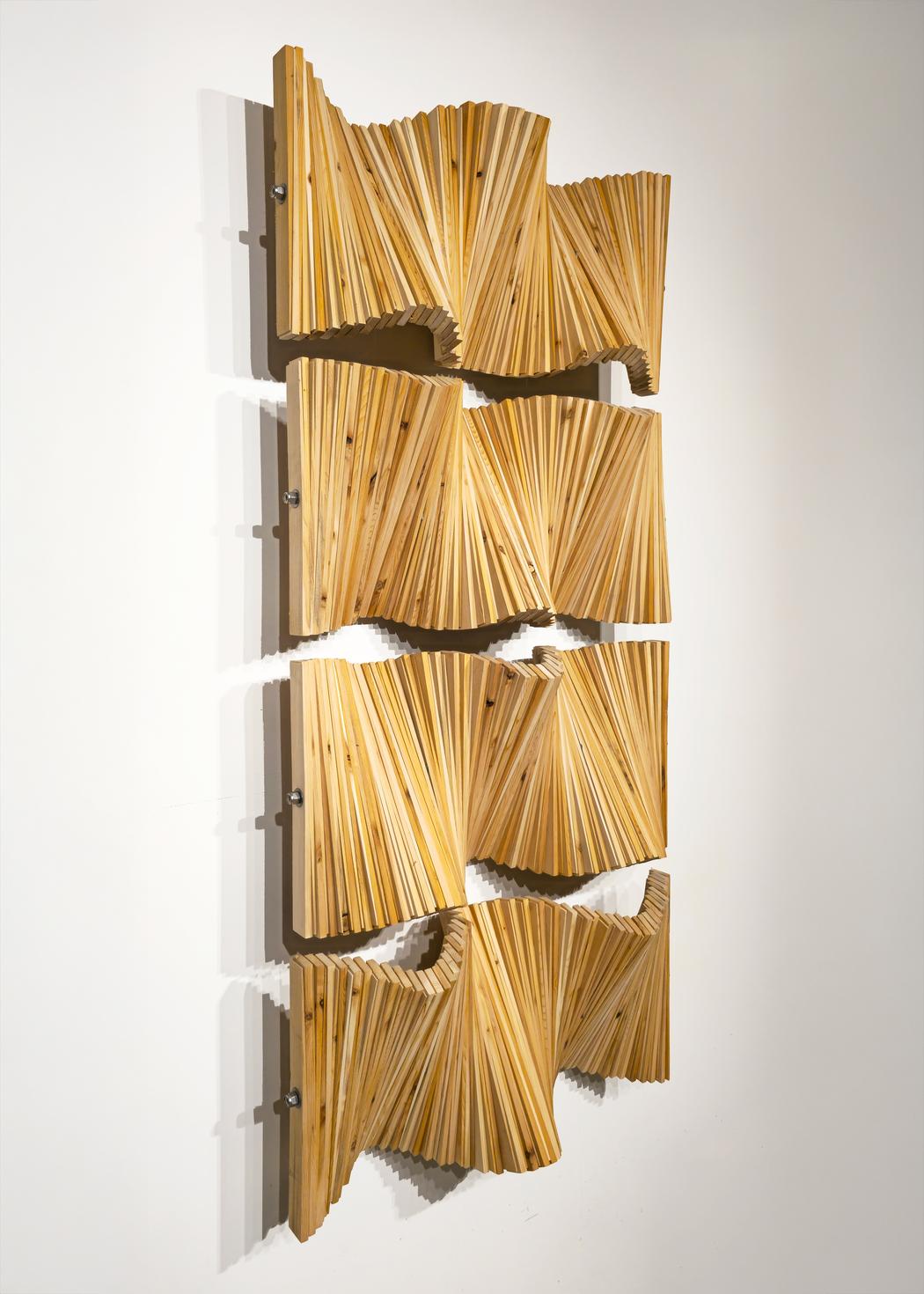 Natalie Dunham | No. 4.526.13
Are there specific artists, movements, or philosophical ideas that inform your practice?
As an artist working with minimal sculptures and installations, I found Eva Hesse’s approach to material investigation and her willingness to embrace ambiguity and process to be inspiring early in my career. Her focus on the tactile and experiential aspects of art aligns with my practice, which seeks to evoke emotional or contemplative responses through minimal forms. Additionally, I have been influenced by various minimal artists from the 1960s, such as Donald Judd and Carl Andre. This movement emphasized the importance of basic geometric forms, monochrome color palettes, and the elimination of unnecessary details to highlight the work’s essential qualities. The aim was to achieve a sense of purity and objectivity, encouraging viewers to engage more deeply with the art’s fundamental aspects. My work closely relates to these principles. In our culture, I believe there is a vital need for simplicity—paring down to the bare essentials and fostering moments of patience, pause, and reflection.
Leave a Reply
You must be logged in to post a comment.