Constanza Eugenia
You left Venezuela at seventeen and spent a formative period studying languages abroad. How did that experience shape the way you observe people, places, and the connections between them?
It completely changed my life. My first roommate ever was from Sweden, and she was an atheist. The first thing I said when she told me was, “Is that allowed?” My world became so much bigger after that, and my art, in turn, so much richer. I found like-minded people in corners of the world I had only heard stories about. Through those experiences, I learned how, despite our differences, we are all the same in essence and connected through it all.
Language itself is also fascinating to me because the way we express something can carry different meanings depending on the language. For example, in Spanish, we have two ways of saying “I love you”: te quiero and te amo. In Portuguese, obrigado (thank you) carries the idea of being indebted or obliged to someone, while in Italian, grazie, and French, merci, the expressions have roots in gratitude, grace, and favor. I find it beautiful how something as simple as expressing love or gratitude can reveal different ways of understanding the world.
What does belonging mean to you today, and has making art changed your relationship with Venezuela and your life in Brooklyn?
Belonging is more of a feeling to me now. I belong in New York because my nervous system feels calm here. I feel a sense of belonging when I’m walking around my neighborhood and my neighbors stop to say hi, or when I wave to the delivery guy in the distance. I belong when I’m having dinner at a friend’s house and our dogs start running around the kitchen. Making art has changed my relationship with myself. It helps me cope with the constant changes and stress that come with Venezuela and being Venezuelan. It has certainly made my life in Brooklyn better, more peaceful, and more intentional. I like bringing little pieces and reminders of my childhood home to Brooklyn, whether it’s a hammock in my living room or merengue playing in the morning. Through my paintings, I also bring the warmth of the Caribbean into my home in Brooklyn.
There is a duality in belonging to two places that are so different, yet both feel like home. For me, it’s all about balance, finding commonality and a sense of union between the two through art. Living in New York, I find myself painting the nature and warmth of the Caribbean. Who knows, perhaps if I were living in Caracas, I would be painting buildings instead. I think there’s something beautiful about that, how we carry pieces of one home into another, and how art allows both to exist together.
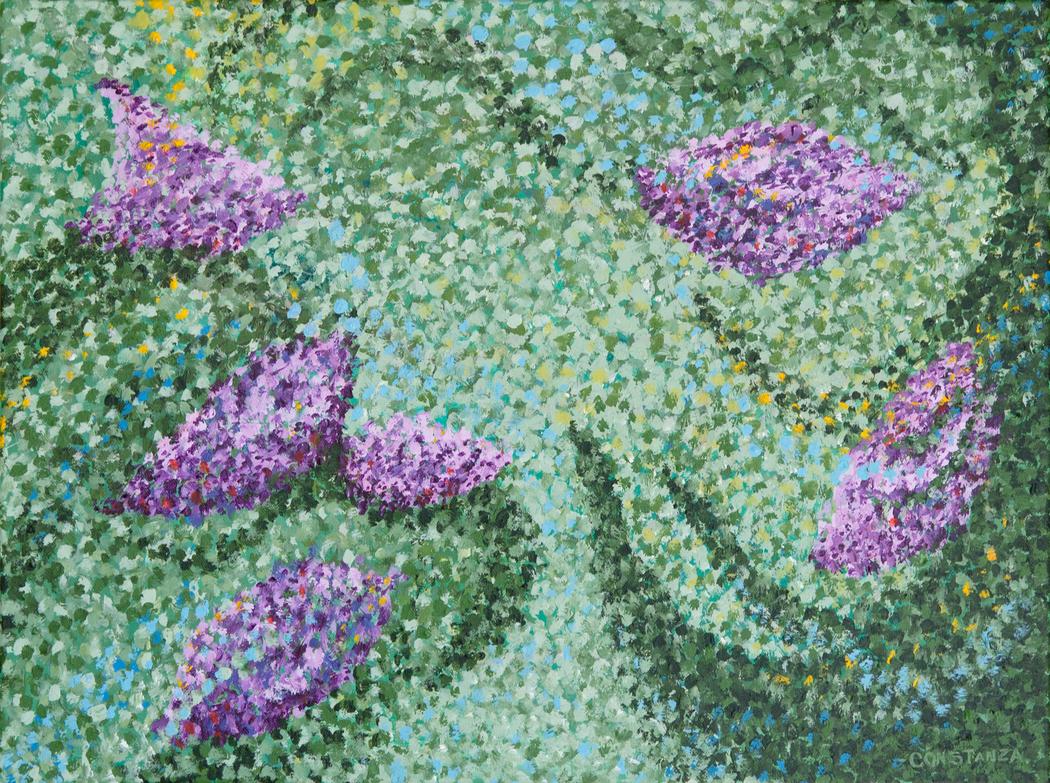 Constanza Eugenia | Within The Garden | 2026
Your paintings move between impressionism and abstraction. How do you decide how much of a place or subject should remain recognizable?
It depends on what I’m painting. If I’m exploring light, a memory, or a feeling, my work tends to lean more toward abstraction. If I’m capturing a particular moment, as in my In the Garden or Landscape series, it leans more toward impressionism, with pointillism as the technique that brings the image together.
Pointillism allows individual marks to become part of a larger image. What interests you about the difference between encountering your paintings up close and seeing them from a distance?
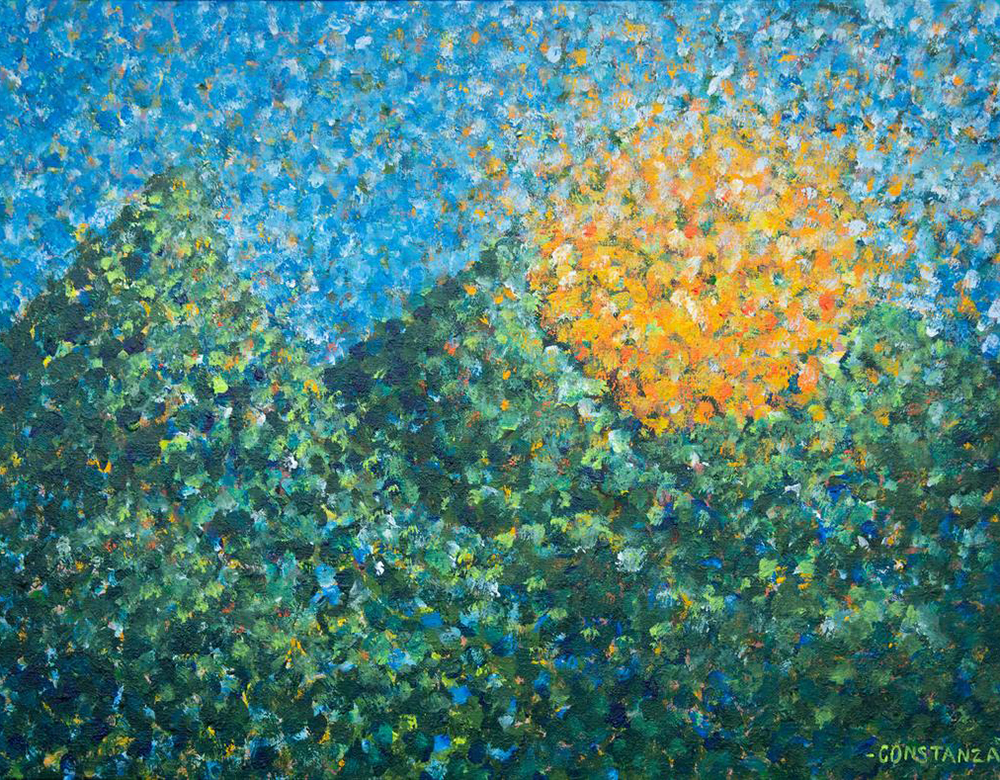
The change in perspective. I have believed since I was a kid that life is a matter of perspective. You experience life through the way you choose to see it. Despite your circumstances, you still get to choose how to experience and live it. A painting created through pointillism offers different perspectives of the same whole. The further away you stand, the more unified the image appears, but as you move closer, you begin to see and appreciate all the little marks that come together to create that whole.
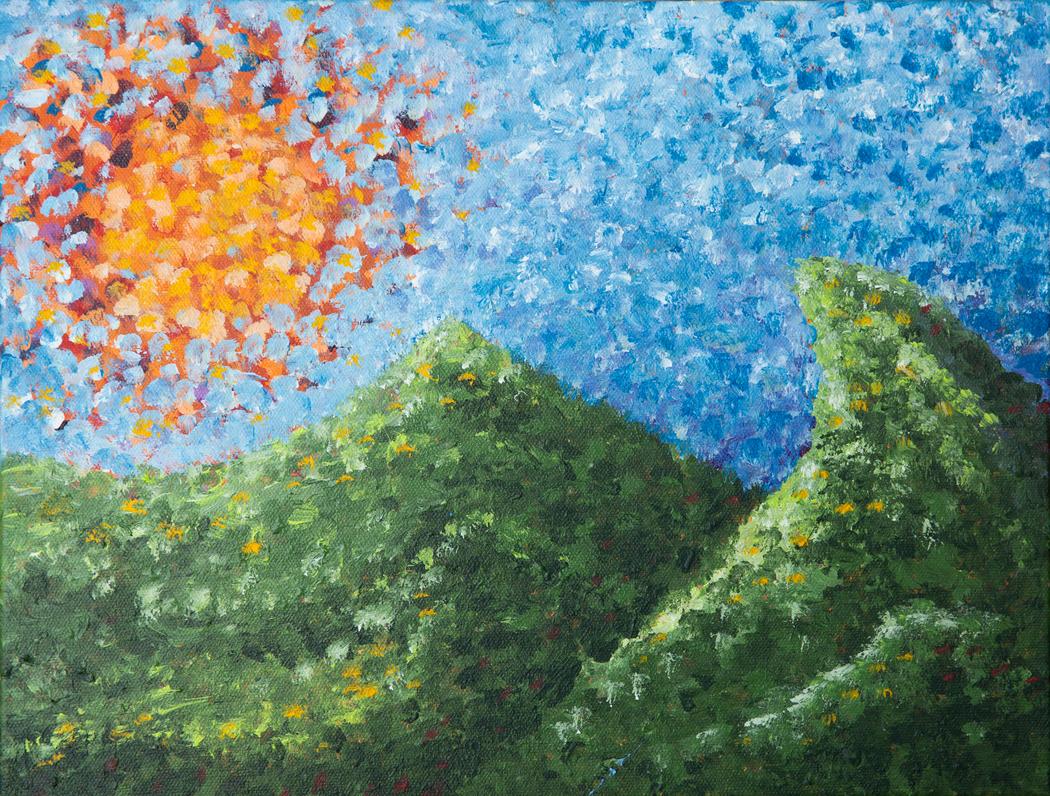 Constanza Eugenia | Mountain Waves | 2026
How do you translate your memories of the Caribbean into color? Are there colors whose meaning has changed for you since moving to New York?
The base of all my paintings begins with a warm tone, bringing the warmth of the Caribbean into each piece, followed by the movement and vibrancy of the culture itself reflecting on the texture and saturation of the colors. The meaning of these colors hasn’t changed since moving to New York. I visit Puerto Rico often to recharge and reconnect with the Caribbean. Although I didn’t move to New York until I was 17, I had been visiting the city my entire life. New York is as much home to me as Venezuela once was.
How does your experience as an art director and visual designer enter your fine art practice? Are there professional habits you find useful and others you consciously set aside?
Having a professional background in design and art direction has been incredibly helpful, as it has allowed me to observe and experience art and culture from a different perspective. My experience in branding has been particularly valuable in building my own identity as an artist, from creating my website and stationery to finding ways to present my work clearly and thoughtfully. Communication design has become the foundation for how I present and share my artwork, and it has also influenced my creative practice, particularly through the incorporation of writing and typography into the borders of some of my paintings.
However, while design has taught me to be intentional and thoughtful about how I communicate, painting allows me to step away from the structure and expectations of commercial work. In my fine art practice, I give myself the freedom to explore without a brief, a deadline, or a specific outcome in mind. I think that’s where the two disciplines complement each other: design has taught me how to communicate my work, while painting has given me the freedom to simply create.
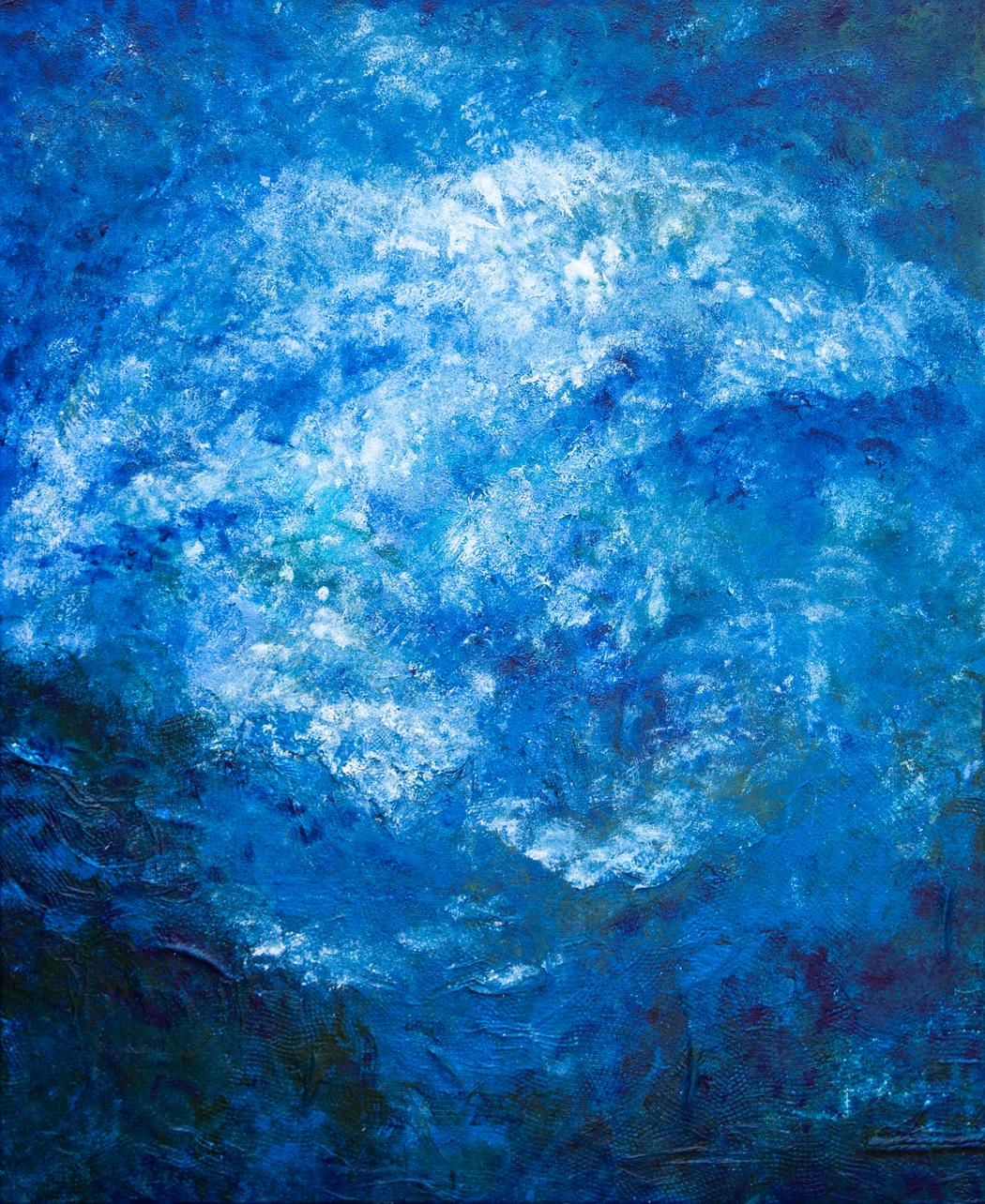 Constanza Eugenia | Deep Sea | 2026
You hope your work encourages people to slow down and find their own connection within it. Has a viewer’s response ever revealed something in a work that you had not recognized yourself?
Yes, and it’s always a pleasant surprise, as it offers a new perspective on something I created. I like to show my paintings without any explanation at first, allowing the viewer to form their own interpretation without being influenced by my intentions behind the work. The more their responses differ from my original intention, the richer the piece becomes. To me, that’s the moment when ownership shifts, and the artwork becomes part of the greater whole it represents.