
Pascale Gay
How did your journey into fashion design begin, and what first attracted you to working with clothing and form?
I’ve been drawn to making things with my hands since childhood — first through art classes, ceramics, and painting. Growing up near a recycling factory, I’d collect fabric scraps and experiment. My mum taught me to sew by hand, and by ten I had my first machine and taught myself everything else. I wasn’t interested in “fashion” as an industry, but I always sewed. After high school, a friend suggested I turn that love into a career, which led me to TAFE.
TAFE suited me — its practical focus helped me understand how ideas and research become real garments. I studied life drawing, illustration, colour theory, CAD, patternmaking, and sewing, and eventually continued into a Fashion Design degree. I learned how luxury fashion connects to every part of the industry, and during my studies I interned and then got my first job at a luxury design house.
From there I kept going — through study, through work, through being told I didn’t belong or wasn’t “fashion.” I wasn’t the most gifted student, but I was relentless. Even when the odds weren’t in my favour, the drive to make garments and keep myself inspired never left. My graduate collection combined fabric, screen printing, painting, and rubber – tying back to my interest in different materials.
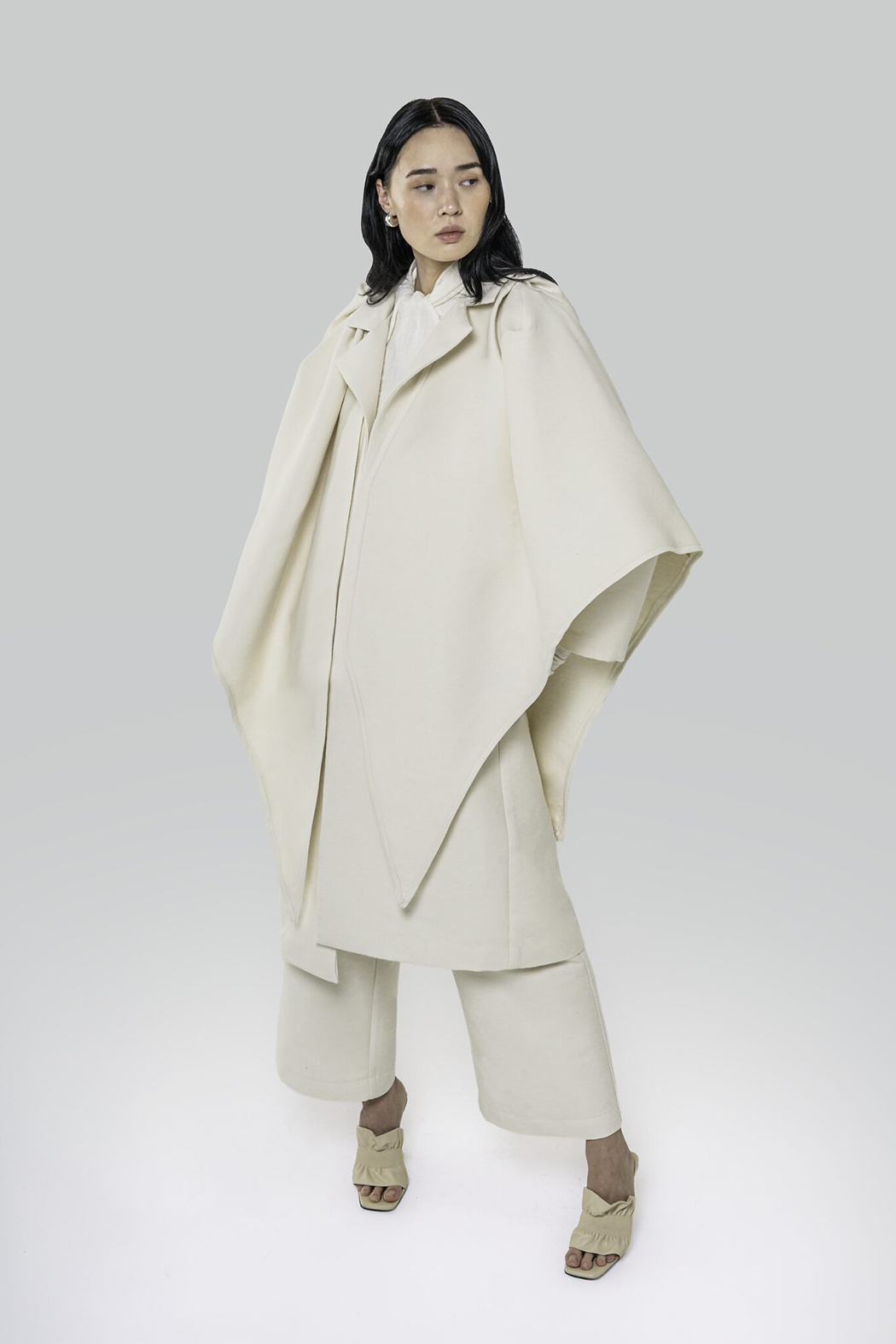 Pascale Gay | Look 10
Looking back at your career, which experiences have had the greatest influence on the designer you are today?
College helped me realise I wanted to be a designer and helped shape the kind of designer I could be, which avenues I felt the most comfortable exploring for inspiration, converting wacky ideas into tangible, wearable pieces and introducing technical standards.
After College, I’ve really absorbed so much from each role in fashion since then. Learning from pattern makers and machinists with 20-30 years’ experience each, and how they see patterns, and where concept starts and production ends.
Moving to London and doing two London Fashion Week Shows proved I could work on the global stage. I feel my strongest source of motivation is the curiosity to continue learning and studying. Taking night and weekend classes, and diversifying my experience across design, development, and production.
You have worked across both smaller ateliers and major fashion houses. How have these different environments shaped your approach to design?
All houses are different, but I felt like the more I could sink my teeth into, the more I could learn. I want to be impressed, and inspired by what could be done given few parameters. Sometimes I am left to drape for days, and play around with morphing shapes, which is where I am most drawn – and this is mostly from smaller houses or in roles where I work on the development side of things. (design, pattern making etc).
The bigger houses, atelier or production roles have taught me structure, critical timelines, management of people and budgets. So equally important, but different. Its critical for me as a small business to have that framework, even if on a smaller scale, to be able to move quickly, and make considered, educated decisions.
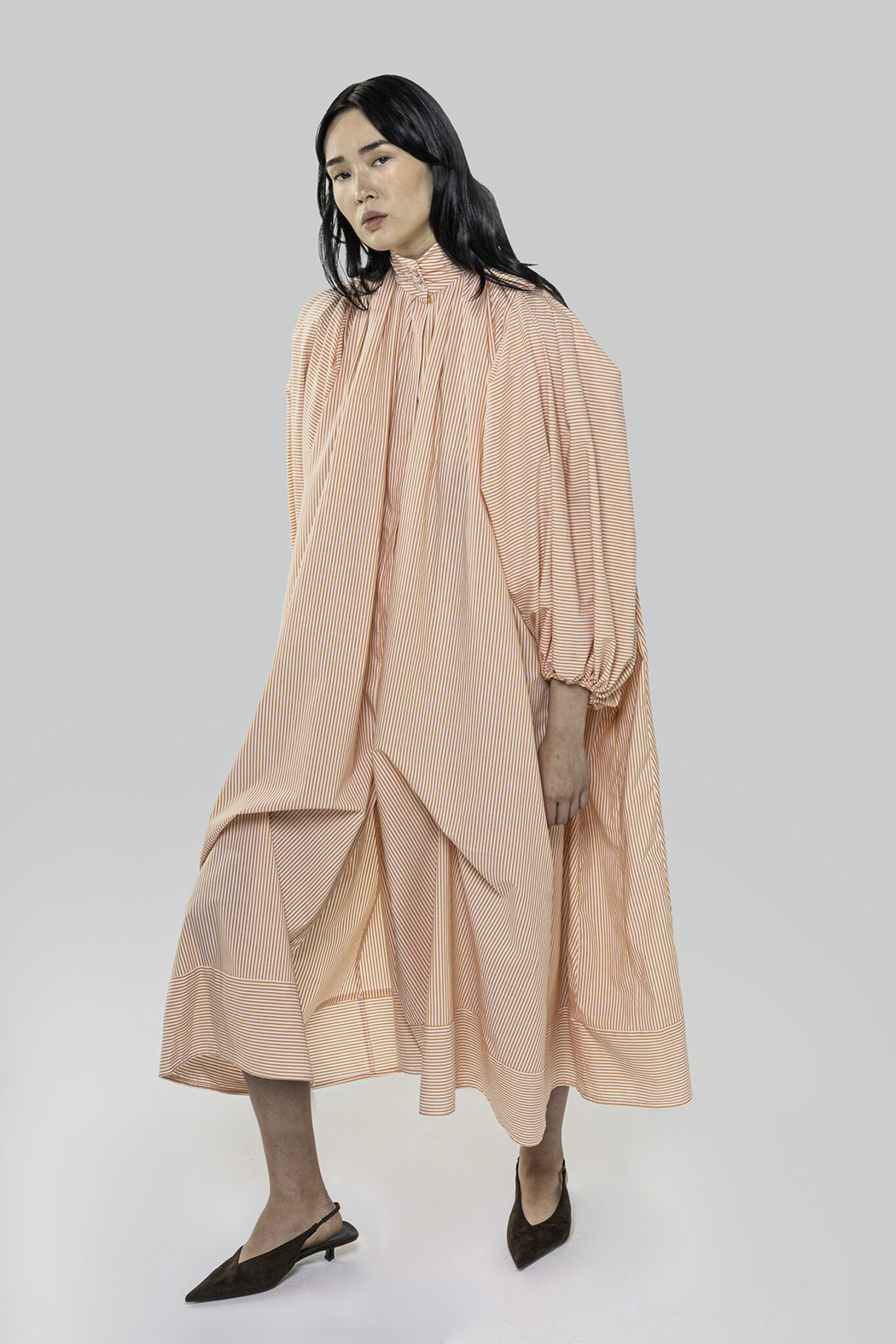 Pascale Gay | Look 9
What does the process of developing a new collection usually look like for you, from the first idea to the finished garment?
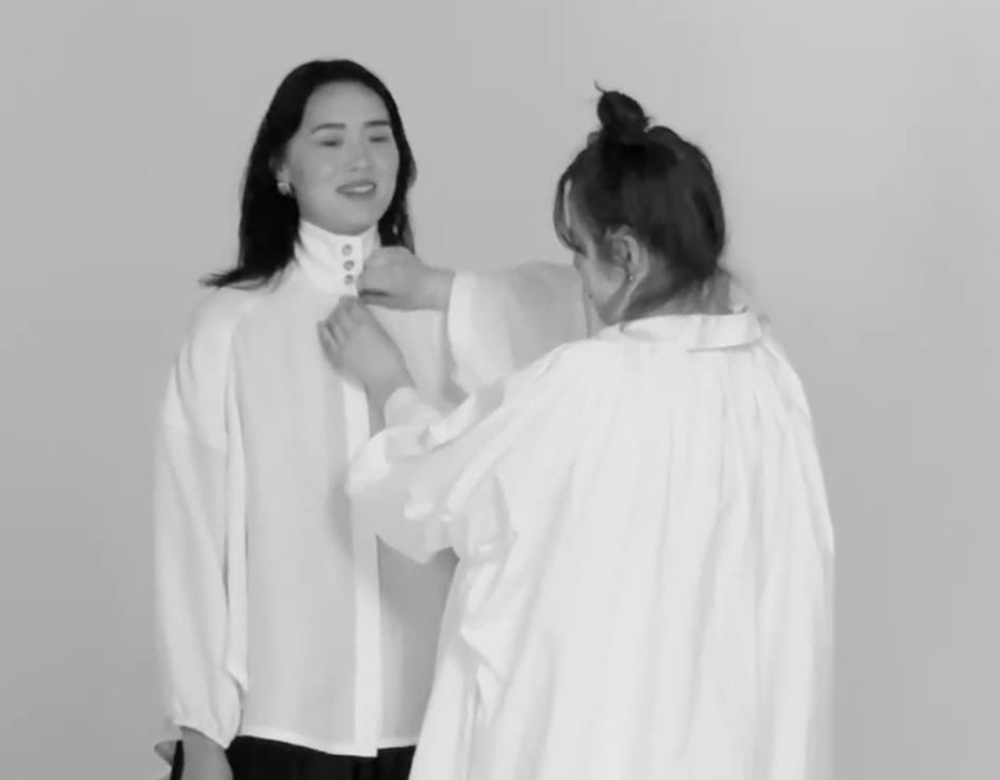
I don’t work in a linear way – Essentially, I start with a mood board of random images, colours, shapes, textures and details, Then i do a lot of draping, trying to emulate some of the shadowing, shape, feelings and negative space of different works, and I sketch it up. I then draft patterns and make a maquette or a toile. I fit this on the mannequin and make alterations to the pattern from there. If its close (fitting wise) then I fit it on a fitting model (an Australian size 8) so she can give me her feedback on fit and wearers experience. I may repeat this step a couple of times until the fit, function and design are ready. Finally, I cut, make and finish in the real fabric. Now imagine all these steps for each garment, and me repeating them many times. The mood boarding, draping, sketching, and altering never really stops until its about to be photographed in the lookbook or at the show.
Visual art plays an important role in your practice. What kinds of artists, artworks, or visual ideas tend to inspire you most?
I get most of my inspiration from old technical books in the library – things like photography techniques, architecture, lighting, painting and other bits and pieces, and I visit old book shops and antique stores. this year I’ve been loving ‘Porcelain Painting’ – Colour, design, method and firing by Joyce Randall. It changes all the time though, the latest collection I was inspired by the work of Rene Lalique’s Glass works, although my phone is also full of photos of 1960s magazine photography, Loie Fuller, it’s a mix. My graduate collection from 2017 was based on the work “A narrative with Sexual Overtones’ – by Sandy Edwards – Found in the Book ‘The Critical Distance: Work with Photography, Politics, Writing’. A lot is found through picking up a stack of old books and going to local art exhibits.
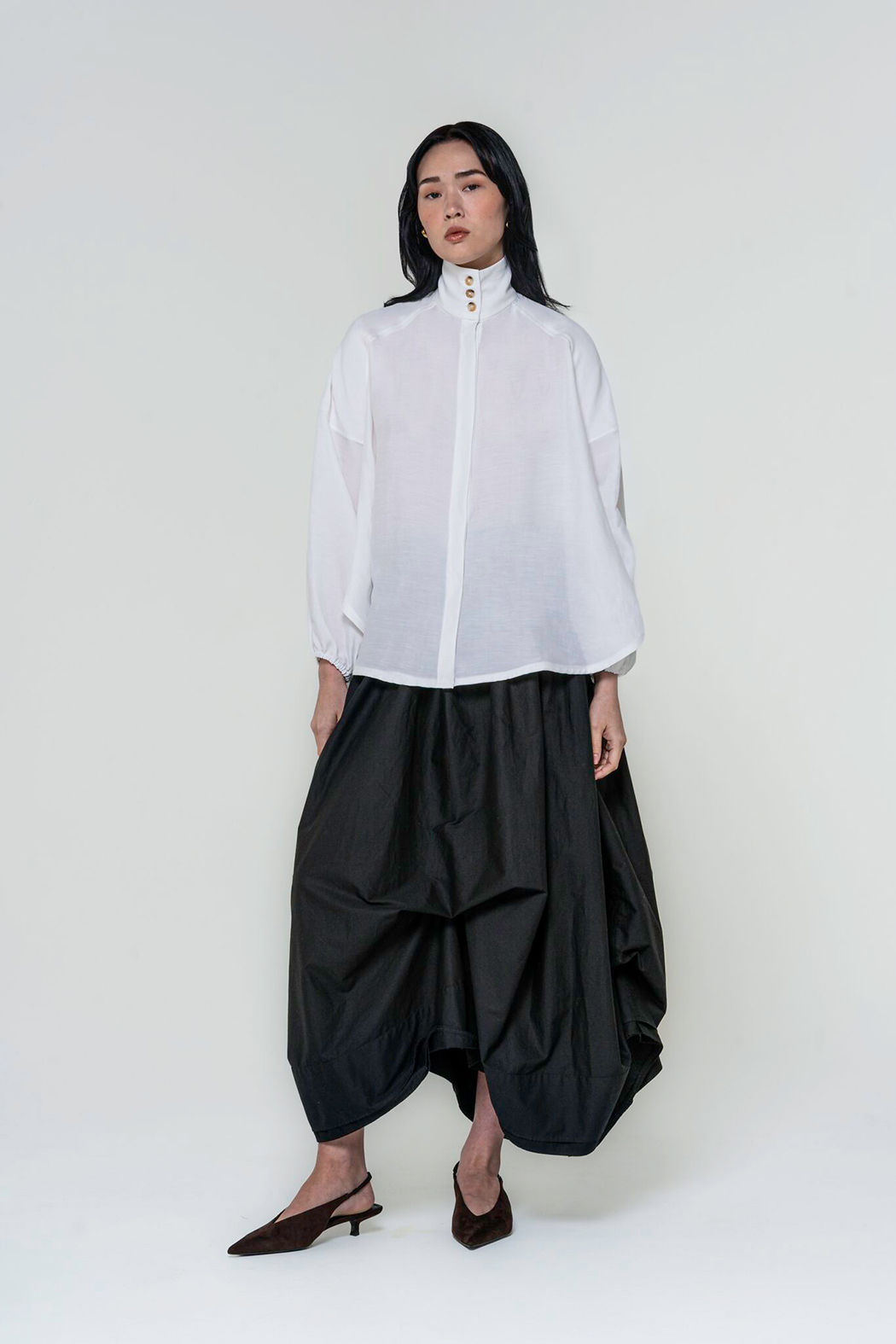 Pascale Gay | Look 1
How has your understanding of the relationship between clothing, the body, and space evolved throughout your career?
I think initially when I started studying Fashion, I didn’t really relate the idea of runway clothing or couture back myself or what I found interesting at all, and I slowly realised that there aren’t as many limitations to designing as I once thought.
My work now treats clothing as a sculptural extension of the wearer. A lot of my practice is driven by exploring materials and their limitations. I’m constantly asking how I can create structure from fabrics that are overly fluid, or how I can distort or ‘destroy’ the inherent qualities of a textile to completely change its function. Back in 2019, I created a range that manipulated the stretch of fabric cut on the bias — a risky approach — and used those distortions to build silhouettes that sat almost like extensions of the skin. It wasn’t about flattering the body; it was about expanding it.
I’ve also been incredibly fortunate with the mentors I’ve had. Being invited into rooms, asked for my opinion, and given the space to experiment has shaped me more than anything. There are moments where I still feel like a complete nobody — and then suddenly I’m backstage at Fashion Week, contributing to something bigger than myself. Those experiences have grounded me and helped me understand that clothing, the body, and space are always in conversation. My work lives inside that dialogue.
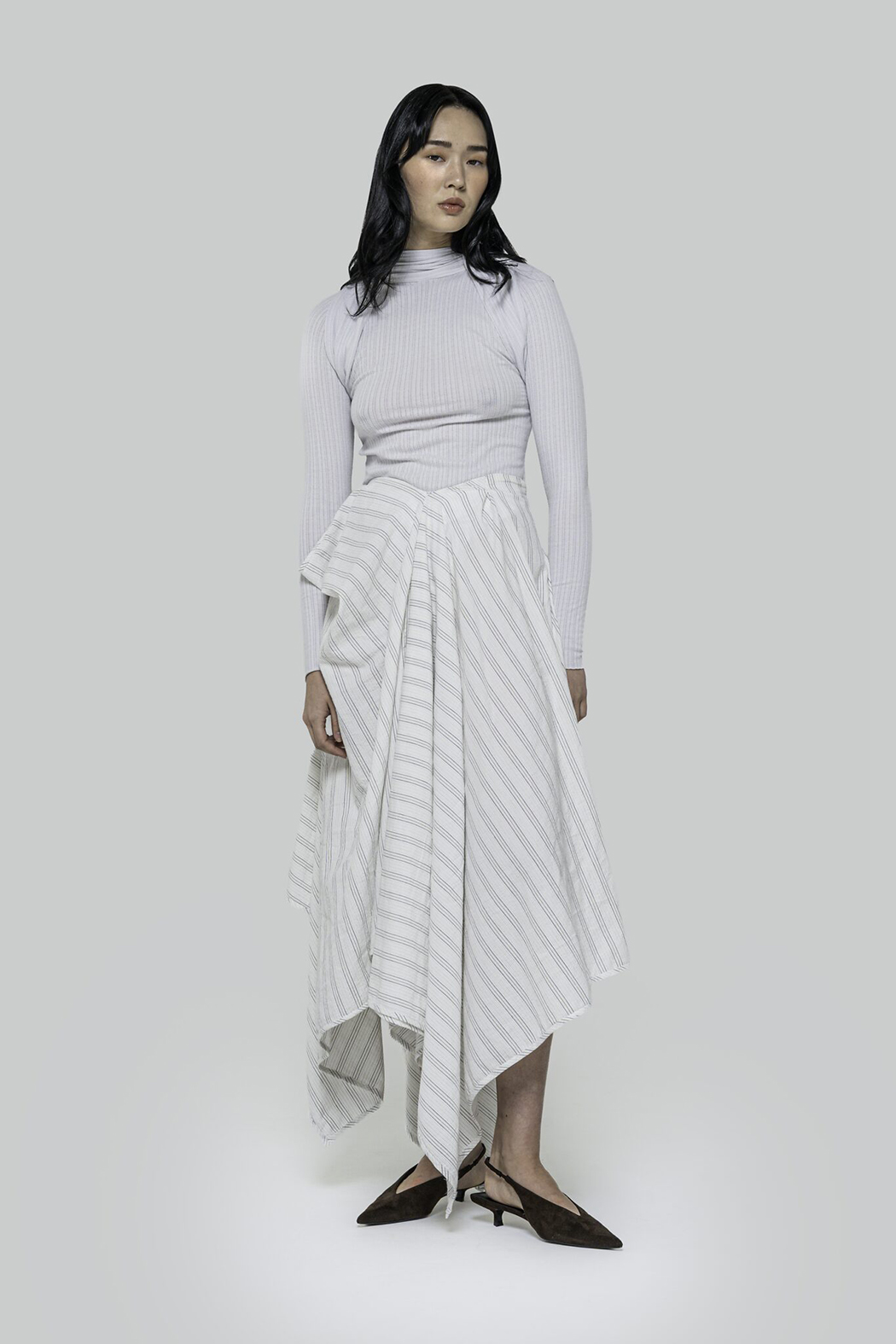 Pascale Gay | Look 2
What have been some of the most important lessons you have learned through building your own label?
One thing I’ve learnt is that as a designer, there is no one ‘proper’ way to produce a collection or a piece. Usually, it’s a lot messier than that. I, like many designers and artists am never satisfied, so I’ve managed to learn the framework, processes, and systems in the fashion industry from development to production and applied them to building my own brand and to guide my decision making and make calls which would have previously sent me into a decision paralysis. Thinking on your feet and trusting your gut are crucial. Try not to present a problem without providing a solution and be flexible. Always overestimate the time it will take to perform each step of the process and seek constructive feedback from friends and colleagues are rules I have harnessed.