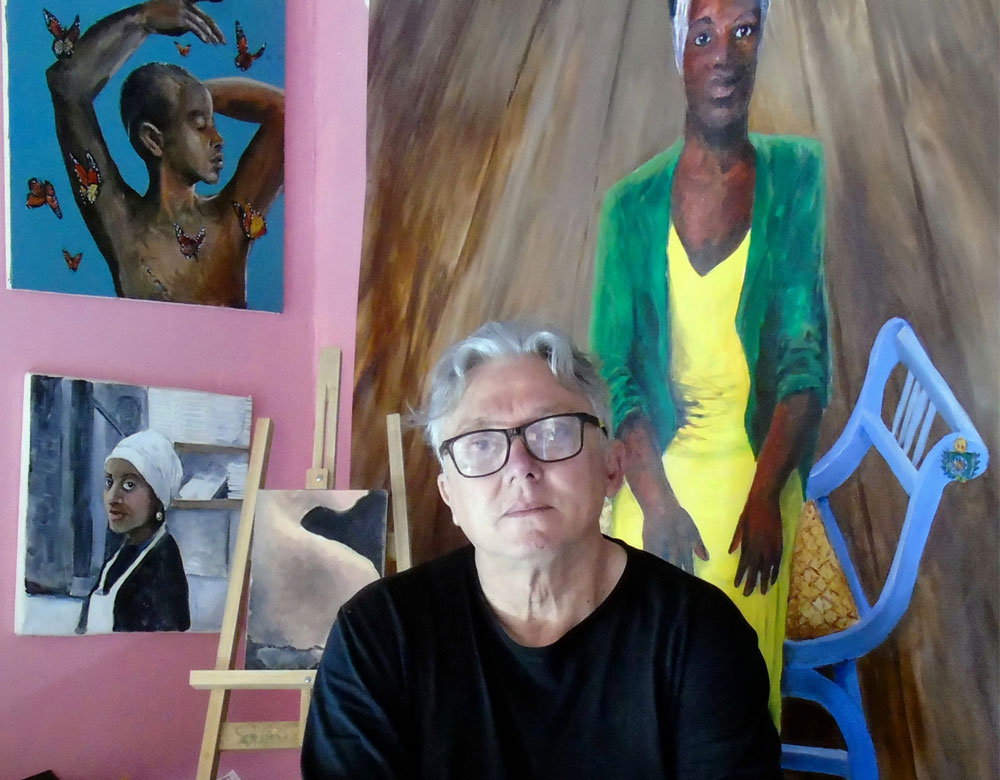
Mario Schuster
Your artistic path has always existed alongside your work in veterinary medicine. At what point did you realize that these two fields were not separate, but were actually shaping the same way of seeing the world?
For many years, drawing and painting walked hand in hand with my veterinary practice—serving as a source of pleasure that eased the stress of daily life. However, I knew how difficult it was to make a living through art while raising young children in a small town in the interior of Brazil, so my dreams were put on hold. Occasionally, I would take part in a collective exhibition. During that period, my work consisted almost entirely of landscapes and watercolor birds. Although people praised my work and I was aware that I possessed technical drawing skills, I felt a deep need for something more, even if I couldn’t quite define what it was.
Once my children grew older, I decided to pursue a degree in Fine Arts. Many people questioned why I would go back to study if I already knew how to draw. But art school taught me how to think about art, and my work began to take a completely different direction. This search led me to see art through a new lens: it ceased to be something merely informal, just meant to hang on a wall, and transformed into a form of resistance against the contradictions of the contemporary world, the daily stress, the violence, and everything that moves me as a human being and as an artist.
Drawing sharpened my sense of observation, which helped me immensely in veterinary medicine—since animals cannot speak, but constantly show what they are feeling. Today, I also realize that veterinary medicine helped me understand art, as a set of symptoms (clinical signs) leads to a diagnosis or conclusion. From conceptual art, I learned to think first and execute later.
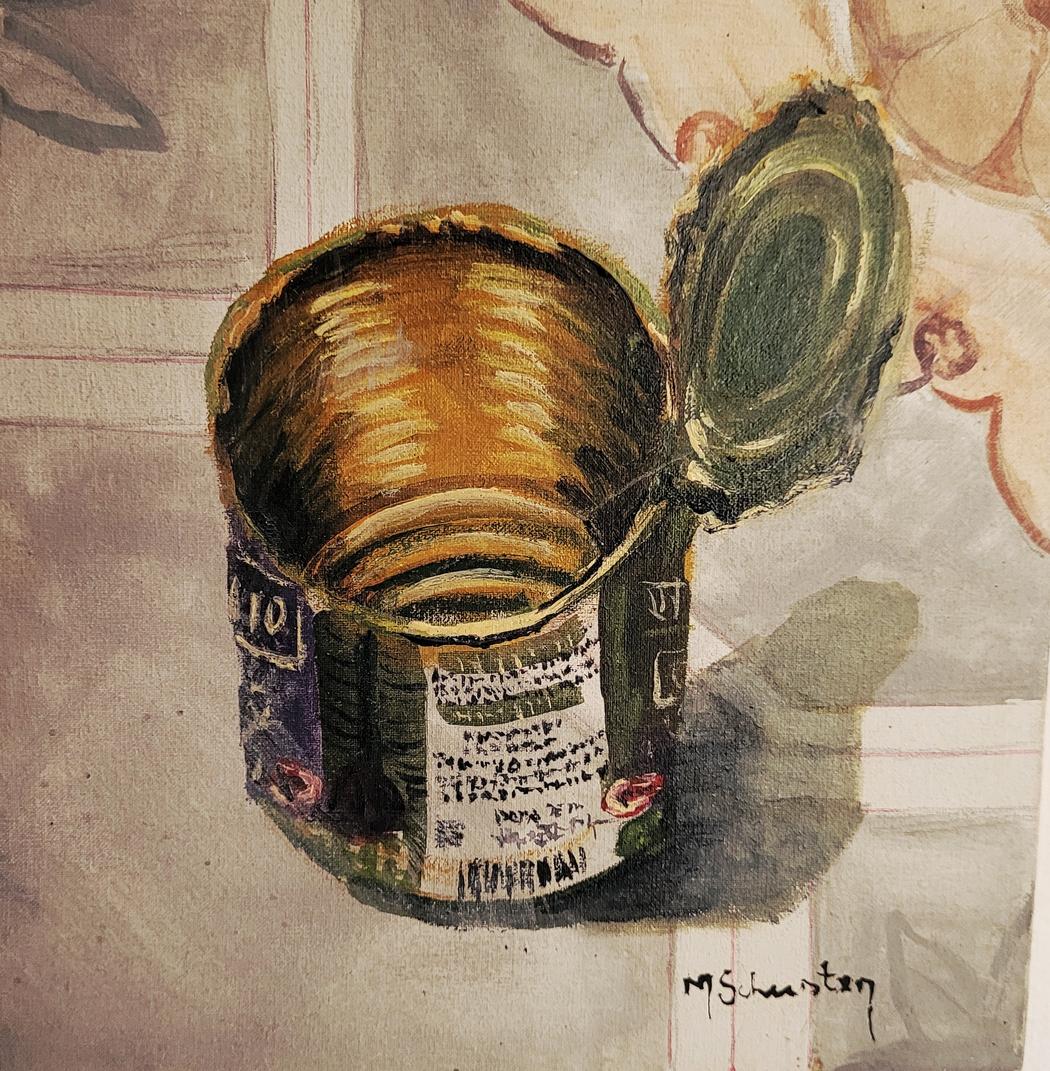 Mario Schuster | Rubbish
You have said that working with animals sharpened your powers of observation because they communicate without words. How has this experience influenced the way you approach a subject before you begin to paint or draw it?
Drawing sharpened my sense of observation, which helped me immensely in veterinary medicine—since animals cannot speak, but constantly show what they are feeling. Today, I also realize that veterinary medicine helped me understand art, as a set of symptoms (clinical signs) leads to a diagnosis or conclusion. From conceptual art, I learned to think first and execute later.
In the second stage of my process, I think about how and through which medium I will translate these ideas and feelings into something concrete. Then, I consider how to present the final piece, because, for me, an artwork is only complete once it is seen.
Drawing originally became a way for you to study anatomy and understand the body. Has that scientific discipline remained present in your artistic process today, even when you are depicting very different subjects?
I thing was born drawing and for me, it was always come naturally. I still have sketchbooks from when I was 5 years old, filled with drawings of animals and people. Even back then, I unconsciously drew or painted with watercolors whenever something moved or touched me. At the age of 12, I began taking lessons with an Uruguayan artist, a professor at the Pelotas School of Fine Arts. I graduated in Veterinary Medicine at 23, and I used to study animal anatomy through my own drawings, copied from the books I checked out at the university library.
Drawing sharpened my sense of observation, which helped me immensely in veterinary medicine—since animals cannot speak, but constantly show what they are feeling. Today, I also realize that veterinary medicine helped me understand art, as a set of symptoms (clinical signs) leads to a diagnosis or conclusion. From conceptual art, I learned to think first and execute later.
My line is organic, fine, and delicate; I was born with it, like a birthmark. Over time, I have learned to use it in the best possible way, even if not always consciously.
In Fine Line, delicate butterflies appear among a dense network of thorn-like or barbed forms. What does this contrast between fragility and danger represent for you?
When I draw butterflies trapped in a tangle of barbed wire, I am questioning humanity’s relationship with nature, the unstable balance between fragility and violence.
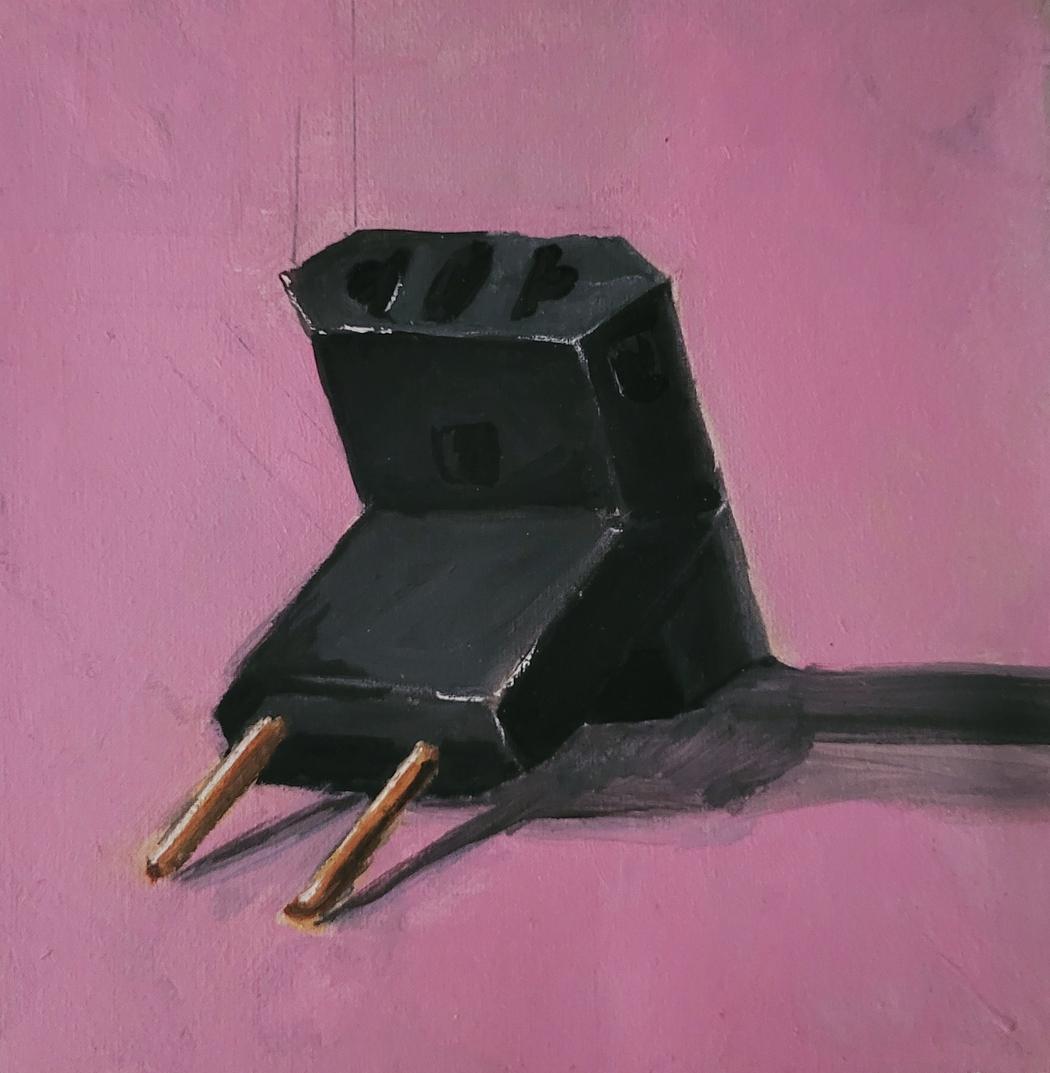 Mario Schuster | Rubbish | 2025
Several of your works transform ordinary or overlooked objects into the central subject of a painting. What attracts you to things that might otherwise be ignored, discarded, or considered insignificant?
I am drawn to gazes, repressed emotions, ordinary people, and everyday objects that seemingly hold no significance, function, or utility. I am drawn to everything that departs from common sense, conventional beauty, and standard expectations. I do not seek to debate art and its mediums—as I feel that has already been done exhaustively—but rather to use art to question feelings, concepts, and human situations.
When I paint simple, everyday objects that seemingly have no purpose left, I am asking: “What is the true function of things and people? How are we valued?”
Your work combines close observation with a certain poetic or symbolic ambiguity. How do you balance accuracy with the freedom to transform what you see?
My line is organic, fine, and delicate; I was born with it, like a birthmark. Over time, I have learned to use it in the best possible way, even if not always consciously. Just as an artist’s imagination is fundamental to creation, my work evolved from landscapes to themes drawn from events and stories I have read, seen, or felt—things that awakened an urge and a necessity to create.
In the second stage of my process, I think about how and through which medium I will translate these ideas and feelings into something concrete. Then, I consider how to present the final piece, because, for me, an artwork is only complete once it is seen. To me, an image is an enigma that can hide something beneath the surface, and i draw reference for my work from photos I take with my phone, as well as from magazines, cinema, music videos, and art history.
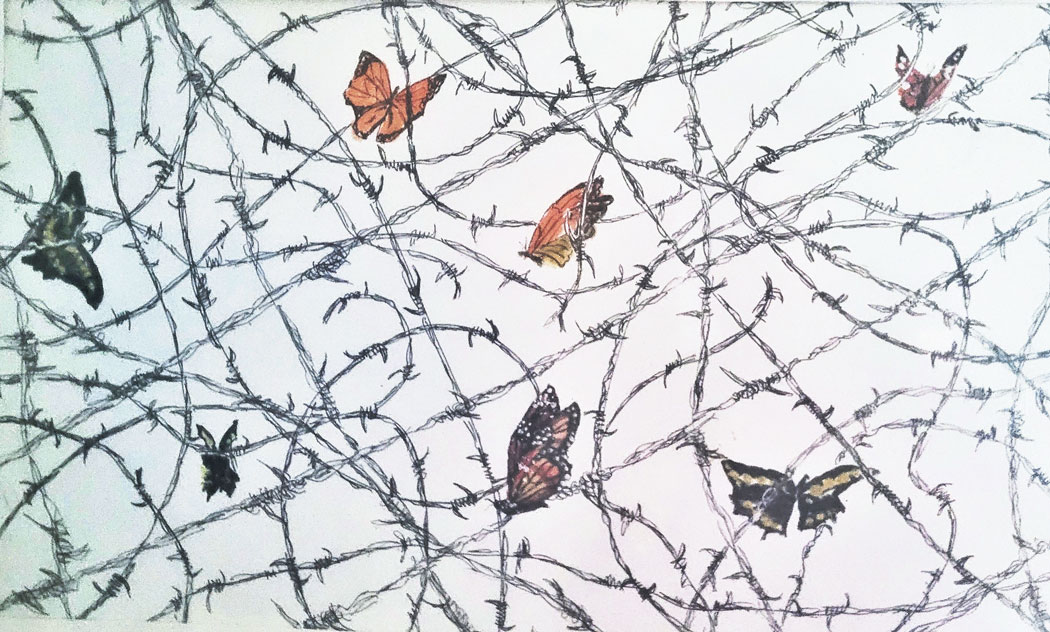 Mario Schuster | Fine Line | 2025