
Cat Simmons
Your project begins with photographs from your family archive. What first prompted you to revisit these images not simply as records of the past, but as materials for artistic transformation?
I discovered that there had been secrets kept within my marriage, secrets of betrayal and addiction. It was during that time that I was in grad school, earning my MFA. As I was cleaning up the house one day, I found a photograph of my family when the kids were much younger. I mapped the timeline and realized that at the time that photograph was taken, there was active betrayal taking place. This photograph that had been a cherished memory suddenly took on a whole new meaning. I began to consider the role of memory as it relates to the actual physicality of the photograph. I was curious to ask the question of whether or not deconstructing the physical photograph might somehow help me soothe my emotional pain. It was an experimentation that led to an entire body of work which continues to evolve.
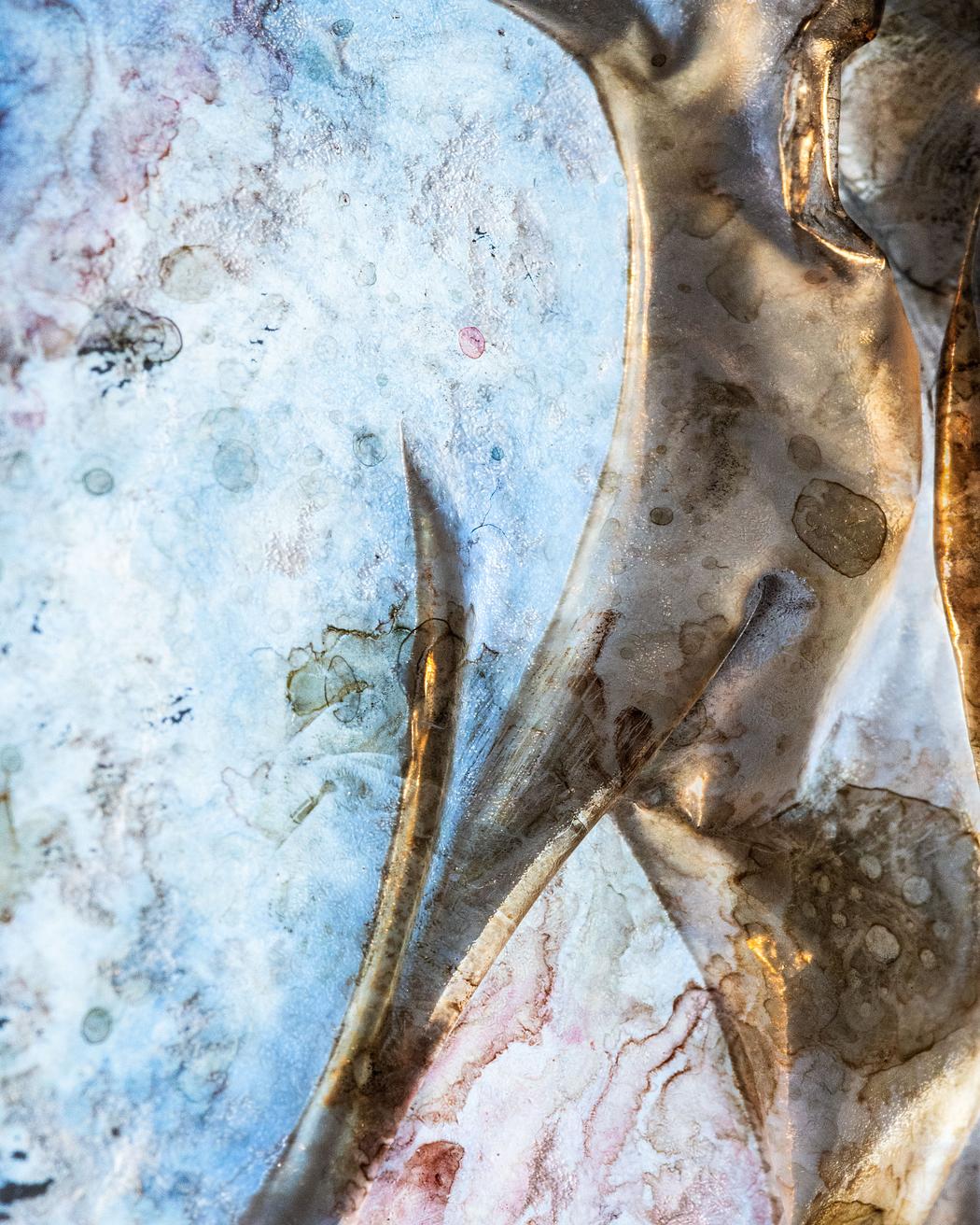 Cat Simmons | Objet A | 2021
You describe discovering painful truths hidden beneath photographs that once represented happiness. How did these new realizations change your understanding of photography’s relationship to memory and truth?
A photograph only ever tells you that something was in front of the camera, not what it meant, not what came before or after the shutter closed. Once I knew what some of these images were concealing, I couldn’t unsee the collision of an outdated truth with the new one. I remember reading Walter Benjamins writing entitled The Work of Art in the Age of Mechanical Reproduction.
It discusses the aura of the original work of art in an age of mass reproduction. I asked, does memory have an aura? Can the aura of memory contained within a printed photograph transcend the destruction of its material state. And if it could, might I be able to reconstruct that memory into a new truth by altering the physicality of the print? The answer is yes. The memory contained within truth of the photograph at the time it was taken remains, but that memory, along with its truth, can be rearranged, reconceptualized.
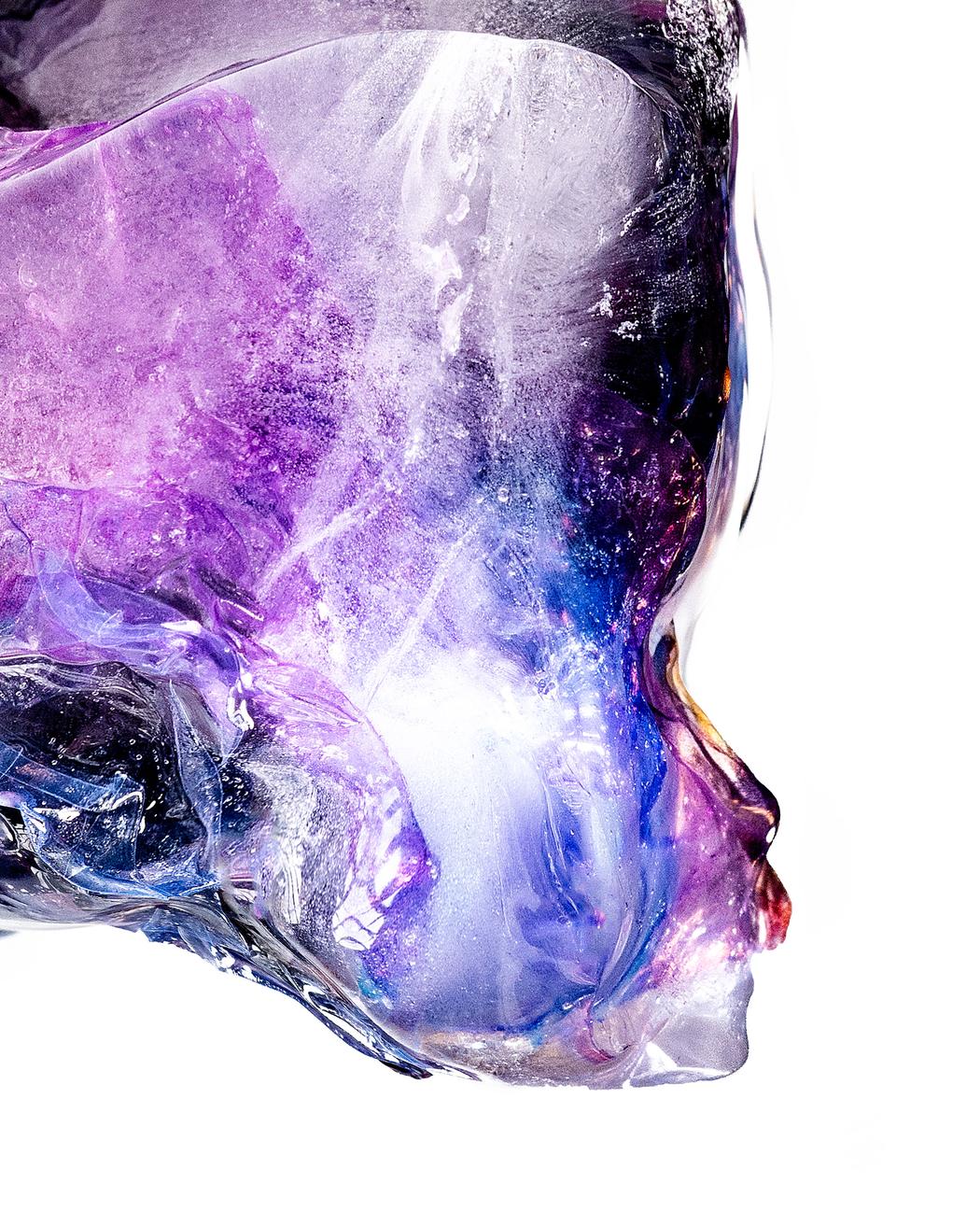 Cat Simmons | Objet A | 2021
What does physically altering an original print allow you to express that digital manipulation alone could not?
As I deconstruct the print, there is a cathartic transaction taking place as the sticky emulsion adheres to my fingers and the ink drips from the paper onto the tray below. The act of assaulting the print along with its aura of memory is healing. To then physically reconstruct those materials into a new assemblage, a new aesthetic representation of that memory is in essence, a truth rewrite. Certainly, the reality of actual events holds true in my brain, but the outward aesthetic changes. The language of that photograph tells a new story, a new more empowering truth. Digital manipulation is not tactile. It just doesn’t hold the same weight. It’s easy and cheap.
Your process includes dripping pigment inks, removing emulsion, tearing paper, and reshaping photographic materials. How do you decide which form of intervention is appropriate for a particular image or memory?
The first step in this decision is to consider the memory I am deconstructing. My process is experimental, and I have remained open to new ideas and approaches to formulate. At the end of the day, it really boils down to what my subconscious mind wants. I am a firm believer that much of what I do is motivated from the deeper places within me. If I am looking at a photograph and have the idea to freeze the emulsion in ice, I do it. If I think it might be interesting to burn the print, I will do that.
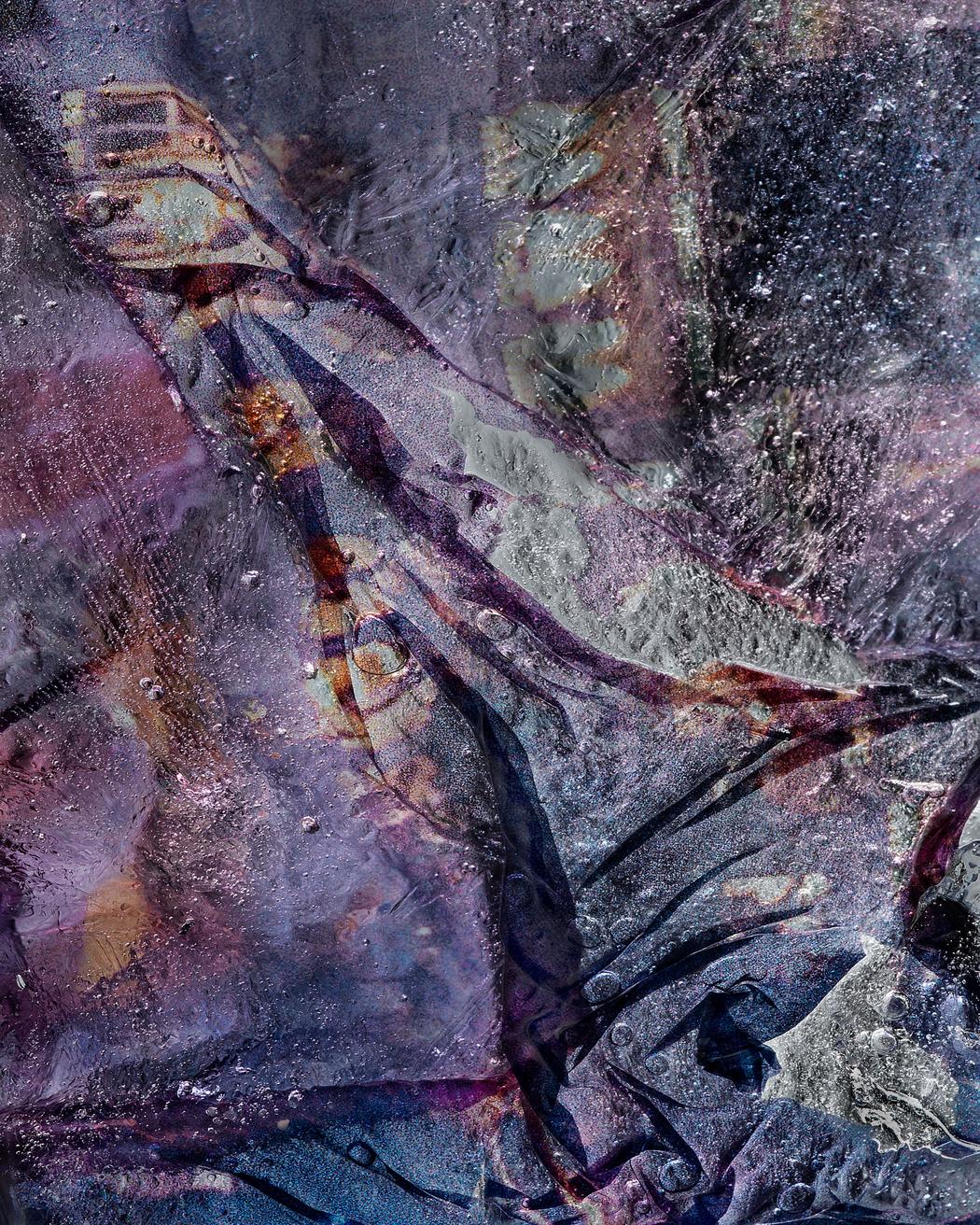 Cat Simmons | Objet A | 2021
Is there an emotional difference between deconstructing a photograph that carries a difficult personal history and creating the final artwork from its fragments?
Yes! The destruction or assault against the print really feels more like the yelling rage one might feel in a heated argument. The construction of the new artwork feels more like the internal strength that comes after walking away from it. Photographing the new artwork and making digital choices in post feels like a slamming of the door on that argument, never to return again. It’s golden!
Has working on this project changed the way you relate to your family archive? Are there photographs you now view differently, or images you would still hesitate to transform?
I love my family archive. I do view many of my family photographs differently, but I must say, the way we choose to perceive and remember really is internal. As I have healed and shifted away from anger and into a place of forgiveness and peace, I do not hold the same intense feelings of anger or hurt. Honestly, I am so grateful for the mess he made because it set me free to become a new version of me whom I have grown to love. This is why I have moved on to working with my own childhood portraits. I am evaluating my own trauma and rather than destroying those images for the purpose of forgetting, I am doing so and using the rubble as decorations, things to be celebrated; same process, totally different intent.
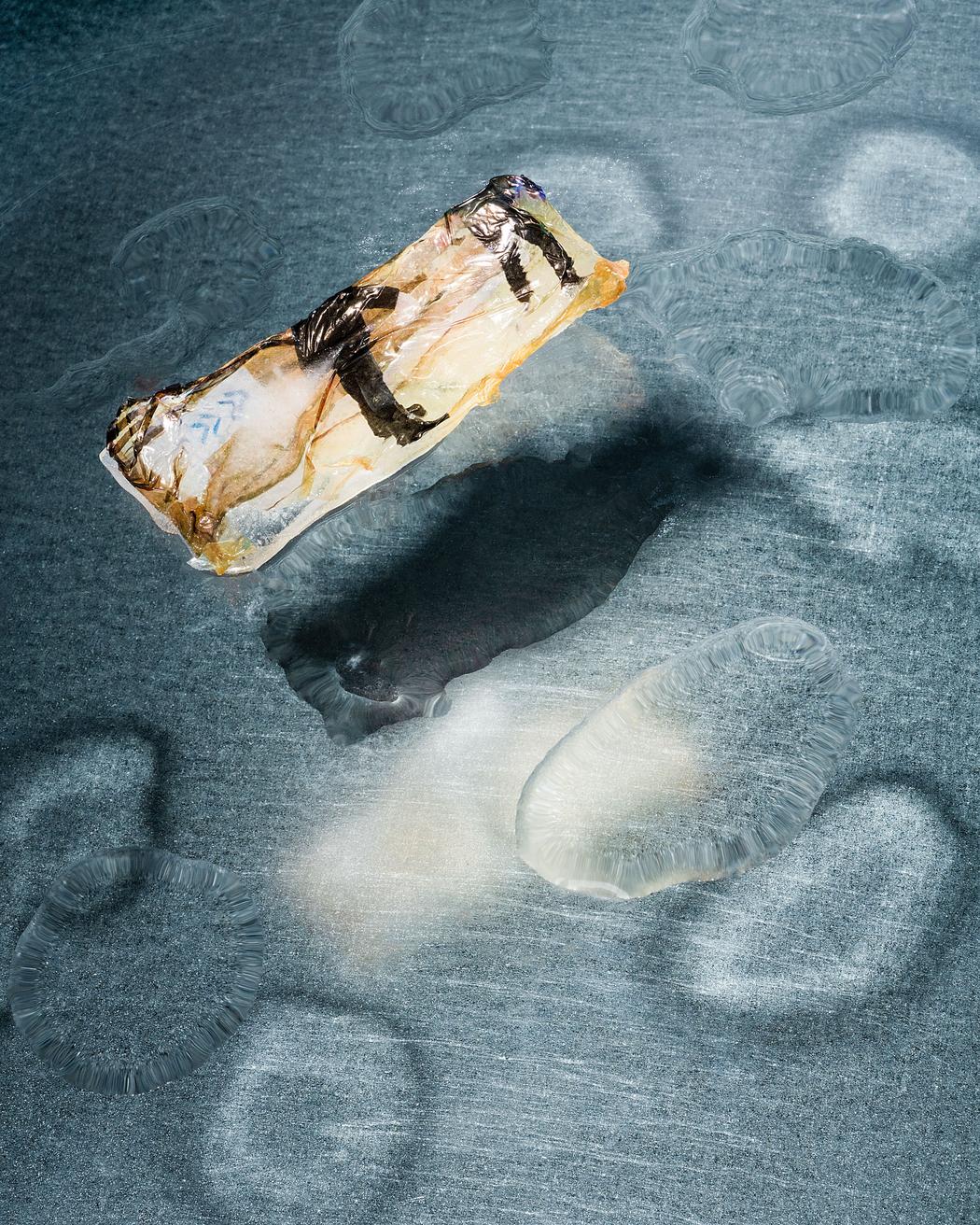 Cat Simmons | Objet A | 2021
As an educator, you encourage others to use photography as a visual voice. How has teaching influenced your own willingness to approach deeply personal material and experiment beyond conventional photographic practice?
When I create assignments, I do so with much intention to offer my students an opportunity to pause and observe themselves in their work. I assign self-portraiture and conceptual projects that require them to look inward, and they do. They come up with deeply personal and reflective projects. I am also a very transparent instructor. I don’t share ALL of my personal details, but as I am vulnerable about my own art, I perceive my students to feel safe in being equally vulnerable.