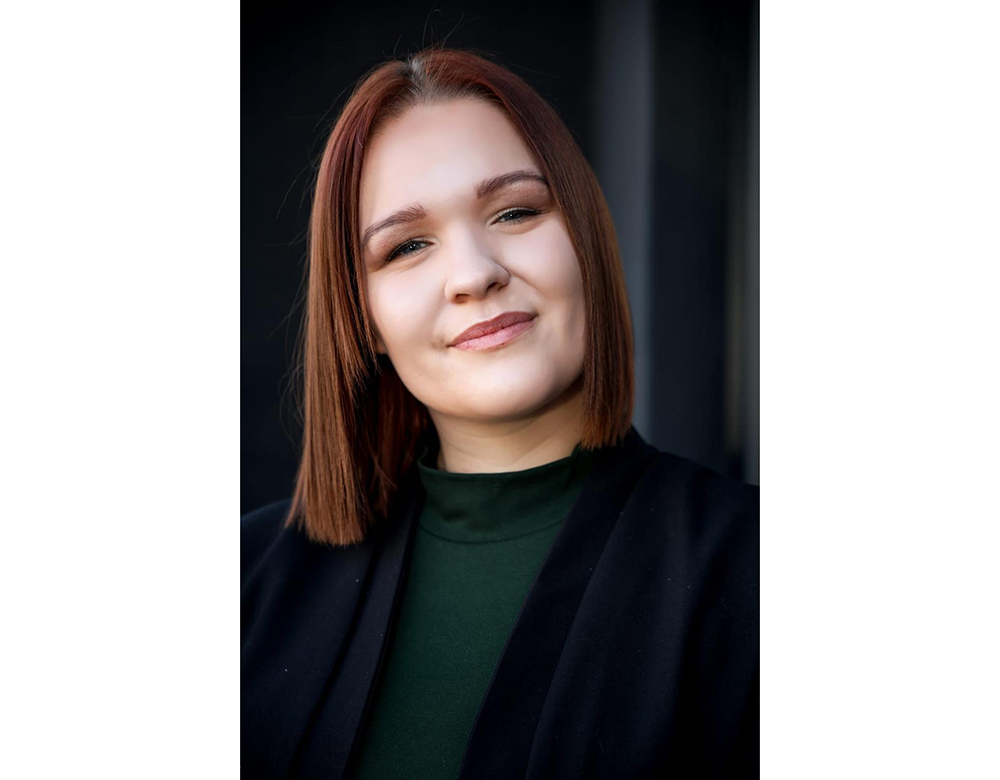
Sita-Marie
You grew up watching your mother paint. How did her creativity shape your early understanding of art, and what influence does she still have on your practice today?
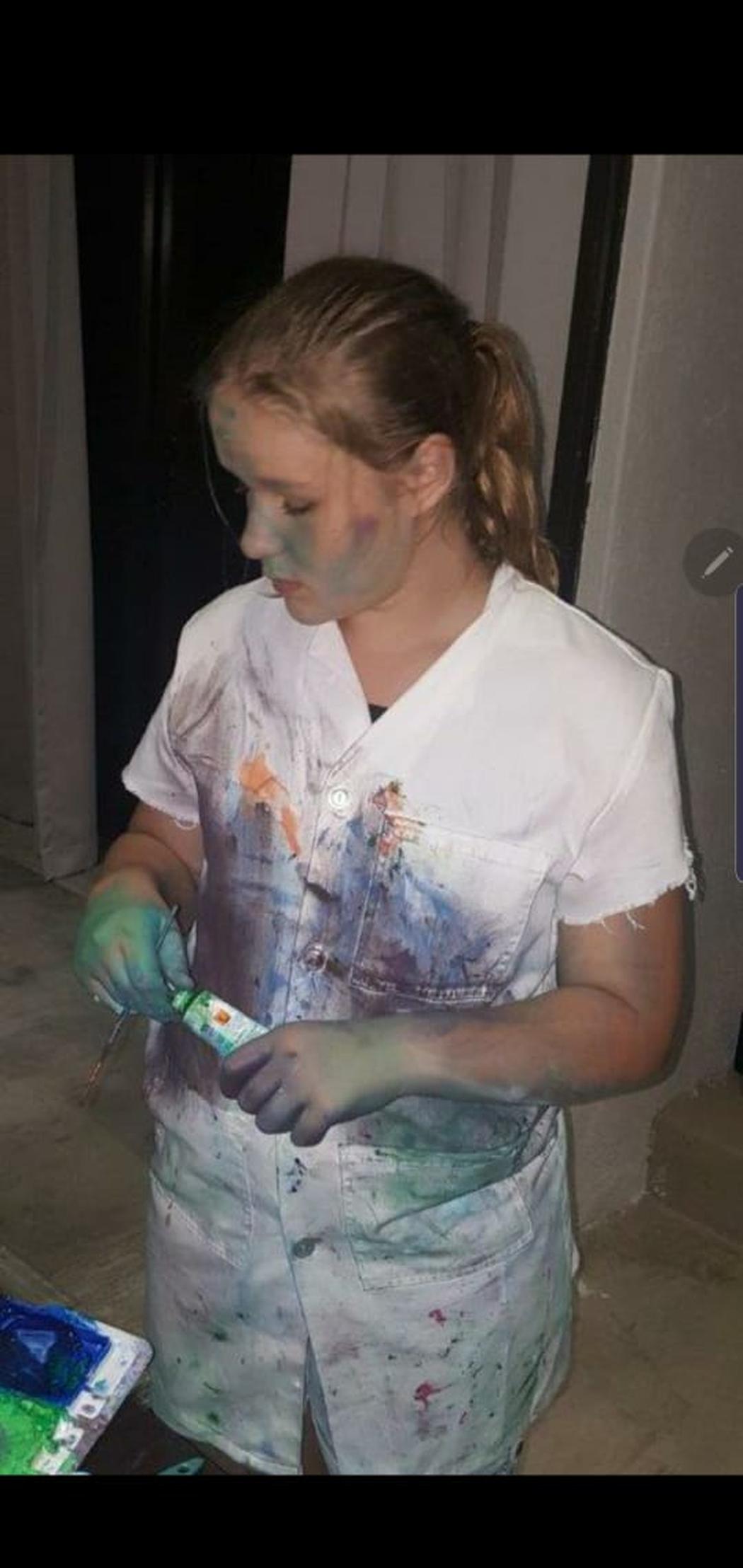
Growing up, I saw art as something natural because my mother was always painting. Watching her taught me that creativity is not about being perfect; it is about experimenting, making mistakes and discovering something unexpected along the way. Some of my earliest memories involve trying to paint beside her, although more paint probably ended up on the walls and floor than on my canvas.
Her influence is still very present in my practice today. She encourages me to trust my instincts, take risks and keep developing a style that feels like my own. We may approach art differently, but our shared love of painting gives us a special connection. She was the person who first opened that world to me, and she remains one of the people who inspires and challenges me most.
What do you remember about your earliest experiences with painting, and when did art begin to feel like something more than a childhood interest?
Some of my earliest memories of painting are of watching Bob Ross with my mother and trying to follow along. I used to challenge myself not to pause the episode and to paint at his pace, which usually ended in me falling miserably behind. Still, Bob Ross and my mother taught me most of what I first knew about painting. One of the best parts of my day was listening to him calmly explain how to paint a “happy little cloud,” as if creating an entire landscape were the easiest thing in the world.
As school became more demanding, I stopped painting for a while. It was only when my mother began painting again that I felt something in me return. It was more than simply wanting to pick up a brush; it felt like a spark and a longing I could not quite explain. That was when art began to feel like more than a childhood interest. I realised it had always been part of me, quietly waiting for me to return to it.
Literature plays an important role in your imagination. Are there particular books, writers, or fictional worlds that have influenced your visual language?
I have always been drawn to the Wattpad community, where I could lose myself in a story and the occasional grammar mistake was the least of my worries. I mostly read fantasy, especially stories about a werewolf Luna who begins her journey hurt, lost and unsure of where she belongs, but eventually finds an embrace in which she finally feels safe.
What stayed with me was not simply the happy ending, but the uncertainty before it. In real life, we do not always know whether that sense of safety will come, when it will arrive or where we should look for it. That tension between feeling lost and longing to belong has influenced my visual language. I am drawn to creating work that feels like part of an unfinished story, where something may be hidden, uncertain or just beyond reach. Like the books I love, I want my paintings to leave enough unanswered for the viewer to imagine what came before and what might happen next.
When a book leaves a strong image or emotion in your mind, how do you translate something literary and intangible into a physical painting?
I rarely try to paint a scene from a book exactly as it was written. Instead, I focus on the feeling or image that remains with me after I have finished reading. I ask myself what affected me most: the loneliness, uncertainty, tension, hope or sense of safety, and then I begin translating that emotion through colour, texture, light and composition.
Sometimes a feeling becomes a symbol, a hidden fragment of writing, an uncertain path or an area that seems to disappear into the painting. I like leaving parts unresolved because emotions are rarely simple or complete. The finished work may no longer resemble the original story, but it still carries something of its emotional truth. In that way, the book becomes a starting point, while the painting develops its own story and allows each viewer to discover a meaning of their own.
Texture and layered materials are central to the physical presence of your work. How do you choose your materials, and how much of the process is planned versus intuitive?
I choose my materials according to what I want the painting to communicate physically as well as visually. Smooth areas can suggest calm, distance or something untouched, while rough textures and visible layers can carry tension, history or uncertainty. I enjoy combining oil and acrylic because they allow me to create contrast between transparent colour, solid forms and textured surfaces.
I normally begin with a clear concept and a general idea of the composition, but I do not plan every mark. Once I start painting, the work begins to guide me. I may scrape something away, cover part of an image, build another layer or allow an accidental mark to become important. That intuitive part of the process often gives the painting its character. For me, planning provides the direction, but instinct gives the work its emotional depth. I need both. Too much planning can make a painting feel controlled, while complete spontaneity can cause it to lose its meaning.
You want viewers to question what they see and arrive at meanings different from your own. Has someone ever interpreted one of your paintings in a way that surprised you or changed how you saw it?
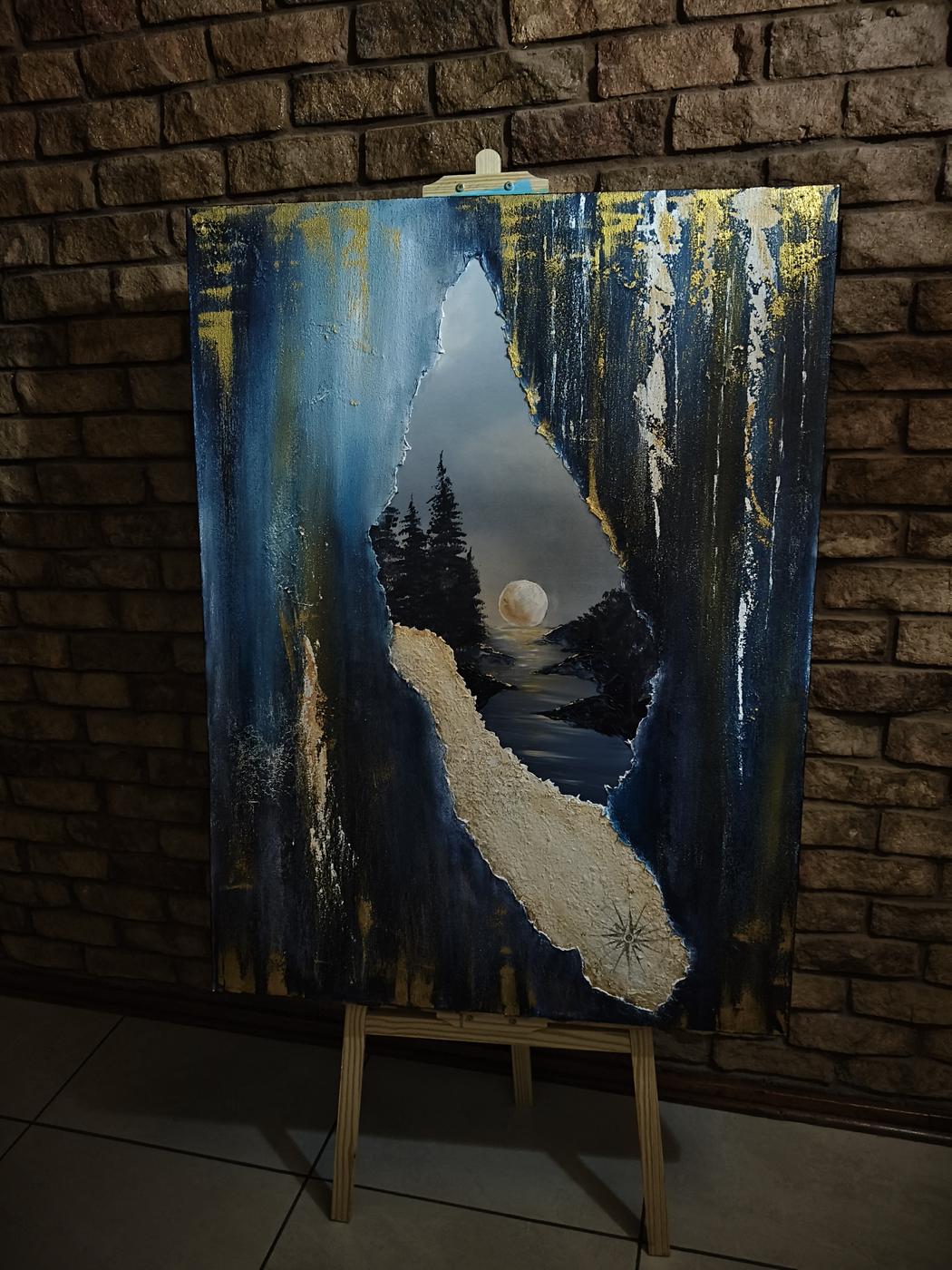
Yes. The Unknown showed me how differently people can read the same image. I saw the compass and river as symbols of uncertainty: having something that should offer direction while still not knowing where you are going. However, some viewers saw the compass as a symbol of hope and the river as a path leading forward. Others saw the river as a barrier that had to be crossed. Those interpretations surprised me because they revealed possibilities I had not consciously planned. They did not replace my original meaning, but they expanded it. I began to see that a painting can hold several truths at once, depending on what the viewer brings to it. That experience made me more comfortable leaving parts of my work unresolved. I do not want to give people an answer; I want to create enough space for them to recognise a question of their own.
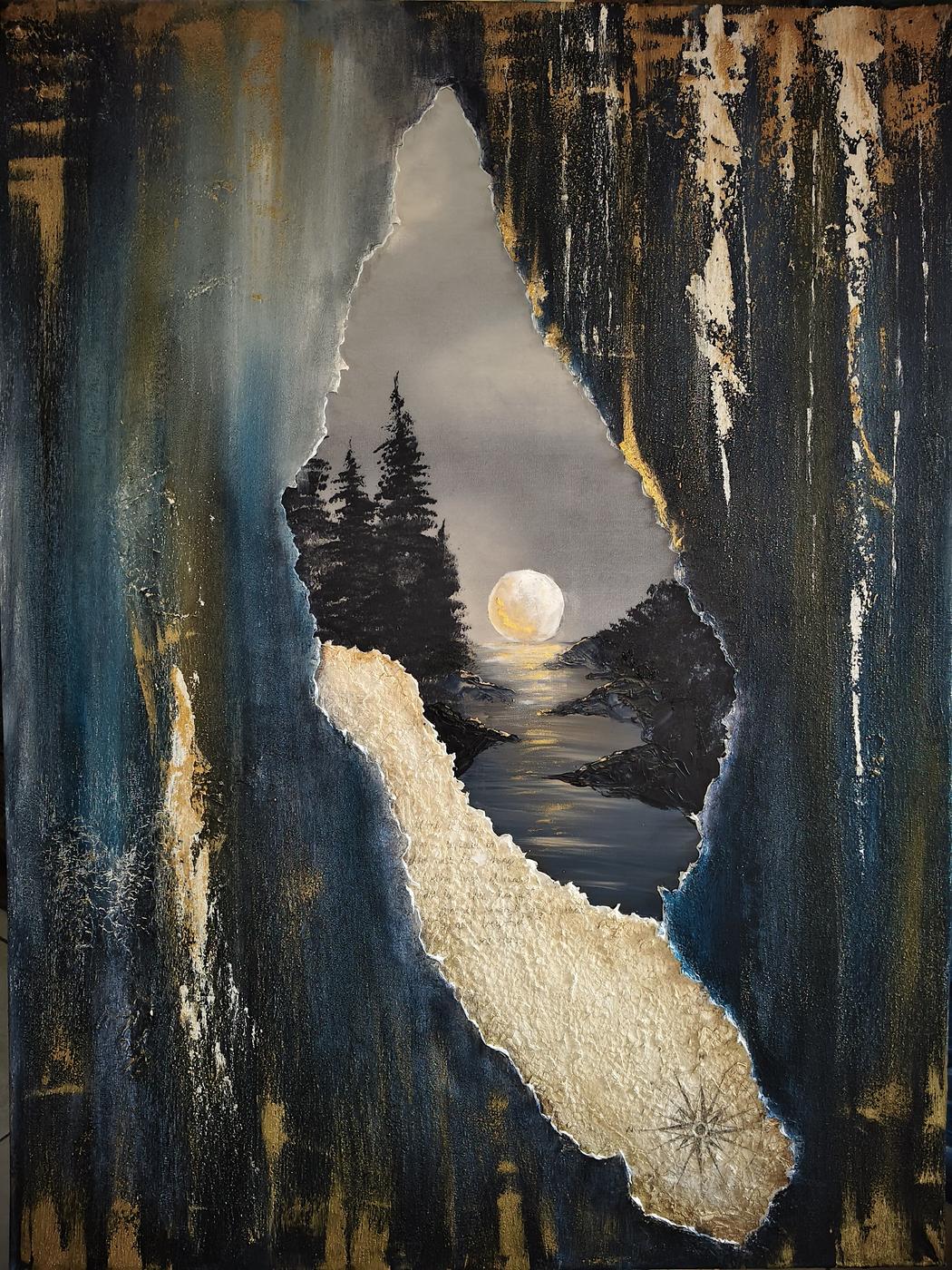
Sita-Marie | Louw The Unknown | 2026
How do you recognise when a painting has achieved the emotional resonance you are looking for—and how do you know when it is finished?
In all honesty, I am still learning how to recognise when a painting is finished. I often begin with a clear idea of what I want to create, but the result does not always match what I imagined. I used to see that as something going wrong, but I have realised that sometimes the painting becomes even better than the original plan.
I know the emotional resonance is there when the work makes me pause and feel something I cannot immediately explain. Finishing is more difficult. At some point, I have to step back and ask whether another mark will strengthen the painting or whether I am only adding to it because I am afraid to stop. I am learning that a painting may be finished when it no longer needs to match the image in my head and can finally exist as something of its own.