
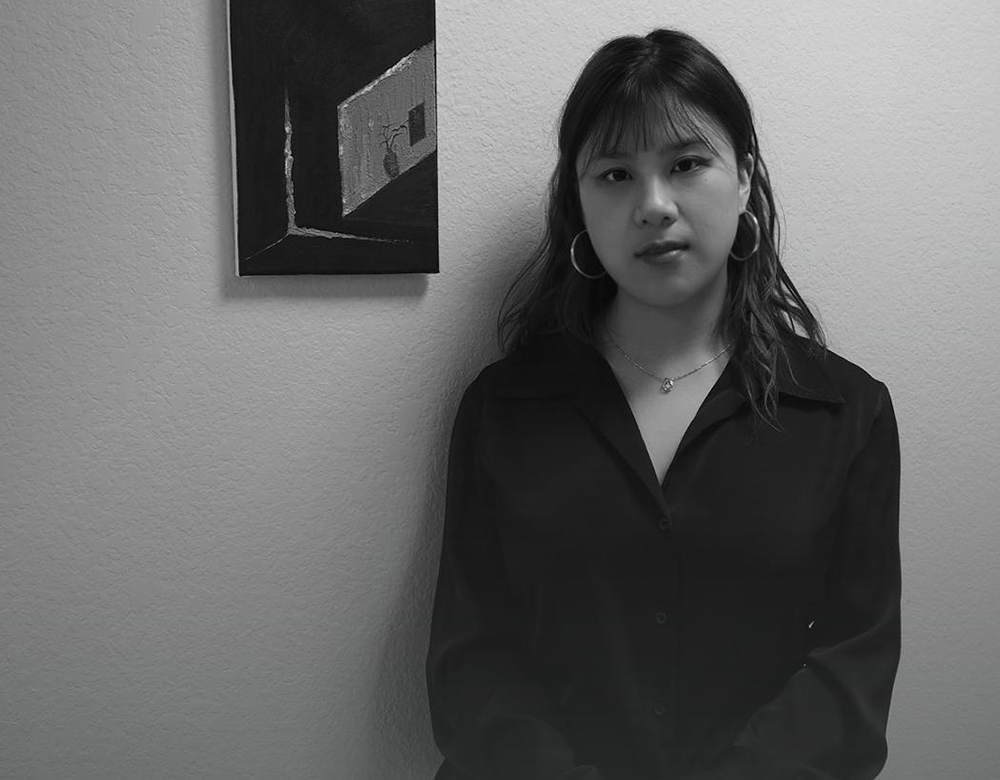
Xinyu Yu
Your practice seems to move between memory, construction, and emotional atmosphere. How would you describe the central question that guides your work?
At the core of my practice is an ongoing inquiry into how human emotions are shaped, preserved, and transformed through constructed environments and cultural memory. My background allows me to approach this question from both artistic and design perspectives. I am not only a fine artist, but also a designer trained in spatial and architectural thinking, which deeply influences the way I construct visual narratives. Rather than creating purely representational images, I build psychological environments where emotion, structure, and atmosphere coexist. My work often investigates the fragile relationship between intimacy and control, permanence and impermanence, asking how contemporary systems shape human perception and emotional experience.
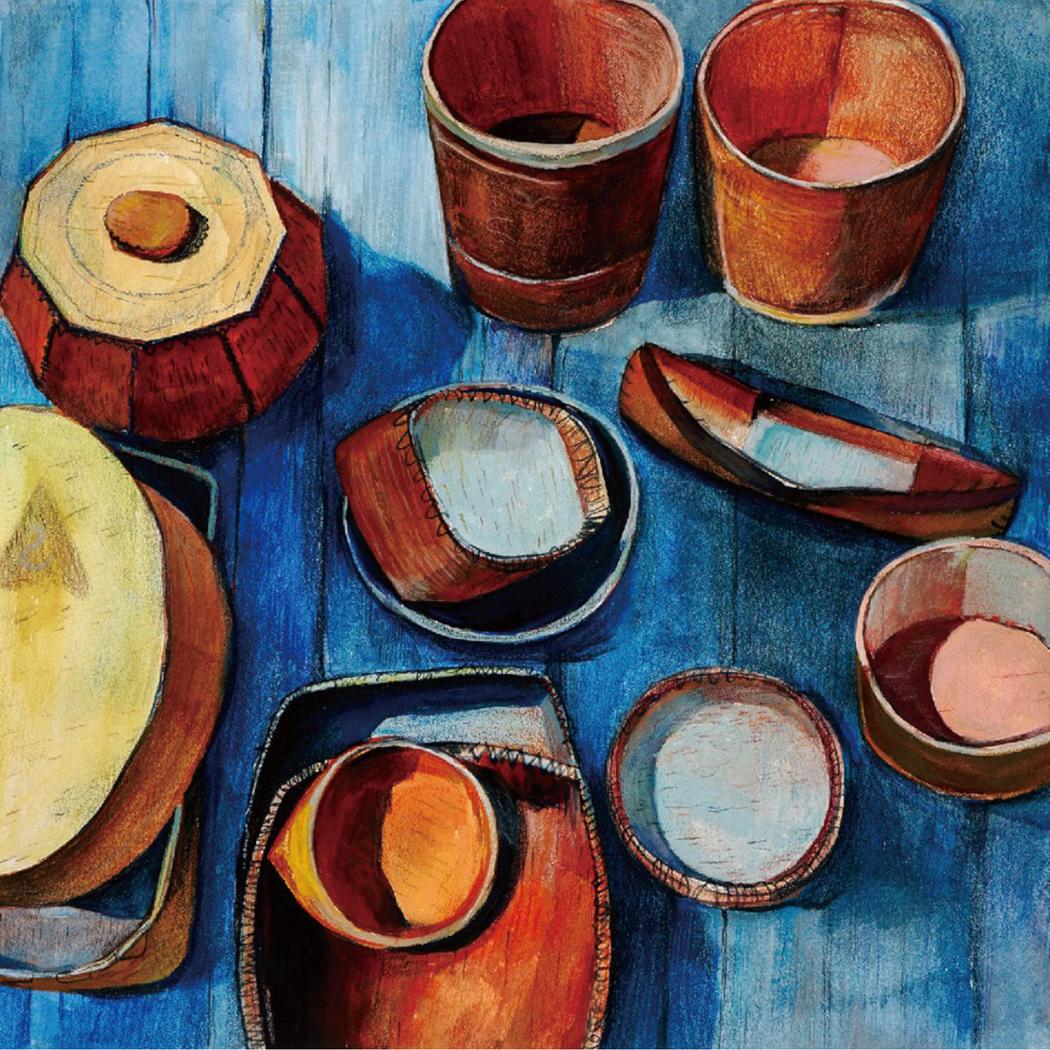 Xinyu Yu | Afternoon
You were trained in ink painting and watercolor in China. How do these early experiences continue to influence your current visual language?
My early training in ink painting and watercolor was not only technical training, but also an immersion into a long cultural lineage rooted in philosophy, rhythm, and perception. Traditional Chinese painting emphasizes the relationship between emptiness and presence, restraint and expression, which continues to shape my visual language today. At the same time, I see these traditions as evolving rather than fixed. My practice explores how cultural inheritance can coexist with experimentation and reinvention. Even in my contemporary works, the fluidity of ink aesthetics, layered transparency, and sensitivity to atmosphere remain central, while being reinterpreted through abstraction, mixed media, and contemporary spatial compositions.
In your work, Eastern artistic sensibilities meet contemporary urban and design-based thinking. How do you balance tradition and reinvention?
I see tradition as an evolving visual language rather than something fixed in the past. My practice does not aim to preserve historical aesthetics unchanged; instead, I reinterpret them through contemporary urban experiences, abstraction, and interdisciplinary experimentation. Reinvention in my work also extends to the exploration of materials and media, particularly through combining traditional techniques with contemporary processes in ways that reflect sustainability and adaptability. By combining the contemplative qualities of Eastern art with the structural and conceptual language of contemporary design, I aim to create works that feel culturally connected while remaining innovative and forward-looking.
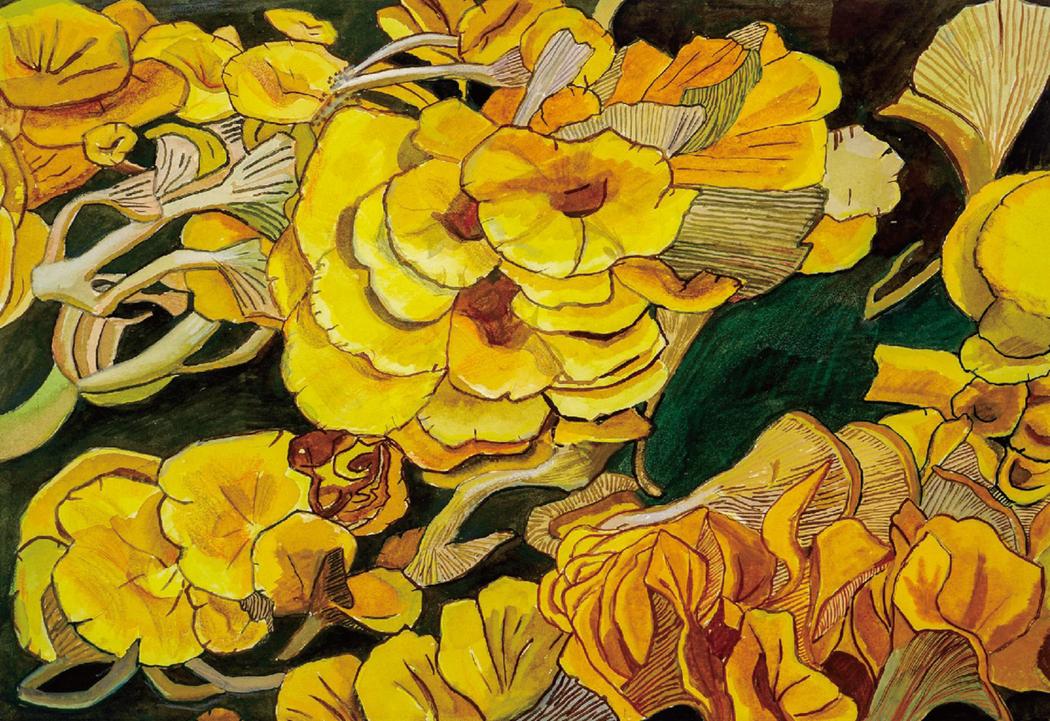 Xinyu Yu | Grain
Your paintings often blur the line between organic forms and structured spaces. What draws you to this tension?
I am fascinated by the contradiction between the organic and the constructed because it mirrors the contemporary human condition. We constantly negotiate between instinct and control, vulnerability and systems of order. In my work, natural forms often appear confined within geometric structures or artificial spaces, reflecting both protection and restriction. This tension allows me to explore how modern environments shape emotional experience and alter our relationship with nature and ourselves.
In Afternoon, ordinary objects such as wooden utensils and bamboo vessels become almost meditative. What interests you about everyday handmade objects?
During my time in Jingdezhen, I was studying traditional pottery and ceramic-making techniques in thr city internationally recognized for its deep ceramic history and craftsmanship. Living within that environment heightened my awareness of how handmade objects carry traces of labor, ritual, and human presence. In Afternoon, the wooden utensils and woven bamboo vessels are not treated simply as still-life objects; they become quiet carriers of memory and time. I am fascinated by the emotional weight embedded within ordinary materials and how craftsmanship can transform functional objects into vessels of cultural continuity and contemplation.
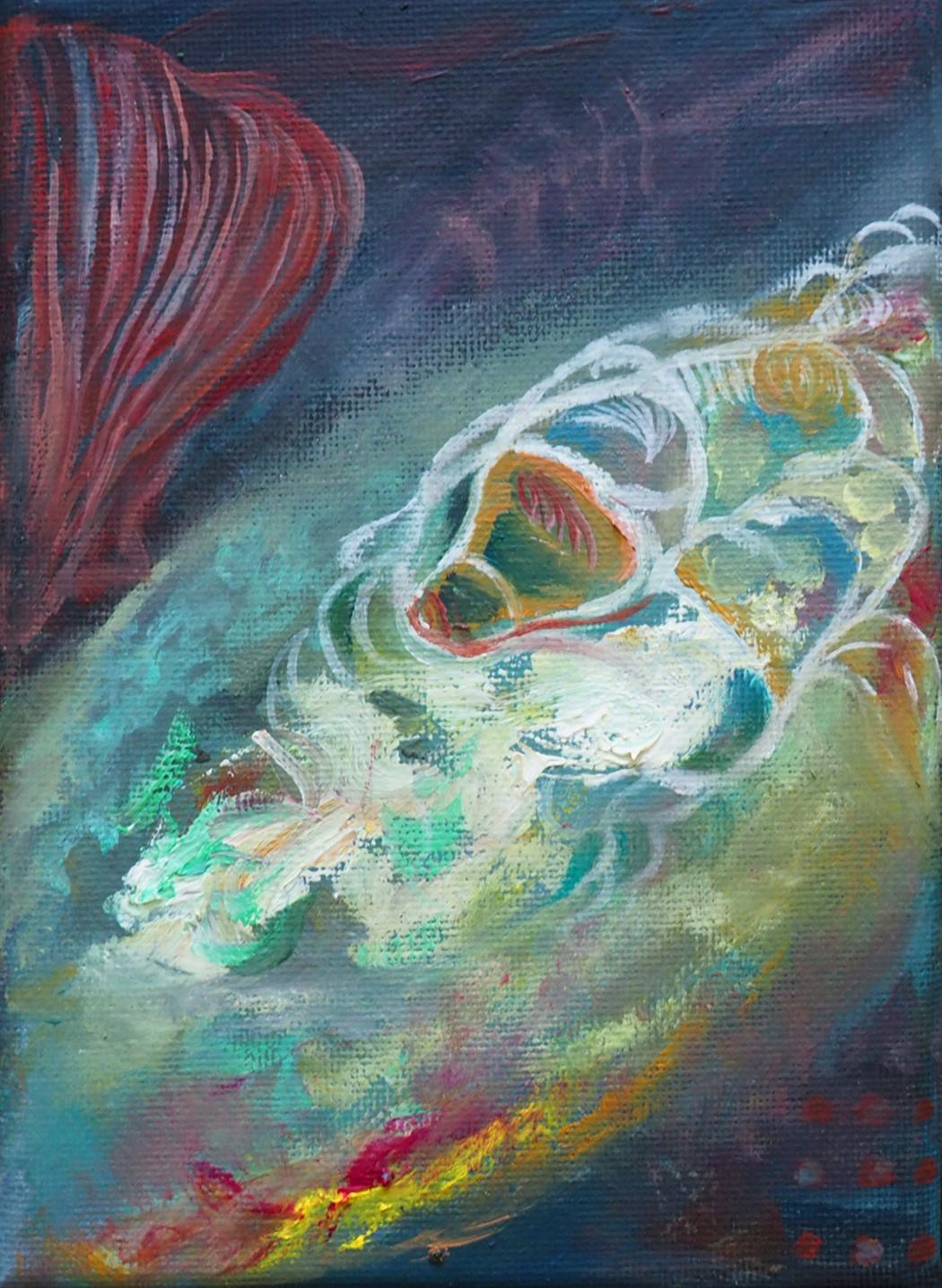 Xinyu Yu | The Shell’S Apocrypha
How has studying at Pratt Institute and the University of Pennsylvania shaped the relationship between art, design, and spatial thinking in your practice?
My academic experiences at Pratt Institute and the University of Pennsylvania profoundly expanded the intellectual and spatial dimensions of my practice. At Pratt, I developed rigorous artistic and visual communication training within one of the leading art and design environments in New York. My graduate studies at the University of Pennsylvania further strengthened my interdisciplinary approach through advanced research in sustainable architecture and spatial systems.
These experiences allowed me to move beyond traditional image-making and approach art as a form of spatial and conceptual construction. The combination of fine art, architecture, and design thinking enables me to create works that operate simultaneously as emotional landscapes, structural compositions, and cultural reflections. This interdisciplinary foundation has become one of the defining strengths of my practice, allowing me to bridge contemporary art, design innovation, and critical spatial thinking in a distinctive way.
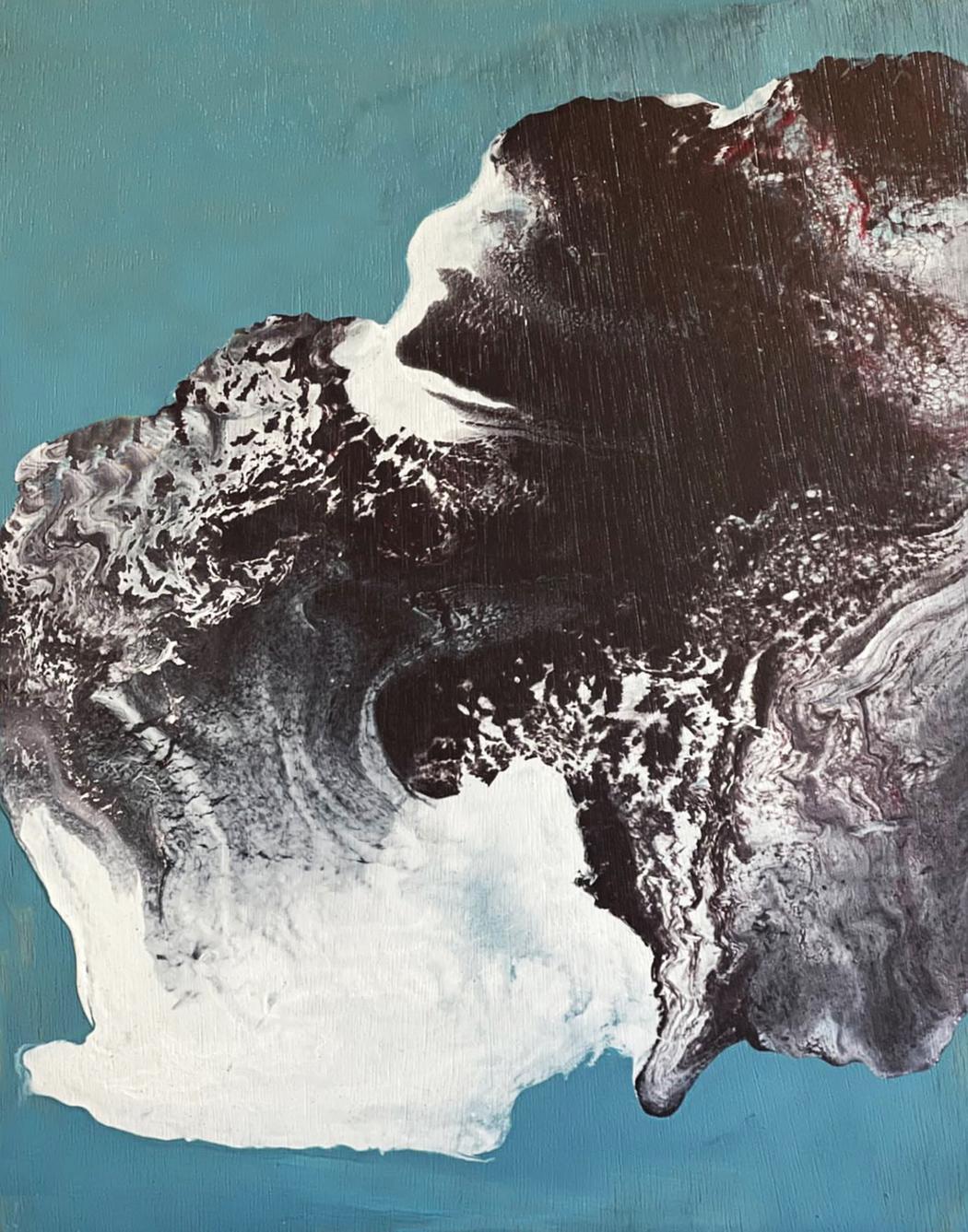 Xinyu Yu | Waveform Relic
Now based in Phoenix, Arizona, do the desert landscape and shifting urban environment influence your color palette, forms, or sense of space?
Absolutely. The desert landscape has profoundly influenced my perception of light, scale, and silence. Phoenix possesses a unique spatial openness that contrasts sharply with the density of the cities where I previously lived. The intense sunlight, muted earth tones, and vast emptiness of the desert have gradually entered my work through more simplified compositions, heightened contrasts, and an increased sensitivity to negative space. At the same time, the rapidly changing urban environment continues to reinforce my interest in impermanence, transition, and the relationship between human construction and the natural world.
Leave a Reply
You must be logged in to post a comment.