
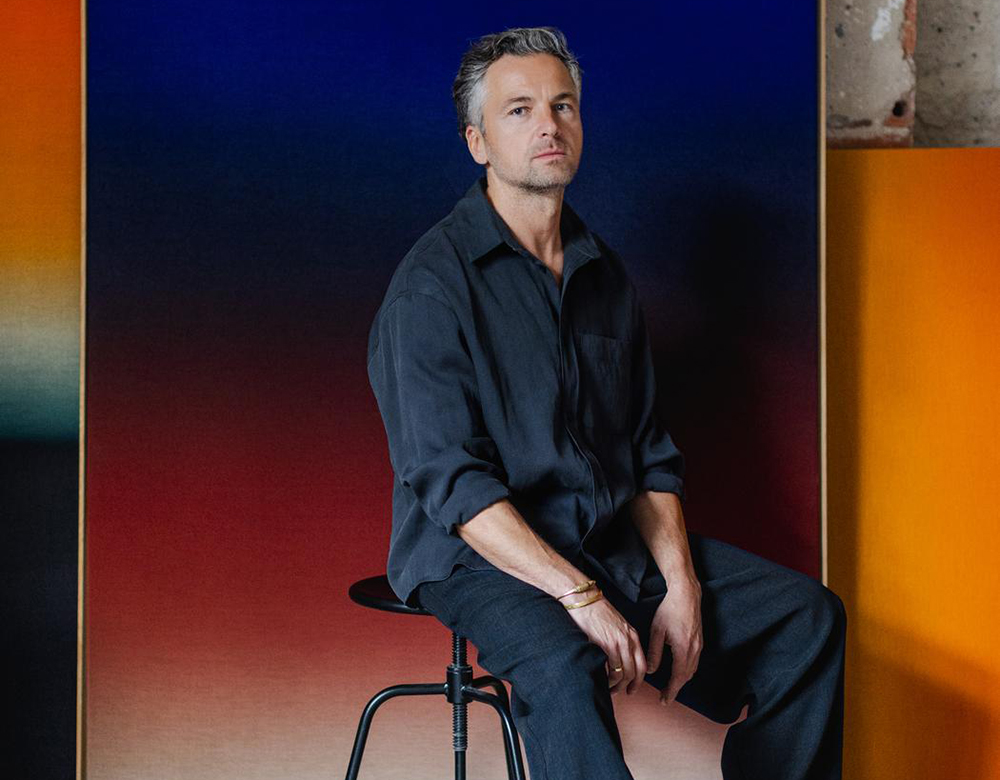
Sebastian Ścigalski
Your paintings are described as spaces of presence rather than representation. What does “presence” mean to you in the context of painting?
For me, presence means a state of being fully here and now, without the need to interpret, name, or analyze what we see. I am interested in the moment when a painting ceases to be an object to be read and instead becomes an experience. I would like the viewer to pause for a moment and simply be with the painting, without feeling the need to search for meanings.

Your compositions often rely on subtle tonal transitions. How do you decide when a transition should remain soft, restrained, or almost imperceptible?
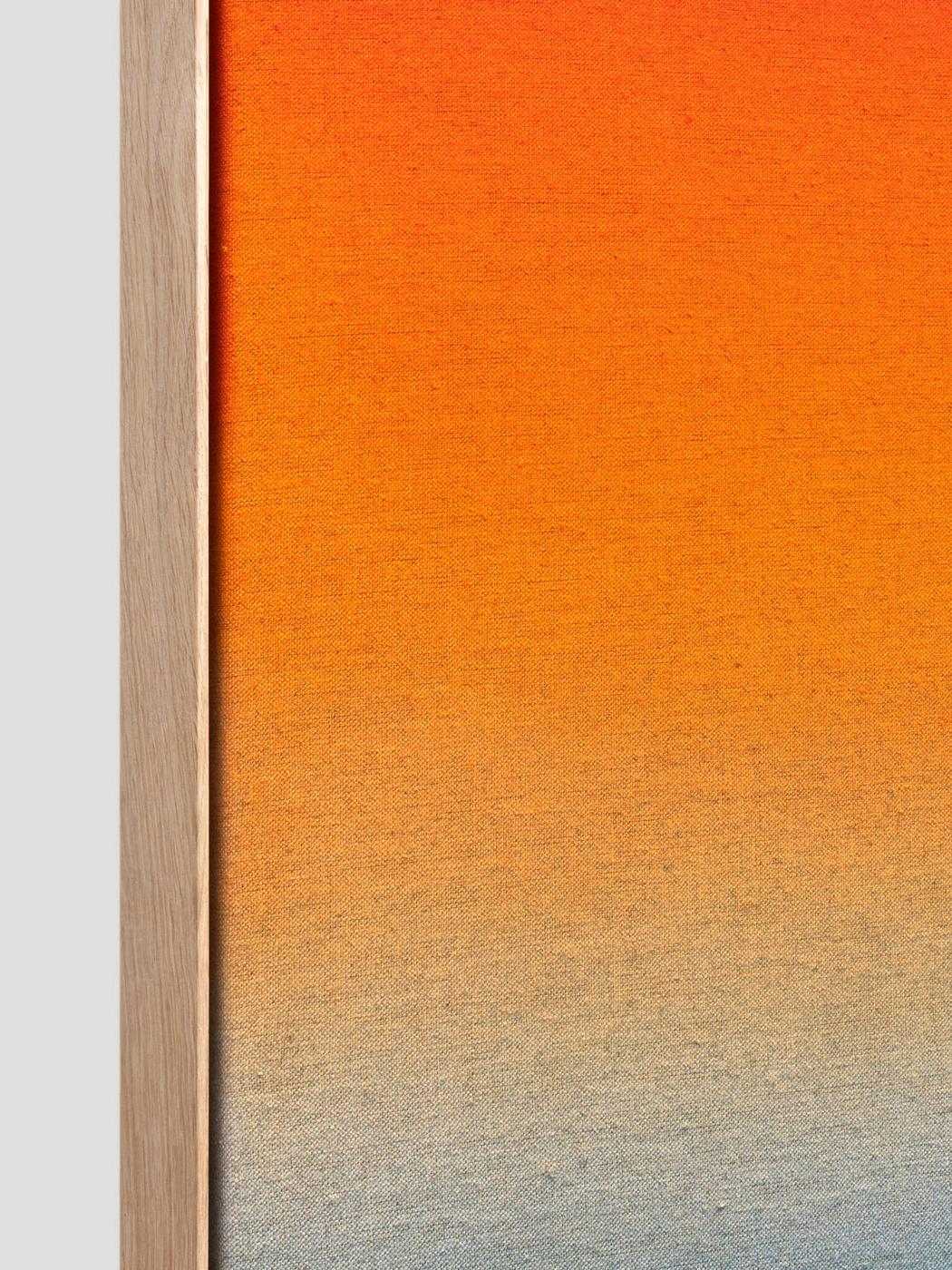
I do not treat tonal transitions as a compositional element in themselves. I am interested in the moment when the boundary between colors begins to dissolve and loses its clear definition. In these areas, the painting becomes less descriptive and more experiential.
During the painting process, I continuously explore different types of transitions—longer or shorter, more fluid or more concentrated. Through these relationships, I build the tension, rhythm, and spatial quality of the work. I do not follow any predetermined rules. Instead, I look for the moment when color, light, and composition begin to resonate with one another in a way that feels internally coherent. When that sense of inner harmony emerges, I know that the painting has reached its final form.
Your works avoid direct narration and symbolism. Why is it important for you to leave a painting open and unresolved?
I believe that a painting does not need to communicate a specific story in order to be meaningful. When we impose a fixed interpretation, we limit the possibility of a personal encounter with the work. I prefer to create a space in which each viewer can discover something of their own, or simply remain with what cannot be fully named or explained.
For me, painting is not a vehicle for delivering messages but a way of opening up a certain kind of experience. Ambiguity plays an important role in this process because it leaves room for contemplation, perception, and individual reflection. I am interested in works that continue to reveal themselves over time rather than offering immediate answers. In that sense, leaving a painting open and unresolved is not an absence of meaning, but an invitation to engage with it more deeply.
Many of your paintings evoke landscapes, horizons, or atmospheric states without depicting them literally. Do you see this connection yourself?
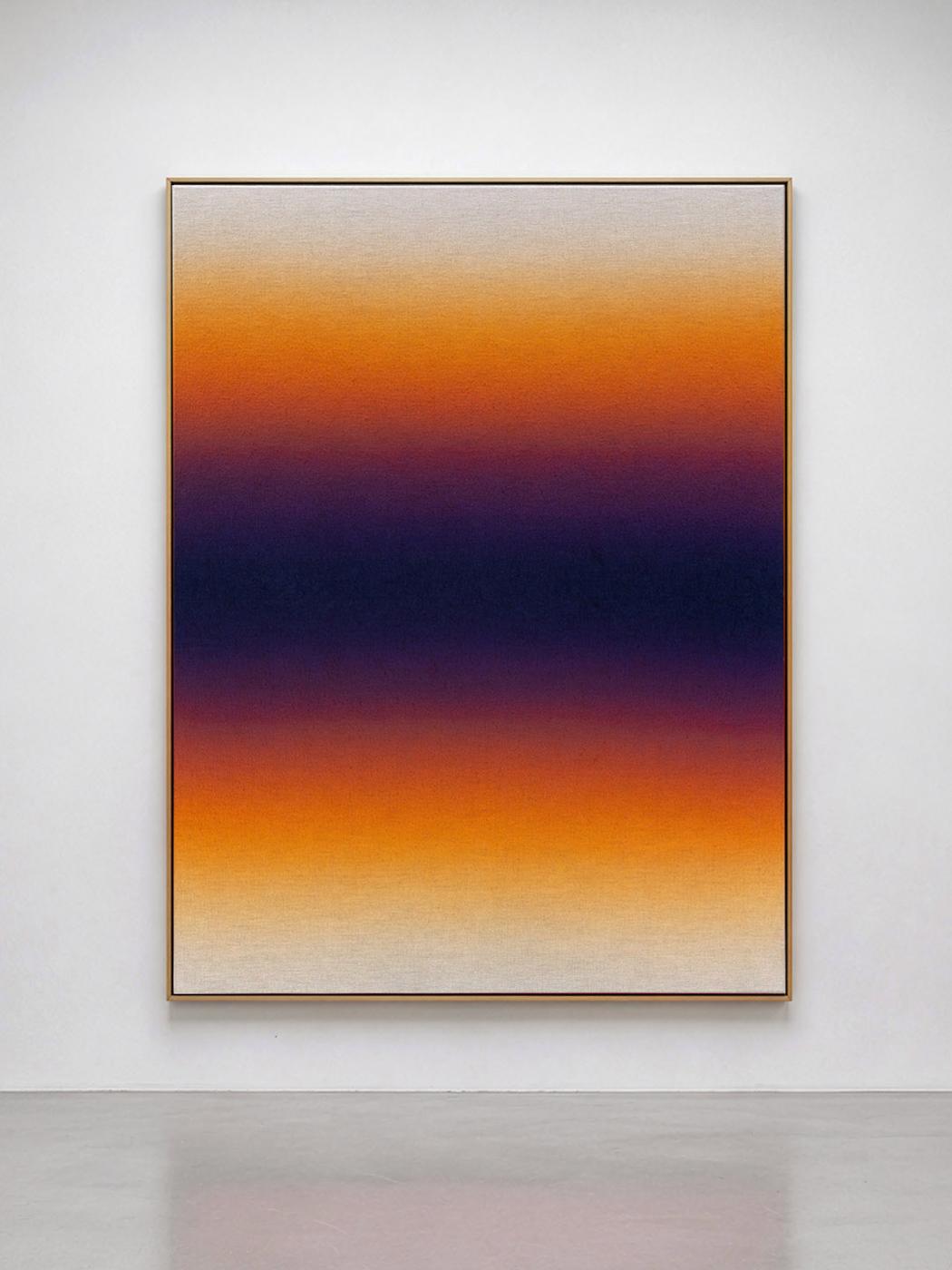
Yes, although it is not the starting point of my work. I think it stems from our natural way of perceiving the world. Viewers often recognize horizons, space, or light in my paintings because these elements are deeply rooted in our experience. I am not trying to depict a landscape, but I am interested in creating a similar sense of space, openness, and immersion.
How do you approach color emotionally and intuitively? Do specific colors carry particular states or memories for you?
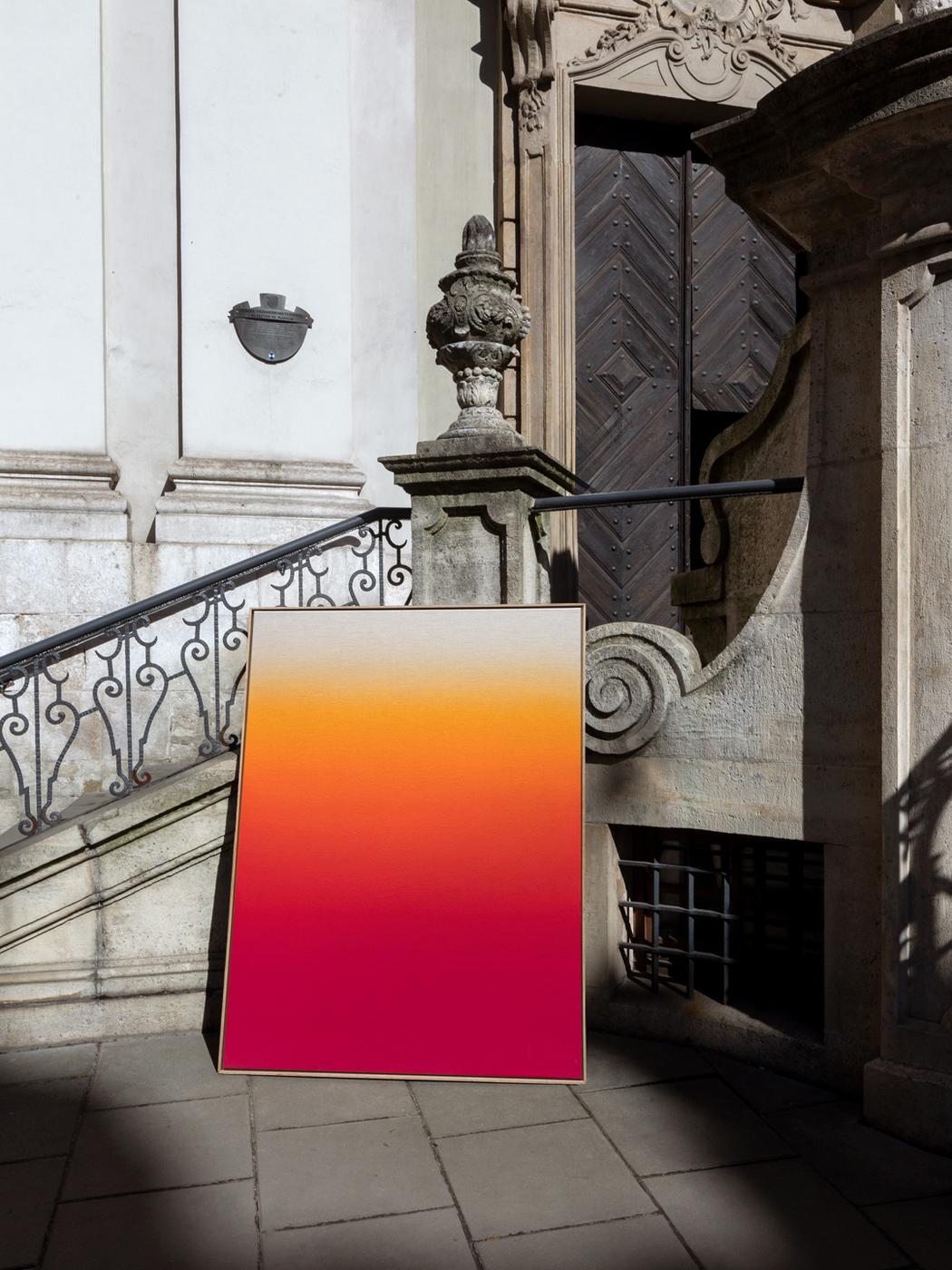
Color is, above all, a carrier of atmosphere for me. I do not assign fixed meanings to specific colors, but I do sense their emotional temperature and energy. My color choices emerge intuitively during the painting process and are often shaped by the relationships between colors rather than by any single color on its own.
This process is based on experimentation. I combine different colors, observe how they interact, and explore the tensions, harmonies, and emotions that emerge between them. I am interested in the moment when a particular combination of colors begins to resonate with me in a way that is difficult to explain rationally. These discoveries often become the starting point for further development of the painting. Ultimately, what interests me most is how color influences our perception of space, time, and presence.