
Lora Arbrador
You discovered egg tempera at the age of nineteen and have remained deeply connected to this medium ever since. What first captivated you about egg tempera, and why does it still feel like the right language for your work?
One of the first art courses I took at the University of California at Berkeley was “Materials & Techniques.” One day, the instructor handed us a paper with instructions for making egg tempera paint.
I had never heard of egg tempera but obediently bought an assortment of pigments, a sheet of plywood, the materials to make the traditional gesso priming, and, of course, eggs. I could not get the paint to work well, but was captivated as each brushstroke was magically absorbed into the ivory-like gesso ground.
Maybe it’s like baking bread from scratch. Sure, you can buy bread at the store, and you can buy paint in tubes, but I love the intimacy of knowing my ingredients. I even have nicknames for some of my pigments, such as “quin mag” and “tit white.” Egg tempera is a difficult medium, not just because you need to add egg yolk to the paint, but because corrections are cumbersome, plus you need to wipe your brush on a rag before every stroke to control the moisture. There is gravitas and a sense of connection to an ancient craft, but mostly it’s the result: a satiny velvet, slightly waxy surface with a bit of glowing light beaming up from the white gesso ground. That’s what keeps me enthralled with the technique.
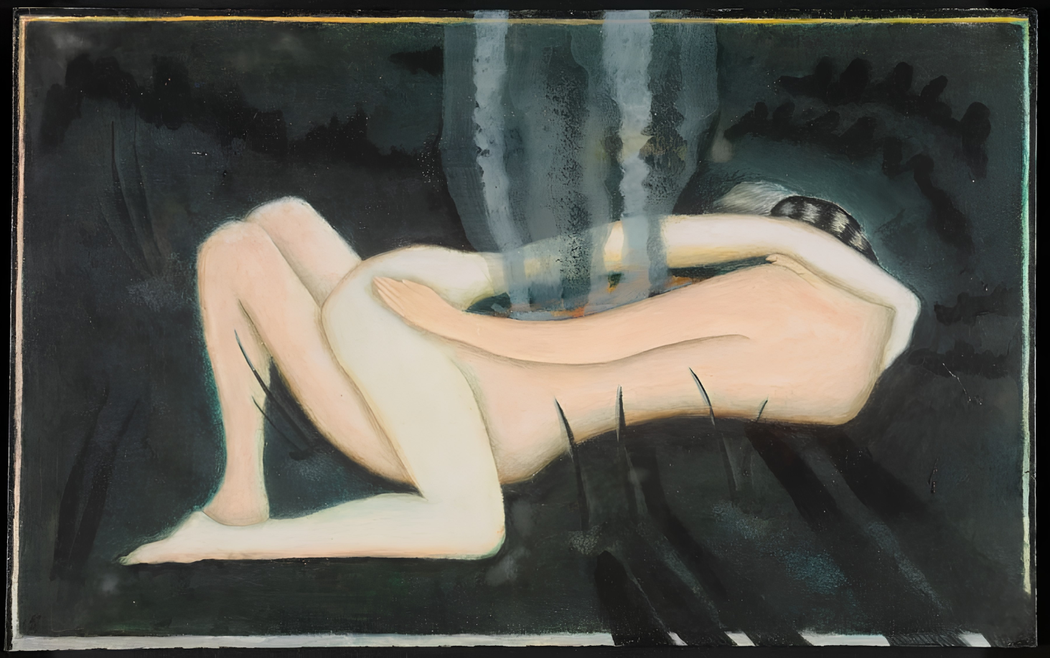 Lora Arbrador | Dying Of Love
Your paintings often balance luminosity and discomfort, tenderness and mortality. How do you approach this emotional tension when developing an image?
I try to transmute difficult or unfiltered subject matter into something challenging or devotional.
The ideas sometimes come ready-formed—musicians call this a “download” from their creative brain—but then I elaborate as the painting starts talking to me and telling me where it needs to go.
I make a lot of preparatory drawings, but the magic occurs in the act of painting. Michelangelo expressed that the image was already in the block of marble, he just needed to reveal it as he carved. I am in dialogue with the painting. Sometimes it fights me, or I struggle to hear what it’s saying. Then I go for trial and error, and the errors are painful. Still, there are moments of exhilaration that carry me through the struggle.
The luminosity often comes from the egg tempera technique itself, but if the egg medium is not added in the correct proportion, it can look dull and overly matte. I must add enough egg yolk to bind the pigment to the gesso ground, but not so much that the paint surface looks greasy. A technique I am currently using is to lightly polish each layer with extra-fine cheesecloth, which starts building a sheen that will become more pronounced once the surface has cured (polymerized) and I polish the painting with a silk cloth.
Your experience as a registered nurse has clearly shaped your artistic vision. How has working closely with the human body changed the way you understand beauty, vulnerability, and intimacy?
I veer away from conventional standards of beauty, which can look trite, worn, or just boring. Rather, I try to capture a mood or expression based more on what the person is thinking or feeling. This is extremely challenging because, in addition to shunning typical beauty, I try to avoid caricature or the grotesque. At times, I default to pretty or classical features because, after all, I do want to create a beautiful painting, and an alluring figure or face can be a shortcut to that.
One aspect of vulnerability, as it relates to the human body, is the fragility of life. My paintings that depict death or medical themes highlight or penetrate imperfections and interventions, such as surgery, that can be seen as violent or invasive. I try to put a human face on them. For example, by depicting lovers, one of whom happens to have a colostomy. Or a surgeon wielding a power saw to open the patient’s chest but for the purpose of repairing the coronary arteries not inflicting harm.
I view intimacy in terms of nursing as the honor bestowed on me to witness private actions or areas of a person’s body, such as defecation, which I cannot say is pleasant but still can be transmuted into something visually interesting, even though it may be shocking or offensive.
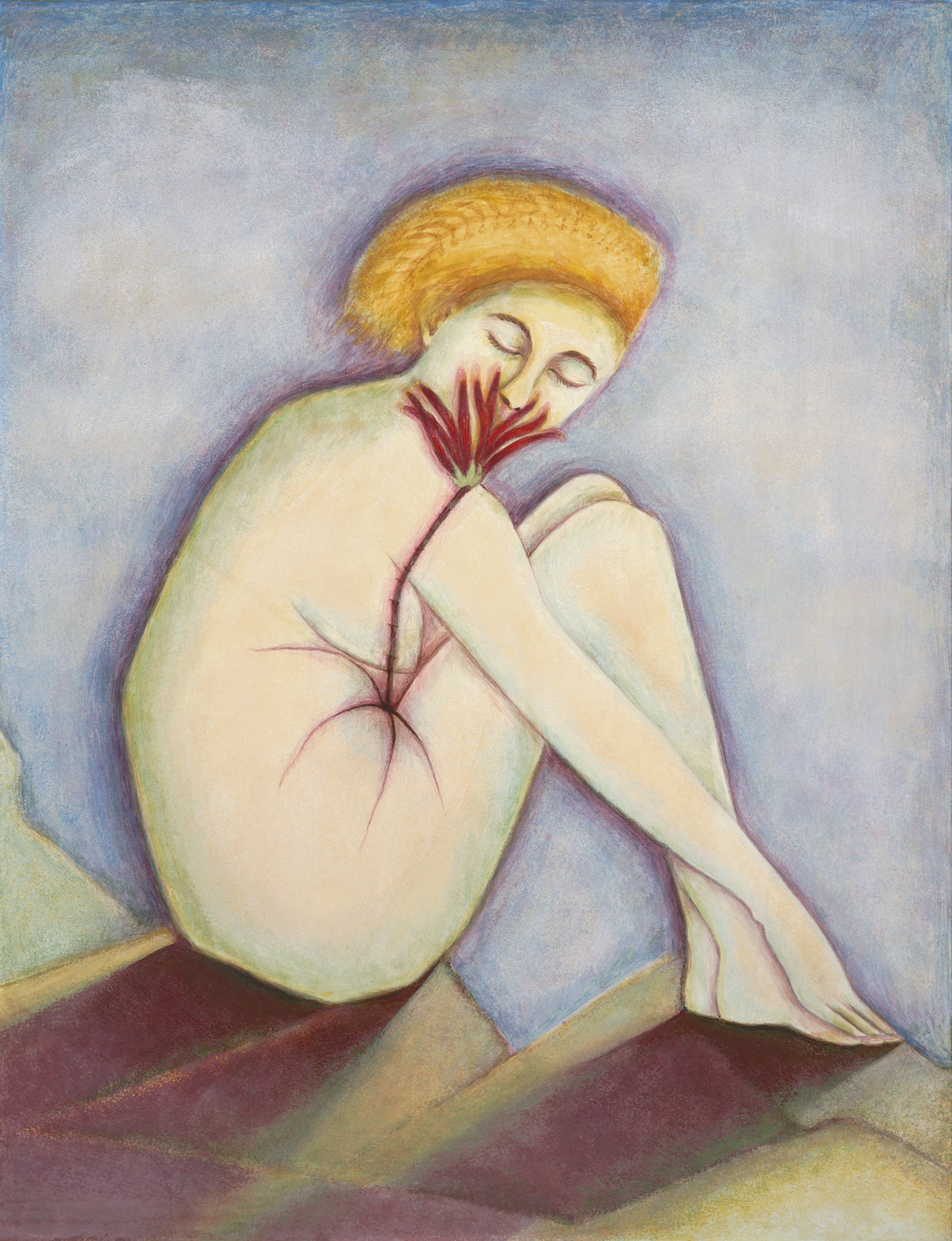 Lora Arbrador | Fertile Flesh
In your statement, you mention the body’s “inner landscape” – fluids, secretions, menstruation, lactation. Why is it important for you to bring these often-hidden aspects of the body into painting?
I don’t pre-think most of my art. Images come to me, and I can either pass on them or capture them with pencil or paint. They are often based on my personal experience, such as menstruation or lactation. I have to make the choice of either graphically portraying them and risk being “cast out of the village” or suppressing them in favor of something more acceptable, such as a still life or conventional landscape. I love traditional art but feel my path is to honor a strong artistic impulse, especially if I can transform it into something beautiful or interesting.
Several of your works seem to transform the body into something symbolic, almost ritualistic. How do you decide when a figure should remain human and when it should become more dreamlike or mythic?
I think those types of images are created when I am sketching or painting free form without knowing where I’m headed. For example, I’m sketching a woman and all of a sudden she has four breasts instead of two! So it’s not a decision; it just rolls off my pencil or brush. The decision comes in deciding whether to share it publicly, which depends not only on the topic but also on whether I think it has artistic merit or interest.
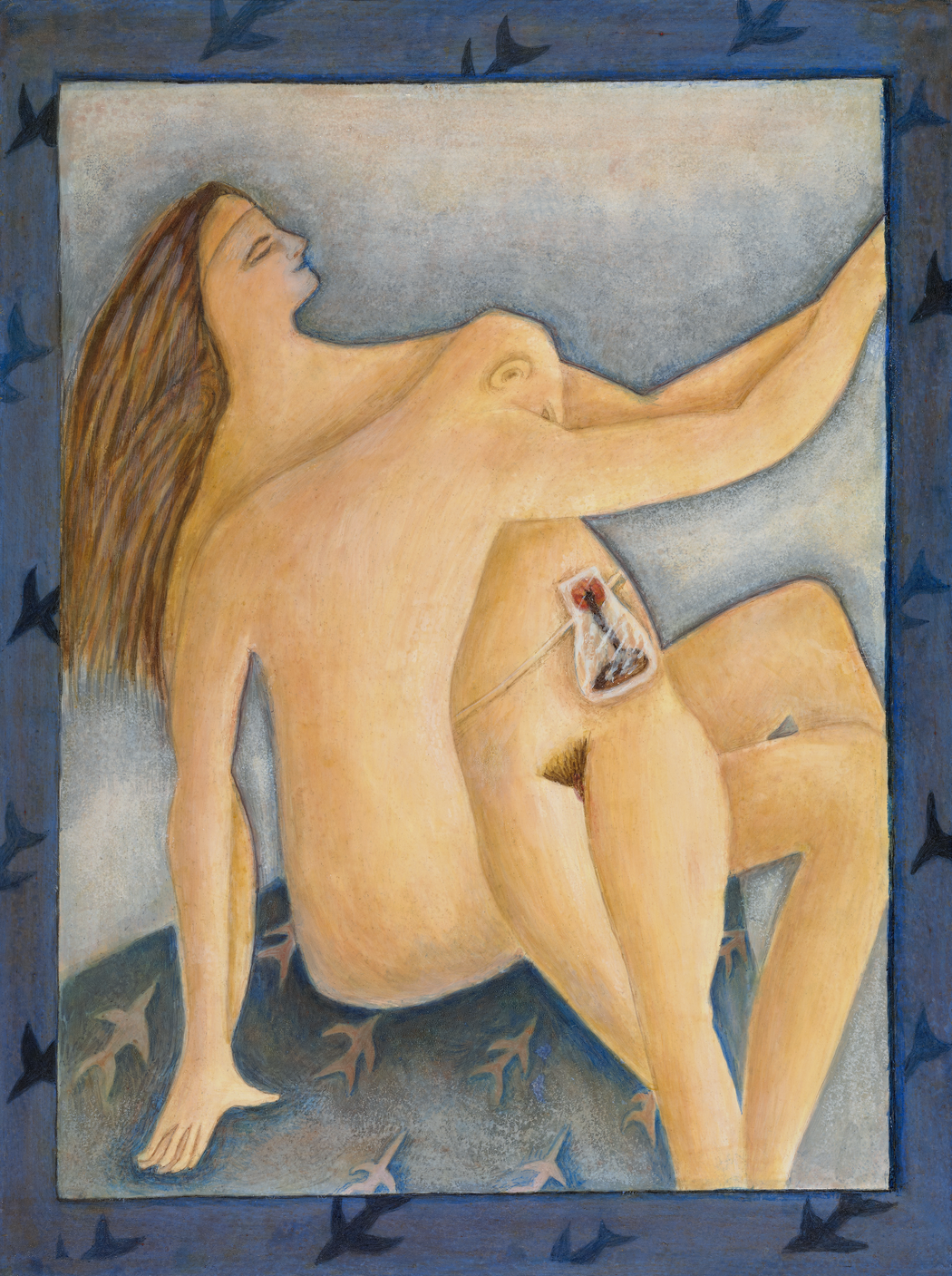 Lora Arbrador | Lovers With Colostomy
You have said that you try to move away from conventional standards of beauty while avoiding caricature or the grotesque. How do you find the balance between confrontation and empathy?
While I do confront if that is what my artistic intuition requires, I try to soften it with a gentle choice of color or lyrical use of line. I think that helps the viewer to not turn away from the image even though the content may be challenging.
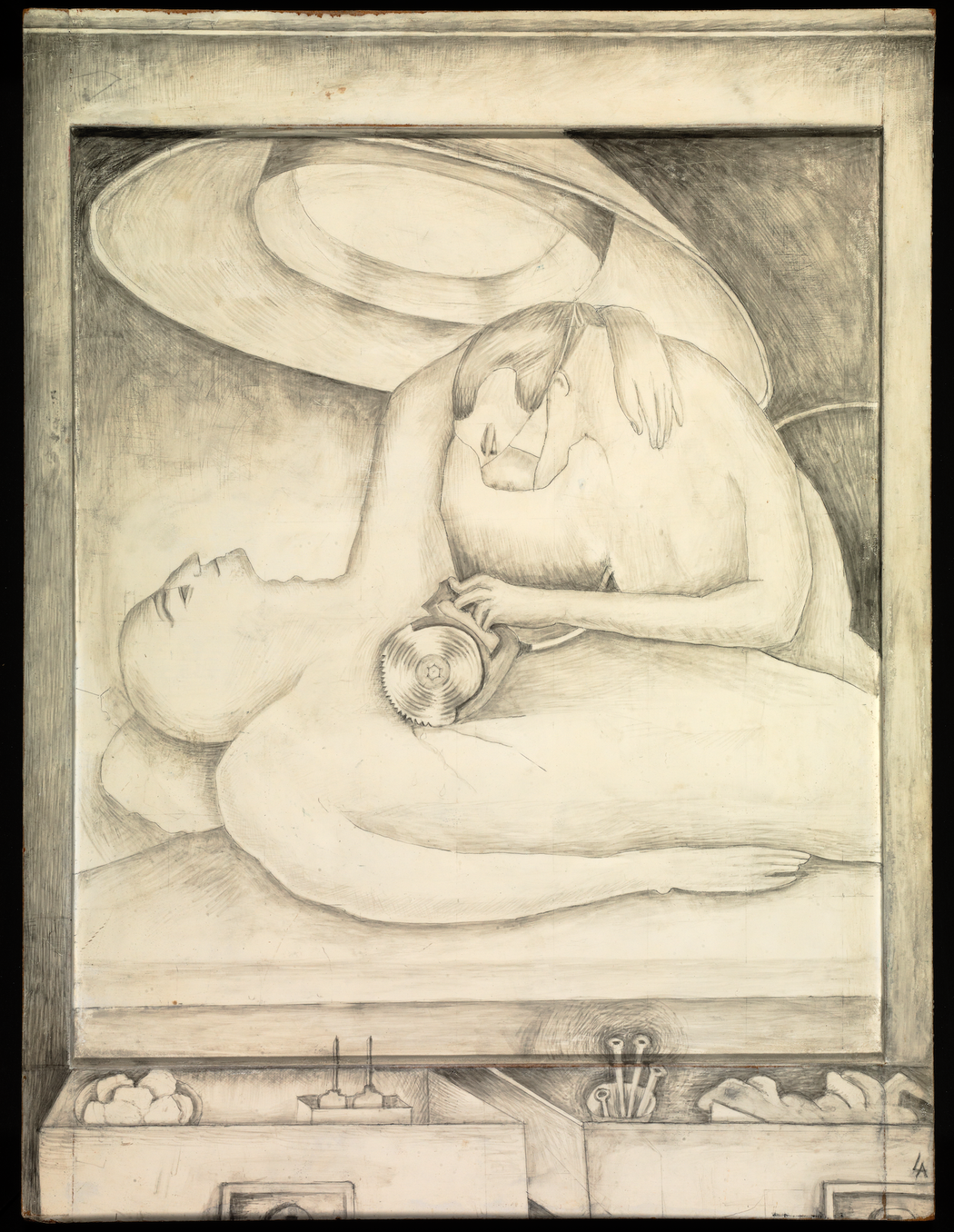 Lora Arbrador | Scene From Surgery
Your work often seems to invite the viewer into narratives that are intimate, unsettling, and not immediately explained. How important is ambiguity in your paintings?
I try to make my paintings work on many levels. Visually, I strive for color harmony or disharmony (unsettled). Because the ideas are “not immediately explained” is one reason I wrote my book Art & Love: My Life Illuminated in Egg Tempera. Although I believe the work should speak for itself, I’ve found that sharing more of the narrative in written form deepens the viewer’s interaction with the painting.