
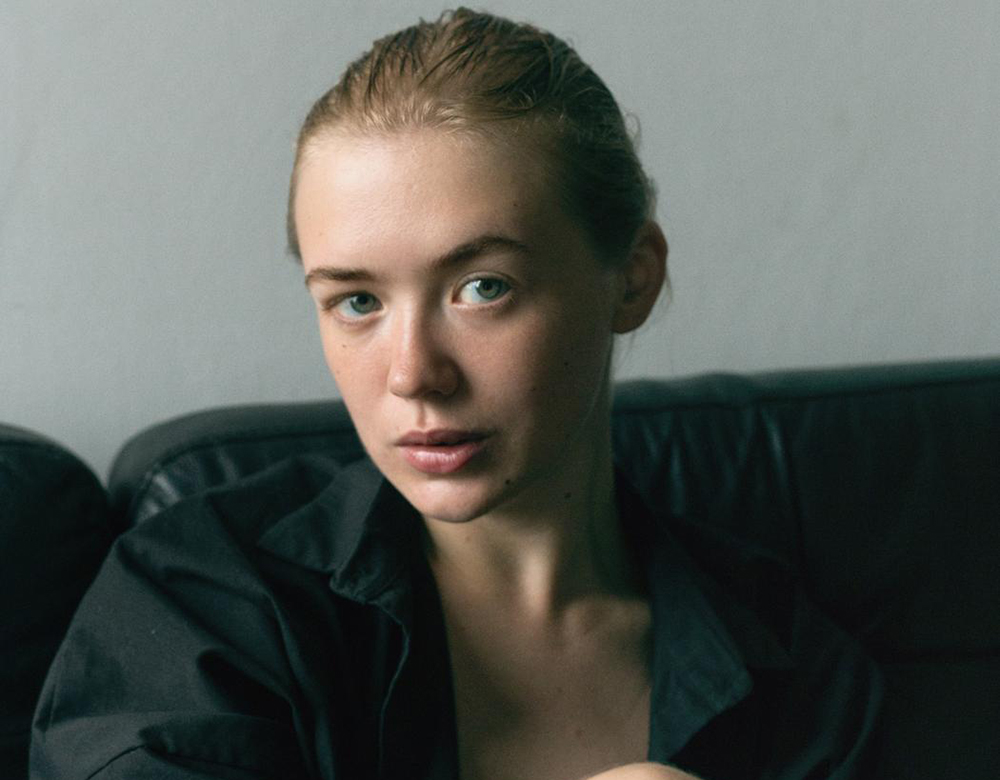
Anastasia Russkova
Your work often focuses on the emotional imprint of lived experience. How do personal memories or observations usually transform into a visual image for you?
Primarily through associations. Before almost every work I build chains of associations, searching for the most precise image that carries a specific emotional state — something that distills the experience rather than illustrates it. It can be a colour, an object, an environment — whatever holds the feeling most accurately.
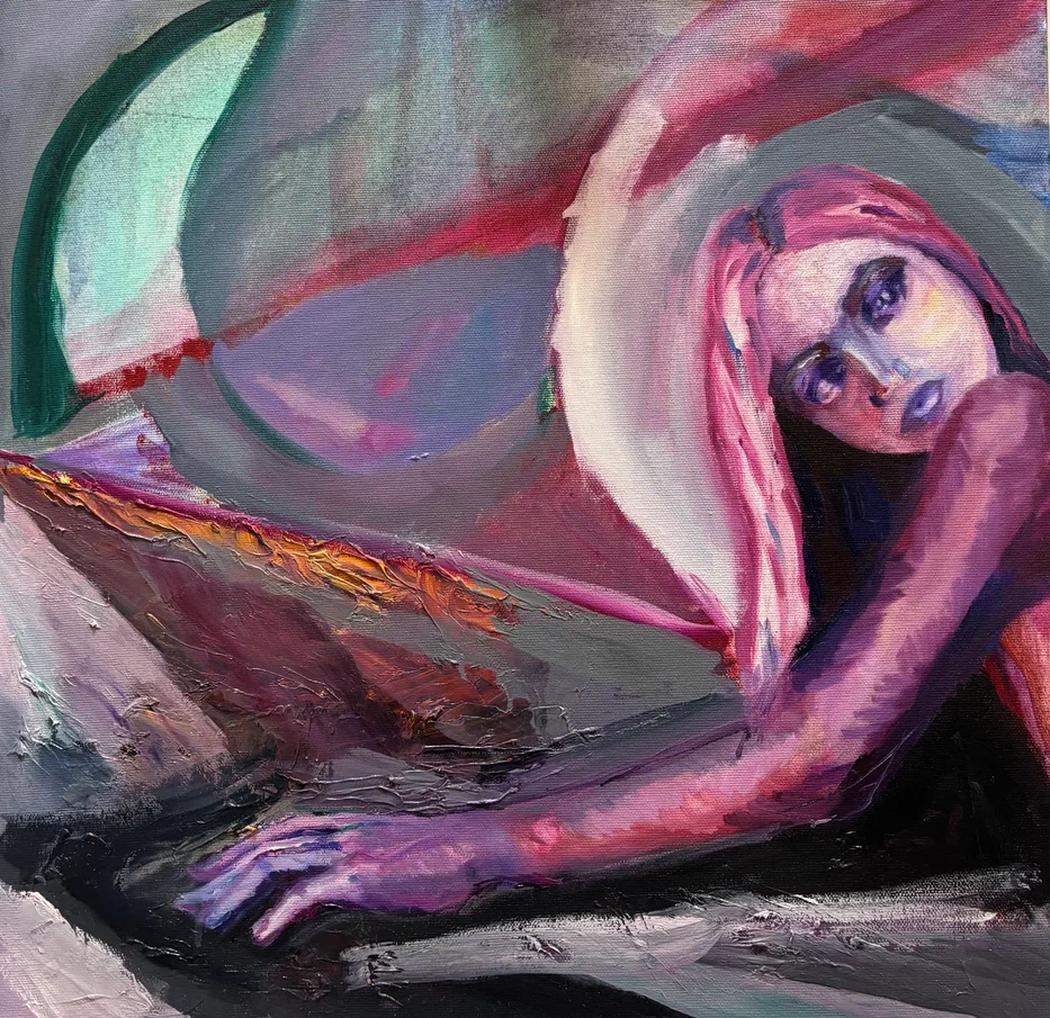 Anastasia Russkova | Awakening
Many of your paintings depict women in intimate, vulnerable, or psychologically charged moments. What draws you to this kind of female imagery?
Vulnerability in women is too often read as weakness. I see it as the opposite — as a vast emotional range that encompasses not only pain but deeply positive experiences as well. At the same time, we still navigate a position of constant defence, continuously pushing back against labels imposed from the outside. That tension is what I find most honest to paint.
In your artist statement, you speak about the pressure placed on modern women — appearance, relationships, success, reproductive expectations, and social status. Which of these pressures feels most urgent for you to explore through painting?
I can’t isolate a single theme, because the problem is precisely the volume — the sheer accumulation of demands placed on women simultaneously. In my work I deliberately move away from depicting that pressure and instead paint life without it. These moments exist: moments when we belong entirely to ourselves, free from external judgement. My intention is to make that feeling of ease visible — and through visibility, to make it easier to carry into everyday life.
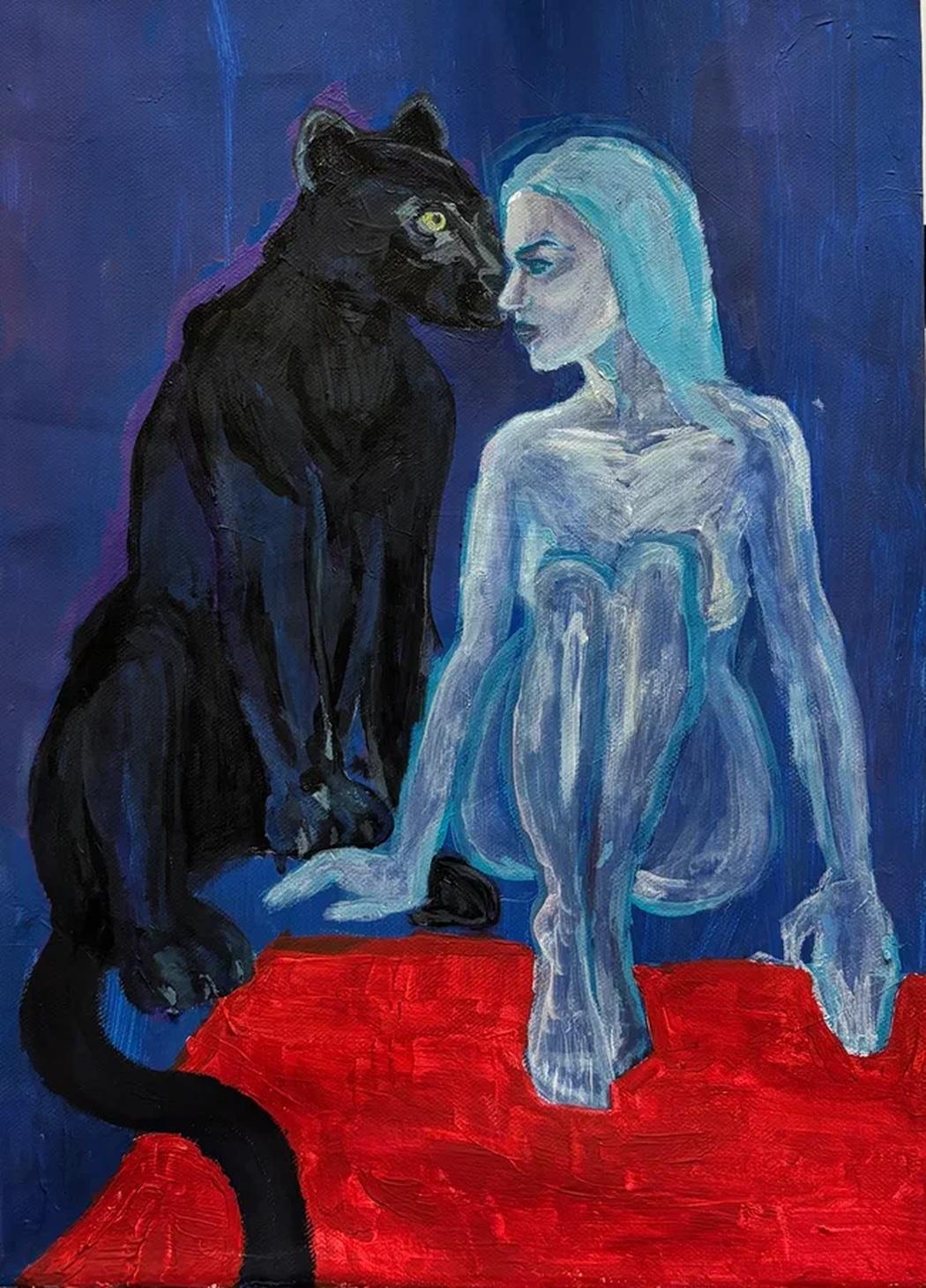 Anastasia Russkova | With A Panther
Your female figures often seem both exposed and powerful at the same time. How important is this tension between vulnerability and strength in your work?
This duality is foundational to everything I make. I believe it exists in all of us — but circumstances have trained us to read it only as weakness. My work is an attempt to reframe that: to show vulnerability and strength not as opposites, but as the same thing.
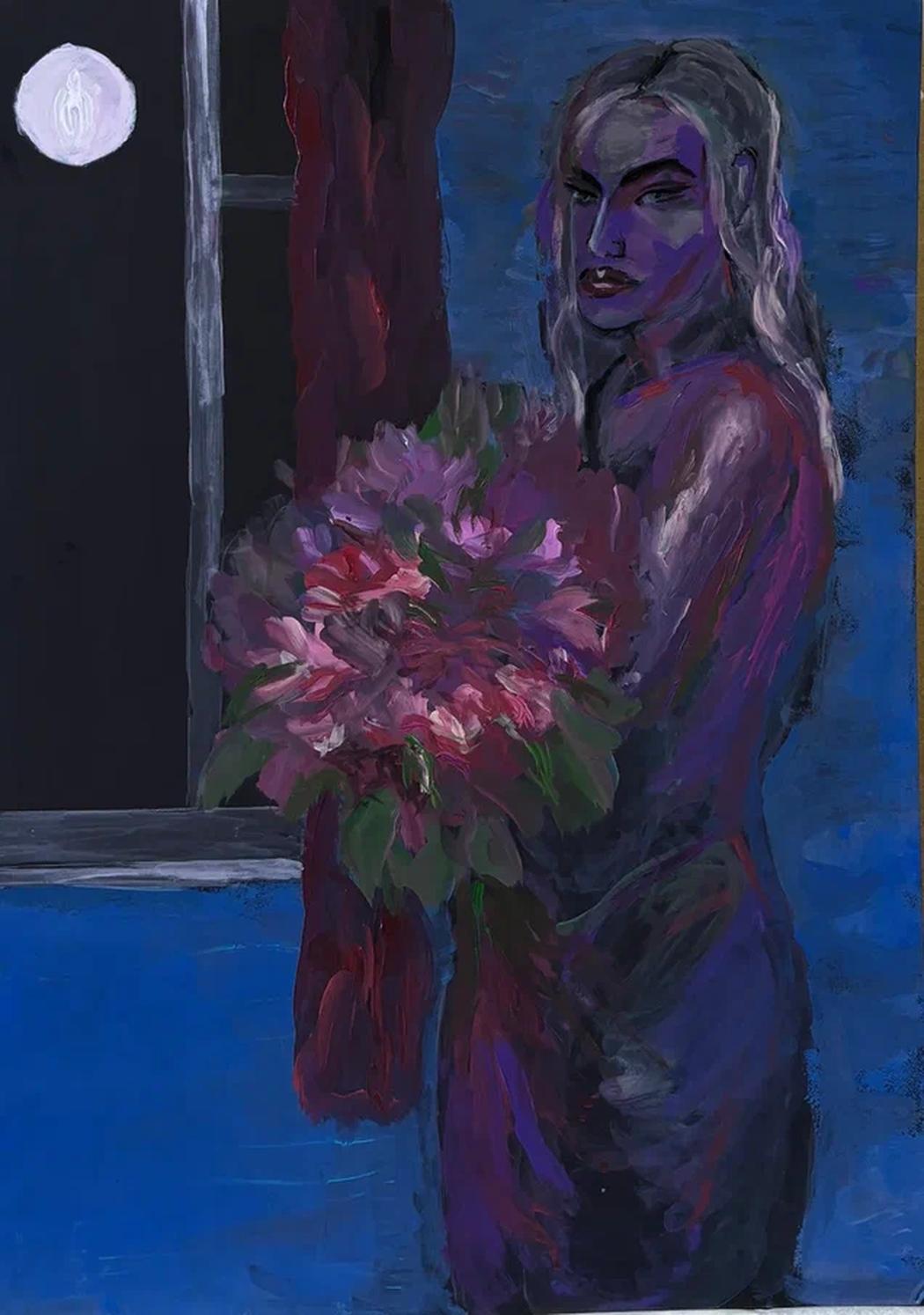 Anastasia Russkova | In The Night
How do you approach the theme of the gaze — both the viewer’s gaze and the way your characters seem to look back?
My figures are looking for the same thing the viewer is — recognition, a sense of being understood. Their gaze moves in different directions: sometimes outward into the world, sometimes inward. But it is always a search. I think of it as a conversation between the figure and the viewer, conducted through looking rather than speaking.
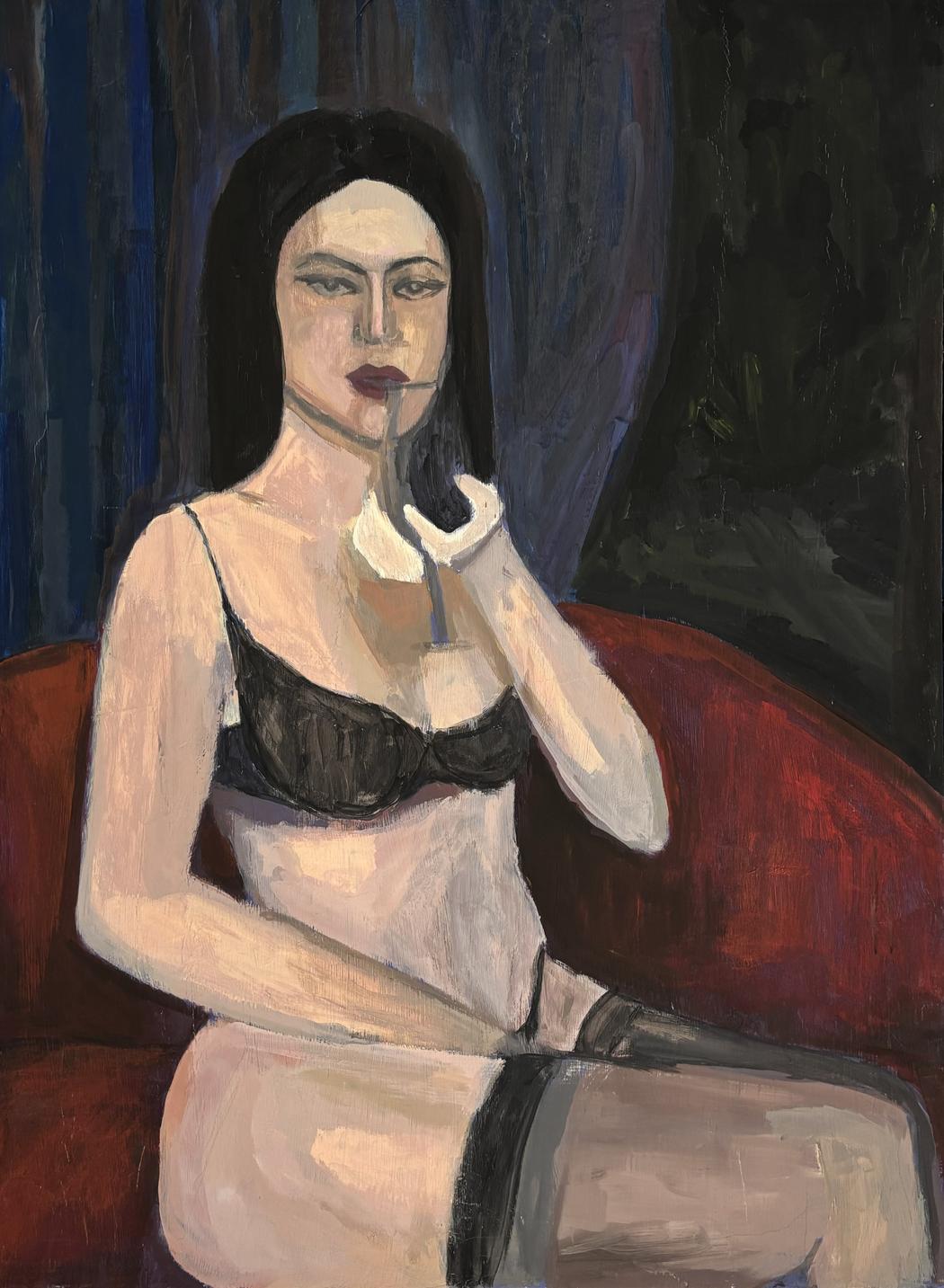 Anastasia Russkova | Lolita
How do you balance personal experience with broader social commentary in your paintings?
Through conversation. I talk with a great many people, and we often discuss the social pressures that affect us — and how they intersect with our inner lives. At a certain point those conversations made something clear to me: these experiences are not mine alone. The problems I carry are shared by an enormous number of women living in entirely different circumstances. That realisation is what moved my work from the personal toward the collective.
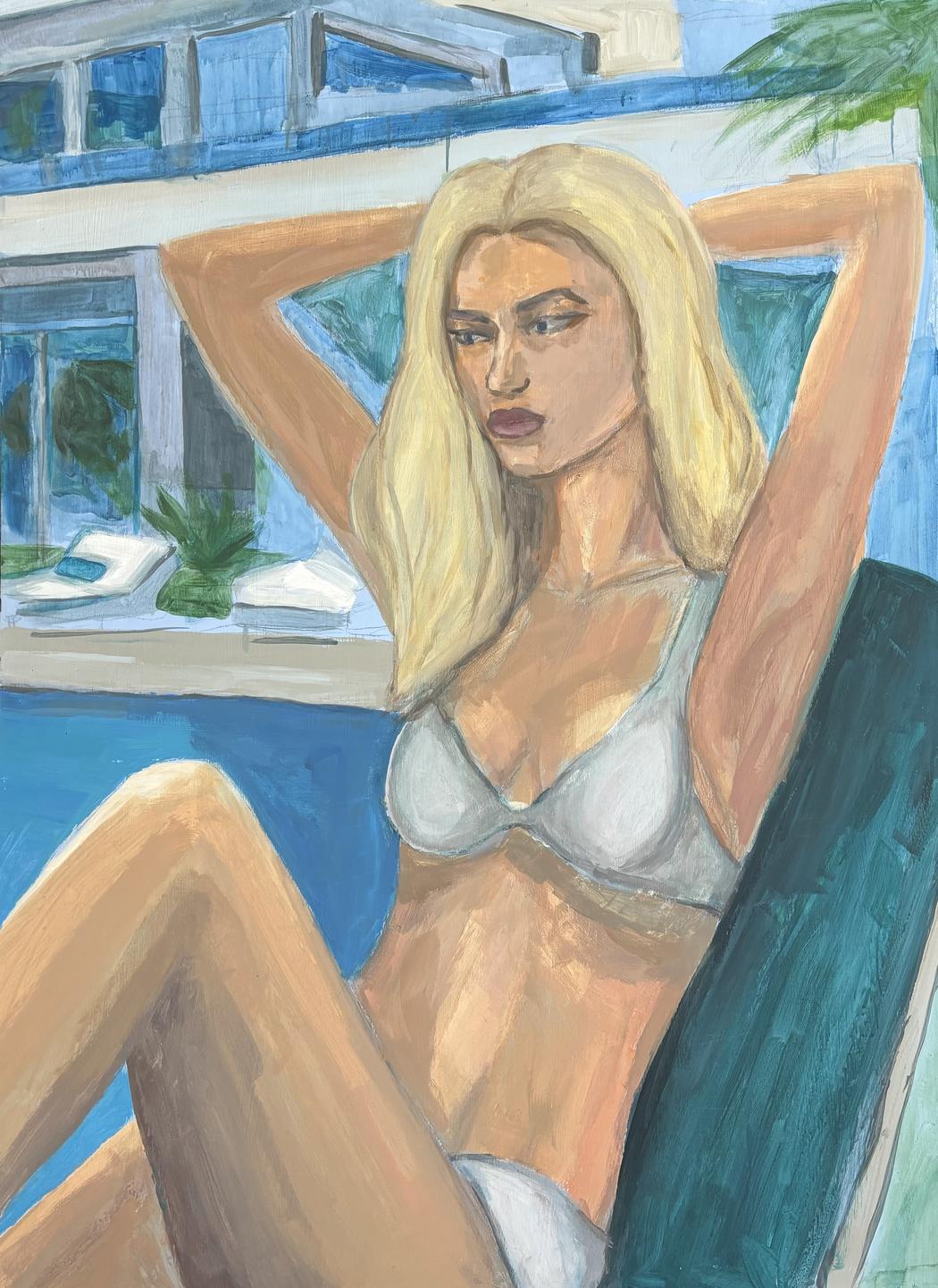 Anastasia Russkova | Maya 2026
What would you like viewers to feel or question when they first encounter your work?
I want them to feel ease — and pleasure in simply being alive. If a painting can return someone to that feeling in a difficult moment, that is enough for me. As for what I hope they question: the authority of social labels, and the degree to which those labels shape our choices without our awareness.