MI YAN
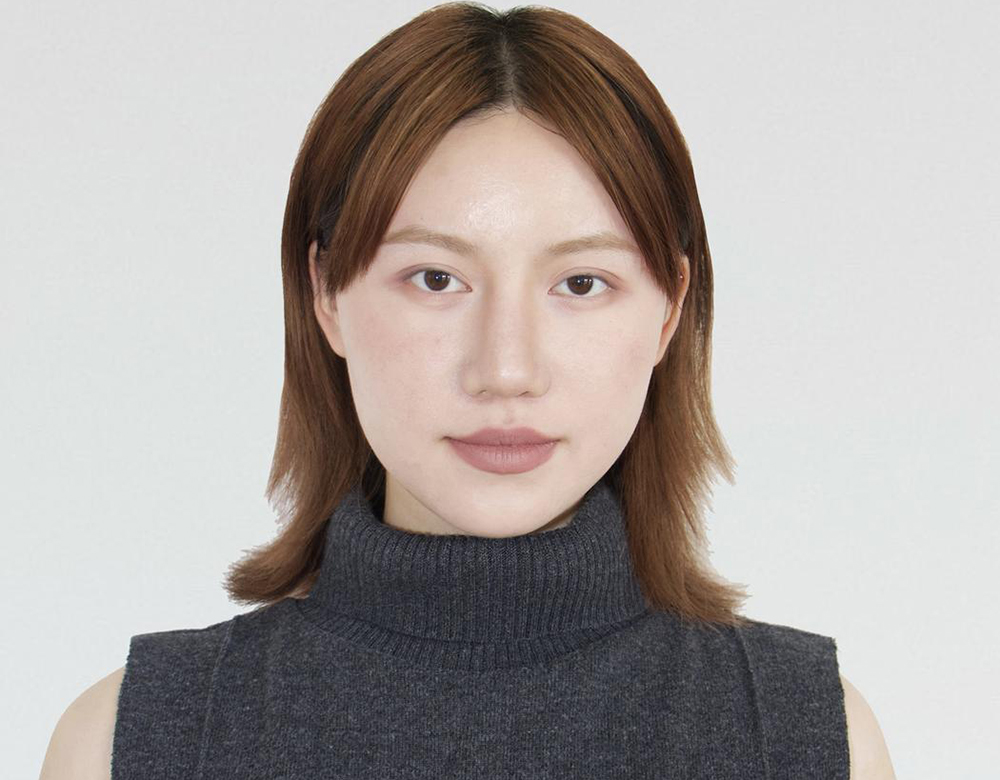
Mi Yan is a visual artist based in Wuhan, China, who previously lived and worked in London. Originally trained in sculpture, she completed an MA in Design: Expanded Practice at Goldsmiths, University of London, where she began constructing fictional worlds as a way of investigating contemporary life. Through graphite drawing and illustration, she transforms observations of consumer culture, technology, health, and social rituals into symbolic narratives populated by invented products, mythologies, and speculative ecosystems. Her work invites viewers to question the invisible forces that shape what we believe, desire, and accept as everyday reality.
Could you tell us about your journey into visual art and illustration, and what first inspired you to develop a research-led practice?
My journey into visual art and illustration began with my grandfather, who was an artist. Although he passed away when I was very young, he left behind many newspaper illustrations. As a child, I was fascinated by their stories. Drawing became a way of connecting with someone I had never truly known. That experience inspired me to create narrative illustrations and imagined worlds. I later studied sculpture because I wanted to explore how illustration could move beyond the page into immersive experiences. During my undergraduate years, I became increasingly interested in social issues and started thinking about how visual art could respond to them.
My research-led practice took shape during my MA in Design: Expanded Practice at Goldsmiths, University of London. There, I learned to begin every project with observation, conversation, and research. I realised that research was not just preparation for making art. It became part of the creative process. Since then, asking questions has become central to my practice. I like to understand why things happen before transforming my observations into characters, spaces, and fictional worlds. Rather than offering answers, I hope my work encourages viewers to explore and form their own interpretations.
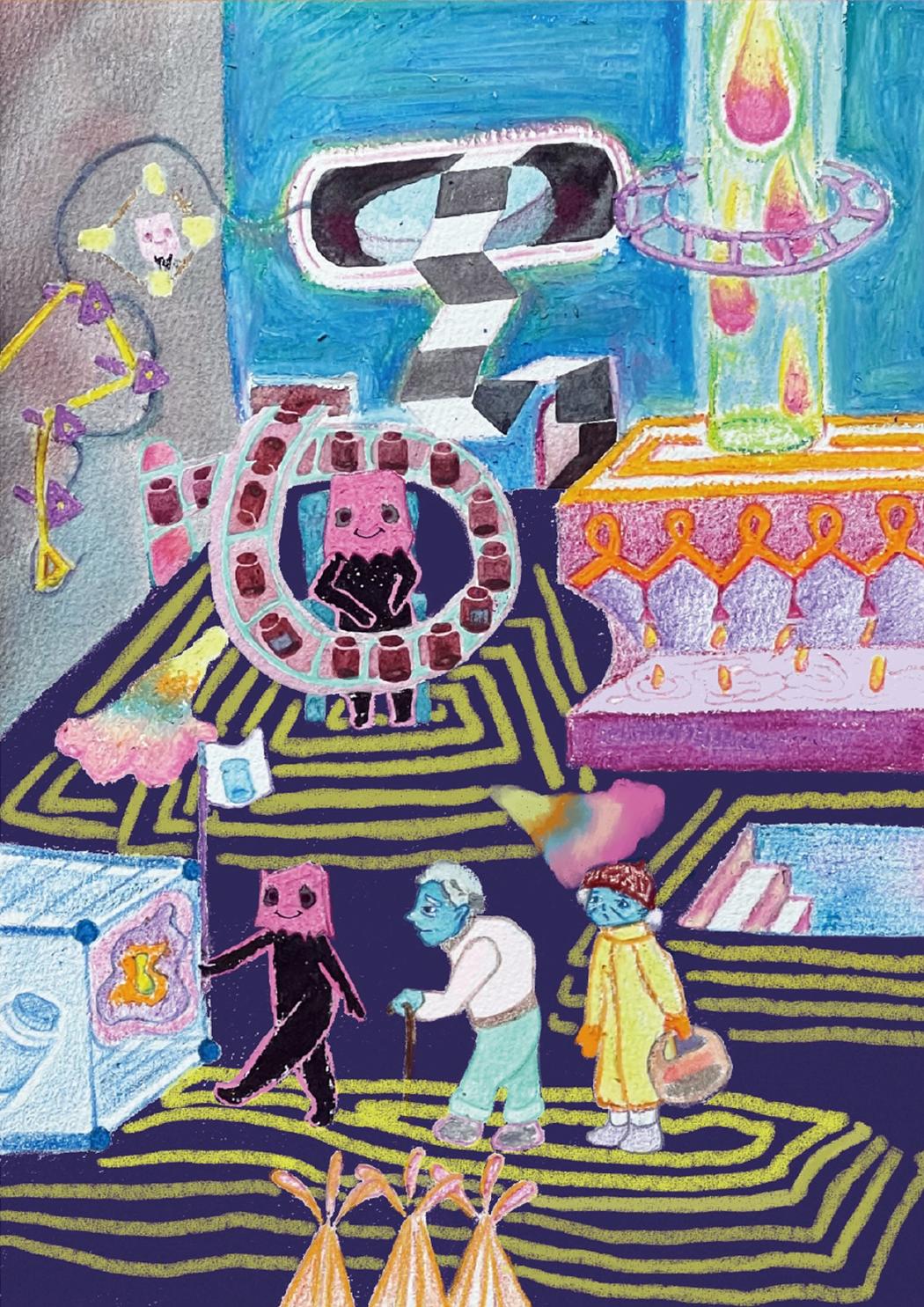 MI YAN | Labyrinth Protocol The Show | 2024
How did studying and working in London influence your artistic perspective, and has returning to Wuhan changed the way you approach your work?
Studying in London broadened the way I think about visual storytelling. During my MA, I experimented with storyboards, scripts, and cinematic narratives before realising that illustration was the medium I connected with most. It allows me to move between my own perspective and that of the characters I create. I enjoy using narrative and humour to explore social questions without giving direct answers.
After graduation, I worked as a model maker in the UK film industry. I watched technical drawings become physical objects and storyboards become real environments. Seeing ideas develop from paper into physical space strengthened my interest in creating immersive worlds. It also showed me how every small detail contributes to the audience’s experience.
Returning to Wuhan did not change the way I make work. Instead, it changed what I notice. I returned to the studio where I grew up, and I found myself paying more attention to family, memory, and everyday life. London is the home I built for myself. Wuhan is the home that holds my roots. Today, these two places continue to shape how I see and make work.
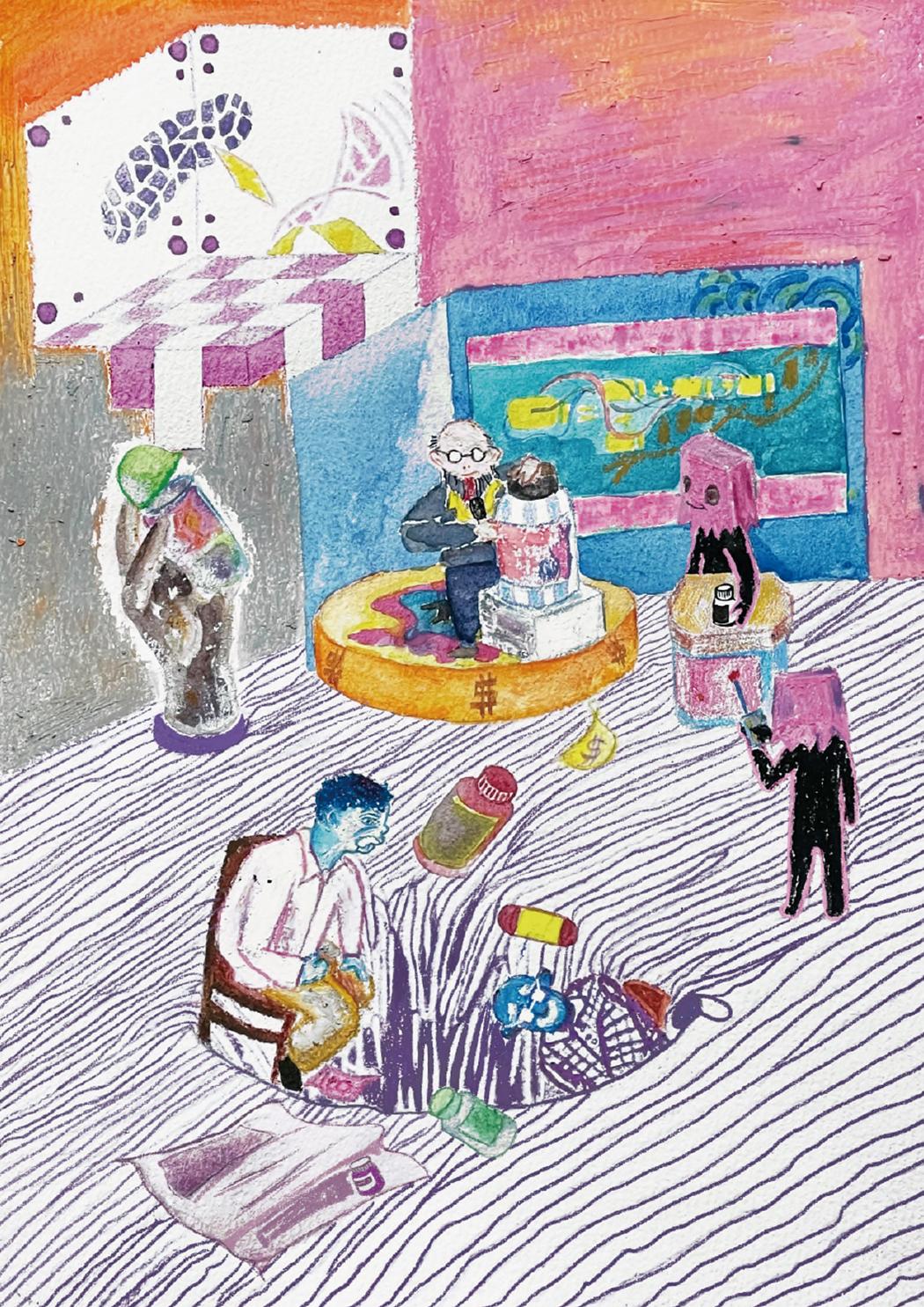 MI YAN | Labyrinth Protocol Trap | 2024
What does a typical working day look like for you?
If I’m working on a film project, my day usually starts early in the workshop, where I make models and props. After work, I like to watch films, read, or scroll through social media. Many of my ideas begin with ordinary moments. It could be a line from a film, a joke, or something I see online. I write these ideas down immediately. If an image already forms in my mind, I sketch it in Procreate before it disappears.
When I’m between projects, I slow down. I take a sketchbook to the park, draw squirrels and plants, or go on long city walks while listening to music. I’m always curious about forgotten objects I find on the street and the stories they might hold. Many of my characters and fictional worlds begin with these small observations.
I also enjoy running and CrossFit. Exercise brings me back to the present after spending long hours imagining new worlds. I usually end my city walks by buying a croissant. I believe creativity doesn’t only happen in the studio. It often begins in the ordinary moments that people overlook.
Your practice explores how social systems shape emotion, behaviour, and identity. What draws you to these themes?
I’ve always felt that nothing exists in isolation. I believe everything is connected. That’s why I pay close attention to everyday life. A song lyric, a street advertisement, a forgotten object on the street, or even a casual conversation can stay with me for days. I often find myself wondering why these moments appear and how they might connect to something larger.
Over time, I realised that I became less interested in individual events than in the invisible forces behind them. I’m more interested in how family, culture, media, consumerism, and the environments we grow up in quietly shape our beliefs, emotions, and behaviour. Rather than judging these systems, I want to understand how they work.
Labyrinth Protocol grew from a personal family experience. My maternal grandfather spent a large amount of money on health products, and our home gradually filled with supplements, promotional gifts, and products that promised extraordinary health benefits. Instead of dismissing those choices, I started asking why people place so much trust in these promises. That question led me to research health-product marketing, consumer psychology, and ageing. It also helped me realise that my practice always begins with questions. I like to understand why things happen before transforming those observations into characters, architecture, and visual narratives. I hope viewers can enter these narratives, discover unexpected connections, and arrive at their own interpretations.
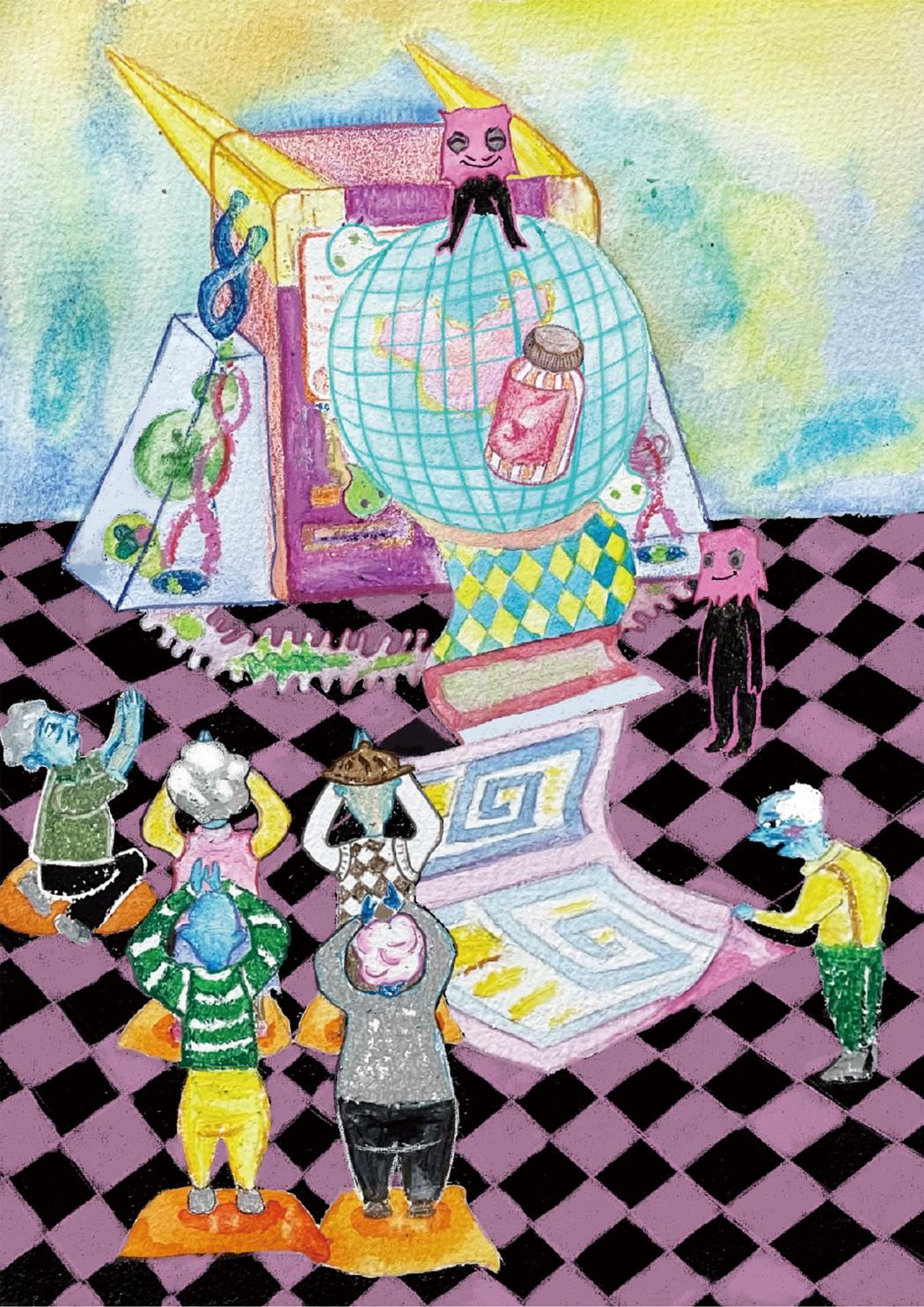 MI YAN | Labyrinth Protocol Prayer | 2024
What role do symbols, repeated objects, and architectural structures play in building the internal logic of your fictional worlds?
For me, symbols are distilled portraits of people or groups. They help me simplify complex social behaviours into characters that viewers can recognise. I usually begin with observation, research, and conversation. Then I gradually transform shared traits into symbolic figures or creatures. I want people to recognise something familiar in them without needing a direct explanation.
Recurring objects represent unresolved questions. They can suggest obsession, emotional barriers, relationships, or psychological states. I repeat these elements because I don’t believe unresolved issues simply disappear. They return in different forms, just as they do in everyday life.
Architecture holds everything together. It represents the invisible systems that shape our lives, so it is never just a backdrop. In Labyrinth Protocol, labyrinths, staircases, corridors, and enclosed spaces all become part of the story. They guide movement, shape decisions, and create the rules of the world. I want viewers to experience these spaces rather than simply look at them. Many of us believe we are making our own choices, while quietly following paths that have already been designed for us.
Is there a particular artwork or project that marked an important turning point in the development of your artistic language?
Yes. I believe Labyrinth Protocol was the turning point in my practice. Before that, I mainly created individual illustrations that captured a single scene, story, or moment. My work was more direct, and I wasn’t thinking about building complete worlds.
While developing Labyrinth Protocol, I spent much more time on research, reading, and interviews. It was the first time I realised that illustration could be more than a way of telling stories. It could also become a way of exploring and understanding reality.
Instead of depicting the real world directly, I began transforming my observations into symbols, characters, architecture, and fictional worlds. I became more interested in how a world works, what rules shape it, and how those rules reflect everyday life. Since then, this has become the foundation of my practice. I begin with personal experience, expand it through research, and use world-building to create spaces that invite viewers to explore and form their own interpretations.
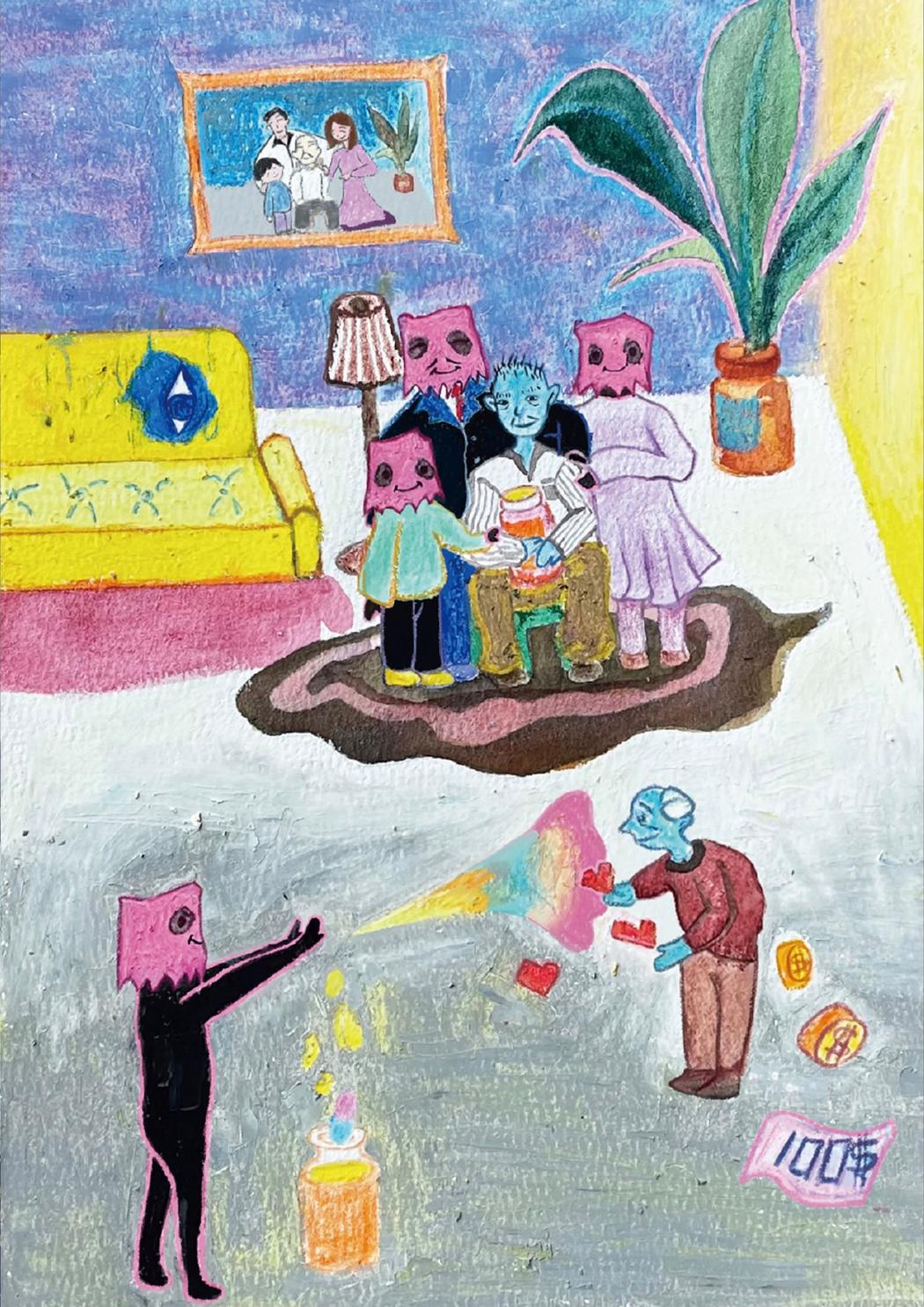 MI YAN | Labyrinth Protocol Family | 2024
What new ideas, materials, or forms of audience participation are you currently interested in exploring?
Recently, I’ve become interested in the idea of collective consciousness and the possible relationship between humanity and unknown forms of life. This idea was inspired by Pluribus. It made me wonder whether consciousness truly belongs to individuals, or whether it can be shared, connected, and constantly reshaped.
I don’t see extraterrestrial life simply as science fiction. I see it as another way of thinking about human civilisation. I often imagine a society without money, nations, religion, or even the identities we take for granted today. How would such a civilisation understand emotion, time, trust, or existence? Questions like these make me question ideas I usually take for granted.
In my practice, I want to expand these imagined environments into physical space. I’m interested in creating experiences where viewers don’t just observe a world, but move through it, make choices, and gradually discover how it works. I hope this creates a more active and personal relationship between the viewer and the work.