
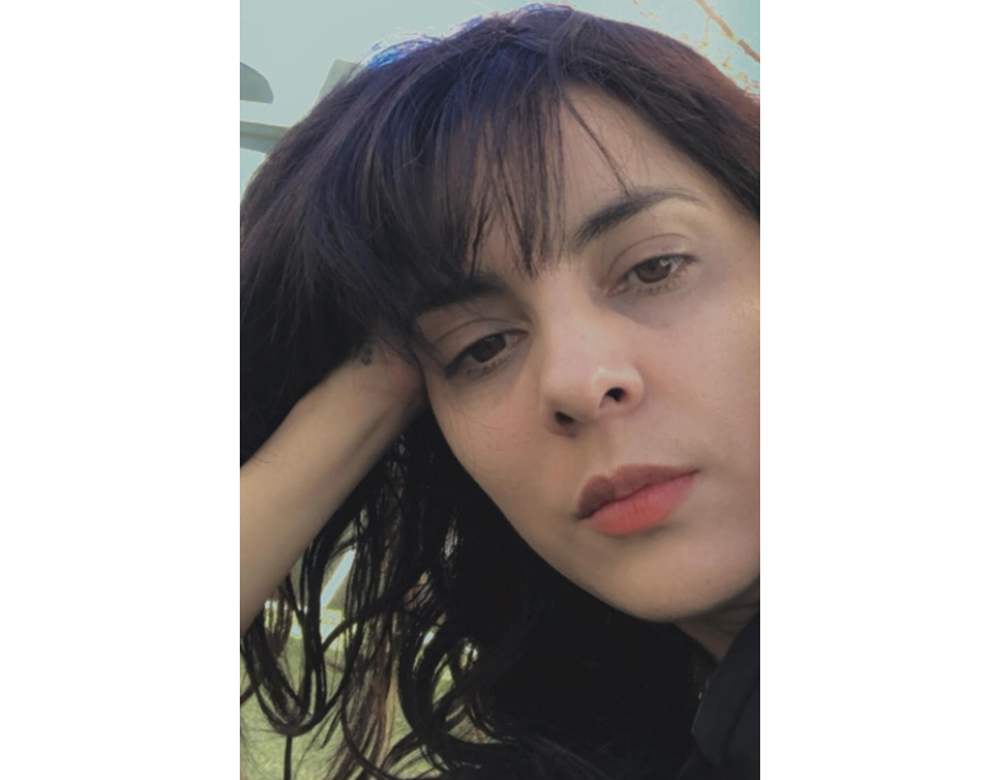
rratta_tta
You describe yourself as a self-taught artist. How did drawing and color first become a language for you in childhood?
I remember always being really into understanding everything around me, like the universe, nature, people, behaviors, systems, and theorizing about it. I think I felt very insecure about my near surroundings. So everything that came with drawing, came first as a way to stop explaining things with words, like some sort of mental relieve, so that I could just follow the lines with some inner intuition and confidence about the order that I was giving to myself, including creating new paths to escape. Over time it became a regular practice to withdraw into myself. Color was different, it was like decorating my inner space, risking myself all the time to be wrong, but without the external judgement. It was about having fun. Most of my experience with color comes from experimenting, doing some hideous mistakes, by ruining things on purpose.
You write that art helps you solve problems and make decisions. How does this process work for you in practice?
It’s like meditation, but reversed. I don’t just feel overwhelmed by every thought and do some breathing work… In this case I start with nothing, just paper. I don’t think at all, until I begin to see some possibilities out of some lines, some kind of inspiration (mostly coming from nature) and dream about it while I let it be on paper. Some emotions related to expansion comes to me, to defy the limits, to defy my own patterns. Till I build my own new story. Sometimes I catch myself holding my breath by the end of it, like I’m holding on to the excitement. So when I feel like reality is too much, I draw and paint, and think that I’m untangling ideas and narratives. Changing something at a subconscious level.
Watercolor is central to your work. What attracts you to its fluidity, unpredictability, and transparency?
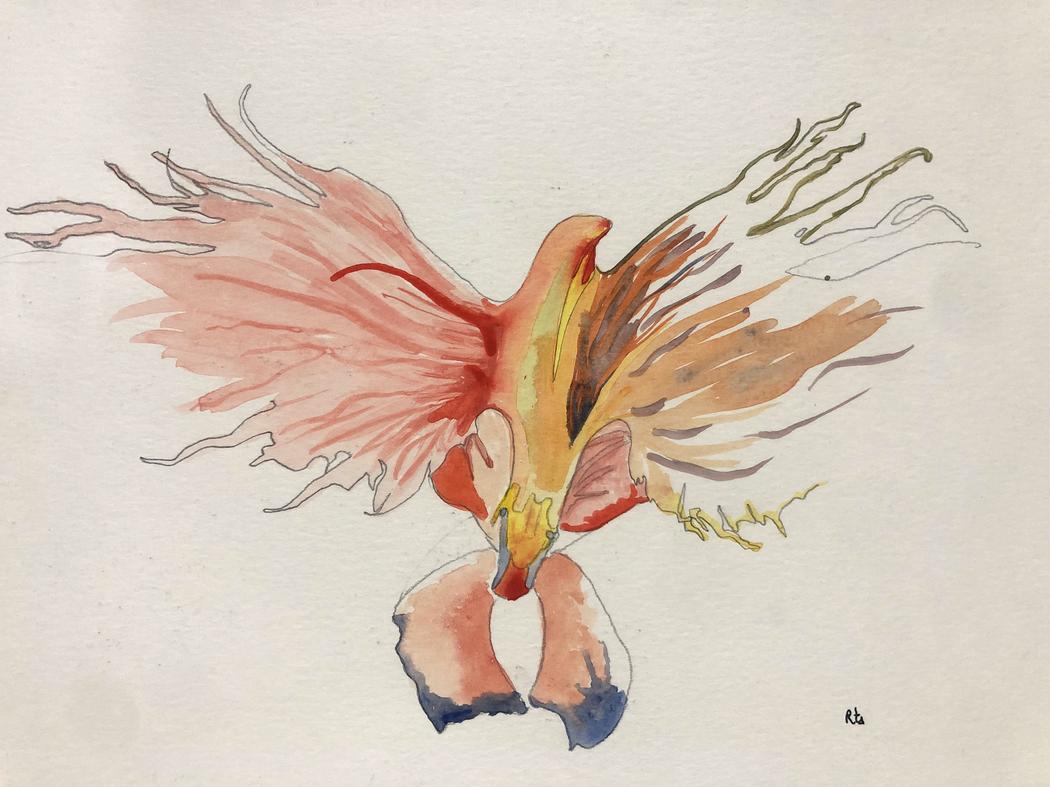
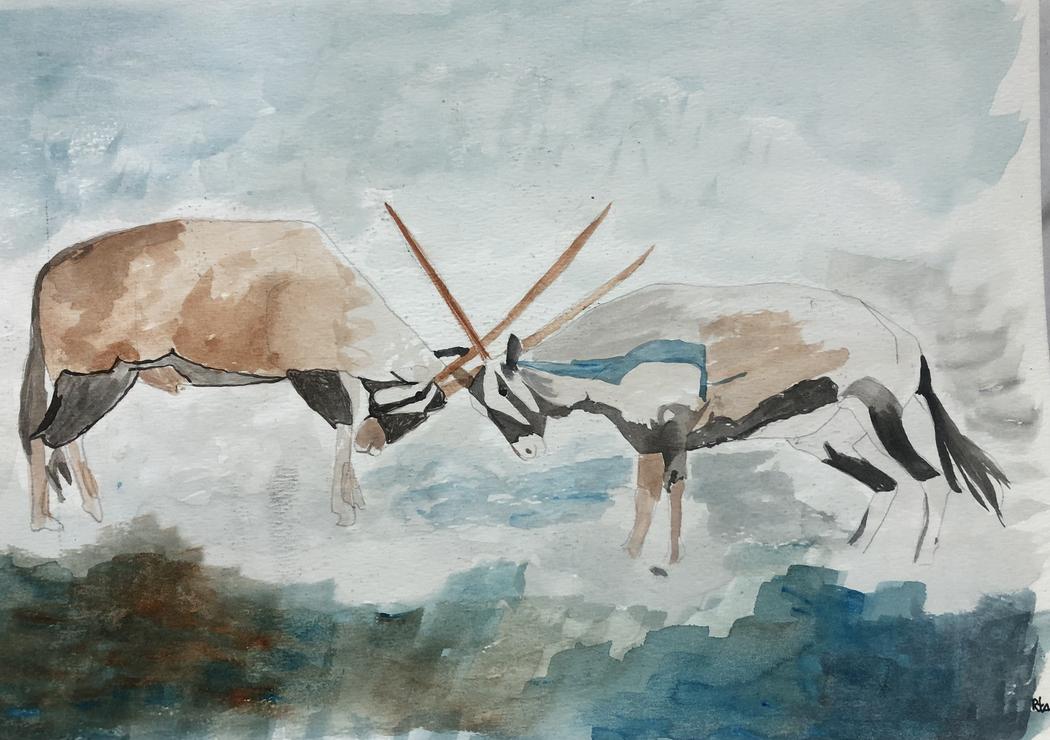
The possibility of visualizing layers or perspectives. It feels like you can imagine the overlap of different dimensions, or that is the movie that I play on my mind. If reality is constructed by different possibilities, watercolor acts like the medium to see it. Every layer is different from the other one… they don’t have the same direction, or the same degree of color. Each one of them has its own current and intensity. Like there is nothing wrong, it’s just nature. I give away control, and wait to see the result.
Many of your works seem to exist between figuration and abstraction. How do you find the balance between recognizable forms and emotional states?
I think I try to represent figures to focus on a theme, while I put the emotions in the way that I hold the pen, and the colors I pick up randomly. I try to draw the limits, to then break them. It’s like feeling the transition every time I cross the line while I’m painting, color can stay the same if its viewed from the same perspective, or it can change if it’s part of a different wave of emotion, it depends of what part and figure I am painting, and how I relate with it… like a chemical reaction between two worlds that are getting in touch. Going from earth to water, from water, to fire, from earth to fire, to air… I don’t know if it makes any sense.
Faces and mask-like images appear often in your works. What does the idea of the mask mean to you?
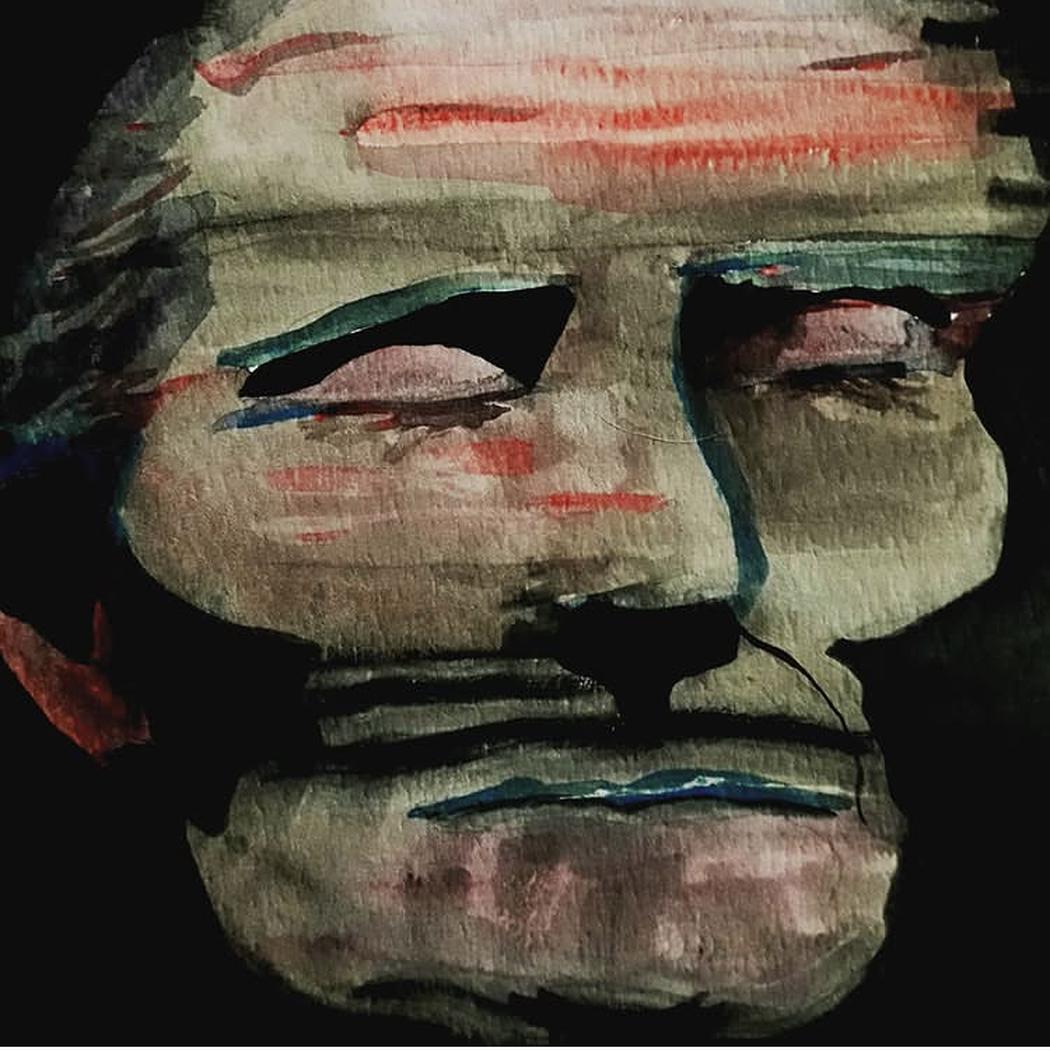
I like to work on the idea of death as a taboo, to perhaps provoke people. Like there was a time when bodies where a source of science, memory, maybe art. And western culture has lost his appreciation for this process, trying always to live as much as we can, pushing unnecessary boundaries on my view. For me masks represent a period of transition, between the thing that is acknowledged and the thing that is remembered.
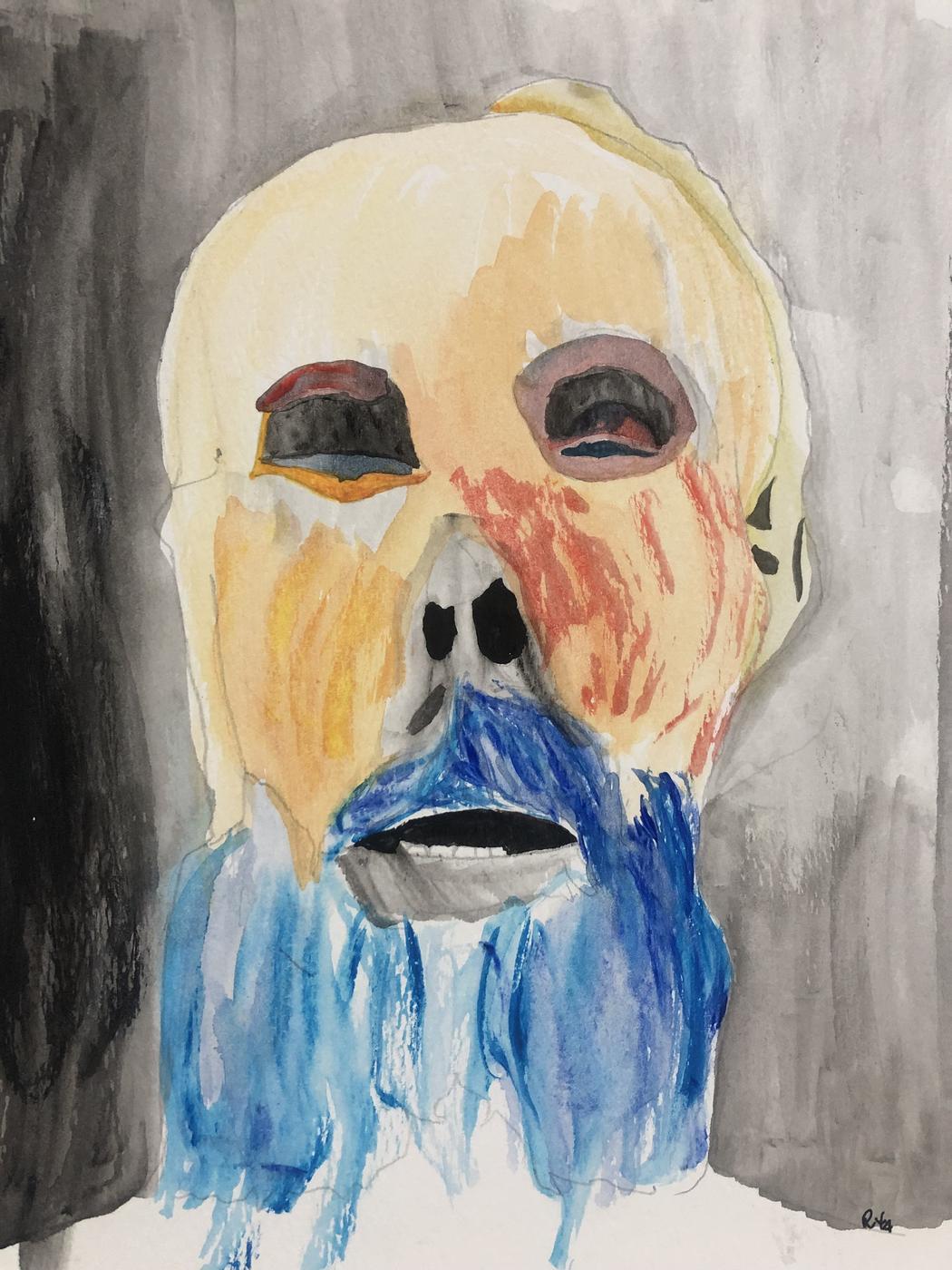
How important is intuition in your work? Do you plan the image before painting, or do you allow the watercolor to guide you?
I sometimes have ideas coming to me before getting asleep, like concepts, or narratives, or just images. I think of some mixture of colors, or a concept to explore. I also use images from different sources that I find interesting in their significance, or in composition. Then I just try watercolor, and let myself go. I think intuition is all of my creative work, despite the fact that I do some research, but I feed on different things that captivate my attention and linked them.
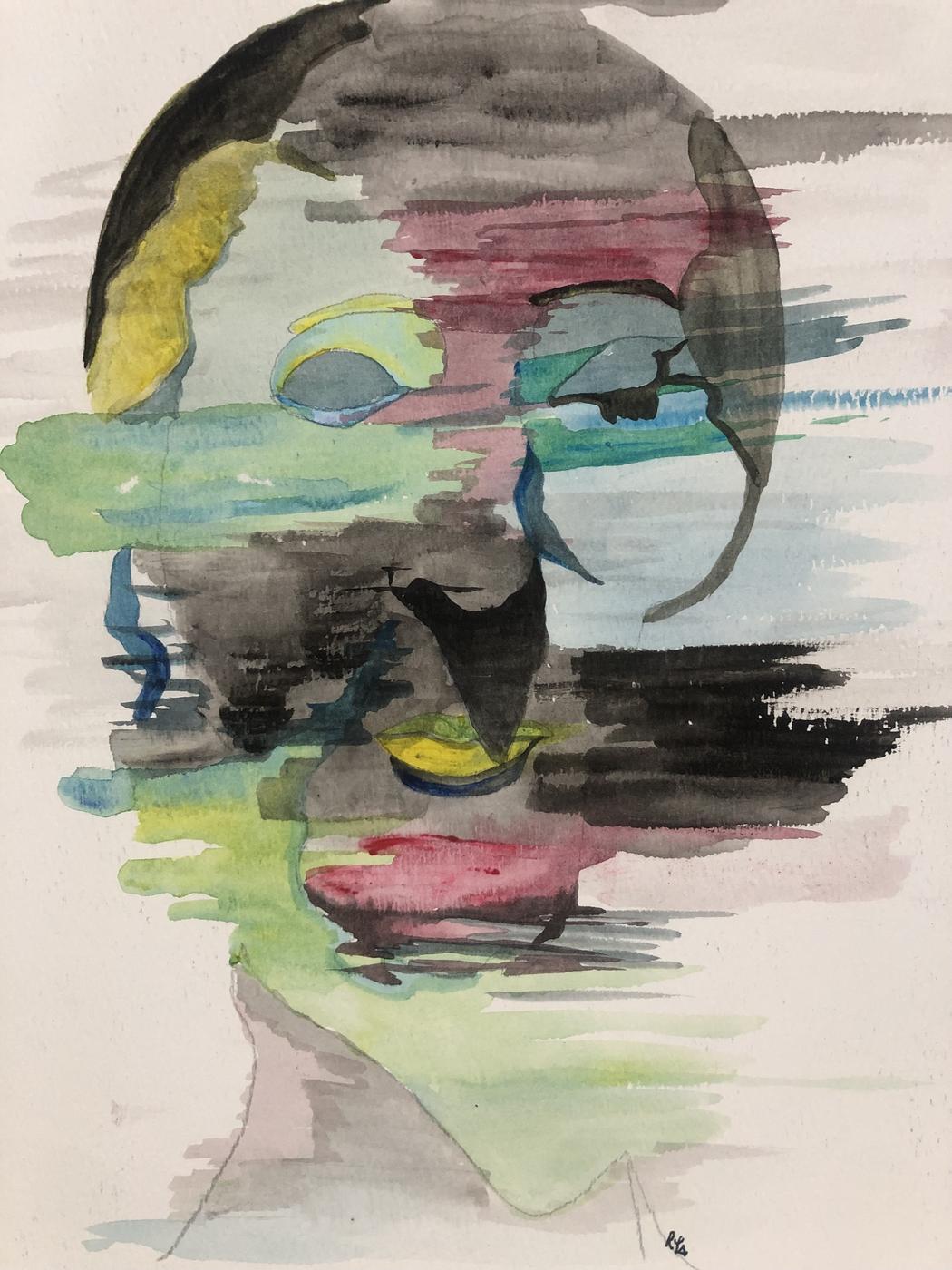
How has your understanding of art changed from childhood until now, especially as a way of transmutation and spiritual survival?
Before it was just a practice, a coping mechanism. I don’t think art had much importance to me in a concrete way, it was about consuming activities and expressions that were private and silly, while I was looking for something to believe, something to rely on. I never believed in a God, although I tried really hard to. I wanted to be normal. And recognizing myself as an artist was far away from my idea of being accepted. Overtime, it was undeniable to myself… and I gave it this purpose, I started to look intentionally for an infinite source of inspiration, and I couldn’t find a bigger thing than spirituality and surrendering to something else. It became a portal to understand meanings and to offer new perspectives about connection between people, nature and non-linear time.