
Davida Ruth
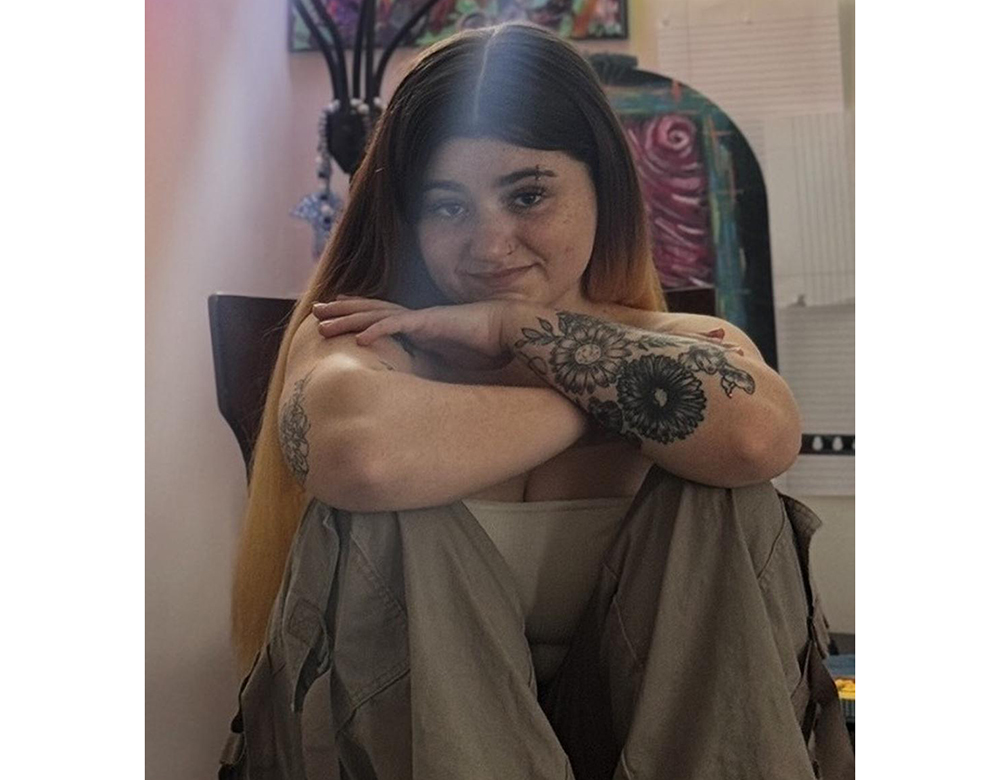
Your work often transforms emotion into abstract visual language. How do you know when a feeling is ready to become a painting?
I usually don’t decide in a strict, intellectual way that a feeling is “ready.” It’s more like it starts to repeat itself inside me.
When an emotion lingers instead of passing when it shows up in different moments, different memories, or even in my body it starts to lose its shape as something purely personal and becomes something more visual. That’s usually the shift. It stops being just “something I feel” and starts becoming something I can see.
I also notice I’m ready to paint it when words start failing. If I keep trying to explain it and it never fully lands, that’s often a sign it belongs in paint instead. At that point, I’m not trying to illustrate the feeling that I’m trying to translate its texture, its weight, its movement.
And sometimes it’s quieter than that. I’ll catch myself mentally returning to a color, a form, or a composition without forcing it.
You describe art as a bridge between your inner world and physical reality. Can you share a moment when creating art helped you understand yourself more deeply?
There was a point where I realized that I could express the emotions I felt by visualizing it. It started when I painted without planning it, just letting color and movement lead instead of thought.
As it has continued to develop I have taken notice that I keep layering over certain areas, some brush strokes heavy and thick, others are small and thin. I expose a part of myself to be seen from a place that can only be understood by those who can also feel what they see. I didn’t fully understand why I was doing it, I just knew it felt natural to the fluid movements from my brain to arm into my art. When I hit every stopping point and take a step back, I see a pattern building that mirrors what I feel internally. There is a part of me that wants to be seen in a way that words cannot explain or express. Seeing my visualized emotions on canvas helps me recognize my emotions from a different perspective. It makes the internal conflict visible in a way I could finally sit with instead of just carrying it.
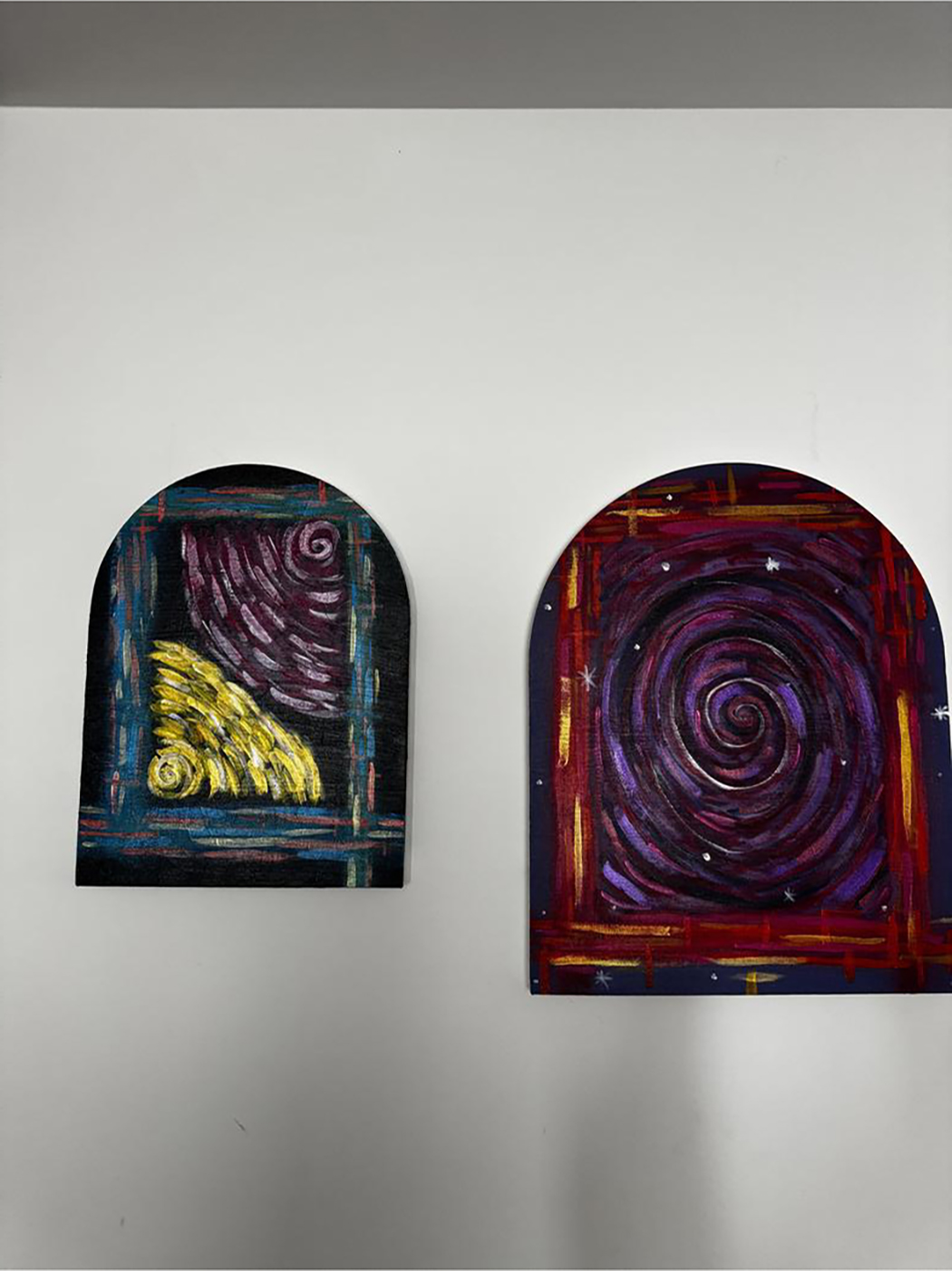 Davida Ruth | Left Is The Distance Between Right Is Where We Meet
Many of your compositions combine fluid movement with structured elements. How do you balance chaos and control within a piece?
For me, it’s less about “balancing” chaos and control and more about letting them take turns leading.I usually start with structure in mind something grounding, like a composition, a boundary, or even just an intention for space and tension. That gives the piece a kind of backbone so it doesn’t dissolve into pure noise, but once that foundation is there I try to loosen my grip.
The more fluid I am, the more detailed parts come in as a response to that structure. I let it lead me. That push-and-pull is where the work starts to feel alive to me. I think the control is what keeps the chaos from becoming accidental, and the chaos is what keeps the control from becoming rigid. If one takes over completely, something gets lost. But when they’re both allowed to exist, the piece starts to feel like a conversation rather than a decision.
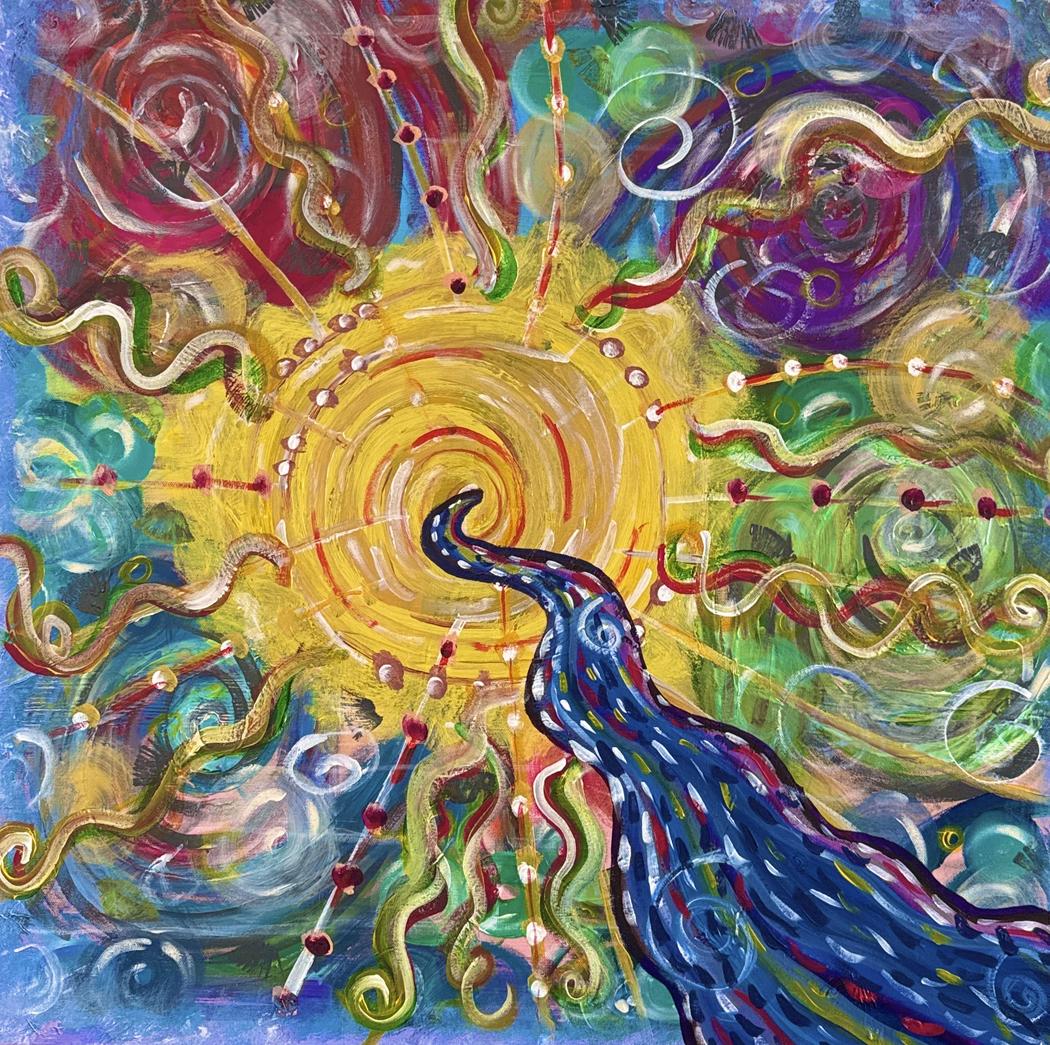 Davida Ruth | The Golden Source
Growing up, you mentioned that verbal expression was often difficult. In what ways has painting become a language of its own for you?
Growing up, being verbally expressive about my emotions wasn’t something that felt safe or encouraged. It was often met with shame or dismissal and because of that I learned early on how to find a safe space to emotionally express myself I quickly learned that painting became the place where that pressure of verbalizing emotions didn’t exist. Instead of needing to justify or carefully articulate what I was feeling, I could let it come out in color, texture, and movement. It gave me a way to be honest without having to translate myself into words first. Over time, it started to feel like one of my most natural forms of communication.
Where speaking requires structure and precision, painting allows things to be layered, contradictory, and slowly processed. I don’t have to fully understand an emotion before expressing it I can start with gesture, pressure, color or shape and let the meaning reveal itself through the process. In that sense, it became its own language.
What I’ve also noticed is that what I couldn’t say out loud would still show up in the work. Certain marks, densities, or repetitions start to reflect what I’m carrying internally, even when I’m not consciously aware of it. It’s almost like the painting knows before I do. So in many ways, painting became both a release and a translator something that holds what I couldn’t safely say, and slowly turns it into something I can finally understand.
Swirling forms and layered textures appear throughout your work. What do these recurring visual motifs symbolize in your personal vocabulary?
Swirling forms are one of the most honest parts of my visual language. They show up when something feels like it doesn’t have a clear beginning or end when emotions overlap, return, or shift before I can fully name them.
For me, they symbolize movement that isn’t linear. It’s not about things “going somewhere” in a straight line, but more about how experiences circulate how they resurface, soften, intensify, and dissolve into each other. They often represent emotional states that are still in motion.
Layered textures work in a similar way. They feel like memory how nothing is ever really isolated. Everything builds on top of something else, even if it gets partially covered or hidden. Every layer is the natural the fluid movements of my wrist.
Together, the swirls and layers become a kind of internal map. The swirls hold the movement and emotional flow, while the layers hold what’s been experienced, protected, or processed over time. They don’t separate things neatly they show how everything is interconnected, constantly shifting, and still becoming, each one different and unique.
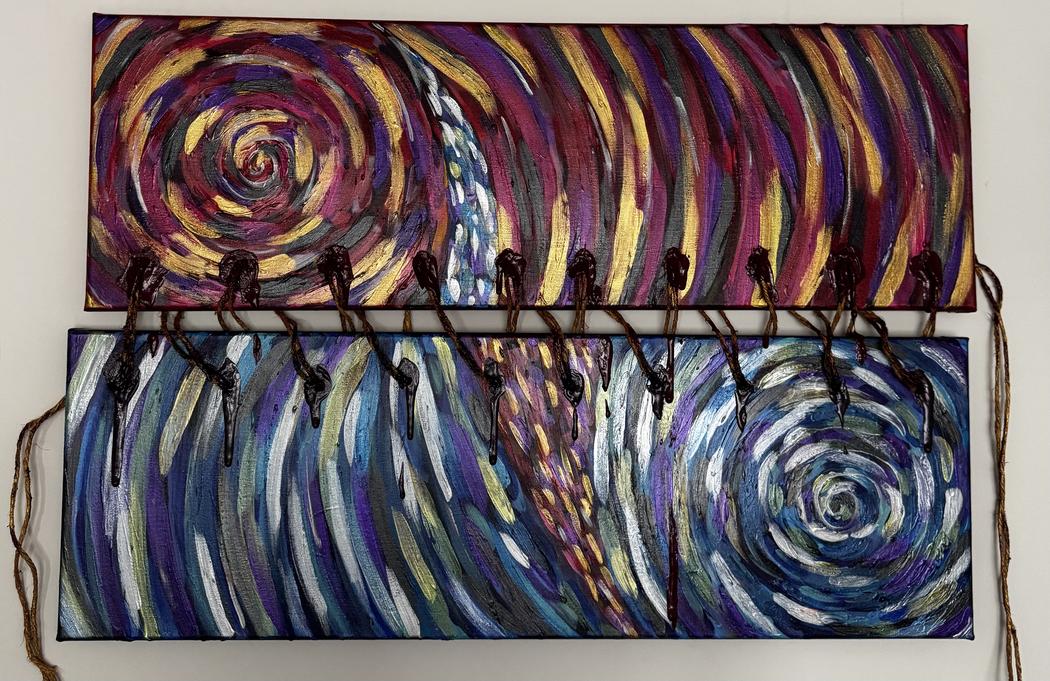 Davida Ruth | The Golden Suture When Two Worlds Collide
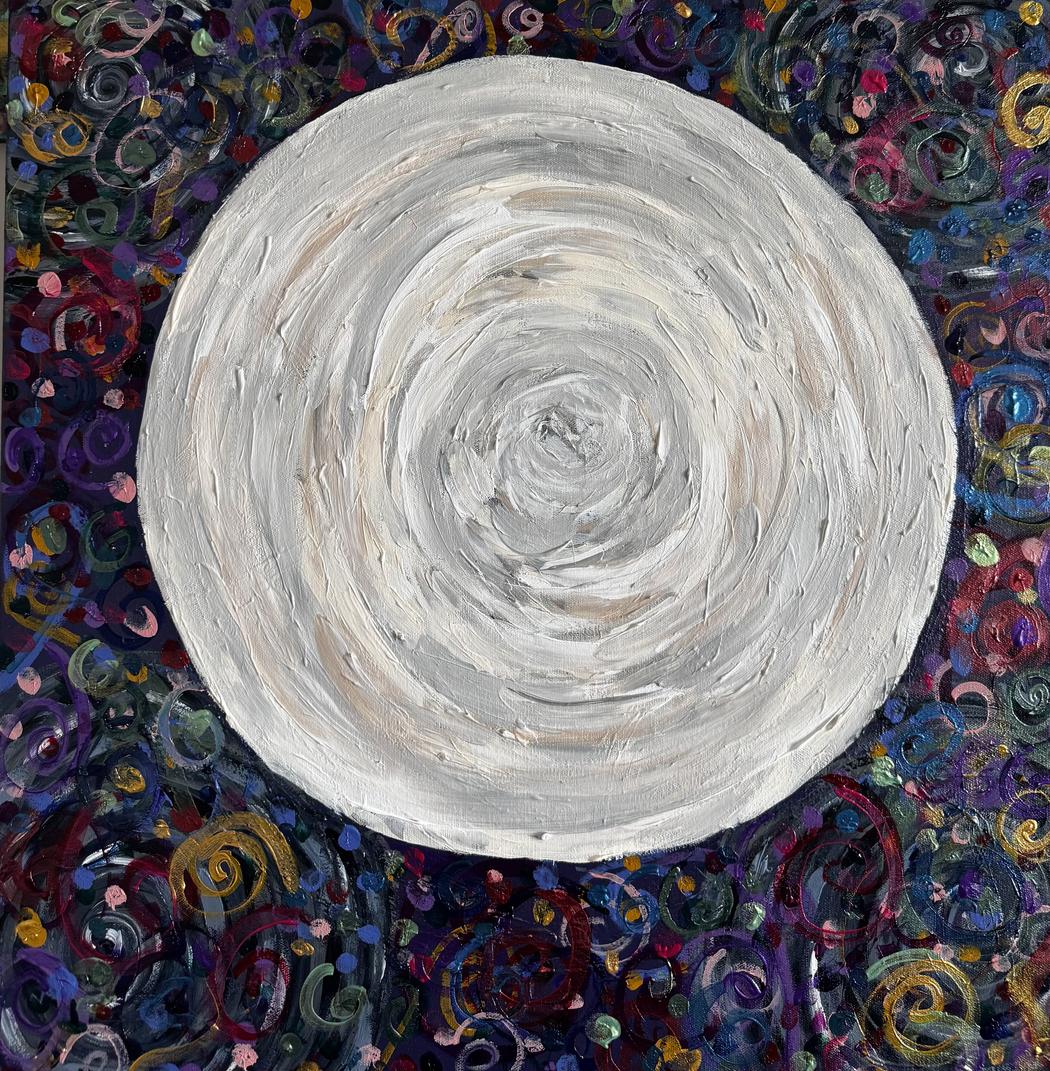
The tactile surfaces and textures in your paintings create a strong physical presence. How important is materiality in communicating emotion?
Materiality is essential for me it’s what turns emotion into something you can almost physically feel rather than just observe.I don’t experience emotion as something abstract or distant It’s often very bodily. Like the way the built up layering brushstrokes in my work become a way to translate that physicality. Thick areas can feel like weight or pressure. Softer transitions can feel like release or breath. Even the tension between smooth and rough surfaces starts to carry emotional contrast.
I’m drawn to texture because it holds time. Every layer has a decision in it, even the ones that get partially covered. That history stays embedded in the surface, so the painting doesn’t just show a moment it holds many moments at once.
For me, materiality is what keeps emotion from floating away. It anchors it. It makes what’s internal feel tangible, like it has mass and presence in the physical world.
Your work invites empathy and reflection from the audience. What kind of emotional experience do you hope viewers leave with after encountering your art?
I don’t really aim for a single defined emotion I think that would limit what the work can hold for someone else. Instead, I hope viewers leave with a sense of recognition, even if they can’t immediately explain what they’re recognizing.
My work often comes from internal states where language struggles to fully capture the emotional layers involved. I think of it as creating space rather than delivering answers. If someone feels something shift in them slightly slowed down, softened, or brought inward that feels like the most honest outcome.
Sometimes that might look like calm, or discomfort, or reflection. I’m not trying to guide it toward one direction. I’m more interested in the moment where someone pauses and connects with something they didn’t expect to see or feel.
Ultimately, I hope the experience feels personal to each viewer, like the work is meeting them where they already are rather than telling them where to go emotionally.
Leave a Reply
You must be logged in to post a comment.