
Polina Skrypnikova
Your works describe a single hour in the life of a child named N. Why did you choose this compressed timeframe, and what does it allow you to reveal about memory and perception?
An hour is a moment that can contain everything: anticipation and completion, brightness and shadow. It is a unit of time that can be held and measured. An hour repeats itself, yet it is never the same — just like the memories we return to again and again. Something is rediscovered, something is lost forever. For the main character, however, this is simply everyday life in which he grows and learns. Memory has not yet divided the world into “important” and “unimportant.” Everything is equal, everything matters, and perhaps only someday will it echo in his memory. It was important for me to show how many details can be seen in what seems like an ordinary situation. One only has to pause — and the miraculous reveals itself within the simple.
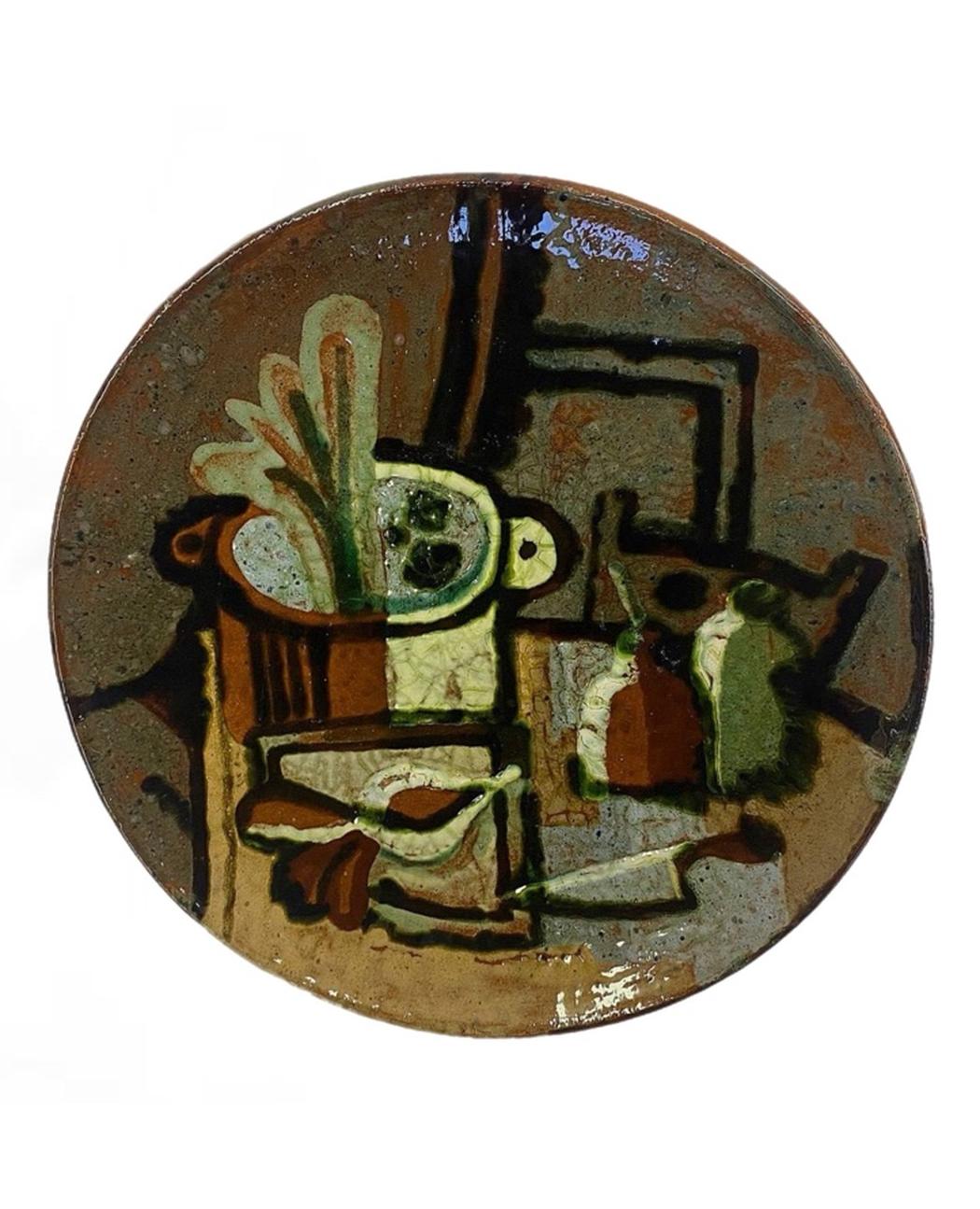 Polina Skrypnikova | Nibble Glazes
The contrast between the vivid mother and the monochrome grandmother is striking. What emotional or symbolic roles do these figures play in the narrative?
Mother is an escape from greyness. She clings to fading youth, to brightness, as if it were salvation. In public she is chaos and confidence, perpetual motion. It seems she fears nothing. But behind the door of her room, anxiety only intensifies — her tone becomes muted, hope is excluded. She lives in constant tension between who she wants to appear to be and what she fears losing.
Grandmother is calm after the storm. She has long erased external chaos from her life, forgiven everyone, and blames no one. Her monochrome is a double symbol: on one hand, outward serenity; on the other, a quiet premonition of the end. Colors have lost their significance for her, as have other people, their opinions, and conversations. She already stands on the other side — the place Mother has not yet dared to look toward.
Between them is the child. He does not yet know that these two worlds are incompatible — and that is his freedom. His role is that of an independent observer.
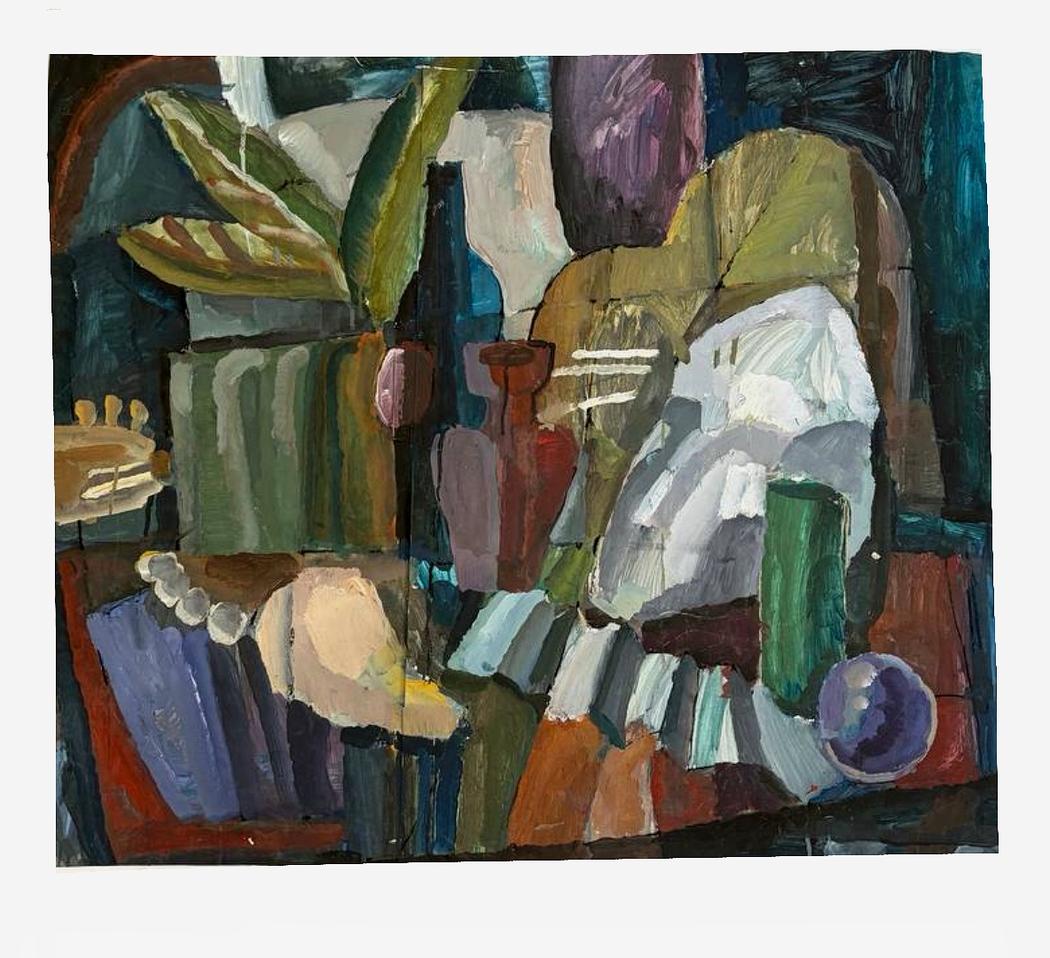 Polina Skrypnikova | Misgiving
In your paintings, familiar interiors feel unstable — full of silence, tension, and ambiguity. How do you construct this psychological atmosphere through color and form?
I believe the sense of anxiety is rooted in broken, trembling lines and the disruption of integrity. A work that appears conditionally stable gradually begins to vibrate and fill with unexpectedly emerging brushstrokes — sharp and unpredictable. Charcoal appears within tempera, light areas break into drips and stains. They burst in uninvited, destroy the structure, and undermine “perfection.” For example, in the work float01, anxiety is expressed not through the character but through the background — the space that the “mother” is unable to control.
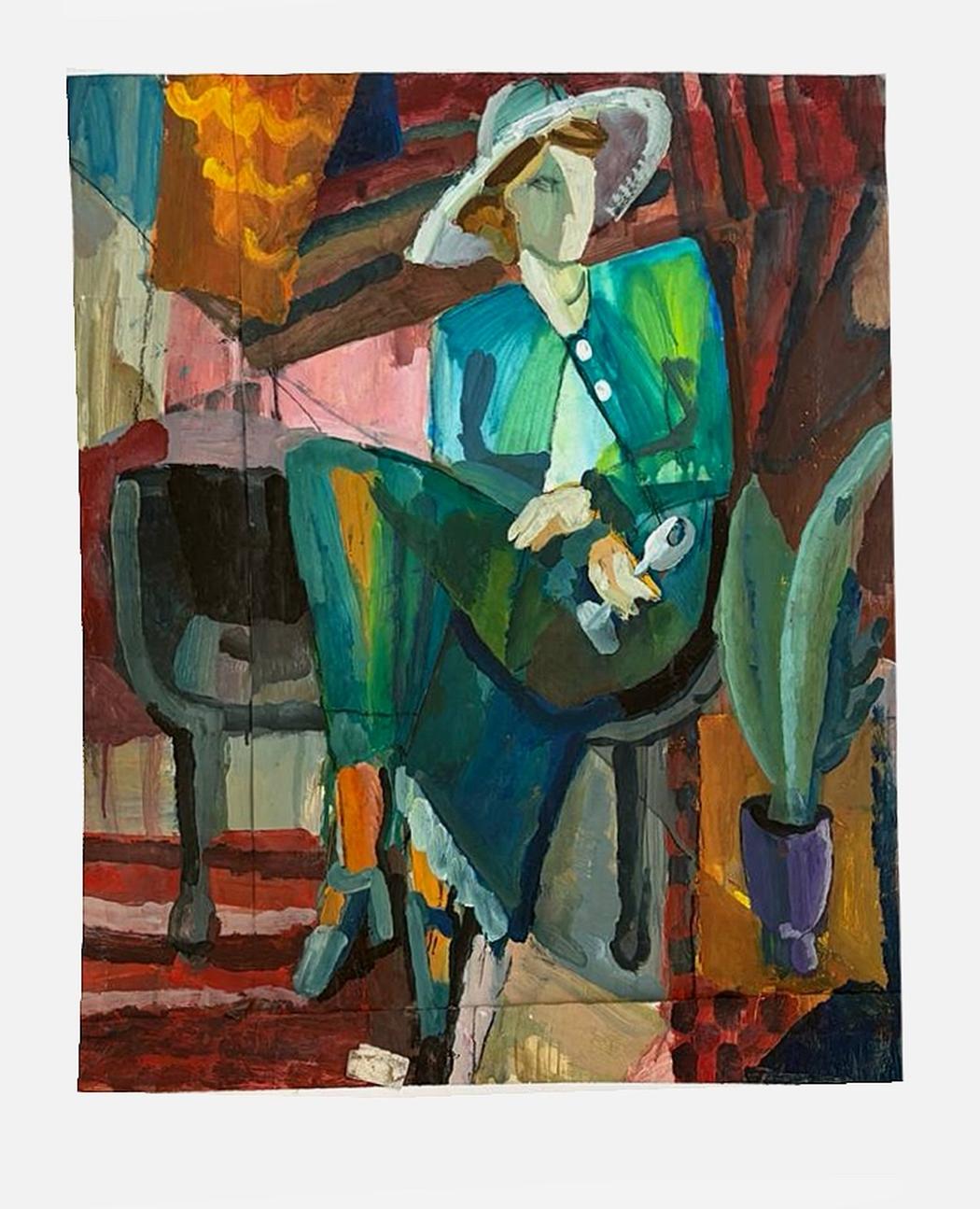 Polina Skrypnikova | Float
Childlike imagination appears through fantastical animals and bright colors. How do you balance innocence with the underlying sense of anxiety in these scenes?
Childlike imagination is not an escape from reality but a way of living through it. A child draws blue cows with wings and pink horses with horns not because the world is beautiful, but because fantasy is a way to tame chaos — to transform fear into color and anxiety into form. Naivety here is neither stupidity nor ignorance; it is a mechanism of survival.
Yet anxiety still seeps in. It does not shout — it seeps. Into the background. Into the trembling line. Into a color that becomes too bright to be sincere. I do not oppose naivety to anxiety — I show how one is born from the other. The brighter the fantasy, the clearer the shadow. The more naive the image, the more evident what it is trying to escape.
You work in both painting and ceramics. What ideas can only be expressed in clay, and what must remain on canvas?
For me, painting is an inner monologue. It is the moment when you project emotion into emptiness and fully control its path. The canvas tolerates doubt: you can paint over it, redo it, begin again. Time here is subordinate — it can be erased. For this reason, in painting I explore anxiety as an intrusion; the blank surface is a space for reflection.
Ceramics, on the other hand, is a dialogue. No matter how well you know a person, you cannot predict their response. The same is true of clay: however precisely you plan the form, the material always answers in its own way. That is its beauty — and its risk. You can never be one hundred percent certain of the result. Therefore, in ceramics anxiety is not an intrusion but the structure of the material itself. You cannot erase it — only accept it and interact with it.
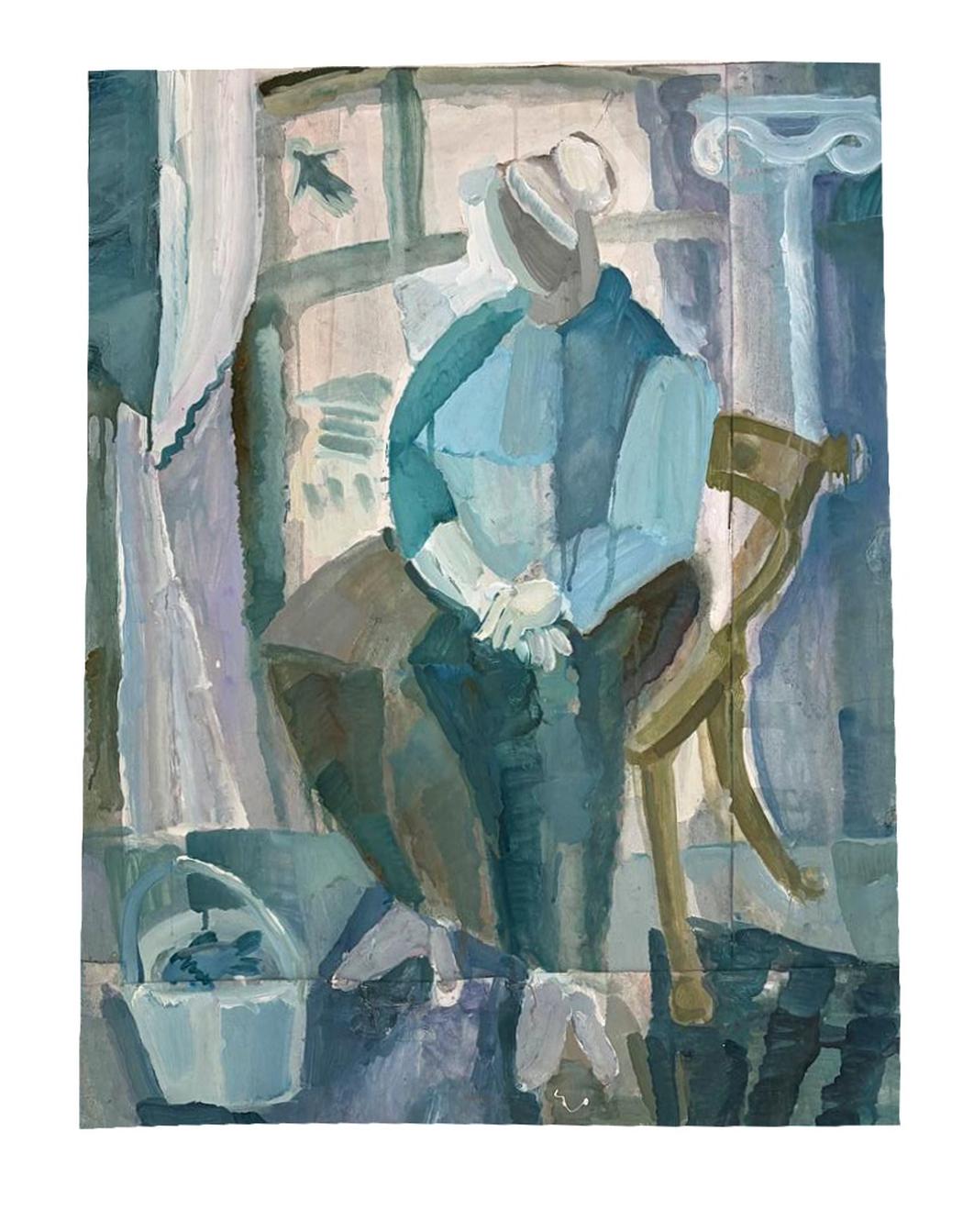 Polina Skrypnikova | Float
Your statement mentions unpredictability — especially in the firing process. How do you collaborate with chance, and when do you intervene to maintain control?
I do not fight chance — I negotiate with it. There are moments where control is necessary. The form of the object, wall thickness, decoration — these are my words in the dialogue. I define the boundaries, set the direction, embed the intention.
But then there is a point where I let go. The glaze is applied, the work is placed in the kiln. I know how a particular composition behaves at a given temperature, but I can never predict exactly whether a crack will appear or how colors will merge — and I do not want to know. Chance, for me, is not an obstacle but a co-author. It brings in what I could never invent myself. Sometimes it is precisely chance that transforms a technically correct object into a living one.
When do I intervene? Only if I see that chance is destroying the concept rather than enriching it. But most often I let it speak. That is the essence: to accept what cannot be controlled. This is also close to what I address in the series about the child N. Adults try to control everything — yet the world still breaks in. One can only learn to listen to it.
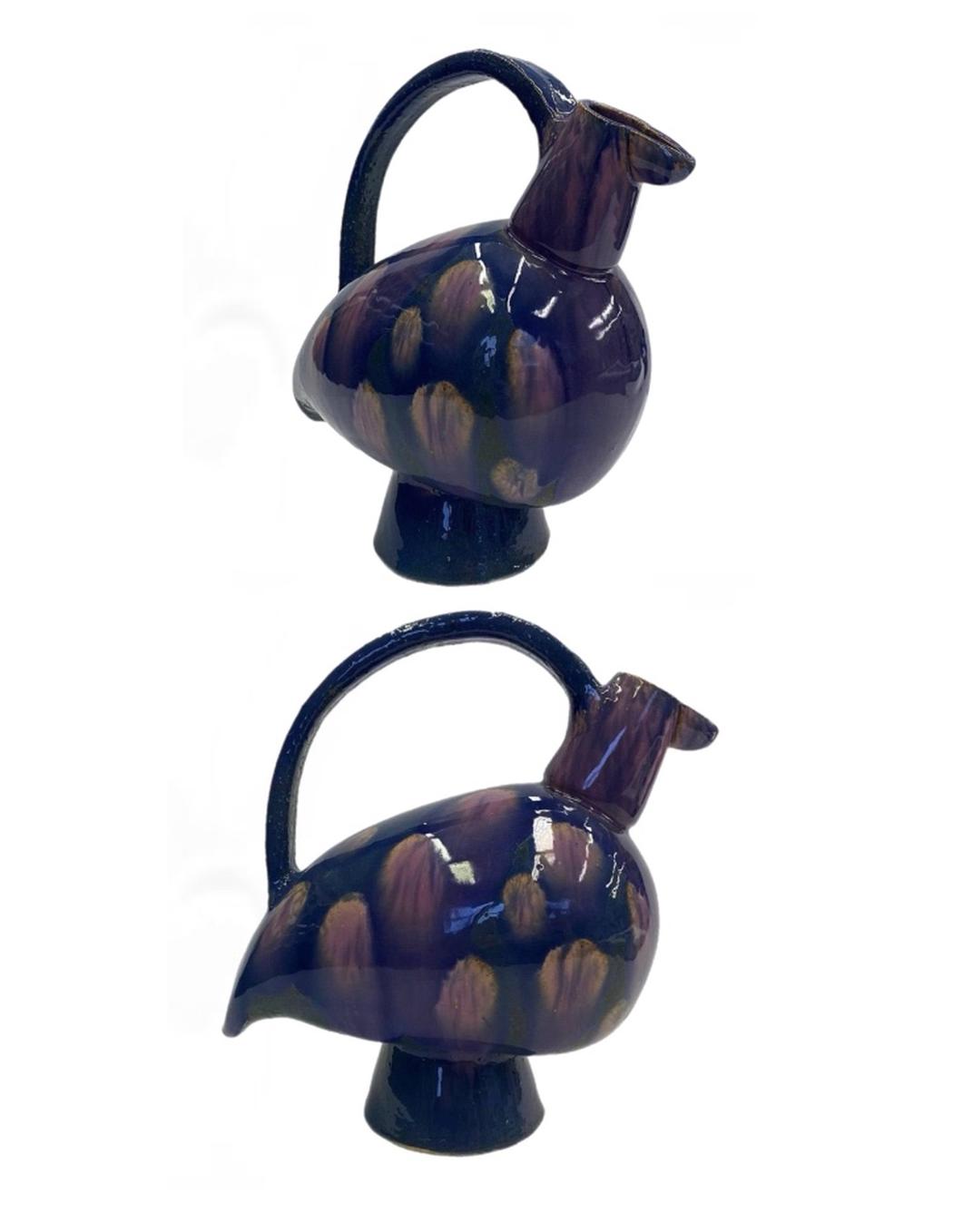 Polina Skrypnikova | Guineahen
Your work navigates between anxiety and naïve joy. Do you see these states as opposites, or as inseparable parts of human experience?
Naïve joy without anxiety is naivety in the worst sense — blindness, a refusal to see. Anxiety without joy is paralysis, fear that immobilizes. Together, however, they create wholeness — the very wholeness we lose as we grow up. We learn to separate: this is joy, it may be shown; this is anxiety, it must be hidden. We build partitions within ourselves so as not to go mad, and fail to notice that the more partitions there are, the less truth remains.
Child N has not yet built these walls. For him, a purple bird and his mother’s table are not in conflict — they are the same world. He draws bright animals because he can, while still feeling tension he cannot yet name. His naivety does not deny anxiety — it contains it. That is its strength.
My task as an artist is to return to this state — not to childhood itself, but to that capacity to contain. So that joy is not an escape from reality, and anxiety does not destroy the ability to feel joy. So that both states may exist side by side — without shame, without fear, without division.
Leave a Reply
You must be logged in to post a comment.