
Maro Markou
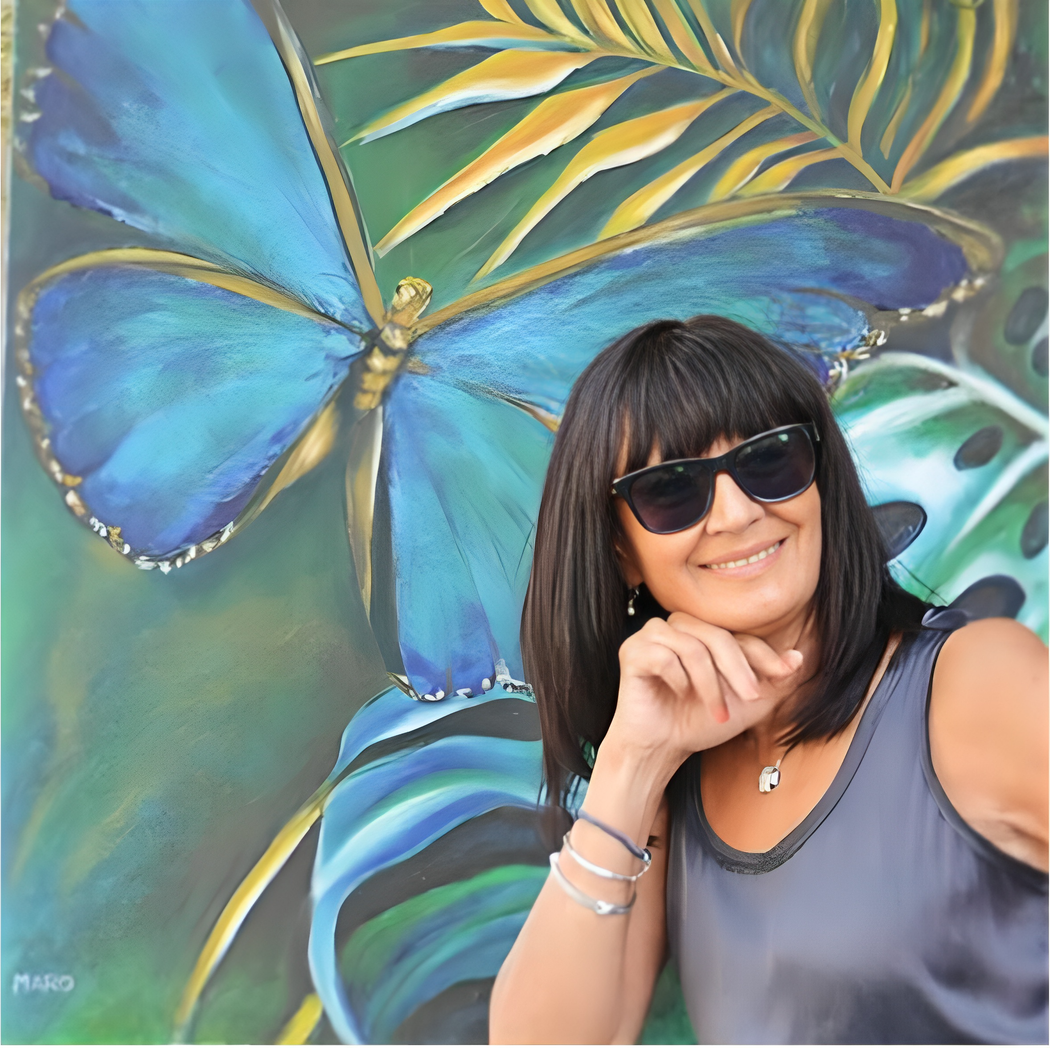
Your forms seem to move between the visible and the suggestive. What is it that gives birth to the first spark before it is imprinted on the canvas?
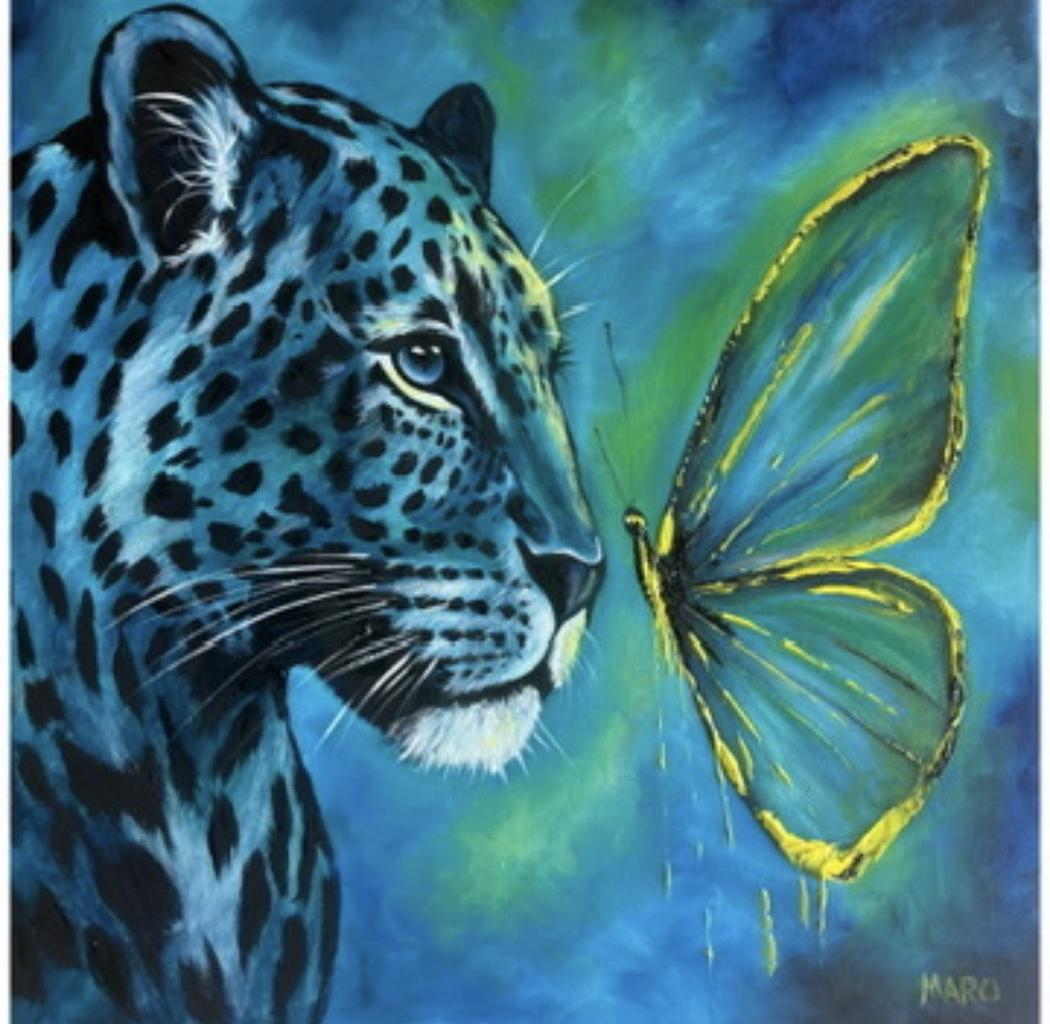
The first spark usually comes from a feeling, but I often do have an image in my mind. There is always a reason behind the forms I choose. For example, a butterfly represents transformation, and a lion can represent strength, courage, and power.
My work moves between the visible and the suggestive because I use recognisable images, but I don’t want them to stay only as images. I want them to carry emotion and meaning. Through colour, texture, and movement, the painting becomes more than what is seen — it becomes what is felt.
In your work, nature, the face and an inner, almost spiritual search coexist. Is this a conscious journey or a need that arises effortlessly?
For me, it is both. There is a conscious awareness, but it is also something that comes very naturally. My faith is at the centre of everything I do. I believe that the gift I have to paint comes from God, and I see my work as a way of expressing that connection.
The spiritual element is not something I try to create—it is already there. It comes through my experiences, through what I have lived, and through my relationship with God. Especially in difficult times, my faith has been my strength, and that naturally flows into my work.
I don’t paint just to create something beautiful. I paint to express something deeper—to bring hope, strength, and a sense of peace. If someone can feel that through my work, then I know I am using my gift in the way it was meant to be used.
Is there a sense of balance between the rigor of the structure and the freedom of expression? How is this delicate coexistence achieved?
Yes, there is a balance, and it comes through the process. I usually begin with a clear idea or image, which gives the work its structure. But once I start painting, I allow myself the freedom to move with it.
The structure gives me direction, but the expression comes through instinct—through colour, texture, and movement. I don’t try to control everything. I let the painting evolve, and sometimes it takes me somewhere unexpected. For me, that balance is about trust—trusting the process and allowing it to unfold naturally.
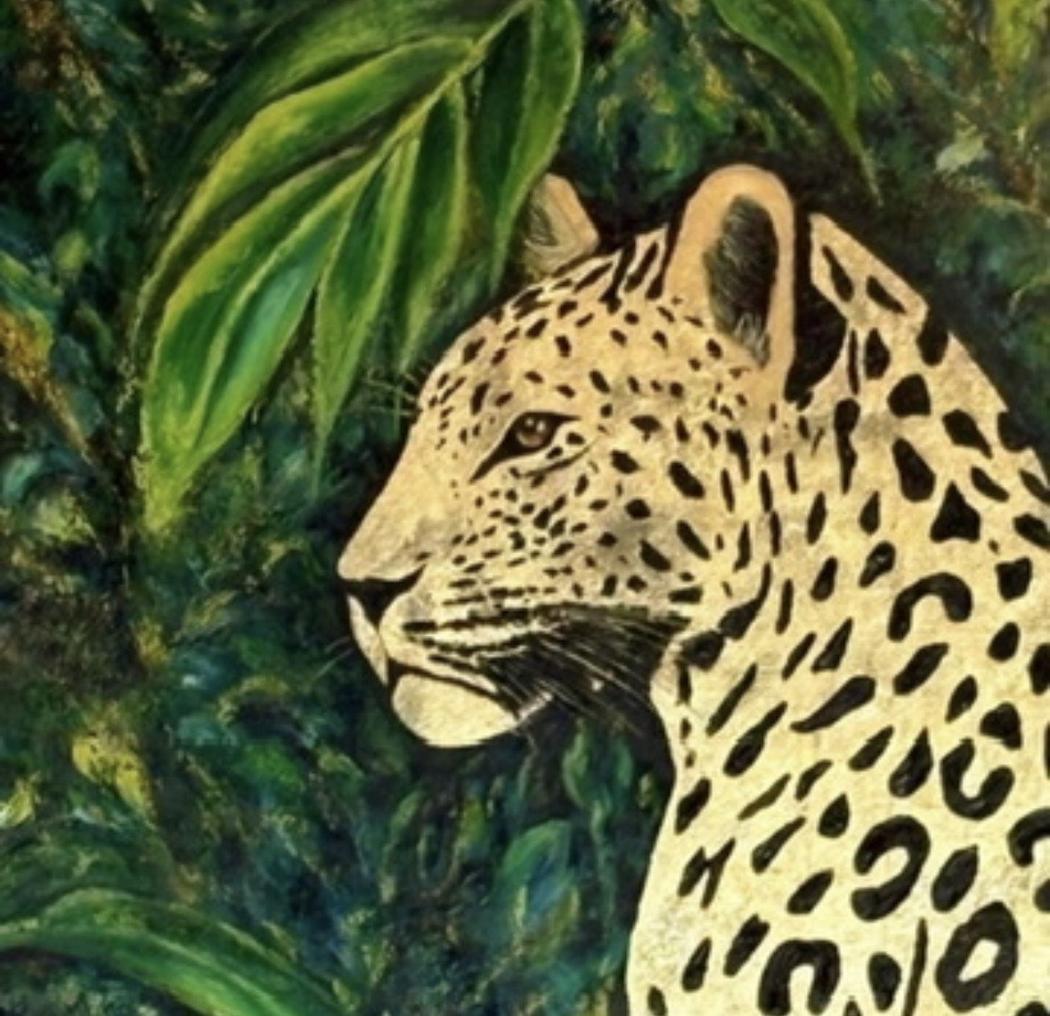
If you had to describe your artistic career as a journey, what would be its key points to date?
My journey hasn’t been a straight line. It has been shaped by life, by challenges, and by growth. Some of the most difficult times I’ve gone through have actually influenced my work the most.
A key point for me was finding my own voice and having the courage to express it honestly. Another was realising that my work is not just about creating something visual, but about conveying meaning and emotion that others can connect with.
My faith has been central throughout this journey. It has given me strength, especially in the harder moments, and has guided me to use my work in a way that can bring hope and positivity to others.
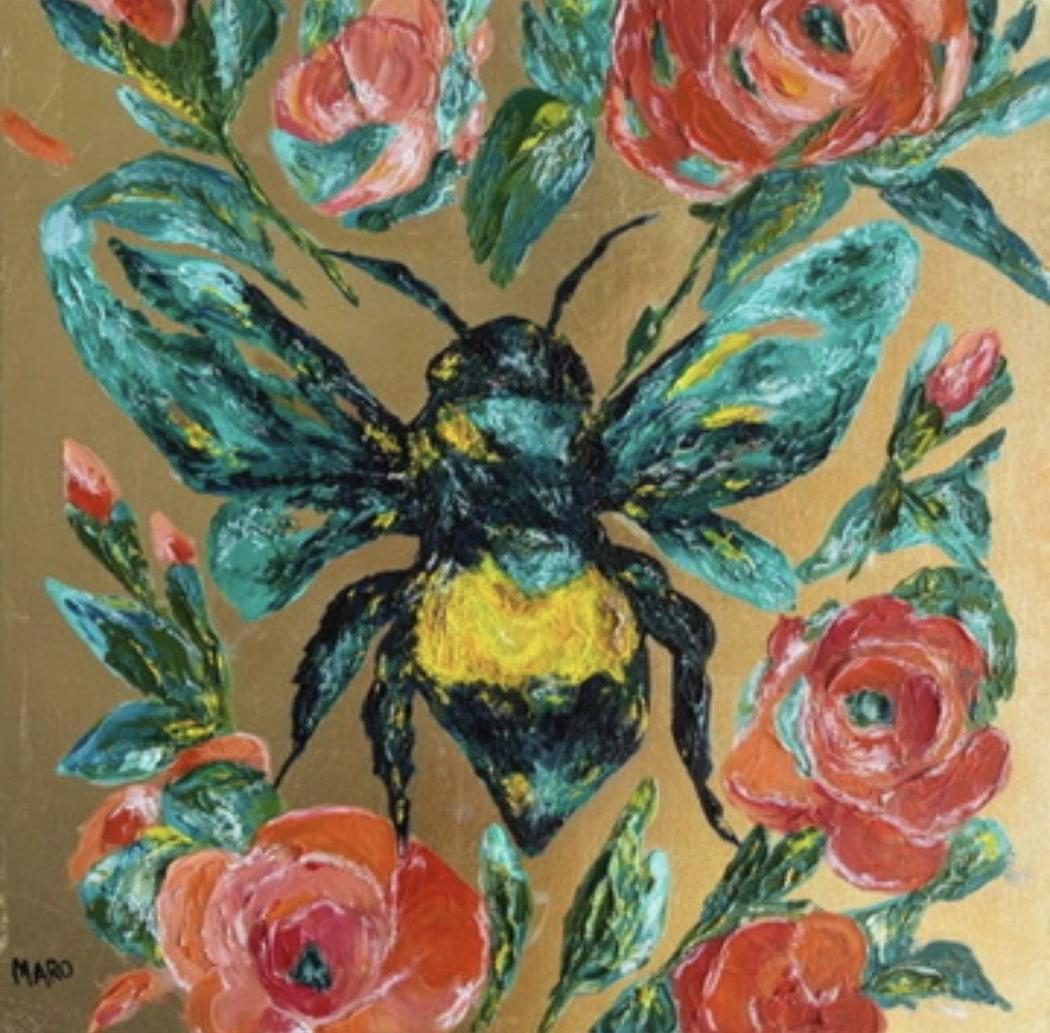
In a world that is constantly changing, what place does art have for you today? Can it still function as a refuge or as an awakening?
I believe art is more important than ever in today’s world. Everything is moving so fast, and people are often overwhelmed. Art creates a moment to pause and reconnect.
For me, it is both a refuge and an awakening. It has also been a very healing part of my own journey. Through painting, I’ve been able to work through experiences in a way that words can’t always express.
I think art gives people space—to reflect, to feel, and sometimes to see things differently. That’s something I value deeply in my own work.
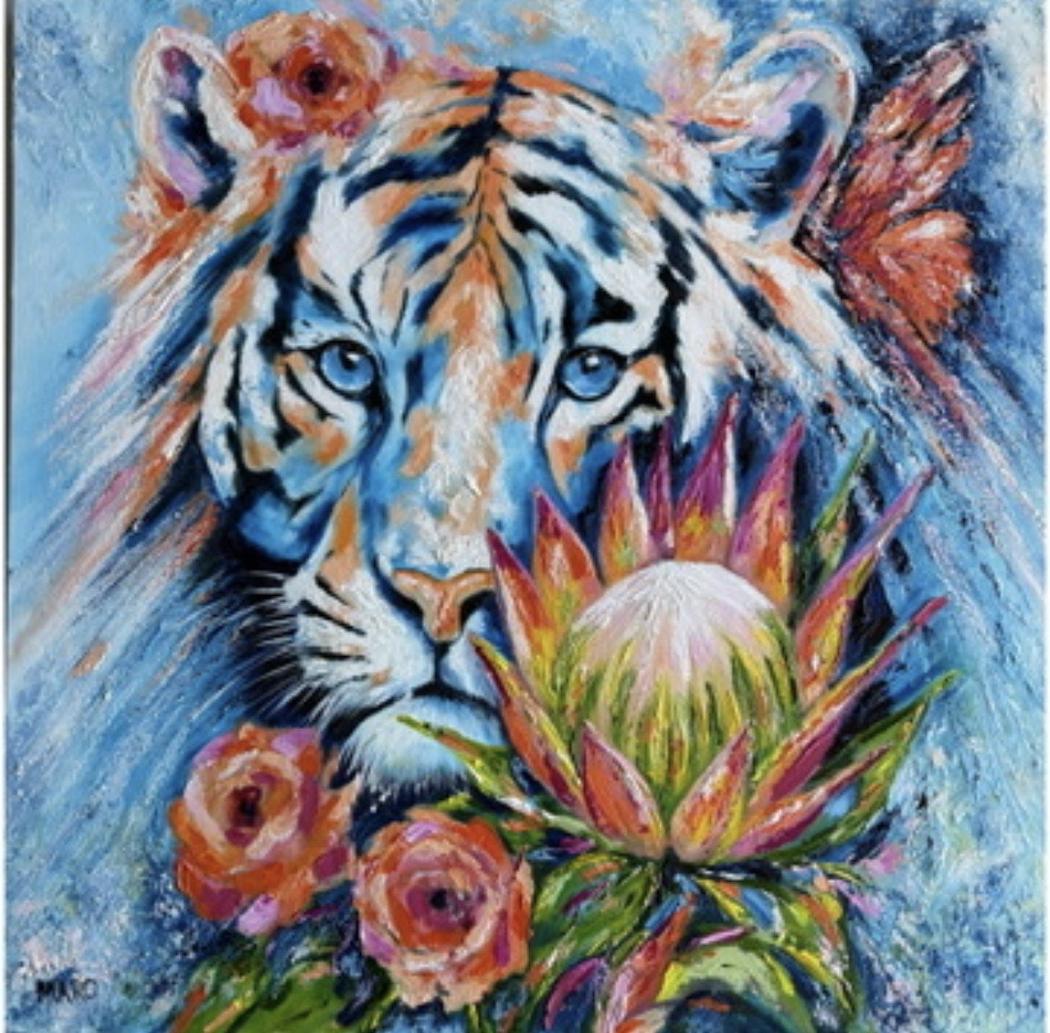
What would you like the viewer to “take with them” when leaving one of your exhibitions? An emotion, a thought or a question?
I would like the viewer to leave with a feeling rather than a fixed idea. Something that stays with them, even after they’ve left.
If my work can create a sense of calm, strength, or even just a moment of reflection, then that is enough. I want people to connect with it in their own way and take something personal from the experience.
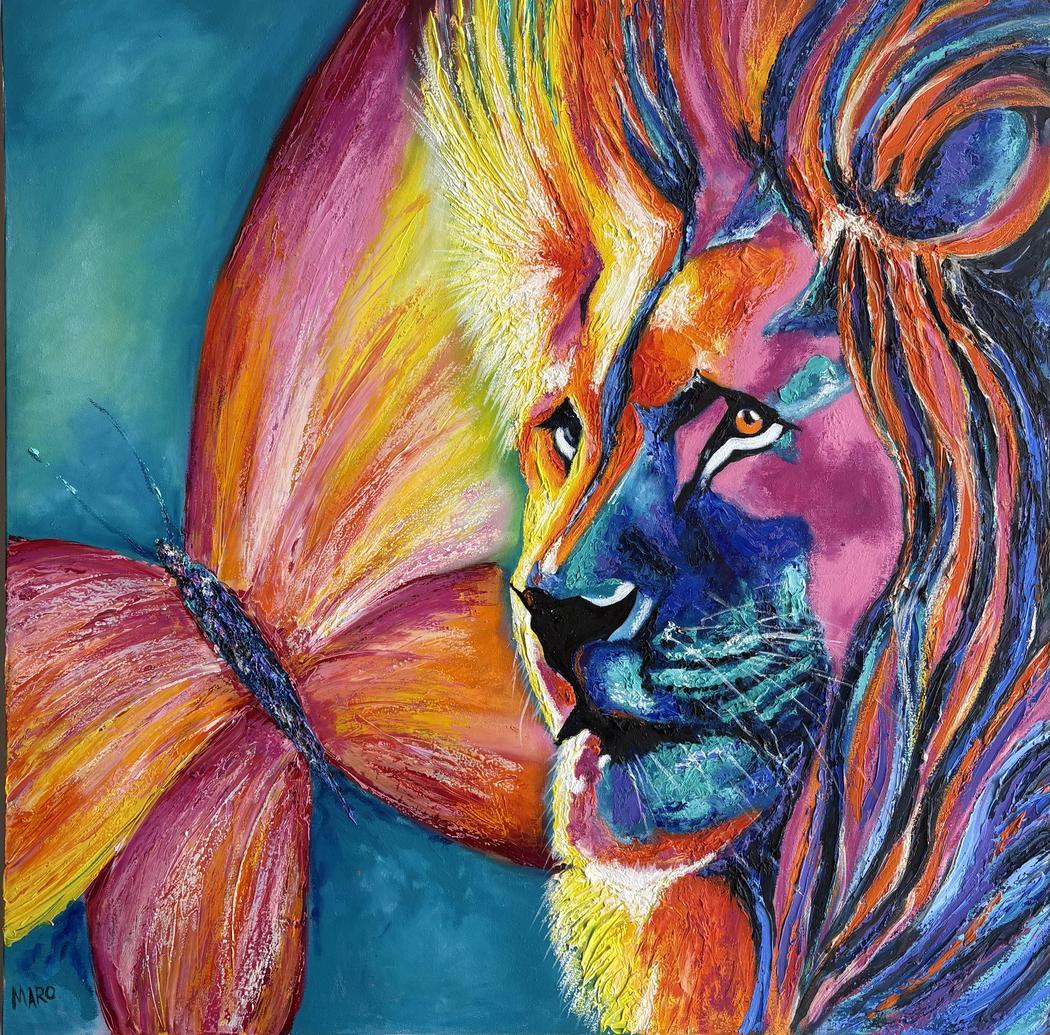
In your participation in Artway, do you feel that your work functions as a personal place or as a meeting place with the viewer?
I think it begins as something personal, but it doesn’t stay there. Once the work is finished and shared, it becomes a meeting place.
Each person brings their own feelings and experiences to it, and that can change the way the work is seen. I don’t try to control that. I think that’s where the real connection happens—when the work no longer belongs only to me.
Leave a Reply
You must be logged in to post a comment.