
Clothilde Fricot Mugnerot
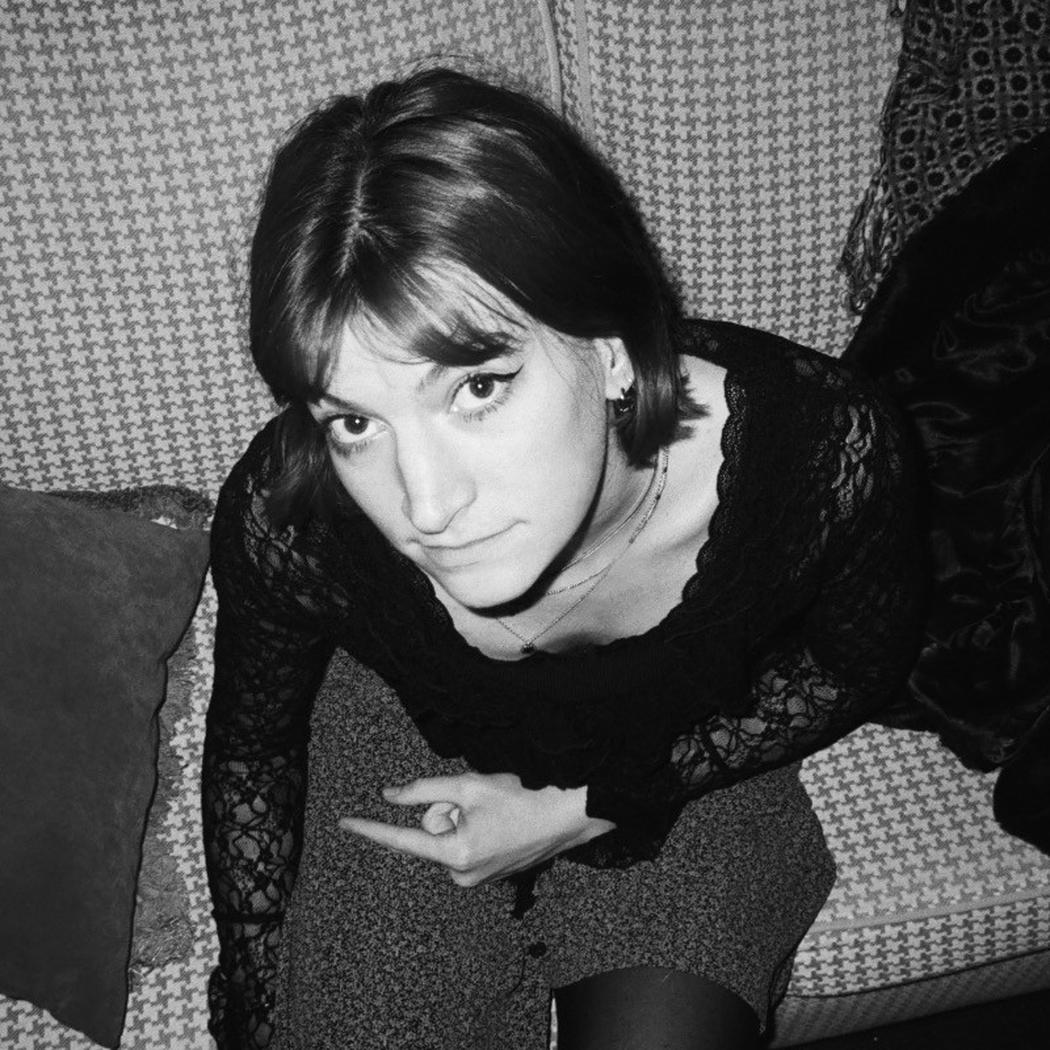
Your artistic journey started very early. Can you recall a specific moment or experience that made you realize art would become central to your life?
Yes, indeed, my relationship with art began very early. From childhood, I have been particularly attentive to details, materials, colors, lines, and shapes that surround us. I have always felt the need to experiment, to manipulate and transform matter, and manual and creative practices very quickly became an essential part of my daily life.
From a very young age, I observed my parents engaging in hands-on practices. My mother created clothes, embroidered, and painted; my father made things and was constantly building and repairing. Simply witnessing these gestures, skills, and processes of making nurtured my curiosity and shaped my relationship with creation from an early age.
As I grew up, I quickly understood that art—and visual art in particular—was the most accurate means of expression for me, the one that allowed me to externalize a sensitivity that was sometimes difficult to put into words.
I have always drawn. As a teenager, I spent hours drawing exclusively in black and white, using a Rotring pen, in a very introspective and almost obsessive practice. Painting came a little later, as a new opening.
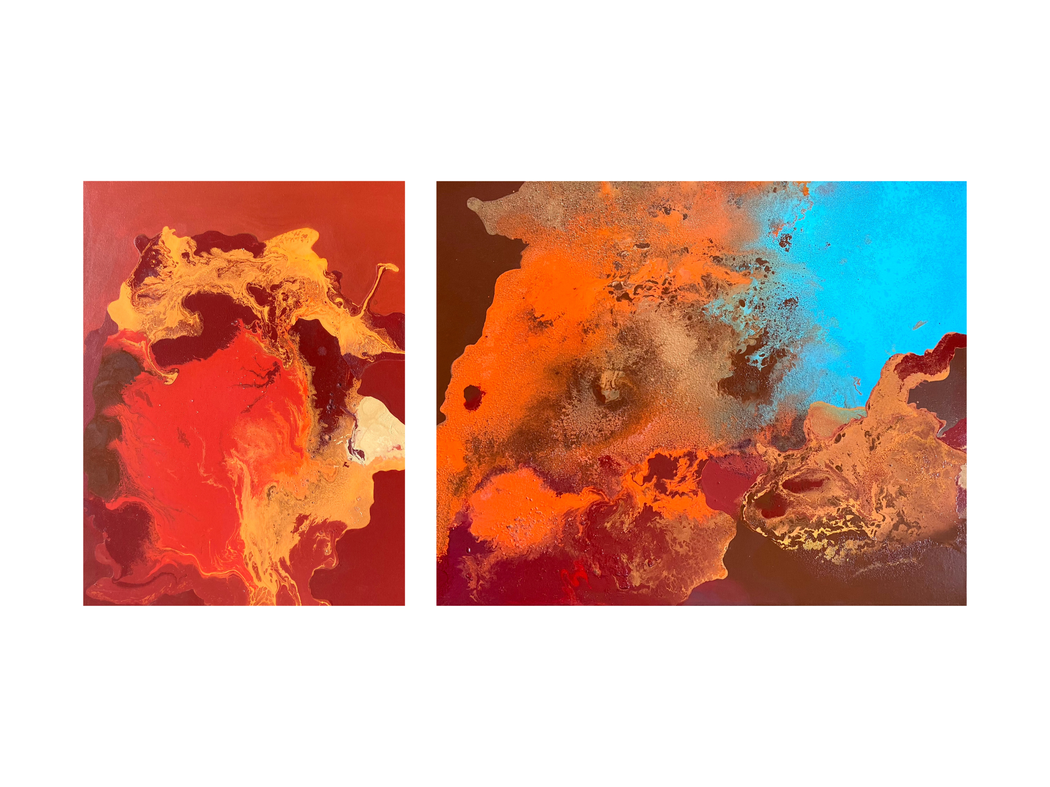 Clothilde Fricot Mugnerot | Yellowstone
You lived in Canada for four years. How did this experience transform your artistic vision and your relationship with nature?
I began with drawing, working exclusively in black and white for many years. My arrival in Canada marked a true turning point. I was deeply moved by the vastness of the landscapes, by the omnipresent nature—raw and spectacular.
It was at that moment that color entered my painting practice.
Painting in color asserted itself almost instinctively, as something self-evident. In hindsight, it is striking to see how naturally this transformation took place.
I traveled across Canada and the United States, which allowed me to discover grand landscapes and national parks shaped by impressive natural phenomena. This direct encounter with powerful, living territories profoundly transformed my artistic vision and my relationship to the world.
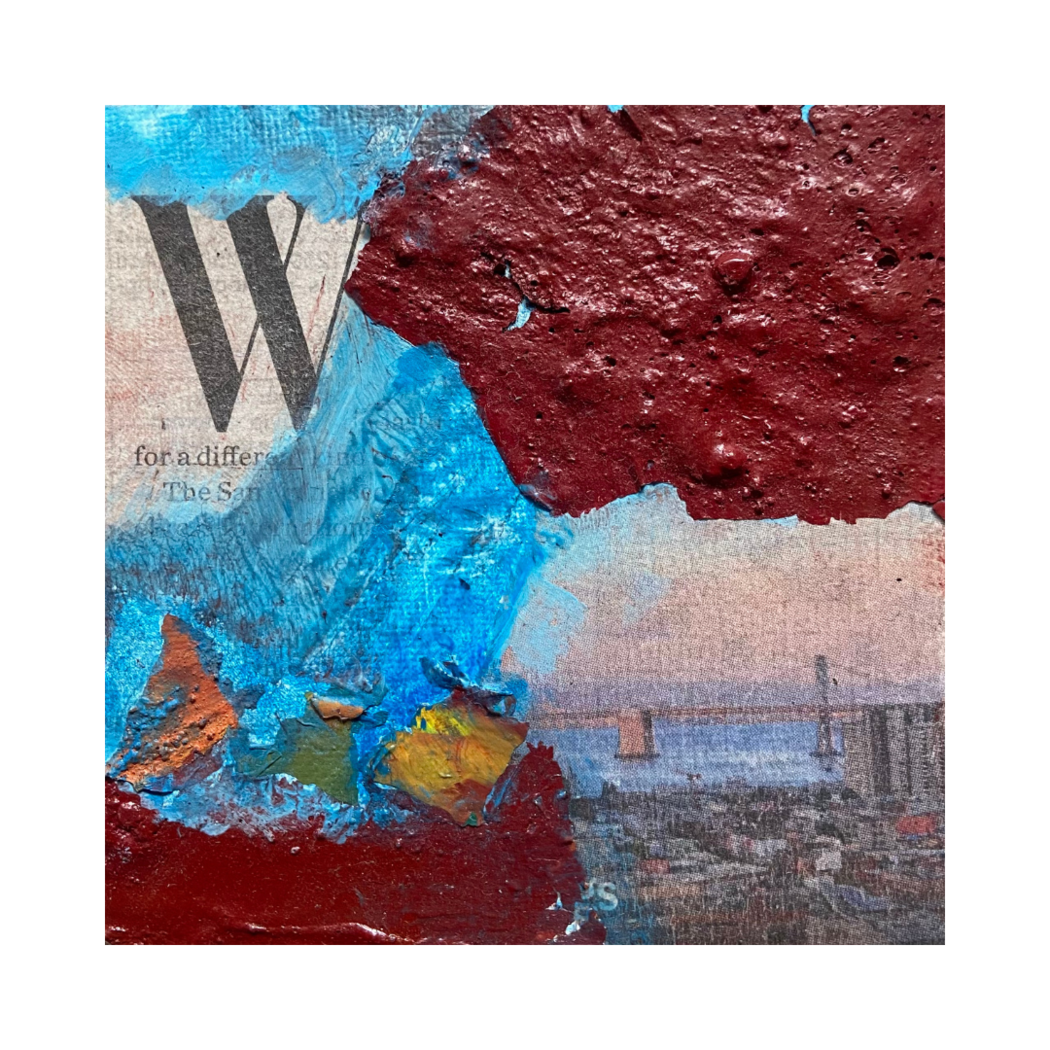 Clothilde Fricot Mugnerot | Mouvance infernale
The Yellowstone series was inspired by your road trips. What emotions or sensations were you trying to translate onto the canvas?
The Yellowstone project is part of the continuation of these travel experiences. Inspired by volcanic zones, telluric movements, and the natural colors of the earth, this series evokes unstable landscapes traversed by invisible forces.
Colors become a language in themselves—the language of transformation. They flow, collide, and settle, like the layers of a ground in constant recomposition.
Through these canvases, I seek to convey the emotion that arises at the moment of a shift, during a change of state. There is also the idea of the ephemeral: those fleeting moments when something transforms before our eyes, never to be fixed or frozen.
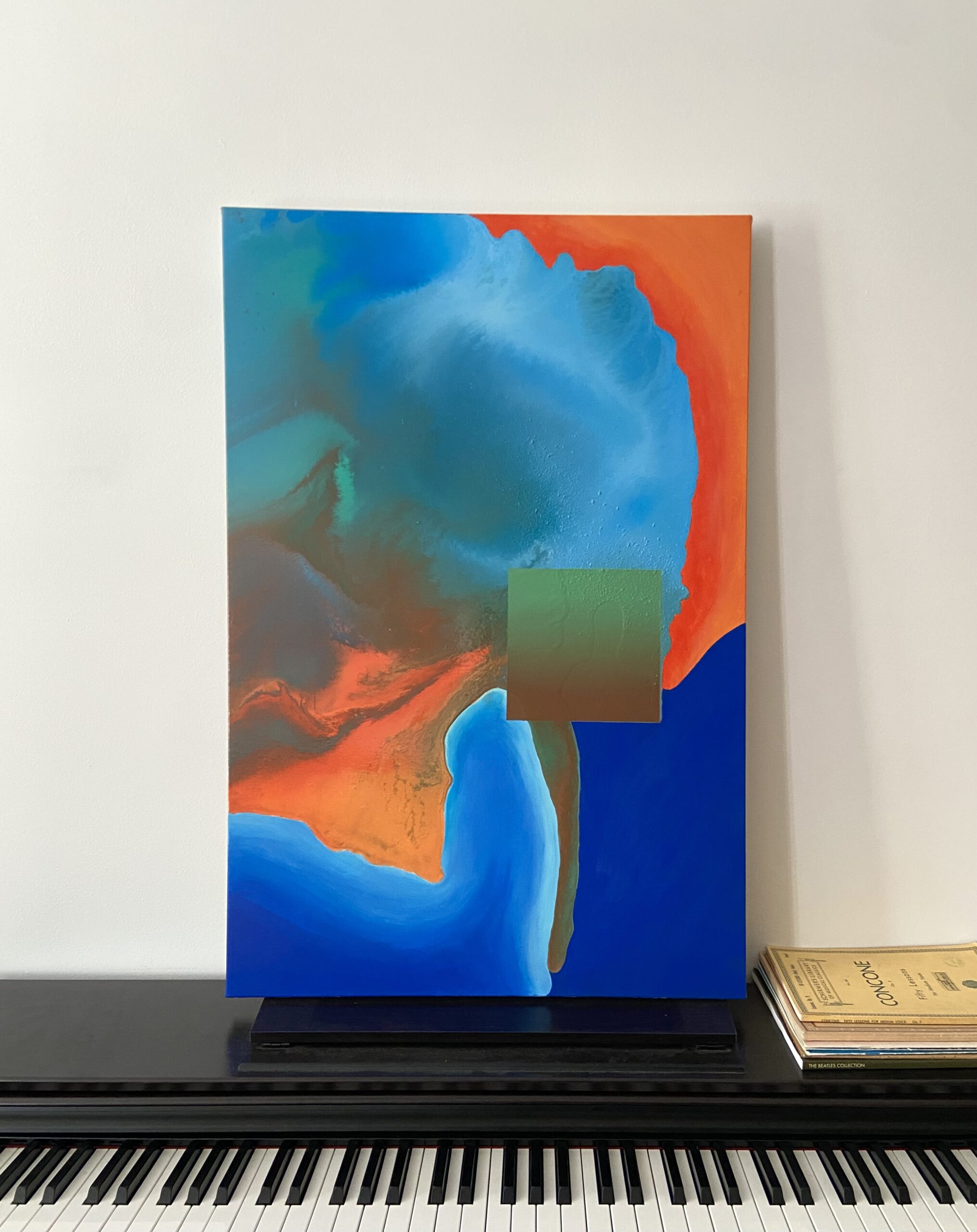
You often describe movement in your work as a metaphor for nature. What does movement symbolize for you on a deeper level?
My practice is rooted in an exploration of transformation, transitional states, and moments when matter escapes all control. Through experiments combining pigments, alcohol-based paint, acrylic, ferrofluid, and chemical reactions, I establish initial conditions and then allow the fluids to interact, disrupt one another, and short-circuit.
Form emerges from imbalance: it appears, transforms, and almost simultaneously disappears. This first phase of the process relies on a deliberate loss of control. Matter sometimes acts faster than intention, generating unique compositions that are impossible to reproduce.
These images may evoke aerial landscapes, geological formations, volcanic zones, or even microscopic movements. They oscillate between the infinitesimal and the monumental, between slowness and sudden eruption. Each work becomes the trace of a tipping point—an instant when the flow briefly breaks before reconfiguring itself.
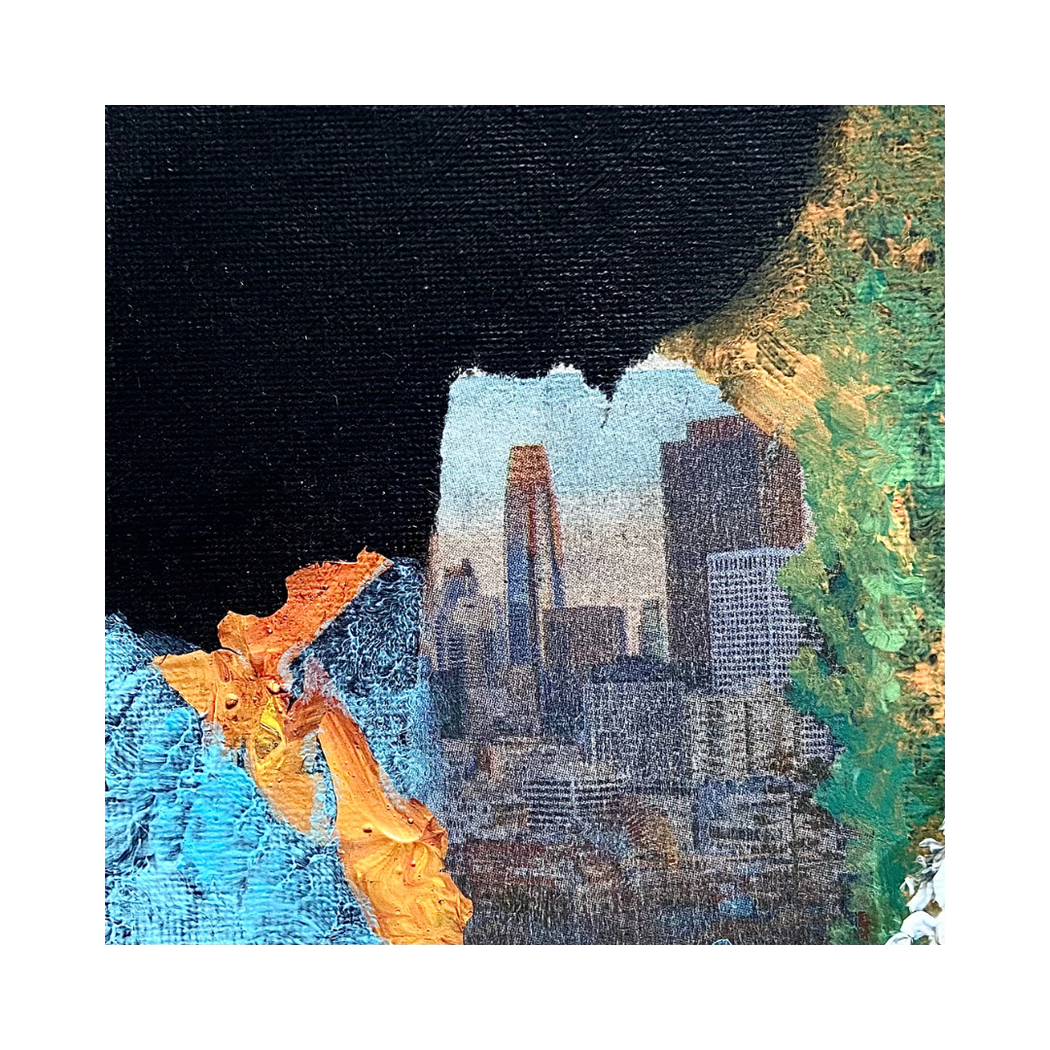 Clothilde Fricot Mugnerot | Mouvance infernale
Your works remain open to interpretation. How important is it for you that viewers bring their own narratives to your art?
It is precisely for this reason that abstraction occupies such an important place in my work. It allows for an open space, without imposing a single interpretation or narrative. What I seek above all is to evoke an emotional response in the viewer.
I place great importance on allowing each person to project their own story, sensations, and memories. Being attentive to what we feel when facing an artwork, and questioning why a particular form or color resonates with us, seems fundamental to me. The work then becomes a place of intimate dialogue between the image and the one who looks at it.
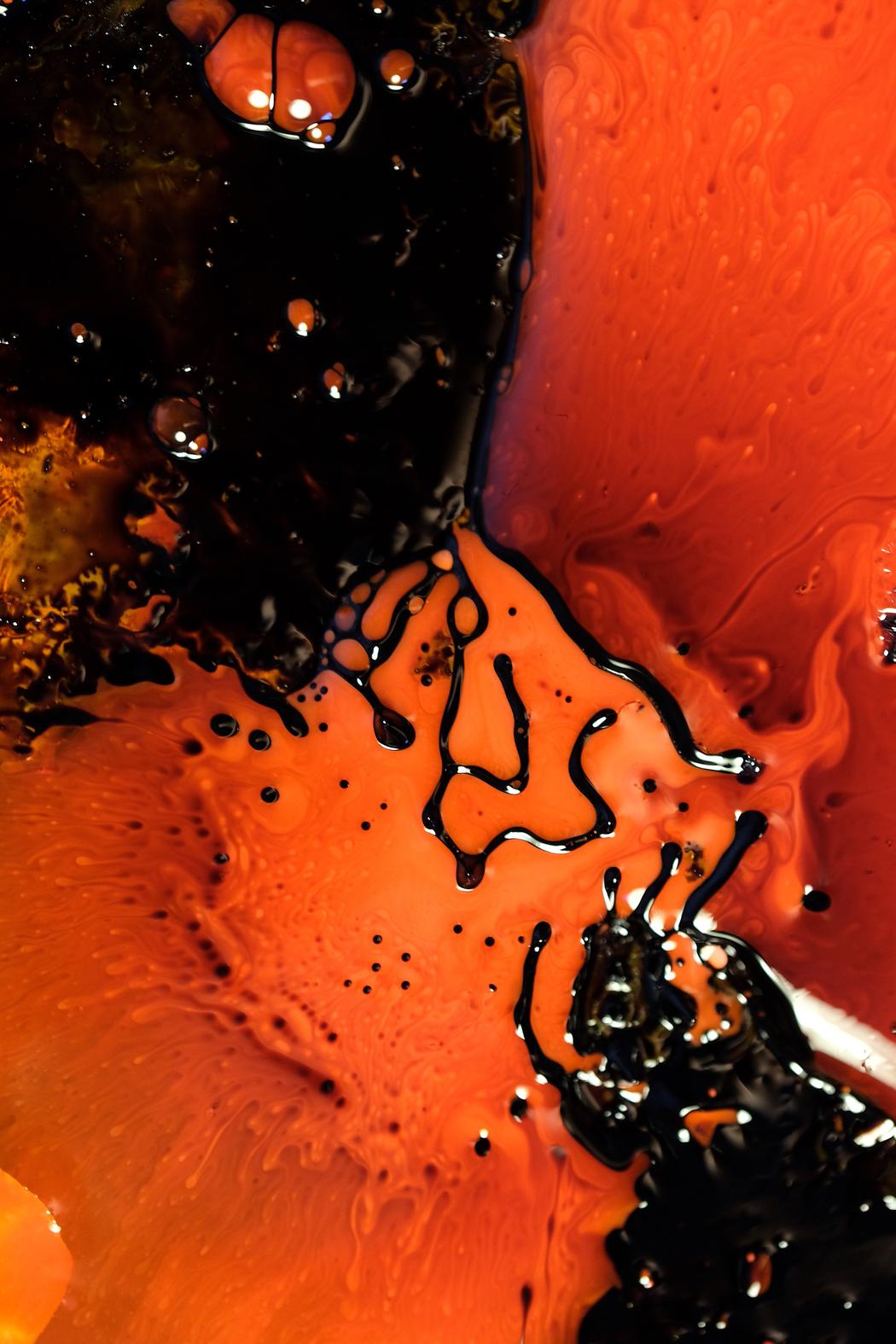 Clothilde Fricot Mugnerot | Sans Titre
How do you balance control and spontaneity during your creative process, especially when working with fluid materials?
I often speak of “guided chance” or “controlled randomness.” It is a balance that is particularly important to me. I usually begin with an intention, a direction, but I leave a great deal of space for chance, for the unpredictable reactions of the material.
Part of the process is accepting what I have not entirely decided, and then continuing to create from there. There is something very important to me in this capacity for adaptation.
It is also a way of echoing nature: it cannot be controlled; it takes shape over time, through movement and successive transformations. Nature is in a constant state of evolution, and my work seeks to situate itself within this dynamic.
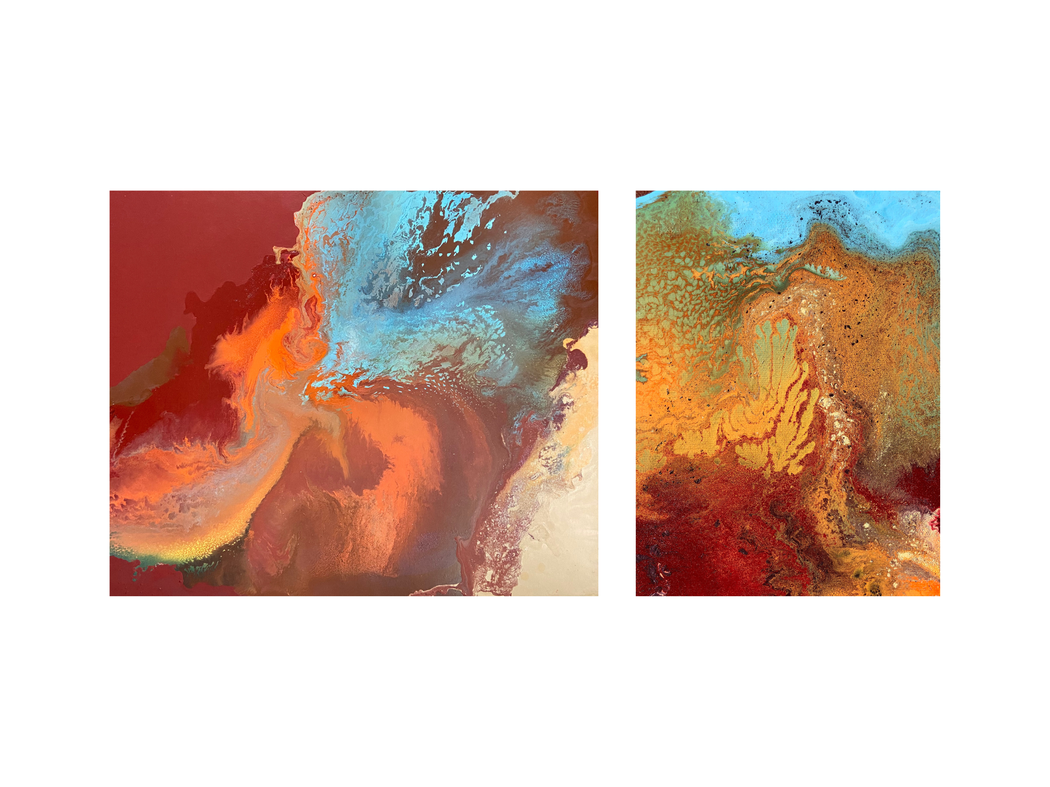 Clothilde Fricot Mugnerot | Yellowstone
You have a background in communication and design. How does this influence your approach to fine art today?
My training in communication and design made me aware of the importance of discourse around art. Knowing how to present one’s work, place it in context, and speak about it with clarity and accuracy is now an integral part of artistic practice.
Design also brought me a certain rigor: attention to composition, balance, and formal and technical choices. This more structured foundation now informs my fine art practice, even though it leaves ample room for intuition and experimentation.
Leave a Reply
You must be logged in to post a comment.