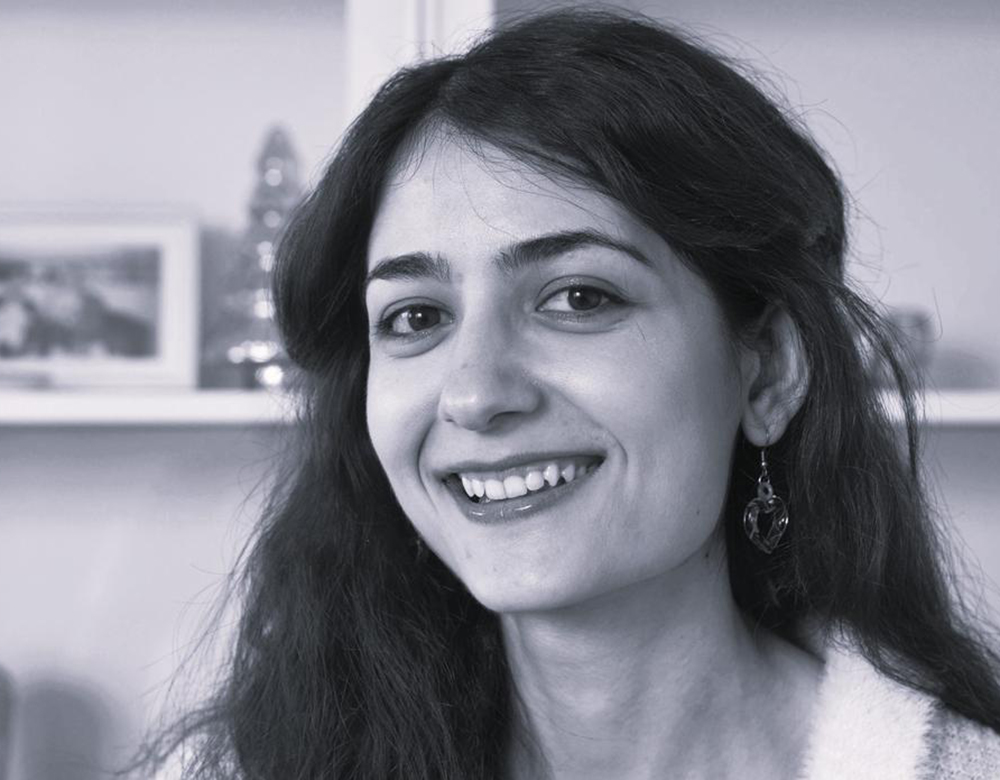
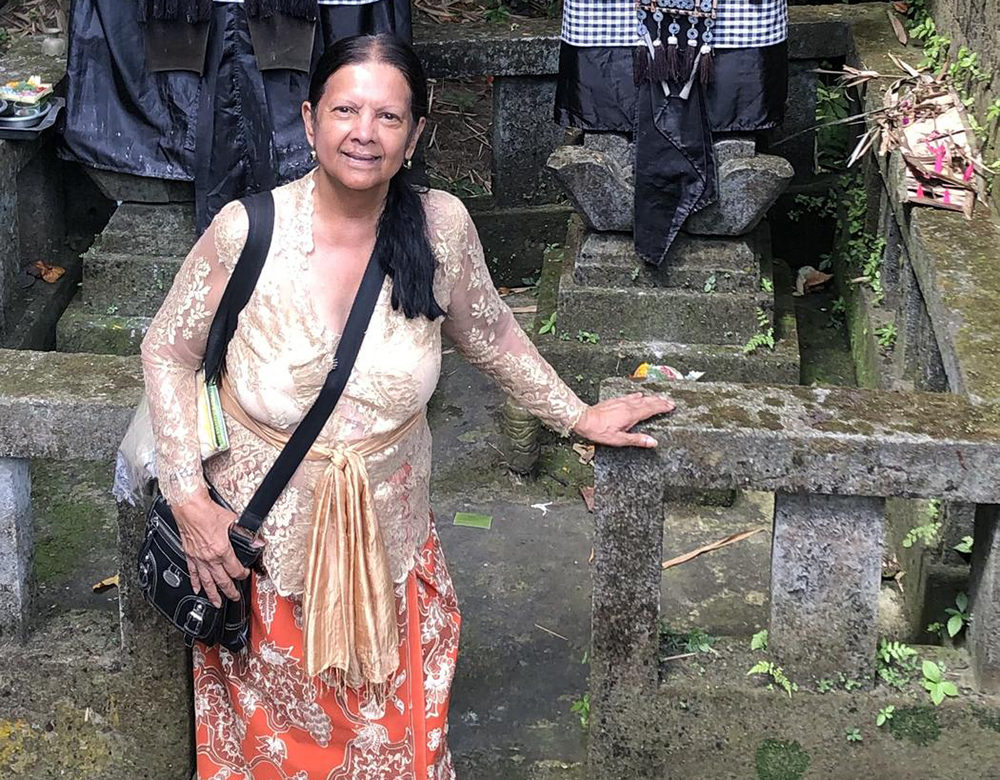
Indra Persad Milowe
You grew up in Curepe, Trinidad. What are some of your earliest memories of art, color, or visual culture from your childhood there?
After I retired in April, 2019, I thought about all the kitchens that I had cooked in and my favorite was my grandmother’s kitchen. She cooked with three chulhas (wood-burning outdoor stoves). They required a lot of skill to manipulate the pieces of wood, to keep the flame burning correctly. To become an “eligible bride,” one of the requirements was to be able to puff a paratha (a flatbread made with wheat flour and ghee), with the right texture and consistency. After mastering that skill, you were allowed to place “your handprint” on her kitchen wall. It was like a graduation! That kitchen brought up a lot of memories of different foods that were cooked for different festivals. Hence my first painting was my grandmother’s kitchen. As I began to plan out this painting, I remembered the smell of freshly made ladoos (small spherical sweets) which was a favorite dessert of ours and of Lord Ganesh. Lord Ganesh is the Remover of all Obstacles and the first Hindu deity to be worshiped in all festivals and ceremonies. My second painting was Ganesh Chaturthi, a festival honoring Lord Ganesh.
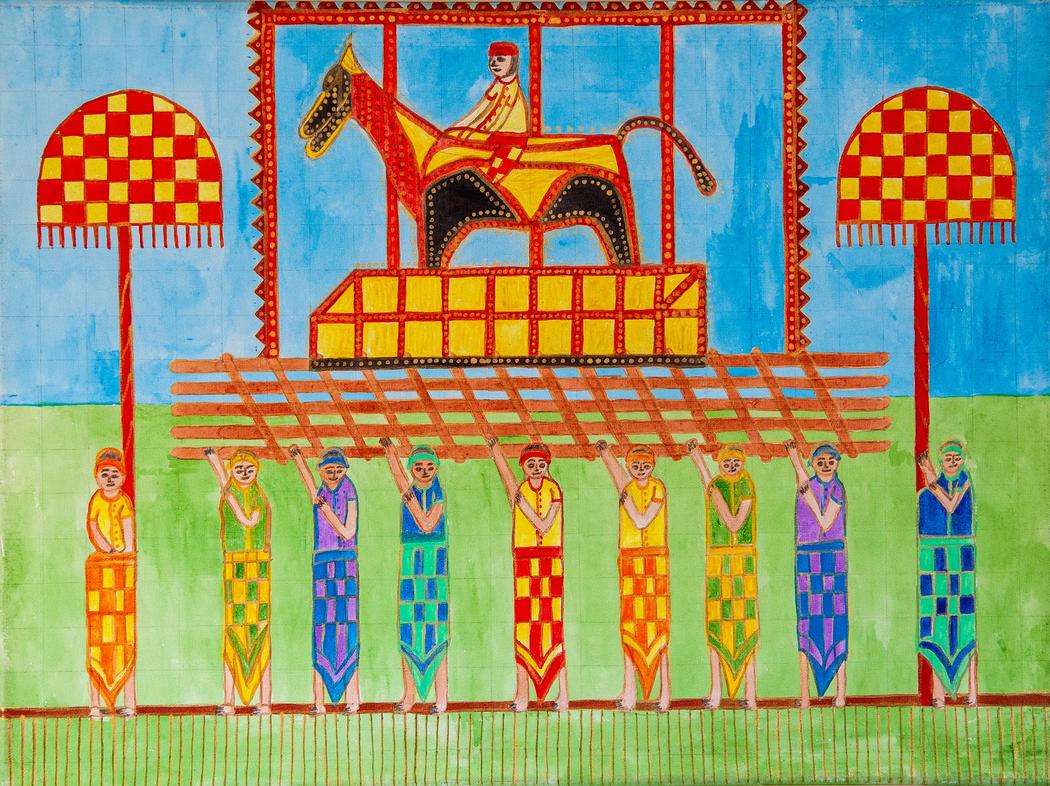 Indra Persad Milowe | A Balinese Funeral
How did your time at Curepe Presbyterian School, St Augustine Girls’ High School, and the University of the West Indies influence your development as an artist?
In my youth I wanted to study art. My interest was in nature, still life and design. I adored my high school art teacher, Mrs. Helga Mohammed. She was from Madrid and married to a Trinidadian. On my first day in her class, she wrote on the blackboard: “Art is not just a painting hanging up on a wall, art is in every aspect of your daily life.” My paintings were chosen for the high school’s yearbook for two consecutive years. At age 15, I painted from nature: orchids on a branch. At age 16, I did a still life: a display of an apple, pear, and a bunch of grapes. Those two paintings and all the incredible reviews that came with them lifted my confidence in my artwork.
I retired from general, ophthalmic and psychiatric nursing in 2019. I had worked in England, Malta, Trinidad and the United States. Through British Nurses Overseas, I was able to work in different countries. Ultimately, I decided to go back to art during my retirement and my preferred medium is acrylic paints on canvas.
I have had numerous exhibitions of my paintings in public venues and in many online digital forums. I have three large collections of paintings relating to the Festivals and Folklore of Trinidad, West Indies, Moroccan culture, and Balinese culture.
Your work often draws on travel, cultural traditions, and local celebrations. What first inspired you to make these experiences a central part of your artistic practice?
I have travelled extensively in and out of cities around the world and have many fond memories. I was determined to create very original art!
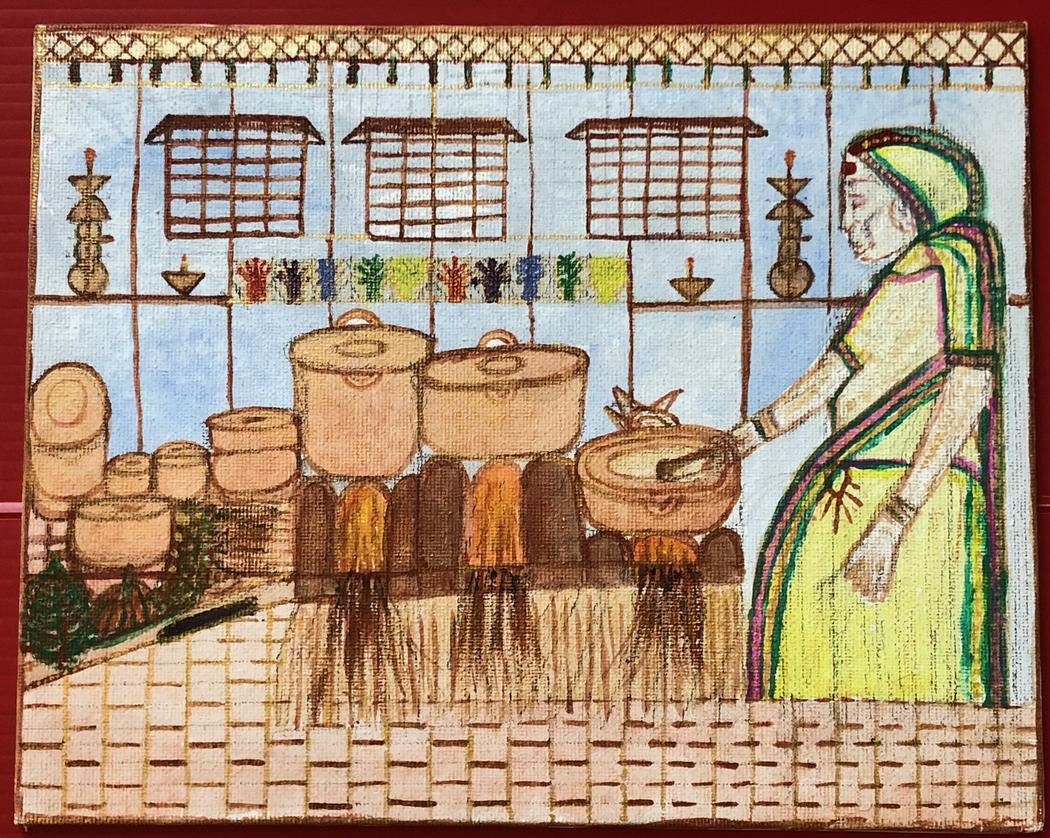 Indra Persad Milowe | My 1St Painting Was My Grandmother’S Kitchen
How did your two artist residencies in Ubud change the way you observed and understood Balinese culture?
I always wore sarongs (traditional wrap around dresses) and was told that if I wore my sarong with a kebaya (traditional chest garment) I could be invited to the five-day Odalan Festival at the local hindu temple. A guard at the entrance makes sure everyone is properly attired!
Kebaya has become Indonesia’s most proud national attire for women. Each province and area has its own distinct kebaya style. Kebaya Bali is especially unique and distinctive compared to other areas in Indonesia. Its uniqueness lies in the colors of kebaya used for different religious ceremonies.
For Odalan, the statues of the deities housed in the Royal Palace are taken by a large procession to the town’s temple where they are worshiped for five days. Then they are removed and returned. The level of commitment of the musicians, drummers and everyone is wonderful to watch as they put their everything in these proud moments. Crowds of Balinese as well as interested tourists observed these events.
At the outdoor temple, I had difficulty getting up from the ground one day because of leg cramps. Two women came to help me up and invited me to join everyone for lunch and it felt like I belonged to that community. When I asked to pay they refused my offer and was told that I was their guest! The decorations were incredibly beautiful; everyone was dressed in their finest. Afterwards, I went out and bought six more sarongs!
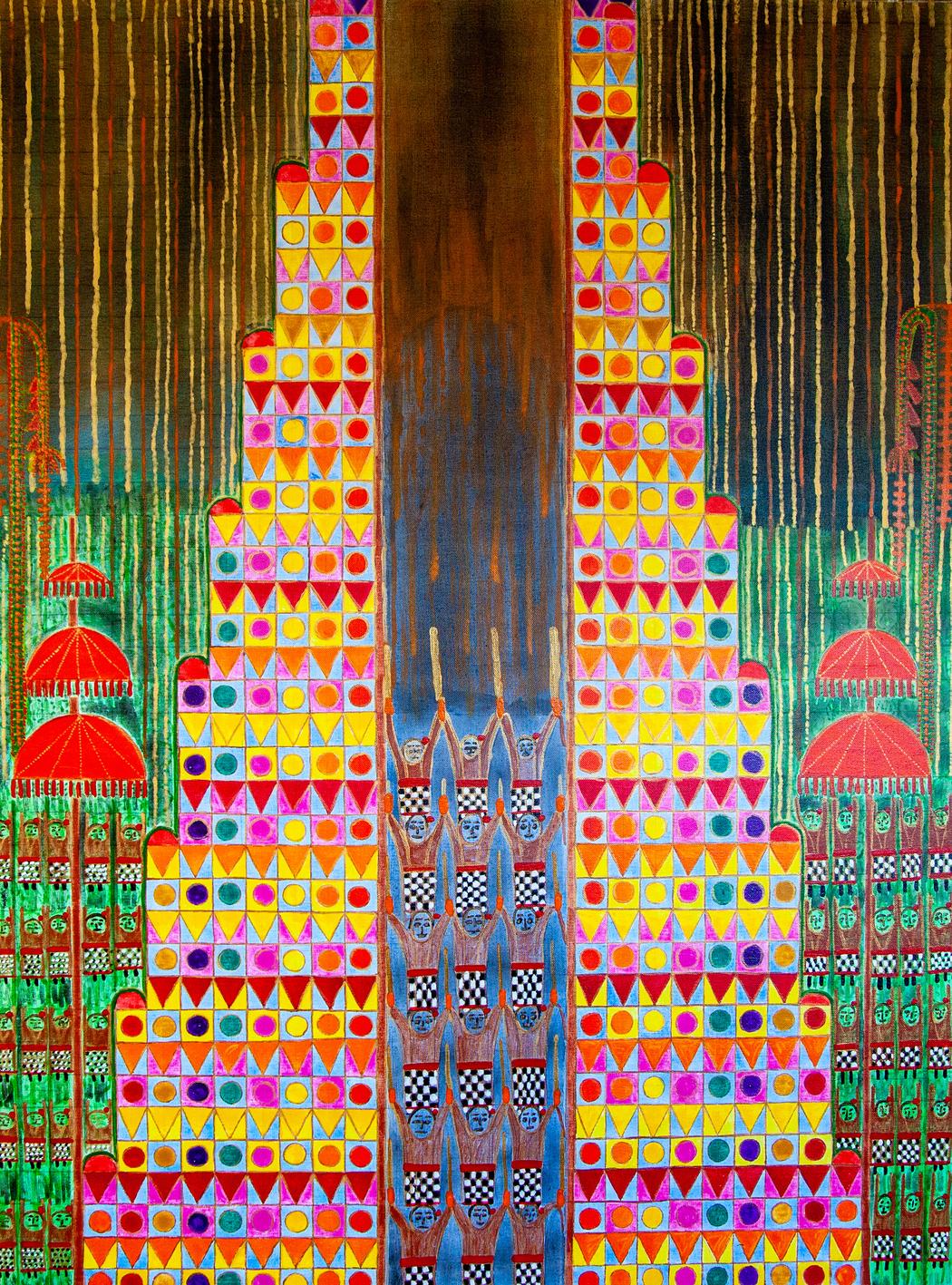 Indra Persad Milowe | Candi Bentar
You attended ceremonies and festivals in Bali, including a wedding, a baby ceremony, Odalan, and Galungan. Which of these experiences had the strongest impact on you as an artist, and why?
I was invited to a Balinese wedding by Rudi and his wife Putu (the owners of the residence where I stayed). I felt so accepted when I was invited to take photographs with the bride and groom and to join everyone for lunch.
I had been shopping in Ubud Market for an Ikat wall hanging and spent quite a while in this shop chatting with the lovely woman owner. Ikat weaving refers to yarns that are first dyed before they are woven into patterns. The weaver has to precisely dye the threads then align them into the correct pattern, a very complicated process. On top of that, there are three different ikat weaving techniques!
One week later, I was walking around Ubud Market and saw that same shop owner again. She came to chat with me and wanted to know when I was leaving. She invited me to her “Granddaughter’s three-month Baby Ceremony.” I was ecstatic about the invitation, but it was the end of the day and I was too tired to go out to buy a gift. I stopped off at Putu’s house to ask her what is appropriate to take as a gift. She replied, “Anything!” I had bought a beautiful box of incense to bring back and she approved of it. I asked her what she was taking and she said, “I will bring a bag of rice.” The Balinese are so simple and practical and much less materialistic compared to most people in the USA.
I was blown away to see the level of devotion, love and support that was showered by everyone to this baby. Lunch was delicious. I tried everything including the roasted pig. I also got a box of treats to take back with me. It was attended by a lot of colorfully dressed women whom I had met in the temple and at the wedding. It is a small town, everyone knows everyone else, they all knew my name and wanted to know when I would return to Ubud! I was struck at how spiritual the ceremony was and took a seat so I could see all the gifts everyone was bringing: rice, flour, tea, coffee, vegetables, a bunch of bananas, coconuts, eggs etc.
The Balinese believe that a baby does not fully come into its new body until one hundred days of age. Therefore, the baby is carried everywhere and its feet are never allowed to touch the ground until the ceremony! Also, a Balian psychic present looks at the infant and announces who the baby is a reincarnation of!
The essence of the Balian life wisdom is “Tat twam asi,” (Sanskrit) meaning “The Divine is I” but it also means “The Divine is he/she.” It is like the Western “Love they neighbor as thyself!” And they practice this every day. Their warmth and caring and hospitality are palpable. That is why the people of Bali are such a treasure!
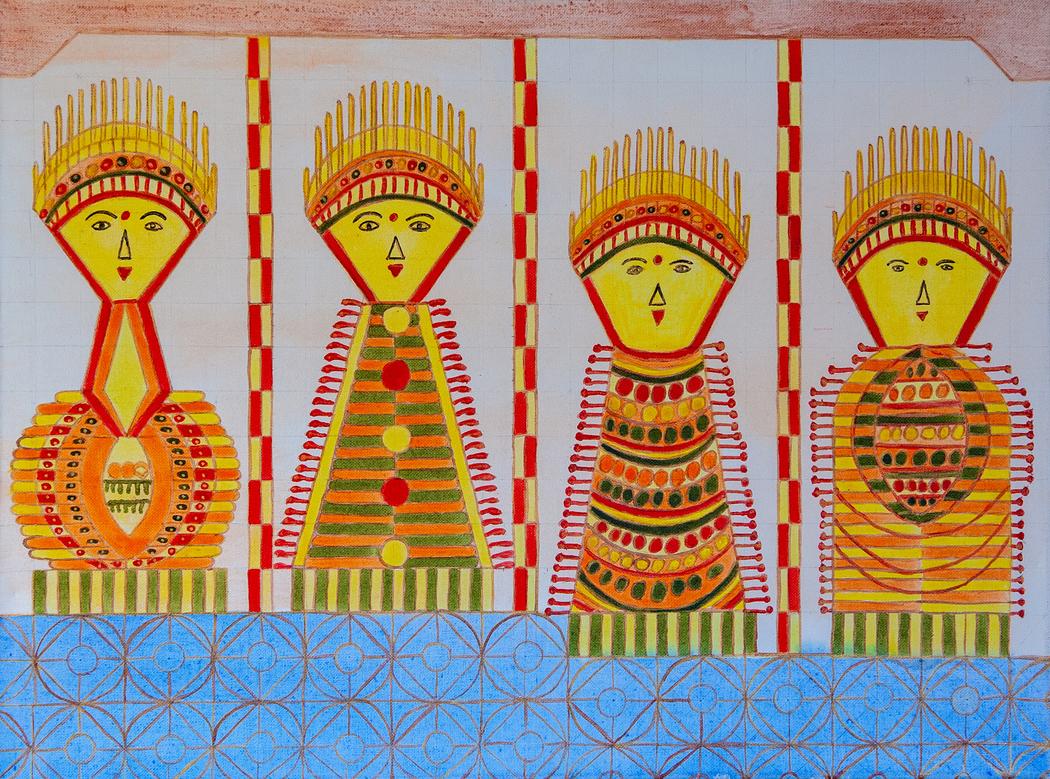 Indra Persad Milowe | Cili Figures
In your Beautiful Ubud, Bali collection, you created 20 paintings. How did you decide which people, rituals, symbols, and architectural elements to include?
It was easy! They are all so meaningful and beautiful. Candi bentar (traditional ornate entranceways) and rice fields are everywhere, so they had to be my first choice.
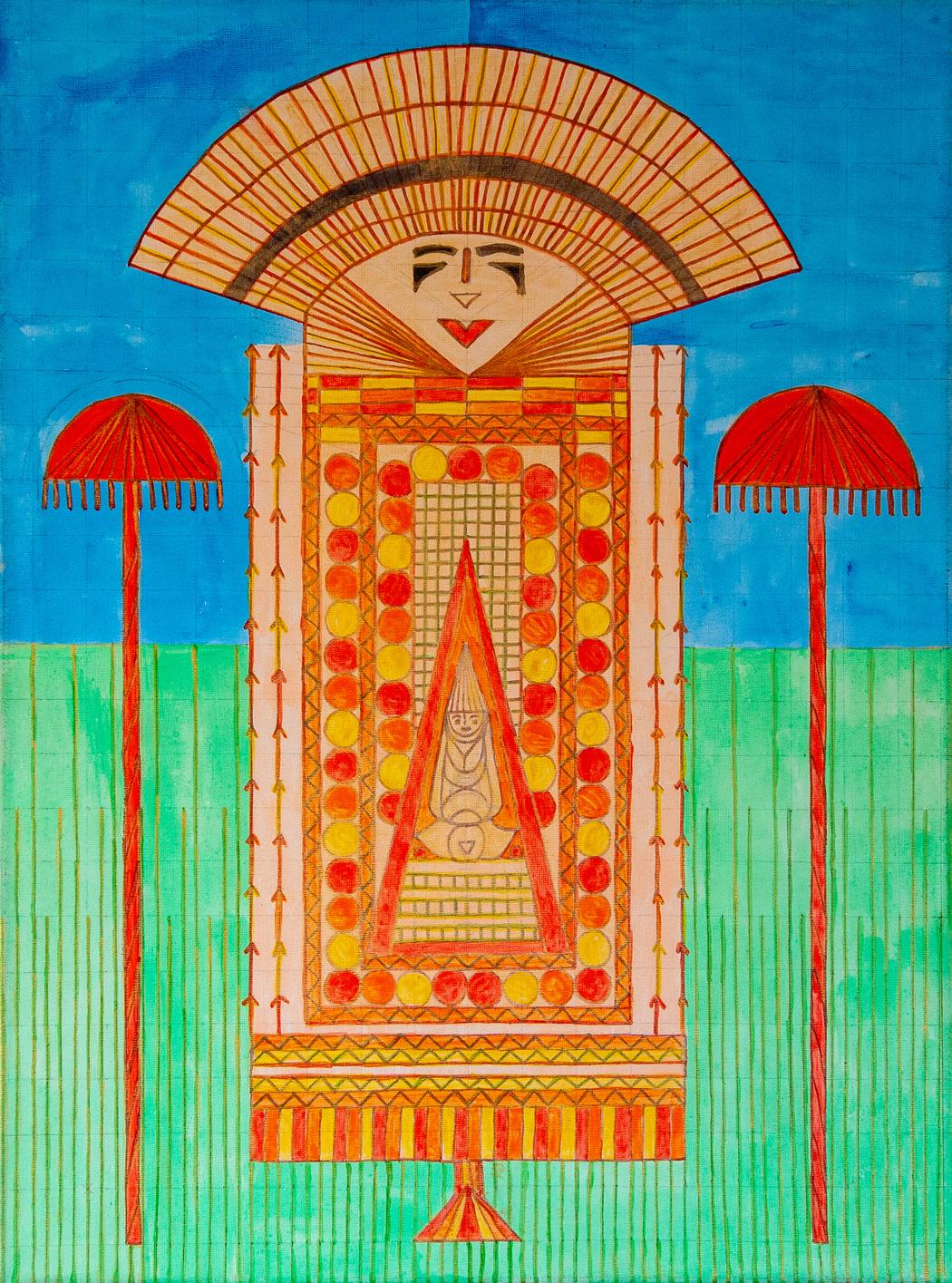 Indra Persad Milowe | Dewi Siri
Looking across your collections today, how has your artistic perspective evolved, and what subjects or places would you like to explore in your next body of work?
I have been working on modern art designs recently. However, I often weave cultural themes into them. My latest painting, Zuri, describes the African tradition of circles and their symbolism in daily life and culture.