
Vlasta Črčinovič Krofič
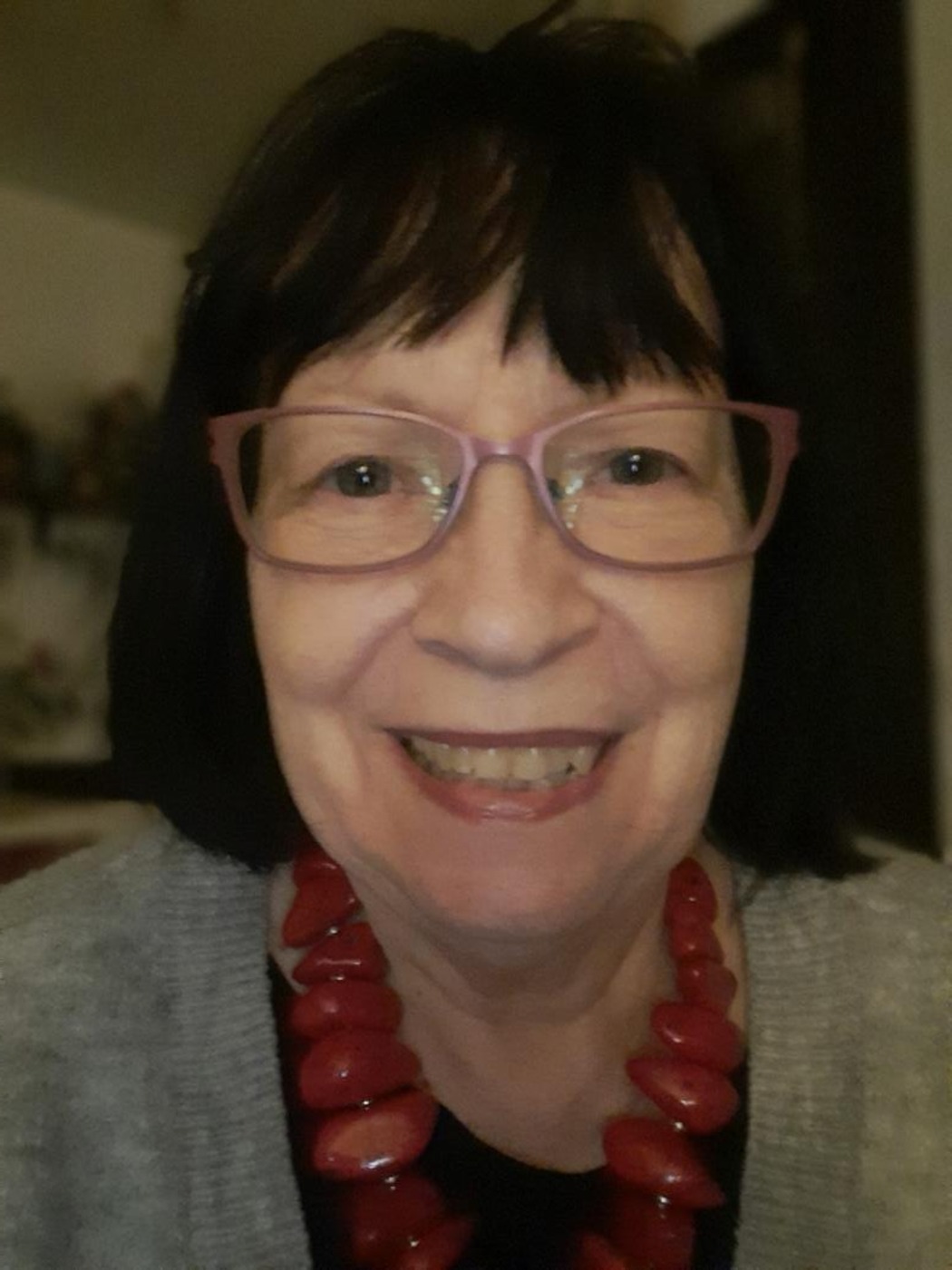
Your background combines economics and fine arts. How do these two fields influence each other in your artistic thinking and creative process?
All the knowledge I gained during my studies in law and economics, as well as during my professional career and life experiences, has shaped me and broadened my perspective on society and what happens within it.
Through the creative process, various areas of my knowledge often intertwine, allowing me to richly interpret themes and motifs. It is precisely this interdisciplinarity that gives me the opportunity to combine analytical thinking, sensitivity to social changes, and aesthetic value in my work.
Painting offers me a unique way of expression and a sense of freedom – with a few strokes and layers of paint, I can depict great stories. Since I am a writer, I often put them into words and/or, conversely, enhance a story with illustration.
You began dedicating yourself fully to art after retirement. How did this transition reshape your identity as an artist?
In life, I have “played” different roles. My current role as an artist fulfills me more than any other life role has. I feel free. On the path to this freedom, I have realized that it is precisely the creative process that requires the most courage – being honest with myself and with my work is the highest value for me. Sometimes, in art, I find myself as a traveler exploring the unknown, but it is precisely this feeling of uncertainty that gives me the strength to constantly test my limits and seek new ways of expression. I strive to leave a part of myself in each of my creations, as I believe that honesty in expression also resonates with others.
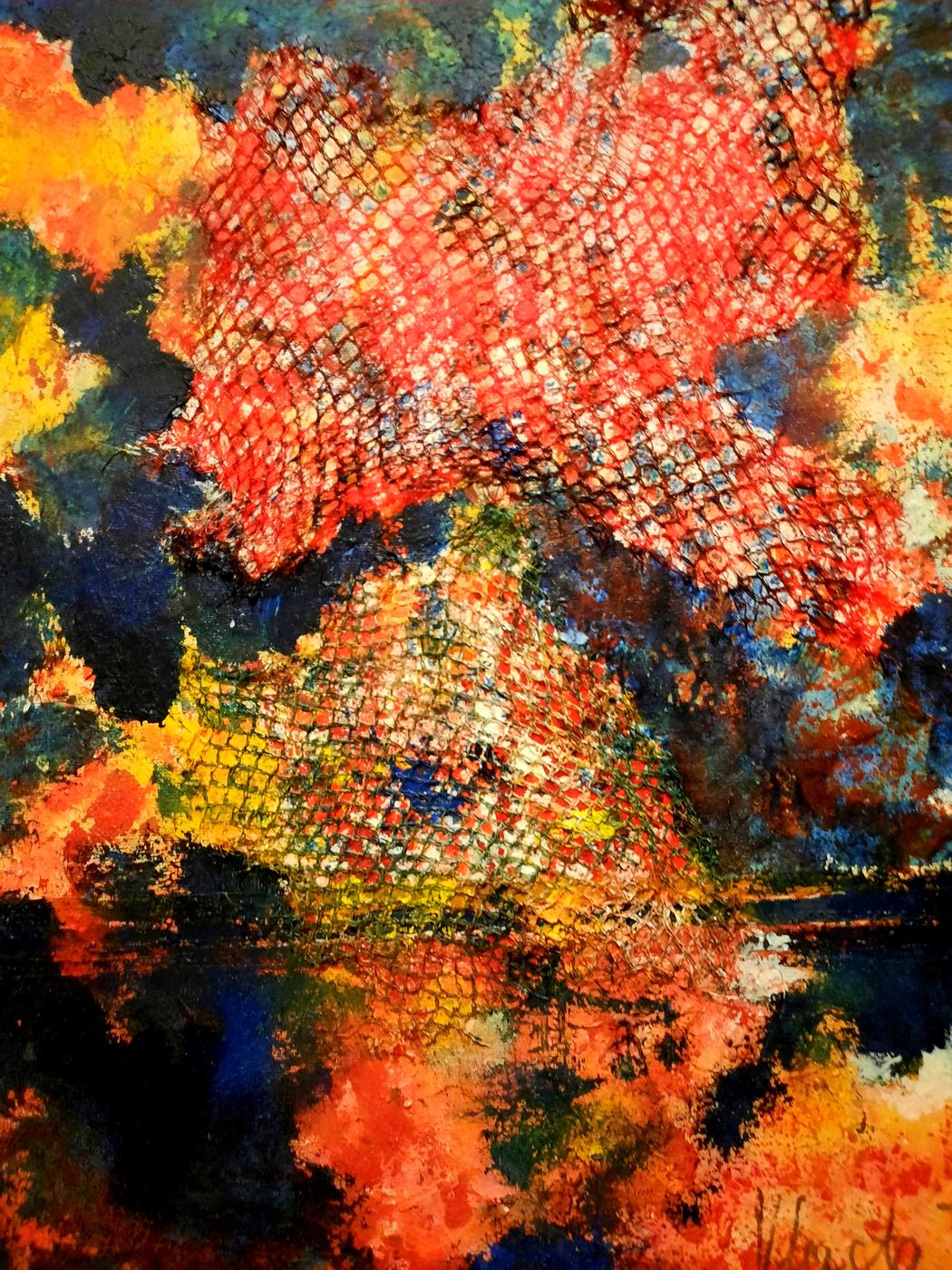 Vlasta Črčinovič Krofič | Mirroring | 2025
Your works often feature rich textures and layered materials like sand or sawdust. What draws you to these tactile elements?
Natural materials: sand, sawdust, as well as waste material, are common companions of my paintings. The elements I incorporate into my works are not merely components of the composition, but carriers of messages and symbols. By observing simple sawdust or a grain of sand, we can discover the interconnection between nature and human creation. Every detail, even the most ordinary, can, in the right context, become a messenger of change, a reminder of responsibility, or even an inspiration for the future. In this way, the paintings gain an additional meaning that goes beyond mere visual experience and invites reflection on our decisions and impact on the world around us.
Many of your paintings evoke inner emotional landscapes. How do you approach translating internal experiences into visual form?
Thoughts and emotions can be expressed with line, color, and surface. Depending on my mood, a picture emerges spontaneously, without me paying particular attention to its form or the process of its creation. Often, I choose colors intuitively, guided only by the feelings I carry within me. Lines can be gentle or sharp, depending on the depth of emotions, while surfaces sometimes emphasize a sense of space or anxiety. Each of my pictures reflects the moment in which I created it and the unique energy it sparked. Sometimes I see it in dreams before it finds its place on the artistic medium, because it is a reflection of a story I experienced or recreated during an event that moved me so much that I had to translate it into the visual language.
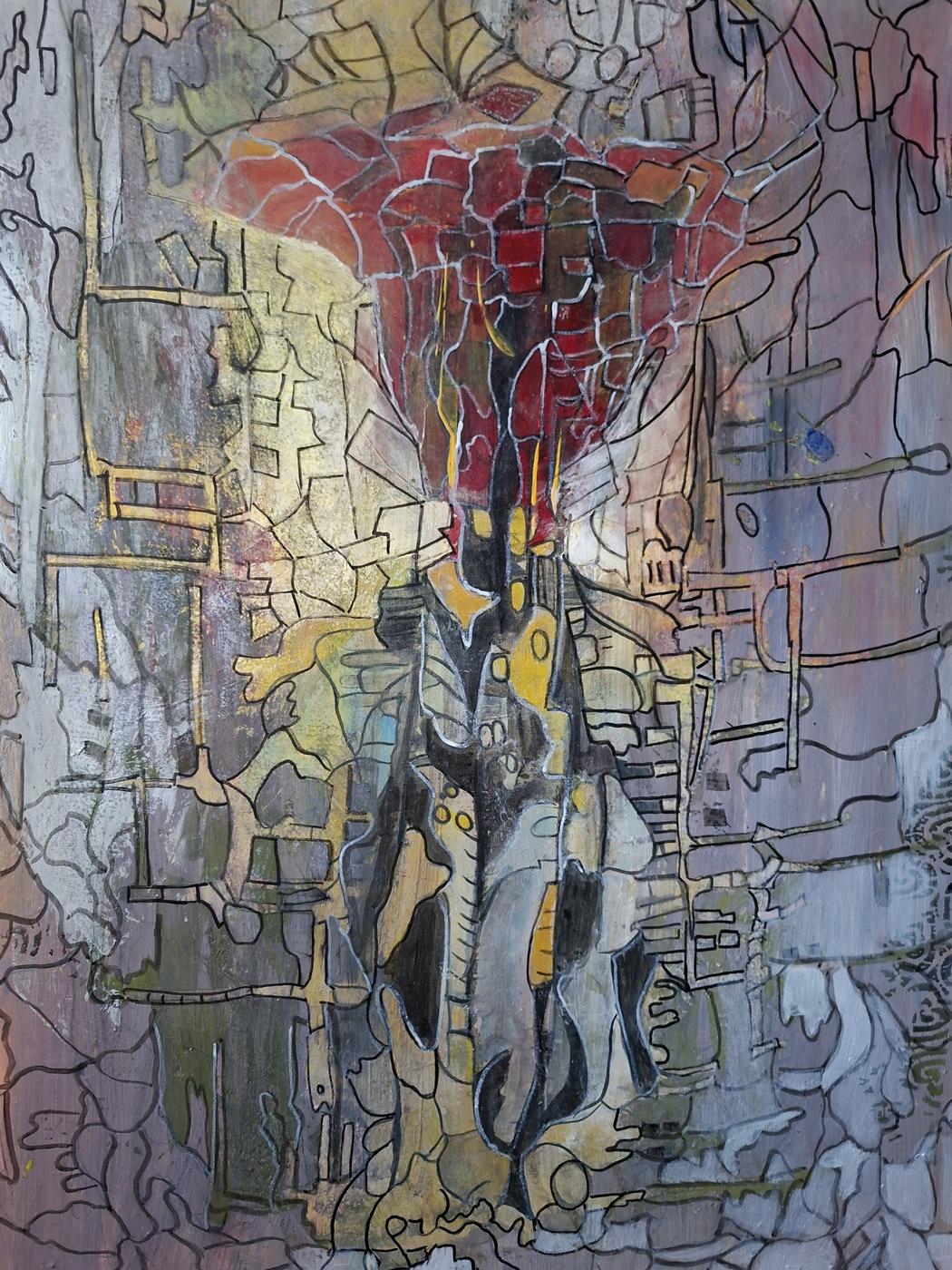 Vlasta Črčinovič Krofič | Prisoner of thought | 2026
The use of abstract structures and fragmented lines appears frequently in your work. What role does structure play in your compositions?
The structure has a strong expressive power, and that of various elements such as personal emotions. It is a reflection of the “weight” of life, an attitude toward social events, toward well-being, as well as toward living and non-living nature. Art reflects the state of society. This is an endless game of possibilities and opportunities. My thoughts and feelings materialize.
During creation, I pause and listen to the language of materials, which themselves dictate the flow of the image – the roughness of stone brings a sense of solidity, while fragile sawdust signals the beginning of something new, a cycle of decay and growth. Packaging, once intended solely for protection and transport, in the artistic process gains new life and an elevated role: it becomes a bearer of messages about responsibility and coexistence with nature. I intertwine all of this with color and line to offer observers a space for reflection on the continuous transformation of the world.
In pieces like the ones presented, there is a strong contrast between chaos and control. Is this tension intentional?
Despite apparent chaos, order prevails in my paintings. In every jumble, I find a sequence, a meaning, a boundary of the story told by colors, shapes, drawn lines, and the materials used. My abstractions are not the result of conscious work, but an unconscious search for balance among all the visual elements and materials employed.
My creation is often connected to inner experiences and personal reflections, which I transform into a visual language. Each painting is a reflection of my thoughts and feelings at a particular moment, giving it a unique atmosphere and character. That is why my paintings are full of hidden meanings that each viewer can understand in their own way. Each painting is like a dialogue that I have with myself, but at the same time I offer it to others so they can seek their own meanings and emotions in it. It is this unpredictability of responses that inspires me and drives me forward, as I repeatedly prove that art is not only a reflection but also a source of new possibilities for self-exploration and conversation with the audience.
An anecdote:
In 2025, I exhibited abstract paintings at an exhibition entitled ‘Dream Catcher’. Visitors to the exhibition connect with a painting when they find something of their own in it. At this exhibition, a man stopped in front of one of my paintings and found exactly that – my story – within it. It was incredible. I felt as if he had completely exposed me, as if he had read my mind.
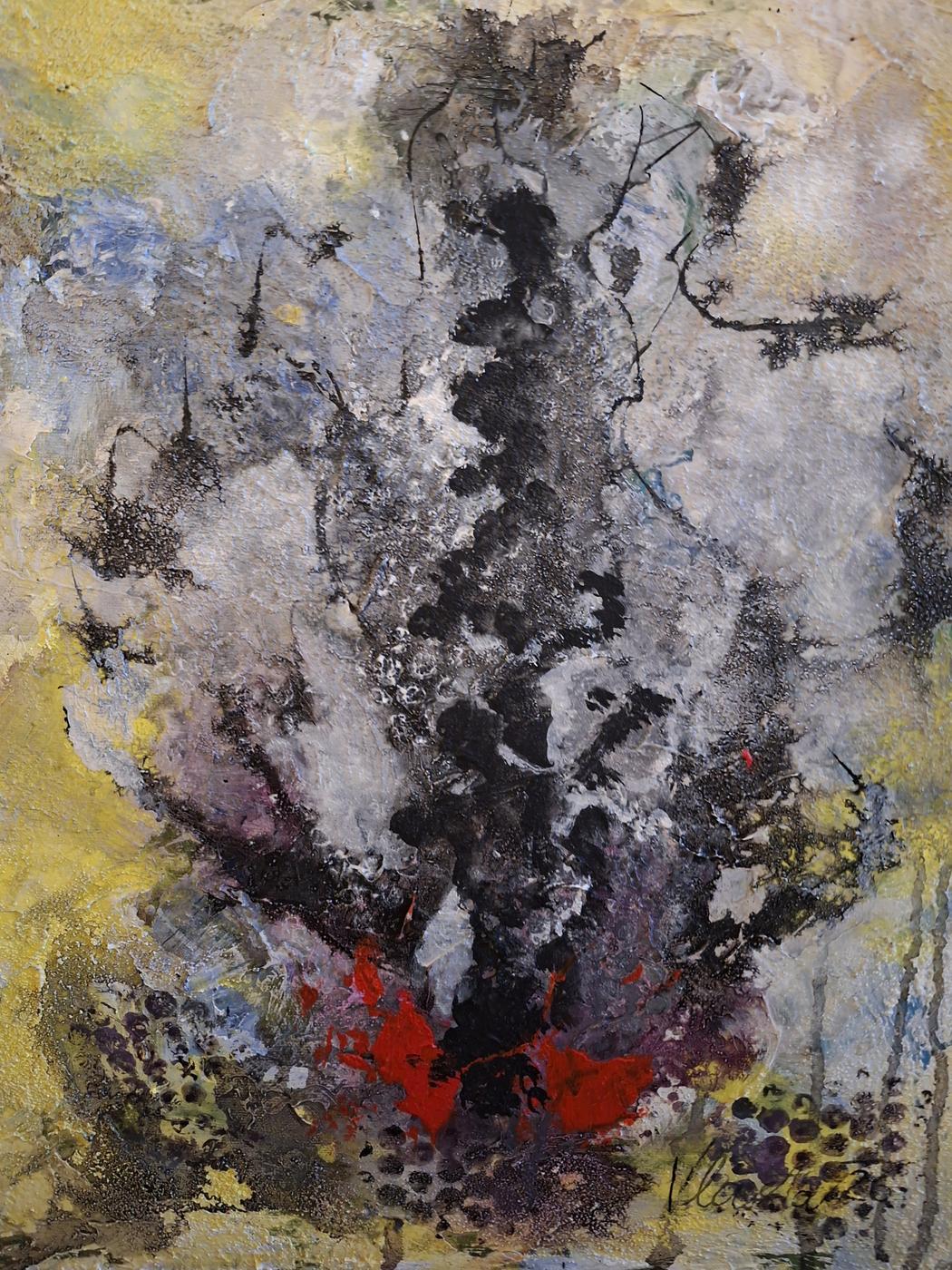 Vlasta Črčinovič Krofič | The voice inside me | 2026
As a member of international art groups, how has collaboration or community shaped your artistic development?
Participation in international artistic circles is certainly reflected in my artistic expression. When in contact with artists coming from different cultural backgrounds, you unconsciously absorb what has moved you, what has caught your attention, what is interesting, different, unusual, beautiful, fresh…
In this way, my artistic expression constantly transforms, as it is exposed to dialogue between various artistic approaches and techniques. This very diversity stimulates creativity and opens new paths of exploration, where every influence is just a small pebble in the mosaic of personal artistic identity. Often these experiences encourage thinking beyond established boundaries, which is particularly valuable in art.
Leave a Reply
You must be logged in to post a comment.