
Ján Špireng
Broken focuses on the silence after a breaking point. What drew you to that moment rather than the event that caused it?
I did not want to show what had broken the person, because the cause can be different for everyone: loss, loneliness, a relationship, illness, failure, or something others might not even consider important. I was more interested in the moment when a person no longer knows how to go on.
For me, BROKEN is about being broken and gradually surrendering. It is about feeling that no one around you hears you, even when you are asking for help. At one point, there is still an attempt to make yourself seen: ‘I am here. Notice me. Give me your hand.’ When that help does not come, surrender follows, along with an acceptance of what has happened.
I wanted to photograph that silence afterwards, because it still holds the question of what comes next. Acceptance does not necessarily mean that everything is over.
The figure appears small beneath a large, dark structure. What drew you to this location, and how does its scale affect the photographs?
Every series begins with an idea. Only then do I look for a location that will help me express it visually.
I found the setting for BROKEN in an ordinary outdoor workout area. To me, the structure felt like a large cage, surrounding the person and closing in on them. I deliberately kept the figure small in the frame to convey helplessness and loneliness: the feeling of facing everything alone, overwhelmed by the space around you.
The large area of black negative space intensifies that feeling. It represents the negativity, emptiness, and isolation a person can experience when they need help but feel that no one hears them.
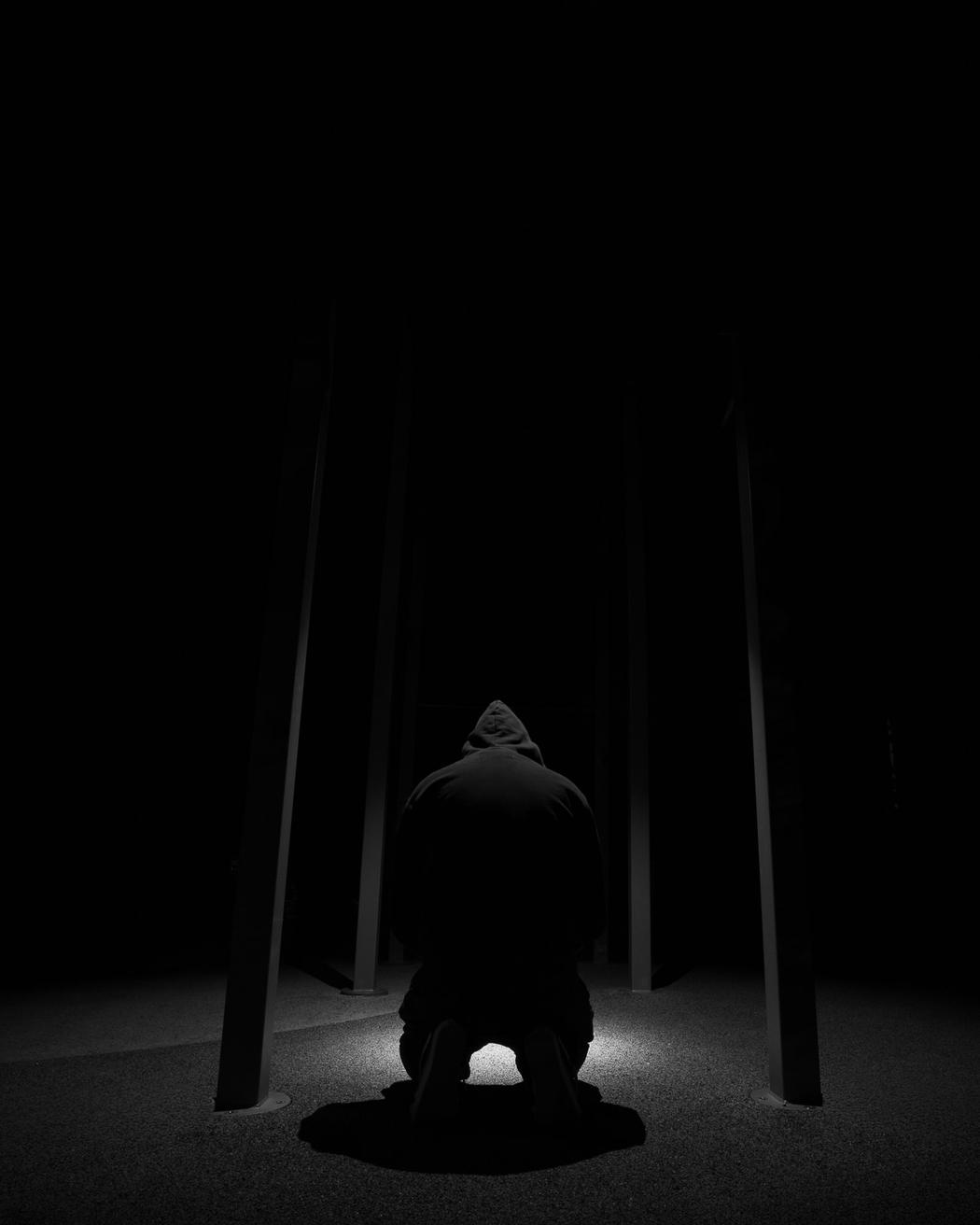 Ján Špireng | Broken | 2026
Much of each image is almost entirely black. How do you decide what the light should reveal and what should remain unseen?
I use light and darkness to draw attention to the central meaning of a photograph. Light can do different things. Sometimes it defines the space where the story unfolds; sometimes it suggests hope or a direction. At other times, it simply reveals what matters most in an image or a series.
Darkness is just as important. It allows me to remove details that do not serve the story and keep the image down to a few essential elements. It can also express uncertainty, pressure, loneliness, or something that remains unknown.
So my decisions are guided by what the viewer needs to see in order to feel the story. Everything else can remain in darkness.
We never see what happened before these photographs. How did you decide how much of the story to leave outside the frame?
I deliberately leave out the circumstances that led to the situation in a series, just as I usually avoid giving it a definitive ending. I like to leave both the beginning and the end open.
I do not want to tell viewers exactly what happened before the first photograph or what will happen after the last. I show a stretch of the journey and the emotions within it, leaving room for them to imagine the rest.
That gives viewers the freedom to create or complete a story of their own through the photographs, drawing on their experiences, memories, and feelings.
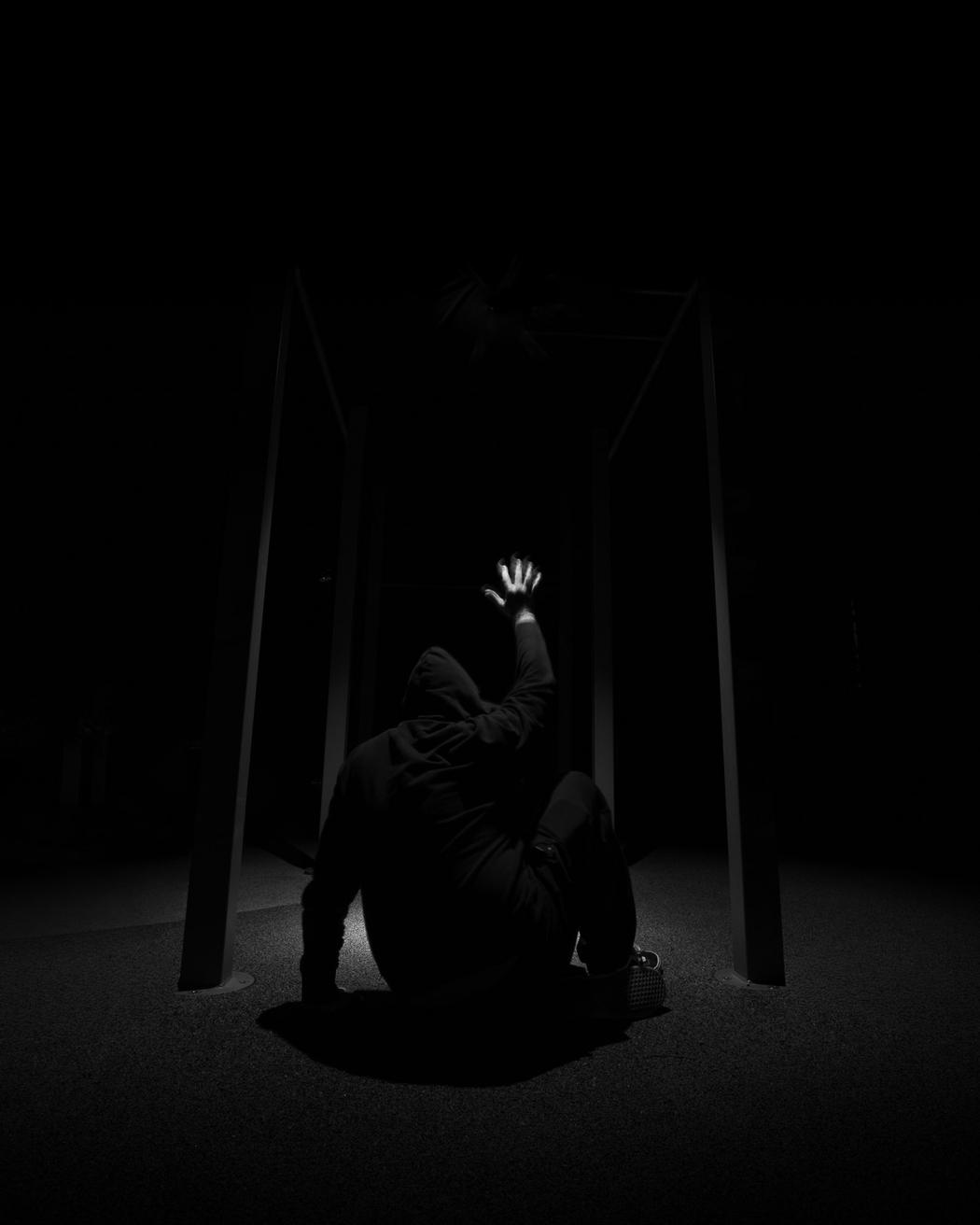 Ján Špireng | Broken | 2026
What practical choices helped you create the small area of light while preserving the depth of the surrounding darkness?
I photographed BROKEN in the middle of the night, when the outdoor workout area was completely unlit. That gave me almost complete control over the light and darkness.
My only light source was a simple headlamp, aimed straight at the scene. It created a small pool of light around the figure, while everything else could disappear into darkness.
I also often underexpose my photographs. I am comfortable letting large parts of an image lose detail and become almost completely black. In BROKEN, this was a deliberate choice. I wanted the light to reveal only what was essential, with the darkness almost swallowing the figure.
What was most difficult about giving visual form to a state between collapse and acceptance?
I think the strength of BROKEN comes from more than the idea behind it. This time, I was photographing my own feelings, rather than an emotion I had imagined or observed. In a way, that made them easier to translate into images. I did not have to work out what that state might look like. I knew it.
The hardest part was recognising and admitting that the feelings I was photographing were my own.
Perhaps that is why BROKEN is one of the most personal chapters of PROJECT LIFE for me.
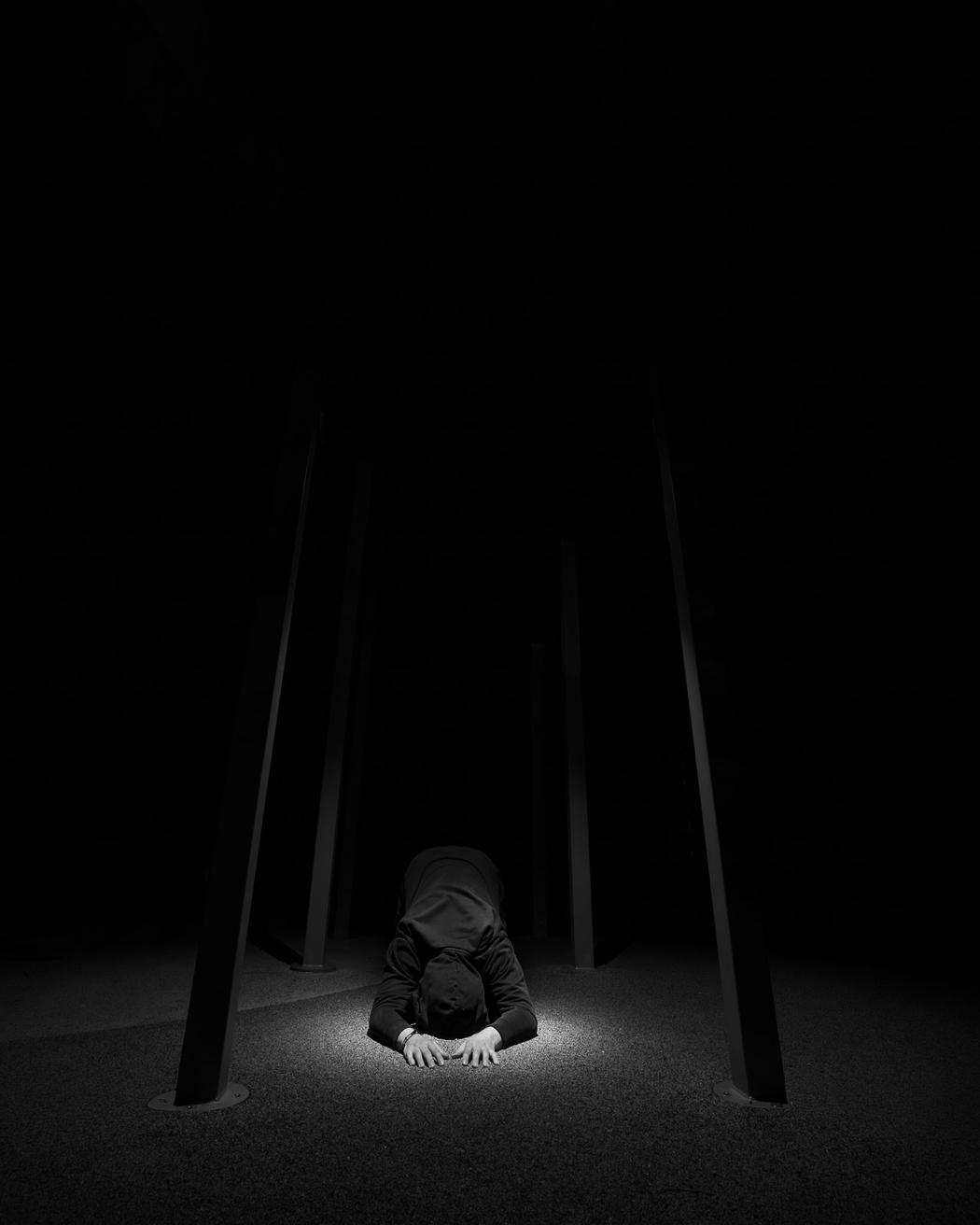 Ján Špireng | Broken | 2026
The title Broken can sound final, but your description leaves room for acceptance. How do those ideas coexist in this chapter?
BROKEN will not mean the same thing to everyone. For some, being broken may feel like the end from the very beginning. For others, it may be the moment they recognise what has happened. Reaching out for help can also lead to different outcomes. Some people find it; others may not.
That is why I did not want to give this chapter a single, definite ending. The final photograph might suggest surrender and a final ending to one person. To another, accepting what has happened might be the first step towards something new.
Personally, I do not believe that being broken means we have to remain that way. Even when we feel we cannot go on, I believe we should at least try to get back up and keep moving. It does not matter whether we do it on our own or with someone’s help.
Sometimes an ending can also be the beginning of something new.