

Lizzy-Lace
You describe yourself as curious, stubborn and slightly rebellious. How do these qualities enter the studio and shape the decisions you make on canvas?
Curiosity is probably what gets me into trouble in the first place. I always want to know, what if I do this? What if I scrape through that layer, put something where it technically shouldn’t be, change the perspective, or ruin the part that was working perfectly well?
Then stubbornness takes over. If something isn’t giving me the feeling I want, I struggle to leave it alone. I can work on the same area again and again, even when common sense is probably telling me to stop.
And the rebellious part is simply that I don’t particularly enjoy being told what a painting is supposed to be. I know there are rules in art, and I respect them, but I also think some of the most interesting things happen when you push against them. I would much rather make a decision that risks being wrong than make a safe one simply because I know it will work.
What is the story behind the name Lizzy-Lace? Does it function as an artistic persona, an extension of yourself, or something else entirely?
Lizzy actually existed long before Lizzy-Lace ever appeared on a canvas.
My friends gave the name Lizzy to my so-called “alter ego” — the version of me that comes out when I’m having a little too much fun, taking a dare, pushing boundaries and generally behaving in a way that might make someone wonder what I’ve been drinking. The truth is, I don’t need anything. I’m quite capable of getting high on life.
My friends would laugh and say, “Lizzy, speak to us. Is it you?”
So when Lizzy-Lace eventually became my artistic name, it felt strangely appropriate. Because that same side of me enters the studio. She is curious, impulsive and a little rebellious. She is the one willing to take the dare on canvas, push something too far, destroy the safe version and see what happens next.
I don’t think Lizzy-Lace is a separate persona. She is very much me — just the part of me that is less interested in behaving herself.
And apparently, she now paints.
Your process involves changing your mind, scraping things away and painting over “perfectly good decisions”. Can you recall a work that became stronger because you were willing to undo part of it?
Almost every painting I make has suffered at my hands at some point.
There have been so many moments where I’ve had something that looked technically good, and I knew other people would probably tell me to leave it alone, but it just didn’t feel right. That is usually when I become dangerous.
I’ll scrape into it, cover it, move something, change the balance or completely destroy an area I spent hours working on.
The funny thing is that the traces of those decisions often become my favourite parts. You can still see that something existed underneath. The painting has a history.
I’ve realised that a perfectly good decision is not necessarily the right decision. Sometimes you have to be willing to lose the good version to find the one that actually has something to say.
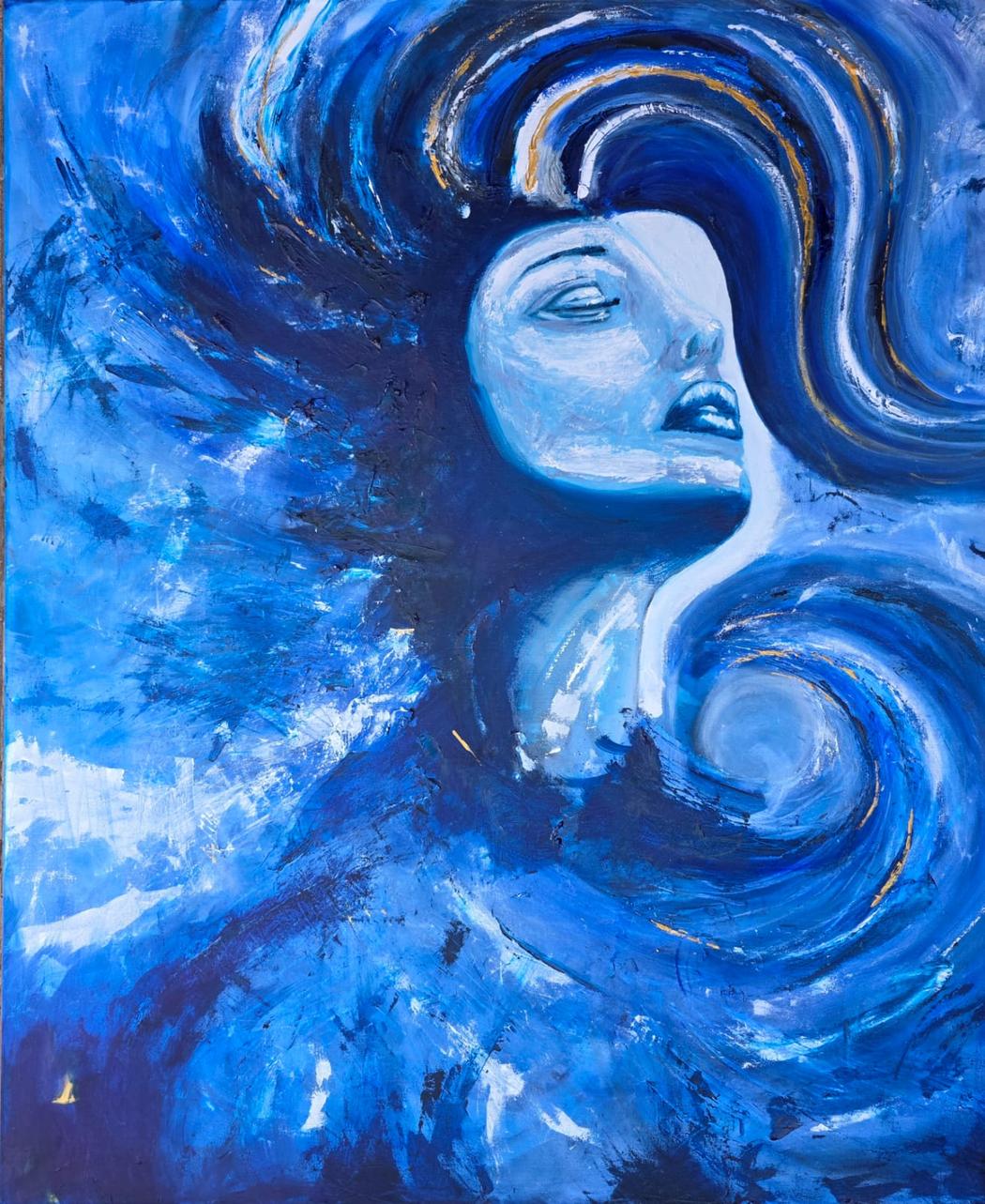
“Release”
Is definitely one of my extreme victims.
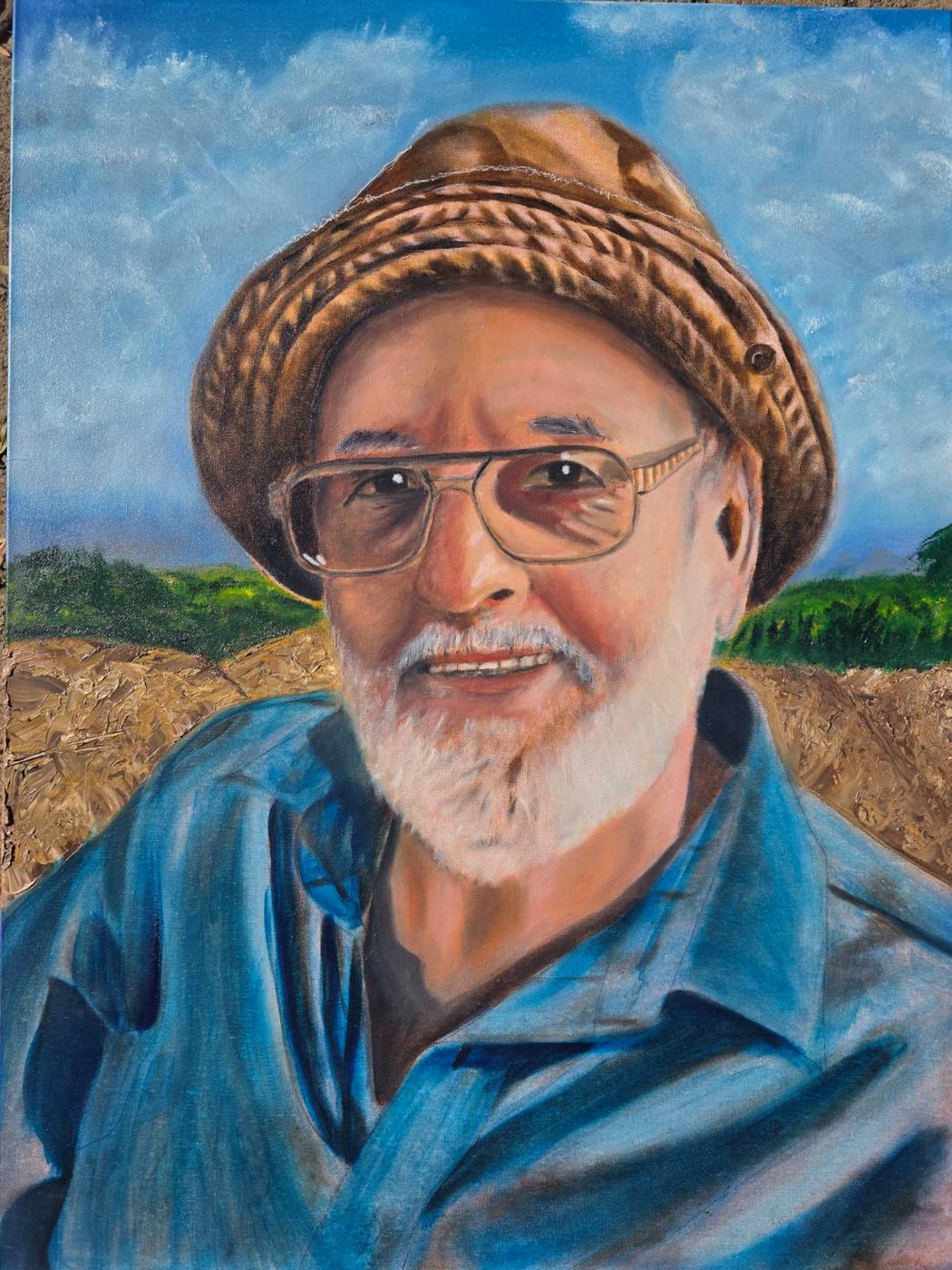 Lizzy-Lace | Colonel Mustard | 2026
Since you paint instinctively, what usually provides the first impulse: a person, an image, a memory, an emotion or the material itself? At what point does a painting begin to reveal what it wants to become?
Usually an emotion comes first.
I don’t necessarily see the finished painting in my head. It is more like I know how I want it to feel. Sometimes that feeling comes from something I have experienced, sometimes from something I have read, and sometimes it is simply a thought I can’t get rid of.
Then I start looking for a visual way into it.
The painting normally begins revealing itself somewhere in the middle, usually after my original plan has started falling apart. That sounds terrible, but I actually think that is where the interesting part begins.
Once I stop trying to force the painting to look like the picture I had in my head, I start noticing what is actually happening on the canvas. A strange mark, an accidental texture or an area I scraped away can suddenly change the entire direction.
I think that is why I enjoy painting instinctively. I am not illustrating an answer I already know. I am trying to find it.
And sometimes I don’t.
You say that perfection bores you. How do you distinguish between an imperfection that gives a work life and an area that still needs to be resolved?
I wish I had a clever formula for this, because it would save me a lot of time.
For me, an imperfection feels intentional even when it wasn’t. It creates tension, makes you look again, or gives the surface some kind of history. A scrape, an awkward edge, something slightly off — those things can make a painting feel alive.
An unresolved area is different. It distracts me for the wrong reason.
I tend to walk past my paintings a lot while I’m working on them. If my eye keeps landing on the same area and something irritates me every single time, I know I’m probably not finished with it.
The danger is knowing when to stop, because I can also destroy the very thing that made it interesting by trying to fix it.
I’m still learning that difference. I suspect I always will be.
Who is the figure portrayed in “Colonel Mustard”, and what made you want to paint him? What does the title reveal — or deliberately conceal — about his identity?
The figure in Colonel Mustard is my father, Dr Abraham Stephanus van der Merwe — Pa Fanus to us. I painted him for his 75th birthday, and when you have known someone your entire life, you realise that painting their face is probably the easiest part. Trying to capture all the people they have been is much harder.
My father has worn an extraordinary number of hats. He is an academic with several degrees, including a doctorate. He is a farmer, a builder, a manager, an administrator, a mentor and a problem-solver. He is the man with another project before the current one is finished, the man who keeps screws, bolts, pieces of wood and bags because you never know when you might need them. Once he gets a bee in his bonnet, good luck changing his mind.
He is also extremely curious. I could call it an enquiring mind, but that would be the polite interview answer.
The family calls it nosy.
If something is happening, Pa Fanus would like to know what, why, who was involved, what time it happened and preferably what they intend doing about it. In hindsight, perhaps Colonel Mustard was inevitable.
He is also, apparently, a “serial cheese thief”.
And then there is Cluedo. Whenever our family played, my father chose Colonel Mustard — but “chose” might be putting it mildly. He became Colonel Mustard. Somewhere along the way, Colonel Mustard simply became another one of Pa Fanus’s many roles.
So when I decided to paint him for his 75th birthday, Colonel Mustard felt like the only title that could possibly work.
To someone who doesn’t know him, the title conceals almost everything. They see this man and perhaps start wondering: Who is he? What has he done? Is he the suspect, the detective, an innocent bystander — or is he just being nosy and trying to find out what everyone else has done?
But to those of us who know him, the title reveals quite a lot.
Academic. Farmer. Builder. Manager. Mentor. Father. Collector of potentially useful screws. Investigator of everybody else’s business. Cheese thief. Colonel Mustard.
Seventy-five years. Quite a few characters.
And somehow, all the same man.
 Lizzy-Lace | Release
You write that “the case always remains open”. What questions would you like viewers to carry with them after encountering this portrait, and do you imagine the project developing into a larger body of related works?
I would love for people to walk away still wondering who he is.
Not necessarily in the literal sense, but wondering what happened before this moment. What does he know? Why are we looking at him? Why is he looking at us? And perhaps the most important question: Do I trust him?
I like paintings that refuse to close the conversation for you. The moment I explain everything, the viewer no longer needs to participate.
“The case always remains open” is really about that. There is no final piece of evidence hidden somewhere in the painting that will suddenly explain everything. The viewer brings their own suspicions, experiences and imagination to it.
And yes, I can imagine Colonel Mustard becoming part of something larger. Not necessarily a literal collection of Cluedo characters, because that might become too predictable. I am much more interested in the idea of portraits as evidence — people who seem to belong to stories we have arrived in the middle of.
No beginning. No confession. No neat ending.
Just enough evidence to make you suspicious.
“What Remains” transforms an ordinary glass of water into something that feels almost like evidence of something that has already happened. Why did you choose that title, and what exactly is it that remains?
That’s exactly the question—I don’t want to tell you what remains.
When you first look at the painting, it’s simply a glass of water. But once I call it What Remains, you start looking for what is missing. You notice the water, the small traces of color, the reflections, the shadow. Suddenly an ordinary object feels like it has a history.
For me, what remains doesn’t necessarily have to be physical. It could be a memory, a feeling, evidence of someone who was there, or simply the part of ourselves that is left after something has changed us.
I like that the glass is neither empty nor full. Something has been taken from it, but something is still there. And I think we are often like that. We tend to concentrate on what we have lost, when sometimes the more interesting question is: what remains?
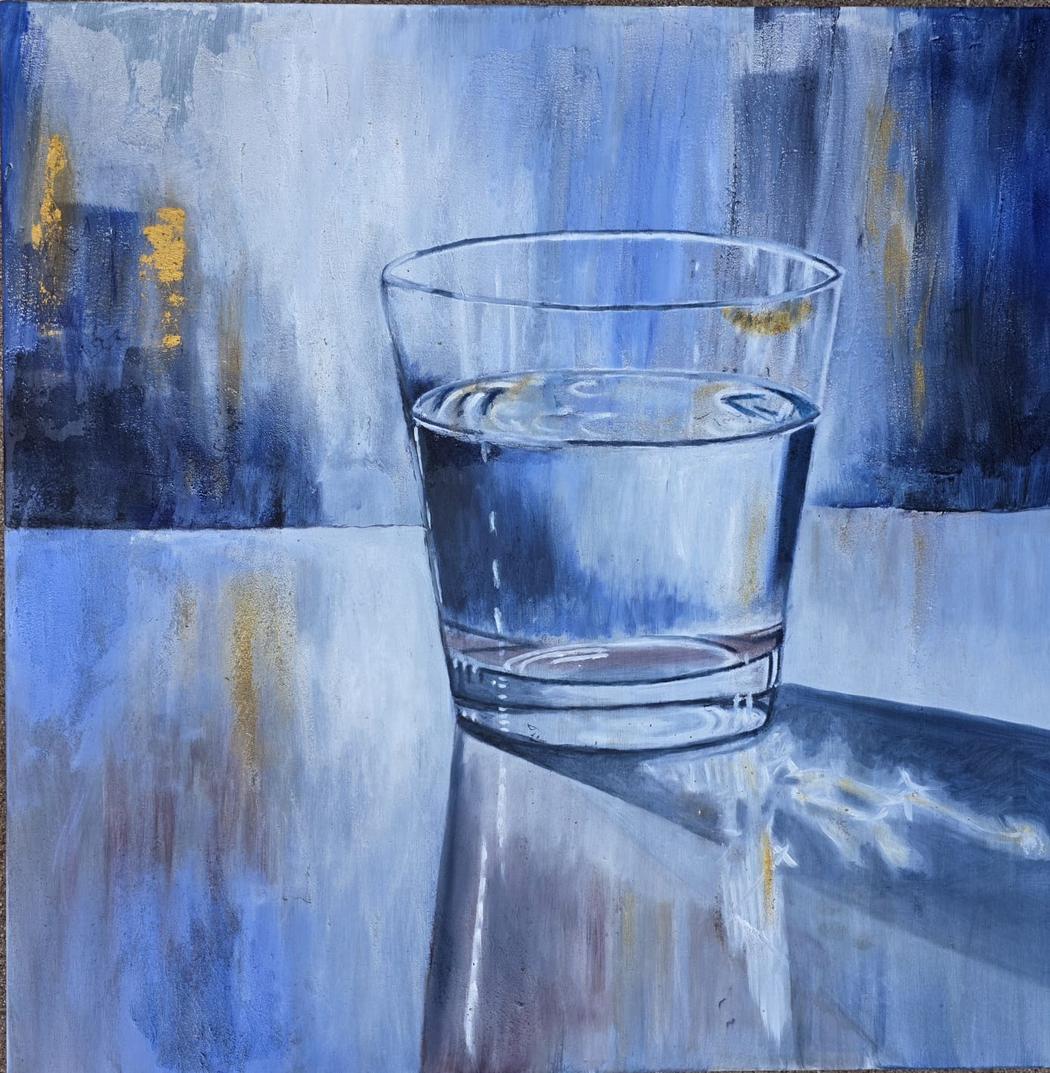 Lizzy-Lace | What Remains
“Release” feels as though the figure is caught between holding on and finally letting go. The sweeping movement around her could be read as water, wind, thought, or emotion. What are we witnessing in this painting, and what does “release” mean to you?
For me, Release is about that moment when you stop fighting everything you cannot control. I didn’t want to define exactly what surrounds her—whether it is water, wind, chaos, or simply what is happening inside her head. That ambiguity matters to me.
Her face is almost still while everything around her is moving. I think that is what release can actually feel like. The world doesn’t suddenly become calm and your problems don’t disappear. Something changes inside you. You loosen your grip.
The upward tilt of her face is important. I don’t see her as drowning or being defeated. I see her allowing herself to be carried for a moment instead of constantly trying to swim against the current.
So Release isn’t really about escape. It’s about surrender—but not surrender as weakness. It is the strange kind of freedom that comes when you finally realize that you don’t have to control everything to survive it.