
Shaina Mohammed
Your practice spans performance, theater, photography, video, and installation. How does your background in theater influence the way you construct visual artworks?
For me, theater is not just about learning acting techniques or creating scenes. Theater can be a way of thinking about human existence. I learned from theater that the body is a place where meaning is created rather than merely a means of expression.
Every movement, every pause, every breath, and even every silence can become a language.
I have tried to transfer this understanding to photography, video, and installation. In my work, the body is not just the subject of an image, but a place where time, nostalgia, pressure, thought, and being intersect.
A body that always exists between revelation and concealment, freedom and limits, presence and absence.
At the same time, I learned from theater that space is never empty, that every place carries history, memory, and the possibility of events.
The same is true of time. I don’t see time as something straightforward, but as something that accumulates in the body and is reborn through the viewer’s experience.
The relationship between theater and visual art, for me, is not a relationship between two different media; it is a relationship between two ways of thinking—one that creates meaning through events and the other through images—but both meet in the same place:
The moment when the viewer feels that what they are seeing is not just something external, but part of their own existential experience.
Therefore, everything I make—photographs, videos, and installations—is, for me, an extension of a stage without visible boundaries. The exhibition space becomes the place of events, the body becomes text, and light becomes language. The viewer is transported from the act of looking into the production of meaning.
Hence, the aim of my work is to create a situation in which the viewer is forced to rethink their existence, body, and relationship to the world.
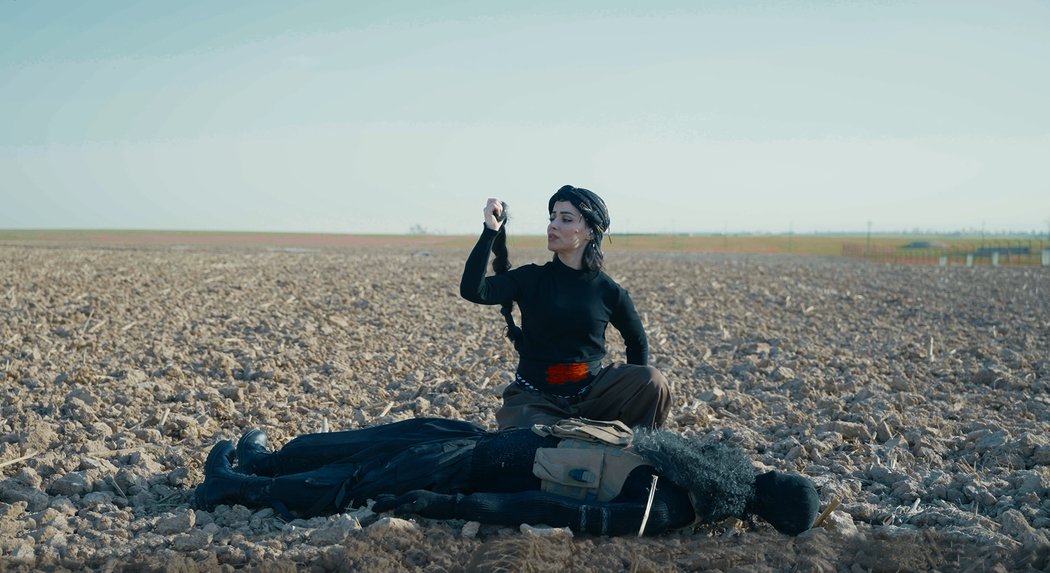 Shaina Mohammed | Force Of Kazi | 2026
In the photographic series Press, the body appears confined within an extremely narrow architectural space. How did you discover or create this location, and what did it represent to you?
This place and situation are not just an ordinary architectural space, but a metaphor for the boundaries and intense feelings I have encountered and experienced every day, to the extent that there is no space for a normal breath.
Every movement is a breath of pressure and boundaries.
The high walls, close to the body, represent stress, mental tension, restrictions, and the absence of free breath. From there, nothing remains in its normal state, and nothing is seen in its normal form.
In this work, the space and the narrow walls alongside the body have become a language. I wanted the viewer not only to see a narrow space, but also to read the feeling of confinement and pressure.
As for the creation of the place or space, the feeling that existed inside me had to be created in such a place, constructed through a series of partitions placed side by side.
The long corridor creates a strong sense of distance between the viewer and your figure. Why was this separation important for the work?
When you stand in front of a work of art and ask, “Why is this made like this?” or, as you say, “Why was this separation important?” it means that, at that moment, the work has managed to come closer to achieving its purpose.
Because it has raised questions and thoughts. This, in itself, is an important aspect of contemporary art.
Yes, this separation is an important aspect of the work and is embedded in the concept itself.
Of course, this situation creates separation as much as it creates a feeling of pressure and crisis. But this distance is not only geographical and physical; it is also psychological and social.
The distance becomes productive of thought and feeling. When the viewer looks at the work, it is both near and far at the same time.
This separation creates a sense of loneliness, silence, and the inability to reach one another, which is the main content of this series of works.
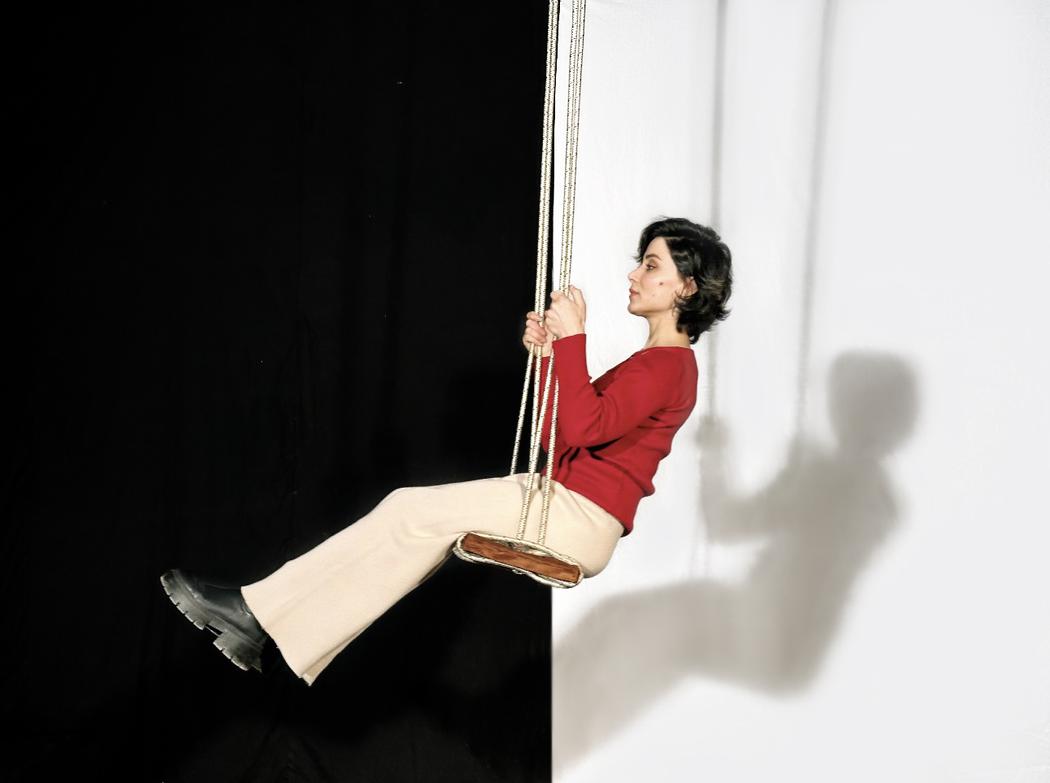 Shaina Mohammed | Infinte Swing | 2025
The series includes various everyday actions and objects, such as sitting, waiting, resting, and using a table or a toilet. How did you choose these particular scenes?
These actions are very ordinary and part of everyday routine. I didn’t aim to show these actions and everyday objects simply to depict ordinary life.
Rather, I wanted to show that one often lives one’s inner life through these same ordinary actions. This inner life is the result of accumulated pressure and intense exposure.
It is the inner self that determines how the things outside and around us are experienced. Although these actions may seem ordinary, when they occur under severe pressure and within a limited space, they take on a different meaning from the one they originally had.
Sitting becomes waiting. Rest becomes mental fatigue. Beds and tables, which are meant to provide comfort, have here become part of the pressure and no longer serve their ordinary function.
I wanted to show that even the most ordinary things can change their meaning under different circumstances.
Therefore, each of these scenes was an attempt to say, or to show, that human tragedy is sometimes found not in great events, but in the most ordinary actions that are constantly repeated.
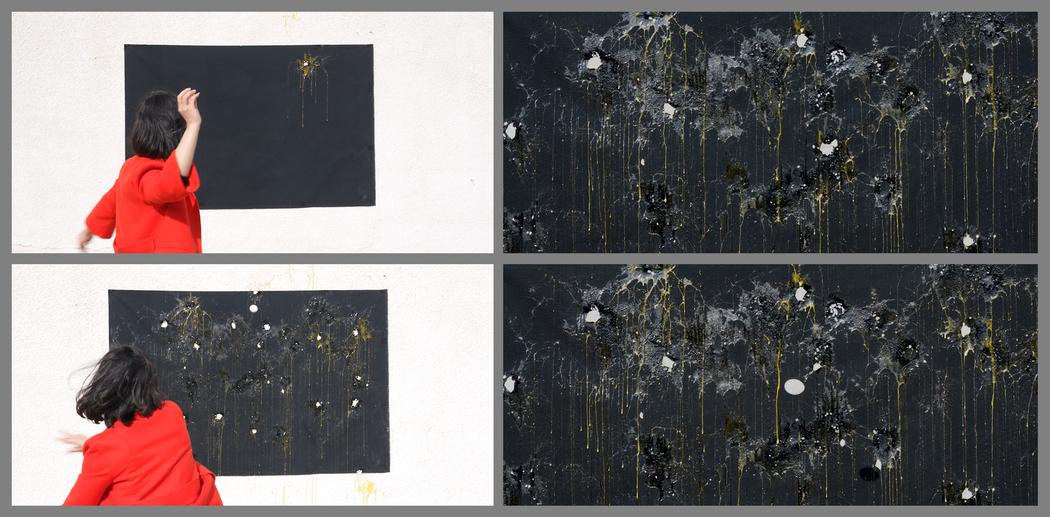 Shaina Mohammed | In The Event Of Creation | 2026
You describe the work as reflecting difficult interactions and treatment by others. How do personal experiences become transformed into images without becoming purely autobiographical?
Yes, I consider personal experience to be the primary material of my work, not its ultimate goal. Life experience is the raw material from which the artist begins and pushes to its furthest possibilities.
In doing so, I didn’t intend simply to tell my own story. I tried to transform private feelings into a shared language, so that each viewer could relate them to their own experience.
When an artwork moves from the private to the public, it is no longer just about one person.
Art has the ability to transform any personal experience into a shared thematic image because there is an artistic consciousness and vision behind that experience. At the same time, personal experience can be questioned, rethought, and transformed into symbols and forms.
At this point, the experience ceases to be a private memory and becomes an artistic experience.
When an individual experience can create a shared sense of humanity, it is no longer a biography, but a mirror of the human condition.
When art is filled with biographical details, the space for the viewer to rediscover their own experience within the work becomes narrower.
Therefore, this work should not be seen as a confession of personal experience, but as a question about the meaning of existence, relationships, and the sense of limitation.
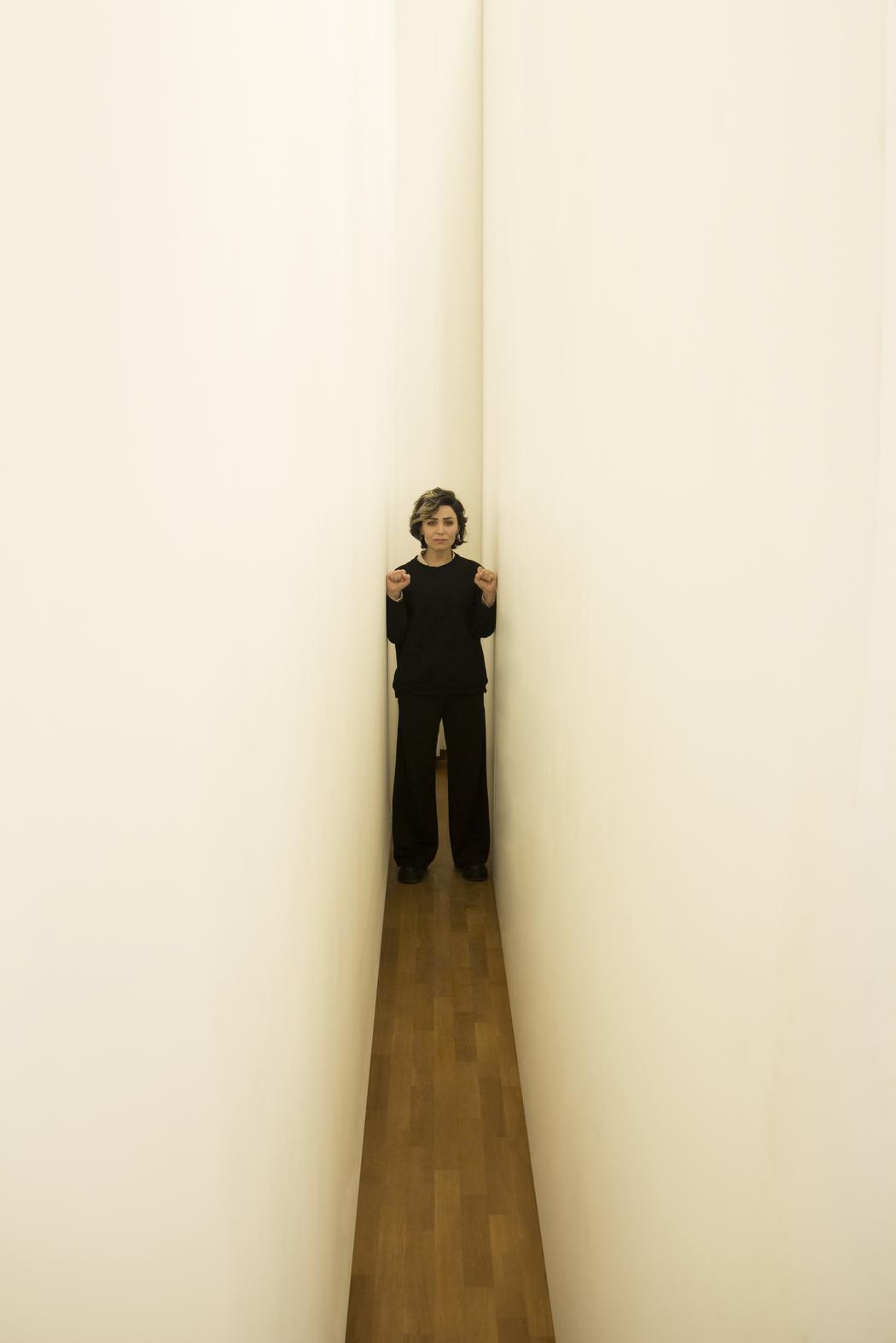 Shaina Mohammed | Press | 2025
Your work often explores loneliness, alienation, pain, memory, and loss. How are these experiences shaped by the social and political realities of Kurdistan?
Of course, no work of art is born outside its time and place. As a Kurdish artist, I have lived within a history, geography, and collective memory that have shaped the lives of individuals and society.
At the same time, I believe that if art remains only within the confines of its regional identity, it loses some of its potential.
The task of art, in my view, is to reach universal meaning from a particular place, and to move from a personal experience to a human experience.
The loneliness, alienation, and memories that recur in my work are not just personal experiences or the result of a particular political situation. They have settled in the heart as psychological monuments of history and life. Each society may have its own way of experiencing these feelings, but the basis of the feeling is the same.
That is why I try to make this place—where the individual and society, nostalgia and the present, the personal and the common meet—the center of my work.
In the context of Kurdistan, history is not only found in the archive of events; it is in the body, in memory, and in silence.
I am most interested in the point where history becomes feeling, not just evidence, so politics can be present in my work as an unseen force.
A force that changes the way one thinks, remembers, and relates to the world, rather than existing merely as a direct subject.
Therefore, although my work originates in Kurdistan, my aim is not for it to be read only as a regional document.
I want it to be read as a shared human space, a place where any viewer, regardless of their identity or geography, can find a part of themselves.
In my view, art then transcends the boundaries of its birthplace and becomes a common language of humanity.
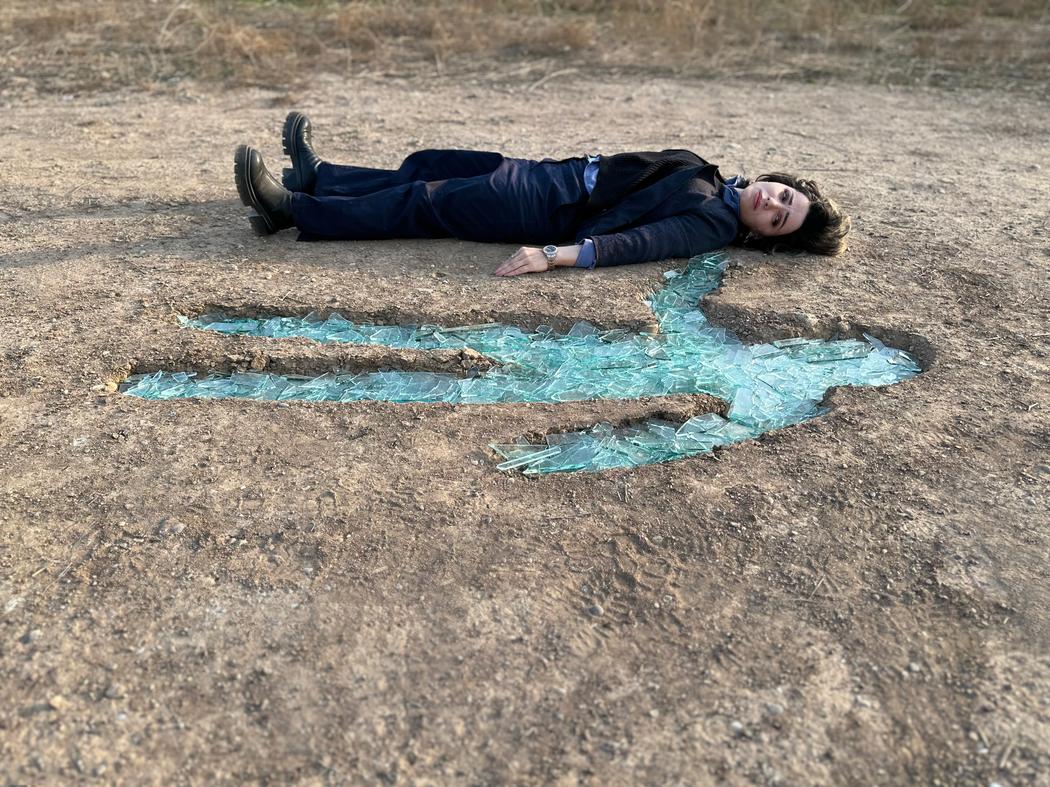 Shaina Mohammed | Trace Of Being | 2025
What kind of emotional or physical response would you like viewers to have when encountering Press as a complete twelve-image series?
The truth is that I never try to impose a particular feeling on the audience, because I believe that a work of art is completed when the audience begins a conversation with it, not when I finish making it.
So, it is not important for me to predetermine what the audience should feel. Rather, I hope my work can create a space in which each person can find their own feelings, memories, and experiences.
In the series Press, the body is not only a visual object; it is an archive of memories, fear, silence, and the influence of unknown forces.
Therefore, I want the viewer to respond to their own body and feelings before seeing the form or the technique.
If they become breathless, feel constricted, or even lose their sense of time, then the work has, for a brief moment, moved from the level of vision to the level of experience.
If Press can create a moment in which the viewer breaks away from the pace of everyday life, even for a second, and returns to their body, their memories, and their feelings, then I feel the work has achieved its goal.
I am not looking for a single, unified answer as much as I want a question to remain in the viewer’s heart.
Finally, I hope that anyone who is under pressure will remember not only the images, but also the feeling of that moment.