Anusri Sabariperumal
You describe yourself primarily as a cinematographer. What first drew you to cinematography, and when did you begin to see it as a form of personal artistic expression rather than only a technical profession?
I didn’t start off as a cinematographer, but rather as a writer. One lighting class changed my direction. I learned the art of lighting a scene just like one would use colors on a canvas. I was also able to practice operating and pulling focus in this class, which introduced me to being a cinematographer. I still remember when my professor complimented my focus pulling skills when I wasn’t even aware what that meant. Getting into camera classes wasn’t easy, and the technical aspects were a hard switch from my usual creative approach. I realized how having technical knowledge is mutually beneficial to the creative looks I wanted to achieve. As much as I loved writing, telling stories visually warmed a part of my heart I didn’t know existed. Sharing my mood purely through visuals was exhilarating.
Music videos and dance films are important sources of inspiration for you. How do rhythm, movement, and music influence the way you compose a shot or structure a visual sequence?
I’m inspired by how movement, lighting, and composition can tell a story without relying on dialogue. These influences have taught me to create visuals that feel expressive, emotional, and engaging. Music is a key part of my creative process. I often build playlists before filming because the rhythm helps me visualize camera movement, shot pacing, and the emotional flow of a scene. This allows me to create films that feel natural and immersive. Dance films rely on how the dancers move to tell a story. I love how each individual can come up with their own interpretation of the story being told. I tend to focus on how the shots are designed to capture the moves to evoke emotion in the audience and try to emulate that in what I want to convey.
In Alankaram, the act of getting dressed becomes a way of questioning identity, memory, and tradition. What personal experiences led you to explore these themes through this work?
I was never confident about wearing South Indian wear, and I think a lot of that came from me not having a personal connection to it apart from my mother forcing me to wear it for festivals and weddings. I did not understand its significance; I didn’t realize what my ancestors had to go through for me to still be able to wear and enjoy ethnic wear. I became more curious as I grew older and was ready to face the weight of what it meant to wear “traditional” clothes. Through this, I started questioning what “tradition” really meant. The sari has gone through many phases of evolution. It is an unstitched cloth that could be worn in many different ways, and it has a casteist background; the Colonial British exacerbated that system. Eventually, the blouse was introduced to morally police women, but today ethnic wear in India faces ageism. In the past, youth wanted to get with the times and conform to Western standards, but I saw a rise of women who were embracing ethnic wear as well. In Alankaram, I strip my clothes off of what society thinks and dress myself up how I want to while still keeping an aspect of the past intact.
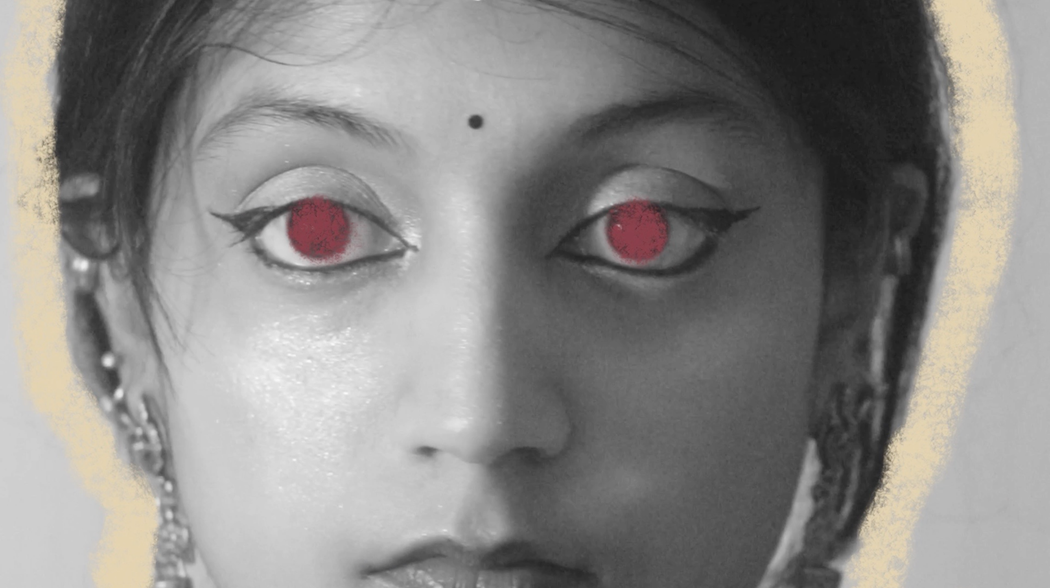
You look directly into the camera as though it were a mirror. What does this relationship between the camera, the mirror, and the viewer represent for you?
The relationship between the camera and me is a personal one. I am capturing my innermost thoughts. Not many people get to look at you when you get ready. You have all the freedom in the world to inspect and probe yourself. An onlooker may not fully decipher what you’re thinking, but my drawings help the viewers understand my emotions. The purpose of making alankaram was to inspire young women like myself to create their own relationship with traditional clothing, outside of what society expects of you. It was also to educate those who may not be familiar with South Asian culture.
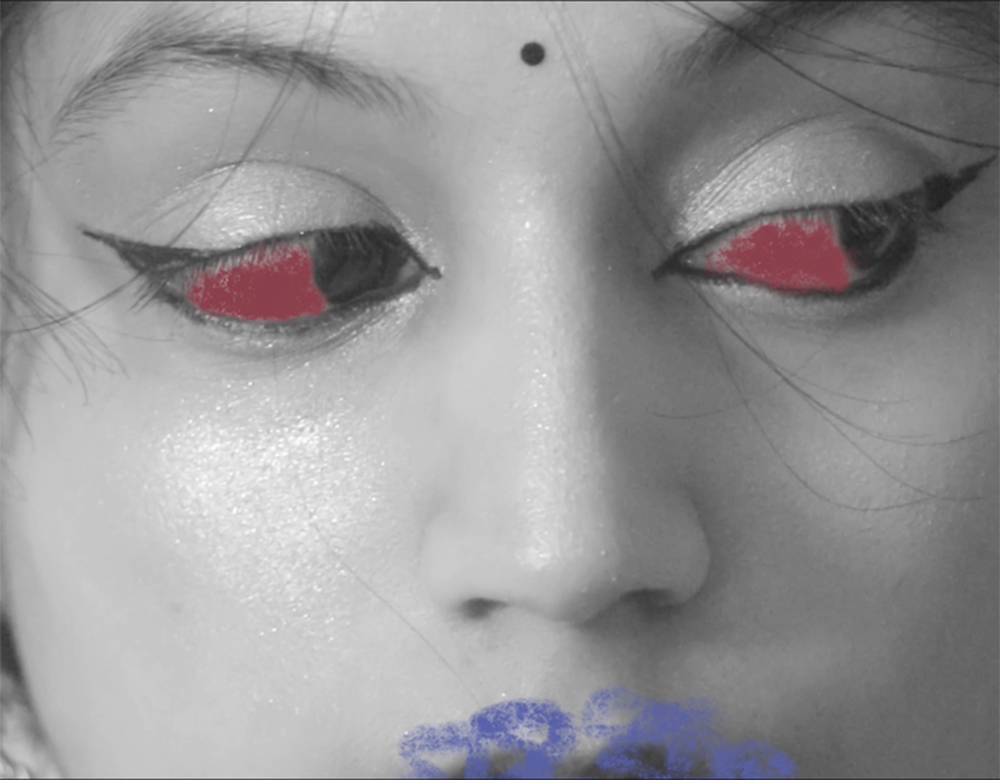
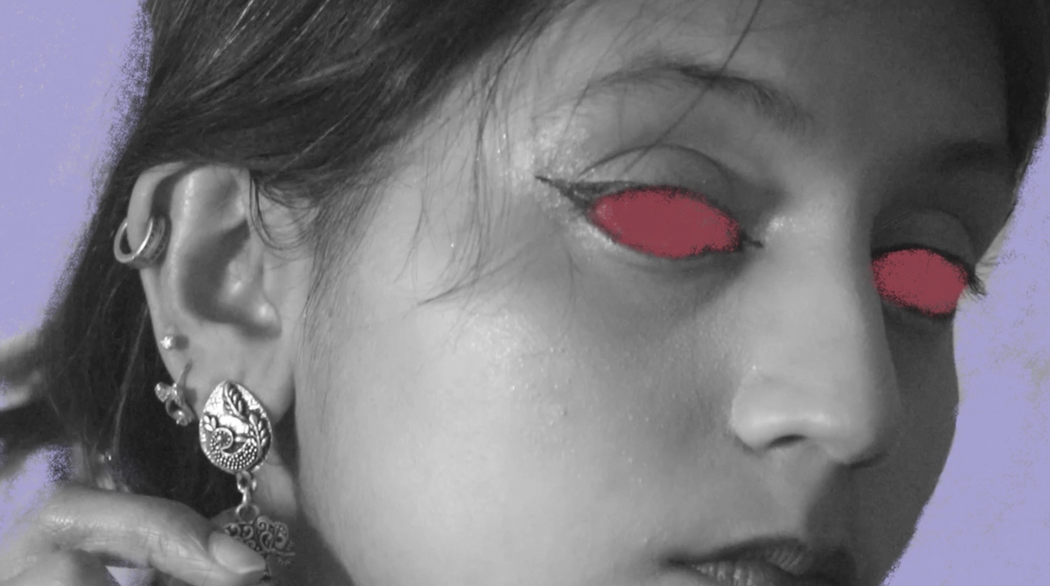
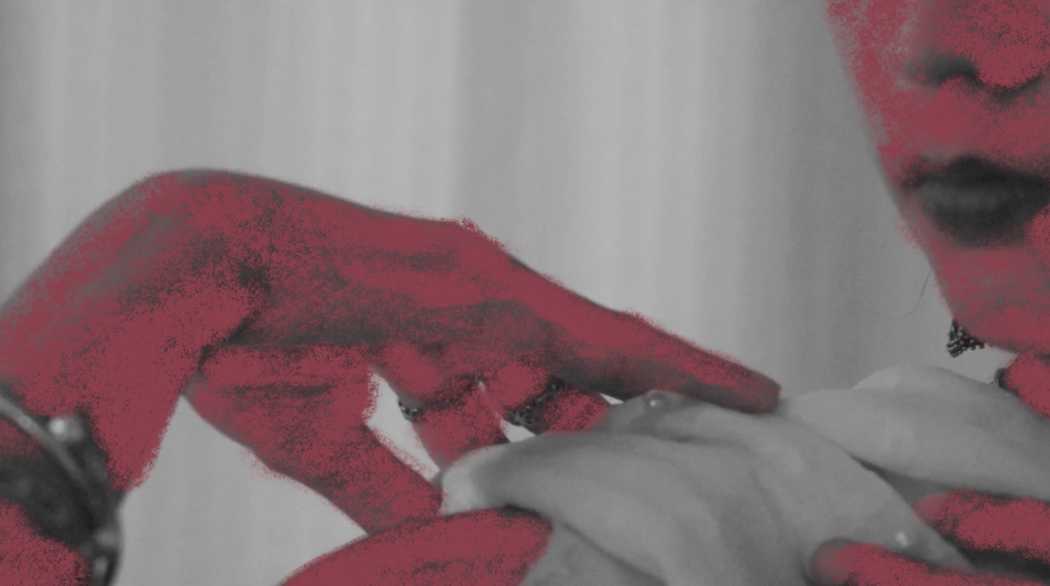
The work combines black-and-white imagery with expressive layers of red, yellow, purple, and blue. How did you develop this visual language, and what role does color play in expressing thoughts or emotions that cannot be seen in the original footage?
While editing the video (before I took the stills), I decided to experiment with a black-and-white image. It stood out more to me as it reminded me of the old photos of my great-grandmothers who wore sarees without a blouse. To me, it also represented that I was looking back at the past while mending my relationship with ethnic wear. I used the colors red and yellow because they demand your emotions; thus, I added them to images that represented anger and confusion. Purple and blue are easy on the eyes and sort of harmonious, which represented when I felt calmer and ready to embrace my look.
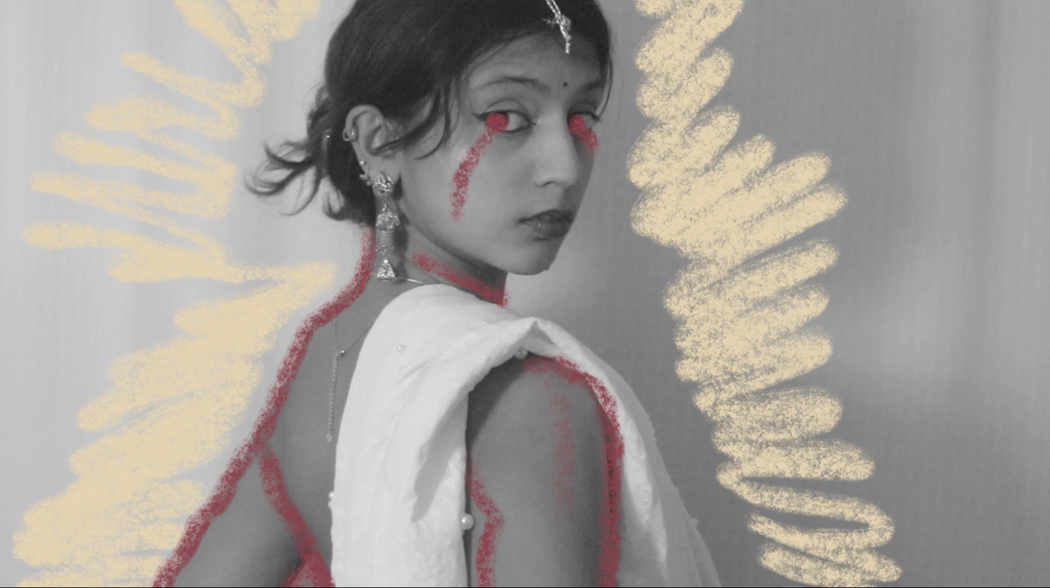
There seems to be both affection and tension in the way you approach ethnic dress – a sense of nostalgia alongside questioning and resistance. How important is this contradiction to the emotional core of the project?
The contradiction represents the honesty I hold myself accountable to. Instead of pretending that I embrace the dress, I stay honest about my uncertainty and the confidence I am yet to have dressing myself strongly, out of respect for my culture. Through this piece, I stay truthful to the amount of reflection I need to do while also acknowledging how far I have come. Dressing myself in cultural wear also feels nostalgic as it reminds me of a time when my mother used to dress me and I didn’t have a care in the world about what others thought of me.
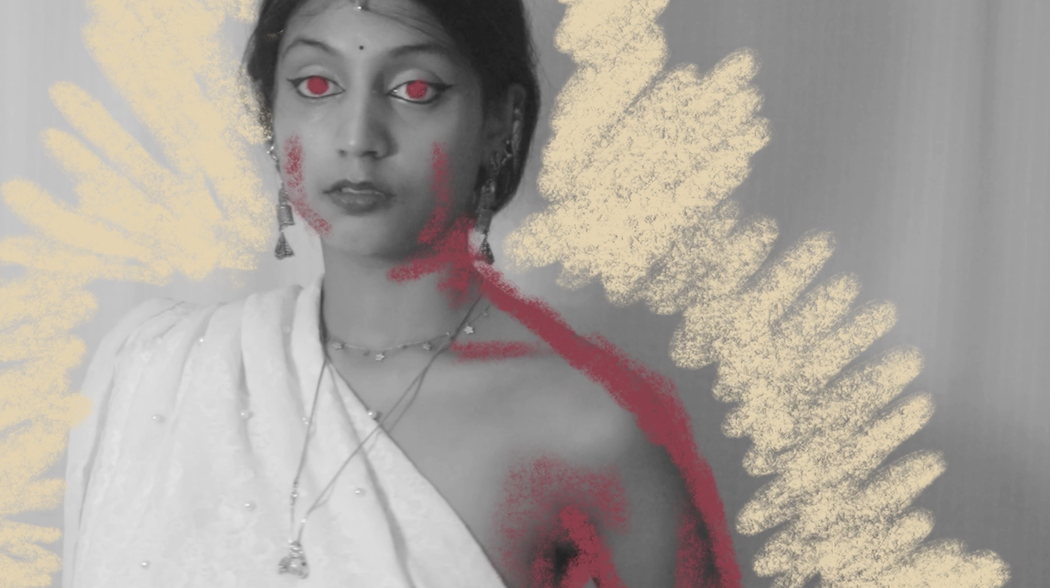
As both the person in front of the camera and the artist constructing the image, how did performing in your own work change the creative process? Did it make the project feel more vulnerable or intimate?
Alankaram is a deeply personal project. It felt as if I was exposing myself and showing my innermost thoughts. At times it even felt embarrassing to admit that I did feel the way I did, when in contrast I should confidently embrace my culture. The creative process, while a little challenging, was really fun. I only faced difficulties while lighting the scene for myself. As an artist, I believe it’s essential to reveal parts of ourselves to create the most authentic work. I am still exploring my relationship with clothes and hope to create more projects reflecting my thoughts while also educating myself and others!